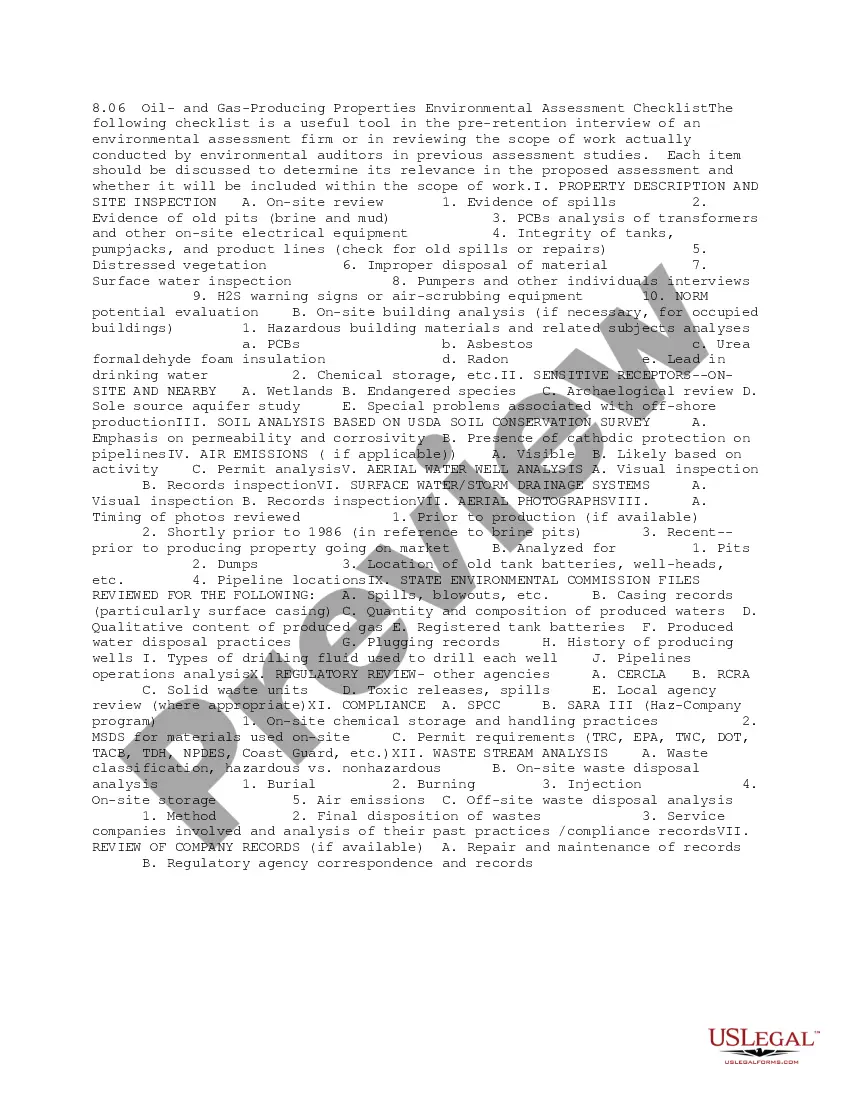
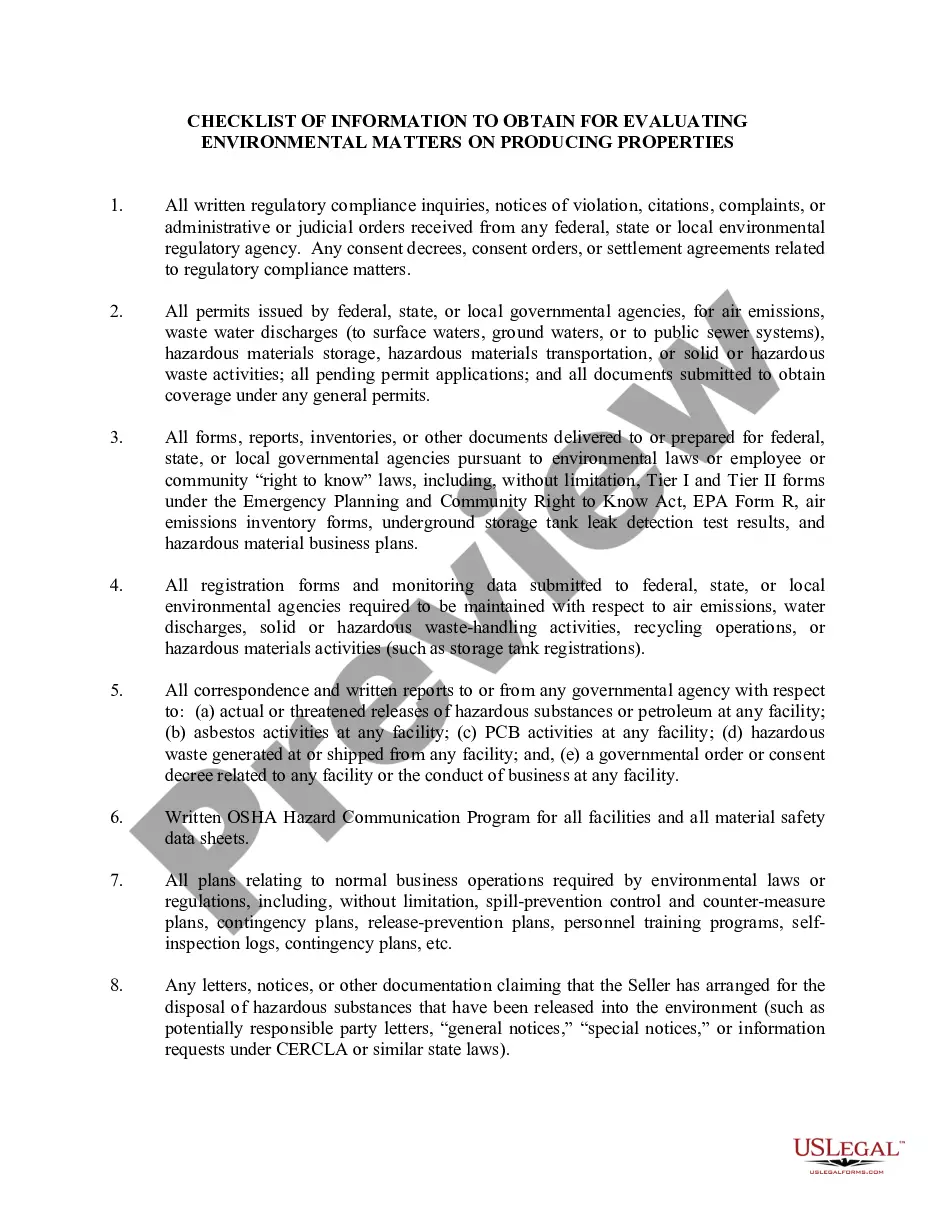
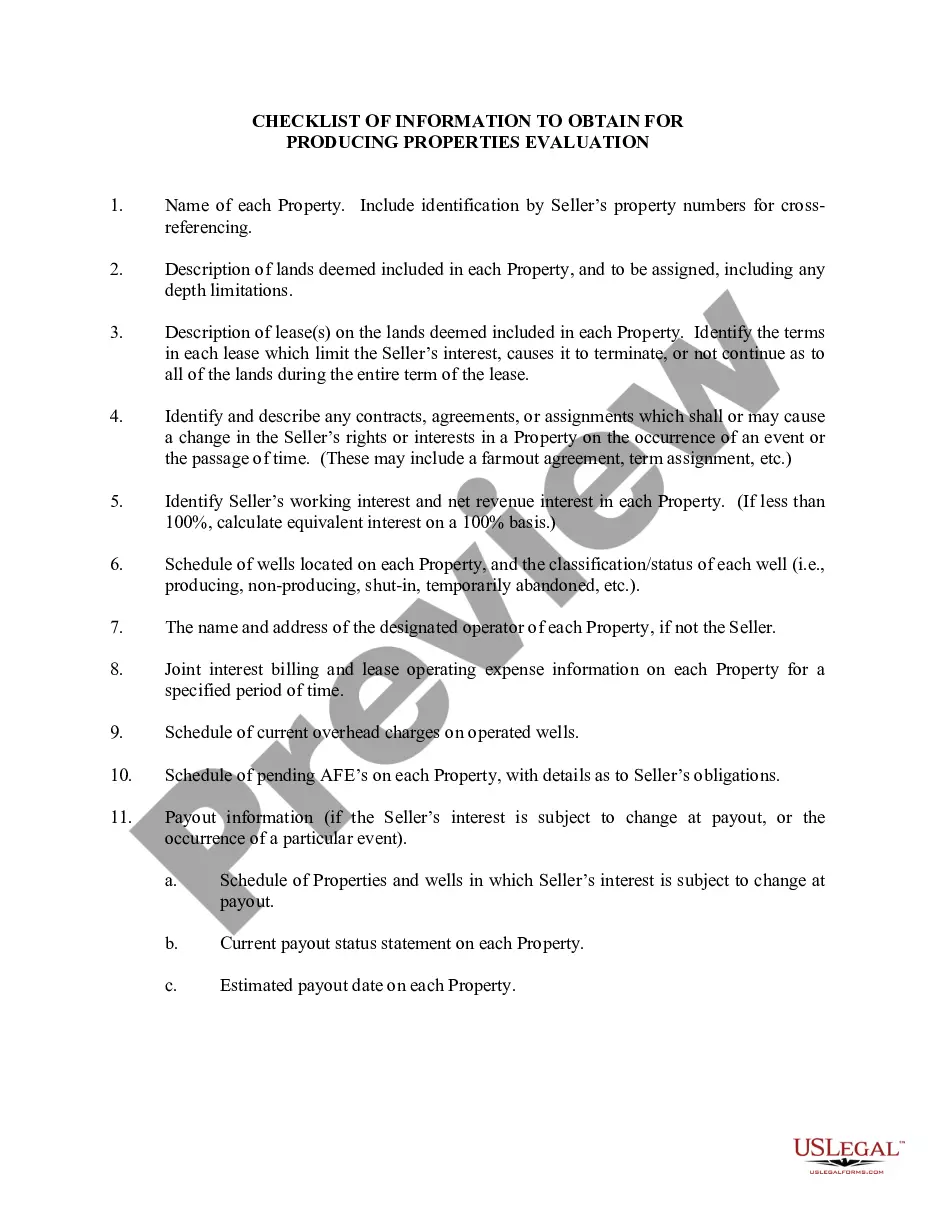
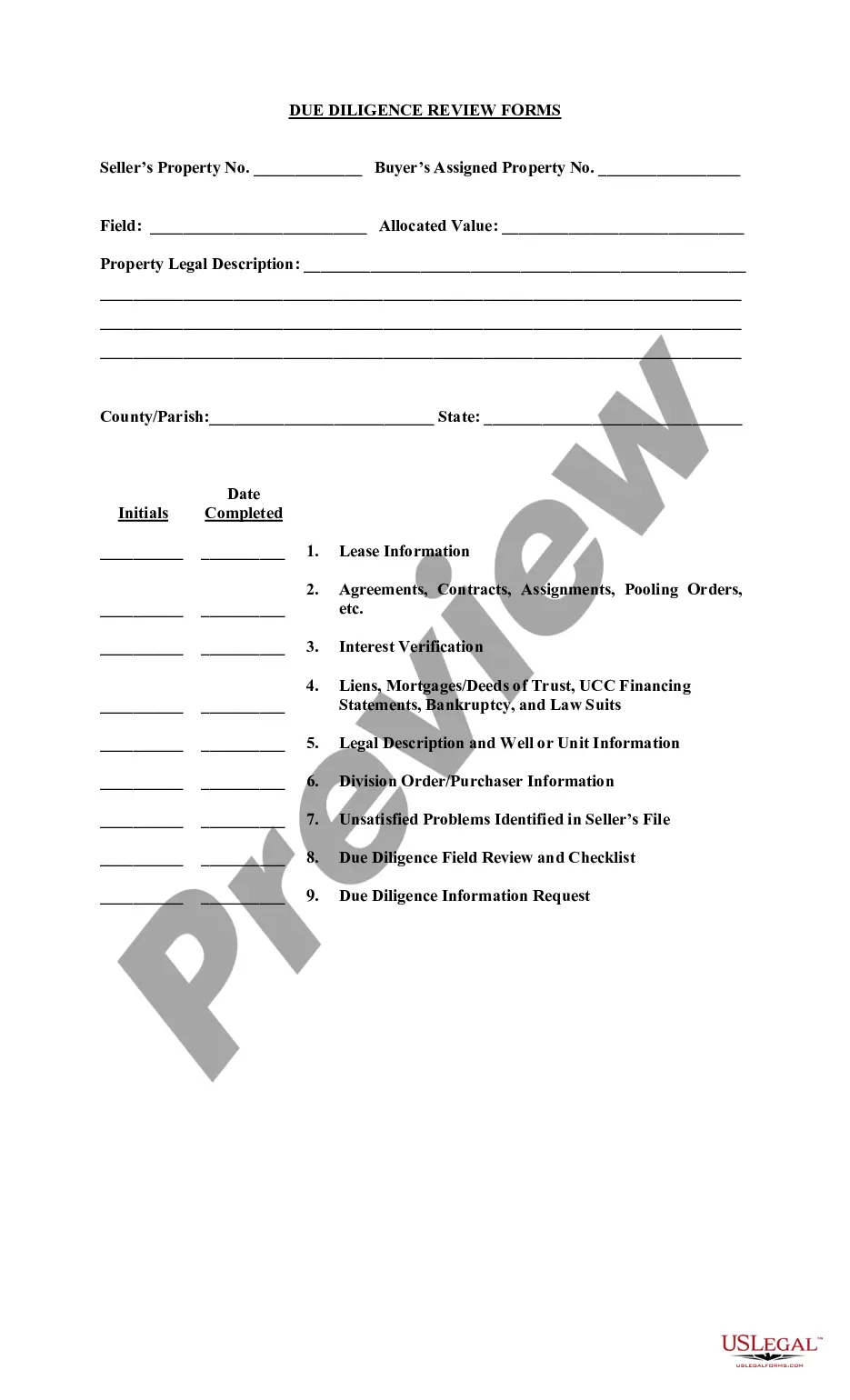
This due diligence checklist can be used in the pre-retention interview of an environmental assessment firm or in reviewing the scope of work conducted by environmental auditors in previous assessment studies.
Michigan Oil and Gas Producing Properties Environmental Assessment Checklist
Category:
State:
Multi-State
Control #:
US-DD0806
Format:
Word;
PDF;
Rich Text
Instant download
Description
Get your form ready online
Our built-in tools help you complete, sign, share, and store your documents in one place.
Built-in online Word editor
Make edits, fill in missing information, and update formatting in US Legal Forms—just like you would in MS Word.
Export easily
Download a copy, print it, send it by email, or mail it via USPS—whatever works best for your next step.
E-sign your document
Sign and collect signatures with our SignNow integration. Send to multiple recipients, set reminders, and more. Go Premium to unlock E-Sign.
Notarize online 24/7
If this form requires notarization, complete it online through a secure video call—no need to meet a notary in person or wait for an appointment.
Store your document securely
We protect your documents and personal data by following strict security and privacy standards.

Make edits, fill in missing information, and update formatting in US Legal Forms—just like you would in MS Word.

Download a copy, print it, send it by email, or mail it via USPS—whatever works best for your next step.

Sign and collect signatures with our SignNow integration. Send to multiple recipients, set reminders, and more. Go Premium to unlock E-Sign.

If this form requires notarization, complete it online through a secure video call—no need to meet a notary in person or wait for an appointment.

We protect your documents and personal data by following strict security and privacy standards.
Looking for another form?





How to fill out Oil And Gas Producing Properties Environmental Assessment Checklist?
Locating the appropriate legal document template can be a challenge.
Naturally, there are numerous templates accessible online, but how can you find the legal form that you require.
Utilize the US Legal Forms website. The service offers thousands of templates, including the Michigan Oil and Gas Producing Properties Environmental Assessment Checklist, which can be utilized for both business and personal purposes.
You can preview the form using the Preview button and review the form description to verify that this is indeed the right one for you.
- All forms are reviewed by experts and comply with state and federal regulations.
- If you are already registered, Log In to your account and click the Download button to receive the Michigan Oil and Gas Producing Properties Environmental Assessment Checklist.
- Use your account to browse through the legal forms you have previously acquired.
- Go to the My documents tab in your account and obtain another copy of the documents you need.
- If you are a new user of US Legal Forms, here are simple steps that you can follow.
- First, ensure you have selected the correct form for your city/county.
Form popularity
FAQ
An environmental assessment typically includes analyses of land use, air quality, water impacts, and ecological considerations. It evaluates existing environmental conditions and forecasts possible changes due to a project. Using the Michigan Oil and Gas Producing Properties Environmental Assessment Checklist can help streamline this process, making it easier to address each aspect thoroughly. This process ultimately fosters accountability and promotes sustainable practices in natural resource management.
An environmental assessment includes a comprehensive review of potential impacts on natural resources, wildlife, and human health. It gathers essential data to evaluate the proposed project's effects on the environment. By utilizing a Michigan Oil and Gas Producing Properties Environmental Assessment Checklist, you can systematically address each component, ensuring no detail is overlooked. This thorough approach leads to informed decisions and responsible resource management.
A checklist in environmental impact assessment serves as a guide to ensure all critical factors are evaluated. It outlines specific areas to consider, helping professionals follow a structured approach. Using a Michigan Oil and Gas Producing Properties Environmental Assessment Checklist can simplify the evaluation process and ensure compliance with relevant regulations. This tool promotes thoroughness and enhances decision-making in environmental reviews.
A baseline environmental assessment measures existing environmental conditions before any oil and gas activities begin. This assessment sets a reference point for identifying changes that may occur due to project operations. Utilizing the Michigan Oil and Gas Producing Properties Environmental Assessment Checklist enhances this assessment's effectiveness, providing a thorough evaluation of environmental factors. Establishing this baseline helps ensure that environmental impacts are monitored and mitigated appropriately.
An environmental impact assessment for oil and gas examines the potential effects of oil and gas projects on the environment. This assessment ensures compliance with regulations and helps identify any ecological harm that could occur. By using the Michigan Oil and Gas Producing Properties Environmental Assessment Checklist, stakeholders can systematically evaluate environmental factors before project development. This proactive approach promotes sustainability and protects natural resources.
In Michigan, PFAS standards focus on regulating per- and polyfluoroalkyl substances to protect water quality and public health. These standards are crucial in areas affected by oil and gas activities, where potential contamination could occur. By adhering to the Michigan Oil and Gas Producing Properties Environmental Assessment Checklist, companies can navigate these regulations effectively and minimize PFAS exposure. This commitment ensures responsible management of resources and safeguards the community.
EIA, or environmental impact assessment in the oil and gas sector, is a systematic process that evaluates the potential environmental effects of exploration and production activities. This process aims to identify risks, promote sustainable practices, and mitigate negative impacts. By following guidelines such as those in the Michigan Oil and Gas Producing Properties Environmental Assessment Checklist, companies can ensure compliance while addressing environmental concerns effectively. This proactive approach fosters healthier ecosystems and communities.
The four main types of environmental impact assessments include project-specific EIA, strategic environmental assessment, regional EIA, and sectoral EIA. Each type serves a different purpose, ranging from examining individual projects to assessing broader policies. Utilizing the Michigan Oil and Gas Producing Properties Environmental Assessment Checklist can guide you through conducting an effective EIA tailored to your specific needs. This thorough approach promotes better planning and environmental protection.
The environmental impact assessment (EIA) of the oil and gas industry examines how activities in this sector affect the environment. This assessment looks at potential air and water pollution, habitat disruption, and resource depletion. Understanding these impacts helps stakeholders make informed decisions and implement the Michigan Oil and Gas Producing Properties Environmental Assessment Checklist. By prioritizing environmental stewardship, we can ensure sustainable practices in the oil and gas industry.