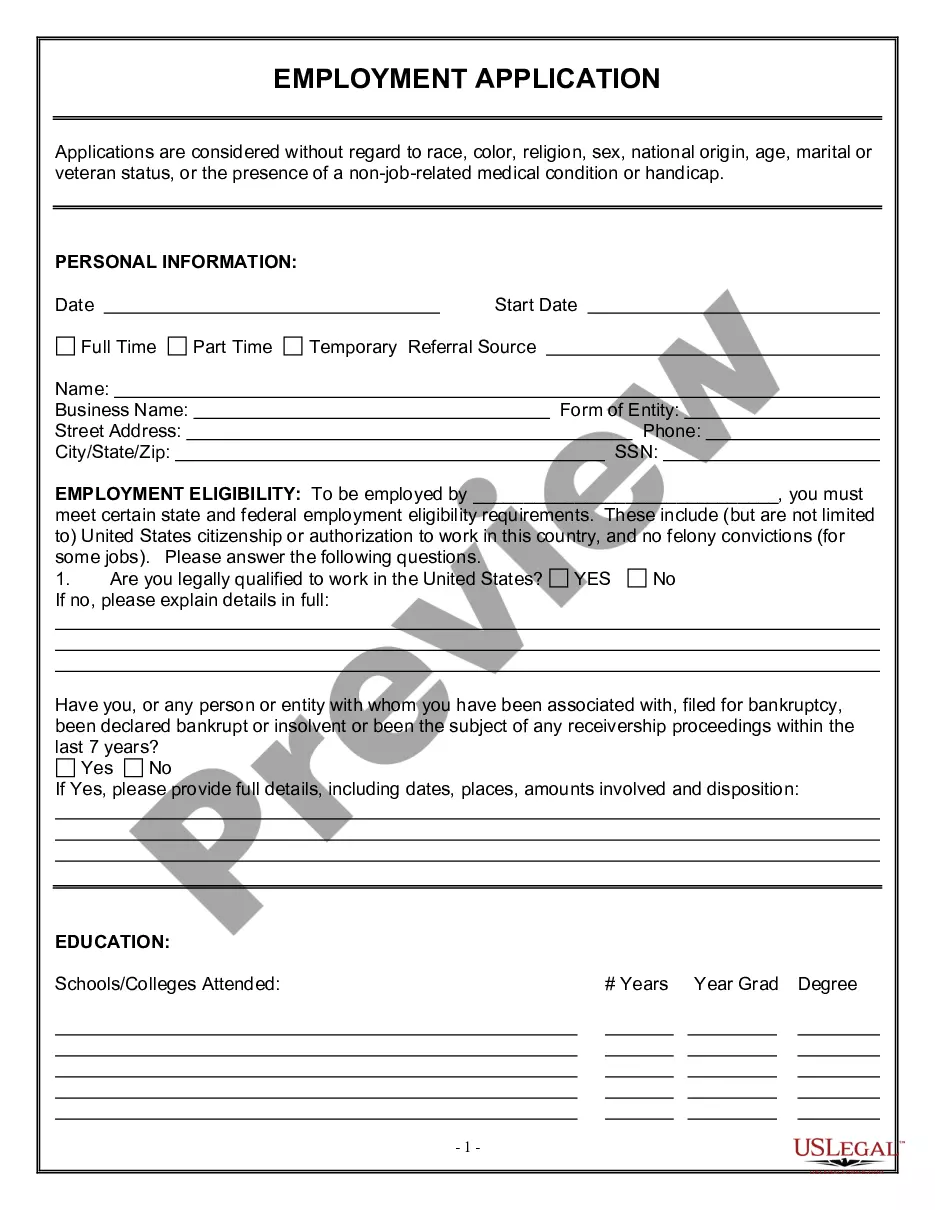
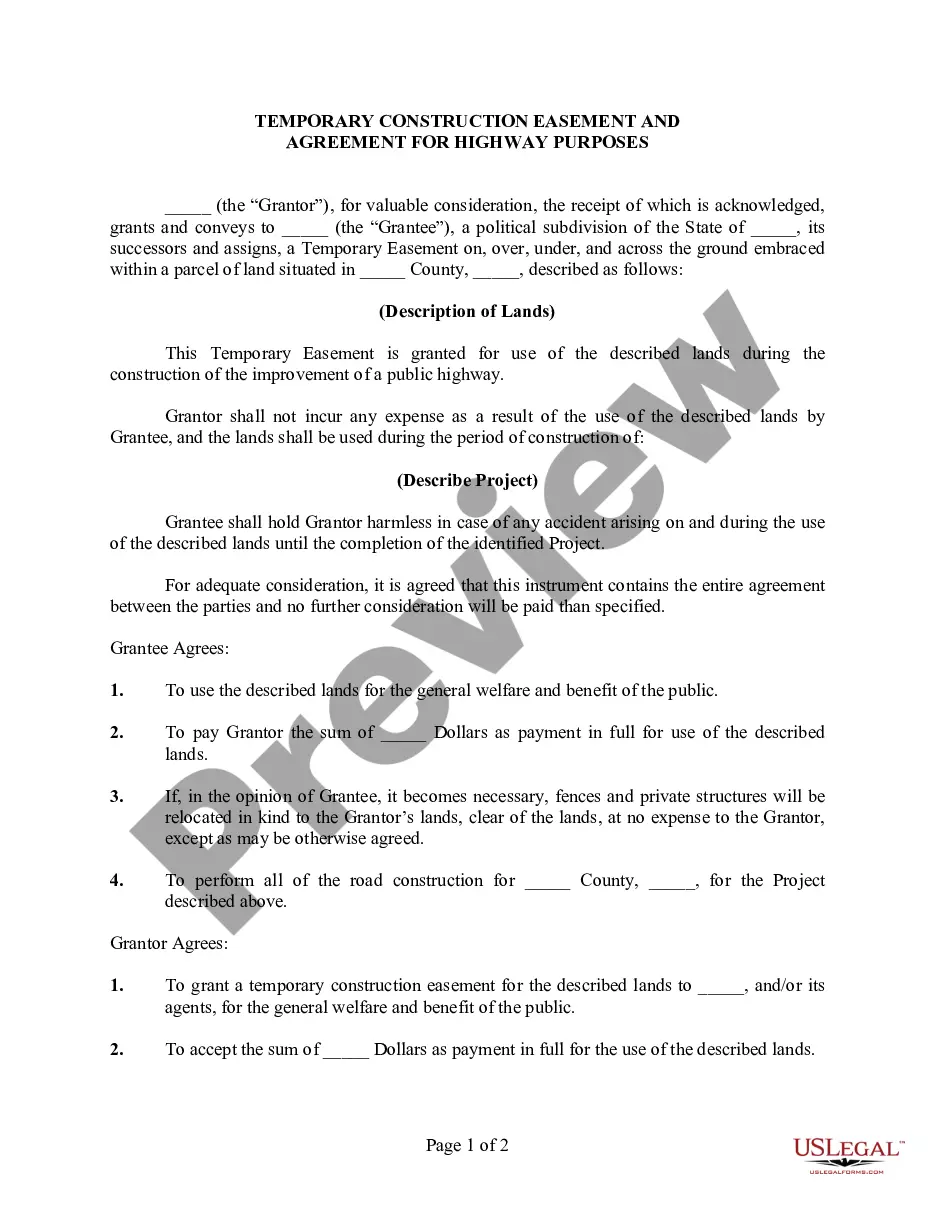
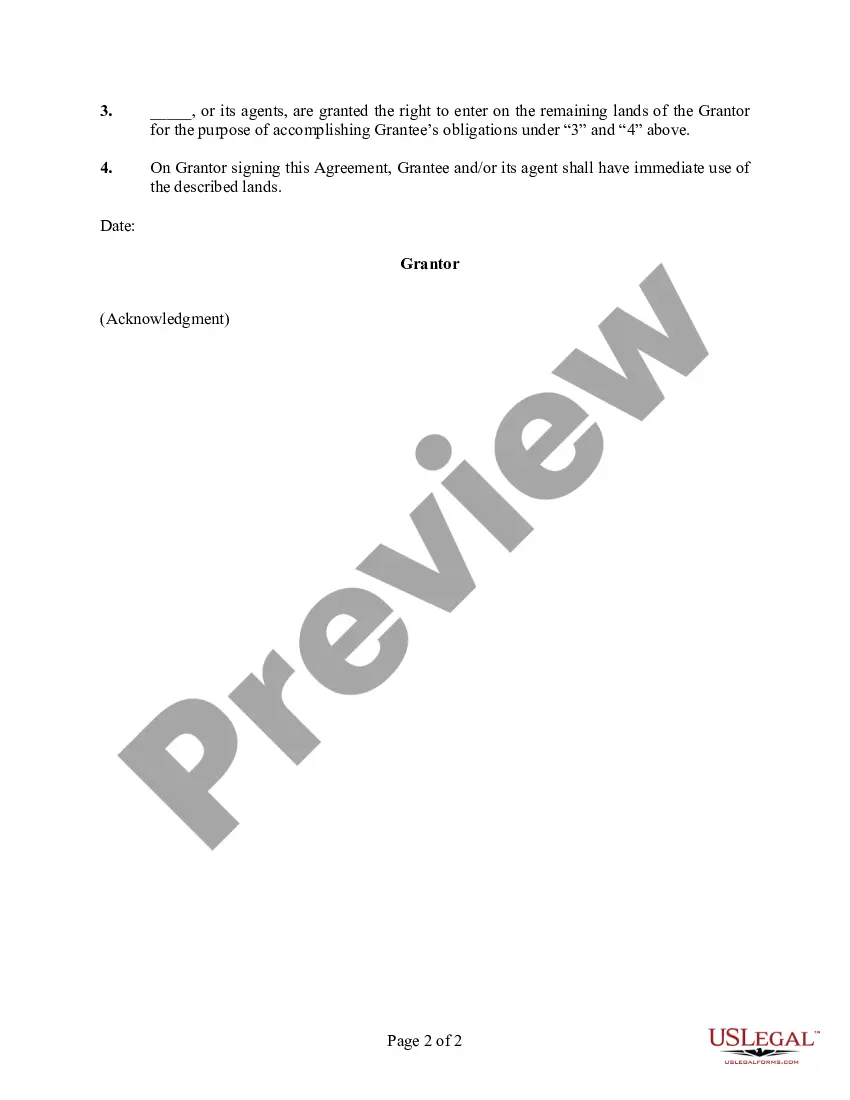
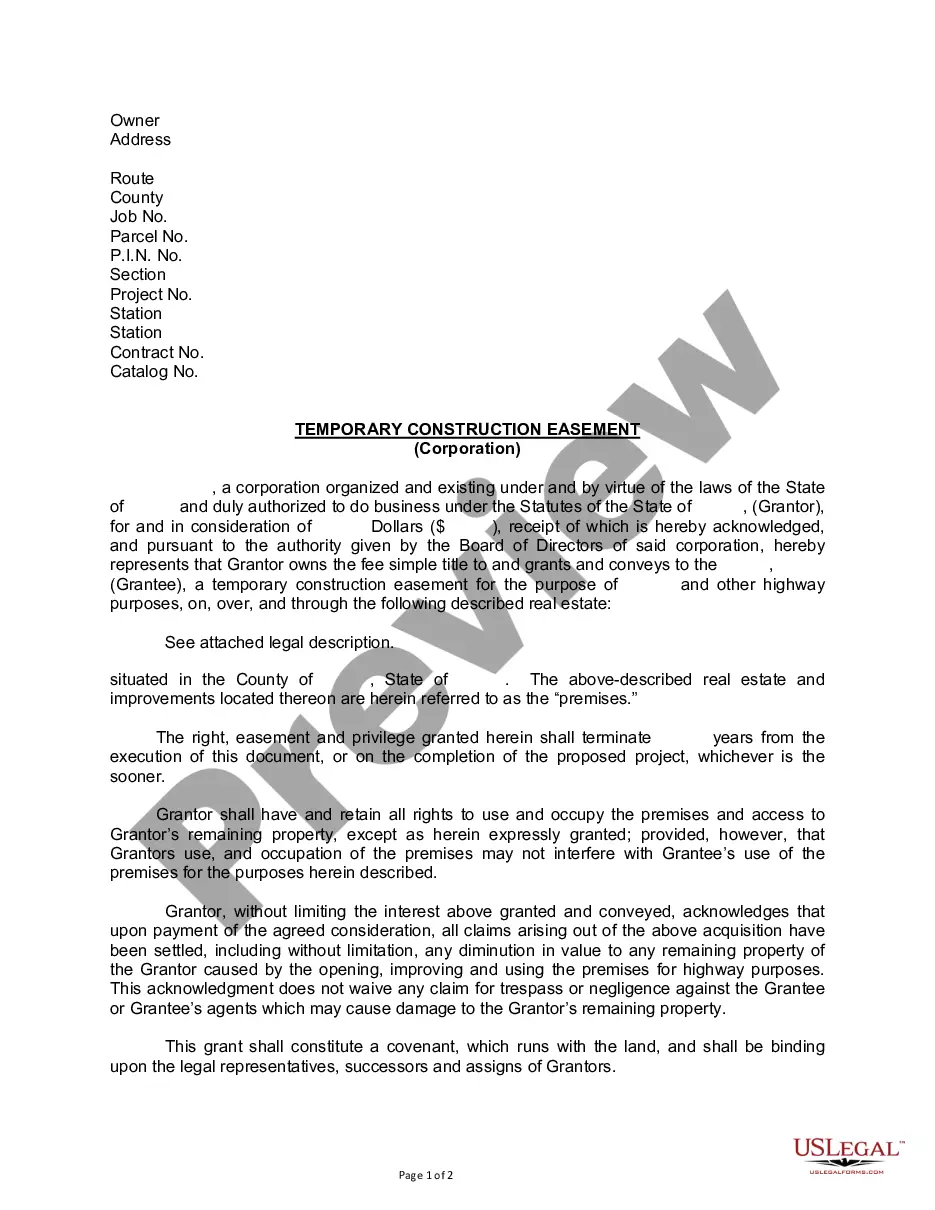
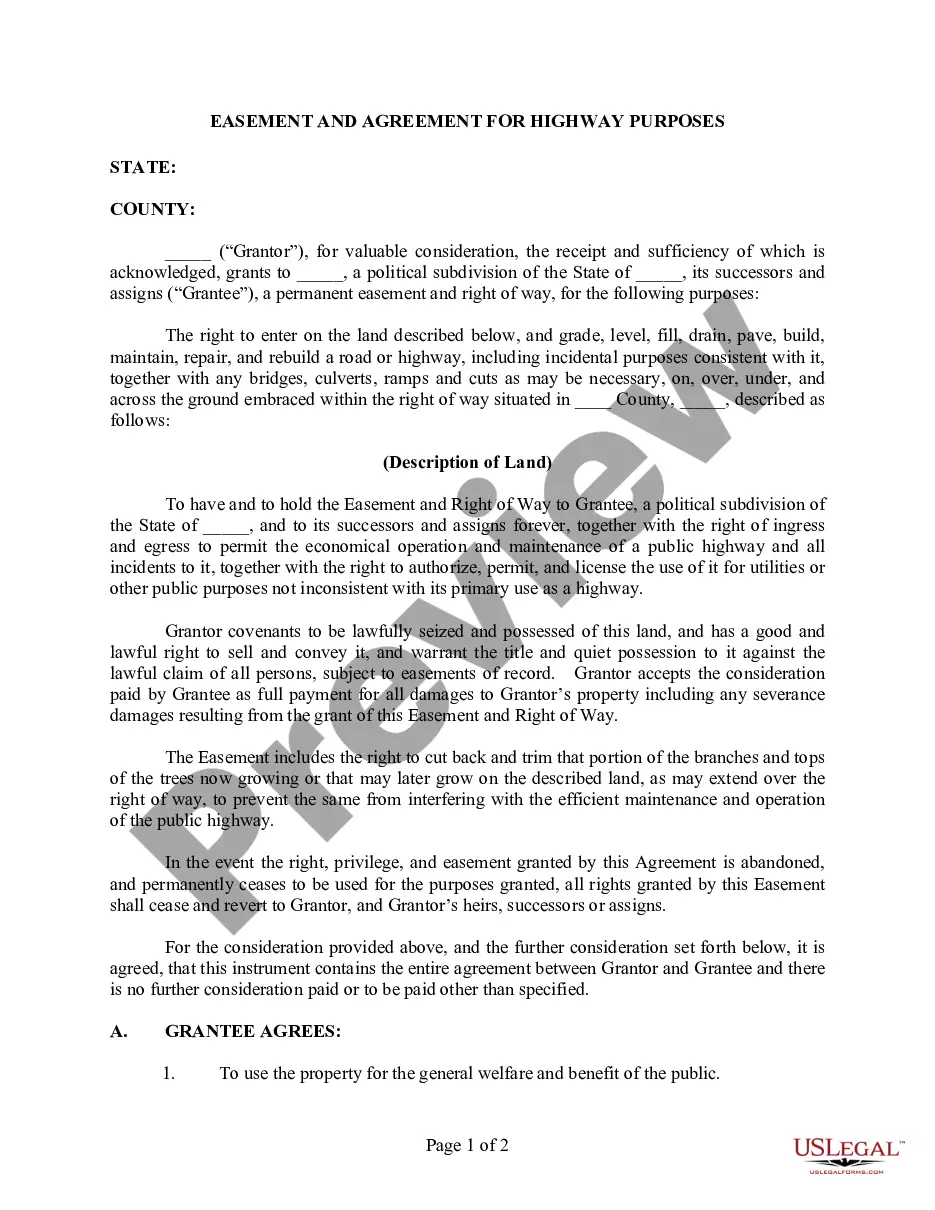
Michigan Temporary Construction Easement and Agreement for Highway Purposes
Description
Get your form ready online
Our built-in tools help you complete, sign, share, and store your documents in one place.
Make edits, fill in missing information, and update formatting in US Legal Forms—just like you would in MS Word.
Download a copy, print it, send it by email, or mail it via USPS—whatever works best for your next step.
Sign and collect signatures with our SignNow integration. Send to multiple recipients, set reminders, and more. Go Premium to unlock E-Sign.
If this form requires notarization, complete it online through a secure video call—no need to meet a notary in person or wait for an appointment.
We protect your documents and personal data by following strict security and privacy standards.

Make edits, fill in missing information, and update formatting in US Legal Forms—just like you would in MS Word.

Download a copy, print it, send it by email, or mail it via USPS—whatever works best for your next step.

Sign and collect signatures with our SignNow integration. Send to multiple recipients, set reminders, and more. Go Premium to unlock E-Sign.

If this form requires notarization, complete it online through a secure video call—no need to meet a notary in person or wait for an appointment.

We protect your documents and personal data by following strict security and privacy standards.
Looking for another form?



How to fill out Temporary Construction Easement And Agreement For Highway Purposes?
Are you presently inside a situation where you need to have papers for either business or individual reasons virtually every time? There are plenty of lawful file themes available on the Internet, but getting ones you can rely is not easy. US Legal Forms delivers thousands of type themes, much like the Michigan Temporary Construction Easement and Agreement for Highway Purposes, which can be written to satisfy federal and state demands.
In case you are already familiar with US Legal Forms internet site and get an account, merely log in. Following that, you are able to download the Michigan Temporary Construction Easement and Agreement for Highway Purposes format.
Unless you have an account and want to begin using US Legal Forms, follow these steps:
- Obtain the type you will need and make sure it is for the proper metropolis/county.
- Take advantage of the Review option to analyze the shape.
- Browse the explanation to actually have selected the proper type.
- In the event the type is not what you are looking for, take advantage of the Look for field to discover the type that fits your needs and demands.
- Once you get the proper type, simply click Purchase now.
- Pick the prices strategy you desire, fill in the required information to make your account, and purchase an order utilizing your PayPal or charge card.
- Pick a practical document format and download your backup.
Get all the file themes you have purchased in the My Forms food list. You can aquire a additional backup of Michigan Temporary Construction Easement and Agreement for Highway Purposes at any time, if necessary. Just select the essential type to download or produce the file format.
Use US Legal Forms, by far the most considerable variety of lawful forms, to save efforts and avoid errors. The support delivers professionally made lawful file themes that you can use for an array of reasons. Create an account on US Legal Forms and initiate making your way of life easier.
Form popularity
FAQ
A temporary construction easement is a legal agreement between two parties that allows one party to use the other party's land for a specific purpose related to a construction project.
Who is Responsible for Maintaining an Easement in Michigan? Who is responsible for maintaining an easement? The short answer is the owner of the easement. A landowner that has an easement over the property of another landowner is the holder of the dominant estate.
Easements can also terminate when the easement was created by necessity and the necessity no longer exists. The owner of the dominant estate requiring the easement may also voluntarily release the easement to terminate the easement.
Easement in Michigan? Generally, the easement holder ? the person who uses the other person's land for access ? is responsible for maintaining the easement.
Utility easements 6 feet in width are permissible along rear property lines, in cases where the rear property lines abut unplatted land.
Easement by Necessity Michigan law recognizes a special easement which is created by an imposed court order, often times against the will of the neighbor. This easement, known as an easement by necessity, is imposed typically only when no other option is available. A common example is truly landlocked property.
The owner of the land over which the easement runs is not allowed to interfere with the easement, even though the owner owns title to that land.
Types of Easements. An easement by necessity is sometimes created when a parcel is landlocked, meaning there is no access to a road. Finally, a prescriptive easement can be created when one parcel has been using another parcel for access rights, without permission, for over fifteen years.