Michigan Confidentiality Agreement for Personal Assistant
Description
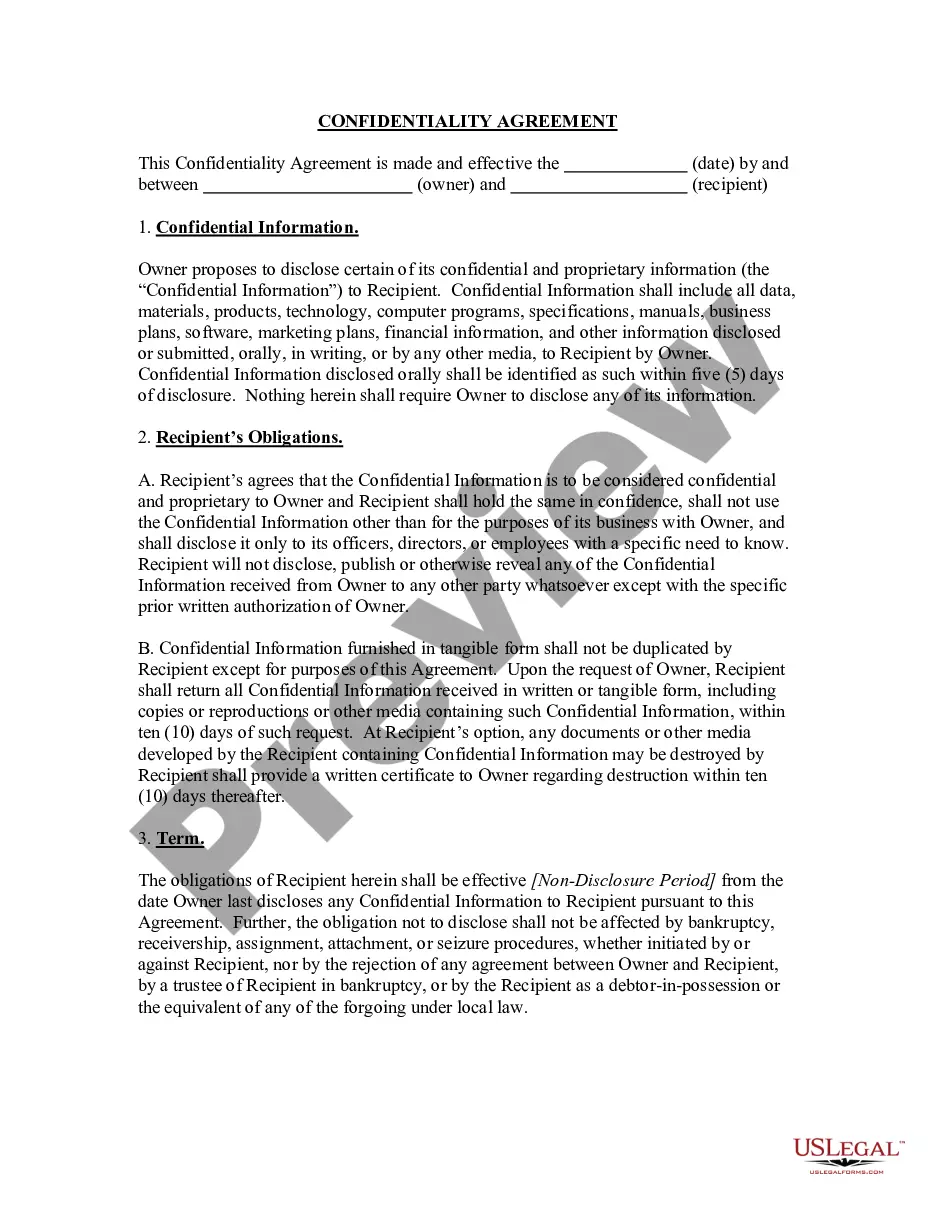
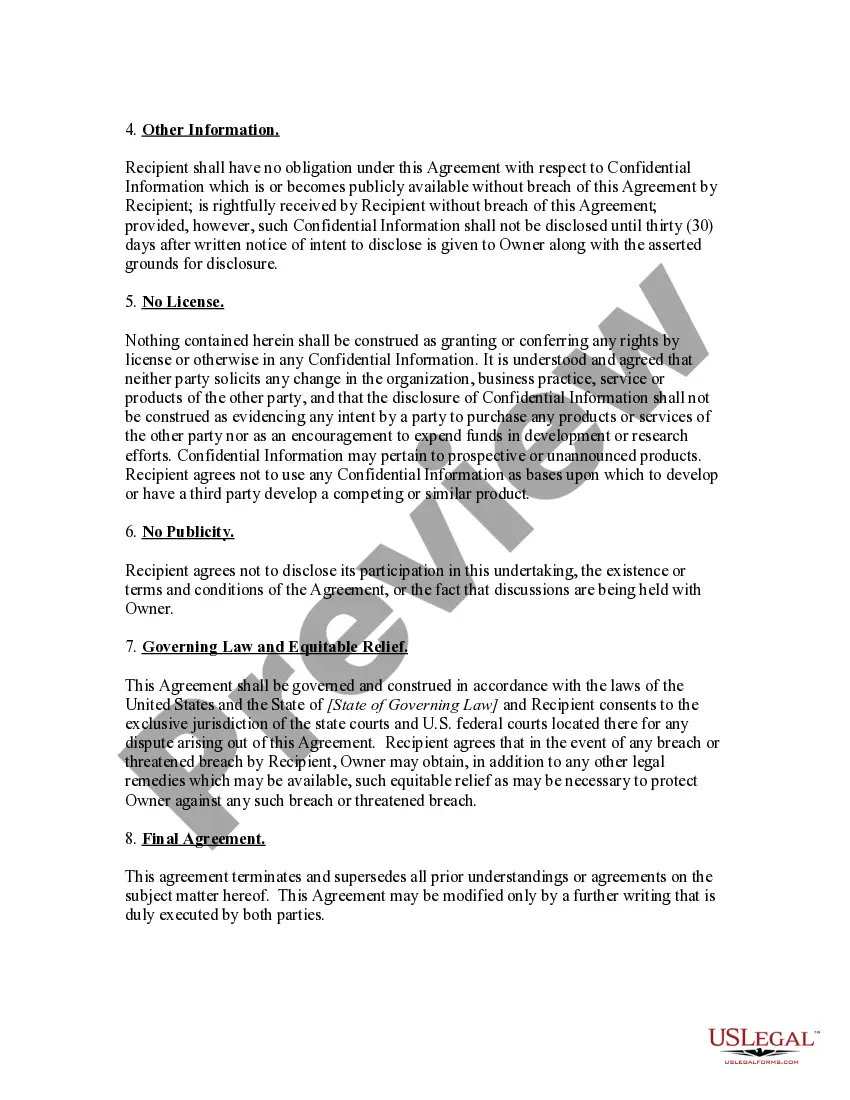
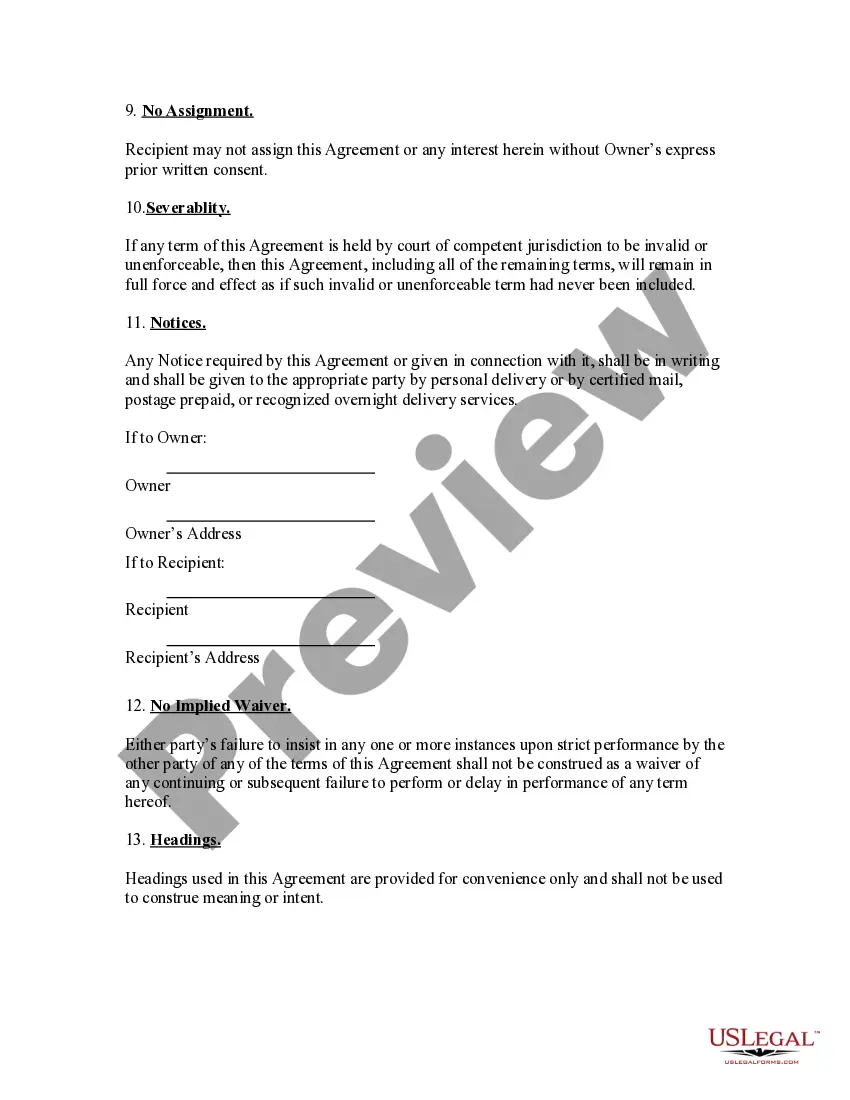
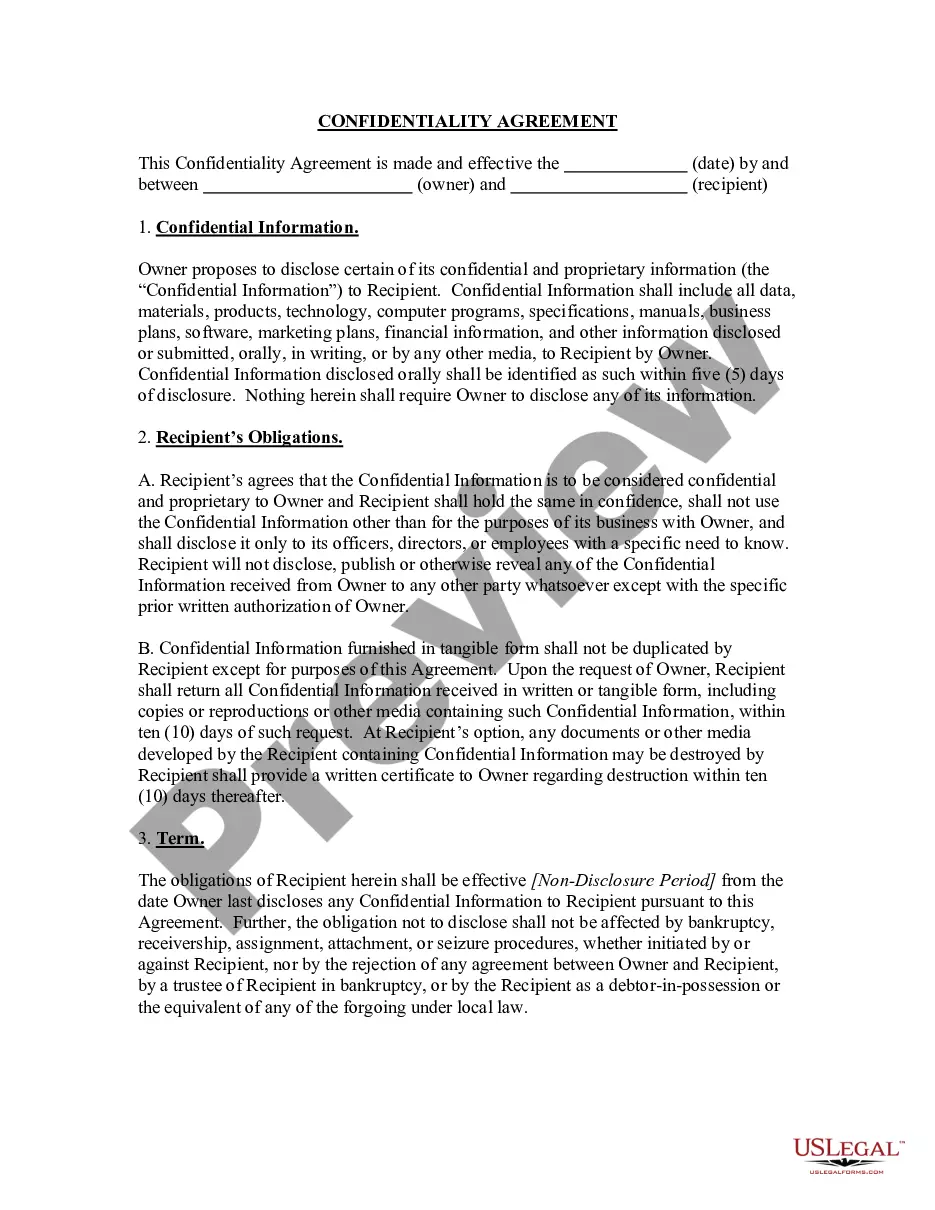
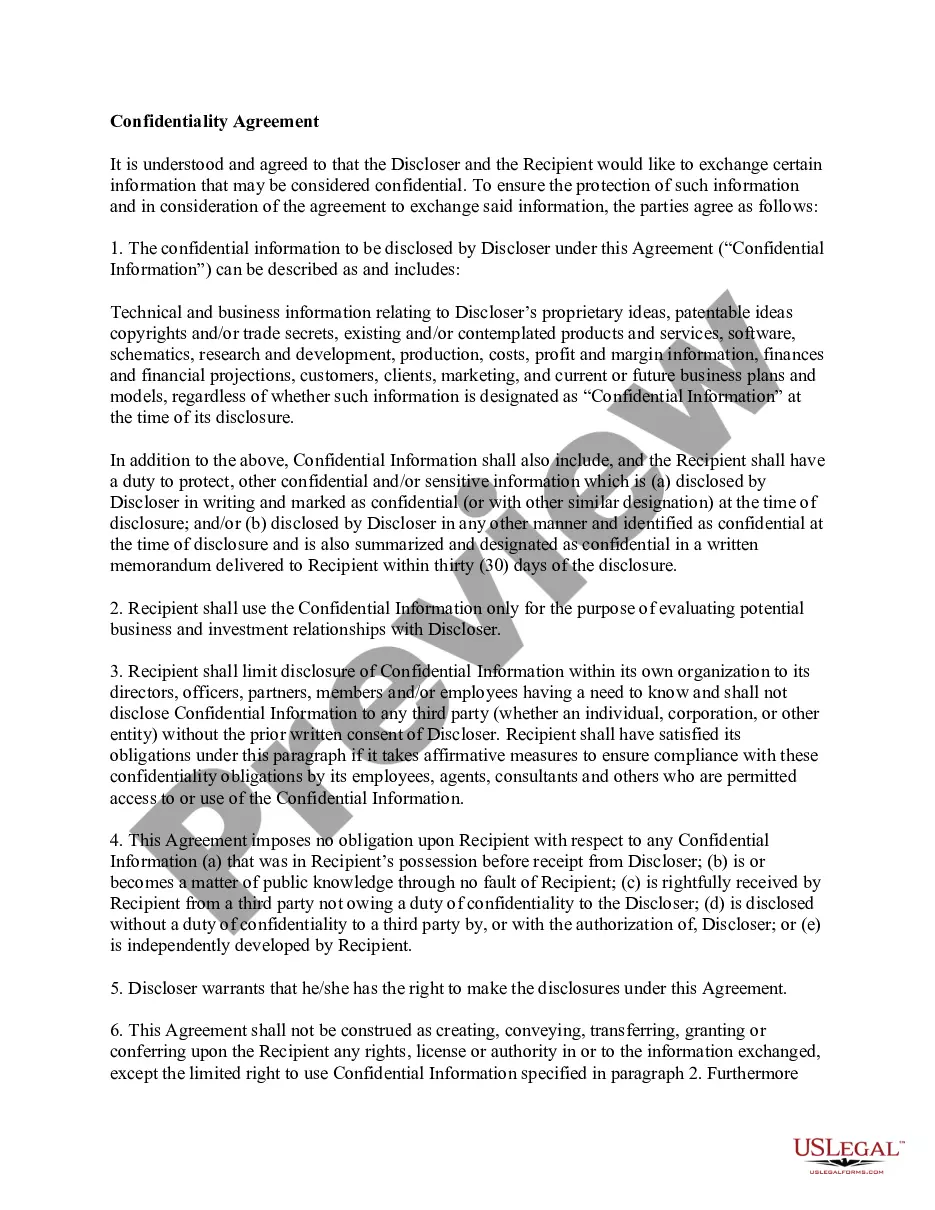
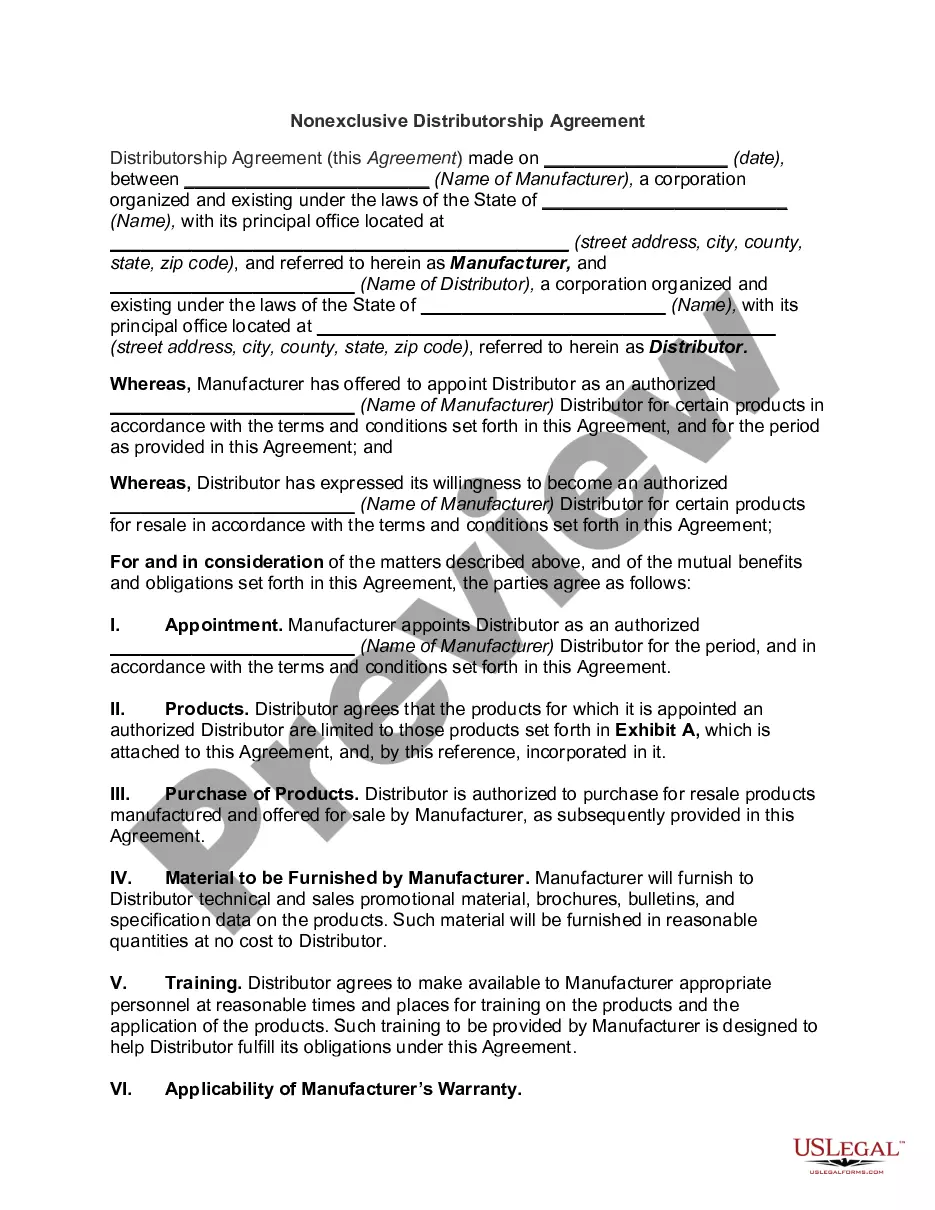
How to fill out Confidentiality Agreement For Personal Assistant?
US Legal Forms - one of the most notable collections of legal documents in the United States - provides a diverse selection of legal template options available for download or printing.
By utilizing the website, you can discover a vast number of forms for both business and personal purposes, categorized by type, state, or keywords. You can access the latest versions of forms like the Michigan Confidentiality Agreement for Personal Assistant in just a few moments.
If you hold a subscription, Log In and download the Michigan Confidentiality Agreement for Personal Assistant from the US Legal Forms collection. The Download button will be displayed on every form you view. You can access all previously downloaded forms from the My documents tab in your account.
Complete the transaction. Use a credit card or PayPal account to finalize the transaction.
Select the format and download the form to your device. Edit. Fill out, modify, print, and sign the downloaded Michigan Confidentiality Agreement for Personal Assistant. Each template you have added to your account does not have an expiration date and belongs to you indefinitely. Therefore, to download or print a different version, simply navigate to the My documents section and click on the form you need. Gain access to the Michigan Confidentiality Agreement for Personal Assistant with US Legal Forms, the most extensive collection of legal document templates. Leverage a vast array of professional and state-specific templates that cater to your business or personal requirements.
- If you are using US Legal Forms for the first time, here are simple steps to help you get started.
- Ensure you have chosen the correct form for your city/state.
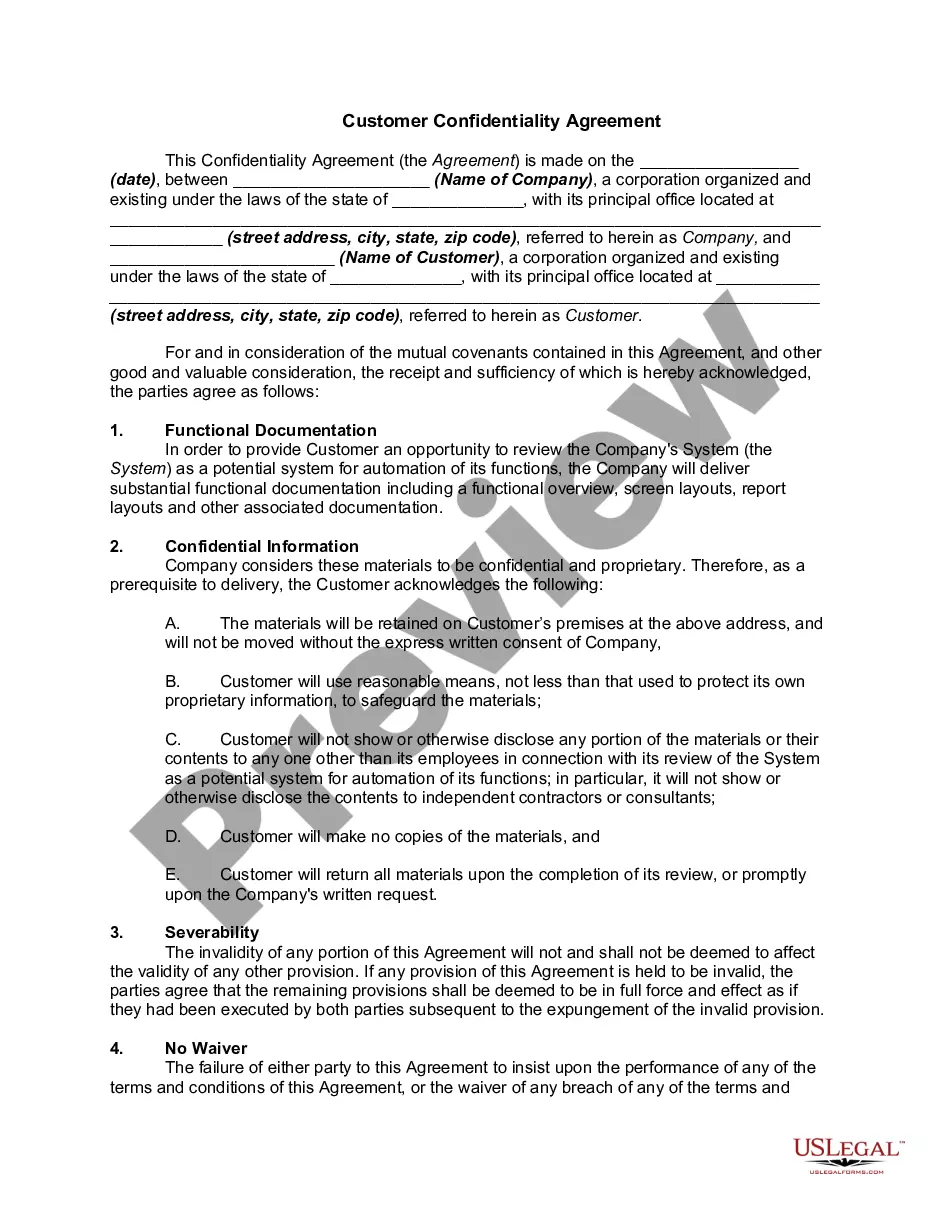
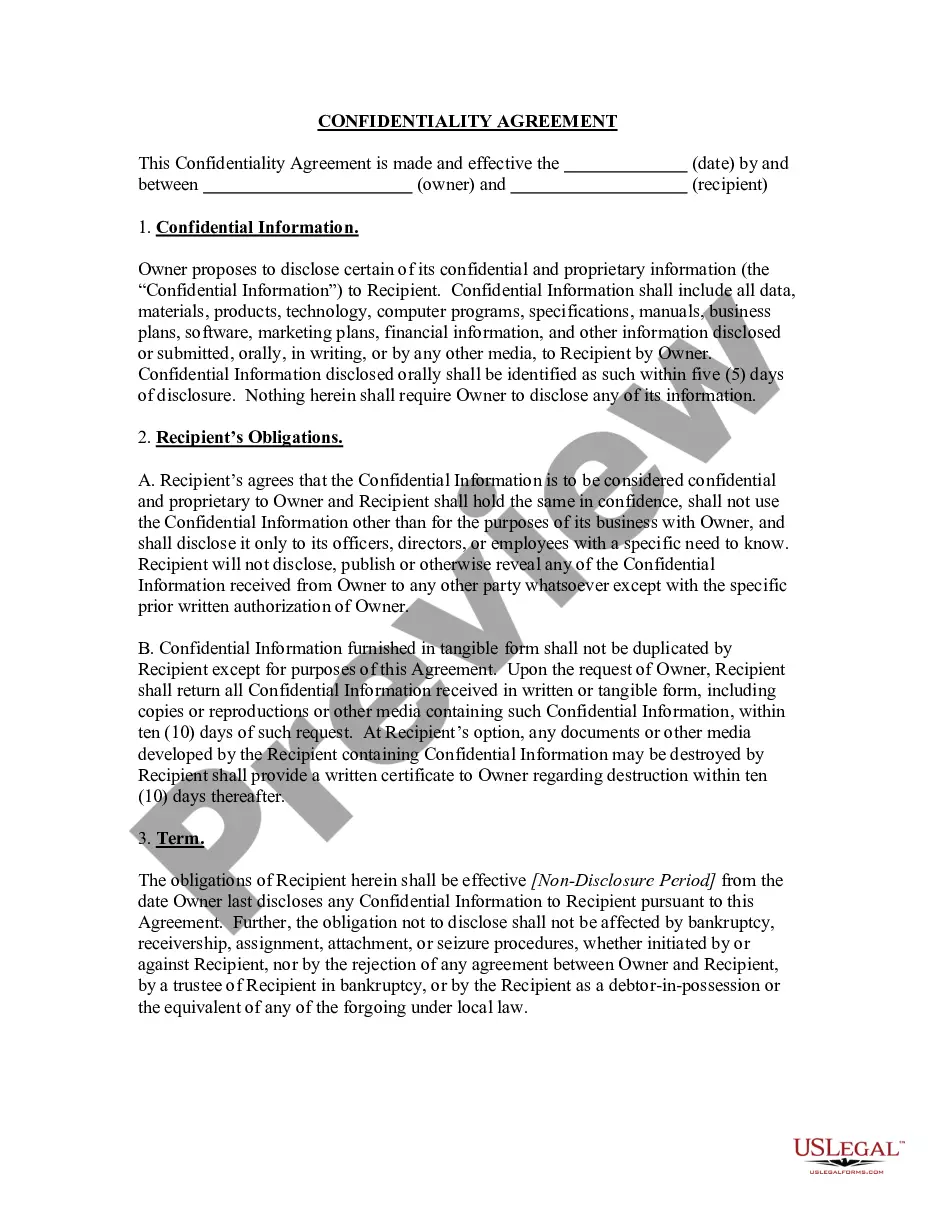
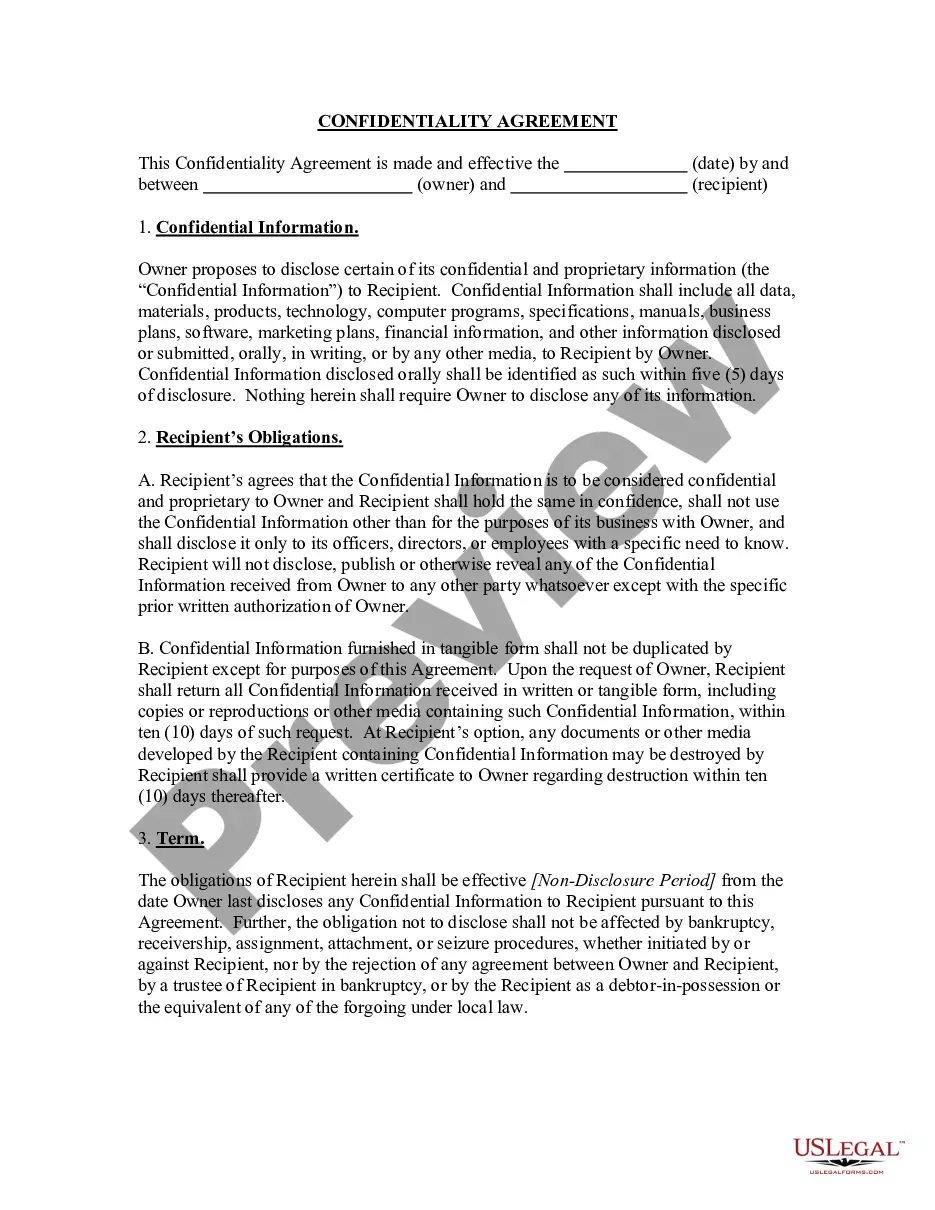
- Click the Preview button to check the content of the form.
- Review the form description to confirm you have selected the right template.
- If the form does not meet your needs, utilize the Search bar at the top of the page to find the one that does.
- Once you are satisfied with the form, confirm your selection by clicking the Buy now button.
- Then, choose your payment plan and provide your details to register for an account.
Form popularity
FAQ
The key elements of confidentiality agreements are: Identification of the parties. Definition of what is defined to be confidential. The scope of the confidentiality obligation by the receiving party.
Describe what the other party is agreeing to.Exercising reasonable precautions against disclosure of the information.Not disclosing Confidential Information without the written consent of the Disclosing Party.Using the information only for business purposes, and only on a need to know basis.More items...?
An Easy Process. Marking a document "Confidential" is easy enough to do, depending on which word processing software you employ. In Word, click "Page Layout." Then, click "Watermark," and choose "Confidential." That watermark will appear on the printed version of the document.
Non-disclosure agreements, or NDAs as they are sometimes called, are legally enforceable agreements between parties that are used to ensure that certain information will remain confidential.
A legally-binding confidentiality agreement must feature the following components:A definition of confidential information.Who is involved.Why the recipient knows the information.Exclusions or limits on confidential information.Receiving party's obligations.Time frame or term.Discloser to the recipient.More items...
The agreement should identify the purpose to which the recipient can put the confidential information. All other uses of the confidential information should be prohibited. Sometimes a confidentiality agreement states that no rights are licensed by the confidentiality agreement. This is stating the obvious.
How to write a confidentiality statement?Use a standard format for contracts.Decide what type of confidentiality statement you should use.Identify the involved parties in the agreement.Define the information to keep confidential.List the information excluded from the agreement.
To avoid an NDA being declared unenforceable because of being too broad, you could provide context for the agreement and its terms. The NDA can also be invalidated where the Receiving Party received the confidential information not through your disclosure but through an entirely separate third party.
NDAs generally will only be enforced if the enforcing party can show: (1) the existence of a trade secret or other confidential information; (2) that the trade secret or confidential information was acquired improperly or as a result of a confidential relationship; and (3) that there was actual or threatened
Generally, confidentiality agreements are enforceable when they meet the general requirements of a contract.