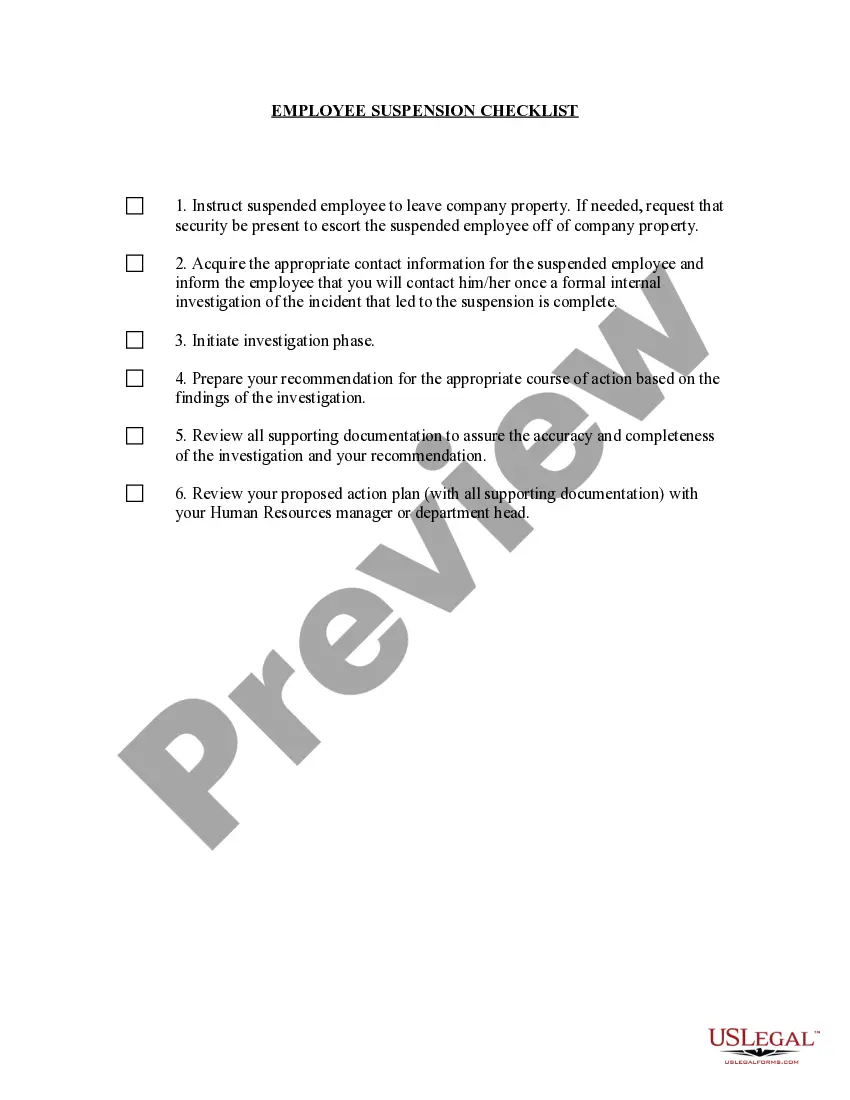
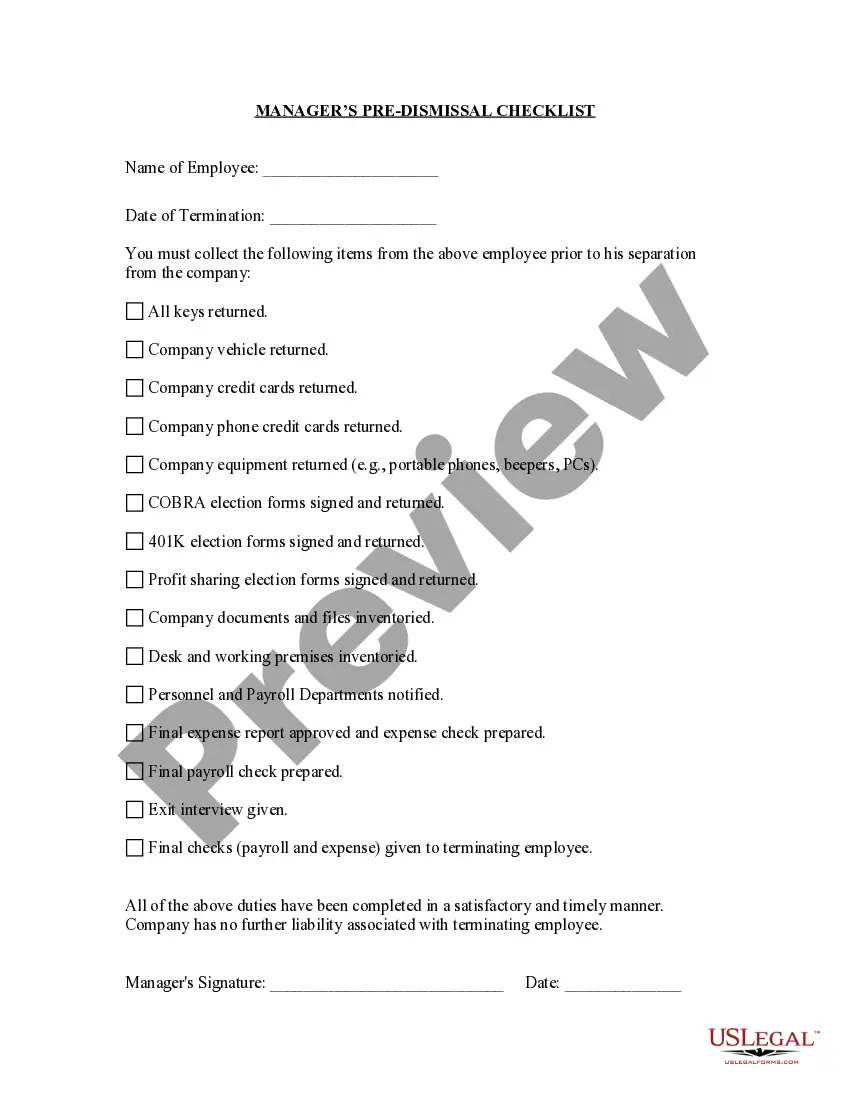
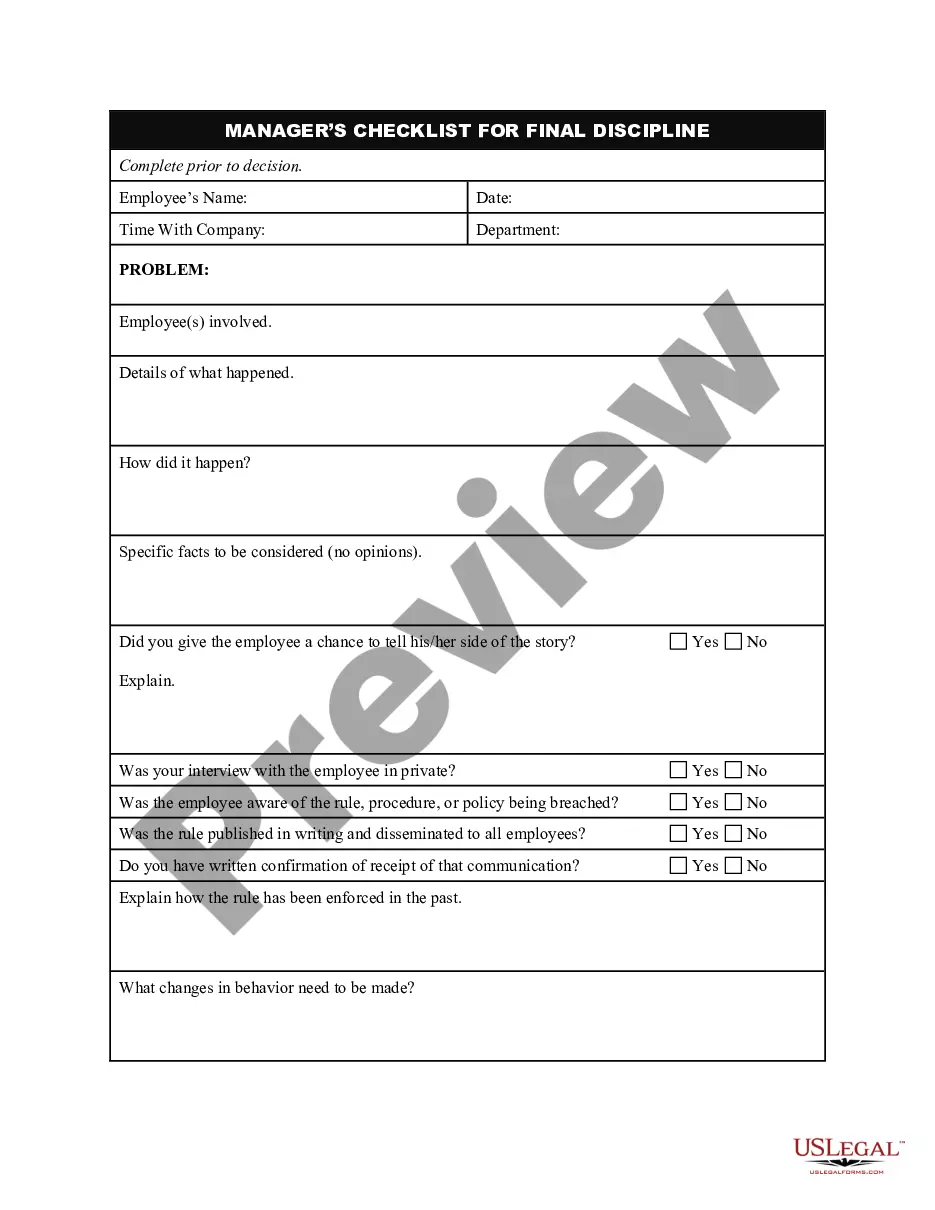
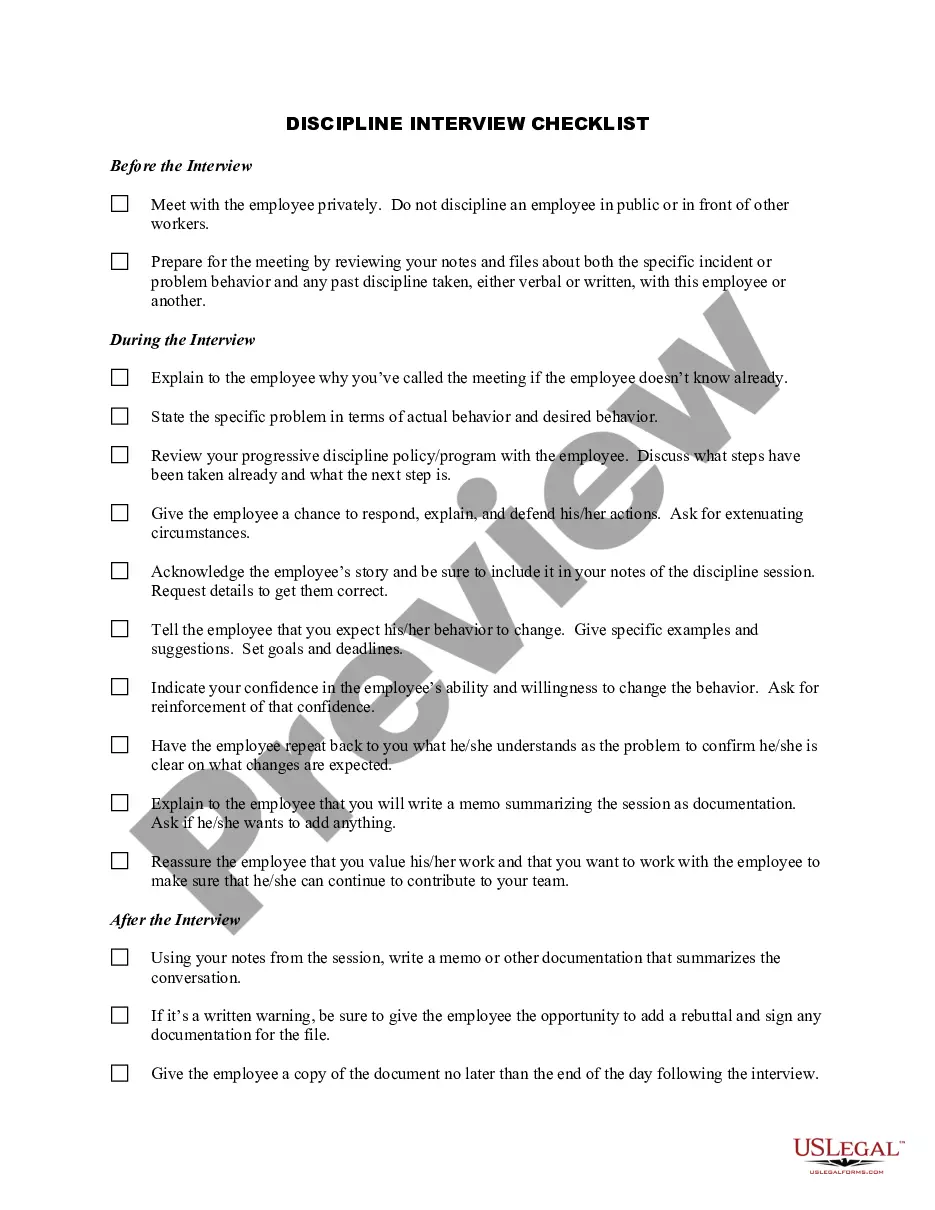
Michigan Employee Suspension Checklist
Description
Get your form ready online
Our built-in tools help you complete, sign, share, and store your documents in one place.
Make edits, fill in missing information, and update formatting in US Legal Forms—just like you would in MS Word.
Download a copy, print it, send it by email, or mail it via USPS—whatever works best for your next step.
Sign and collect signatures with our SignNow integration. Send to multiple recipients, set reminders, and more. Go Premium to unlock E-Sign.
If this form requires notarization, complete it online through a secure video call—no need to meet a notary in person or wait for an appointment.
We protect your documents and personal data by following strict security and privacy standards.

Make edits, fill in missing information, and update formatting in US Legal Forms—just like you would in MS Word.

Download a copy, print it, send it by email, or mail it via USPS—whatever works best for your next step.

Sign and collect signatures with our SignNow integration. Send to multiple recipients, set reminders, and more. Go Premium to unlock E-Sign.

If this form requires notarization, complete it online through a secure video call—no need to meet a notary in person or wait for an appointment.

We protect your documents and personal data by following strict security and privacy standards.
Looking for another form?


How to fill out Employee Suspension Checklist?
If you want to acquire, collect, or print official document templates, utilize US Legal Forms, the largest selection of legal forms available online.
Utilize the site's straightforward and user-friendly search feature to locate the documents you need.
Various templates for business and personal use are organized by categories and states, or keywords.
Every legal document template you purchase belongs to you forever. You can access any form you downloaded in your account.
Click on the My documents section and select a form to print or download again. Complete and print the Michigan Employee Suspension Checklist with US Legal Forms. There are numerous professional and state-specific forms available for your business or personal needs.
- Use US Legal Forms to find the Michigan Employee Suspension Checklist in just a few clicks.
- If you are already a US Legal Forms customer, Log In to your account and click the Download button to retrieve the Michigan Employee Suspension Checklist.
- You can also access forms you have previously downloaded from the My documents tab of your account.
- If you are using US Legal Forms for the first time, follow these steps.
- Step 1. Ensure you have selected the form for your correct area/state.
- Step 2. Use the Review option to examine the form's content. Don't forget to read the description.
- Step 3. If you are not satisfied with the form, utilize the Search field at the top of the screen to find other versions of the legal form template.
- Step 4. After finding the form you need, click the Buy now button. Choose the pricing plan you prefer and provide your details to sign up for an account.
- Step 5. Process the transaction. You can use your credit card or PayPal account to complete the transaction.
- Step 6. Select the format of the legal form and download it to your system.
- Step 7. Complete, review, and print or sign the Michigan Employee Suspension Checklist.
Form popularity
FAQ
It is usually legal to suspend an employee or ask him or her to leave work as long as the employer pays him or her during the time away from the job. If the worker has an agreement, employment contract or subject to a certain policy, he or she may have an entitlement to pay no matter how long the suspension lasts.
Unless there is a clause in your contract that says your employer can suspend you without pay, you should receive full pay while you are suspended. Most suspensions are on full pay, even when part of a disciplinary process.
6 Ways to Come Back from a Suspension Like a BossCommunicate professionally and responsibly with your employer throughout your suspension.Clearly define expectations with your employer before your return to work.Avoid even a suggestion of misconduct.Know your rights.Be apologetic where appropriate.More items...?
This would enable the employee to bring a claim in the employment tribunal. An employer has to have reasonable and proper cause to suspend you. It may be acting unreasonably (and in breach of contract) where the disciplinary allegation against you isn't credible.
Unless there is a clause in your contract that says your employer can suspend you without pay, you should receive full pay while you are suspended. Most suspensions are on full pay, even when part of a disciplinary process.
An employer may suspend an employee without pay if the employee so agrees, or legislation or a collective agreement authorises the suspension. From this it is therefore clear that employees may only be suspended without pay if they agree. An example would be suspension without pay as an alternative to a dismissal.
This occurs when the functions between company and worker cease for a short time, but the employee still retains employment. In many suspension situations, the worker is able to acquire payment or backpay if he or she keeps the job after the investigation ceases.
Suspension means the employee still has a job, and discharge or termination means she does not.
Suspension is considered as an administrative penalty when an employee commits several infractions of the company policies or code of conduct such as repeated absences, repeated tardiness or other similar acts. It may also be resorted to when an employee committed gross or habitual negligence of his/her work.
You can be suspended if you are being investigated for misconduct, for health or safety reasons, for example, because you are pregnant. Suspension is often part of an organisation's disciplinary procedure, to allow an investigation to take place. Employees can be suspended for medical or health and safety reasons.