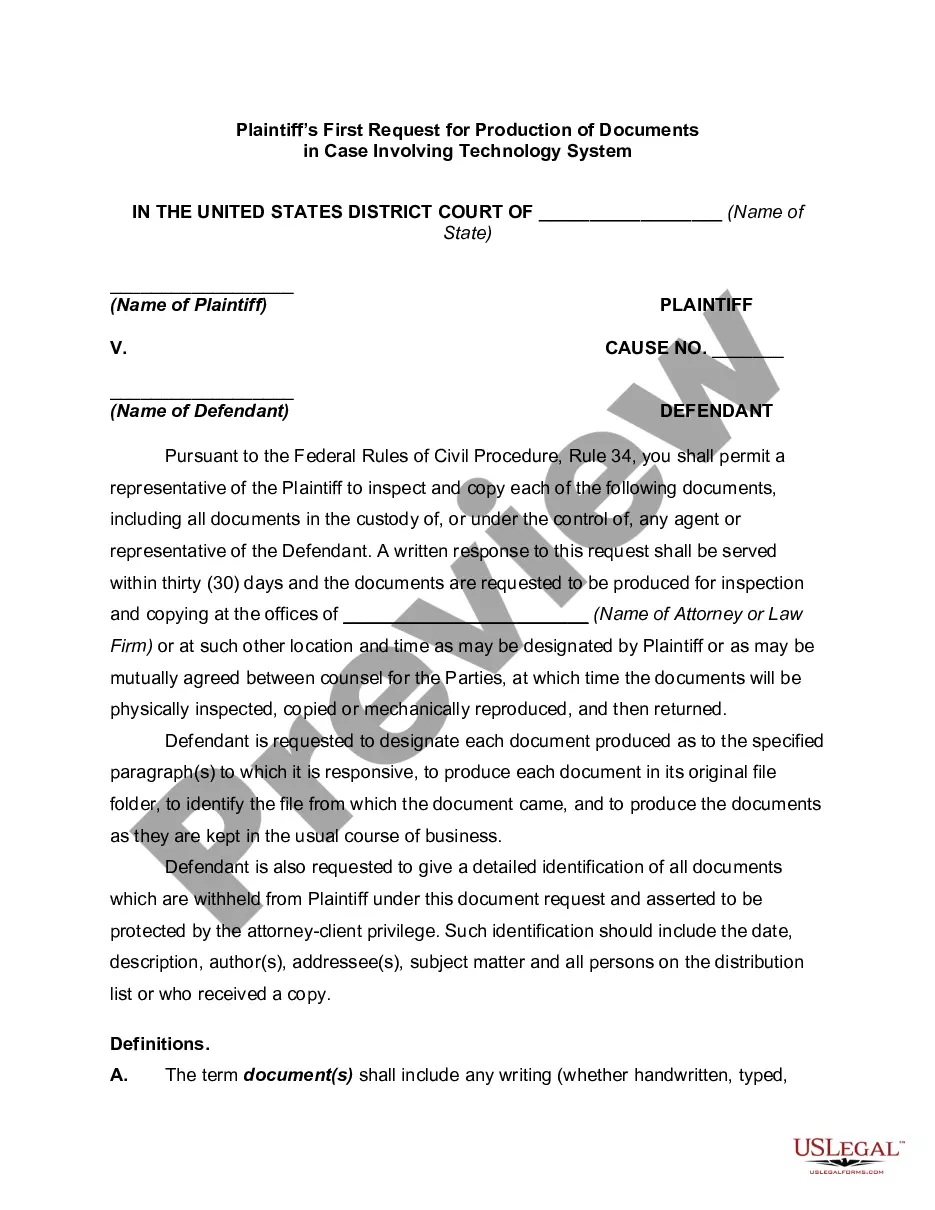
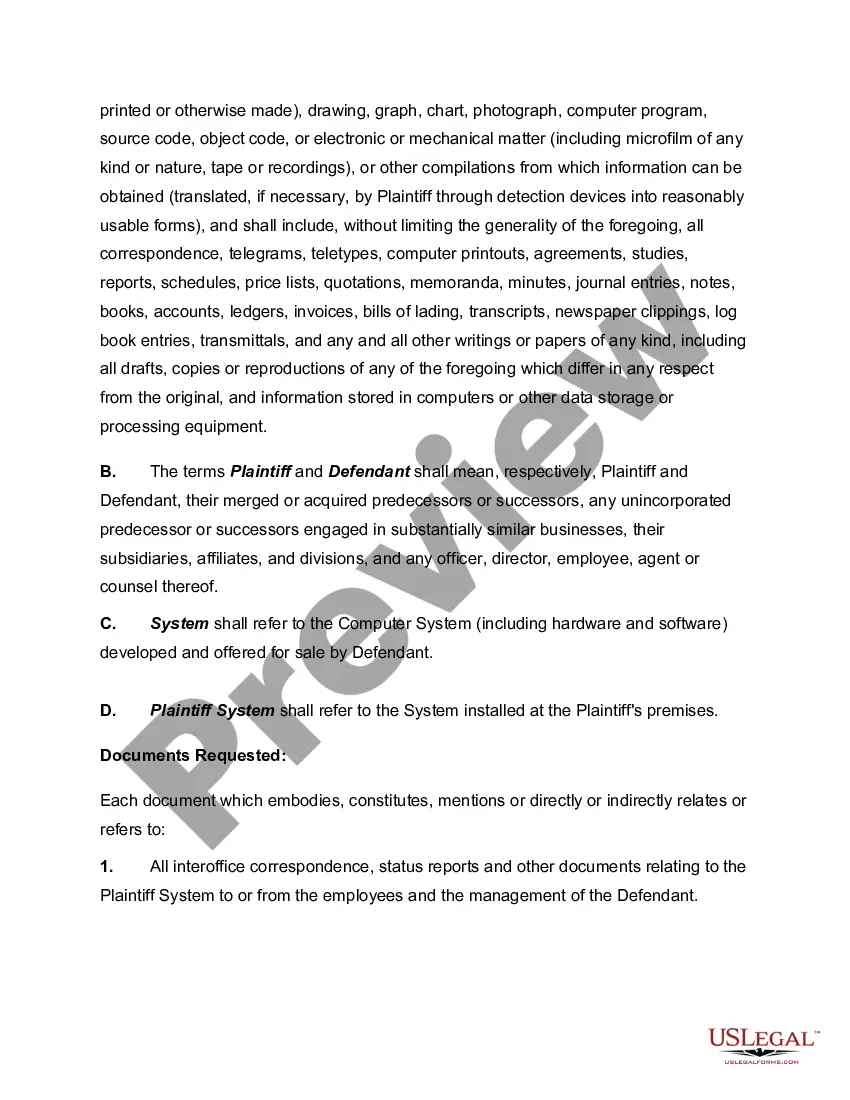
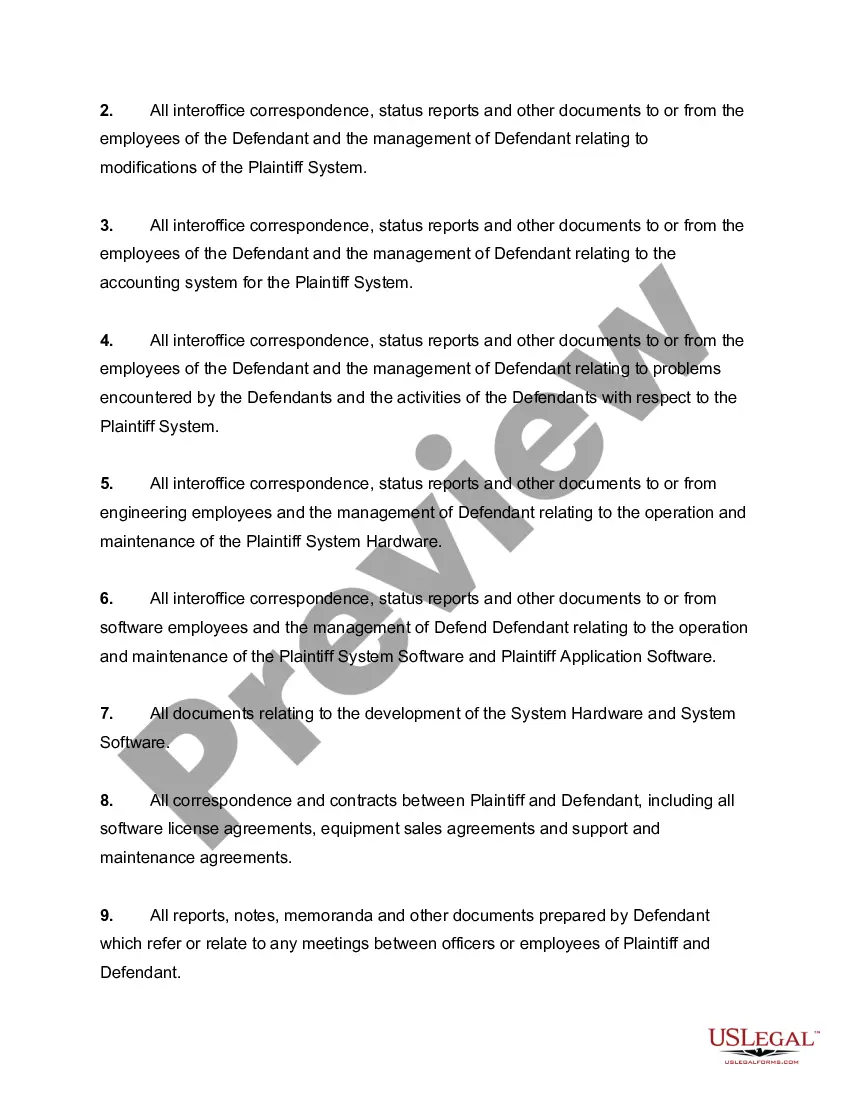
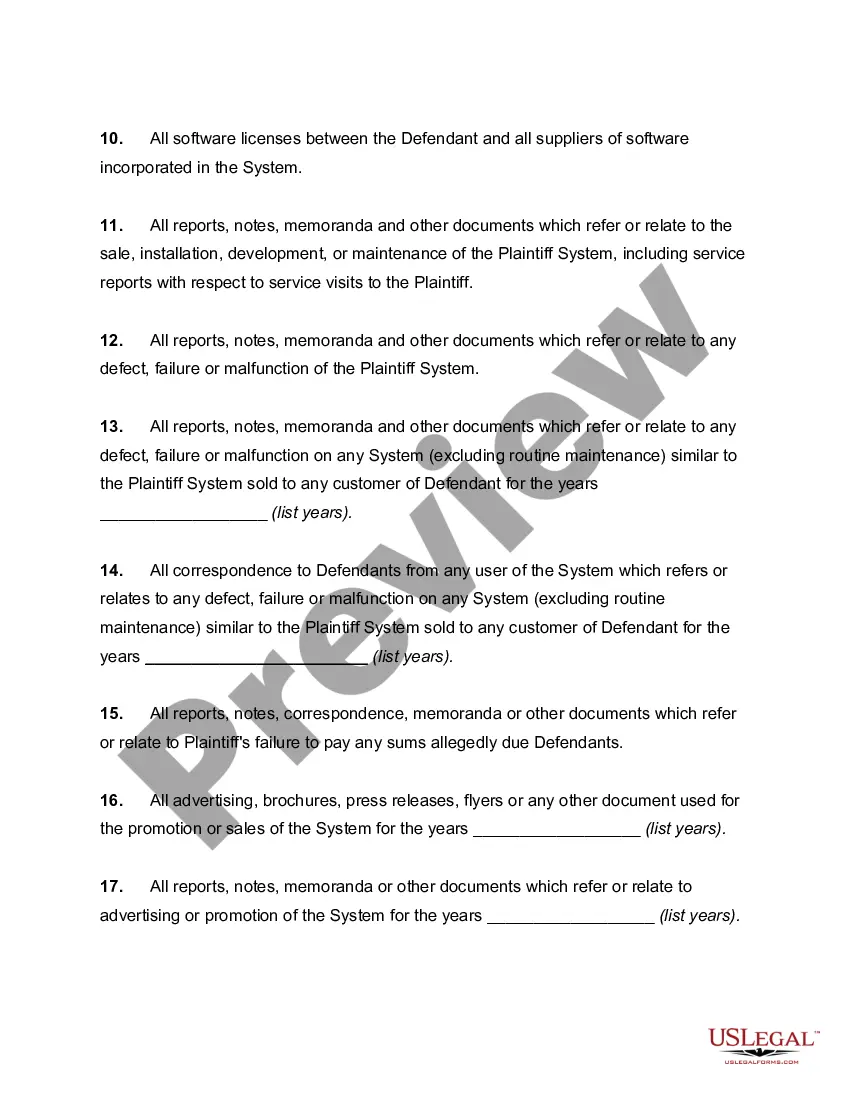
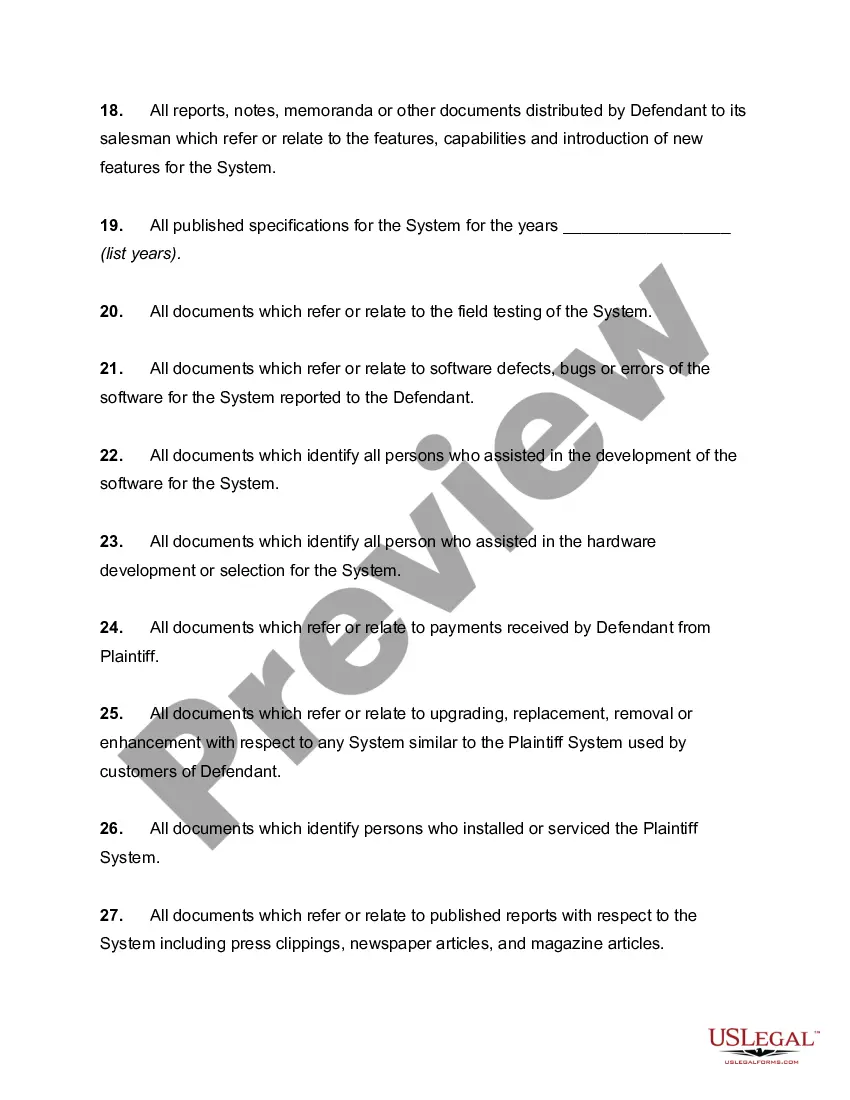
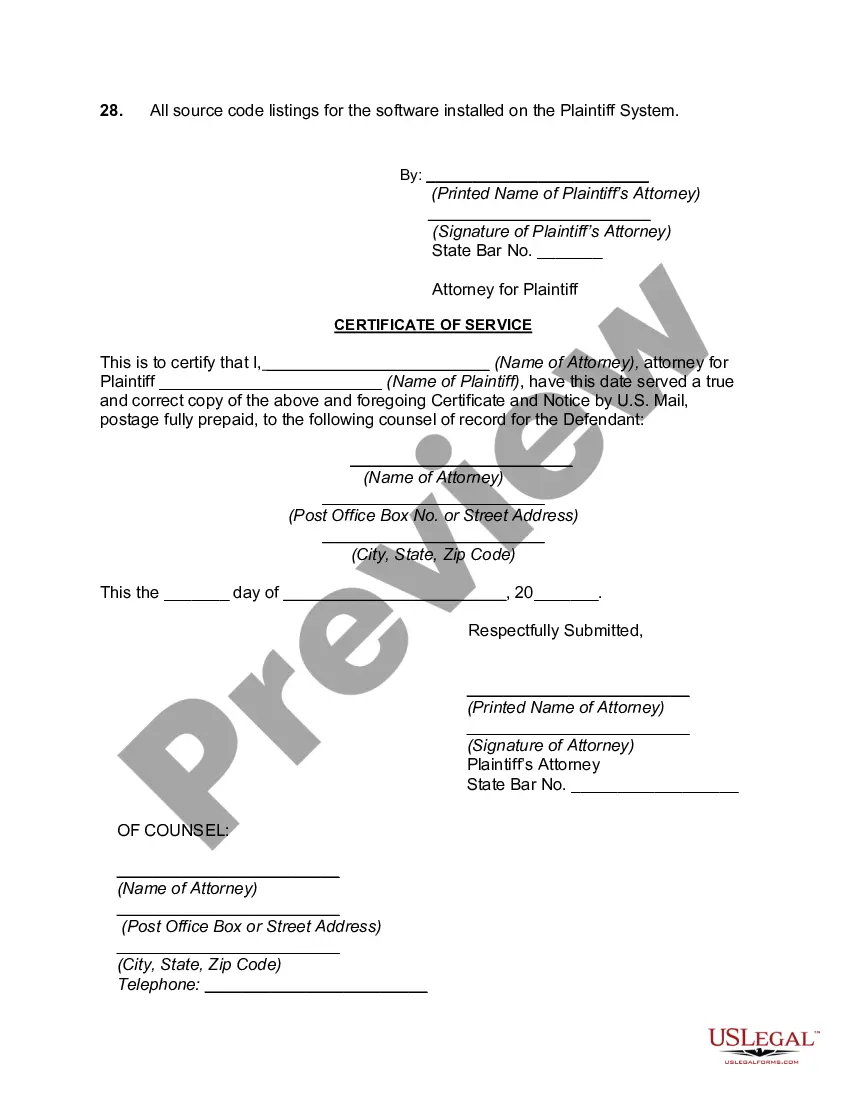
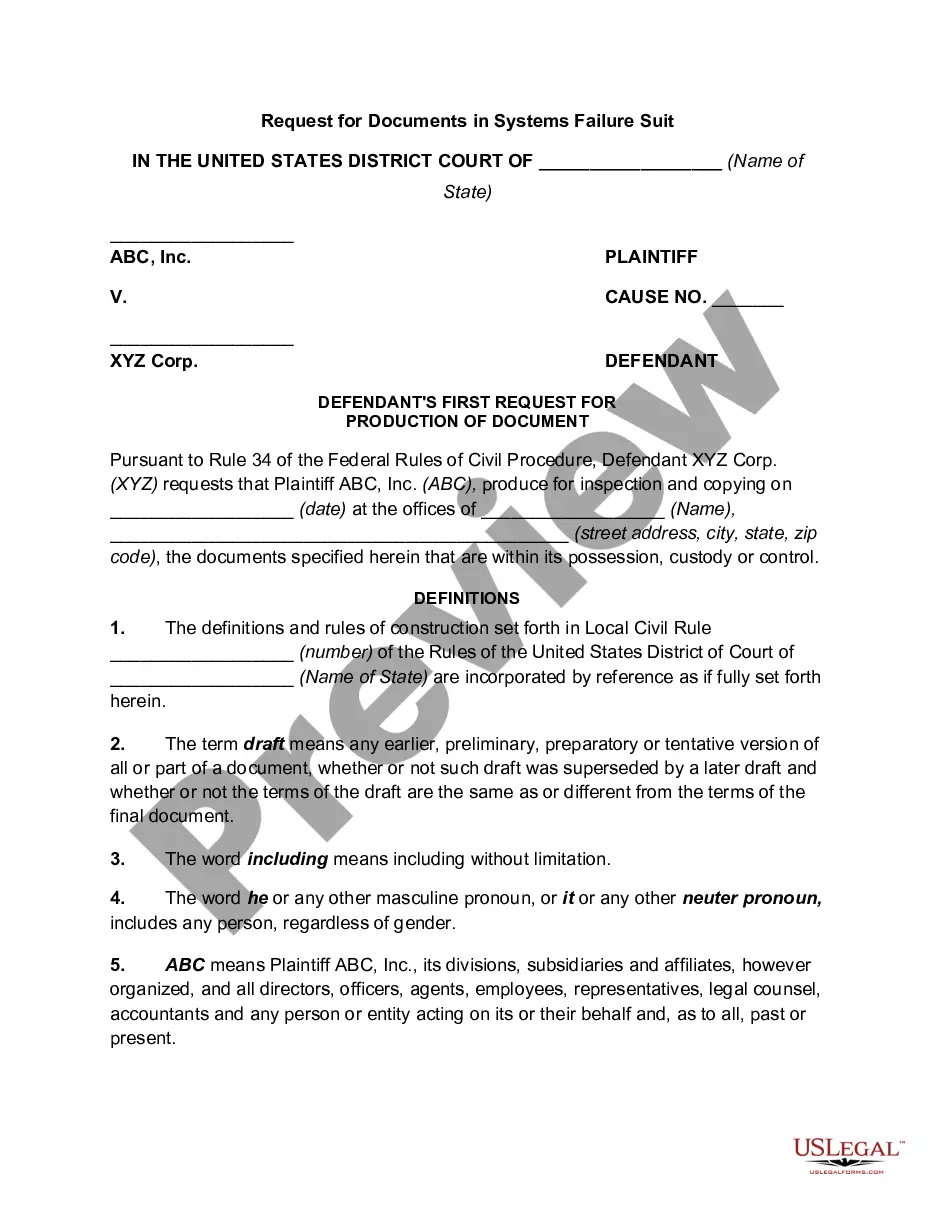
Michigan Plaintiff's First Request for Production of Documents in Case Involving Technology System
Description

Get your form ready online
Our built-in tools help you complete, sign, share, and store your documents in one place.
Make edits, fill in missing information, and update formatting in US Legal Forms—just like you would in MS Word.
Download a copy, print it, send it by email, or mail it via USPS—whatever works best for your next step.
Sign and collect signatures with our SignNow integration. Send to multiple recipients, set reminders, and more. Go Premium to unlock E-Sign.
If this form requires notarization, complete it online through a secure video call—no need to meet a notary in person or wait for an appointment.
We protect your documents and personal data by following strict security and privacy standards.

Make edits, fill in missing information, and update formatting in US Legal Forms—just like you would in MS Word.

Download a copy, print it, send it by email, or mail it via USPS—whatever works best for your next step.

Sign and collect signatures with our SignNow integration. Send to multiple recipients, set reminders, and more. Go Premium to unlock E-Sign.

If this form requires notarization, complete it online through a secure video call—no need to meet a notary in person or wait for an appointment.

We protect your documents and personal data by following strict security and privacy standards.
Looking for another form?


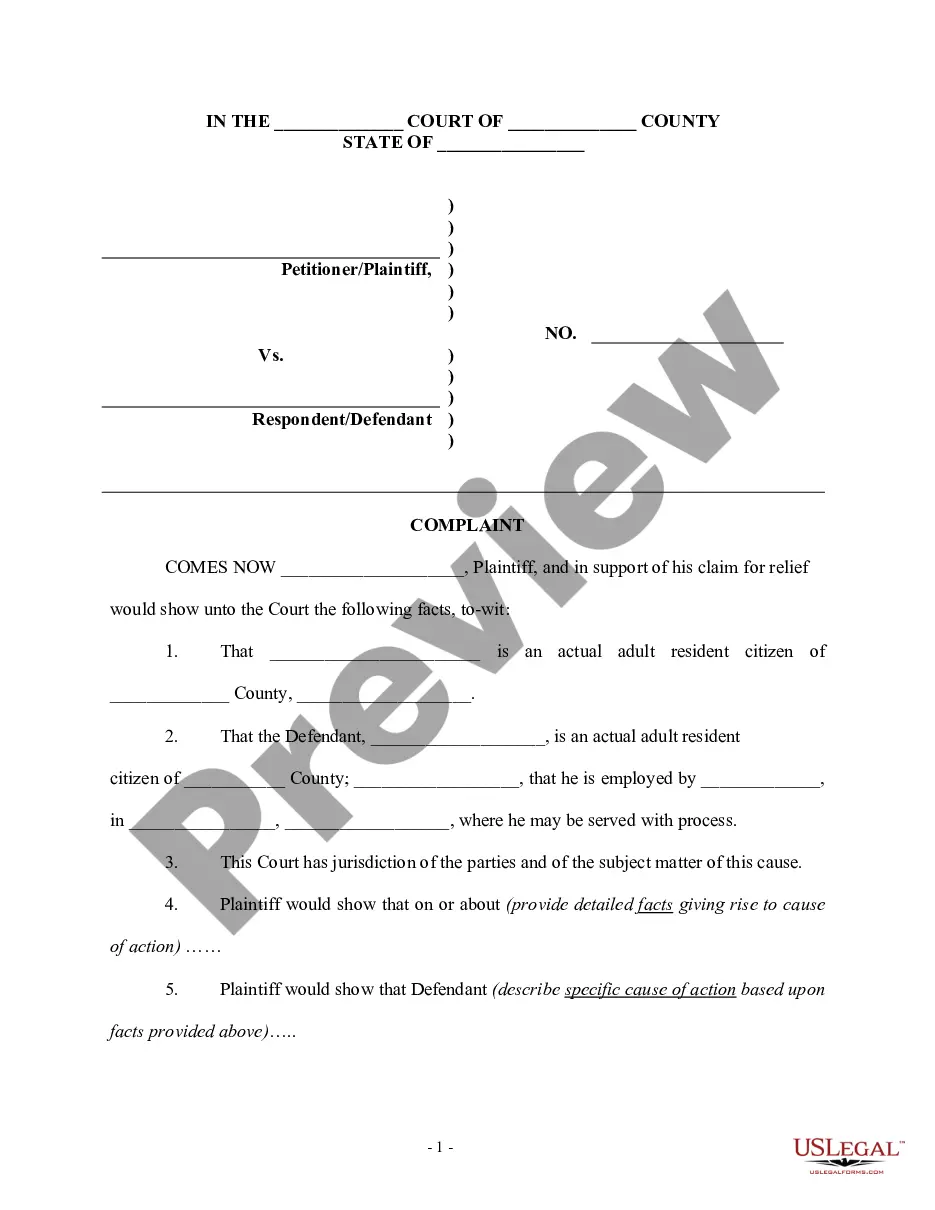
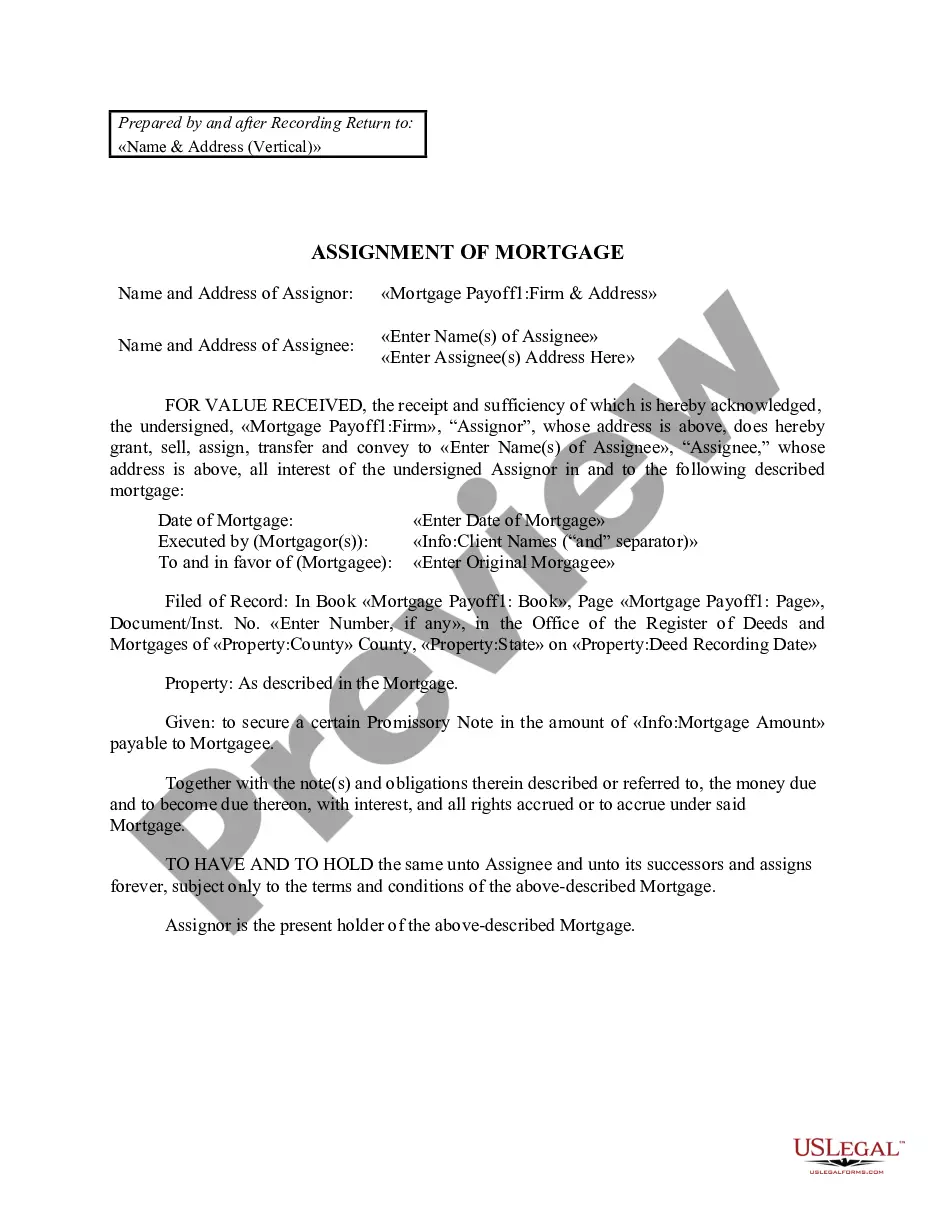
How to fill out Plaintiff's First Request For Production Of Documents In Case Involving Technology System?
You might spend hours online looking for the legal document template that meets both state and federal standards you require.
US Legal Forms provides numerous legal templates that can be reviewed by experts.
You can download or print the Michigan Plaintiff’s First Request for Production of Documents in a Case Involving Technology System through our service.
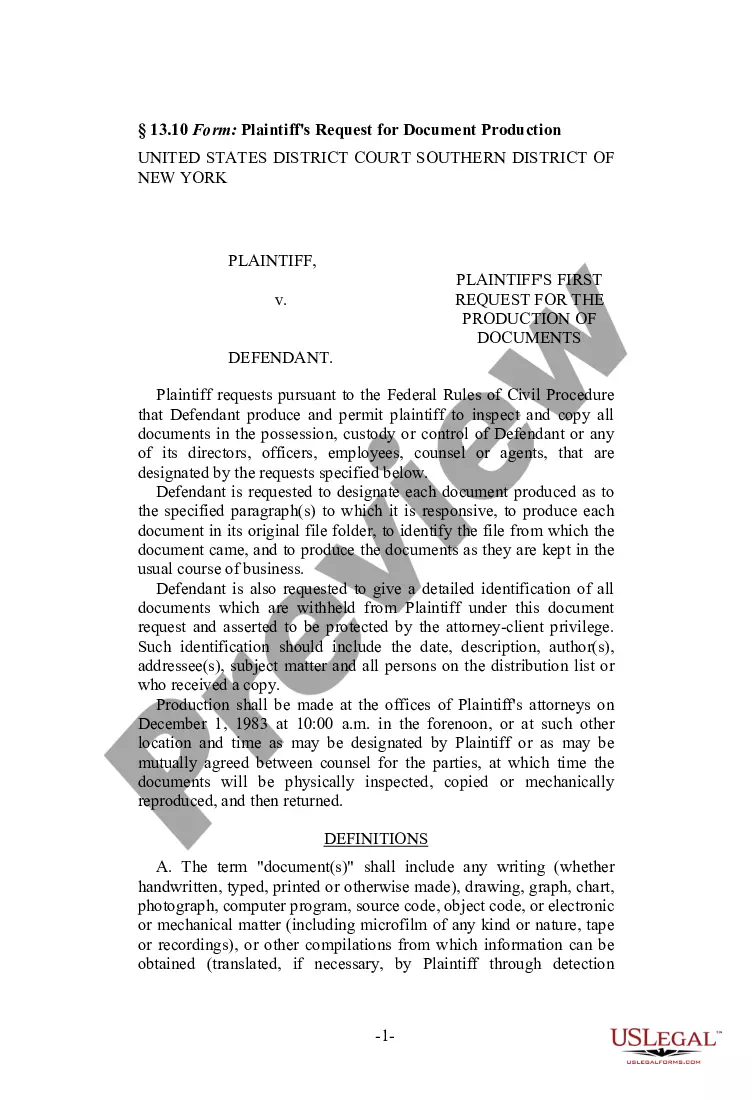
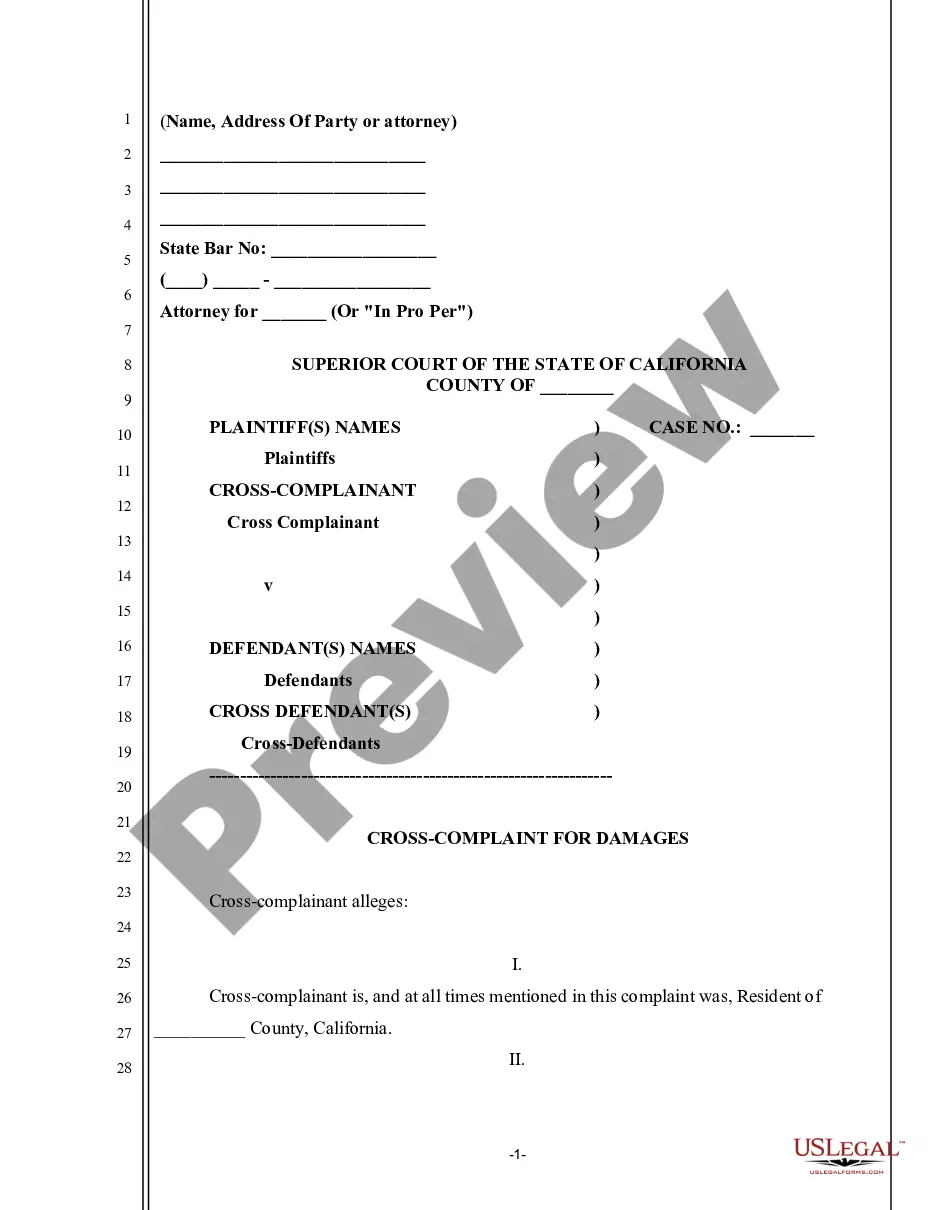
If available, utilize the Preview button to examine the document template also.
- If you already possess a US Legal Forms account, you can Log In and click on the Download button.
- Once done, you can complete, modify, print, or sign the Michigan Plaintiff’s First Request for Production of Documents in a Case Involving Technology System.
- Every legal document template you acquire is yours indefinitely.
- To obtain another copy of any purchased document, navigate to the My documents section and click the appropriate button.
- If you are visiting the US Legal Forms website for the first time, follow the simple instructions below.
- First, make sure you have selected the correct document template for the state/city of your choice.
- Review the form summary to confirm you have chosen the right form.
Form popularity
FAQ
Initial disclosures have been common in the federal court system for some time, but they have only been required in Michigan since January 1, 2020. Essentially, initial disclosures require each party to disclose to each other information they will rely on to prove their case.
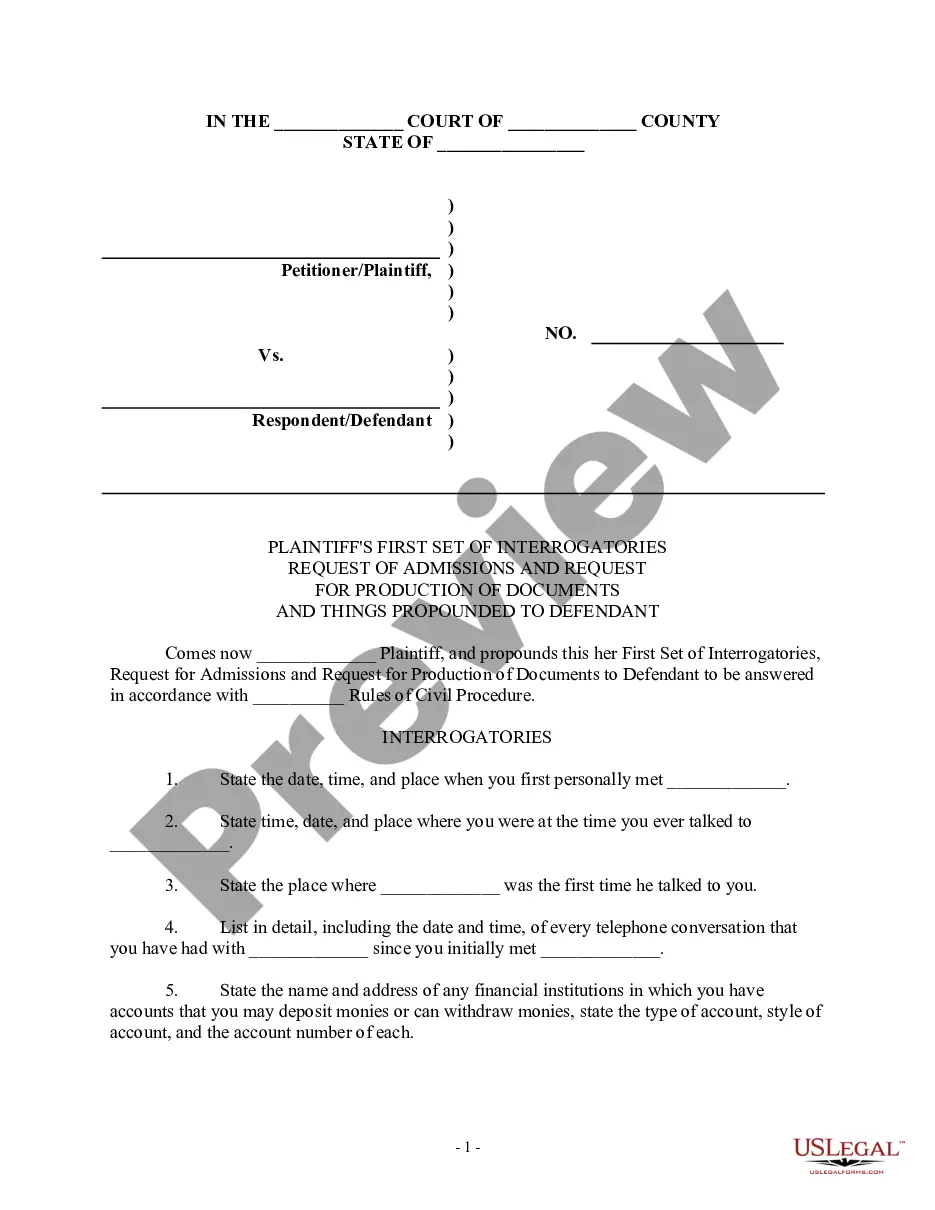
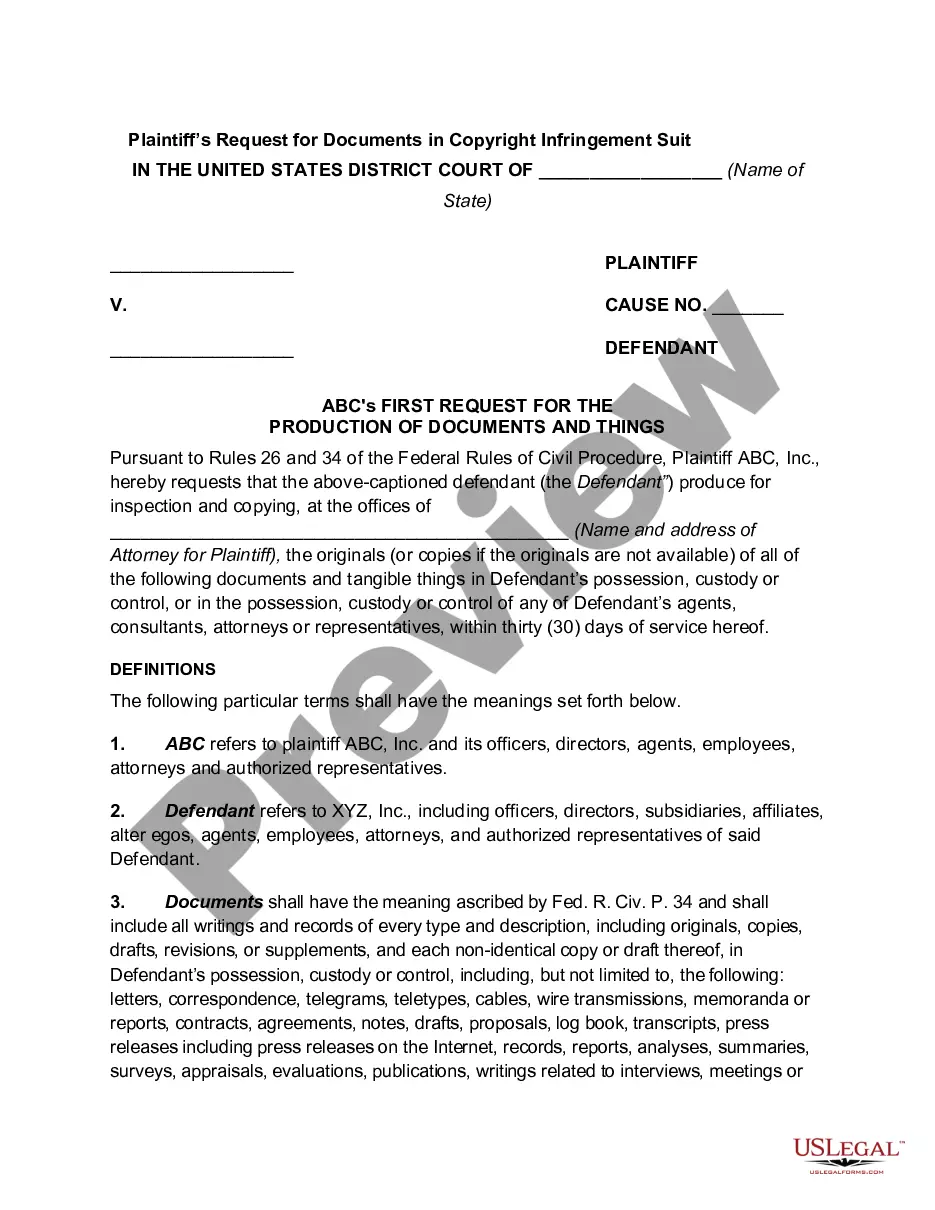
A request for production is a legal request for documents, electronically stored information, or other tangible items made in the course of litigation.
Initial Disclosures Will Be Required For instance, as to timing, Michigan's disclosures are automatically required unless a court order says otherwise. While federal rules do not require disclosures until after a Rule 26(f) conference, Michigan will require a plaintiff to serve them 14 days after the answer is filed.
If a request asks for a document, make a copy of the document; in your response, describe the document and say that a copy is attached; and attach a copy of the document to the responses you send back to the other side.
If the motion is based on the failure to serve answers, proof of service of the interrogatories must be filed with the motion. The motion must state that the movant has in good faith conferred or attempted to confer with the party not making the disclosure in an effort to secure the disclosure without court action.
The process of delivering, or making available for review, documents in response to a request for documents, such as a request for production and a subpoena. A request for documents may call for the production of paper (hard copy) documents and electronically stored information (ESI).
Your response to a request for production consists of two parts: One part is a written response to the requests, in which you state under penalty of perjury that you will produce the requested items; that you will not produce and why; or that you object to a request on legal grounds.
Request for Production of Documents: Overview A request for production (RFP) is a written discovery request that is used to obtain relevant, non-privileged documents, tangible things, or electronically stored information (ESI) from any party to a case (Fla. R. Civ. P. 1.350).
What Is a Request for Production of Documents? A request for production is a discovery device used to gain access to documents, electronic data, and physical items held by an opposing party in a legal matter. The aim is to gain insight into any relevant evidence that the opposing party holds.