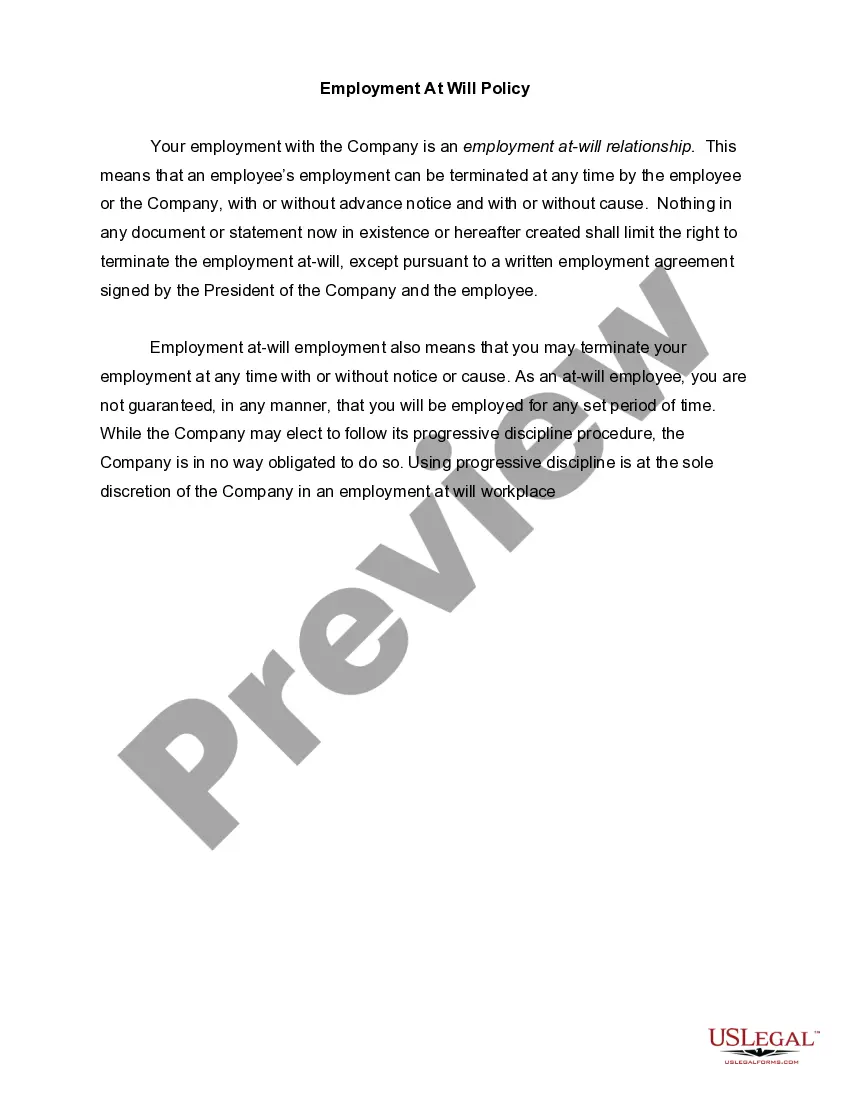
Michigan Employment At Will Policy
Description
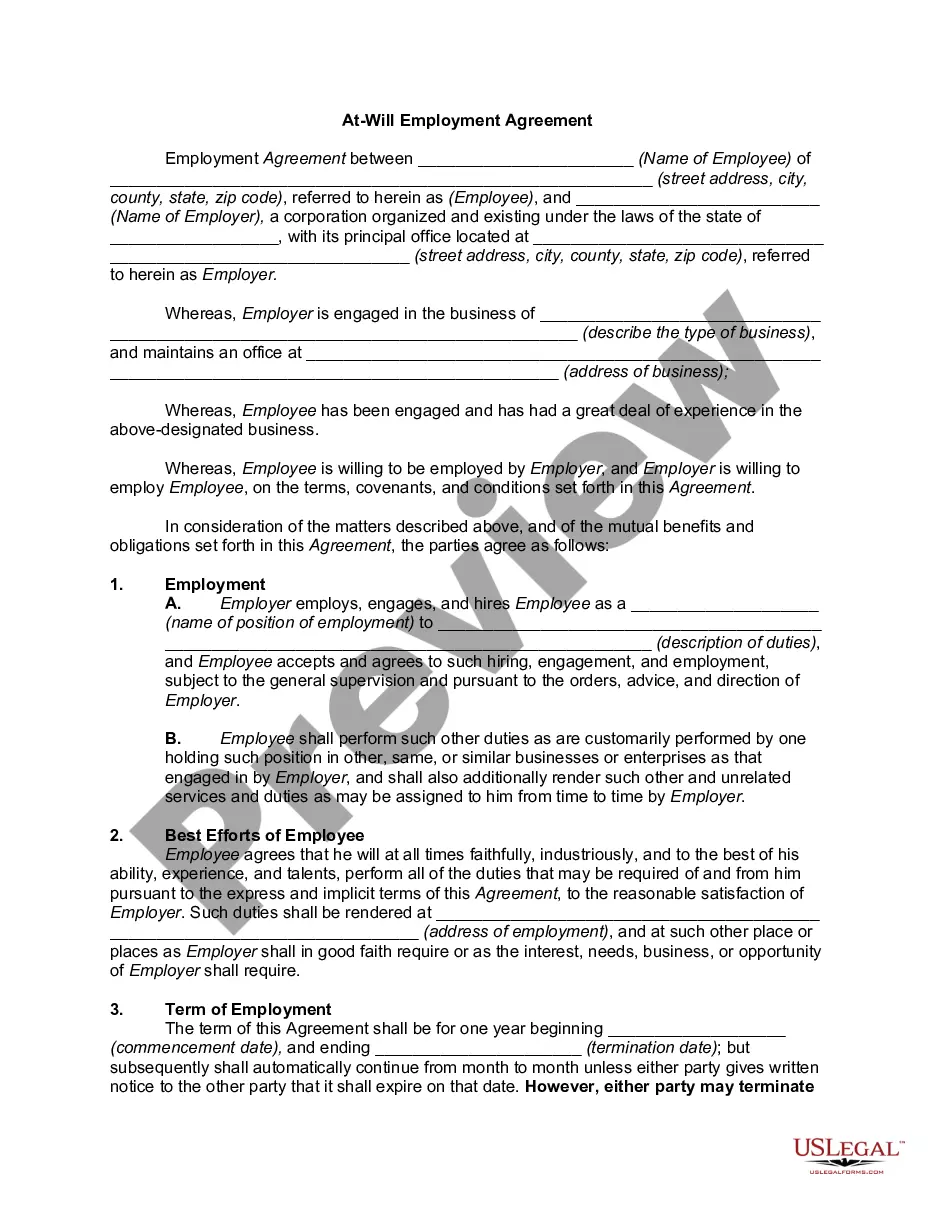
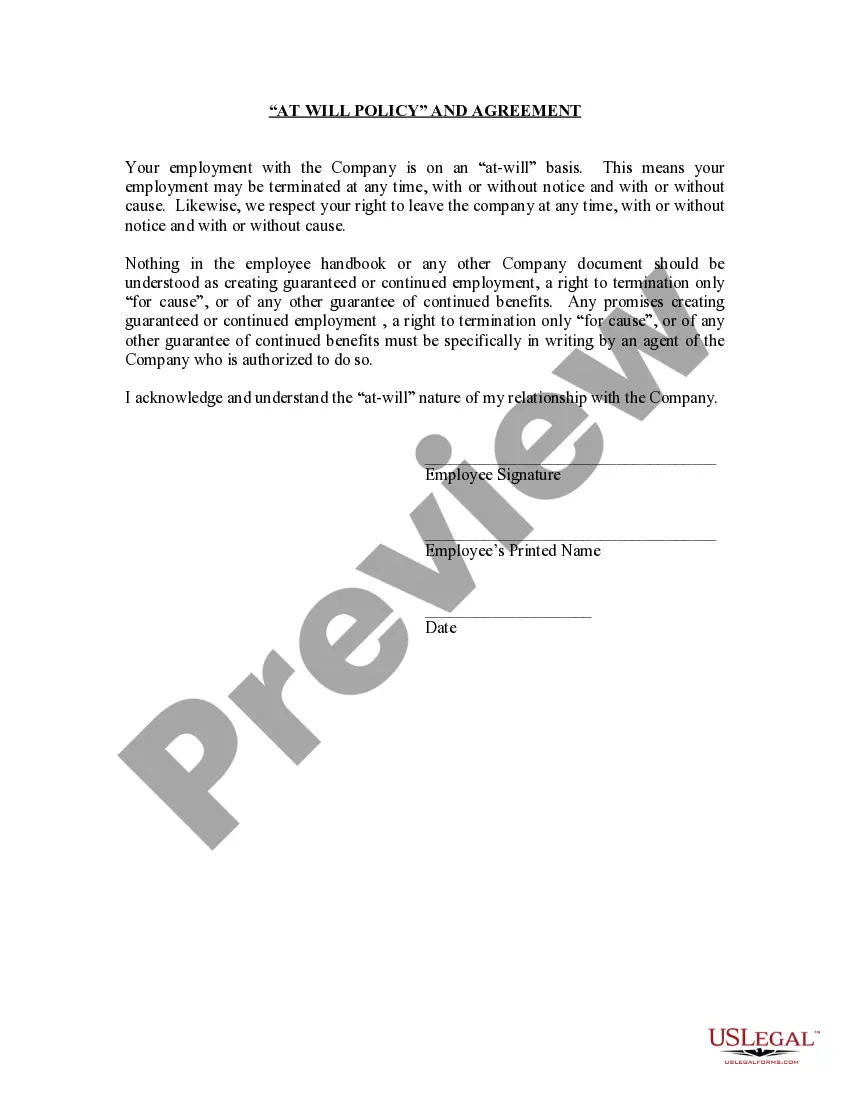
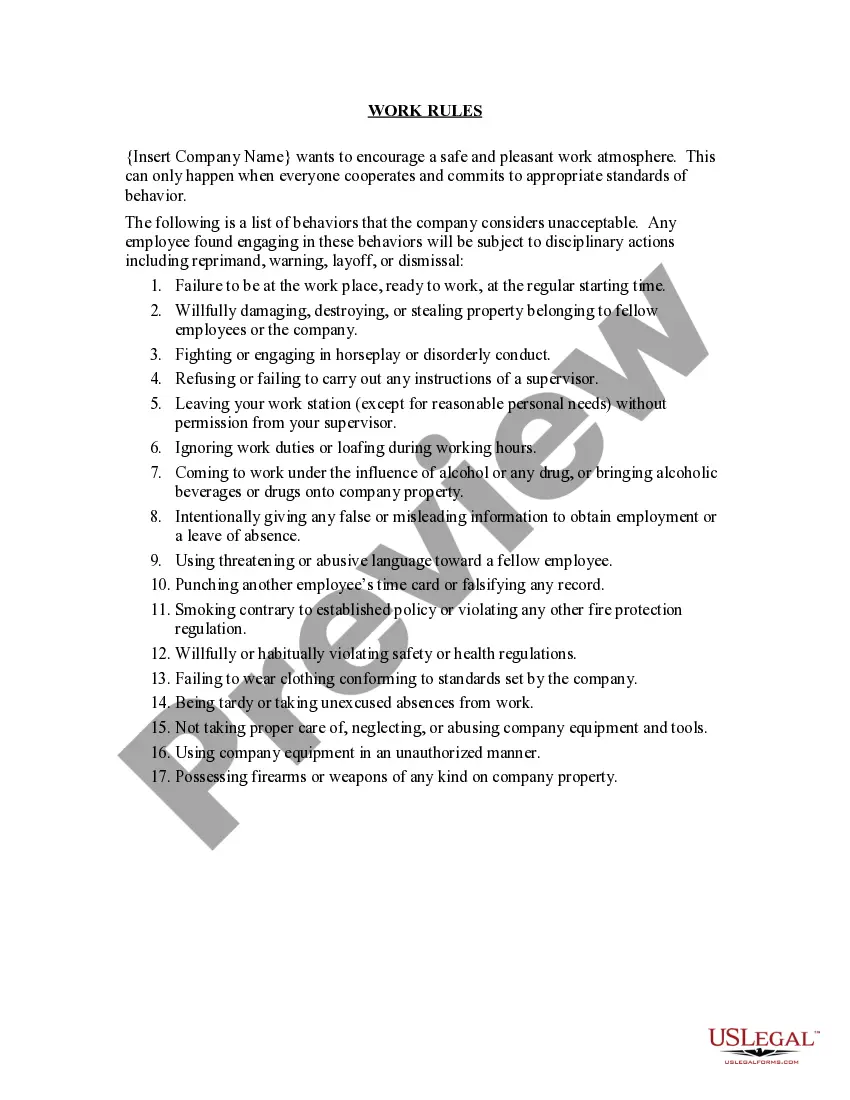
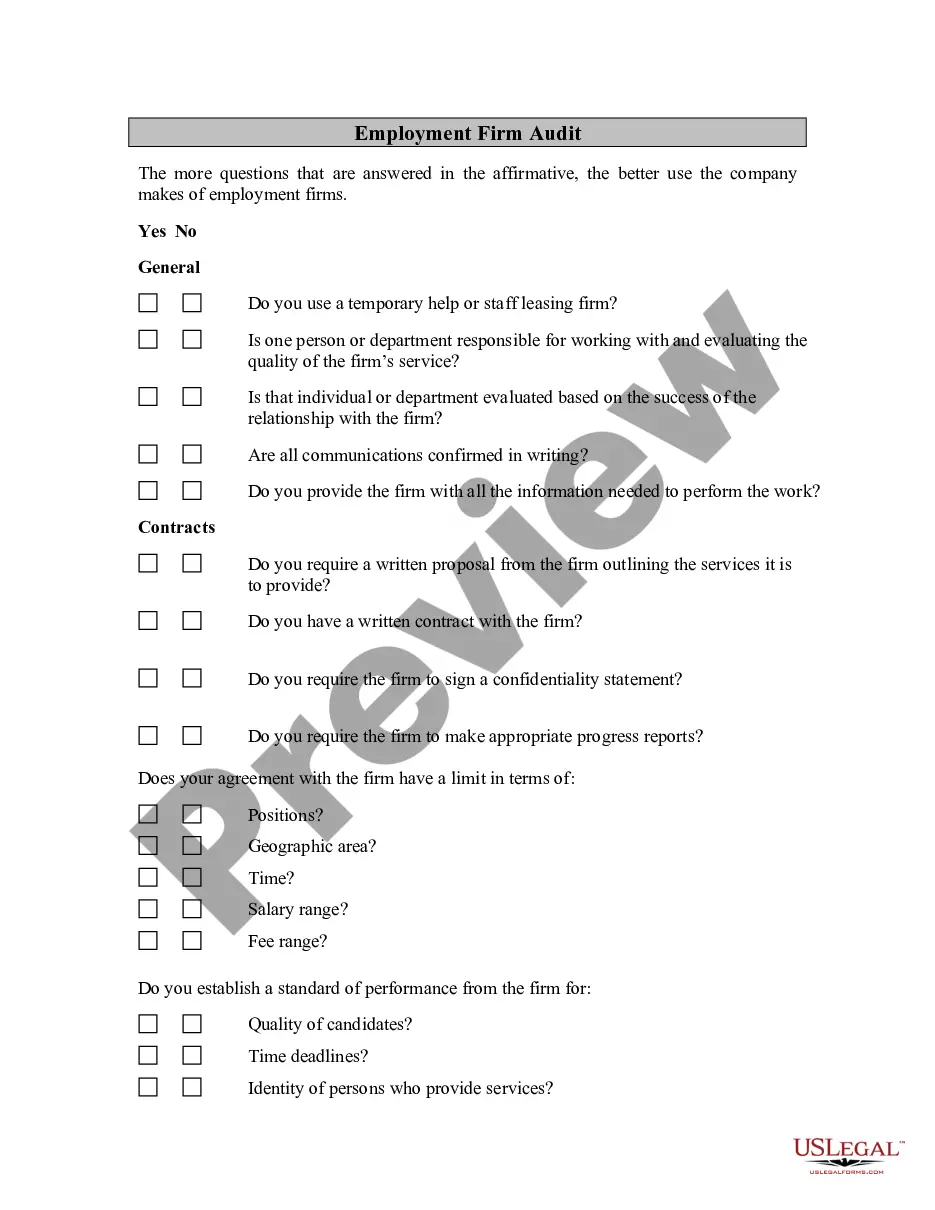
Get your form ready online
Our built-in tools help you complete, sign, share, and store your documents in one place.
Make edits, fill in missing information, and update formatting in US Legal Forms—just like you would in MS Word.
Download a copy, print it, send it by email, or mail it via USPS—whatever works best for your next step.
Sign and collect signatures with our SignNow integration. Send to multiple recipients, set reminders, and more. Go Premium to unlock E-Sign.
If this form requires notarization, complete it online through a secure video call—no need to meet a notary in person or wait for an appointment.
We protect your documents and personal data by following strict security and privacy standards.

Make edits, fill in missing information, and update formatting in US Legal Forms—just like you would in MS Word.

Download a copy, print it, send it by email, or mail it via USPS—whatever works best for your next step.

Sign and collect signatures with our SignNow integration. Send to multiple recipients, set reminders, and more. Go Premium to unlock E-Sign.

If this form requires notarization, complete it online through a secure video call—no need to meet a notary in person or wait for an appointment.

We protect your documents and personal data by following strict security and privacy standards.
Looking for another form?
How to fill out Employment At Will Policy?
You can spend numerous hours online searching for the authorized document format that meets the state and federal requirements you need.
US Legal Forms provides thousands of legal templates that are reviewed by experts.
It is easy to obtain or create the Michigan Employment At Will Policy from your service.
If available, utilize the Review button to go through the document format as well. If you wish to find another version of the template, use the Search section to find the format that meets your needs and requirements.
- If you already have a US Legal Forms account, you can Log In and click the Download button.
- Then, you can complete, modify, print, or sign the Michigan Employment At Will Policy.
- Every legal document template you receive is yours forever.
- To get another copy of any purchased template, go to the My documents tab and click the corresponding button.
- If you are using the US Legal Forms website for the first time, follow the simple steps below.
- First, ensure that you have chosen the correct document format for your state/city of preference.
- Check the template description to ensure you have selected the right form.
Form popularity
FAQ
Yes, you can quit a job without notice in Michigan due to the Michigan Employment At Will Policy. This policy allows employees or employers to terminate employment at any time, for any reason, without the need for advance notice. However, while you have the legal right to leave without notice, it’s wise to consider the potential impact on your professional relationships and future references. If uncertain, using platforms like US Legal Forms can help you understand your rights and duties concerning your employment status in Michigan.
Yes, Michigan remains an at-will state in 2025. This means that employers in Michigan can terminate employees for any reason, as long as it is not illegal, and employees also have the freedom to leave their jobs without providing notice. Understanding the Michigan Employment At Will Policy is essential for both workers and employers to navigate their rights and responsibilities. For more detailed information, consider exploring resources like uslegalforms, which can help clarify this policy and its implications.
Legal limitations of employment at-will prevent wrongful terminations and protect employees from unfair biases. For example, employers cannot dismiss employees for discriminatory reasons or in retaliation for asserting their rights. Recognizing these limitations is crucial under the Michigan Employment At Will Policy, as they ensure a fair work environment. Accessing comprehensive legal resources through US Legal Forms can further aid in understanding these limitations.
The three main exceptions to the employment at-will doctrine include terminations based on contractual relations, discrimination, and retaliation. These exceptions protect employees from unjust dismissal and uphold fundamental rights in the workplace. Understanding these principles under the Michigan Employment At Will Policy is essential for both employers and employees. Utilizing platforms like US Legal Forms can provide deeper insights into these exceptions.
Being an at-will employment state like Michigan means that employees serve at the discretion of their employers, who can terminate them without cause. This doctrine encourages a straightforward employment relationship, yet it can lead to uncertainty for workers. Familiarizing yourself with the nuances of the Michigan Employment At Will Policy can empower you in your employment situation. Tools from US Legal Forms can assist you in navigating these complexities.
Common law rule exceptions to the at-will employment doctrine in Michigan provide additional safeguards for workers. These exceptions often relate to implied contracts, where an employee has expectations based on company policies or verbal agreements. This aspect of the Michigan Employment At Will Policy can complicate the employment landscape. Therefore, consulting legal resources or guidance from US Legal Forms can help clarify your situation.
While Michigan follows the at-will employment doctrine, there are important exceptions that protect employees. For example, terminations based on discrimination, retaliation, or any violation of public policy are not permissible. Understanding these exceptions under the Michigan Employment At Will Policy is vital for employees who may feel wrongfully terminated. Resources available at US Legal Forms can help clarify these exceptions further.
The at-will doctrine in Michigan allows employers to terminate employees at any time without cause, as long as the termination does not violate specific laws. This policy enhances flexibility in the workplace, reflecting the nature of employment relationships in the state. However, it is crucial for both employers and employees to understand their rights under the Michigan Employment At Will Policy. Being aware of these rights can prevent misunderstandings and ensure fair treatment.
The three major exceptions to the employment at-will doctrine include public policy exceptions, implied contract exceptions, and covenant of good faith and fair dealing exceptions. Public policy exceptions protect employees from termination for reasons that violate laws, such as discrimination. Implied contract exceptions arise if there is an understanding that employment will not be terminated without cause. Lastly, the covenant of good faith ensures that dismissals are not conducted in an unfair manner. Familiarizing oneself with these exceptions is important for anyone navigating employment in Michigan.
The most common exception to at-will employment involves violations of public policy. This means that employers cannot terminate employees for reasons that violate state or federal laws, such as discrimination or whistleblowing. Understanding this exception is vital for both employers and employees to ensure fair practices in accordance with the Michigan Employment At Will Policy. Legal advice may be beneficial in navigating these exceptions.