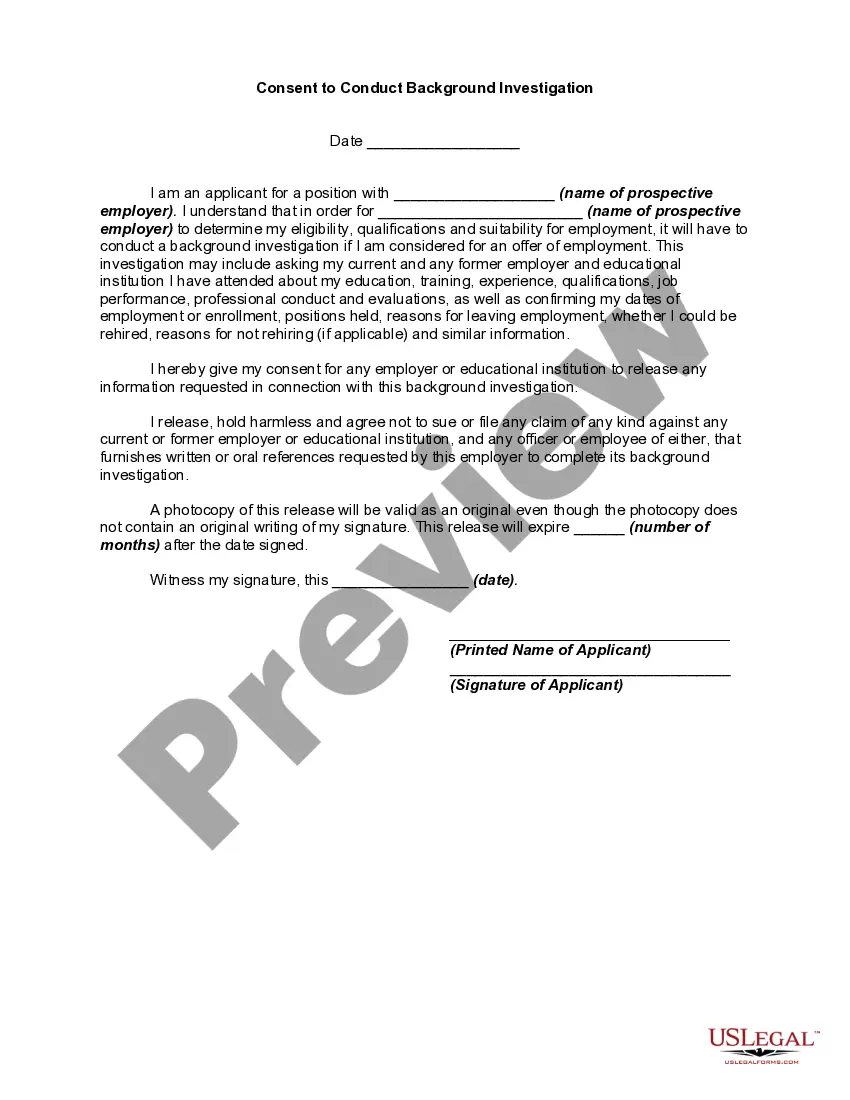
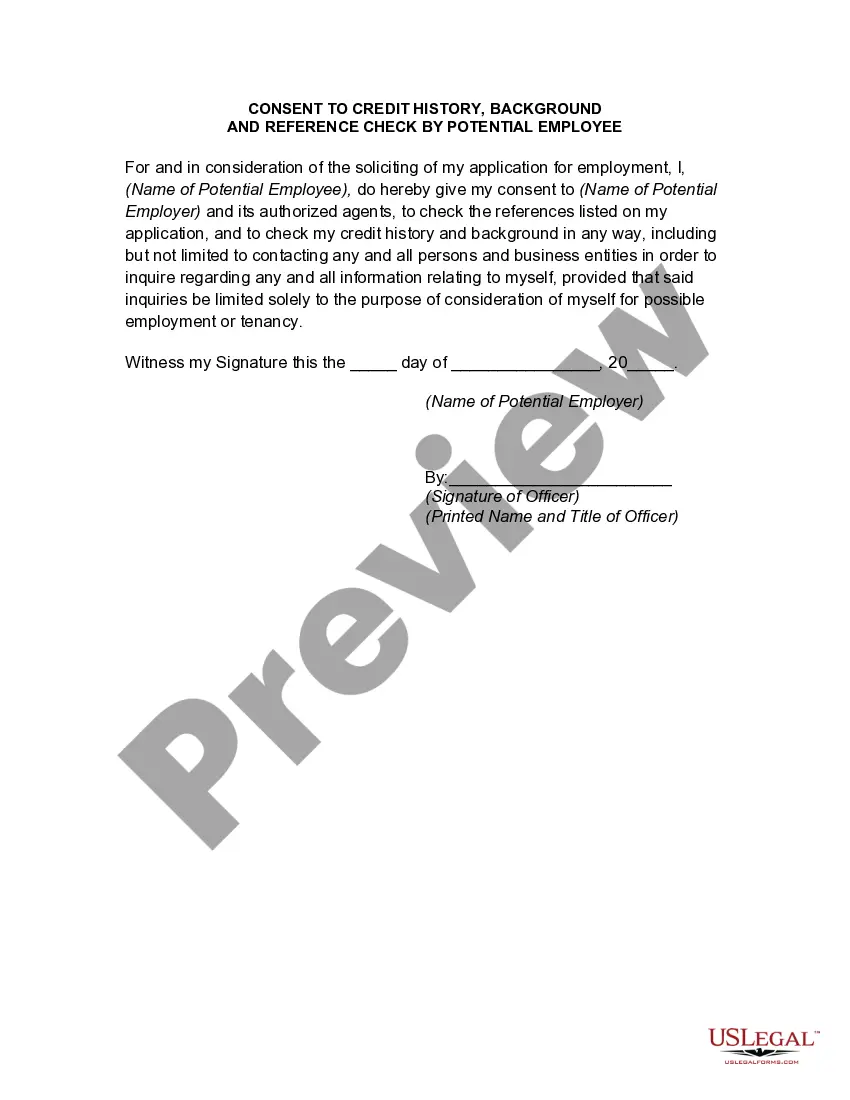
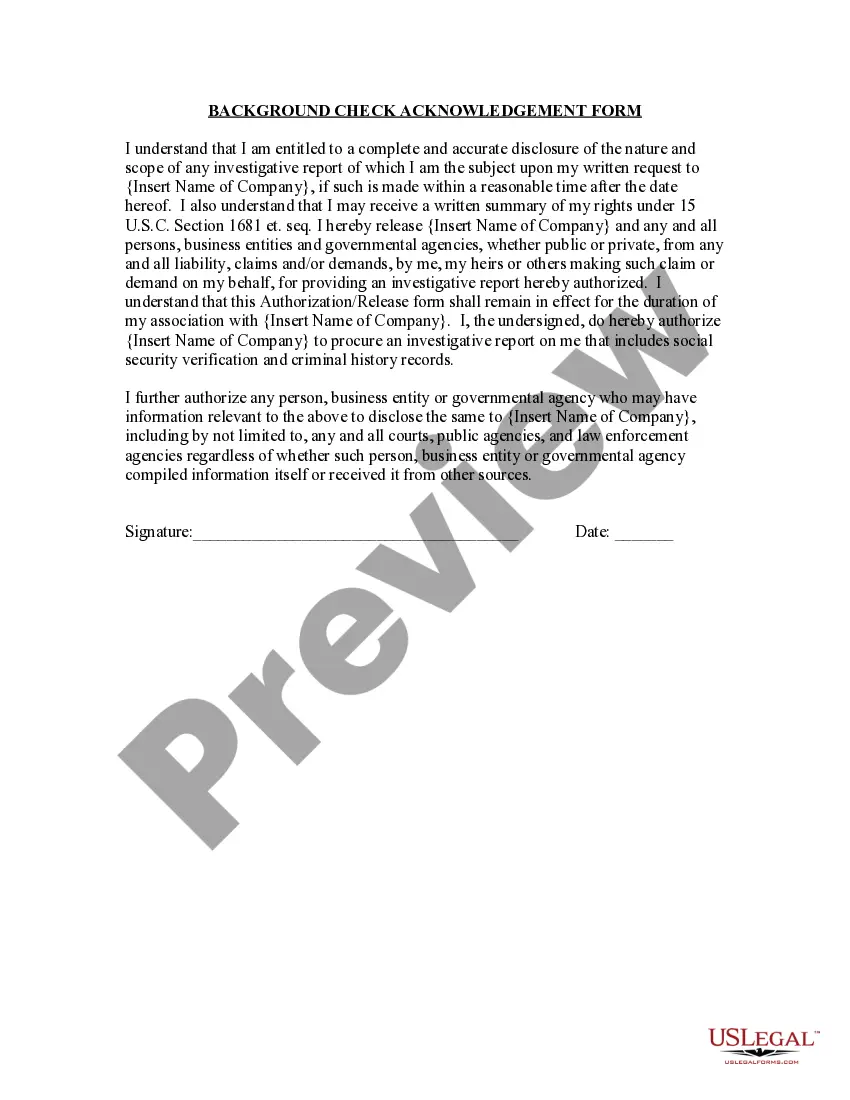
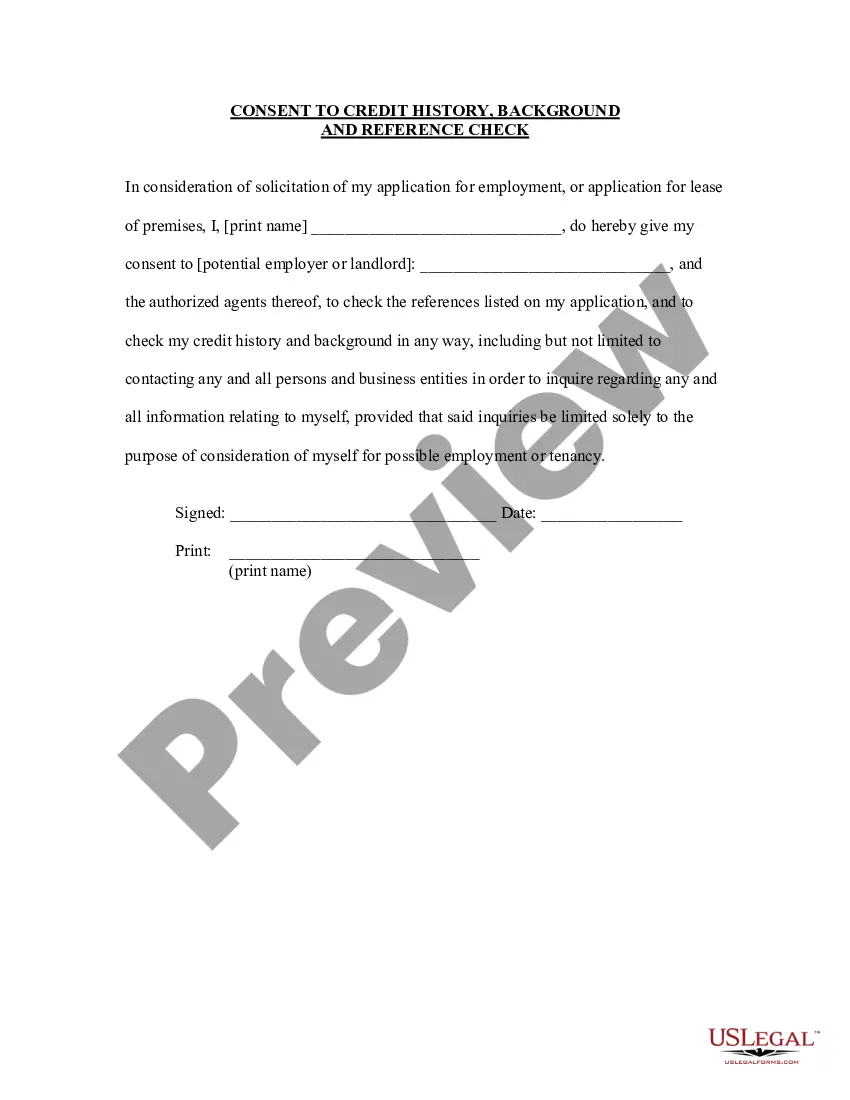
Michigan Consent to Conduct Background Investigation
Description
Get your form ready online
Our built-in tools help you complete, sign, share, and store your documents in one place.
Make edits, fill in missing information, and update formatting in US Legal Forms—just like you would in MS Word.
Download a copy, print it, send it by email, or mail it via USPS—whatever works best for your next step.
Sign and collect signatures with our SignNow integration. Send to multiple recipients, set reminders, and more. Go Premium to unlock E-Sign.
If this form requires notarization, complete it online through a secure video call—no need to meet a notary in person or wait for an appointment.
We protect your documents and personal data by following strict security and privacy standards.

Make edits, fill in missing information, and update formatting in US Legal Forms—just like you would in MS Word.

Download a copy, print it, send it by email, or mail it via USPS—whatever works best for your next step.

Sign and collect signatures with our SignNow integration. Send to multiple recipients, set reminders, and more. Go Premium to unlock E-Sign.

If this form requires notarization, complete it online through a secure video call—no need to meet a notary in person or wait for an appointment.

We protect your documents and personal data by following strict security and privacy standards.
Looking for another form?
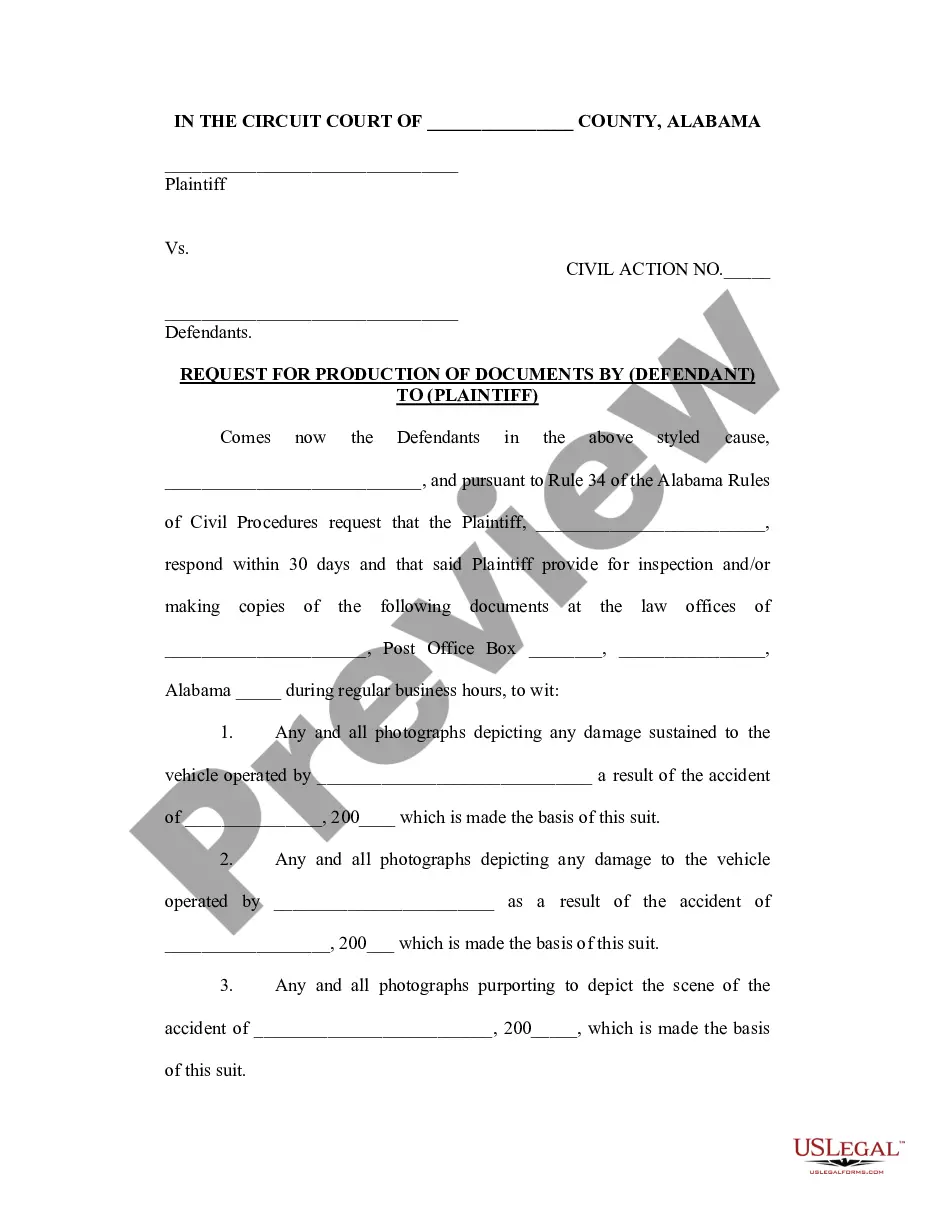
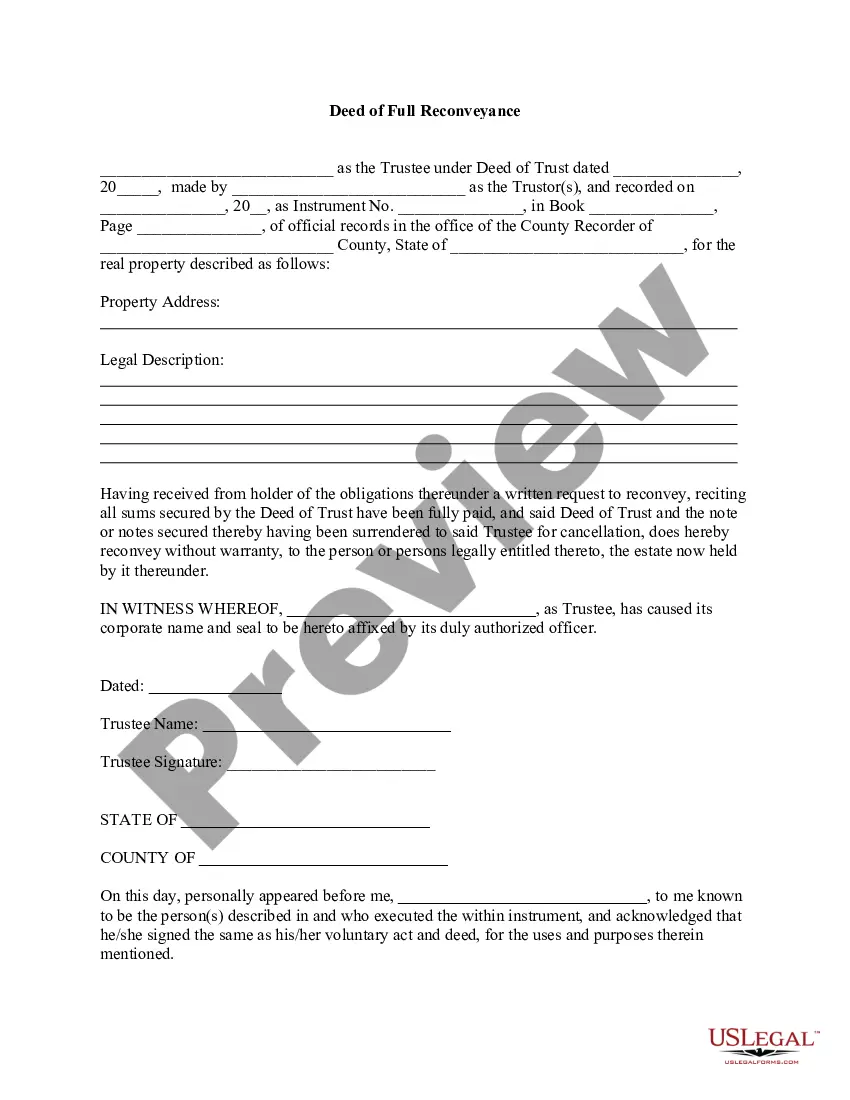
How to fill out Consent To Conduct Background Investigation?
Selecting the appropriate official document template can be quite challenging.
Clearly, there are numerous formats available online, but how can you find the correct type you require.
Utilize the US Legal Forms website. The service provides a vast array of templates, including the Michigan Consent to Conduct Background Investigation, which can serve both business and personal needs.
You can review the form using the Review button and read the form description to confirm it is the right one for you.
- All forms are reviewed by professionals and comply with state and federal regulations.
- If you are already registered, Log In to your account and then click the Download button to acquire the Michigan Consent to Conduct Background Investigation.
- Use your account to browse the legal documents you have previously purchased.
- Go to the My documents section of your account to get another copy of the document you need.
- If you are a new user of US Legal Forms, follow these simple steps.
- First, ensure you have selected the correct type for your city/region.
Form popularity
FAQ
You write a consent letter to grant permission for a background check to take place. This letter outlines what specific information can be accessed and ensures that all parties understand their rights. Using the Michigan Consent to Conduct Background Investigation as a guide, you can effectively communicate your approval and facilitate a smooth investigation process.
Deciding to allow a background check to contact your current employer depends on your situation. If you feel comfortable and trust that it won't jeopardize your current job, giving permission can demonstrate honesty and transparency. However, if you have concerns, it’s essential to discuss this upfront in the Michigan Consent to Conduct Background Investigation to protect your interests.
Michigan's background check law mandates that employers obtain consent before conducting a background investigation. This law ensures that individuals have control over their personal information and the ability to review what is shared during the process. Understanding these laws is crucial when navigating the Michigan Consent to Conduct Background Investigation, fostering a sense of security and trust between employers and candidates.
A background check letter is a document that either requests or gives consent for a background investigation. This letter outlines what information can be reviewed, often in compliance with laws governing such checks. In Michigan, this can be a key component of the Michigan Consent to Conduct Background Investigation, ensuring all parties are informed of their rights and responsibilities.
When writing an explanation letter for a background check, start by introducing yourself and clearly stating the purpose of the letter. Include any relevant details about your history that may need clarification, while being honest and straightforward. This letter can serve as part of the Michigan Consent to Conduct Background Investigation process, helping you address potential concerns upfront and demonstrate your transparency.
Yes, employers in Michigan can legally ask about your criminal history during the job application process. However, they must follow specific regulations that govern when and how they can inquire about this information. It is essential for job seekers to prepare for these inquiries and understand their rights under the Michigan Consent to Conduct Background Investigation. Ensuring you are informed will help you present your best self to potential employers and manage the impact of your history effectively.
In Michigan, you generally do not have to disclose a felony after seven years if it is not a felony requiring registration or if it has been expunged. However, you must be truthful about your record if asked by an employer since failing to disclose can lead to employment issues down the line. Knowledge of this rule enables individuals to make informed choices during their job application processes. Understanding the Michigan Consent to Conduct Background Investigation is key to navigating these disclosure requirements efficiently.
Yes, generally, a felony can appear on a background check for more than ten years in Michigan if it has not been expunged. Employers conducting background checks often review criminal records that are not time-limited unless official expungement has taken place. Understanding the implications of your criminal history is crucial, especially when you know about the Michigan Consent to Conduct Background Investigation. You can take proactive steps to manage your record by exploring expungement options.
The seven-year rule in Michigan generally refers to the time frame after which certain criminal charges may not be considered when evaluating a person's background. This timeframe is particularly relevant for job seekers as employers often rely on this duration when assessing applicants' eligibility. It's important to note that this rule does not erase the record; it simply limits how long certain offenses can impact employment decisions. Therefore, understanding the Michigan Consent to Conduct Background Investigation helps clarify how this timeframe affects you.
In Michigan, felonies do not automatically disappear after seven years. However, individuals may apply for expungement, which can remove certain criminal offenses from their record after waiting for this period. It is vital to understand that not all felonies are eligible for expungement, and specific criteria must be met. By knowing these regulations, you can navigate your criminal history more effectively in relation to the Michigan Consent to Conduct Background Investigation.