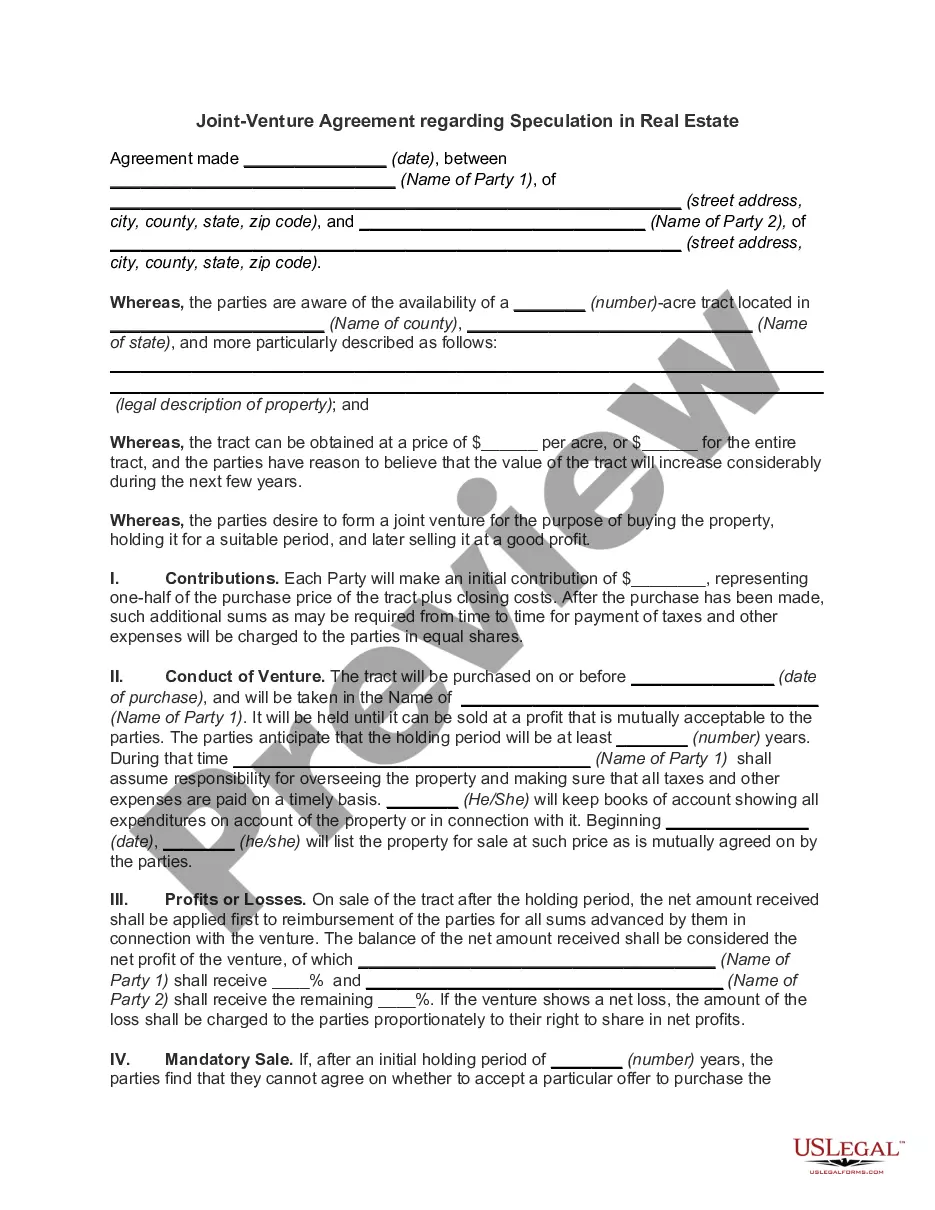
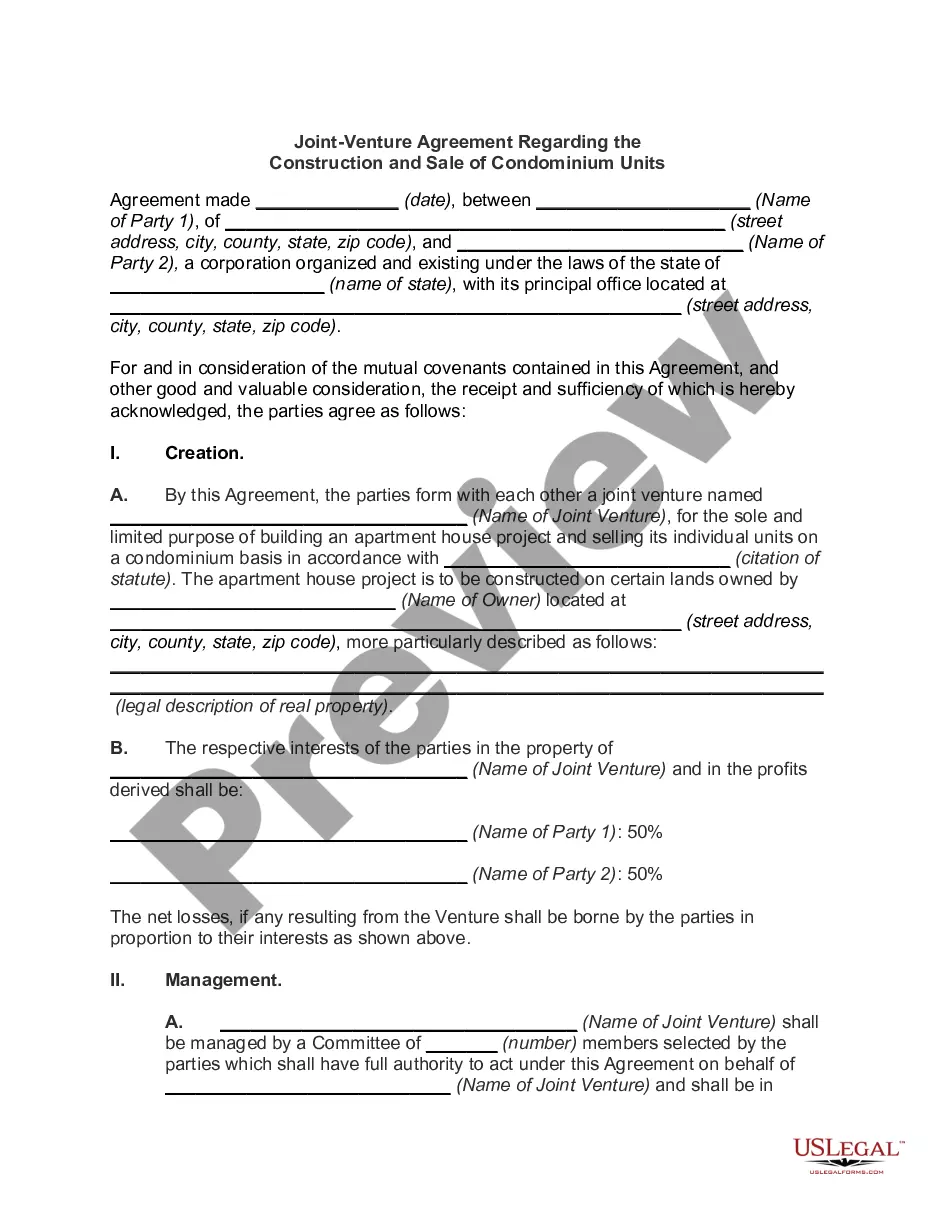
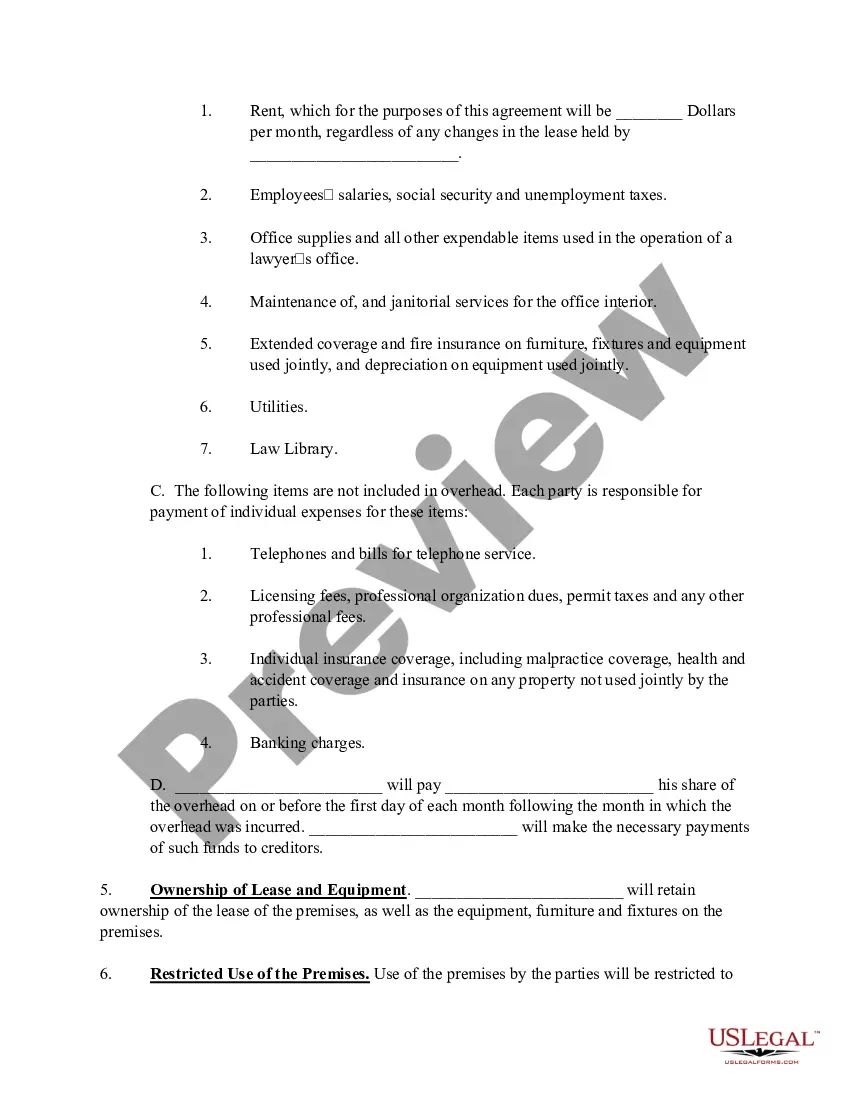
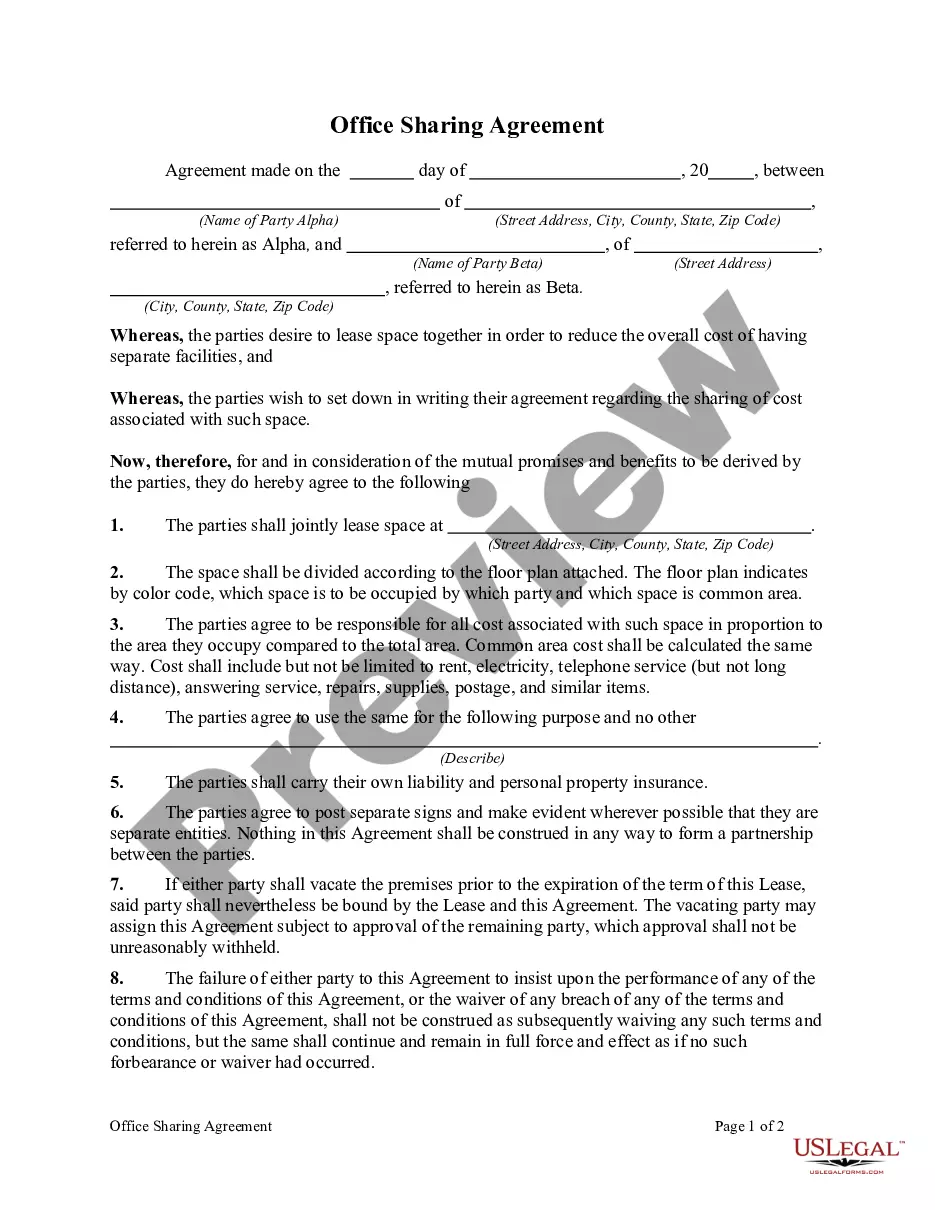
Michigan Agreement to Share Office Space between Attorneys or other Professions
Description

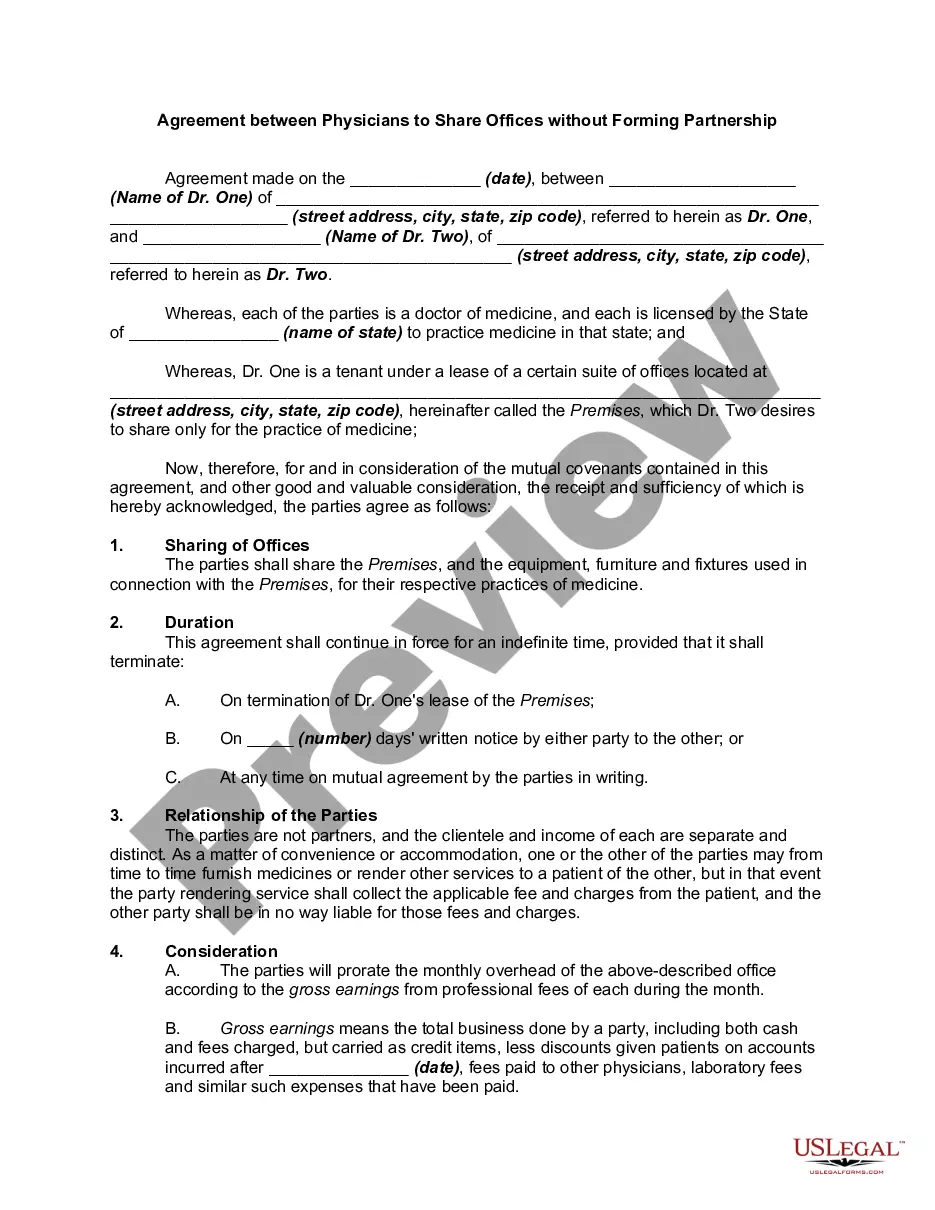
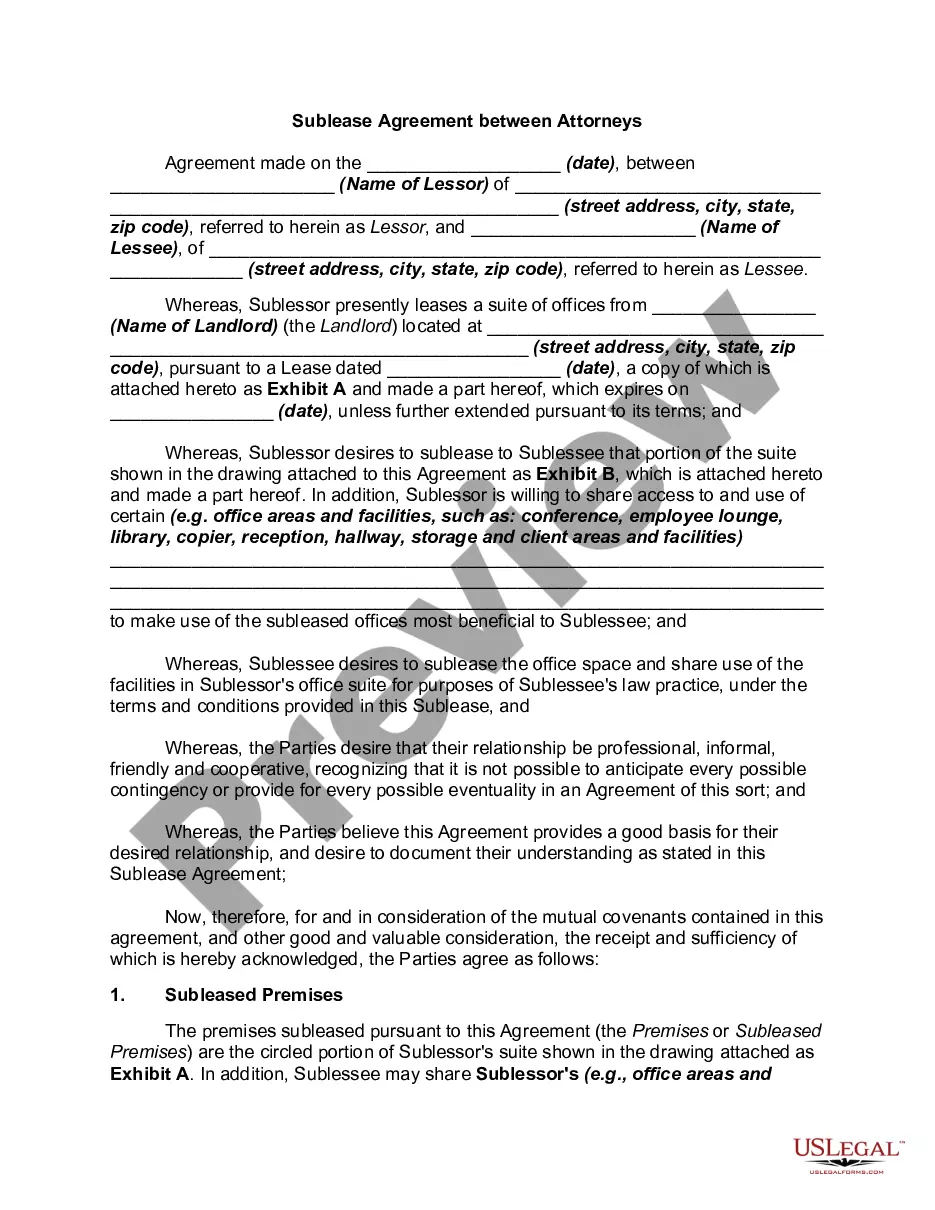
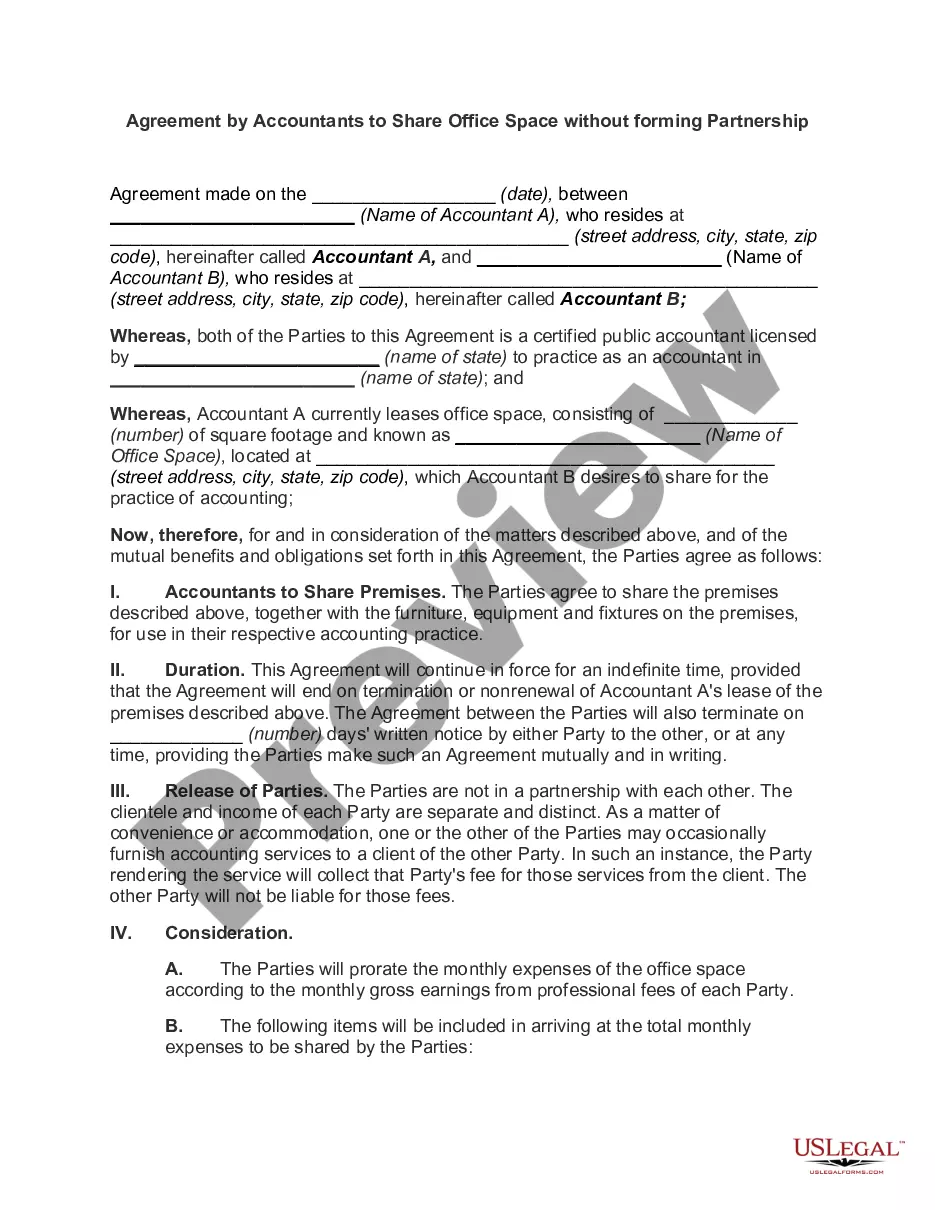
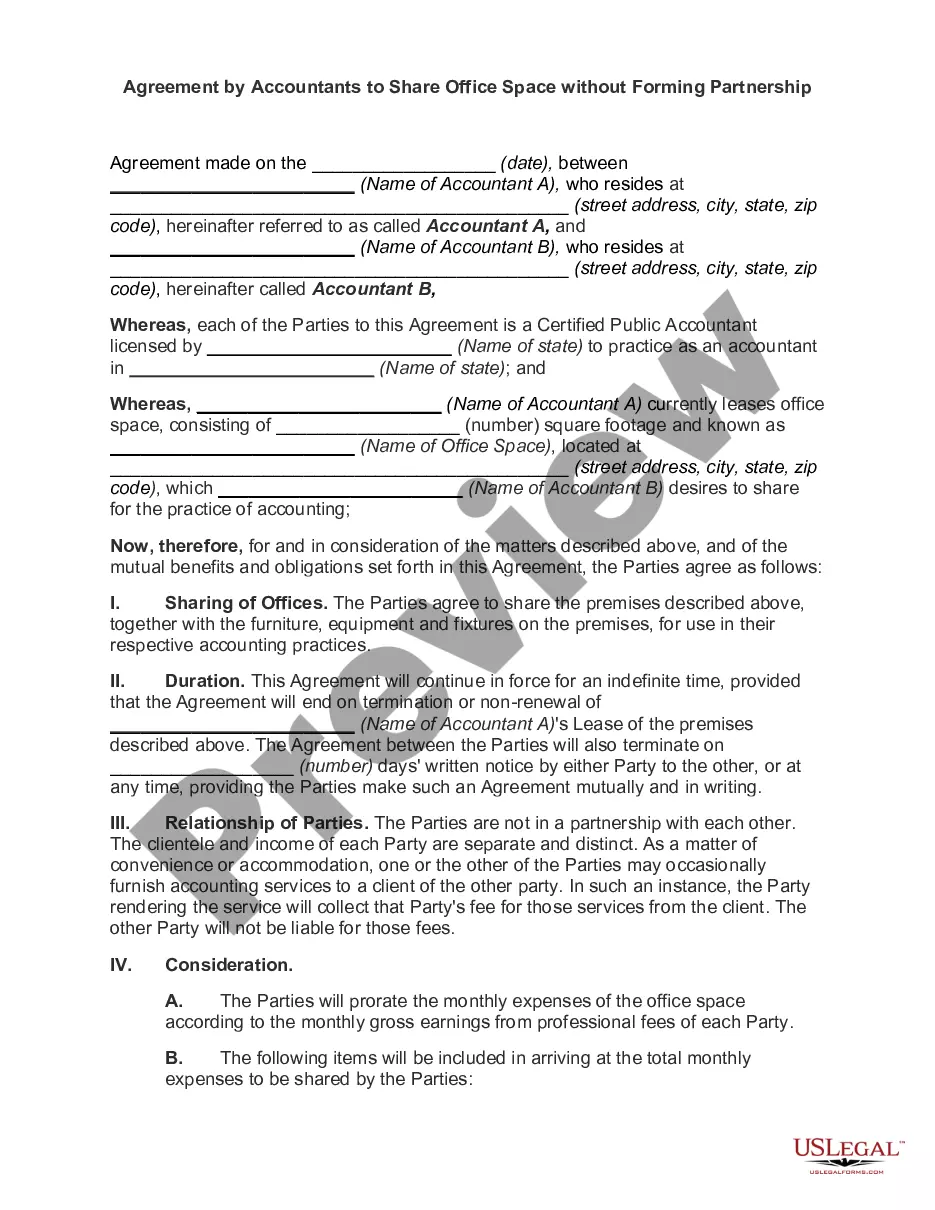

How to fill out Agreement To Share Office Space Between Attorneys Or Other Professions?
Are you currently in the place where you will need paperwork for sometimes company or specific functions almost every working day? There are a lot of legal papers web templates accessible on the Internet, but finding types you can trust is not easy. US Legal Forms provides 1000s of develop web templates, like the Michigan Agreement to Share Office Space between Attorneys or other Professions, which are published to fulfill state and federal demands.
If you are previously acquainted with US Legal Forms site and also have a free account, simply log in. Afterward, you can acquire the Michigan Agreement to Share Office Space between Attorneys or other Professions design.
Should you not have an profile and would like to start using US Legal Forms, abide by these steps:
- Obtain the develop you require and make sure it is to the correct town/county.
- Use the Review key to check the shape.
- Look at the outline to actually have chosen the proper develop.
- If the develop is not what you are seeking, utilize the Search field to discover the develop that meets your requirements and demands.
- When you obtain the correct develop, just click Buy now.
- Choose the rates plan you want, fill out the specified information to create your account, and purchase an order making use of your PayPal or bank card.
- Decide on a hassle-free document format and acquire your copy.
Get all the papers web templates you possess purchased in the My Forms food list. You can aquire a more copy of Michigan Agreement to Share Office Space between Attorneys or other Professions at any time, if possible. Just select the needed develop to acquire or print the papers design.
Use US Legal Forms, probably the most extensive selection of legal forms, to save time and stay away from errors. The support provides appropriately created legal papers web templates that you can use for an array of functions. Produce a free account on US Legal Forms and begin generating your way of life easier.
Form popularity
FAQ
Rule 4.2 governs communication with persons represented by counsel in Michigan. It prohibits attorneys from contacting represented individuals regarding the subject of the representation without consent from their lawyer. This rule protects the rights of clients and ensures fair legal processes. If you are considering a Michigan Agreement to Share Office Space between Attorneys or other Professions, it's vital to respect these communication boundaries to foster a professional environment.
Rule 3.7 relates to the lawyer as a witness in Michigan. It states that a lawyer cannot act as an advocate in a trial if they are likely to be a witness, unless specific exceptions apply. This rule aims to prevent conflicts of interest and maintain the integrity of legal representation. When forming a Michigan Agreement to Share Office Space between Attorneys or other Professions, understanding these rules ensures that all parties can represent clients effectively.
MRPC 8.4 addresses professional misconduct for attorneys in Michigan. It emphasizes that lawyers must not engage in dishonesty, fraud, deceit, or misrepresentation. This rule is crucial for maintaining trust in the legal profession. When entering into a Michigan Agreement to Share Office Space between Attorneys or other Professions, it's essential to uphold these standards for ethical collaboration.
Rule 1.6 focuses on the confidentiality of information related to the representation of clients. It mandates that attorneys must protect sensitive client information from disclosure unless given informed consent. When participating in a Michigan Agreement to Share Office Space between Attorneys or other Professions, attorneys must be vigilant about maintaining confidentiality, ensuring that client trust remains intact during any collaborative efforts.
In Michigan, the requirements for adverse possession include continuous possession, open and notorious use, exclusive possession, hostile use, and statutory timeframes. These criteria determine whether an individual can claim ownership of land despite the absence of a title. Understanding these factors is important for attorneys involved in real estate law, especially when drafting a Michigan Agreement to Share Office Space between Attorneys or other Professions, as it may involve land use considerations.
The rule of professional conduct 5.5 emphasizes the importance of legal practice within authorized jurisdictions. It aims to protect clients and the integrity of the legal profession. For attorneys exploring a Michigan Agreement to Share Office Space between Attorneys or other Professions, understanding this rule is vital for ensuring that all practices remain within legal boundaries and adhere to ethical standards.
Rule 5.5 reiterates the prohibition against the unauthorized practice of law. This rule highlights the necessity for attorneys to maintain active licenses within their practicing jurisdictions. When attorneys consider a Michigan Agreement to Share Office Space between Attorneys or other Professions, they must ensure compliance with this rule to uphold their professional responsibilities and avoid legal repercussions.
Rule 7.3 addresses solicitation of clients by attorneys. It sets clear boundaries on how lawyers may communicate with potential clients to avoid misleading or coercive practices. Understanding this rule is crucial when forming a Michigan Agreement to Share Office Space between Attorneys or other Professions, as it guides ethical marketing and client interactions. This approach fosters a respectful and professional legal community.
Rule 1.16 D governs the withdrawal of attorneys from representing clients. This rule requires lawyers to take reasonable steps to avoid harm to their clients upon withdrawal. When engaging in a Michigan Agreement to Share Office Space between Attorneys or other Professions, attorneys must consider their obligations under this rule. This ensures that client interests remain a priority throughout any transition.
Rule 5.5 of the Michigan Rules of Professional Conduct addresses the unauthorized practice of law. It prohibits lawyers from practicing in jurisdictions where they are not licensed. Additionally, it emphasizes the importance of professional integrity when entering into agreements, such as a Michigan Agreement to Share Office Space between Attorneys or other Professions. Adhering to this rule can help maintain trust and compliance in your legal practice.