Michigan Judgment of Divorce
What is this form?
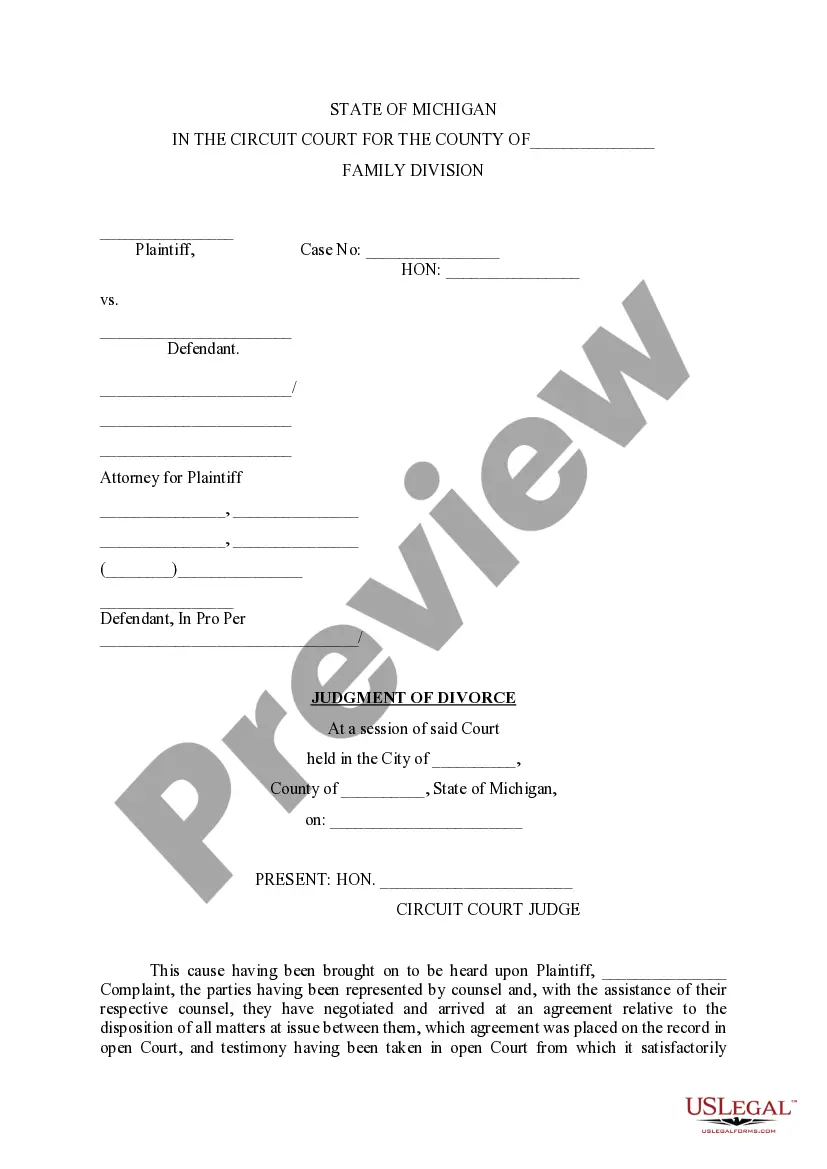
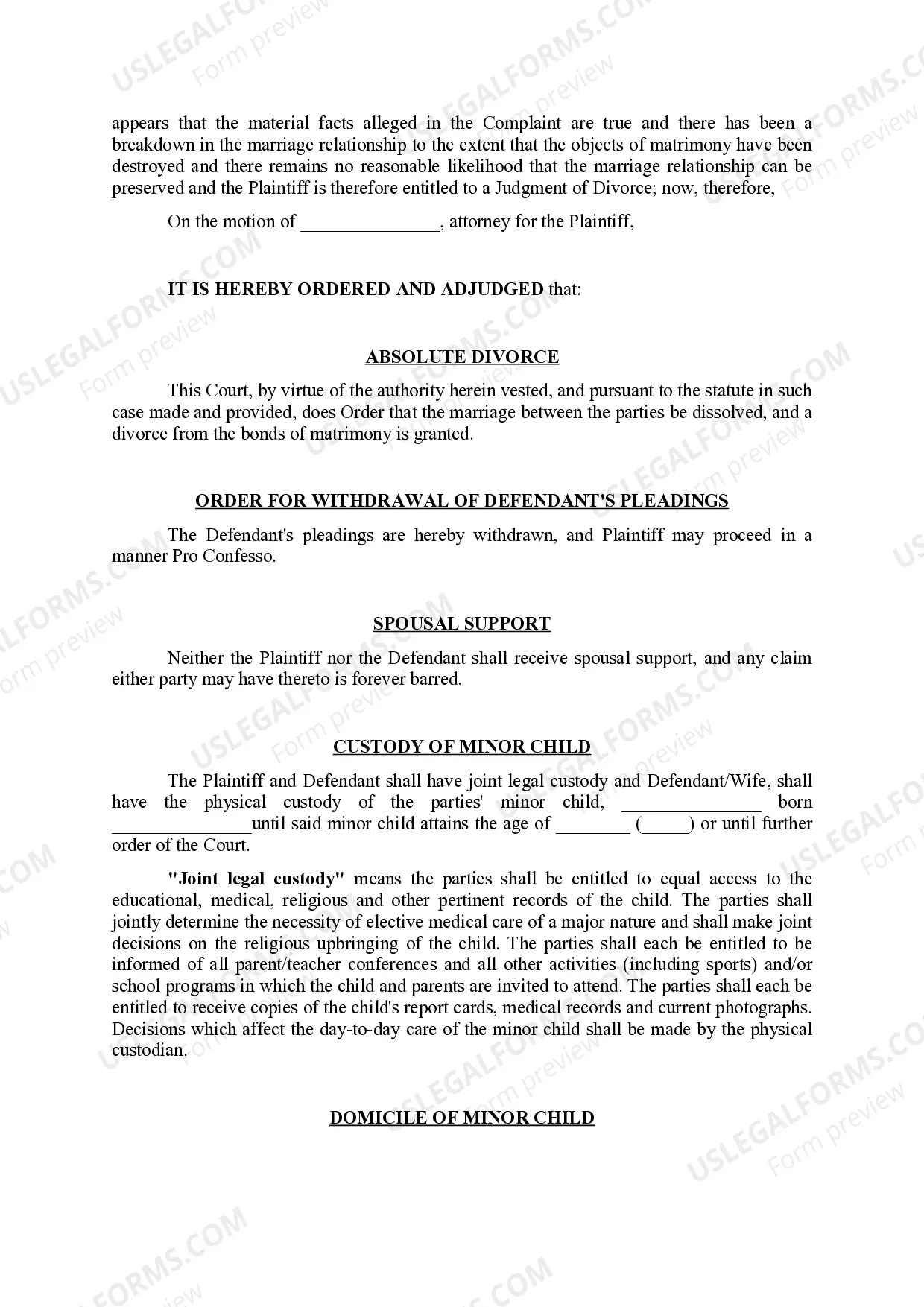
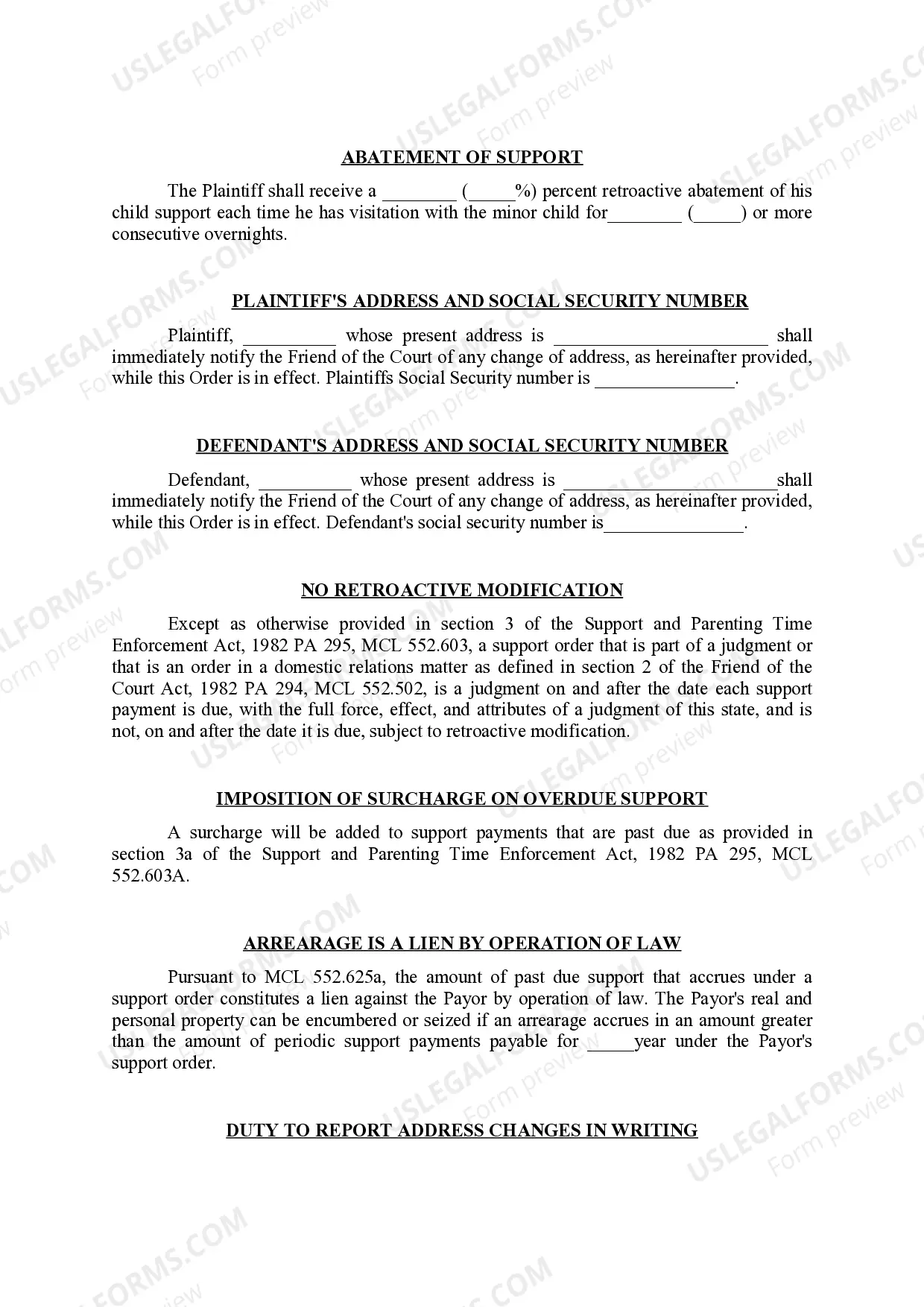
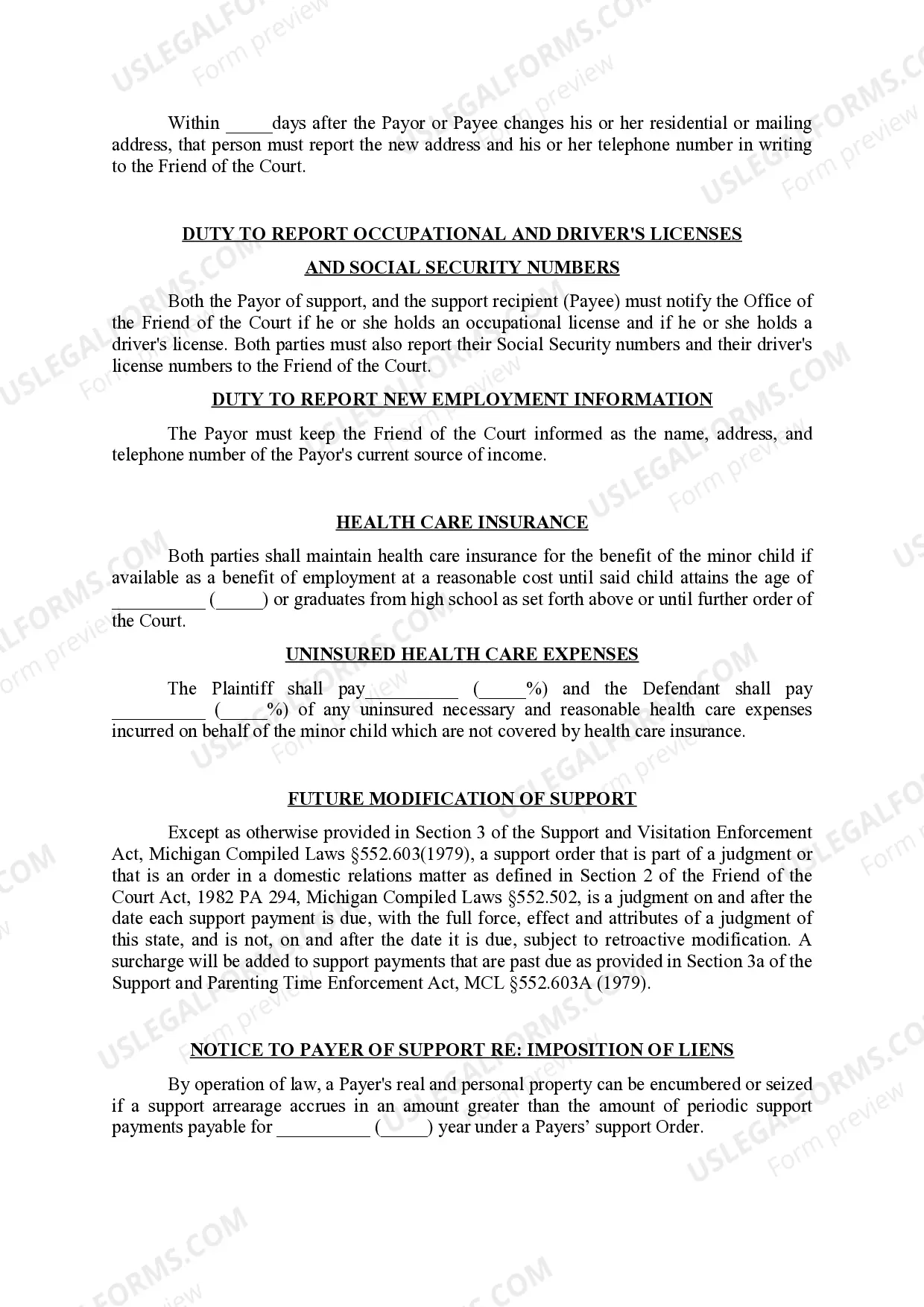
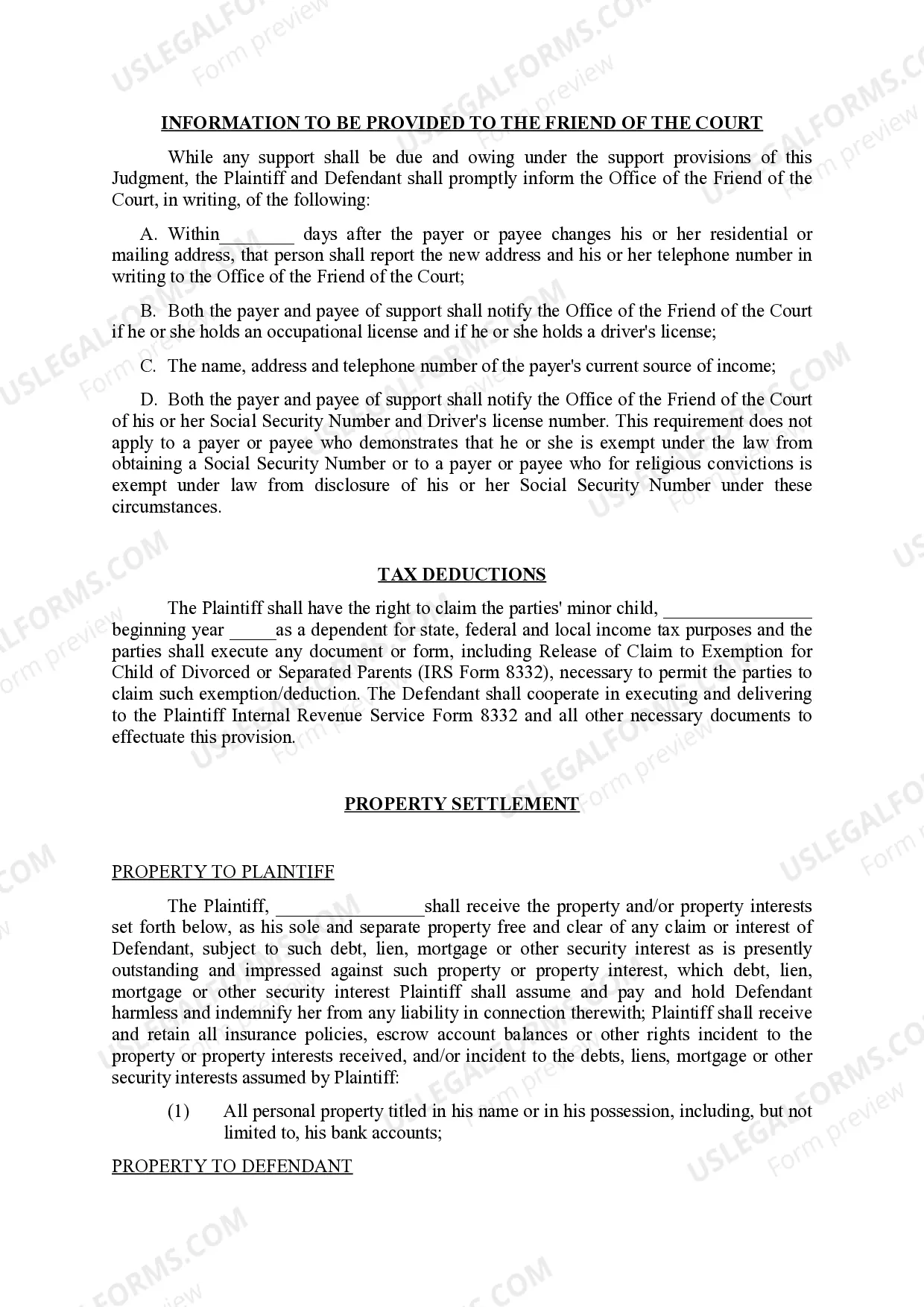
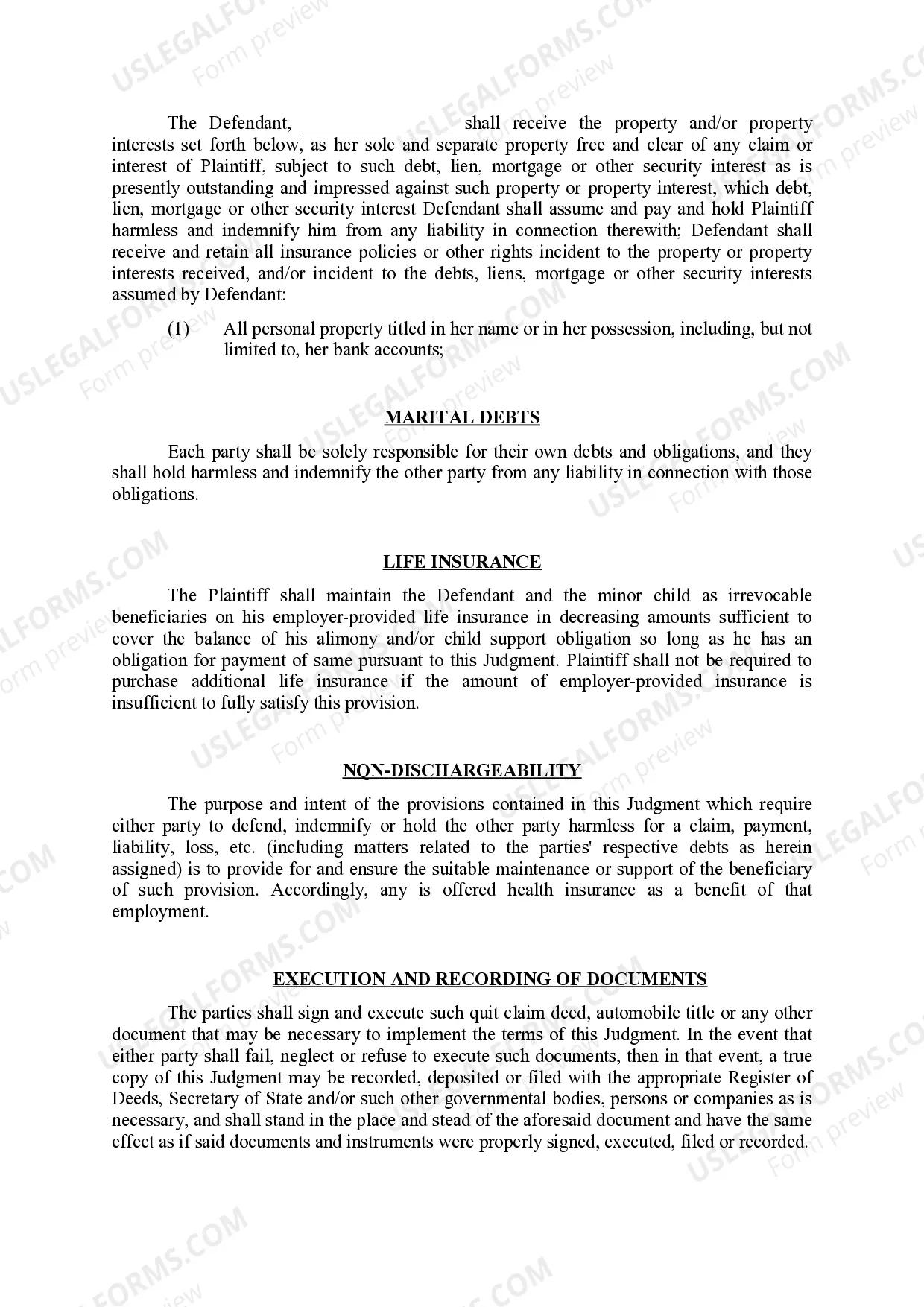
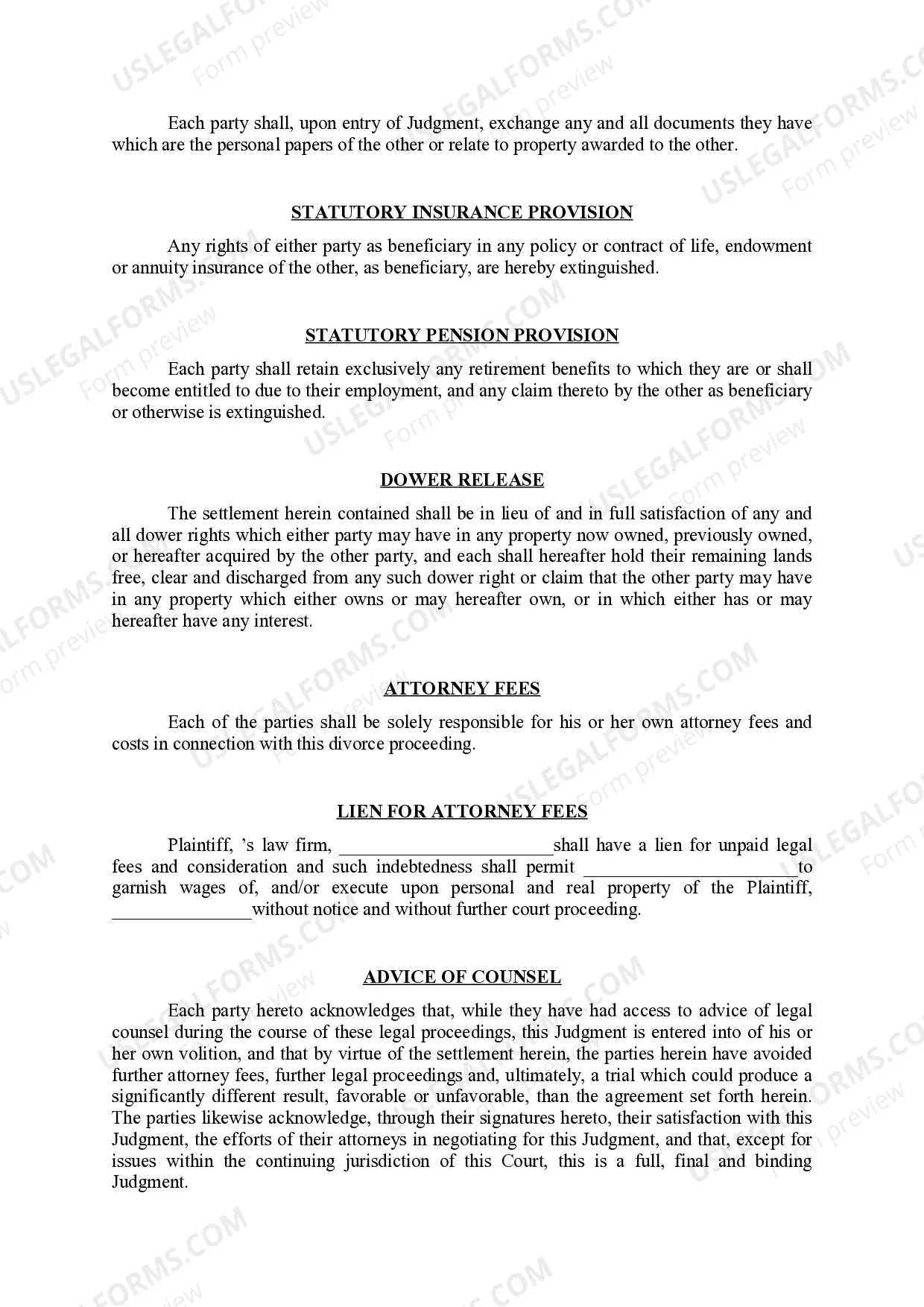
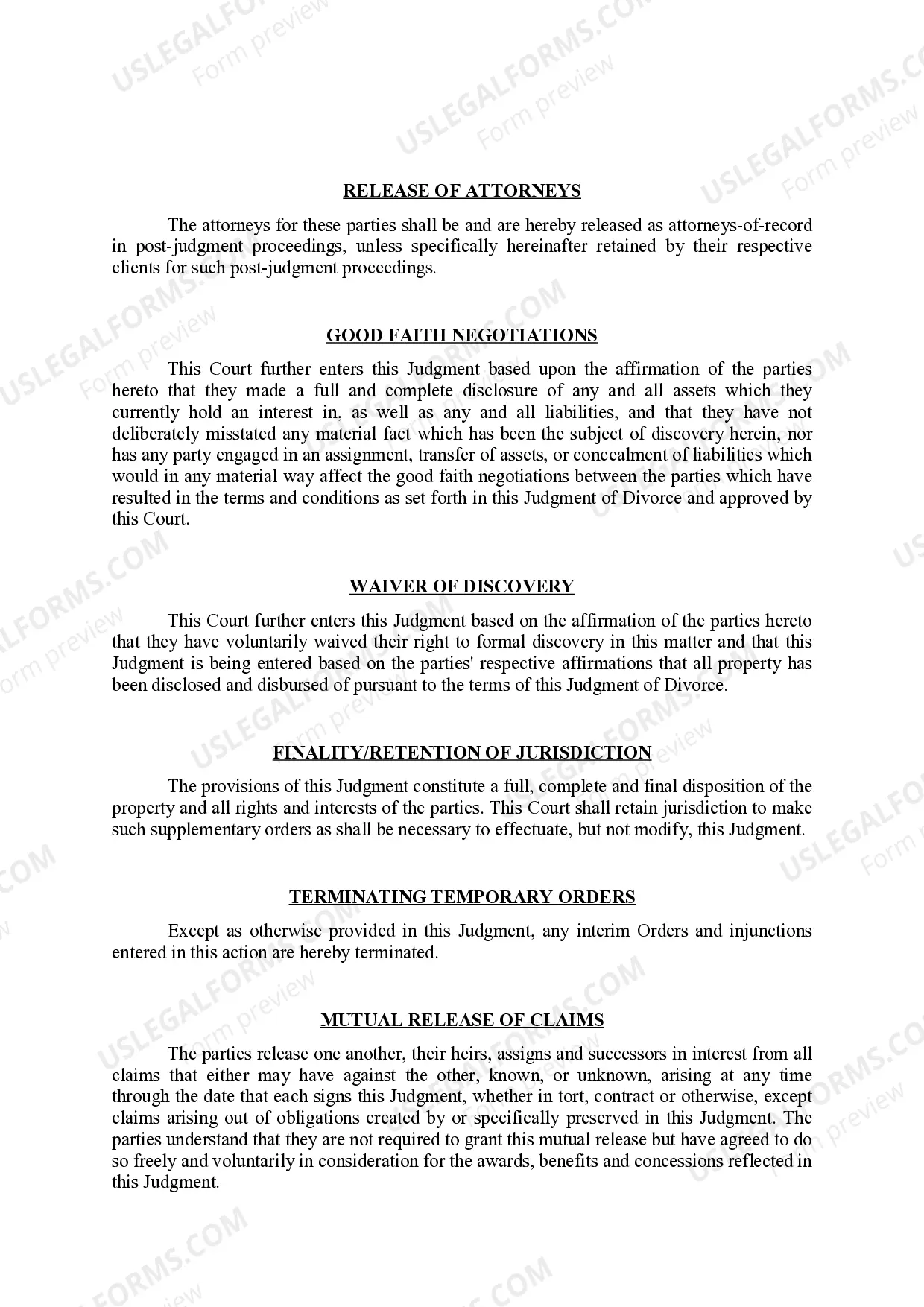
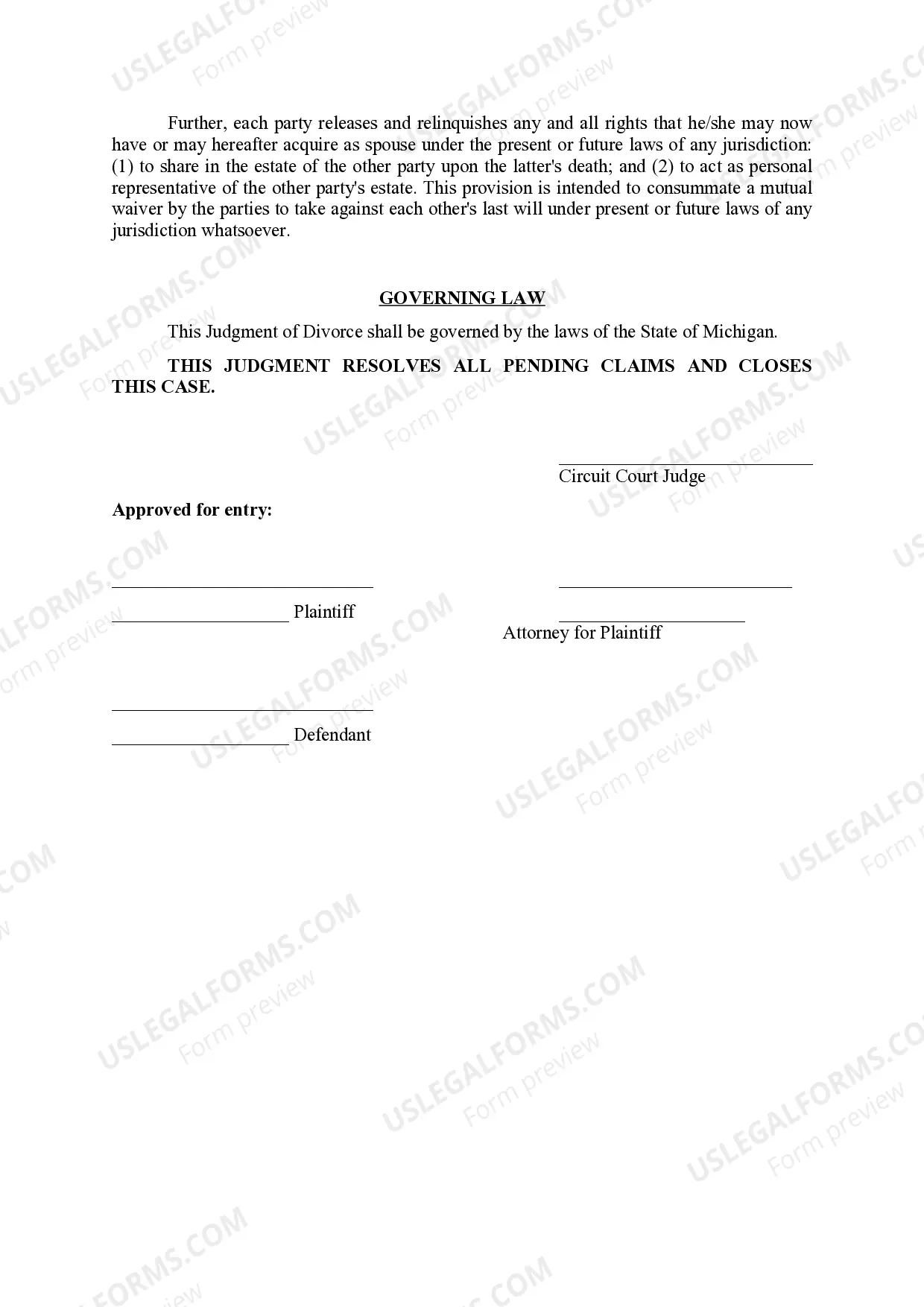
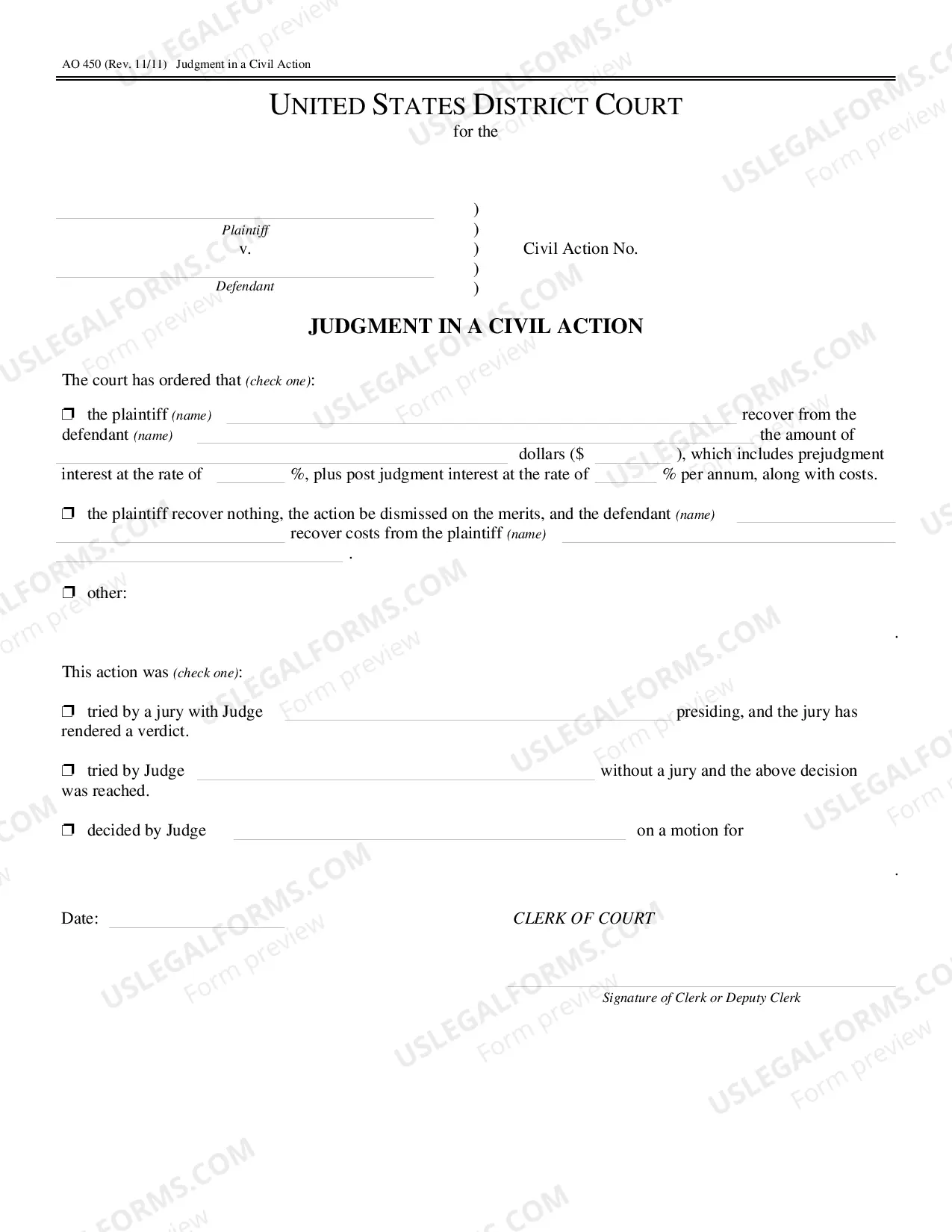
The Judgment of Divorce is a legal document used to formalize the dissolution of marriage between two parties. This form outlines the court's findings of fact, conclusions of law, and the specific orders related to divorce such as custody, support, and property division. It is essential for finalizing a divorce, distinguishing it from temporary orders or divorce agreements that are not yet court-approved.
What’s included in this form
- Findings of fact regarding the marriage and its dissolution.
- Details on spousal support responsibilities for both parties.
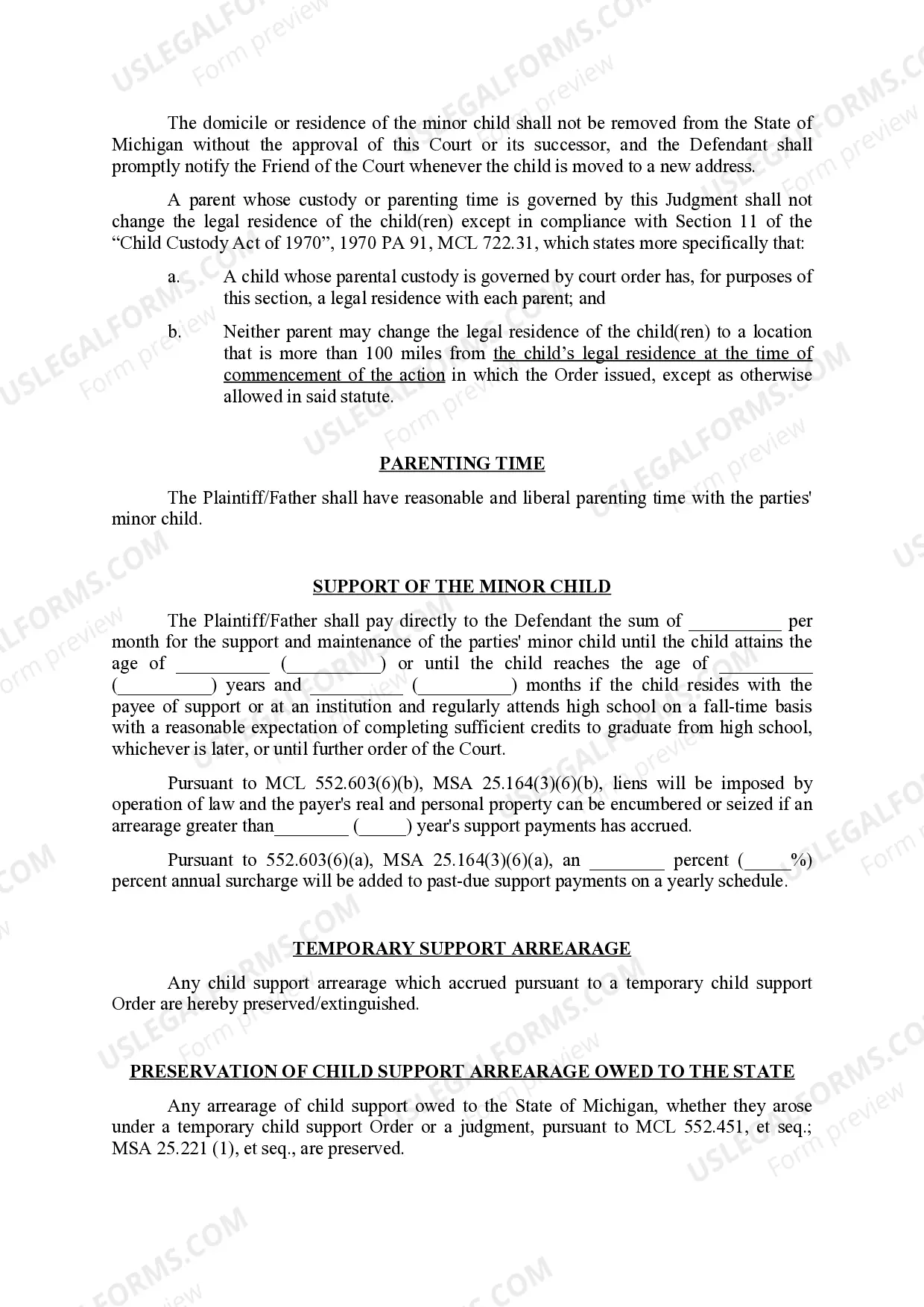
- Custody arrangements for minor children, including physical and legal custody.
- Child support obligations and terms of payment.
- Distribution of property and financial obligations between spouses.
- Provisions for modifying support or custody arrangements if needed.
Situations where this form applies
This form should be used when a couple has reached a mutual agreement on the terms of their divorce, including aspects such as child custody and support. It is necessary when both parties wish to have their divorce officially recognized by the court, ensuring that all agreed-upon terms are legally binding and enforceable.
Who should use this form
- Couples who have agreed to divorce and want to formalize their separation.
- Individuals looking to finalize arrangements regarding children, support, and property.
- Parties seeking to clarify their legal responsibilities post-divorce.
Instructions for completing this form
- Identify both parties involved in divorce by entering their names and contact information.
- Complete sections on child custody, including the names and birth dates of any minors.
- Fill in the financial details such as monthly child support payments and any spousal support arrangements.
- Define property distribution, specifying what each party will retain after the divorce.
- Sign the document in front of a notary, if required, and file it with the appropriate court.
Notarization guidance
This form does not typically require notarization unless specified by local law. However, it is advisable to check with your local court or legal professional to ensure compliance with all procedural requirements.
Get your form ready online
Our built-in tools help you complete, sign, share, and store your documents in one place.
Make edits, fill in missing information, and update formatting in US Legal Forms—just like you would in MS Word.
Download a copy, print it, send it by email, or mail it via USPS—whatever works best for your next step.
Sign and collect signatures with our SignNow integration. Send to multiple recipients, set reminders, and more. Go Premium to unlock E-Sign.
If this form requires notarization, complete it online through a secure video call—no need to meet a notary in person or wait for an appointment.
We protect your documents and personal data by following strict security and privacy standards.

Make edits, fill in missing information, and update formatting in US Legal Forms—just like you would in MS Word.

Download a copy, print it, send it by email, or mail it via USPS—whatever works best for your next step.

Sign and collect signatures with our SignNow integration. Send to multiple recipients, set reminders, and more. Go Premium to unlock E-Sign.

If this form requires notarization, complete it online through a secure video call—no need to meet a notary in person or wait for an appointment.

We protect your documents and personal data by following strict security and privacy standards.
Typical mistakes to avoid
- Failing to include all necessary financial information required by the court.
- Not properly addressing custody arrangements for minor children.
- Omitting signatures from both parties or witnesses, potentially invalidating the document.
- Leaving sections blank or providing unclear information that may lead to legal disputes later.
Benefits of completing this form online
- Convenience of completing the form from home at any time.
- Editable templates allow users to customize the document to their specific circumstances.
- Access to legal guidance to ensure the form adheres to state laws.
- Secure storage and easy retrieval of completed forms.
Looking for another form?


Form popularity
FAQ
Yes, you can file your own divorce papers in Michigan, but it is important to understand the process thoroughly. A Michigan Judgment of Divorce requires specific forms and adherence to state laws. If you choose to represent yourself, you must ensure that all necessary documents are accurate and complete to avoid delays. Many individuals find it helpful to use resources like USLegalForms to access the correct forms and guidance for a smooth filing experience.
The 10 year rule in Michigan refers to the period during which a divorce judgment can be enforced or modified. Specifically, if a party wishes to change custody or support arrangements, they typically need to do so within 10 years of the Michigan Judgment of Divorce. After this period, options may be limited, which emphasizes the importance of timely decisions. For assistance in navigating these rules, consider using resources from UsLegalForms to understand your rights.
To obtain a copy of your divorce decree in Michigan, start by contacting the court where your divorce was finalized. You can request a copy in person, by mail, or sometimes online. Make sure to provide necessary details, such as case number and your identification. This document, known as the Michigan Judgment of Divorce, is essential for various legal and personal matters.
The entry of judgment in divorce is a formal legal process that finalizes the divorce agreement in Michigan. This process involves the court issuing a judgment that outlines the terms of the divorce, including property division, child custody, and support obligations. Once the judgment is entered, it holds legal weight and both parties must comply with its terms. Understanding the importance of this process helps you navigate a Michigan Judgment of Divorce more effectively.
Moving out during a divorce can significantly impact your rights regarding property and custody. When one party leaves the home, it may lead to assumptions about their willingness to forfeit certain rights or responsibilities. Maintaining your residence often showcases your commitment to shared responsibilities, particularly when children are involved. It's essential to consult with legal professionals, like those at US Legal Forms, to understand the implications fully before making such a decision.
While the terms Judgment of Divorce and divorce decree may sound similar, they often refer to related but distinct documents. The Judgment of Divorce is the formal court order that concludes the marriage, while the divorce decree can refer to the comprehensive document detailing all terms agreed upon. Both documents are essential in the divorce process, and understanding their differences can help you navigate post-divorce challenges more effectively. If you need assistance with these documents, consider using US Legal Forms for a clear and straightforward solution.
A judgment, in the context of a divorce, refers to the court's final decision regarding the dissolution of a marriage. It details all agreements made between the parties or, in some cases, decisions made by the judge. Having a clear understanding of the judgment is important for both parties as it legally binds them to the terms set forth. This judgment becomes a critical reference point in the event of future disputes.
In Michigan, the final divorce decree is essentially the same as the Michigan Judgment of Divorce. This decree formally concludes the marriage and contains important details about asset distribution, child custody, and alimony. Understanding the decree is vital since it serves as the law governing your post-divorce life. Both documents are essential for securing your future and ensuring compliance with the court's decisions.
The final Judgment of a divorce in Michigan is the legal document that formalizes your divorce. It outlines the terms agreed upon by both parties, including property division, custody arrangements, and support obligations. This document officially ends your marriage and allows you to move forward. It is crucial to understand this judgment as it dictates your rights and responsibilities after the divorce.