Michigan Order to Show Cause
Description
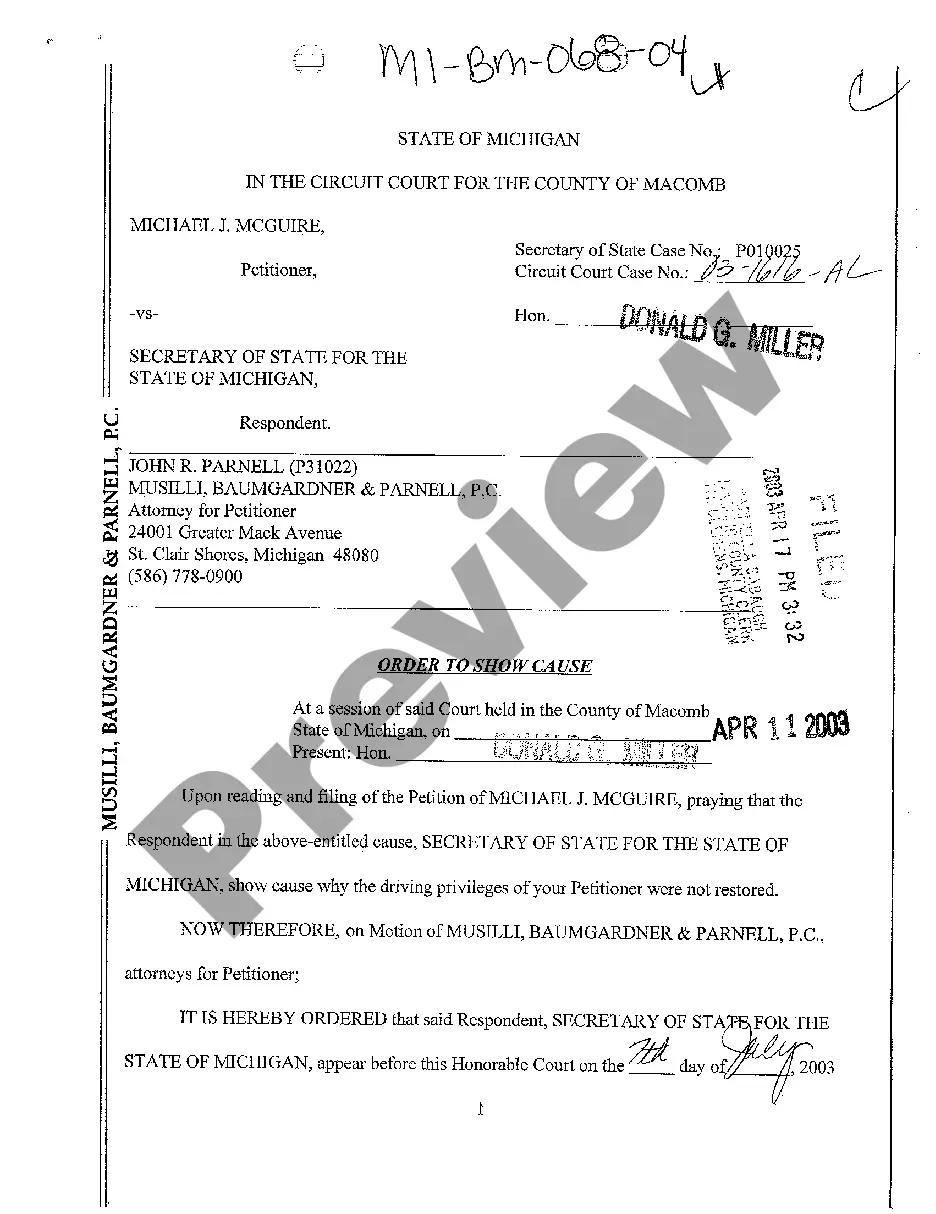
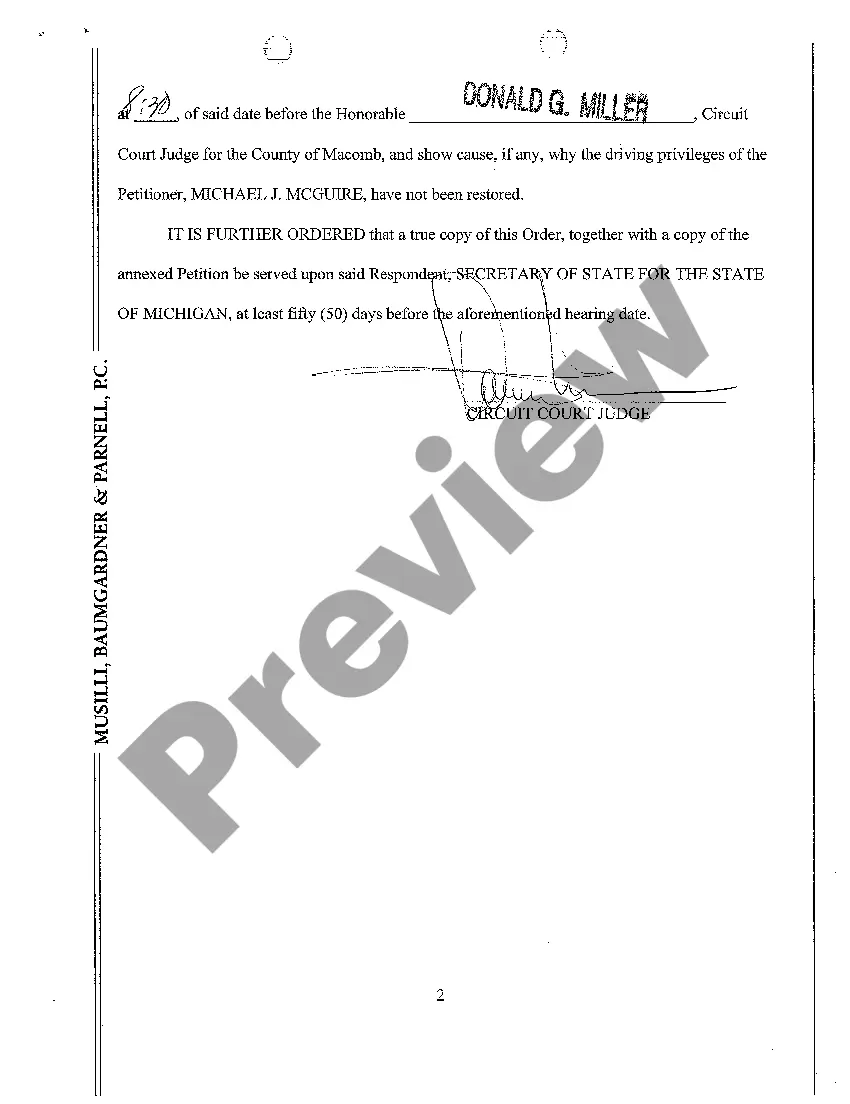
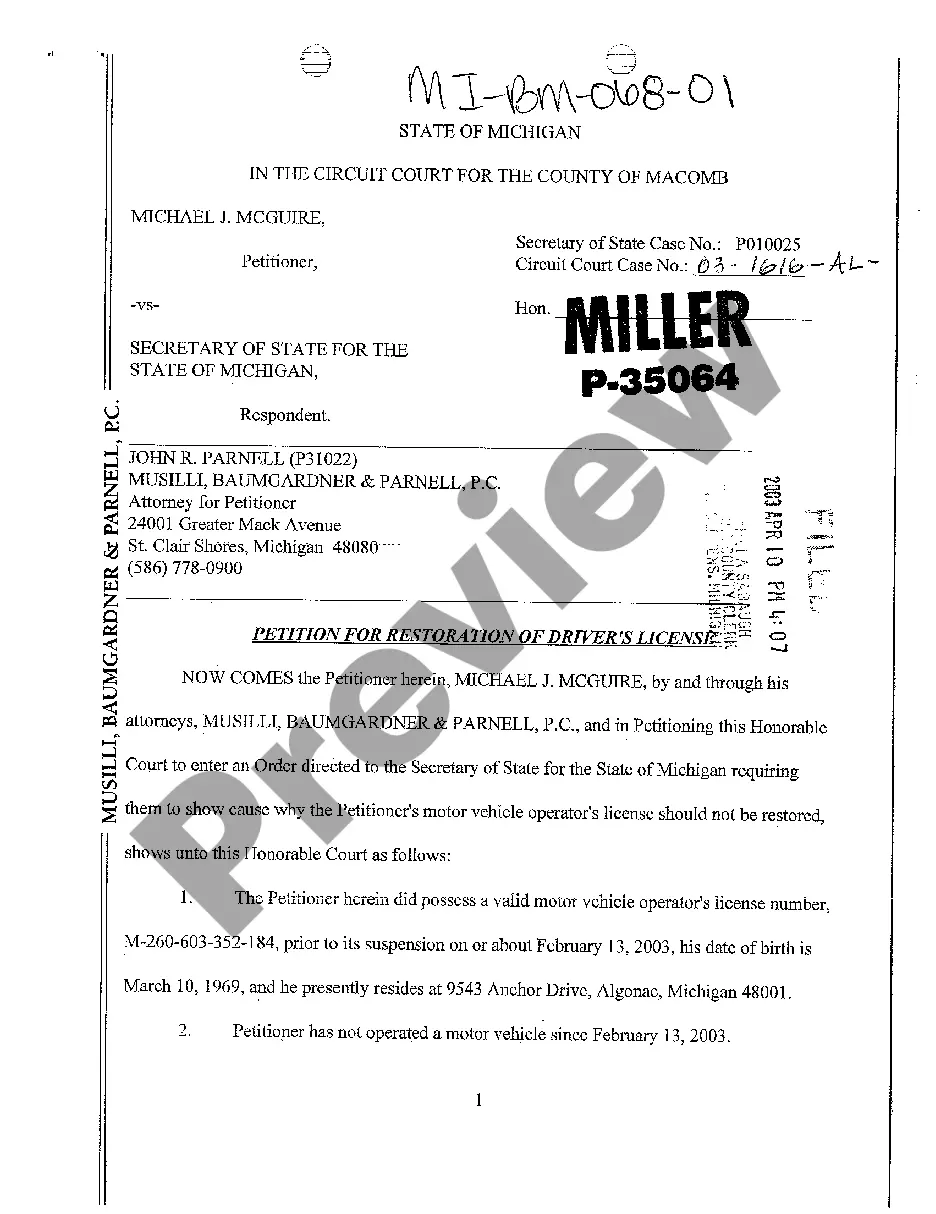
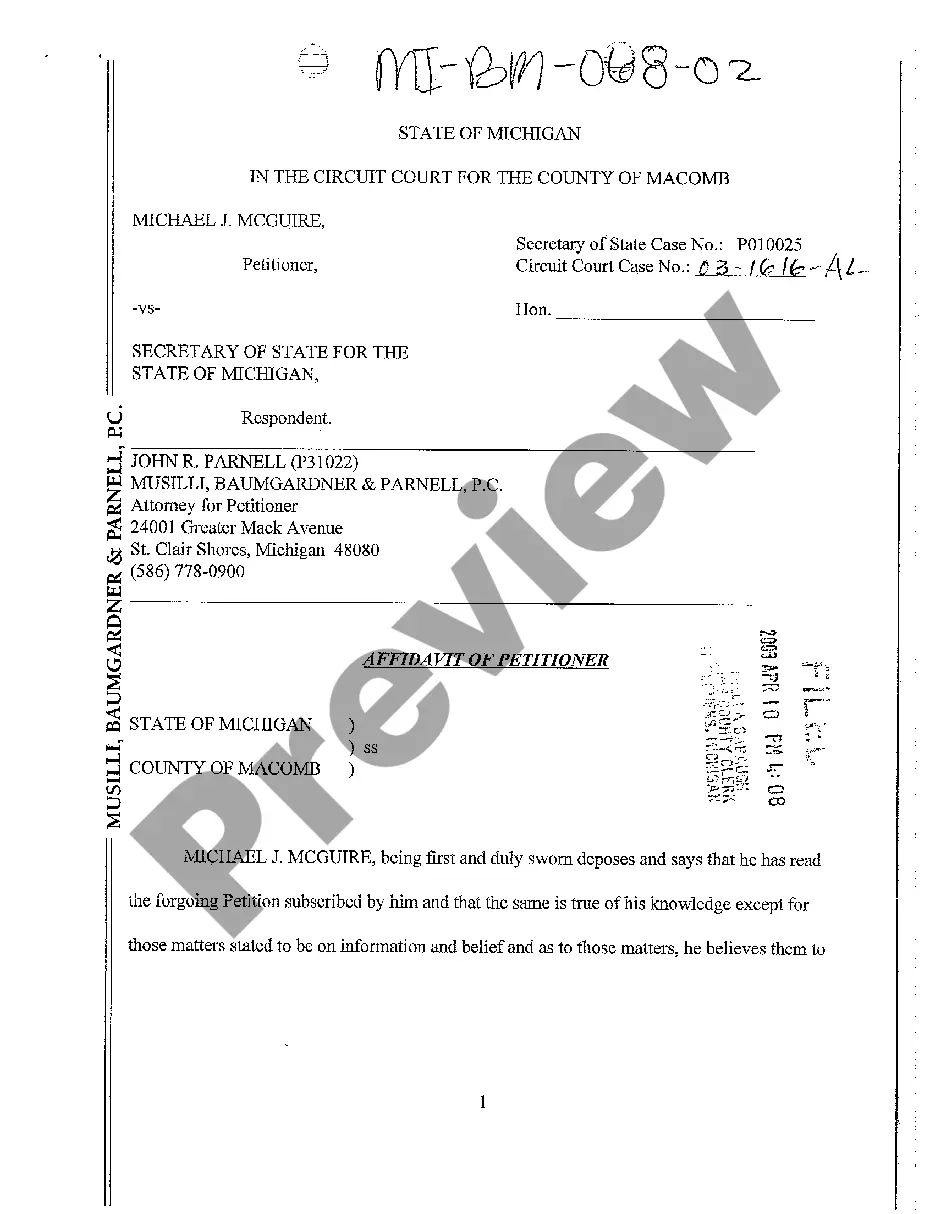
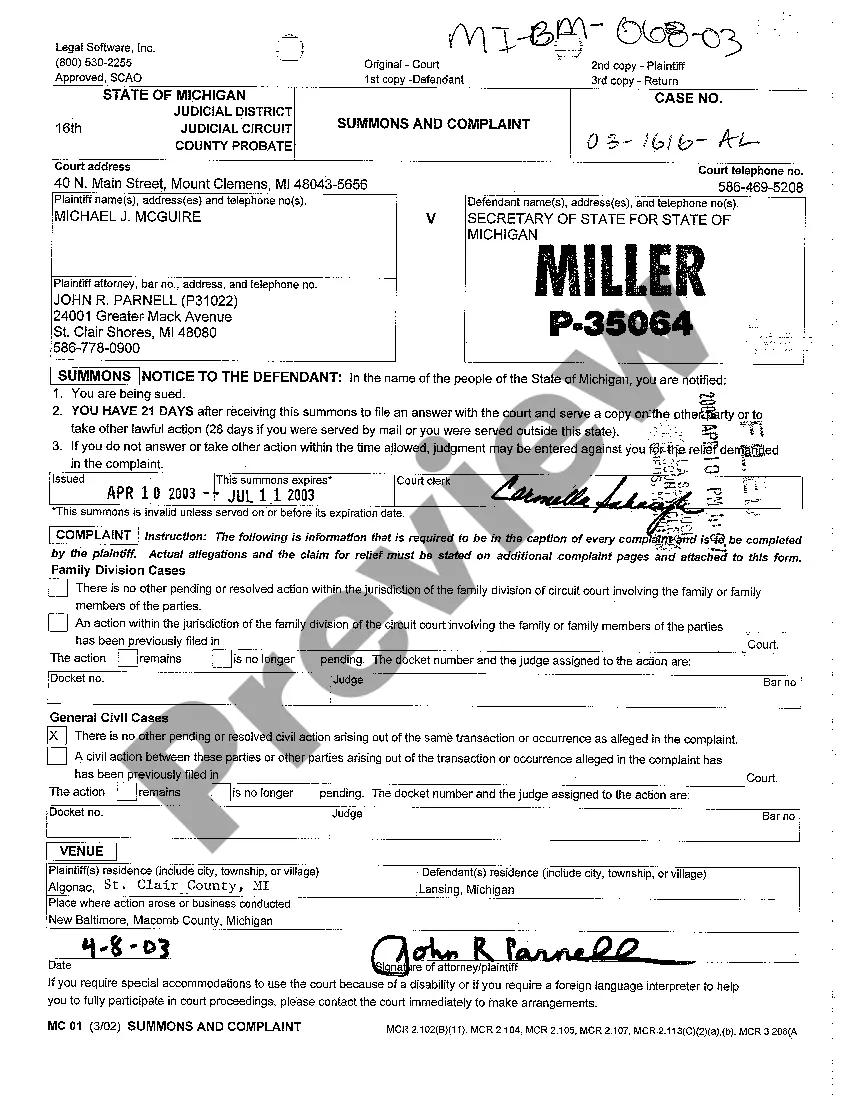
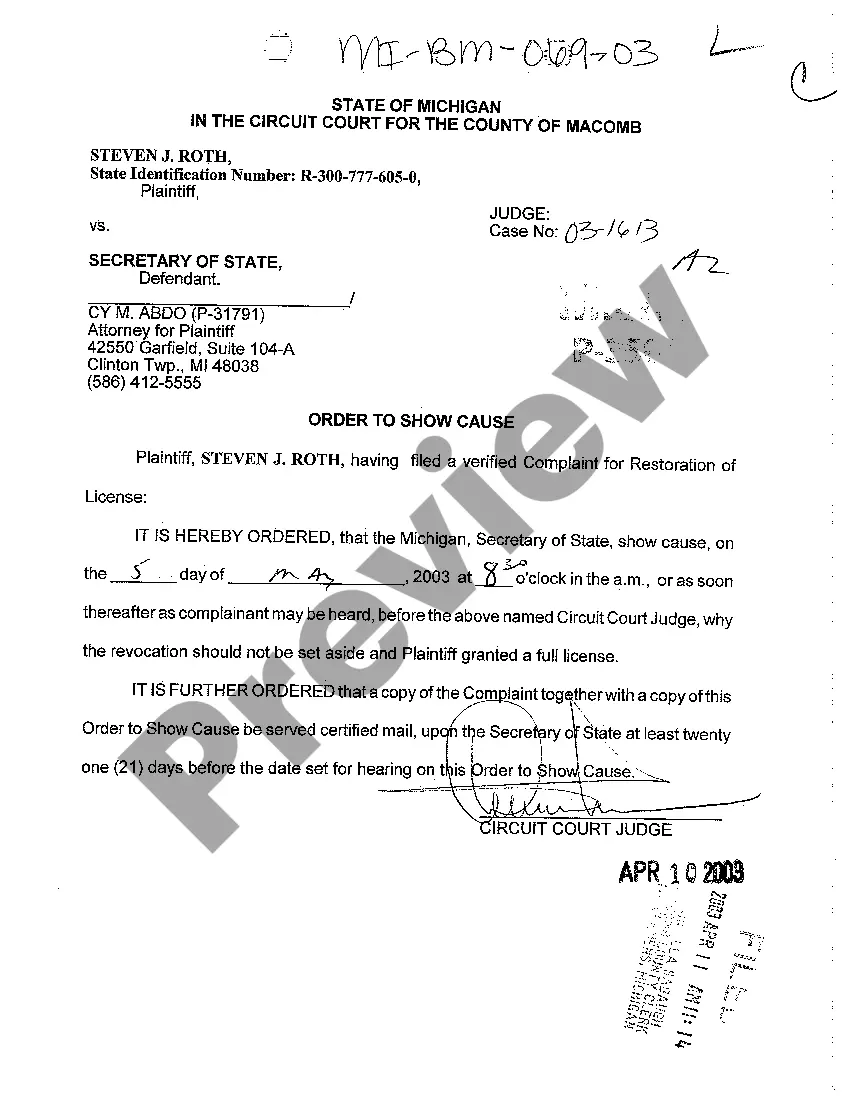
How to fill out Michigan Order To Show Cause?
Obtain any template from 85,000 legal documents including Michigan Order to Show Cause online with US Legal Forms. Each template is prepared and updated by state-recognized attorneys.
If you already possess a subscription, Log In. Once you are on the form’s page, click the Download button and navigate to My documents to access it.
If you have not subscribed yet, follow the steps below.
When your reusable form is ready, print it out or save it to your device. With US Legal Forms, you'll always have instant access to the appropriate downloadable sample. The service provides access to forms and organizes them into categories to streamline your search. Utilize US Legal Forms to acquire your Michigan Order to Show Cause quickly and effortlessly.
- Verify the state-specific requirements for the Michigan Order to Show Cause you wish to use.
- Browse the description and view the sample.
- Once you’re confident that the sample fits your needs, click Buy Now.
- Select a subscription plan that accommodates your budget.
- Create a personal account.
- Make payment through one of two convenient methods: by credit card or via PayPal.
- Select a format to download the document in; two options are available (PDF or Word).
- Download the file to the My documents section.
Form popularity
FAQ
Drafting an order to show cause involves several important steps. You should clearly outline the issues at hand, the legal grounds for seeking the order, and specify what you want the court to compel the other party to do. For guidance and templates, you can explore uslegalforms, which offers resources to help you create a proper Michigan Order to Show Cause effectively.
Receiving a show cause notice in Michigan is a legal signal that requires your immediate attention. It means the court expects you to appear and justify your actions regarding a specific issue. Ignoring this notice can lead to a Michigan Order to Show Cause being issued against you, which may have lasting consequences.
A show cause order is taken seriously by the courts in Michigan. It indicates that there may be significant legal implications for those involved if they fail to comply. Responding appropriately to a Michigan Order to Show Cause is crucial to avoid potential penalties or unfavorable rulings.
The purpose of a show cause order is to require a party to explain or justify their actions before the court. It essentially gives individuals a chance to respond to allegations or requests for enforcement. In a Michigan Order to Show Cause, this mechanism is essential for ensuring fairness in legal proceedings.
During a show cause hearing in Michigan, the involved parties present their cases to the judge. This includes providing evidence and arguments as to why the order should or should not be issued. The judge then evaluates the presented information and decides whether to grant the Michigan Order to Show Cause, making it a critical step in the legal process.
The 77 day rule in Michigan refers to the timeline that courts follow for scheduling trials. When a request for a show cause order is filed, the court aims to hold the hearing within 77 days. This rule helps ensure timely resolutions and maintains the flow of justice for all parties involved in a Michigan Order to Show Cause.
Common reasons for show-cause hearings include failure to comply with custody arrangements, delinquency in child support payments, or disobedience to court orders. Such hearings allow the court to enforce its orders and ensure compliance. It's essential to understand that these hearings can have serious implications, which is why being informed is crucial. Utilizing platforms like USLegalForms can help you find the right resources to navigate these situations.
Winning a Michigan Order to Show Cause hinges on presenting solid evidence and a clear argument. Be sure to gather all relevant documentation that supports your case and prepare to address the court's concerns directly. If necessary, seek assistance from a legal professional to strengthen your argument. A well-prepared case can significantly influence the court's decision.
When in court regarding a Michigan Order to Show Cause, you should avoid disrespectful language or making accusatory statements. Comments that undermine the severity of the situation or diminish the court's authority can adversely affect your standing. Instead, remain respectful and concise throughout your hearing. Always be prepared to present your case clearly and logically.
A show cause order may be triggered by noncompliance with a previous court ruling in Michigan. For instance, if a parent fails to adhere to a visitation schedule or misses child support payments, the aggrieved party may file for such an order. The court takes these matters seriously, prompting the need for a detailed explanation. Engaging with a legal professional can greatly assist in these scenarios.