Michigan Request for Admissions to Defendants
Overview of this form
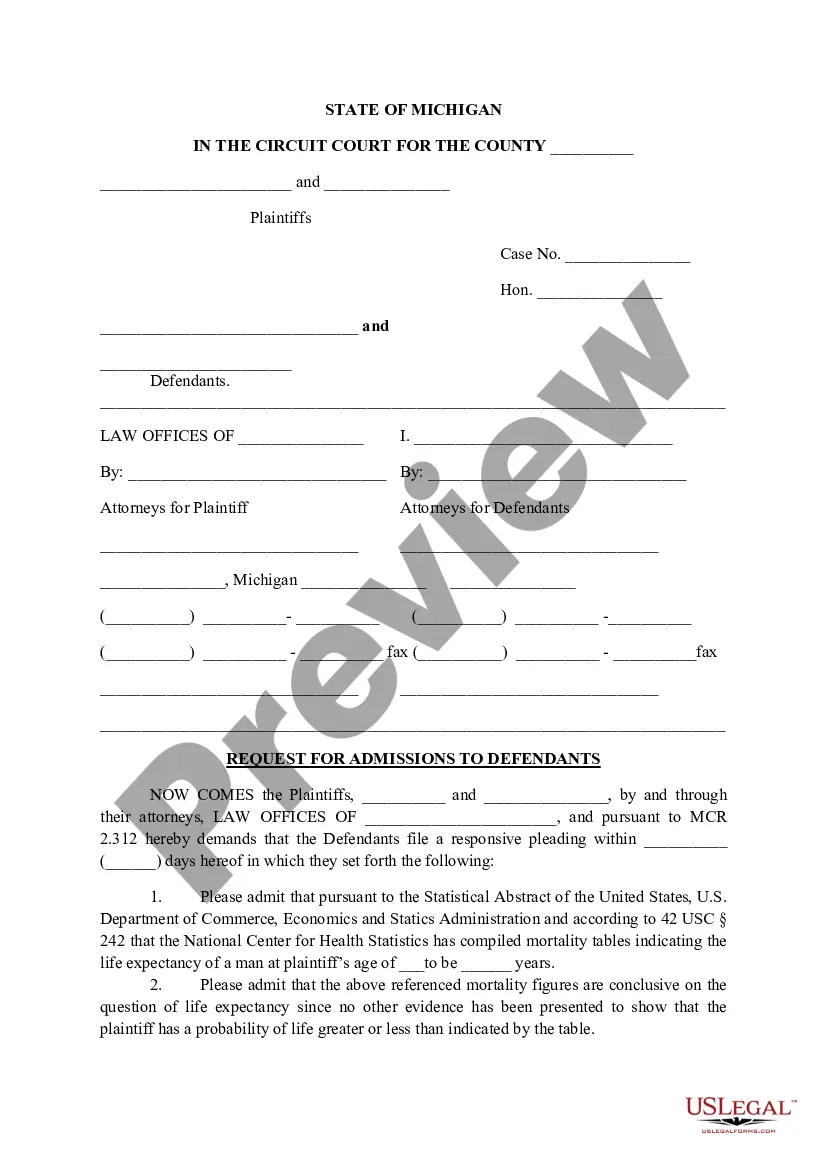
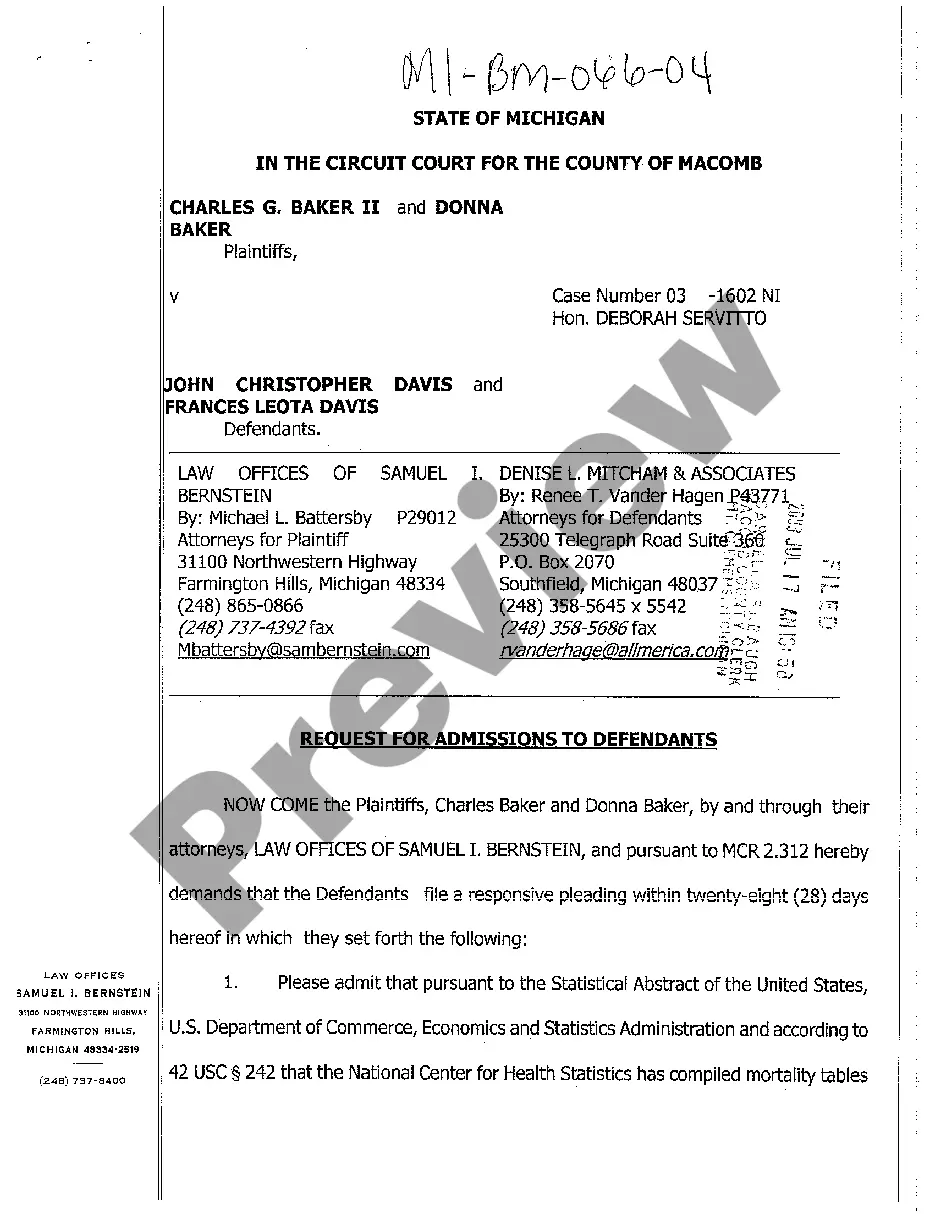
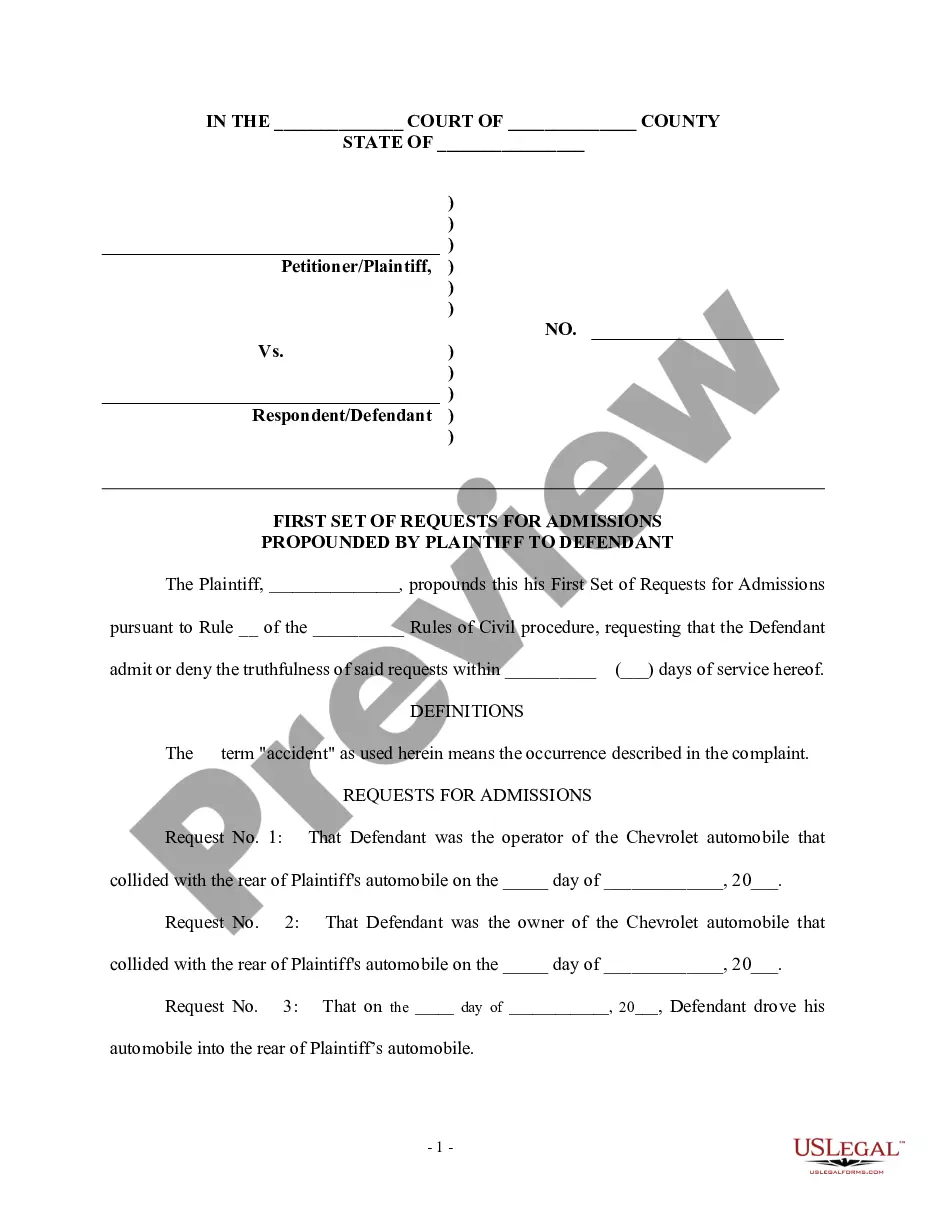
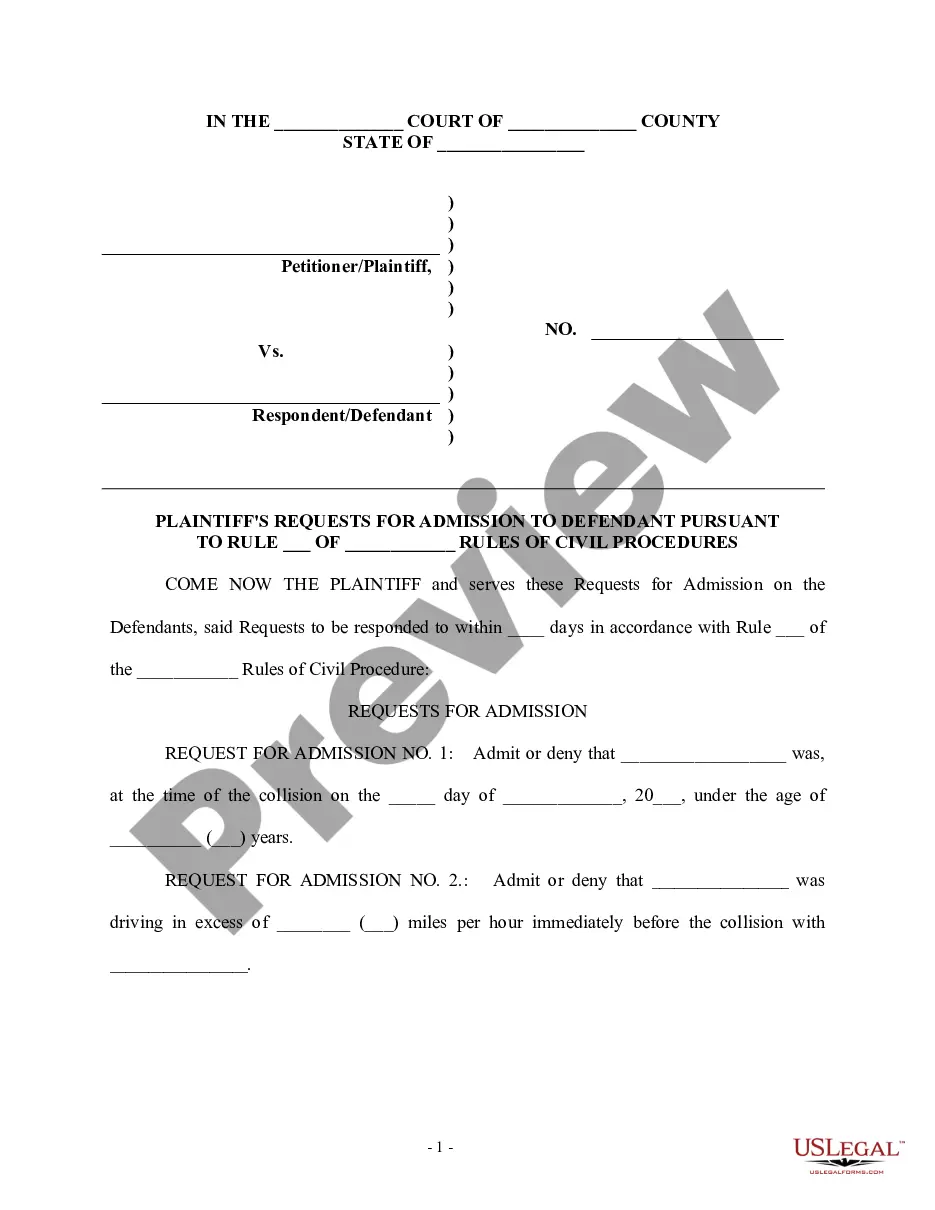
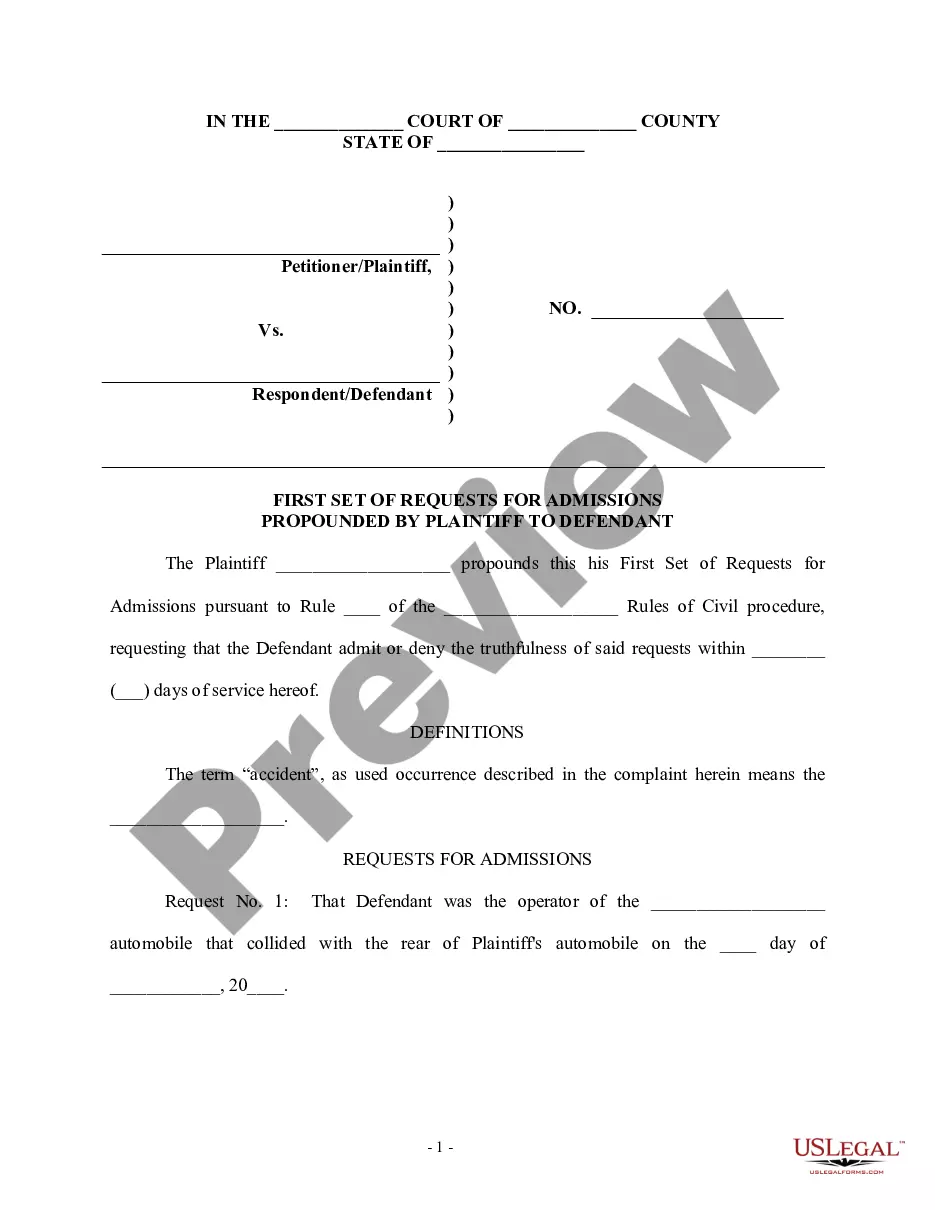
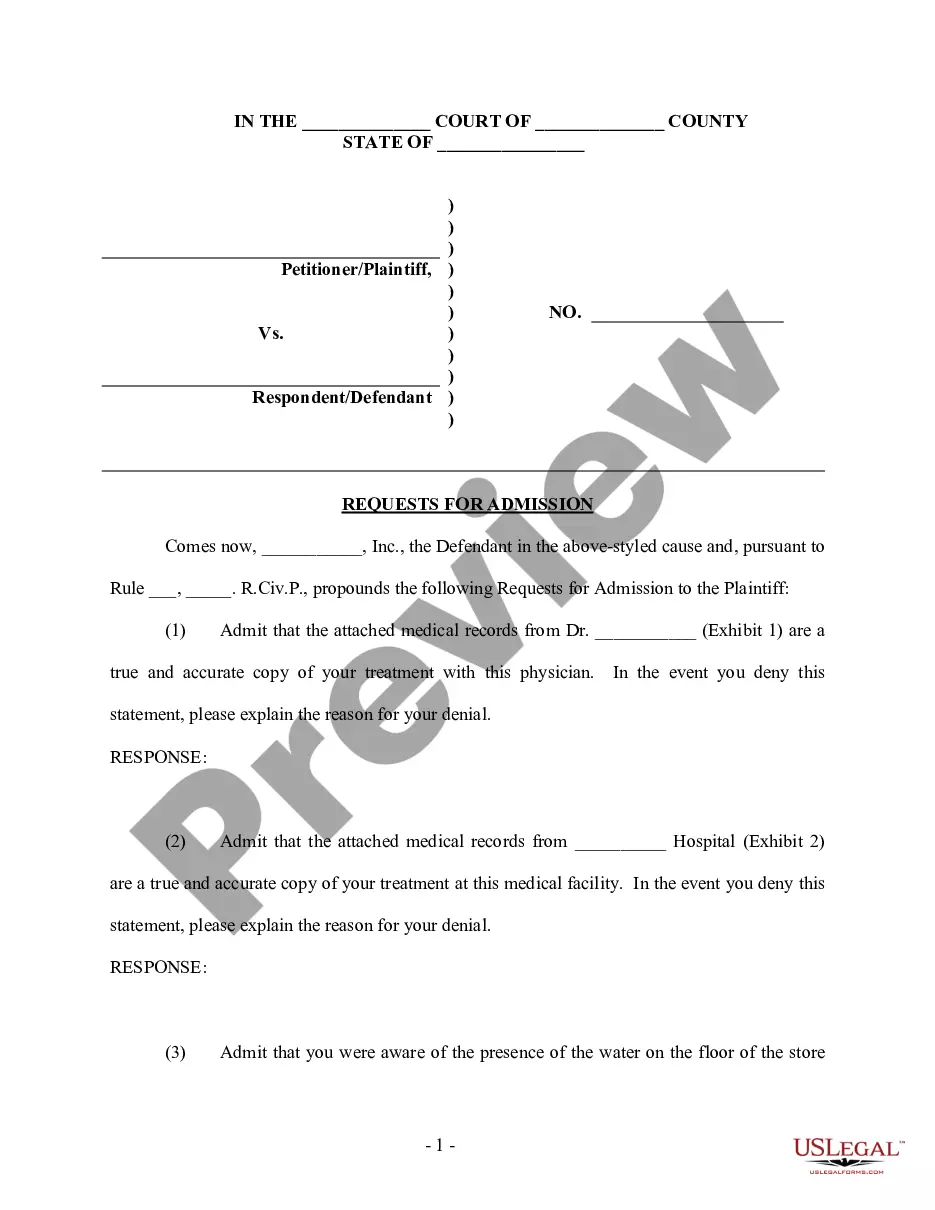
The Request for Admissions to Defendants is a legal document used in civil litigation to ask the opposing party to admit or deny specific facts related to the case. This form helps streamline the trial process by clarifying which facts are undisputed, allowing both parties to focus on the key issues that need resolution. It is an essential part of pre-trial discovery, distinguishing itself from other discovery tools by specifically targeting factual admissions.
What’s included in this form
- Caption: Identifies the court and parties involved in the litigation.
- Request Section: Lists the specific facts or statements that the defendants are required to admit or deny.
- Timely Response: Includes provisions that mandate a response from the defendants within a specified time frame.
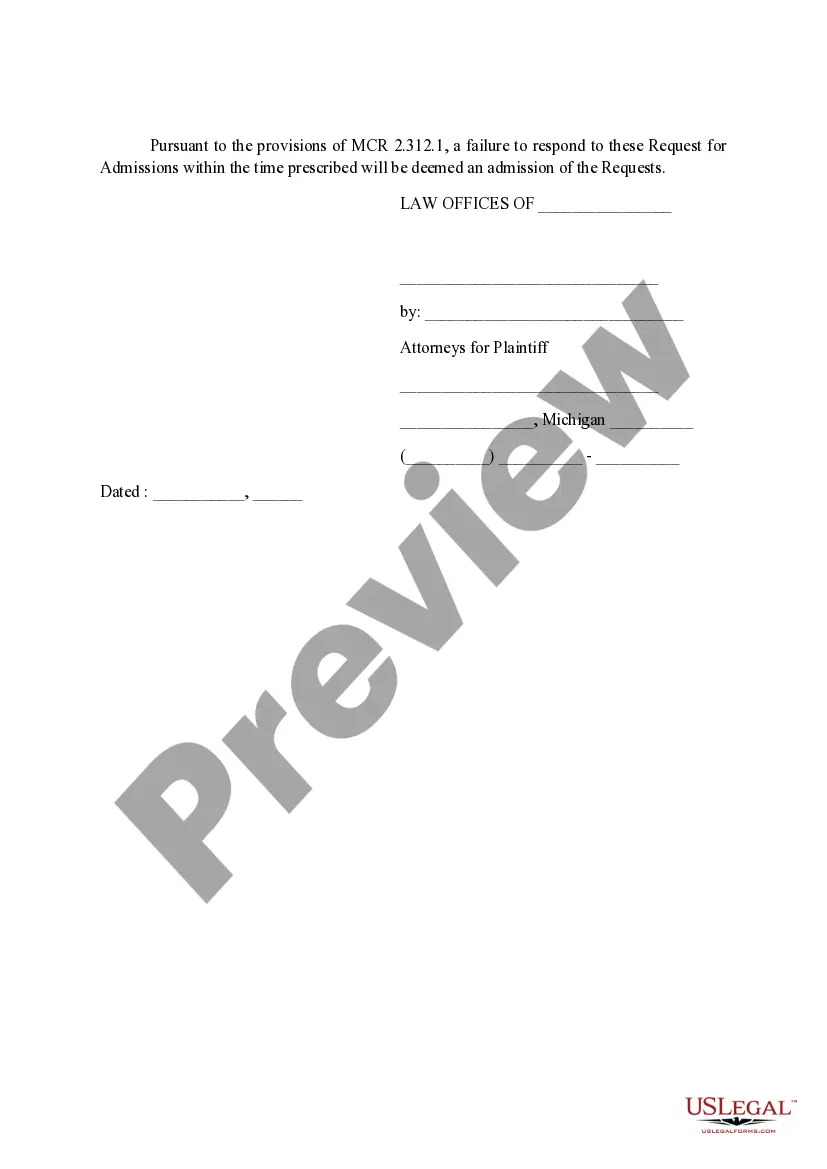
- Consequences of Non-Response: Outlines the ramifications of failing to respond, which may result in automatic admissions.
- Signatures Section: Requires signatures from the attorneys representing the plaintiffs and possibly the defendants.
When to use this form
This form is used during the discovery phase of a lawsuit when one party seeks to clarify the facts of the case. It is particularly useful when the opposing party is not cooperative or has failed to provide clear information voluntarily. Legal practitioners typically utilize this form to expedite the resolution of issues before trial, especially when dealing with complex fact-specific claims.
Who should use this form
- Plaintiffs in civil lawsuits who need to establish which facts the defendants will agree or disagree with.
- Attorneys representing plaintiffs looking for a systematic way to confirm factual assertions related to the case.
- Individuals involved in litigation who may not have legal representation but need to understand their rights to request admissions from opposing parties.
Steps to complete this form
- Identify the parties involved in the case and fill out the caption section accurately.
- List each fact or statement you wish the defendants to admit or deny in the request section.
- Specify the deadline by which the defendants must respond to the requests.
- Include the signatures of the plaintiffs' attorneys to validate the request.
- Make copies of the form for your records and for service to the defendants as required.
Notarization requirements for this form
This form does not typically require notarization unless specified by local law. Always check the specific requirements in your jurisdiction to ensure proper compliance.
Get your form ready online
Our built-in tools help you complete, sign, share, and store your documents in one place.
Make edits, fill in missing information, and update formatting in US Legal Forms—just like you would in MS Word.
Download a copy, print it, send it by email, or mail it via USPS—whatever works best for your next step.
Sign and collect signatures with our SignNow integration. Send to multiple recipients, set reminders, and more. Go Premium to unlock E-Sign.
If this form requires notarization, complete it online through a secure video call—no need to meet a notary in person or wait for an appointment.
We protect your documents and personal data by following strict security and privacy standards.

Make edits, fill in missing information, and update formatting in US Legal Forms—just like you would in MS Word.

Download a copy, print it, send it by email, or mail it via USPS—whatever works best for your next step.

Sign and collect signatures with our SignNow integration. Send to multiple recipients, set reminders, and more. Go Premium to unlock E-Sign.

If this form requires notarization, complete it online through a secure video call—no need to meet a notary in person or wait for an appointment.

We protect your documents and personal data by following strict security and privacy standards.
Avoid these common issues
- Failing to provide a clear deadline for responses, which can lead to confusion.
- Neglecting to list all relevant facts, which may affect the overall effectiveness of the request.
- Not including proper signatures, which can invalidate the form.
Benefits of using this form online
- Convenience of downloading the form immediately for use in your case.
- Editable format allows for customization to suit specific case needs.
- Accessibility of legal templates drafted by licensed attorneys ensures reliability.
Looking for another form?

Form popularity
FAQ
The 77-day rule in Michigan refers to the time frame within which a party must respond to a Michigan Request for Admissions to Defendants. This rule mandates that defendants have 77 days to answer or object to requests, facilitating a clearer path for legal proceedings. By adhering to this timeline, both parties can efficiently manage their cases and move forward. Understanding this rule can assist you in navigating the complexities of your legal matters.
The purpose of Rule 36 is to facilitate a streamlined discovery process by allowing parties to clarify and narrow the issues for trial. By using requests for admission, parties can promote efficiency and focus on relevant facts rather than unnecessary disputes. This is particularly valuable in the context of Michigan Request for Admissions to Defendants, as it helps both sides to establish a clearer understanding of the case.
Rule 2.119 addresses the format and manner of motions and requests in civil proceedings. It outlines how parties should submit documents, including the requirement for concise arguments. By understanding Rule 2.119, you enhance your ability to present Michigan Request for Admissions to Defendants effectively, ensuring clarity and professionalism in your submissions.
Yes, Michigan law does impose limits on requests for admission. Typically, a party can send a reasonable number of requests, but the court maintains discretion to determine what is excessive. Being aware of these limitations is crucial when dealing with Michigan Request for Admissions to Defendants, as it helps avoid unnecessary disputes and delays.
A Rule 36 request for admission is a formal way to confirm specific facts in a legal dispute. When one party sends this request, the recipient must either admit or deny the truth of the statements. This process streamlines litigation, which is particularly beneficial in matters related to Michigan Request for Admissions to Defendants, allowing for clearer case evaluations.
Rule 2.313 governs the discovery process in Michigan courts, specifically addressing the production of documents and materials. This rule allows a party to request the opposing party to produce evidence, which can greatly aid in case preparation. Knowing Rule 2.313 helps you effectively utilize Michigan Request for Admissions to Defendants, ensuring you gather all necessary facts.
Rule 36 pertains to requests for admissions in civil litigation. Under this rule, one party can request another party to admit the truth of certain matters relevant to the case. This simplifies the trial process, as it reduces the amount of evidence required to prove certain facts. For those navigating Michigan Request for Admissions to Defendants, understanding Rule 36 is essential for effective legal strategies.
Requests for admission are formal inquiries during the discovery phase of a lawsuit where one party asks the other to admit the truth of certain statements or facts. These requests deepen the understanding of the case, allowing parties to narrow down the issues for trial. Utilizing requests for admission effectively, like those in the Michigan Request for Admissions to Defendants, can lead to a more streamlined legal process, saving time and resources.
An example of a request for admission might be: 'Admit that on July 1, 2022, you were driving the vehicle involved in the accident.' These specific statements require the defendant to confirm or deny, helping build a factual foundation for the case. This is an essential component of the Michigan Request for Admissions to Defendants, enhancing the efficiency of the discovery process.
A plaintiff's request for admissions to the defendant is a formal request that seeks the defendant's acknowledgment of certain facts relevant to the case. This process is part of legal discovery and can significantly streamline the litigation process. By obtaining admissions, plaintiffs can establish crucial facts without needing further evidence, which is a powerful aspect of the Michigan Request for Admissions to Defendants.