Michigan Proposed Final Judgment
Description
Key Concepts & Definitions
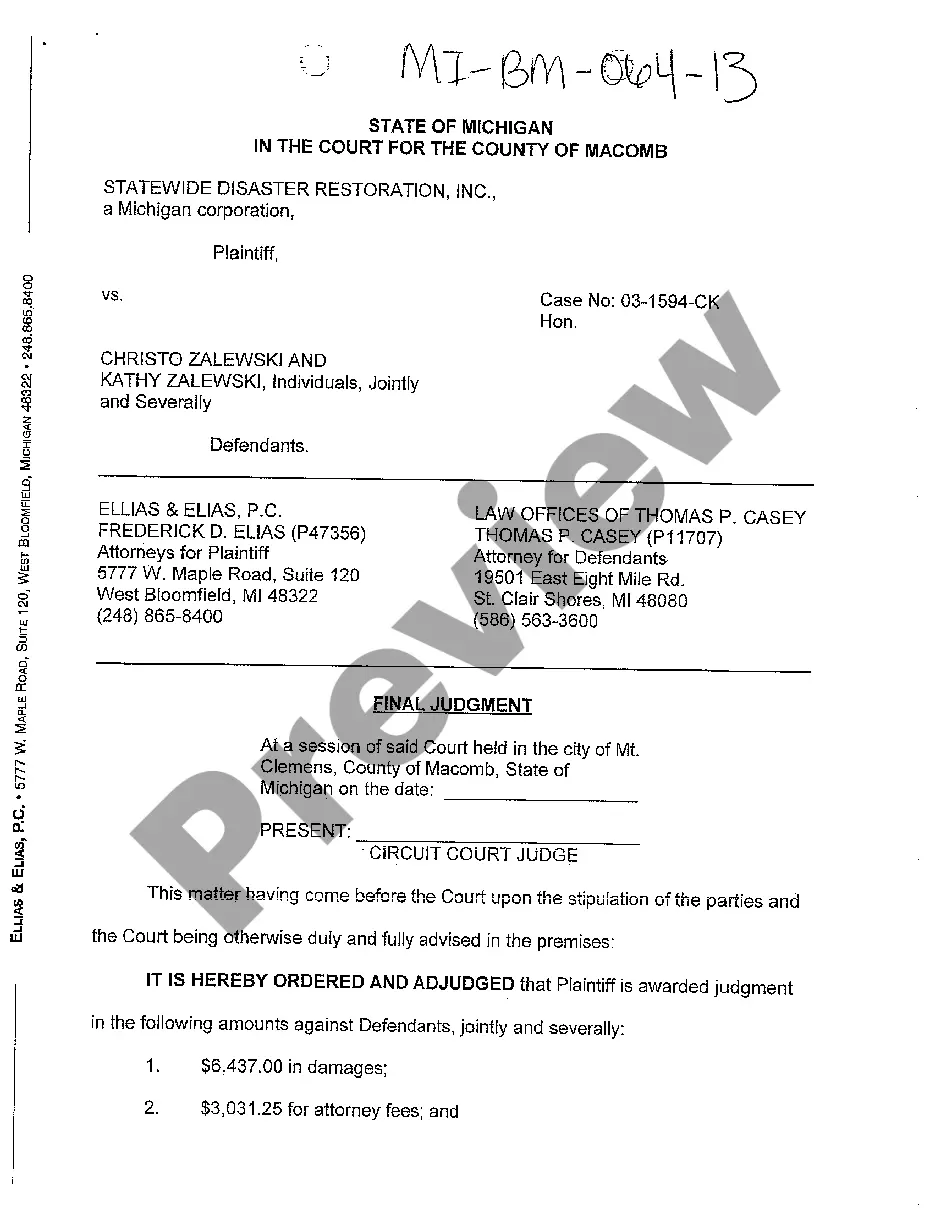
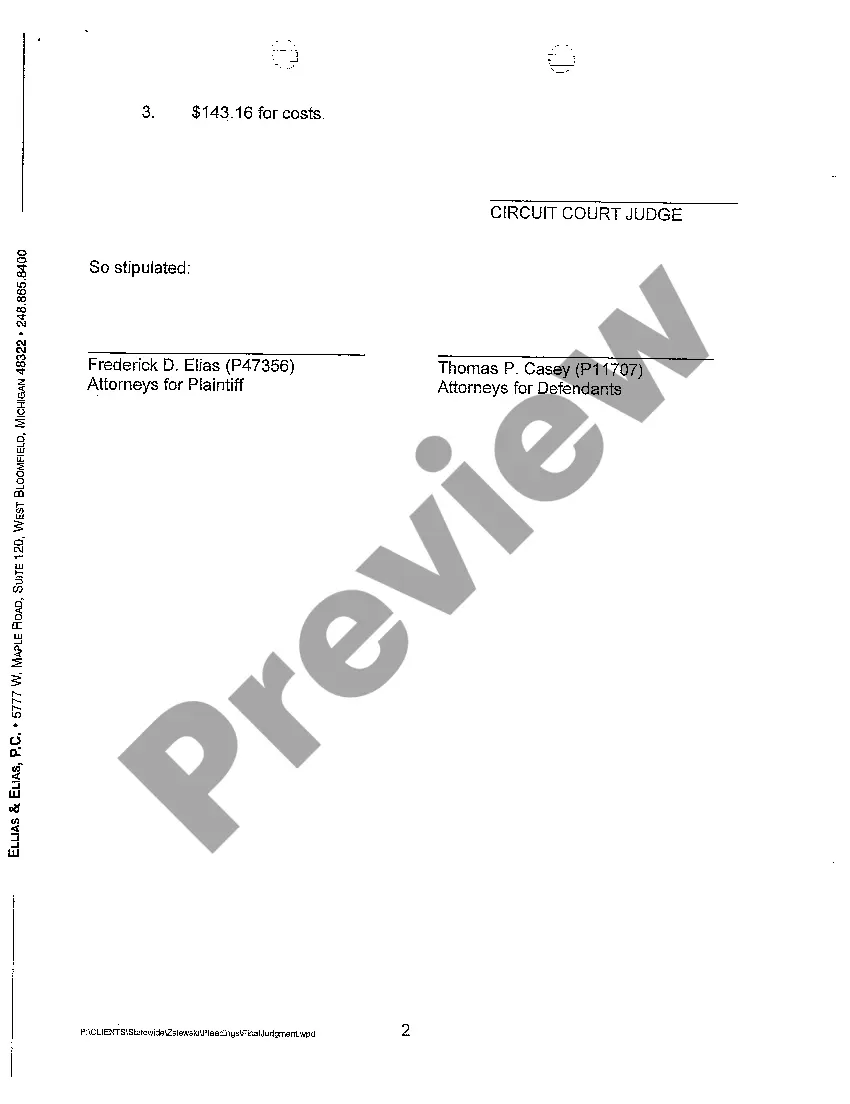
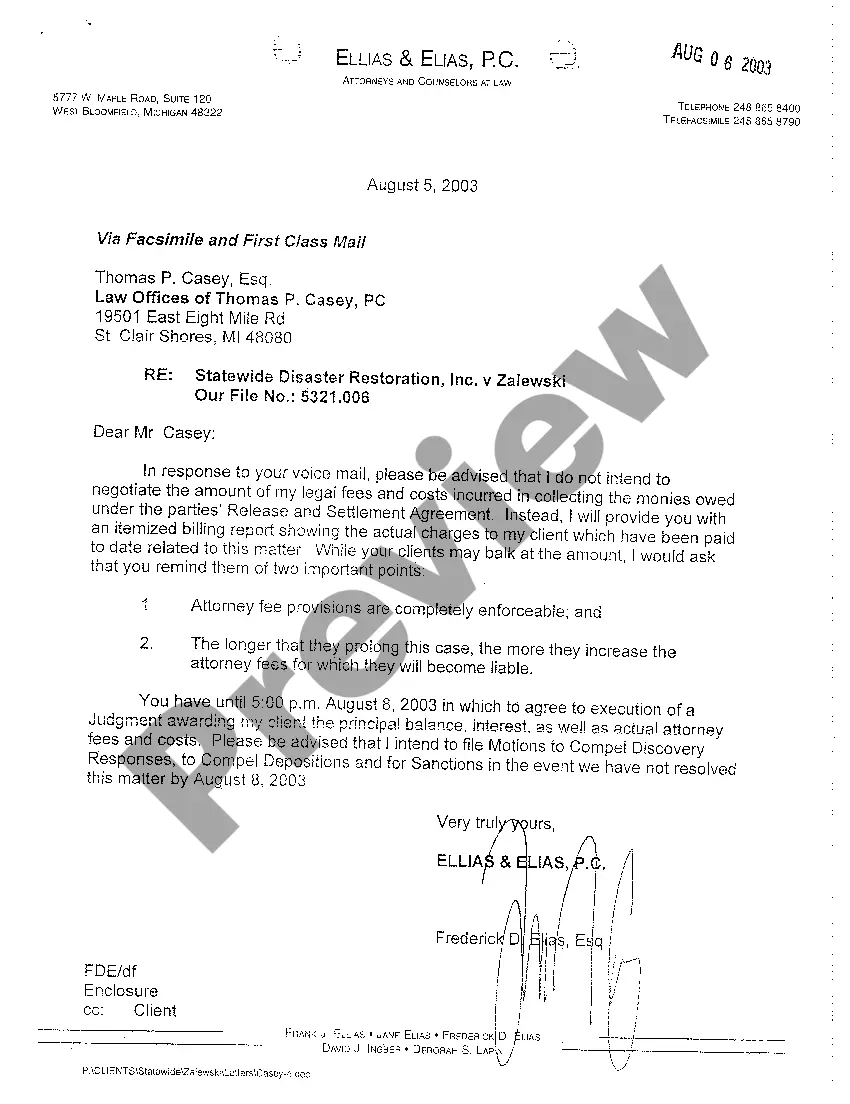
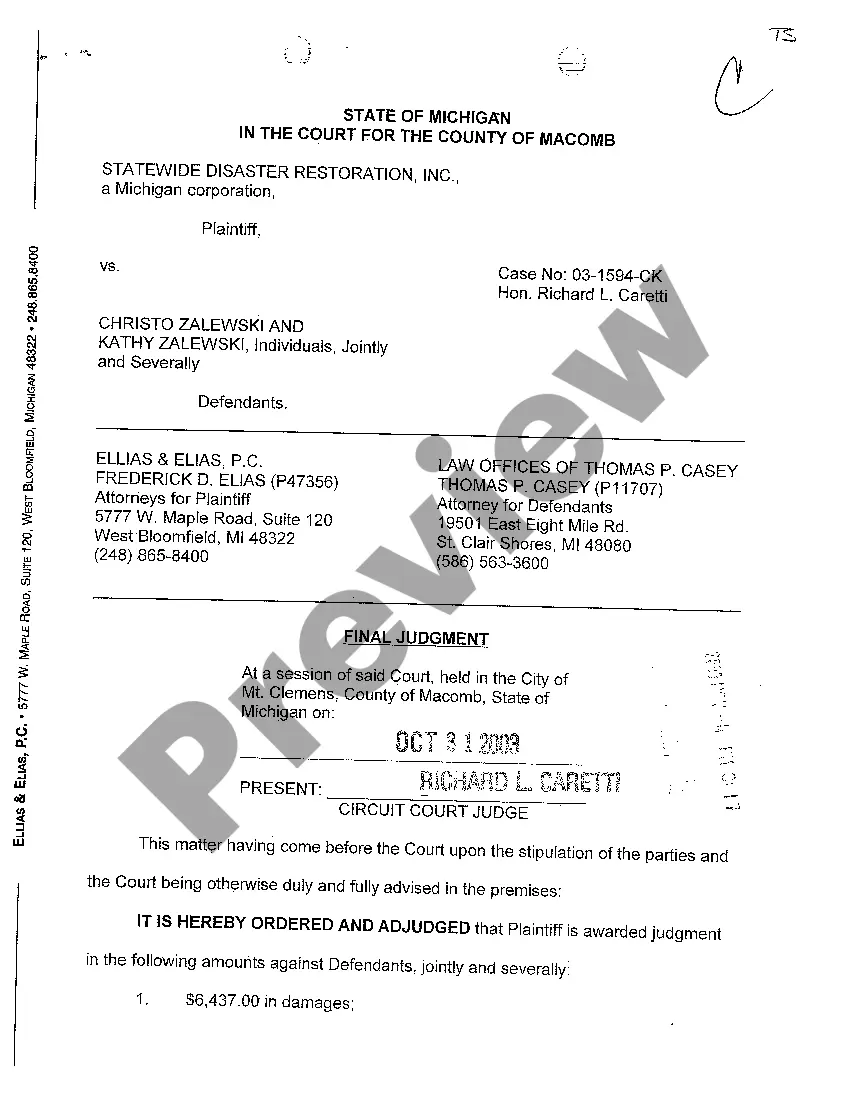
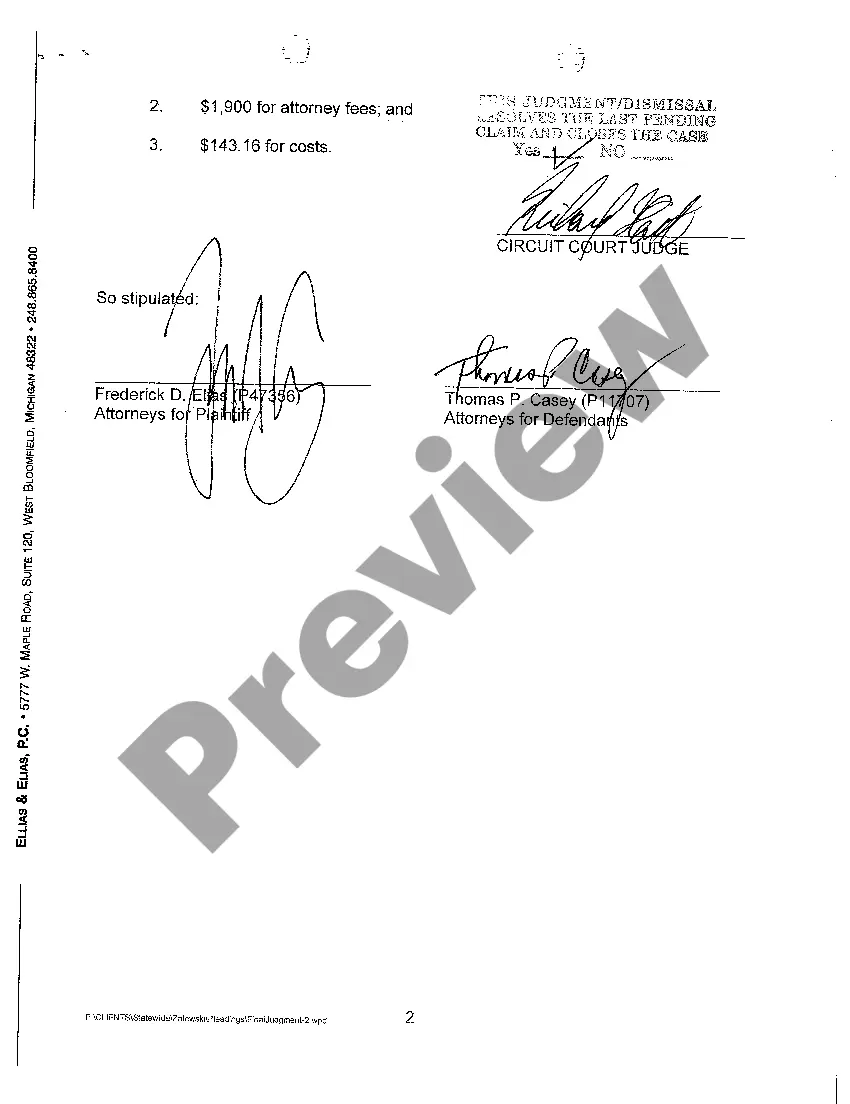
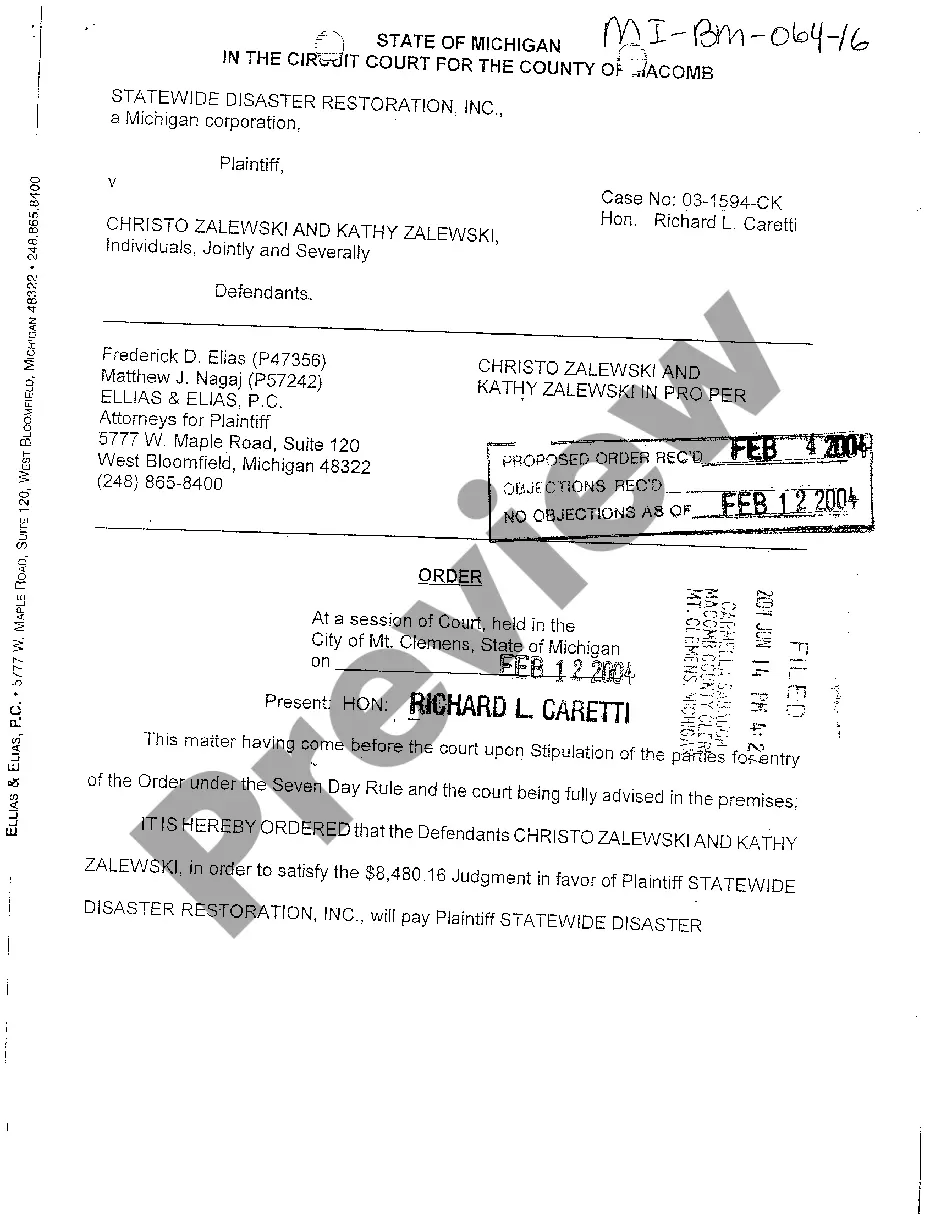
A13 Proposed Final Judgment: In United States legal practice, a 'proposed final judgment' refers to a draft of the court's final decision, which effectively resolves the matter at issue between the parties involved. It is 'proposed' because although it outlines the court's decision, it may undergo further revisions based on the inputs or objections from the involved parties before it becomes final and enforceable.
Step-by-Step Guide to Understanding the A13 Proposed Final Judgment
- Review the Document: Begin by thoroughly reading the proposed final judgment to understand the decisions and conditions laid out by it.
- Consult Legal Representation: Discuss the document with your attorney to clarify any legal jargon and understand the implications for your case.
- Assess Impacts: Evaluate how the decisions in the proposed final judgment will affect your personal or business circumstances.
- File Objections: If there are areas of the judgment you disagree with, prepare and file objections within the deadline specified in the judgment.
- Final Hearing: Attend the final hearing, where the objections are considered, and the judgment is potentially revised before it is finalized.
Risk Analysis of A13 Proposed Final Judgment
- Non-Compliance Risks: Ignoring the conditions of a proposed final judgment can lead to legal penalties, including fines and increased scrutiny.
- Financial Implications: The judgment may impose financial obligations such as damages or costs, impacting financial planning.
- Reputational Damage: Depending on the nature of the judgment, there could be negative effects on personal or corporate reputation.
Key Takeaways
Understanding the structure and implications of a proposed final judgment is crucial for effectively managing its impact. Consulting with legal professionals and actively participating in the process are essential steps for parties involved in legal disputes in the United States.
Best Practices
- Early Consultation: Engage legal advice as soon as a proposed final judgment is issued.
- Document Management: Keep all related documents organized and easily accessible.
- Proactive Participation: Be proactive in the judicial process by preparing necessary documentation and being prepared for court appearances.
FAQ
- What is a proposed final judgment? It's a preliminary version of a court's decision in a legal matter, awaiting final adjustments and approval.
- How can one object to a proposed final judgment? Objections must be formally filed and usually within a strict timeframe, as specified in the judgment documentation.
- Who decides if the proposed final judgment is finalized? The judge overseeing the case will make this decision, taking into account any objections raised by the parties involved.
How to fill out Michigan Proposed Final Judgment?
Obtain any template from 85,000 legal documents, including the Michigan Proposed Final Judgment online with US Legal Forms.
Each template is created and updated by licensed attorneys in the state.
If you already possess a subscription, Log In. Once you are on the form’s page, click the Download button and navigate to My documents for access.
Once your reusable template is prepared, print it out or save it to your device. With US Legal Forms, you will consistently have quick access to the appropriate downloadable sample. The service provides access to documents and categorizes them to simplify your search. Utilize US Legal Forms to quickly and easily obtain your Michigan Proposed Final Judgment.
- Verify the state-specific requirements for the Michigan Proposed Final Judgment you wish to utilize.
- Review the description and preview the template.
- When you are confident that the sample meets your needs, click Buy Now.
- Choose a subscription plan that fits your financial situation.
- Create a personal account.
- Complete your payment using one of two convenient methods: by card or through PayPal.
- Choose a format for downloading the file; you can select either PDF or Word.
- Download the document to the My documents tab.
Form popularity
FAQ
An offer of judgment in Michigan is a legal tool used to encourage settlement between parties in a lawsuit. It represents a party's willingness to resolve the matter before it reaches trial, facilitating a clearer path to agreement. If accepted, it can lead to a quicker resolution and savings on legal expenses. By understanding this process in the context of the Michigan Proposed Final Judgment, you can navigate your legal challenges more effectively.
The offer of judgment rule in Michigan allows a party to propose a settlement to the opposing party prior to trial. This rule aims to encourage settlements and reduce trial loads by providing a framework for settlements. If a party rejects the offer and ends up receiving a less favorable judgment, they may be responsible for the other party's legal costs incurred after the offer. This rule is significant when considering the implications of a Michigan Proposed Final Judgment.
The downside of an offer of judgment may involve the risk of incurring costs if the judgment does not favor the rejecting party. If their awarded amount is lower than the original offer, they could end up paying the legal fees of the offering party. Moreover, rejecting an offer of judgment can sometimes prolong the litigation process, which can be stressful and costly. Therefore, it's vital to weigh these potential drawbacks when dealing with a Michigan Proposed Final Judgment.
An offer of judgment is a formal proposal made by one party in a lawsuit to settle the case before it goes to trial. By accepting this offer, the other party can avoid further legal expenses and possibly unfavorable outcomes. If the offer is not accepted and the court's judgment is less favorable than the offer, the rejecting party could face additional costs. Thus, understanding the implications of an offer of judgment is crucial when considering a Michigan Proposed Final Judgment.
The 77 day rule in Michigan refers to the time frame within which a proposed final judgment must be entered in cases involving certain civil actions. This rule ensures that parties have a clear timeline for moving forward in their cases. Once the 77 days have passed, the court may consider the matter for final judgment. Understanding this rule is essential when navigating the Michigan Proposed Final Judgment process.
To domesticate a judgment in Michigan, you first need to file a petition in the appropriate court along with the original judgment from another jurisdiction. This process ensures that the Michigan Proposed Final Judgment is enforceable within the state. It's vital to follow the statutory requirements carefully, as errors can delay the process. Additionally, you may benefit from using platforms like uslegalforms to complete your paperwork efficiently.
The 7 day rule in Michigan court stipulates that you must provide proper notice of certain motions at least seven days in advance. This includes motions related to the Michigan Proposed Final Judgment, ensuring all parties have time to prepare. Adhering to this rule is crucial for a fair process and effective communication among all involved. Always check court guidelines to avoid timing issues.
A 6500 motion in Michigan refers to a request to amend a judgment by addressing a clerical error or by other means. This motion helps ensure that the Michigan Proposed Final Judgment reflects the true intentions of the court. By filing this motion, you can correct mistakes that may have occurred in the original judgment. It's important to file this motion promptly to maintain the integrity of your judgment.