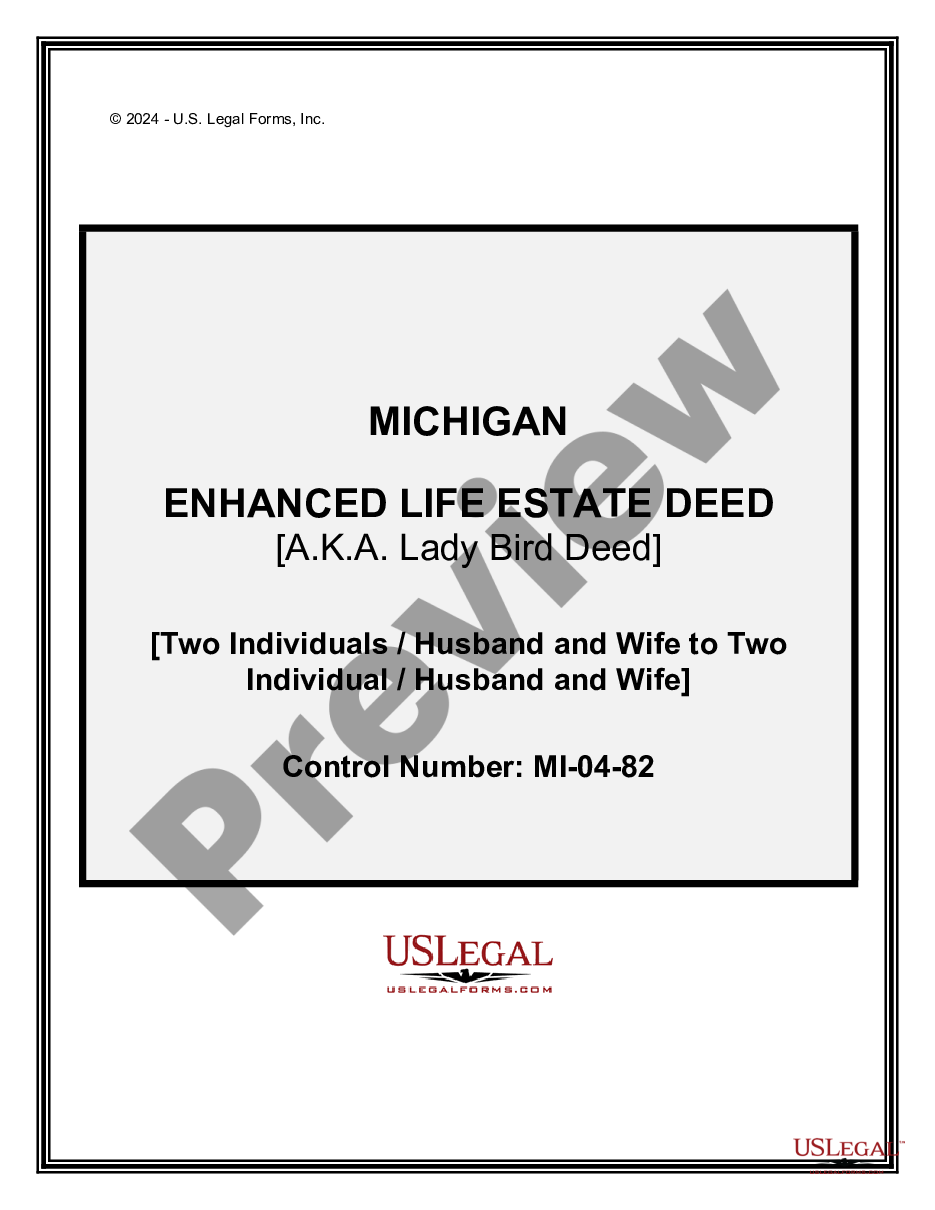
Michigan Enhanced Life Estate or Lady Bird Deed - Two Individuals / Husband and Wife to Two Individuals / Husband and Wife
About this form
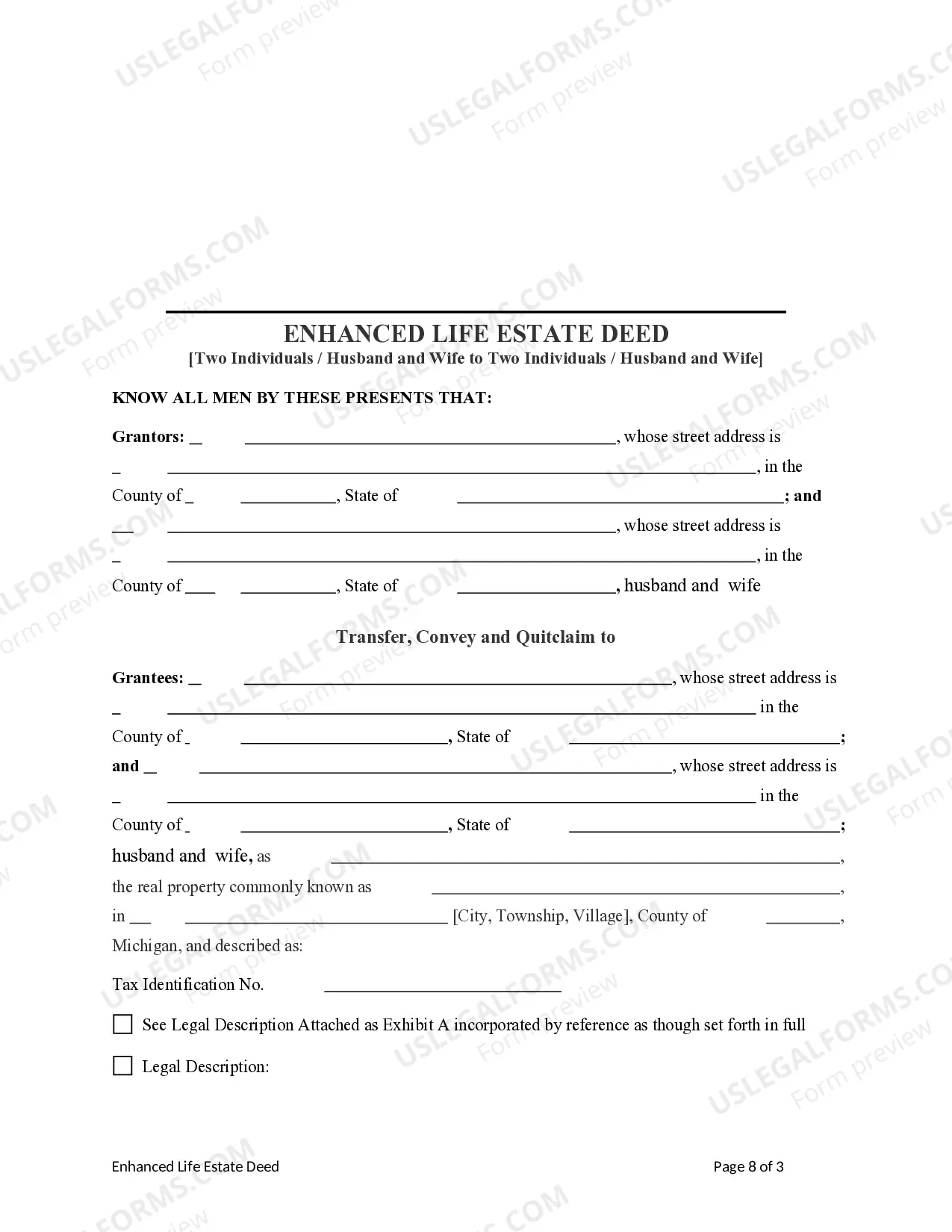
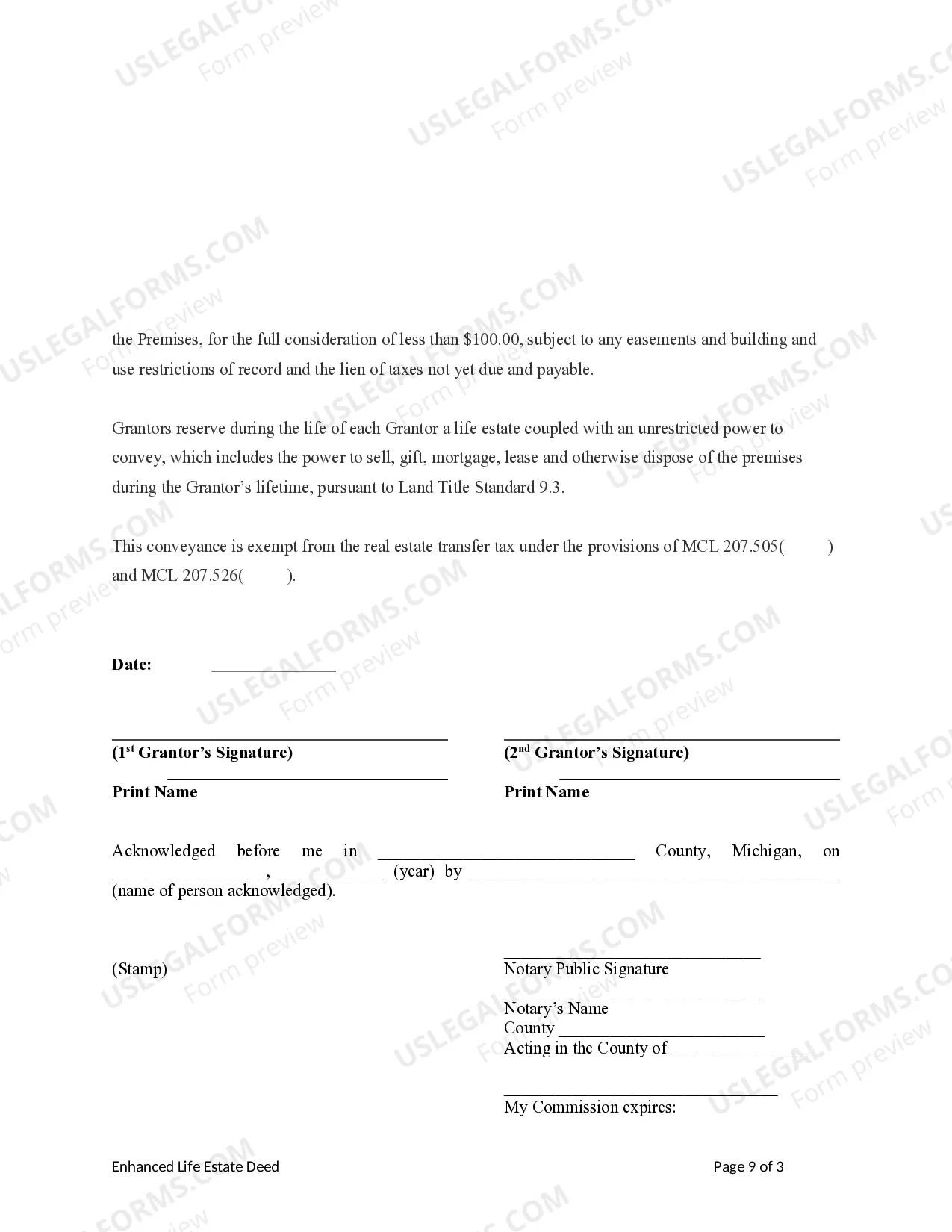
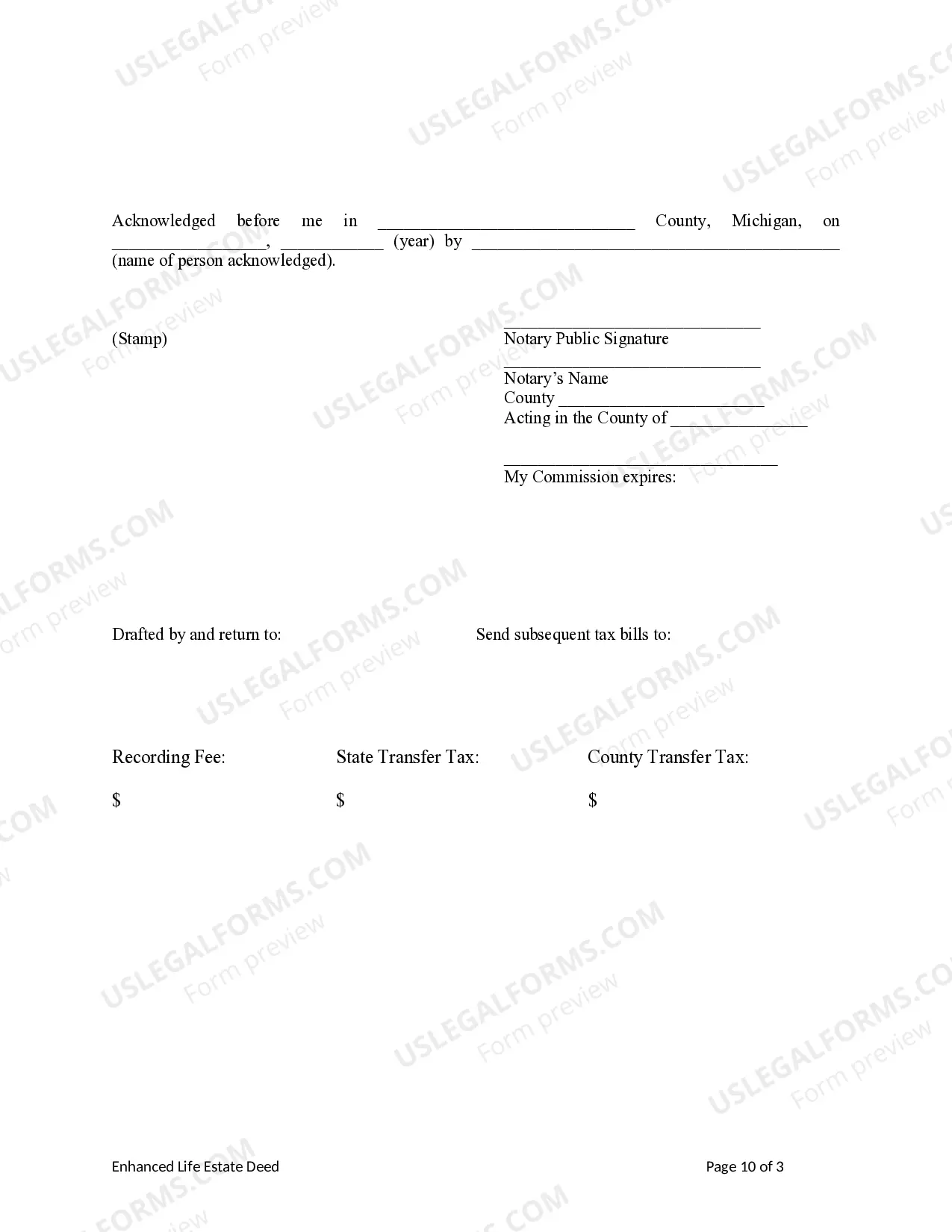
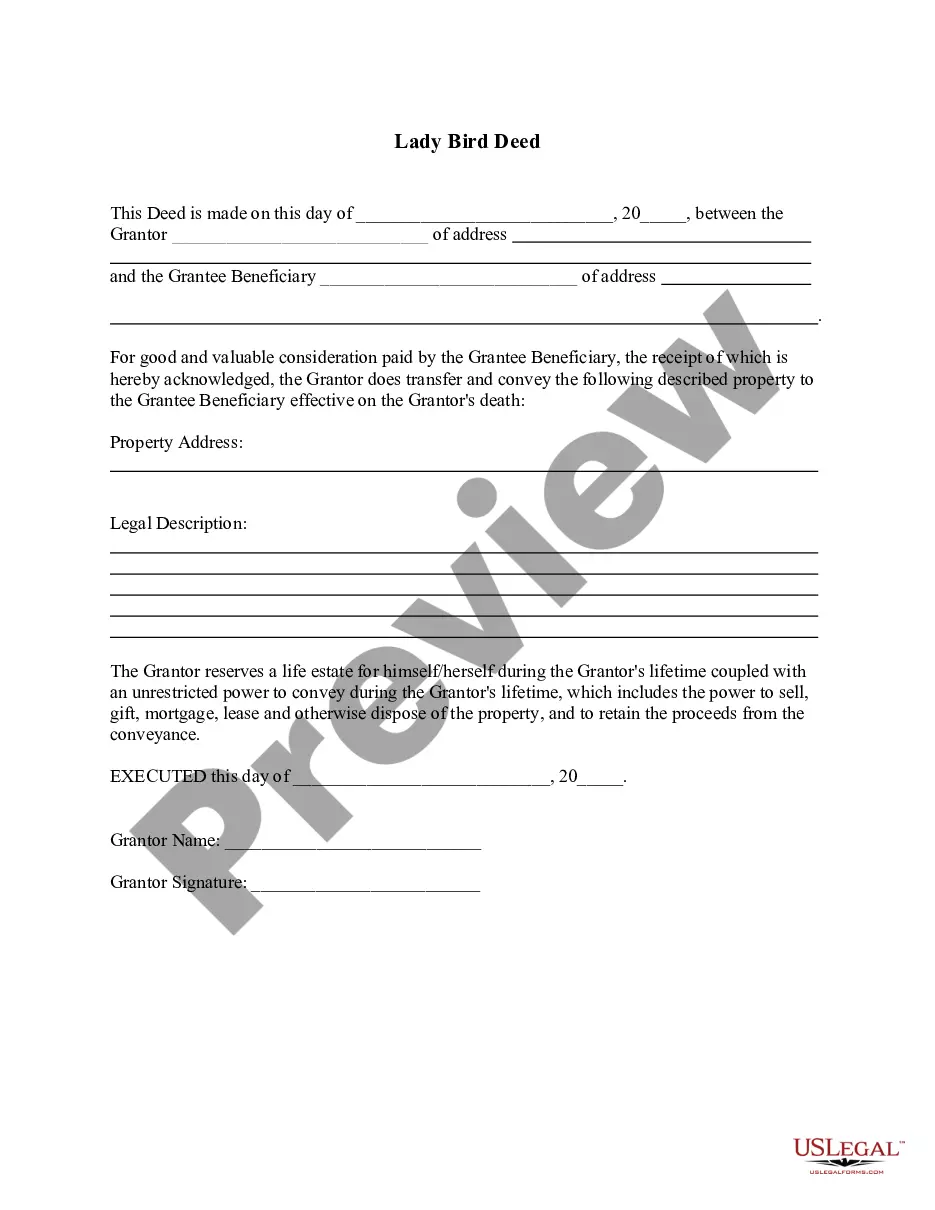
The Enhanced Life Estate or Lady Bird Deed allows property owners, specifically two individuals or husband and wife, to convey their property to another couple while retaining a right to live in and use the property during their lifetime. This form differs from a traditional Quitclaim Deed by allowing the grantors to maintain control over the property, including the ability to sell or mortgage it without needing to notify the grantees. In essence, the Lady Bird Deed provides a way to transfer property while ensuring continued benefits for the original owners.
Key parts of this document
- Identification of Grantors and Grantees.
- Description of the property being transferred.
- Retention of an enhanced life estate by the Grantors.
- Rights of the Grantors to manage the property.
- Conditions regarding transferability of interests.



When to use this form
This form is typically used when two individuals or a married couple wish to transfer ownership of real property to another couple while retaining the right to live on and use the property for their lifetimes. It is particularly beneficial for estate planning, allowing property owners to transfer their assets while avoiding probate and maintaining control over their property during their lifetime.
Who this form is for
- Property owners seeking to transfer property to family or loved ones.
- Married couples wanting to facilitate an estate plan while retaining life interests.
- Individuals looking to maintain control of their property rights post-transfer.
Steps to complete this form
- Identify the Grantors (individuals or married couple) involved in the transaction.
- Clearly describe the property being transferred, including its legal description.
- Specify the Grantees (the new owners) who will receive the property.
- Indicate the retention of the enhanced life estate by the Grantors.
- Enter dates, and ensure all parties sign the document where indicated.
Does this form need to be notarized?
This document requires notarization to meet legal standards. US Legal Forms provides secure online notarization powered by Notarize, allowing you to complete the process through a verified video call, available 24/7.
Get your form ready online
Our built-in tools help you complete, sign, share, and store your documents in one place.
Make edits, fill in missing information, and update formatting in US Legal Forms—just like you would in MS Word.
Download a copy, print it, send it by email, or mail it via USPS—whatever works best for your next step.
Sign and collect signatures with our SignNow integration. Send to multiple recipients, set reminders, and more. Go Premium to unlock E-Sign.
If this form requires notarization, complete it online through a secure video call—no need to meet a notary in person or wait for an appointment.
We protect your documents and personal data by following strict security and privacy standards.

Make edits, fill in missing information, and update formatting in US Legal Forms—just like you would in MS Word.

Download a copy, print it, send it by email, or mail it via USPS—whatever works best for your next step.

Sign and collect signatures with our SignNow integration. Send to multiple recipients, set reminders, and more. Go Premium to unlock E-Sign.

If this form requires notarization, complete it online through a secure video call—no need to meet a notary in person or wait for an appointment.

We protect your documents and personal data by following strict security and privacy standards.
Common mistakes to avoid
- Failing to accurately describe the property being transferred.
- Not specifying how the Grantees will hold the property (e.g., Tenants in Common, Joint Tenants).
- Omitting signature lines for all parties involved in the transaction.
Benefits of completing this form online
- Convenience of completing the form from home without needing multiple visits to a lawyer.
- Editability, allowing users to tailor the document to their specific needs.
- Quick access to legal templates prepared by licensed attorneys.
Main things to remember
- This deed allows for property transfer while retaining rights for the grantors until death.
- Useful for couples looking to manage estate planning and avoid probate.
- Ensure all parties sign and provide necessary property details for a valid deed.
- Consult state-specific guidelines to comply with local laws regarding the form.
Looking for another form?
Form popularity
FAQ
Using a Lady Bird Deed in Michigan allows you to retain control of your property during your lifetime, meaning that you can still sell or mortgage your property at any time if you want.Once you pass, your tax basis in the property will step up to its value at death.
A Lady Bird Deed (LBD) is a deed which in which the grantor retains a life estate and makes an inter vivos transfer of the remainder interest while also retaining the ability to revoke or alter the deed without consent of the remainder beneficiary.
Avoid probate of the property. keep the right to use and profit from the property for your lifetime. keep the right to sell the property at any time. avoid making a gift that might be subject to federal gift tax. avoid jeopardizing your eligibility for Medicaid.
A lady bird deed is an estate planning tool that enables a Medicaid beneficiary to protect their home as an inheritance from their state's Medicaid Estate Recovery Program. A lady bird (ladybird) deed (also called an enhanced life estate deed, lady bird trust or a transfer on death deed) is a type of life estate deed.
While you can draft a Ladybird Deed on your own, it is always best to have something like this done by an experienced attorney. These are documents that need to be done correctly, or it can create additional issues for your loved ones.
A Lady Bird deed avoids probate, so the home is not part of the probate estate and Medicaid cannot go after it.
This right to rescind is what distinguishes a Lady Bird Deed from a standard Life Estate Deed.A properly written, signed and filed Enhanced Life Estate Deed does supersede the terms of the owner's Will, so long as the grantor has not exercised the retained right to reclaim ownership while living.