Michigan Defendant's Witness and Exhibit List
Overview of this form
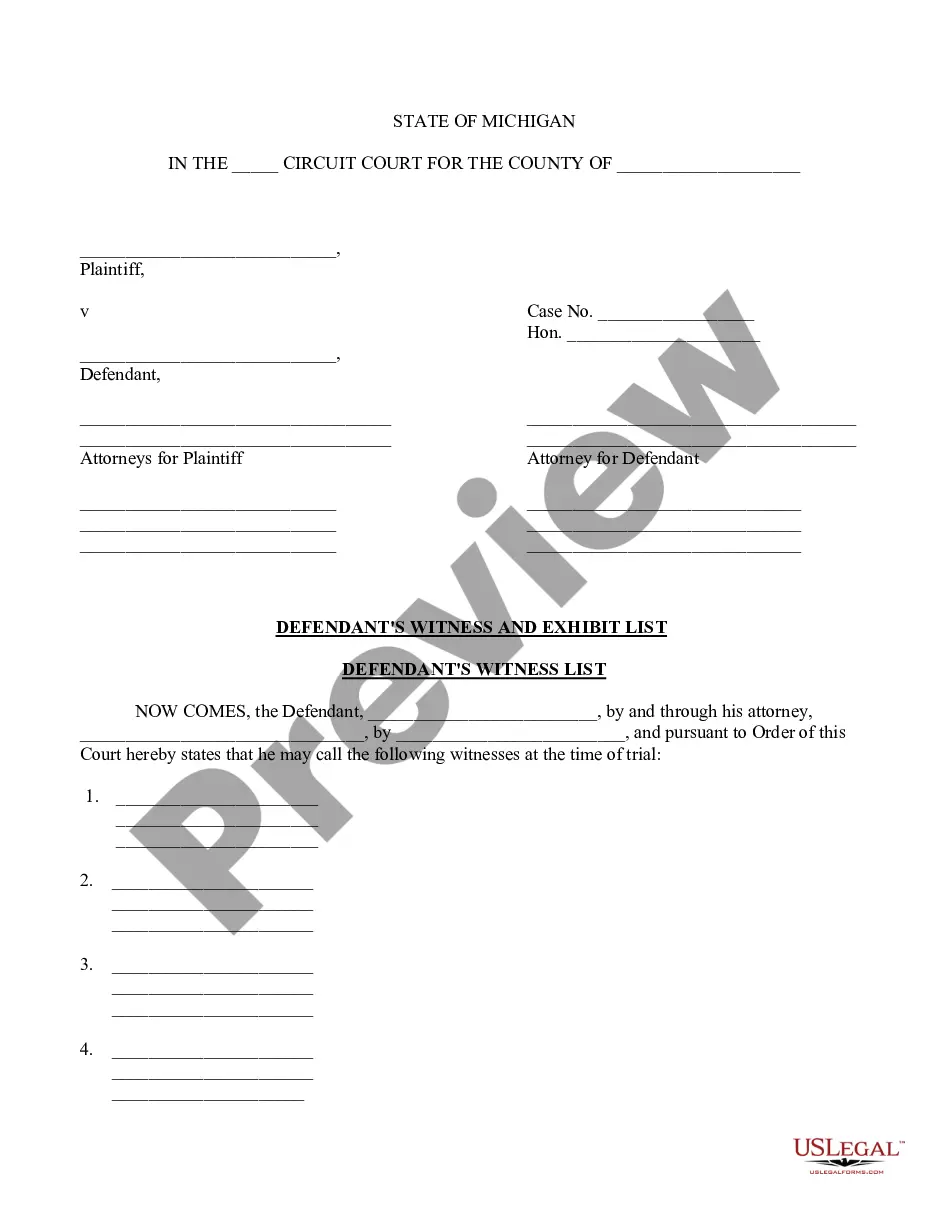
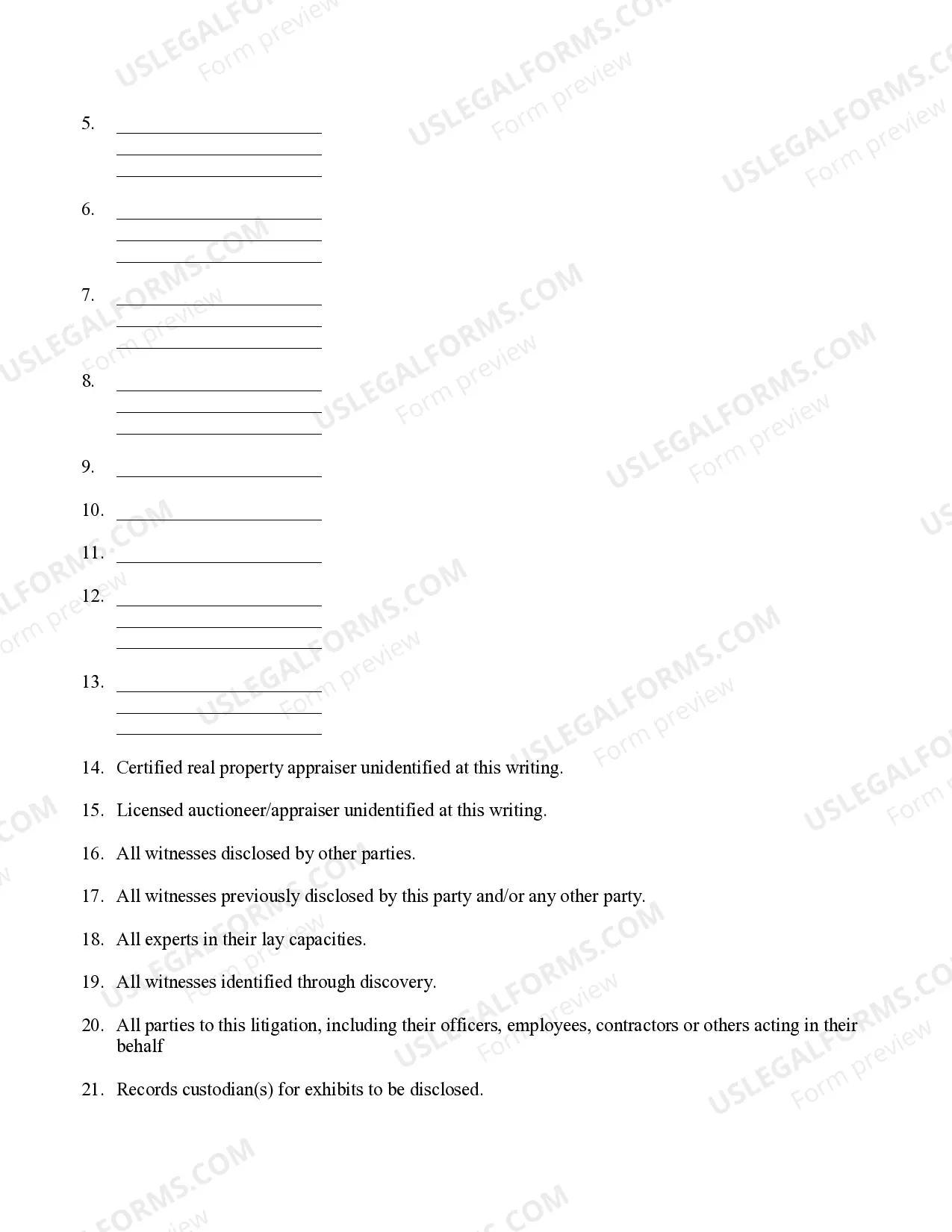
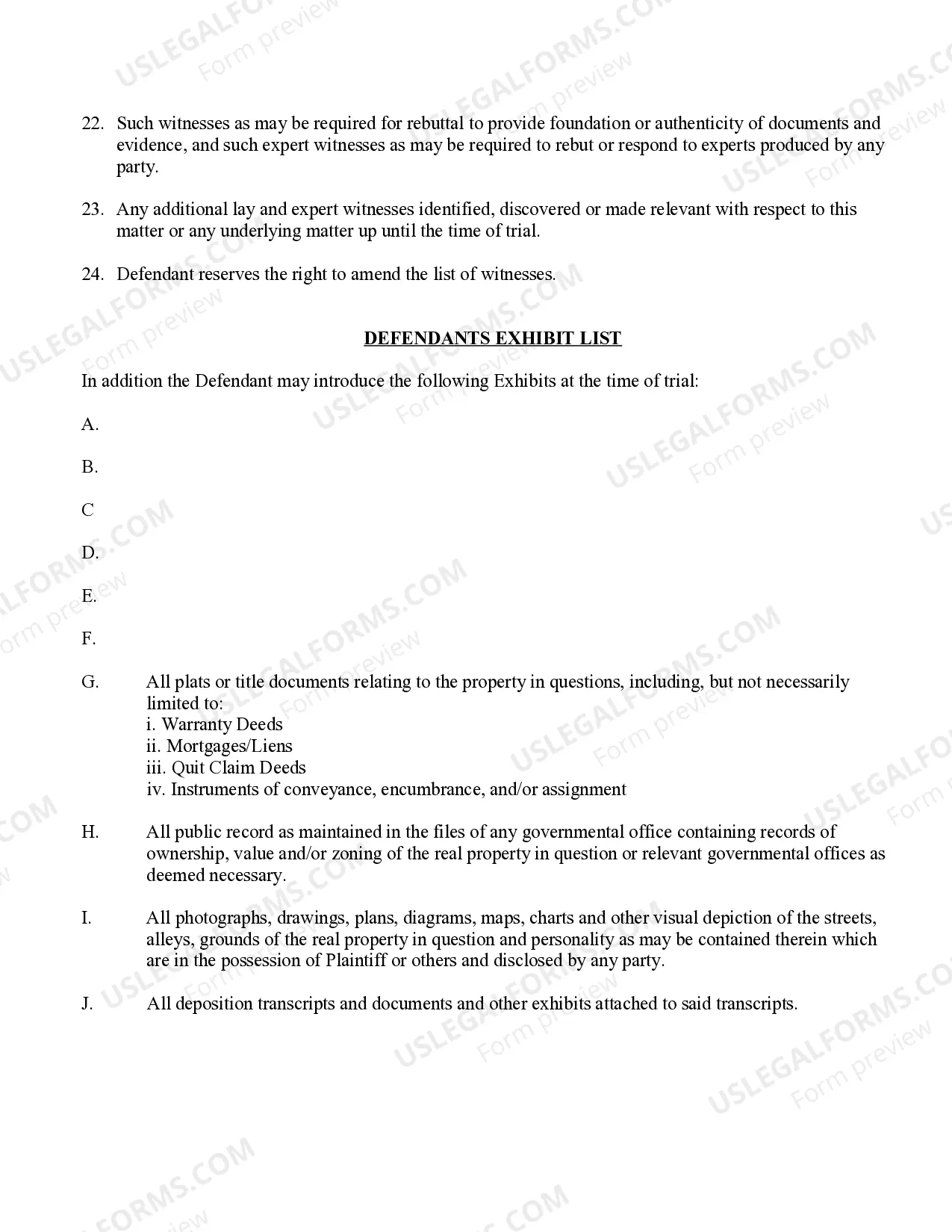
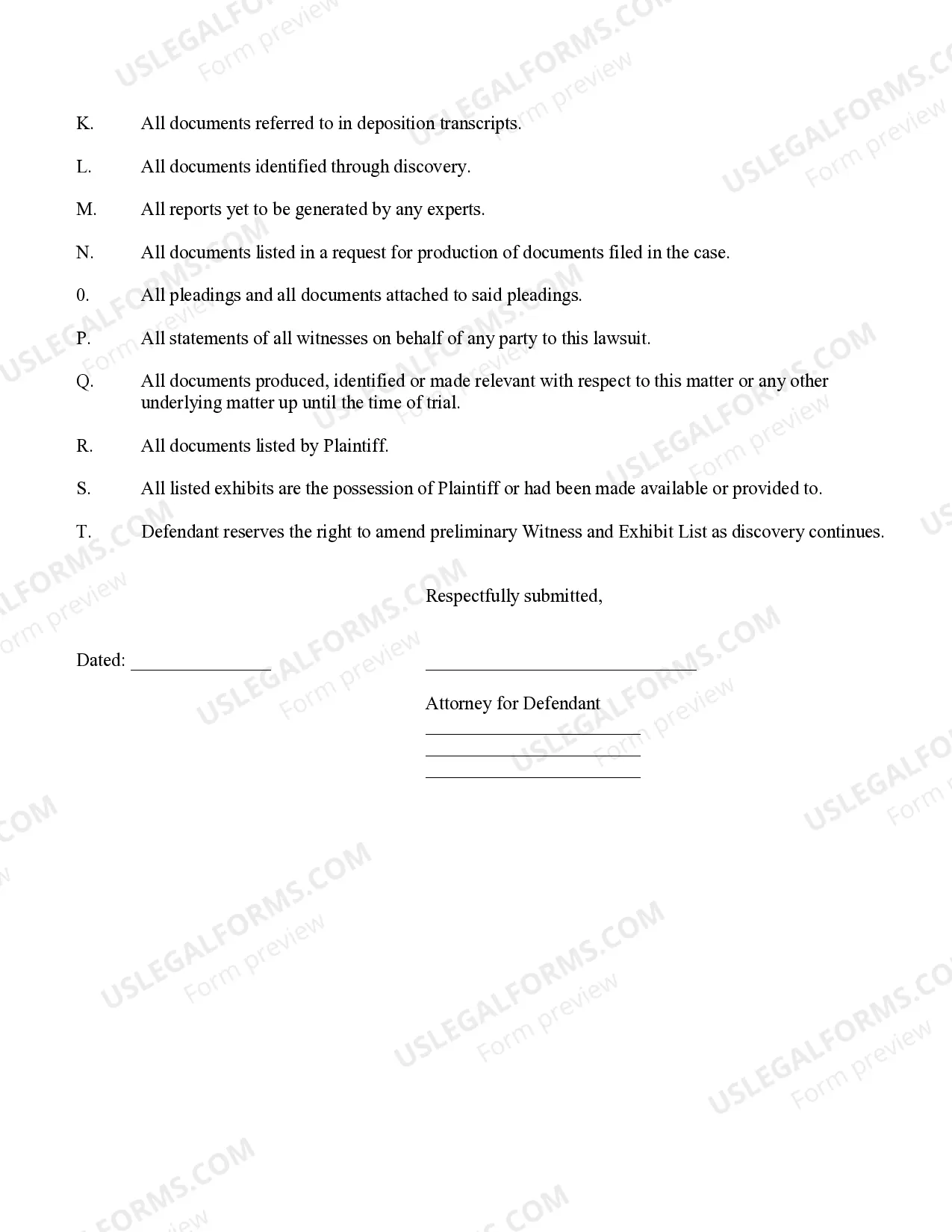
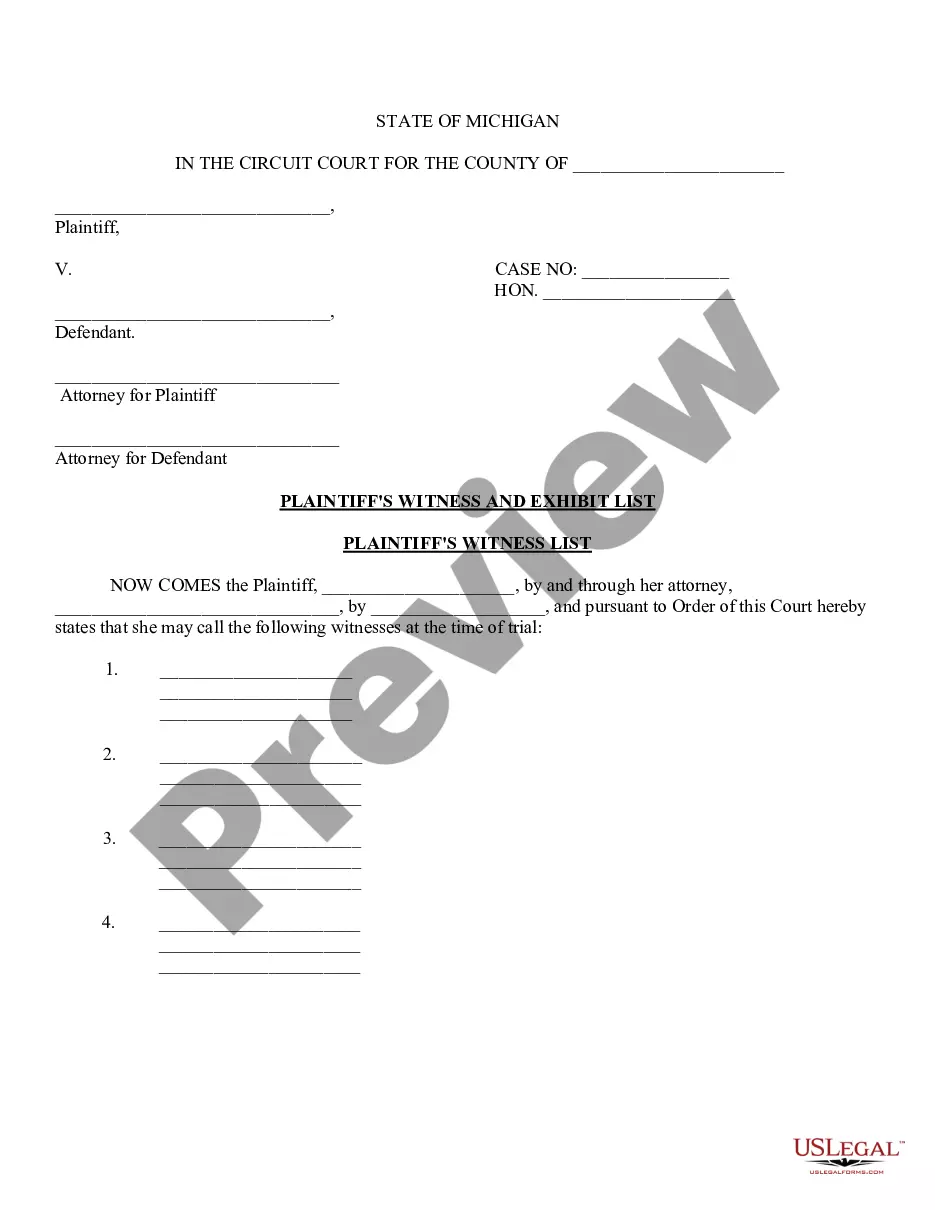
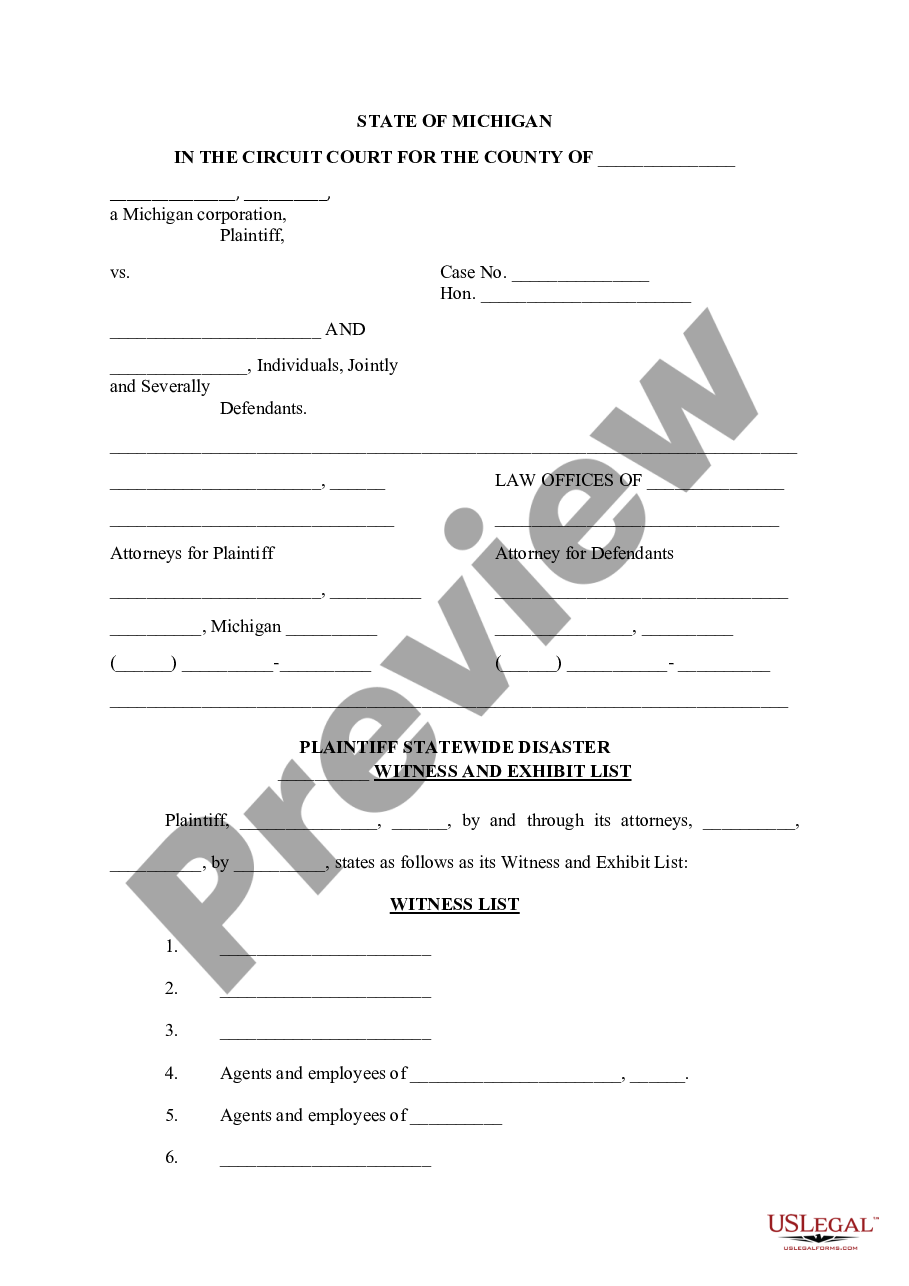
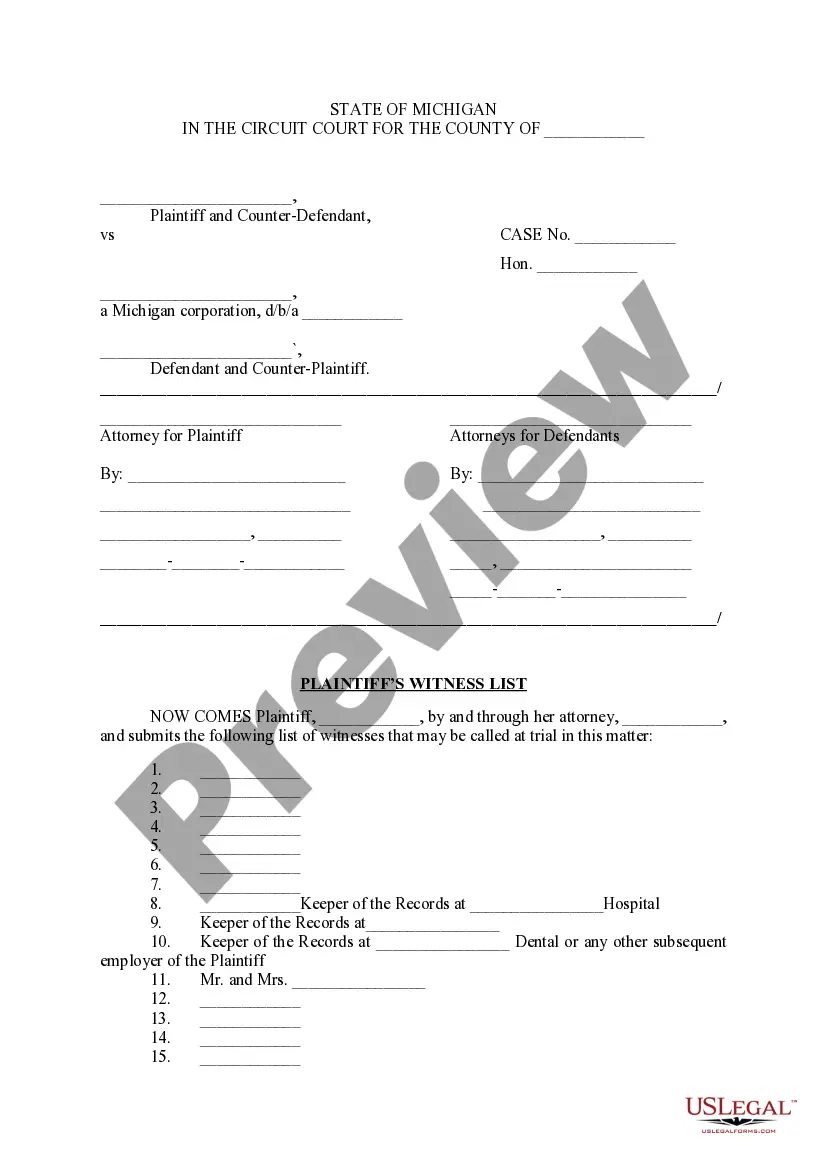
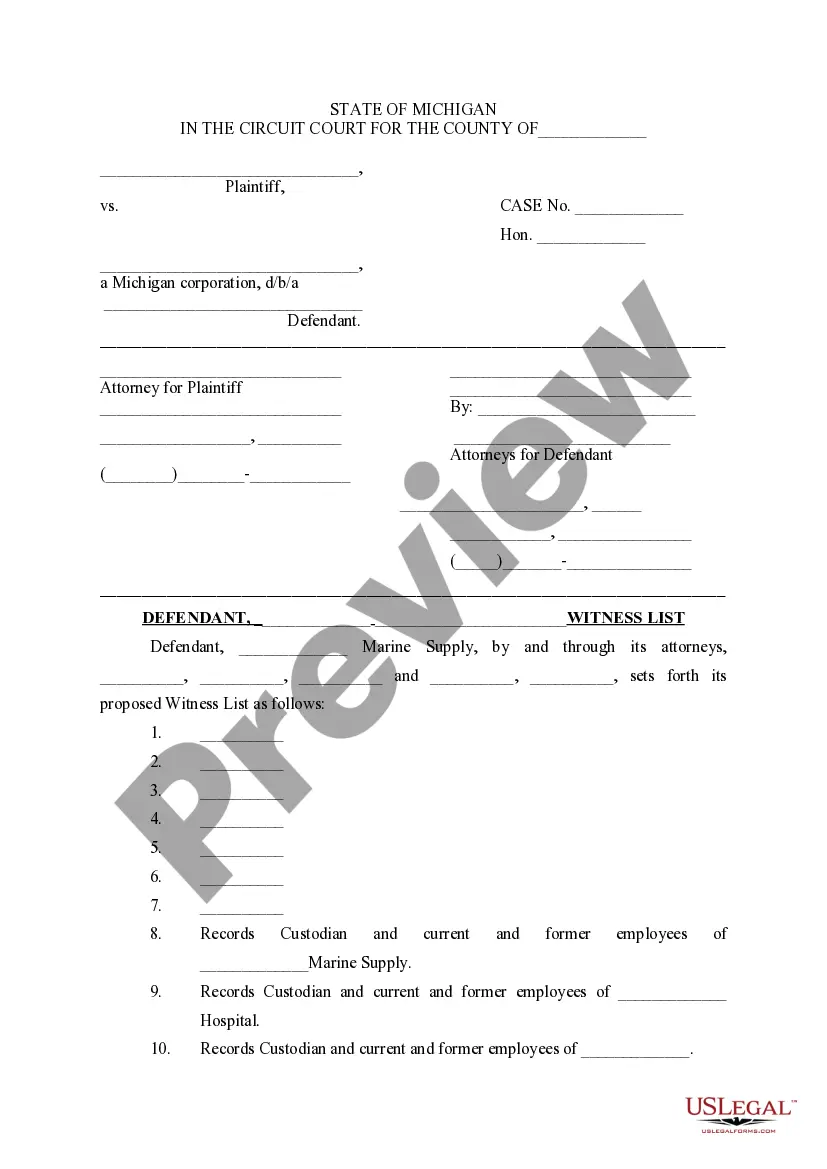
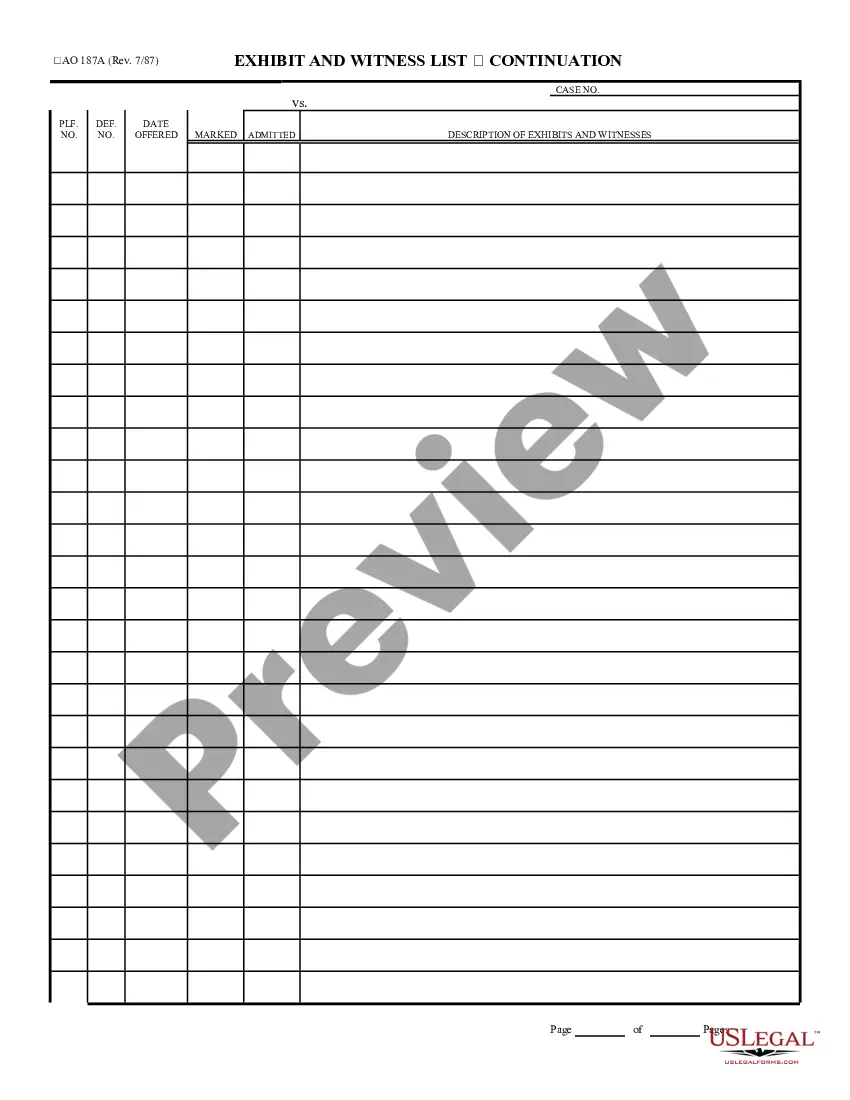
The Defendant's Witness and Exhibit List is a formal document used in court to detail the witnesses the defendant plans to call and the exhibits they intend to introduce during trial. This form helps to outline the evidence and testimonies that will support the defendant's case, ensuring all parties are aware before the proceeding. It is crucial in organizing the defense's case and differs from other forms, such as the Plaintiff's Witness and Exhibit List, which serves a similar purpose for the opposing party.
Key components of this form
- Defendant's Information: Basic identification details about the defendant.
- Witness List: Names and details of witnesses the defendant may call at trial.
- Exhibit List: Items or documents that the defendant plans to introduce as evidence.
- Certification: Affirms the accuracy and completeness of the witness and exhibit list.
- Amendment Clause: Allows for the possibility to amend the list as discovery continues.
Common use cases
Intended users of this form
- Defendants in civil or criminal cases who are preparing for trial.
- Attorneys representing defendants in legal proceedings.
- Individuals seeking to understand the presenting evidence and testimonies in their cases.
Completing this form step by step
- Identify the defendant and provide relevant details, including their attorney's information.
- List the names of witnesses the defendant intends to call, along with a brief description if necessary.
- Outline the exhibits to be introduced, ensuring each item is clearly identified.
- Review the list for accuracy and completeness before submission.
- Sign and date the document, affirming its validity and readiness for court.
Notarization requirements for this form
This form does not typically require notarization unless specified by local law. However, always check with local court requirements to ensure proper compliance.
Get your form ready online
Our built-in tools help you complete, sign, share, and store your documents in one place.
Make edits, fill in missing information, and update formatting in US Legal Forms—just like you would in MS Word.
Download a copy, print it, send it by email, or mail it via USPS—whatever works best for your next step.
Sign and collect signatures with our SignNow integration. Send to multiple recipients, set reminders, and more. Go Premium to unlock E-Sign.
If this form requires notarization, complete it online through a secure video call—no need to meet a notary in person or wait for an appointment.
We protect your documents and personal data by following strict security and privacy standards.

Make edits, fill in missing information, and update formatting in US Legal Forms—just like you would in MS Word.

Download a copy, print it, send it by email, or mail it via USPS—whatever works best for your next step.

Sign and collect signatures with our SignNow integration. Send to multiple recipients, set reminders, and more. Go Premium to unlock E-Sign.

If this form requires notarization, complete it online through a secure video call—no need to meet a notary in person or wait for an appointment.

We protect your documents and personal data by following strict security and privacy standards.
Common mistakes to avoid
- Omitting the required information about witnesses or exhibits.
- Failing to file the form with the court or serve it to opposing counsel.
- Not updating the list as new evidence or witnesses are discovered.
- Neglecting to include important details about the relevance of the witnesses or exhibits.
Benefits of using this form online
- Convenience of immediate access to download the form in various formats.
- Editability allows for updates as the case develops.
- Reliability in ensuring compliance with legal standards.
Legal use & context
- This form is used in legal contexts to help ensure fairness by notifying all parties of the evidence presented.
- It plays a role in the discovery process, as it allows both sides to prepare for what will be introduced in court.
- Noncompliance with submission deadlines may result in the exclusion of witnesses or exhibits during trial.
Quick recap
- The Defendant's Witness and Exhibit List is essential for trial preparation.
- Proper completion and timely filing are crucial to avoid issues in court.
- Understanding local requirements can enhance the effectiveness of this form.
Looking for another form?
Form popularity
FAQ
You should place Exhibit stickers on each exhibit so that the court reporter does not need to take time to do this at trial. Create a master index of each exhibit including the author/source, date, type and short description to identify the exhibit. You should have a minimum of three copies of each exhibit.
Typically, the court requires you to make copies of each exhibit you want to have admitted into evidence, and place a specific sticker on each page that identifies the exhibit with a particular number or letter. Some courts require different colored stickers for the plaintiff and the defendant in each case.
An exhibit list is a court document that lists all the exhibits that you intend to (or may) use at trial.
1 : to submit (something, such as a document) to a court or officer in course of proceedings also : to present or offer officially or in legal form. 2 : to present to view: such as. a : to show or display outwardly especially by visible signs or actions exhibited no fear.
Complete the legal document to determine where to attach the exhibit. Include a typed notation within the body of the legal document where the exhibit should be referenced. Label the exhibit with the assigned identifying number or letter. Insert a tab page at the end of the legal document.
In a contract sense, an exhibit is a document with an identifying mark, such as a number or a letter, and it is a part of the contract. These documents could be called: Exhibits. Schedules. Attachments.
An exhibit is a document, record or other tangible object formally introduced as evidence in the court. Exhibit list is list of such Exhibits a party wants to produce before the court to prove his case.
Before you ever go to court, think about the evidence you want to use to prove your case. Mark each piece of evidence with an exhibit number (attach a sticker labeled Exhibit 1, Exhibit 2, etc.). Bring these marked Exhibits with you to court.
Generally, exhibits are labeled in sequential alphabetical or numerical order. For example, Exhibit A is followed by Exhibit B, etc. This gives the reader clear guideposts to follow throughout the document.