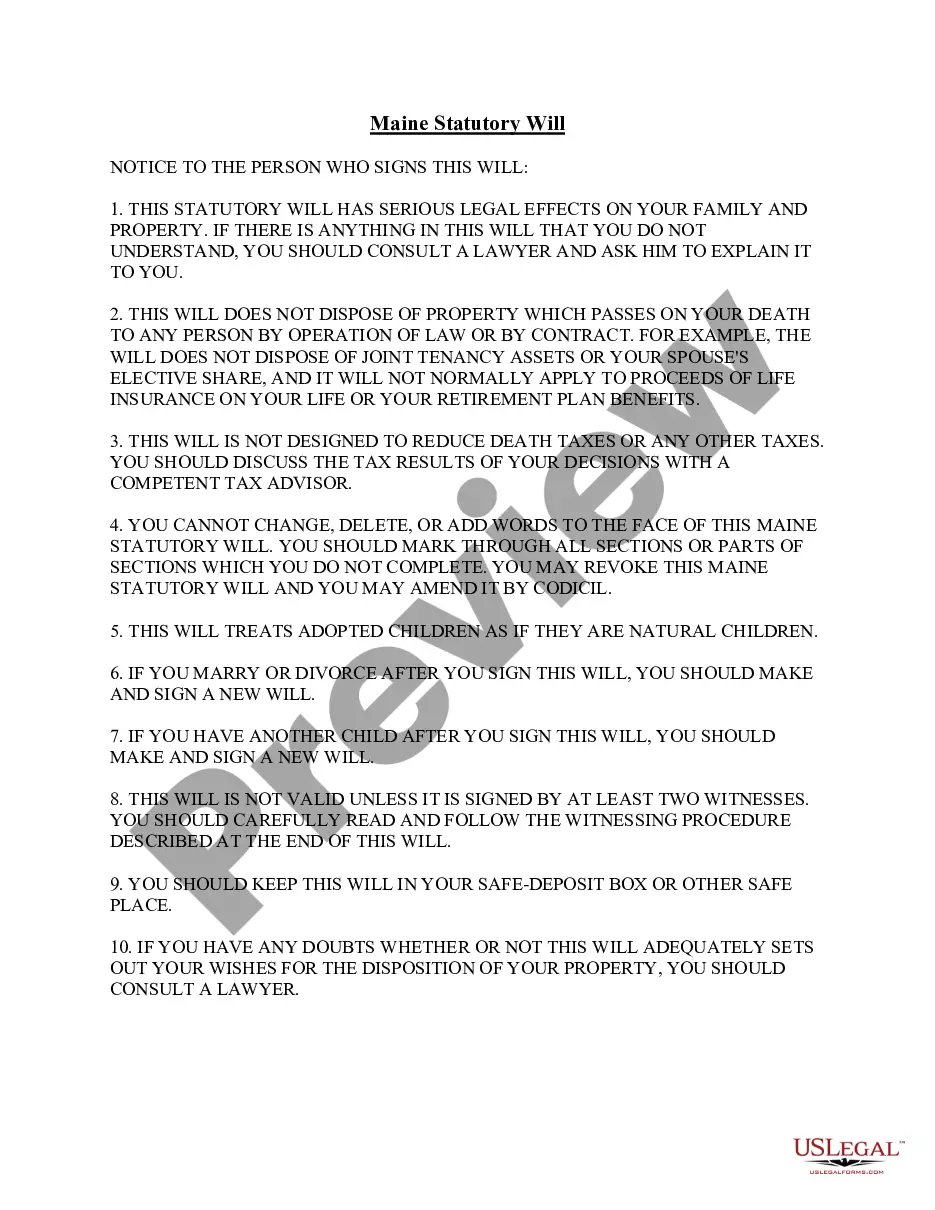
Maine Statutory Will Form
Overview of this form
The Maine Statutory Will Form is a legally recognized document in the State of Maine that allows individuals to outline their wishes for the distribution of their property after death. It differs from other will forms by adhering to Maine's statutory requirements, ensuring that your will is valid and enforceable. This form facilitates the appointment of a personal representative and specifies who will inherit your assets, streamlining the estate planning process.
What’s included in this form
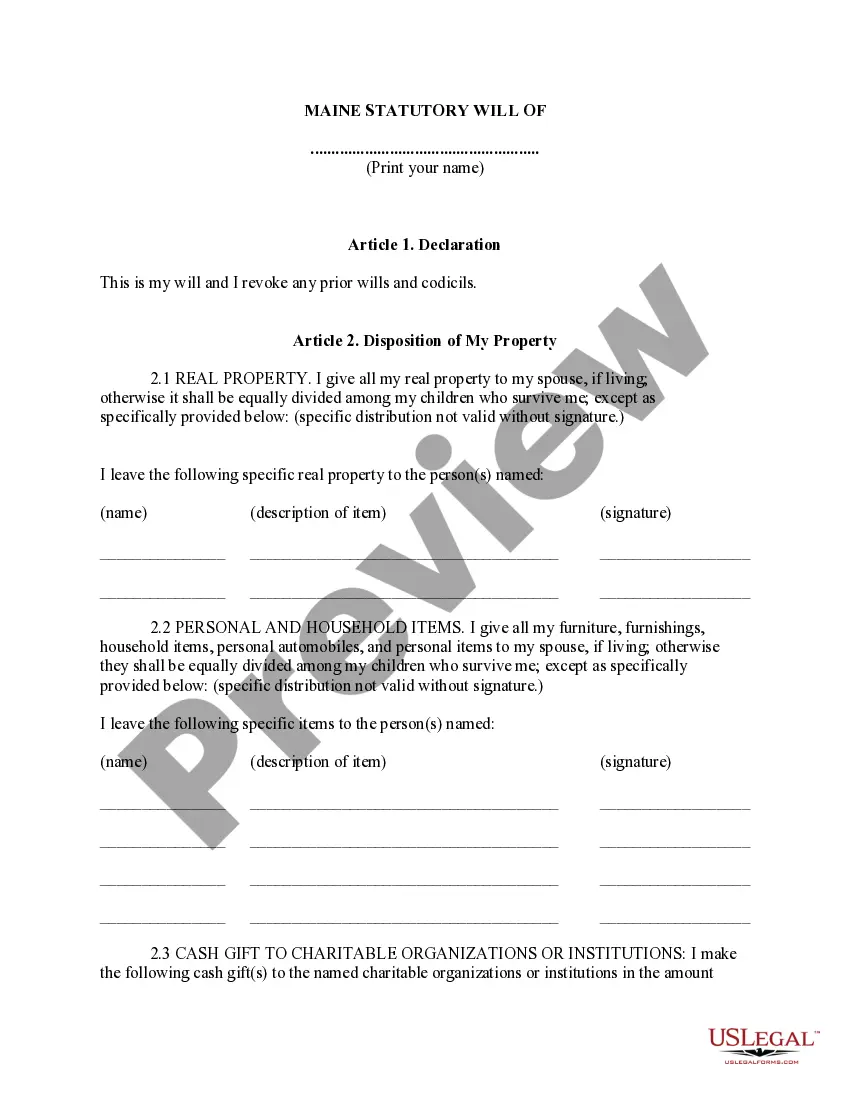
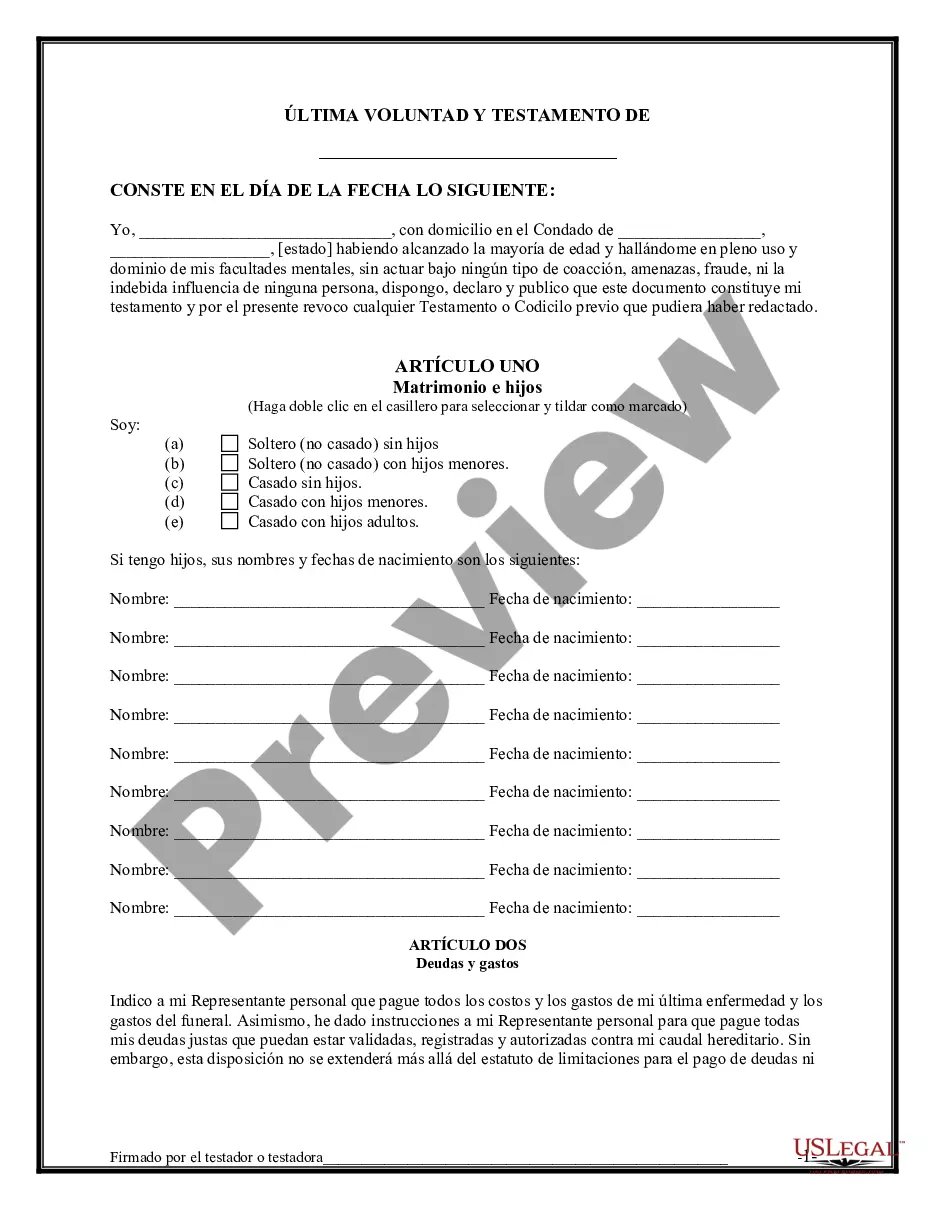
- Declaration of the testatorâs intent and revocation of prior wills.
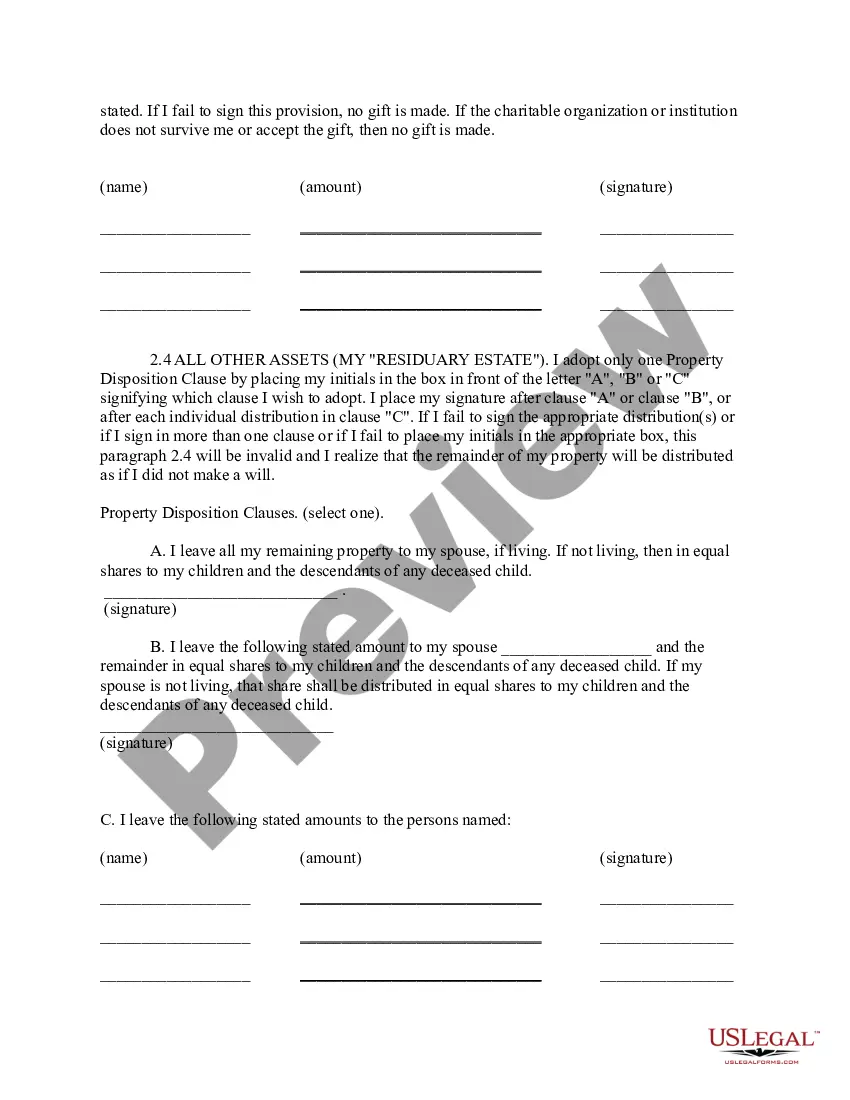
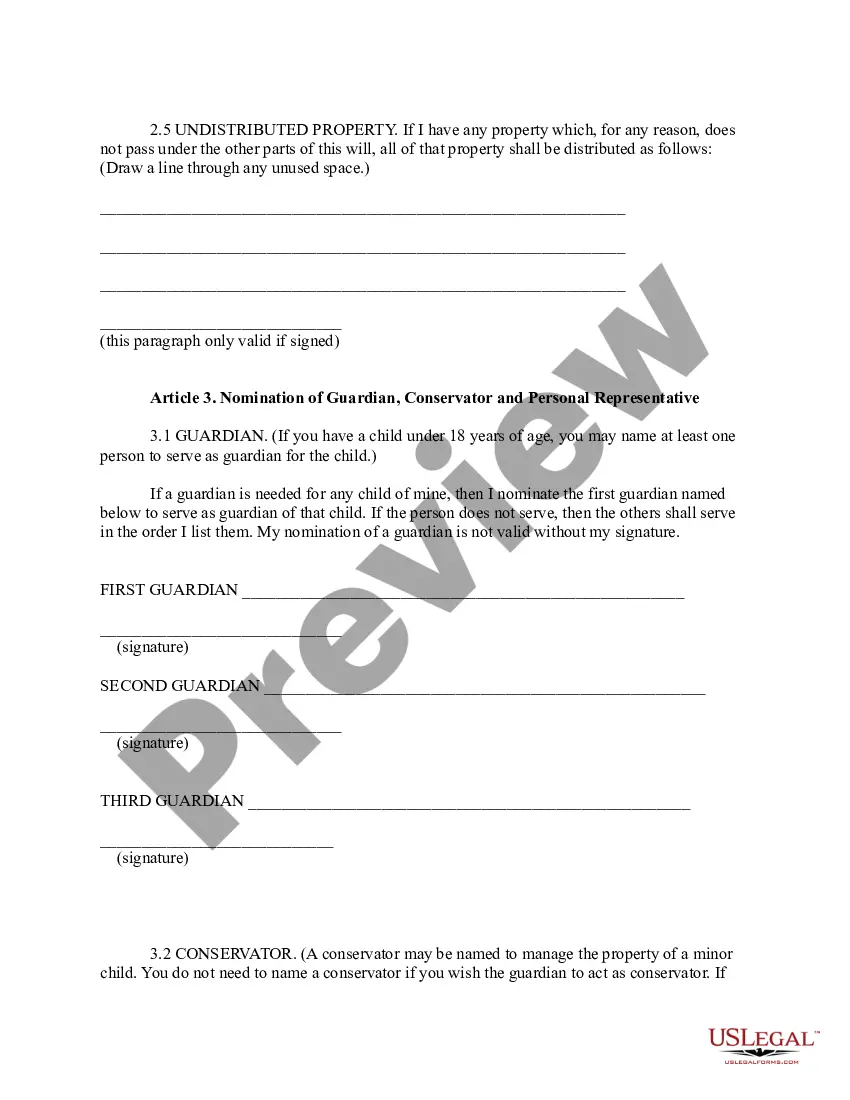
- Disposition of real property, including specific bequests and general distribution instructions.
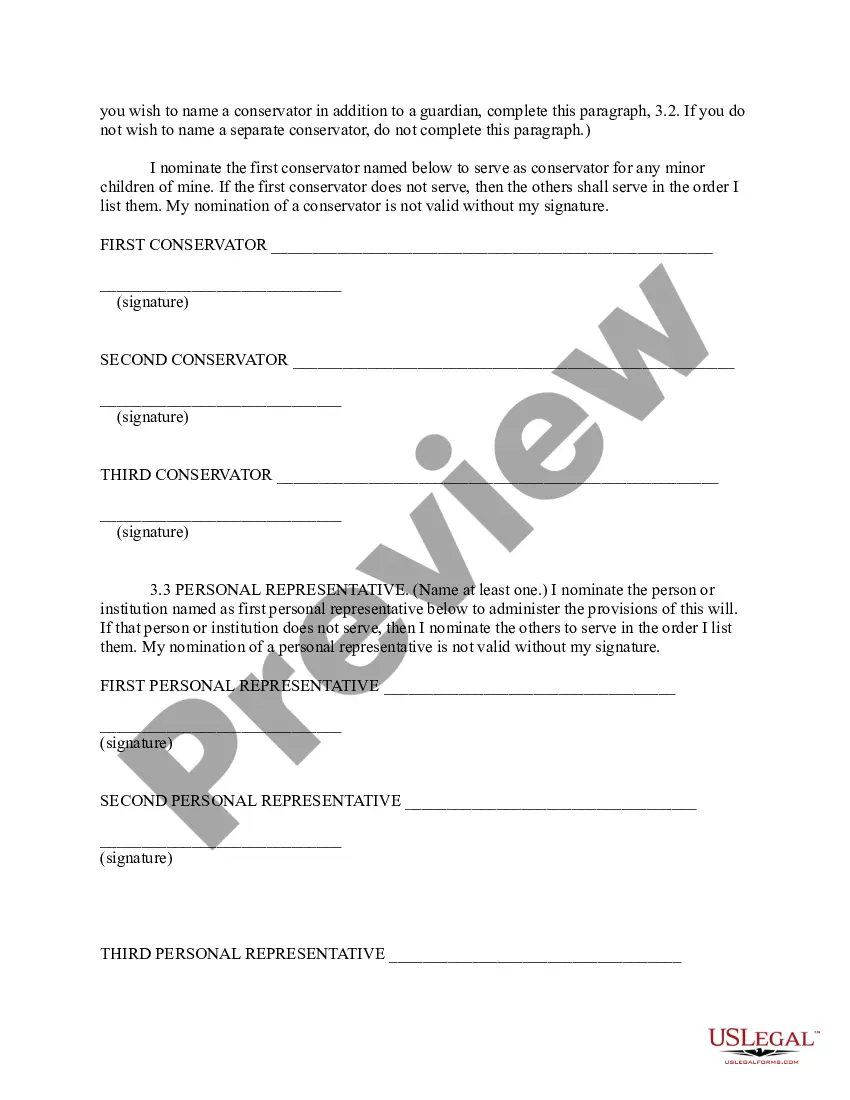
- Appointment of guardians for minor children if applicable.
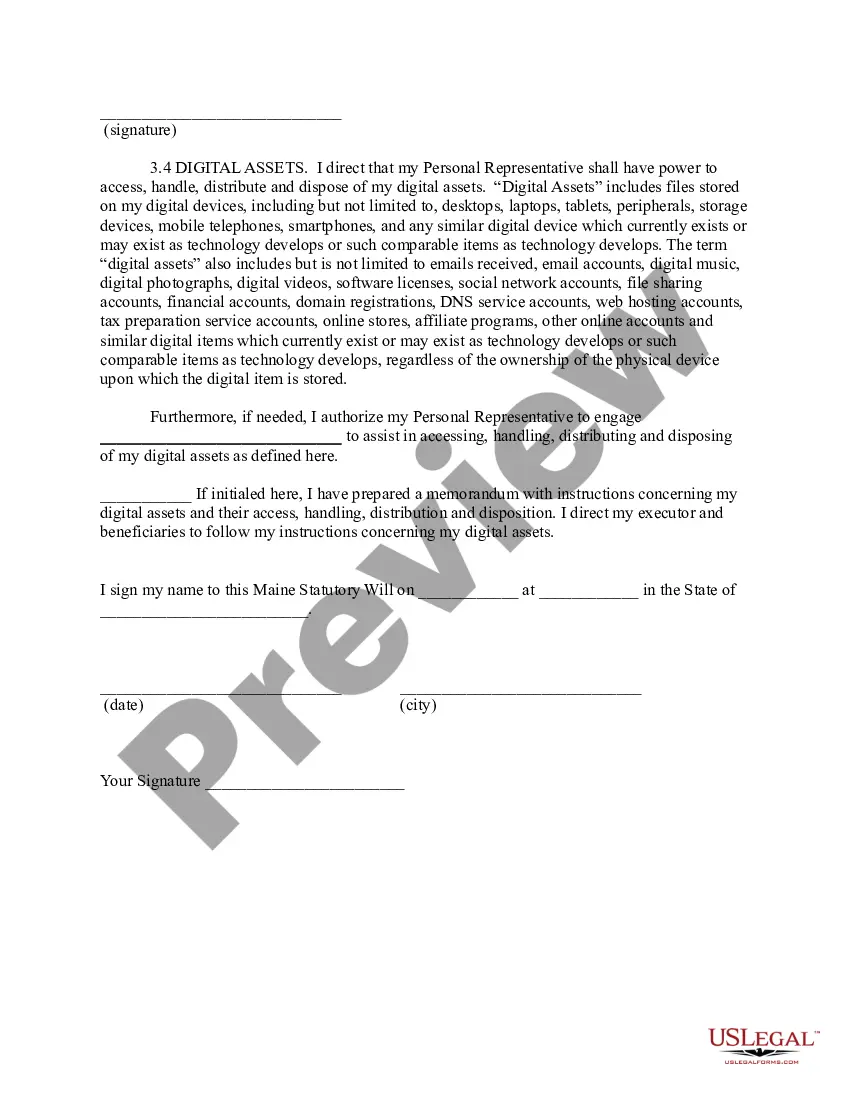
- Nomination of a personal representative to manage the estate.
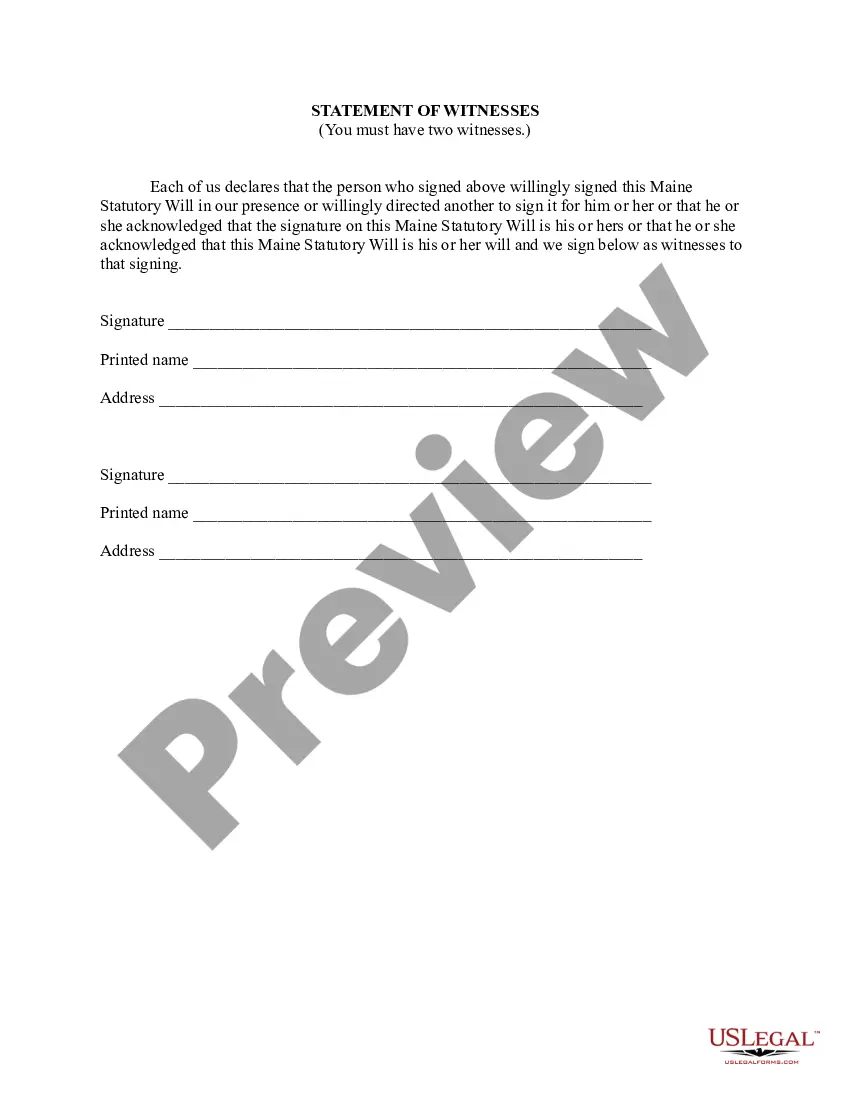
- Witnessing requirements to ensure the will is legally valid.

Common use cases
You should utilize the Maine Statutory Will Form if you want to specify how your assets will be distributed upon your death, designate guardians for minor children, or appoint a personal representative for your estate. It is particularly useful for individuals who have straightforward estate planning needs and wish to ensure their wishes are legally documented in accordance with Maine law.
Intended users of this form
The Maine Statutory Will Form is suitable for:
- Individuals residing in Maine who want to create a valid will.
- Parents seeking to appoint guardians for their children under 18.
- People with uncomplicated estates looking to outline their property distribution clearly.
- Anyone wanting to ensure their last wishes are honored after their passing.
Steps to complete this form
- Begin by entering your full name at the top of the document.
- Clearly state your intentions regarding the distribution of your real and personal property.
- Designate guardians for any minor children and a personal representative to manage your estate.
- Sign the document in the presence of two witnesses who must also sign it.
- Consider having the will notarized for added legal validation, especially if a self-proving affidavit is included.
Notarization guidance
This form does not typically require notarization unless specified by local law. However, including a self-proving affidavit can simplify the probate process and is recommended for enhancing the legal validity of the will.
Get your form ready online
Our built-in tools help you complete, sign, share, and store your documents in one place.
Make edits, fill in missing information, and update formatting in US Legal Forms—just like you would in MS Word.
Download a copy, print it, send it by email, or mail it via USPS—whatever works best for your next step.
Sign and collect signatures with our SignNow integration. Send to multiple recipients, set reminders, and more. Go Premium to unlock E-Sign.
If this form requires notarization, complete it online through a secure video call—no need to meet a notary in person or wait for an appointment.
We protect your documents and personal data by following strict security and privacy standards.

Make edits, fill in missing information, and update formatting in US Legal Forms—just like you would in MS Word.

Download a copy, print it, send it by email, or mail it via USPS—whatever works best for your next step.

Sign and collect signatures with our SignNow integration. Send to multiple recipients, set reminders, and more. Go Premium to unlock E-Sign.

If this form requires notarization, complete it online through a secure video call—no need to meet a notary in person or wait for an appointment.

We protect your documents and personal data by following strict security and privacy standards.
Common mistakes
- Failing to have the will signed in the presence of two witnesses.
- Neglecting to update the will after major life events such as marriage or the birth of a child.
- Leaving out specific distributions or failing to sign designated sections, which can invalidate them.
- Not consulting a legal advisor if there are uncertainties regarding tax implications or legal terms.
Why use this form online
- Convenient accessibility allows you to create your will from home at your own pace.
- Editability ensures you can make changes as your circumstances evolve without starting over.
- Reliability of professionally drafted content ensures your form meets state requirements.
Key takeaways
- The Maine Statutory Will Form is a legal way to outline how your assets will be managed after your death.
- Two witnesses, who are not beneficiaries, must sign the will for it to be valid.
- Updated provisions should be made if you experience major life changes.
Looking for another form?
Form popularity
FAQ
In addition, Maine allows a will to be made without witnesses if it is written by hand by the testator and signed at the end. 18-A M.R.S.A. § 2-503. This is called a holographic will.
In Maine, anyone aged 18 or older who is of sound mind can make a Will. When you write your Will, you list all your property and who you want to give it to after you die (these people are called your beneficiaries).
As long as it was properly signed and witnessed by two adult independent witnesses who are present at the time you sign your will, it should be legally binding.Using the wrong wording could mean that your instructions aren't followed, or even that your will isn't valid.
Only a few states provide statutory will forms. They are: California, Maine, Michigan, New Mexico, and Wisconsin.
To start the probate process, you need to file an Application for Probate in the probate court in the county where the decedent lived. In Maine, each county has its own probate court. If there is a Will, it needs to be submitted to the probate court. The probate judge will decide whether or not the Will is valid.
No, in Maine, you do not need to notarize your will to make it legal. However, Maine allows you to make your will "self-proving" and you'll need to go to a notary if you want to do that. A self-proving will speeds up probate because the court can accept the will without contacting the witnesses who signed it.