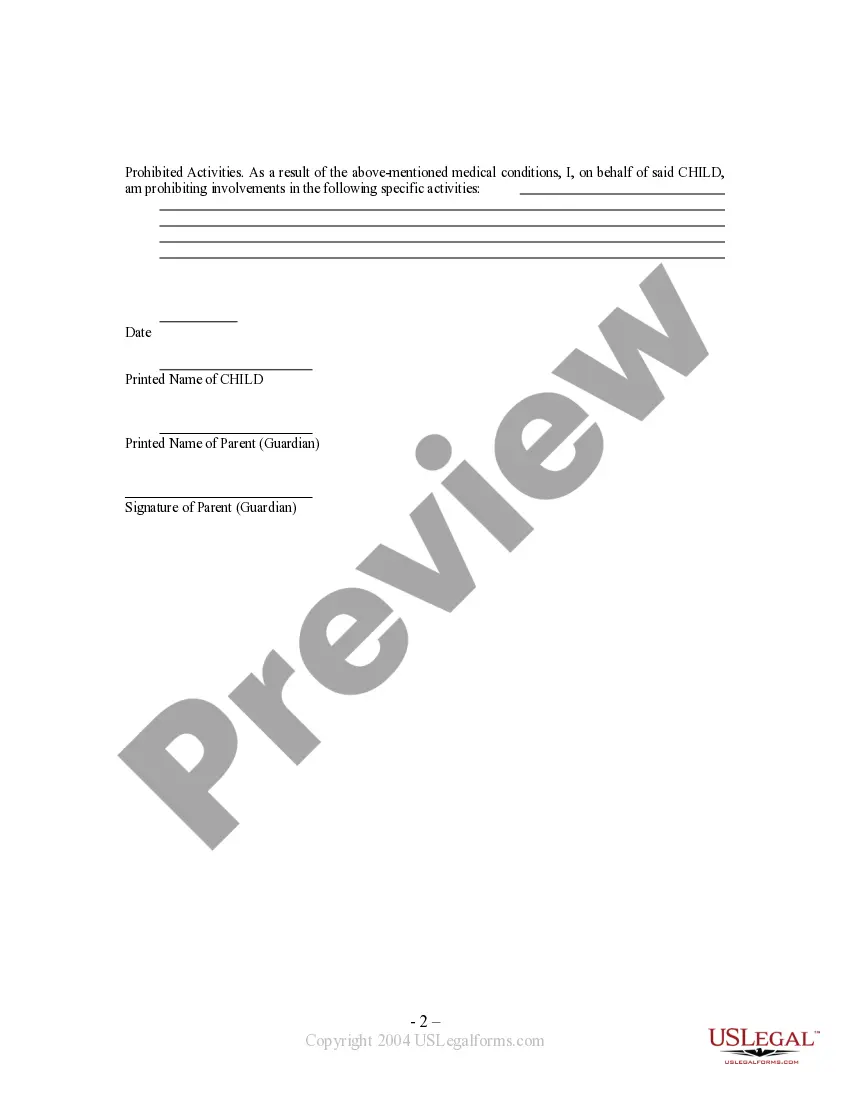
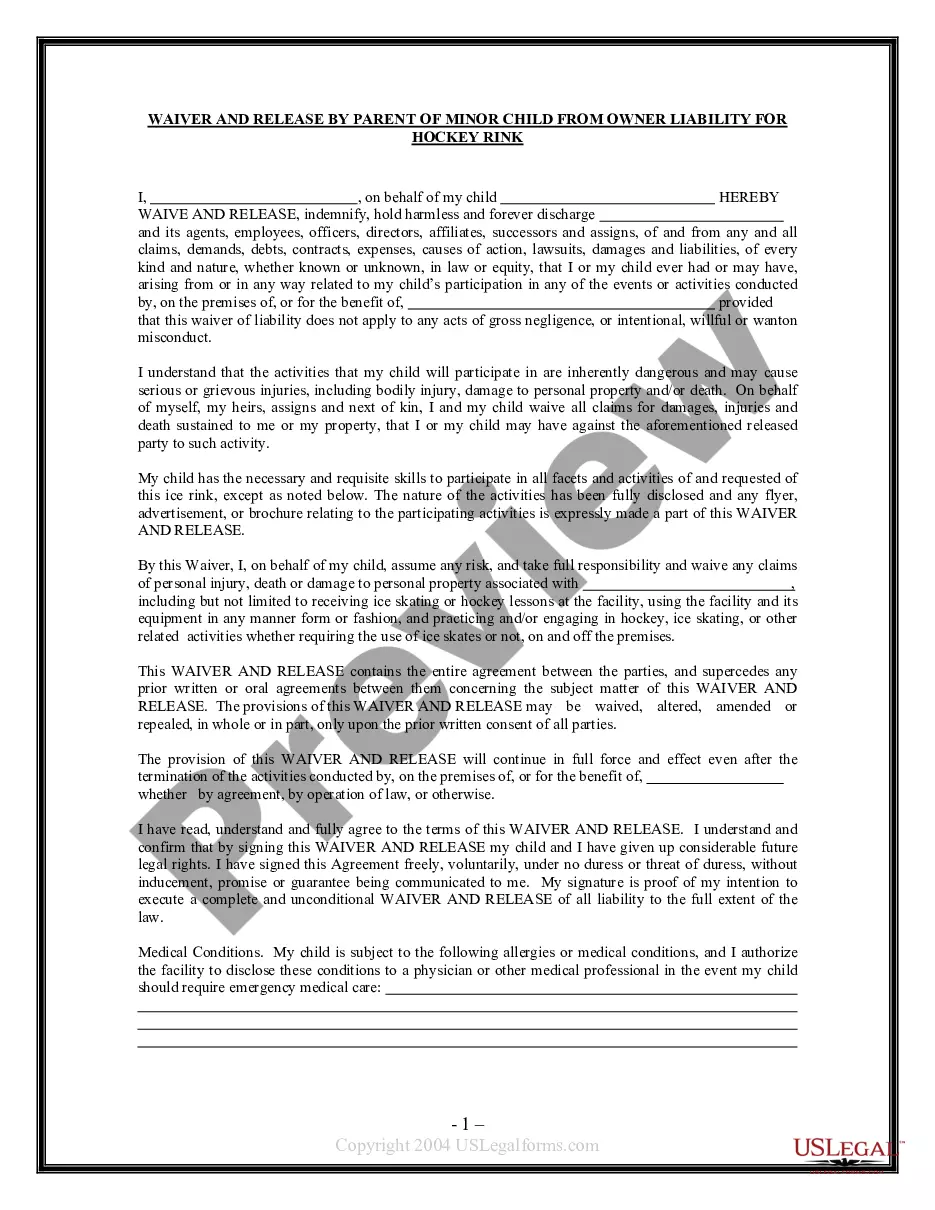
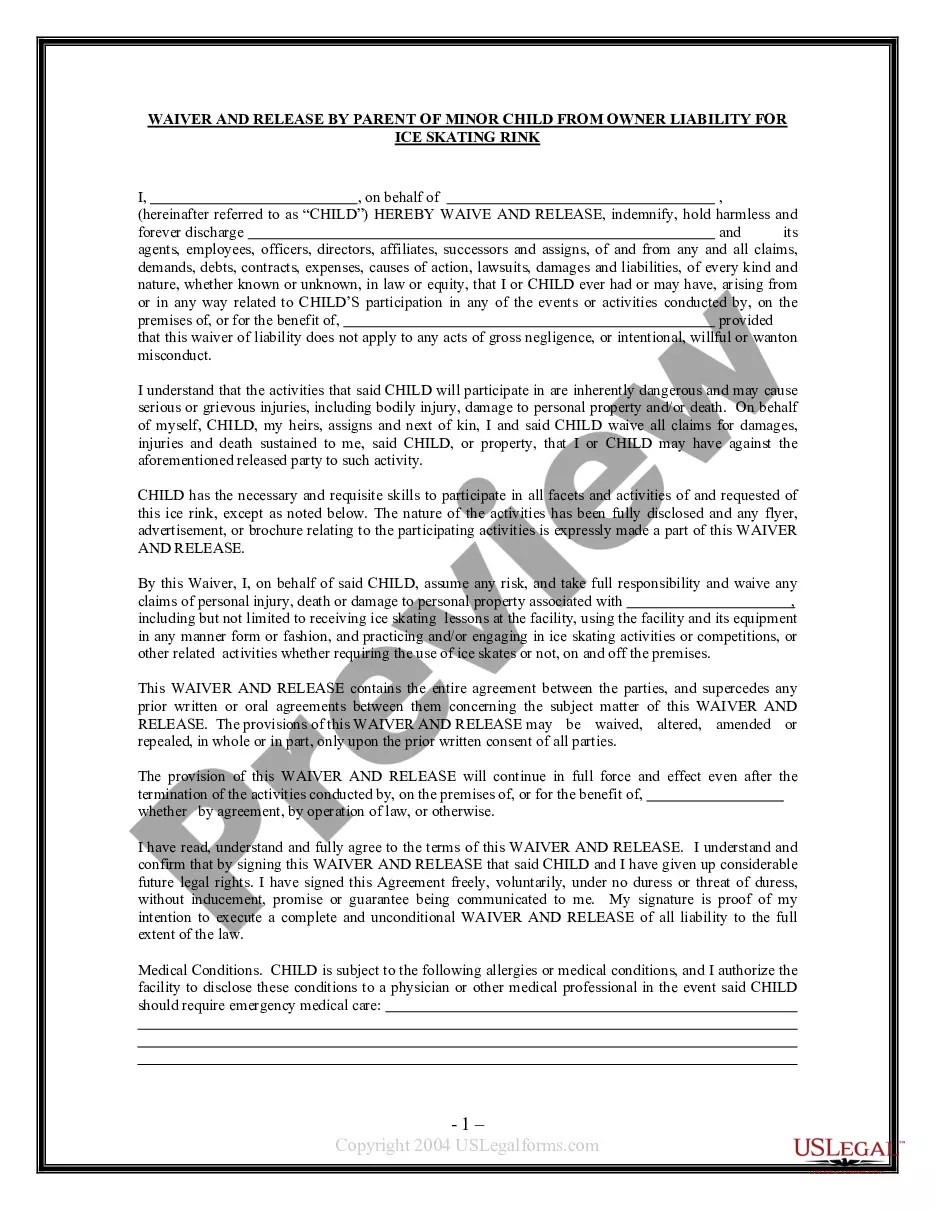
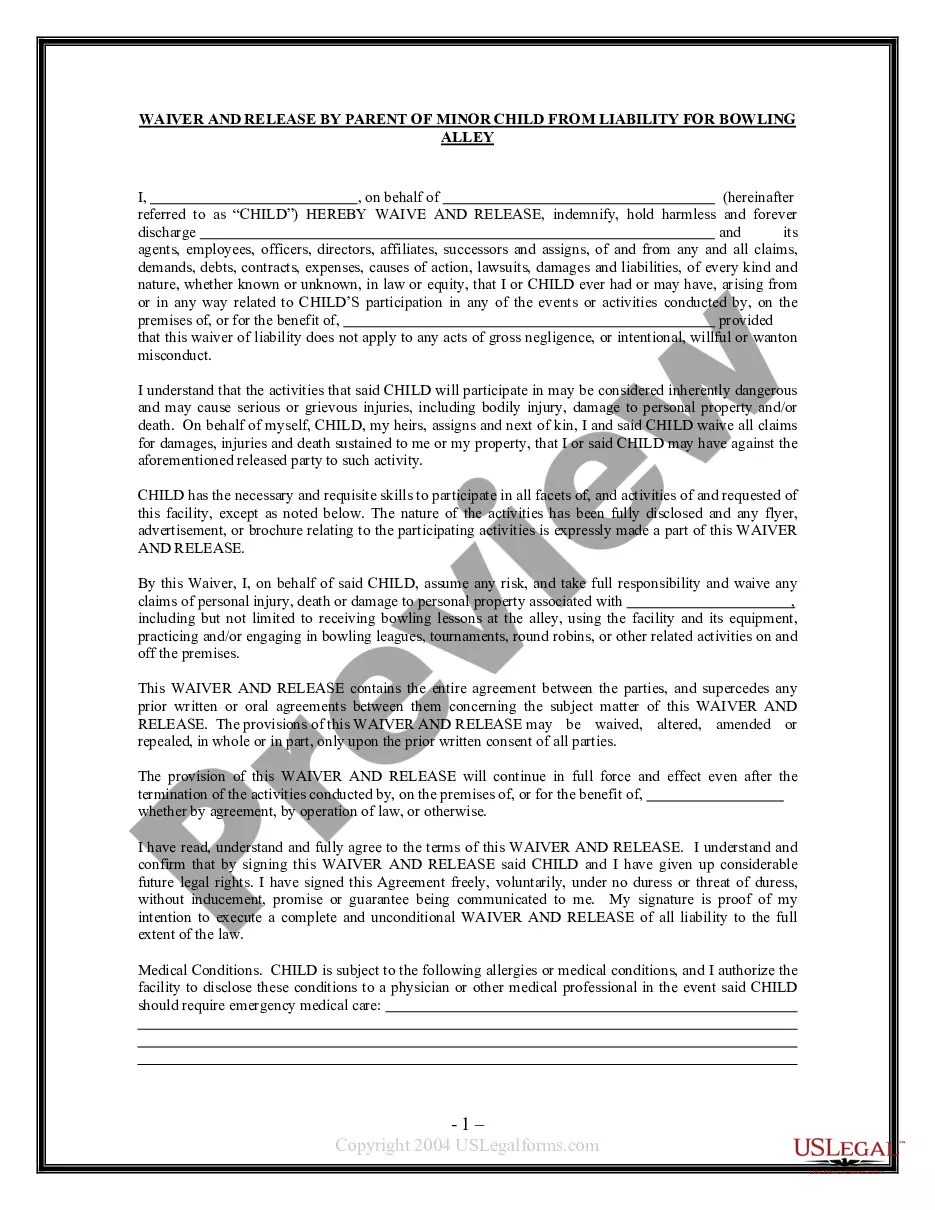
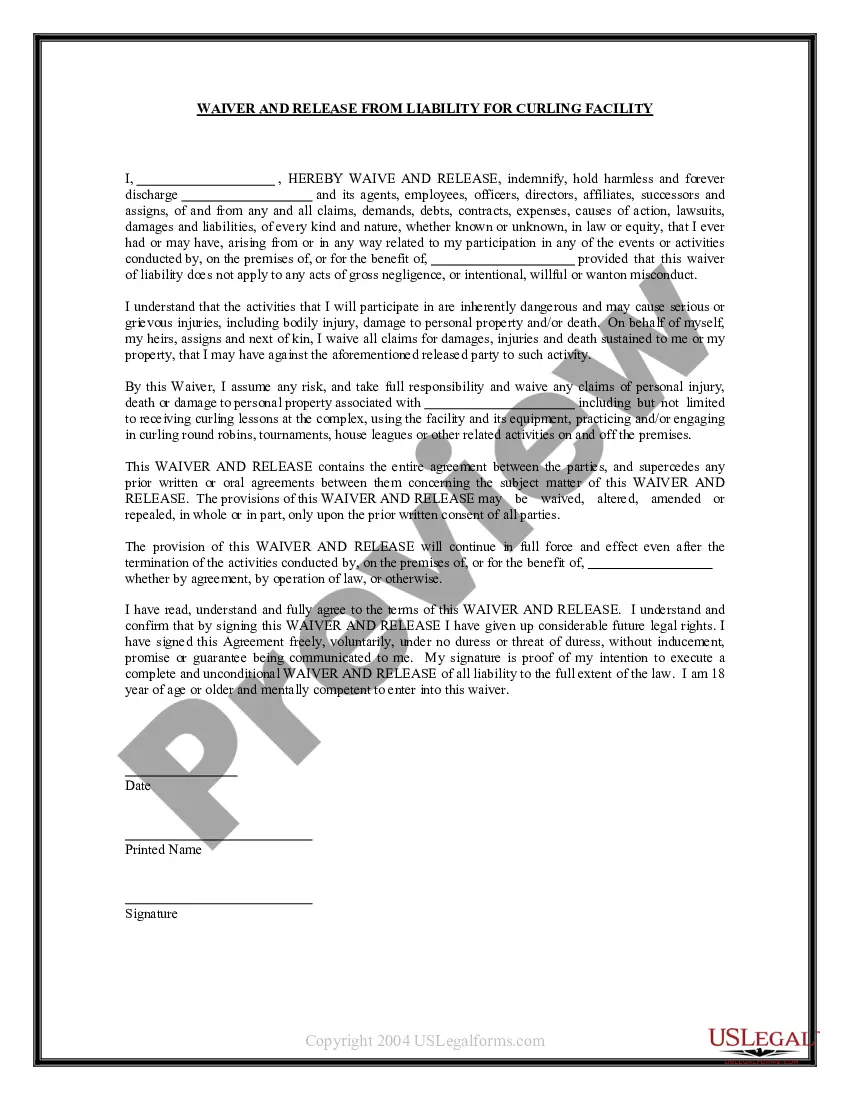
This form allows a parent or guardian to release a curling facility from liability for injuries which may be incurred by a minor child while on the premises, taking part in activities, etc.
Maine Waiver and Release From Liability For Minor Child for Curling Facility
Category:
State:
Multi-State
Control #:
US-WAV-25M
Format:
Word;
Rich Text
Instant download
Description
Free preview
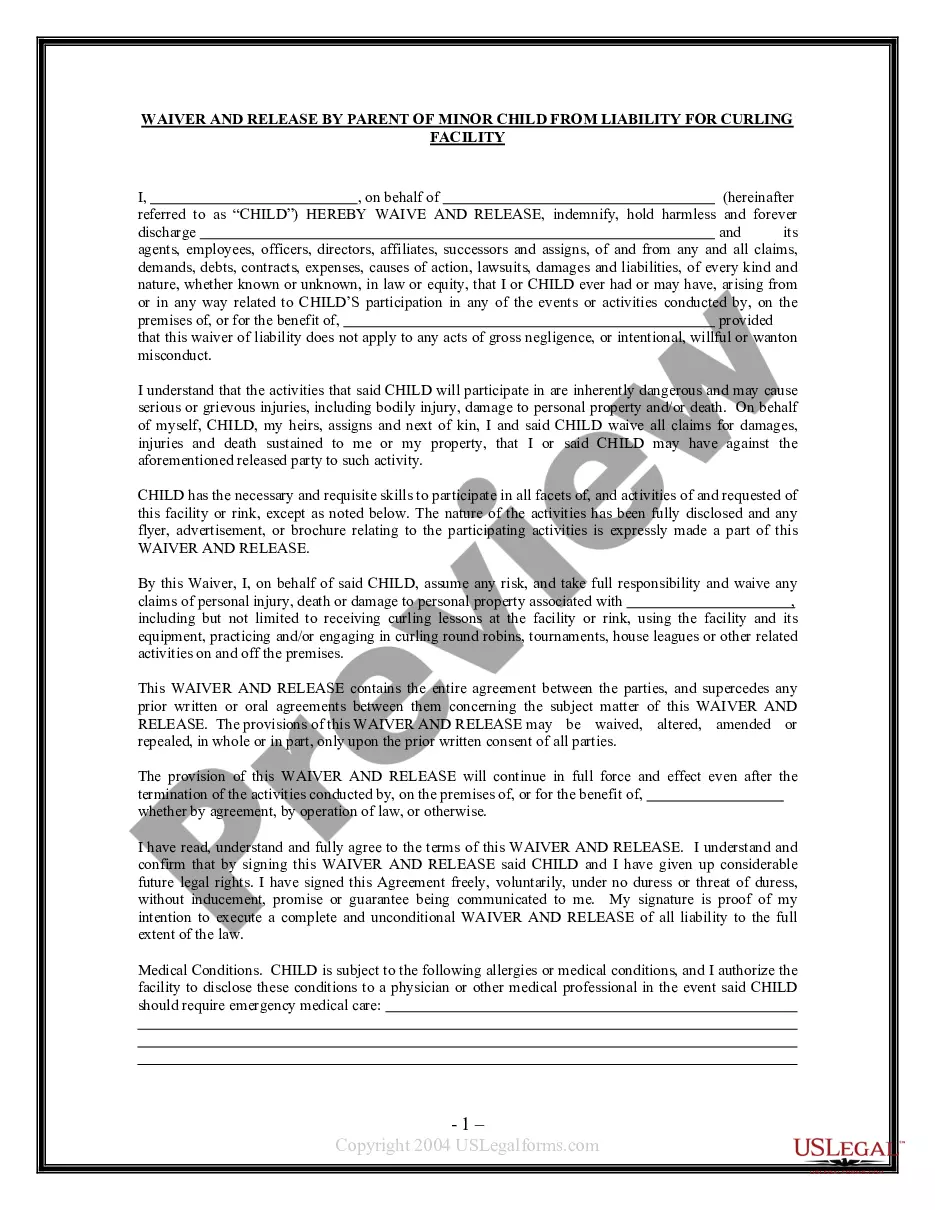
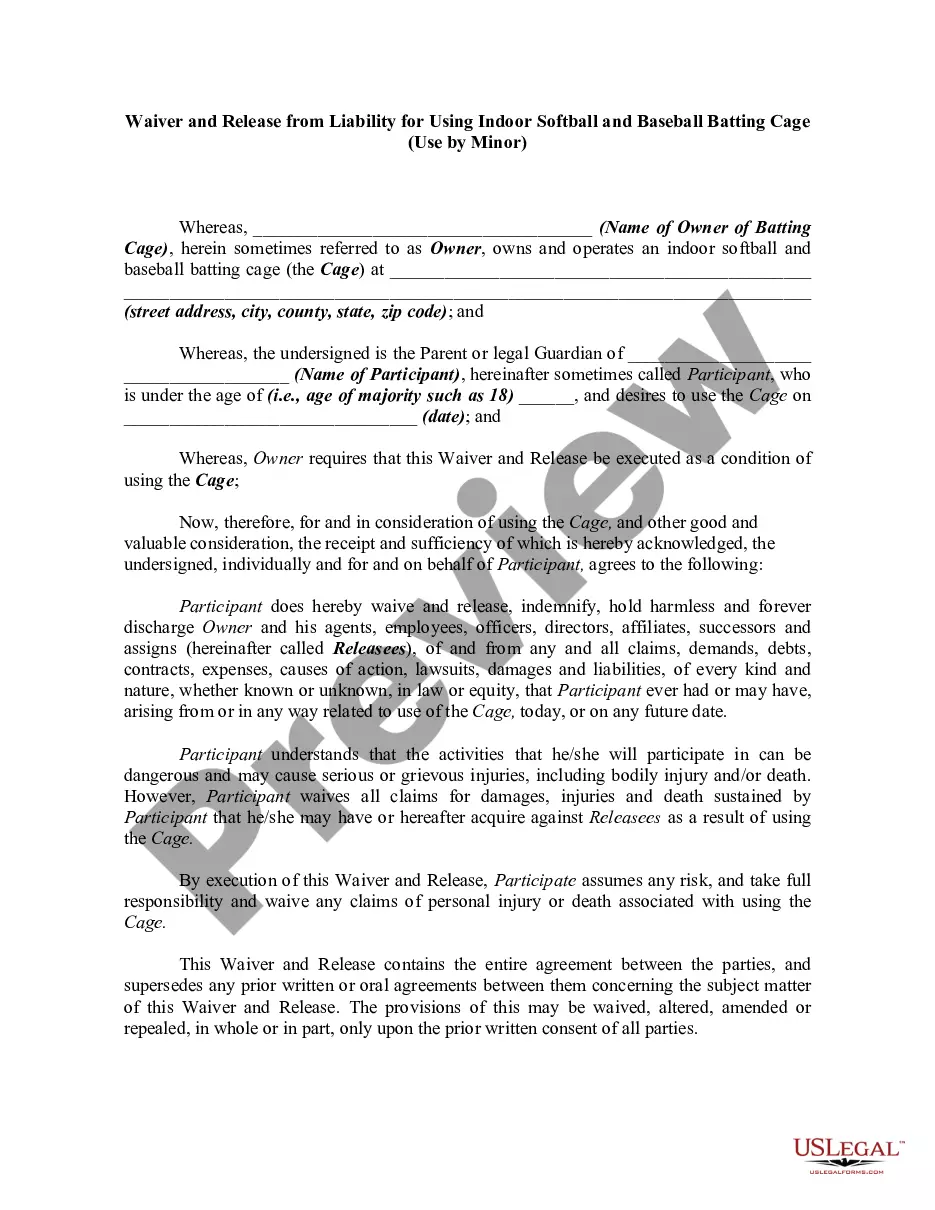

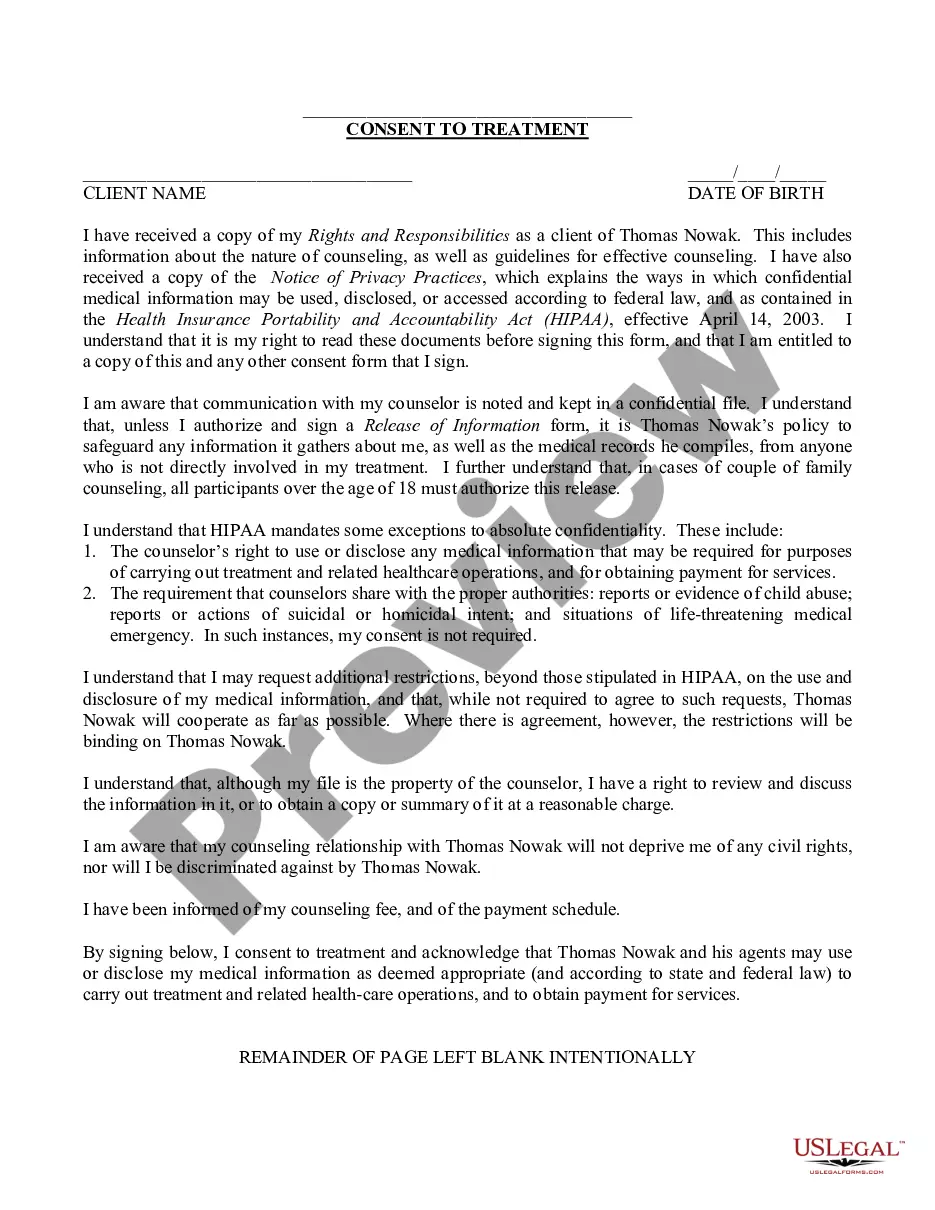


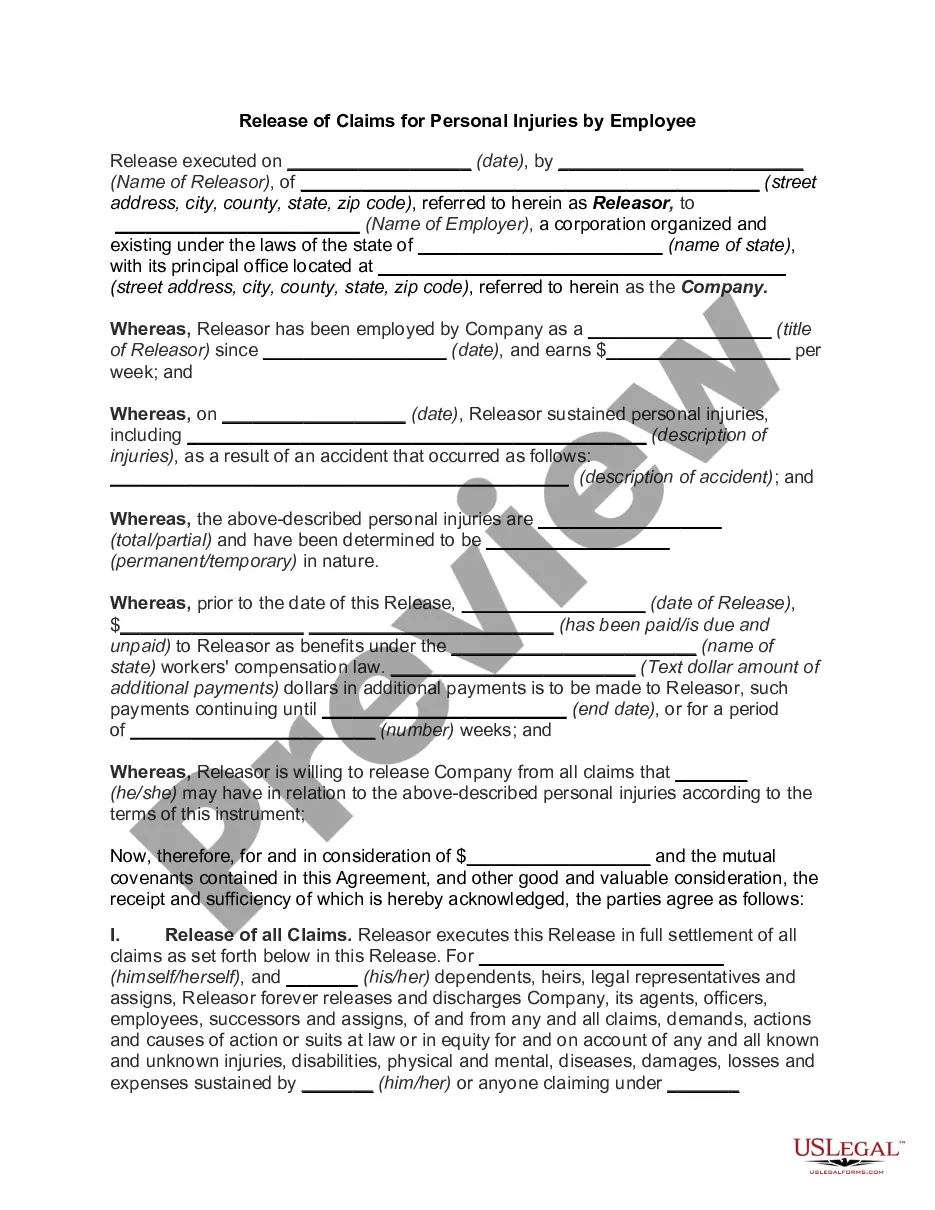
How to fill out Waiver And Release From Liability For Minor Child For Curling Facility?
Are you inside a situation the place you need to have files for sometimes business or personal reasons virtually every time? There are tons of legitimate papers templates accessible on the Internet, but discovering ones you can trust isn`t easy. US Legal Forms provides thousands of develop templates, like the Maine Waiver and Release From Liability For Minor Child for Curling Facility, that happen to be written in order to meet federal and state requirements.
When you are previously familiar with US Legal Forms web site and possess your account, basically log in. Afterward, you can obtain the Maine Waiver and Release From Liability For Minor Child for Curling Facility format.
Should you not come with an bank account and need to start using US Legal Forms, abide by these steps:
- Get the develop you will need and make sure it is for your appropriate area/area.
- Use the Preview button to examine the form.
- Read the explanation to ensure that you have chosen the right develop.
- In case the develop isn`t what you are trying to find, use the Search field to obtain the develop that meets your requirements and requirements.
- When you get the appropriate develop, simply click Buy now.
- Opt for the costs plan you need, submit the specified info to create your account, and buy an order using your PayPal or charge card.
- Pick a hassle-free file file format and obtain your copy.
Find every one of the papers templates you have bought in the My Forms food selection. You can obtain a more copy of Maine Waiver and Release From Liability For Minor Child for Curling Facility any time, if required. Just click on the essential develop to obtain or print out the papers format.
Use US Legal Forms, one of the most substantial selection of legitimate types, to save lots of time as well as avoid faults. The assistance provides expertly made legitimate papers templates which you can use for a range of reasons. Create your account on US Legal Forms and start generating your lifestyle easier.
Form popularity
FAQ
What is the purpose of a waiver? A waiver is a legal agreement the primary purpose of which is to let you or another party modify or relinquish a right, privilege, or claim. The agreement can be a separate document on its own, such as if you sign a waiver form, or added to a contract as a waiver clause.
At the ski hill, the fair, or a hockey game, Canadians must sign waivers before participating in a wide variety of activities and events. We sign waivers everyday for ourselves and for our children. A waiver can significantly limit the right to sue for a personal injury, but is not always enforceable.
A waiver is a legally binding provision where either party in a contract agrees to voluntarily forfeit a claim without the other party being liable. Waivers can either be in written form or some form of action.
Within the United States, the most common types of waivers tend to fall into one of three categories criminal rights, procedural rights, and liability waivers.
Examples of waivers include the waiving of parental rights, waiving liability, tangible goods waivers, and waivers for grounds of inadmissibility. Waivers are common when finalizing lawsuits, as one party does not want the other pursuing them after a settlement is transferred.
How long do I keep signed waivers? The sponsoring unit is required to retain the waiver for six (6) years after the end of the event or activity for which the waiver was signed.
Components of a waiverGet help. Writing a waiver should not be complicated.Use the correct structure. Waivers should be written in a certain structure.Proper formatting.Include a subject line.Include a caution!Talk about the activity risks.Do not forget an assumption of risk.Hold harmless.More items...?
A waiver explained A release form or a waiver is simply a legal document containing an agreement between two parties. The first party is the releasor (person promising not to sue) and the releasee (the party that is reliable).
A liability waiver is a legal document that a person who participates in an activity may sign to acknowledge the risks involved in their participation. By doing so, the company attempts to remove legal liability from the business or person responsible for the activity.
AN AGREEMENT NOT TO SUE THE RELEASEES for any loss, injury, costs or damages of any form or type, howsoever caused or arising, and whether directly or indirectly from the participation of my minor child/ward in any aspect of the EVENT; and. 4.