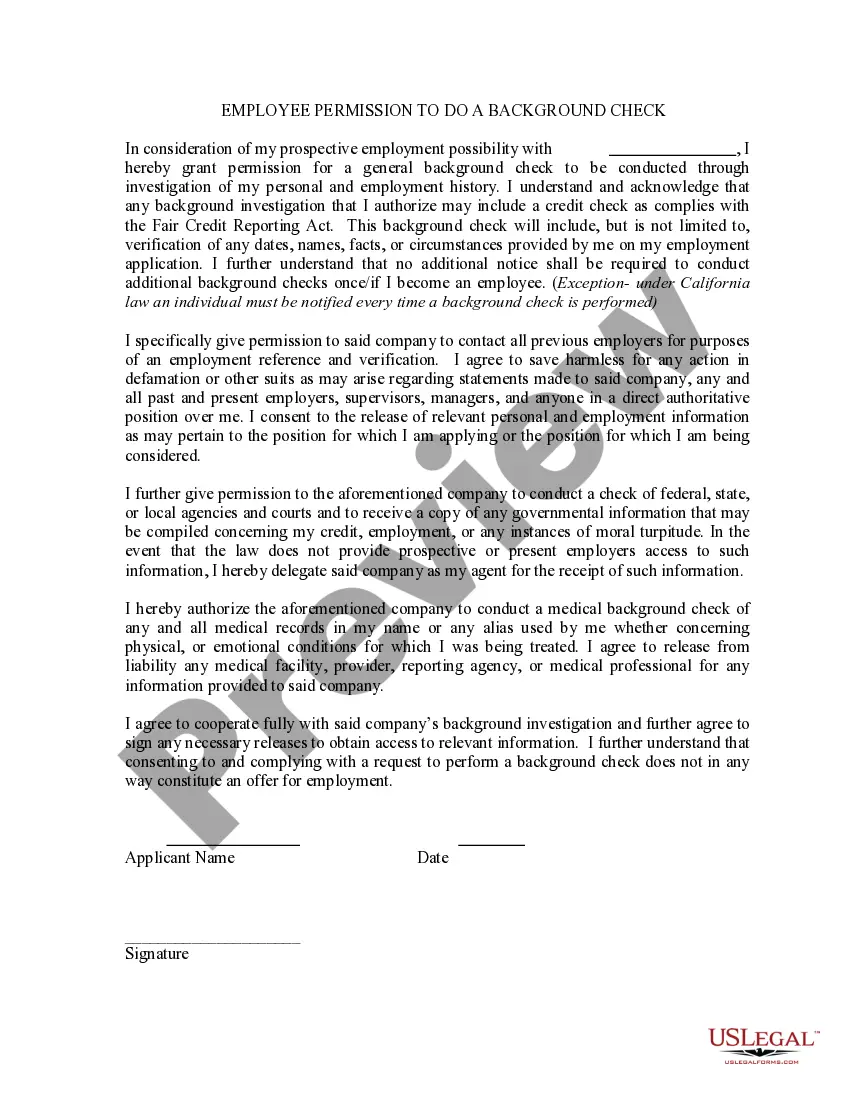
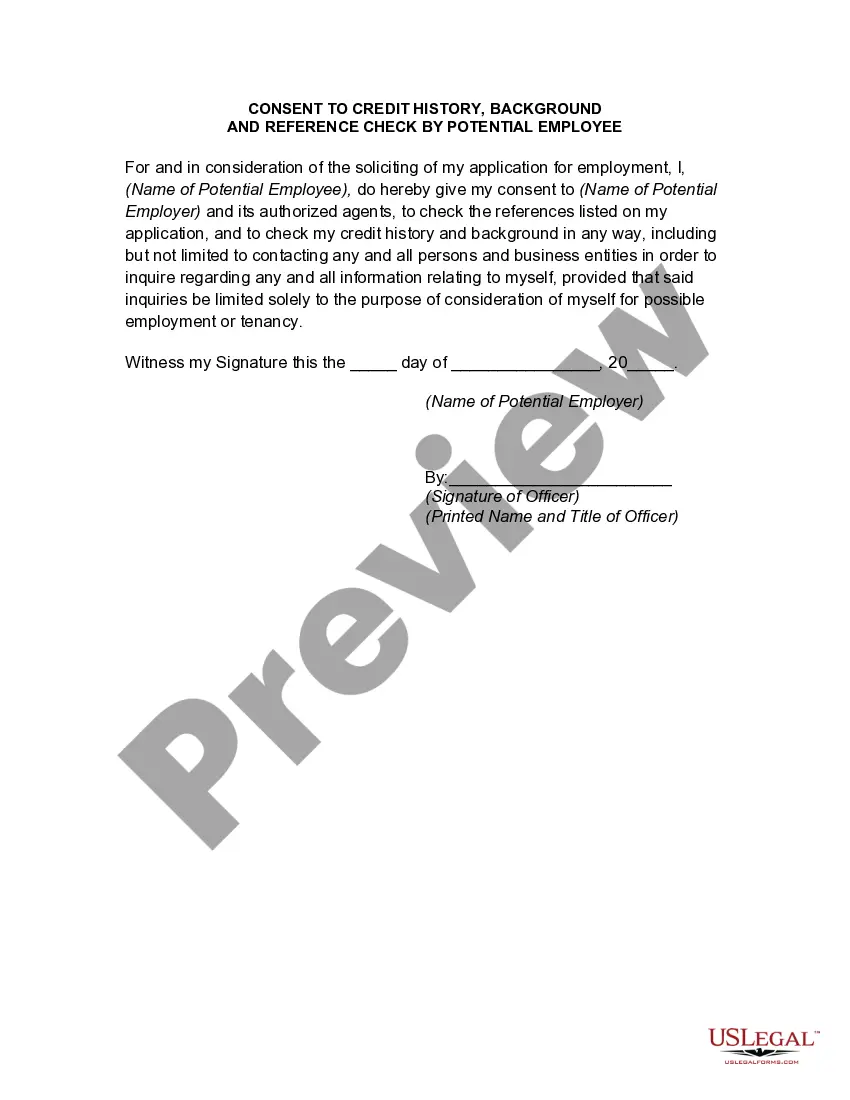
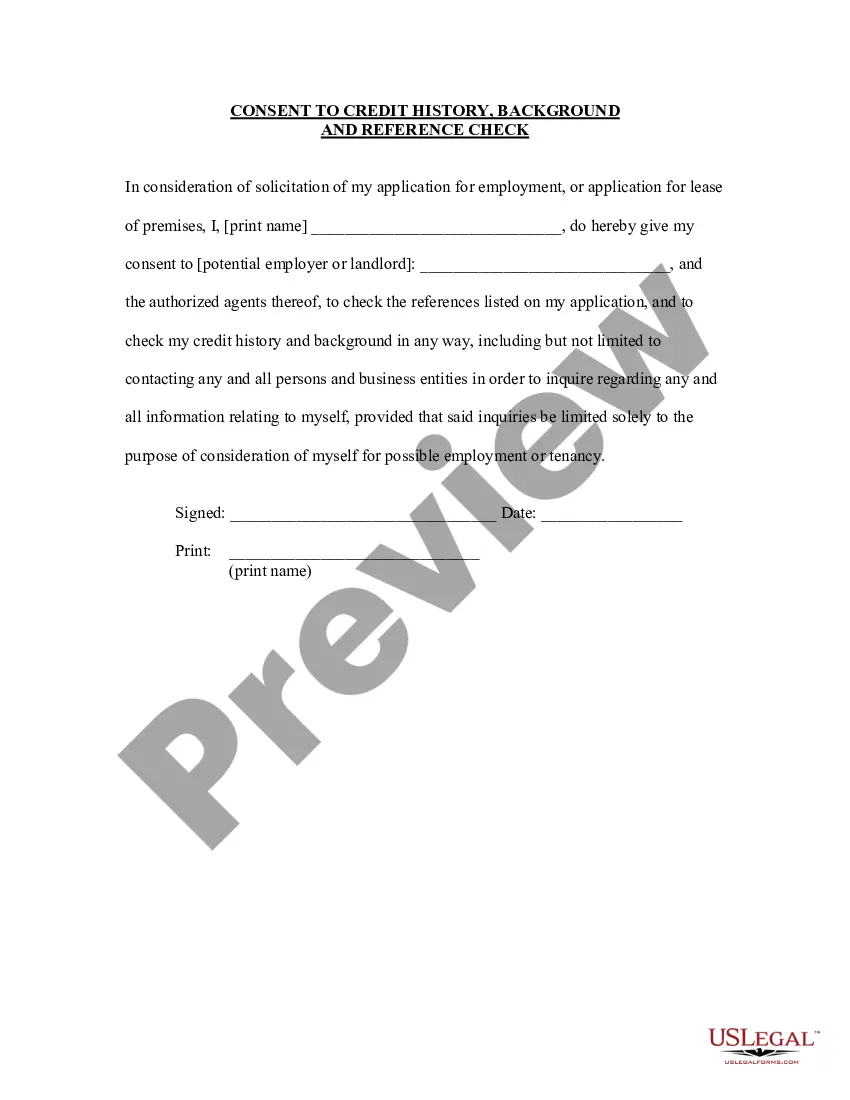
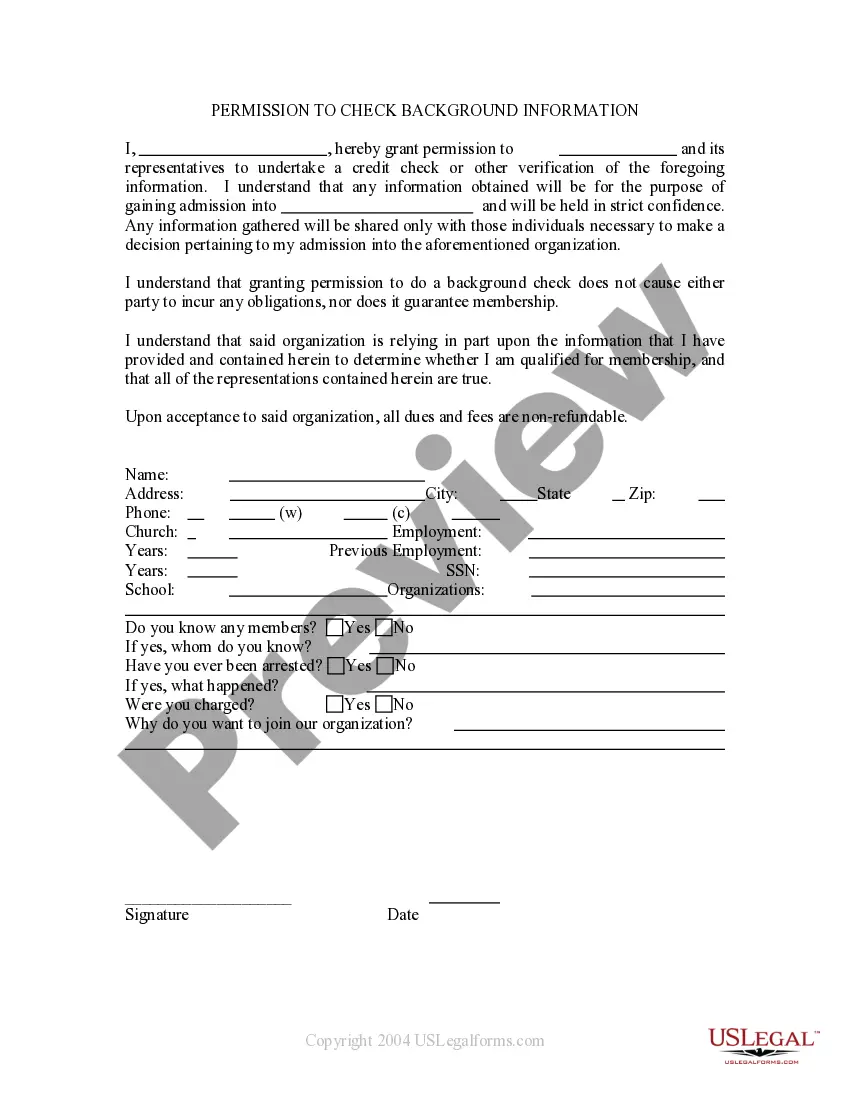
This is a form signed by an employee or prospective employee granting an employer permission to do a background check.
Maine Employee Permission to Do a Background Check
State:
Multi-State
Control #:
US-PRM-10
Format:
Word;
Rich Text
Instant download
Description
Get your form ready online
Our built-in tools help you complete, sign, share, and store your documents in one place.
Built-in online Word editor
Make edits, fill in missing information, and update formatting in US Legal Forms—just like you would in MS Word.
Export easily
Download a copy, print it, send it by email, or mail it via USPS—whatever works best for your next step.
E-sign your document
Sign and collect signatures with our SignNow integration. Send to multiple recipients, set reminders, and more. Go Premium to unlock E-Sign.
Notarize online 24/7
If this form requires notarization, complete it online through a secure video call—no need to meet a notary in person or wait for an appointment.
Store your document securely
We protect your documents and personal data by following strict security and privacy standards.

Make edits, fill in missing information, and update formatting in US Legal Forms—just like you would in MS Word.

Download a copy, print it, send it by email, or mail it via USPS—whatever works best for your next step.

Sign and collect signatures with our SignNow integration. Send to multiple recipients, set reminders, and more. Go Premium to unlock E-Sign.

If this form requires notarization, complete it online through a secure video call—no need to meet a notary in person or wait for an appointment.

We protect your documents and personal data by following strict security and privacy standards.
Looking for another form?

How to fill out Employee Permission To Do A Background Check?
Finding the appropriate legal document template can be quite a challenge. Of course, there are numerous formats available online, but how do you locate the legal form you require? Utilize the US Legal Forms website. The platform offers a multitude of templates, including the Maine Employee Authorization for a Background Check, which you can use for both business and personal purposes. All documents are verified by professionals and adhere to federal and state regulations.
If you are already registered, sign in to your account and click the Download button to obtain the Maine Employee Authorization for a Background Check. Use your account to review the legal documents you have purchased previously. Navigate to the My documents section of your account and retrieve another copy of the document you need.
If you are a new user of US Legal Forms, here are simple steps you should follow: First, ensure you have selected the correct form for your region/county. You can preview the form using the Review button and read the form details to confirm it is suitable for you. If the form does not satisfy your requirements, use the Search field to find the correct form. Once you are confident that the form is appropriate, click the Buy Now button to acquire the form. Choose the pricing plan you want and input the necessary information. Create your account and complete your purchase using your PayPal account or credit card. Select the file format and download the legal document template to your device. Complete, modify, print, and sign the acquired Maine Employee Authorization for a Background Check.
- US Legal Forms is the largest collection of legal documents where you can find various file templates.
- Utilize the service to obtain professionally crafted paperwork that meet state requirements.
- Access a wide range of templates for different legal needs.
- Enjoy a user-friendly interface for easy navigation.
- Receive expert assistance if you have questions regarding the forms.
- Stay updated with legal standards and regulations through reliable document sources.
Form popularity
FAQ
Background verification is a process many organizations carry out in order to verify the information provided by the candidate during hiring. It involves various checks in which the employer will go through your education records, past employer details, identity checks, resume checks and address checks.
Federal law does not prohibit employers from conducting background checks before an offer of employment is made. State laws, however, may have restrictions. Although in most states a standard background check can be conducted prior to an offer, a small number of states do not allow it.
A background check usually comes at the end of the hiring process. Employers will typically conduct a background check before they're about to make an offer. They may be conducting a background check on a handful of candidates they're considering making an offer to.
What is an Employee Background Check? An employment background check is a review of a person's commercial, criminal, employment, and/or financial records. 1feff When employers use a third party to check someone's background, the Fair Credit Reporting Act (FCRA) restricts what they are allowed to check, and how.
A CRA will contact the employers listed on your resume or application to verify the dates you worked and the positions you held. They may also contact references you have provided to ascertain performance and character.
Federal law does not prohibit employers from conducting background checks before an offer of employment is made. State laws, however, may have restrictions. Although in most states a standard background check can be conducted prior to an offer, a small number of states do not allow it.
Background Reports First, the employer must ask for your written permission before getting the report. You don't have to give your permission, but if you're applying for a job and you don't give your permission, the employer may reject your application.
Background verification is the process of vetting employment history, commercial records, financial records, criminal records, and other activities of a person or a company to confirm their authenticity.
When do employers conduct background checks? Employers often perform background checks before extending job offers. A brief period in between a background check and a job offer is common because the results of a background check can result in an employer choosing to hire a different applicant.
To find it, go to your state's official government website or find the information you need at the National Center for State Courts. Make sure you search every state that the person you're checking has lived in.