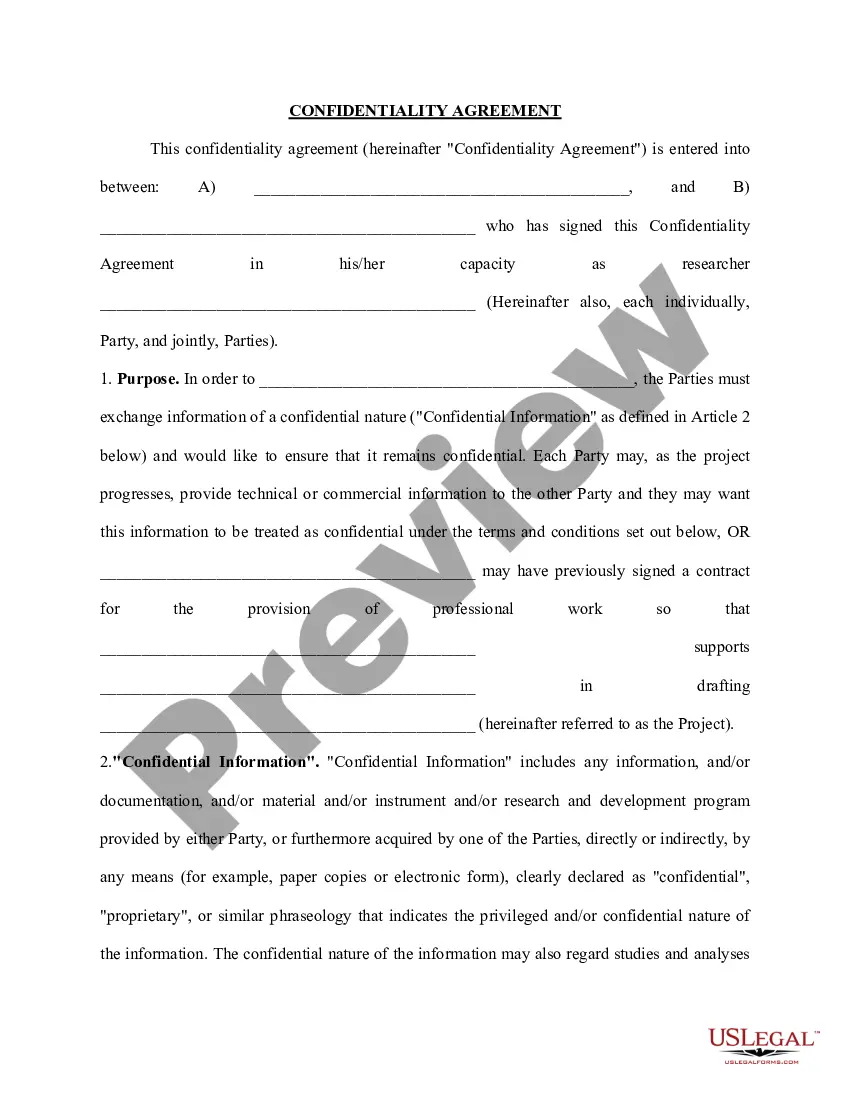
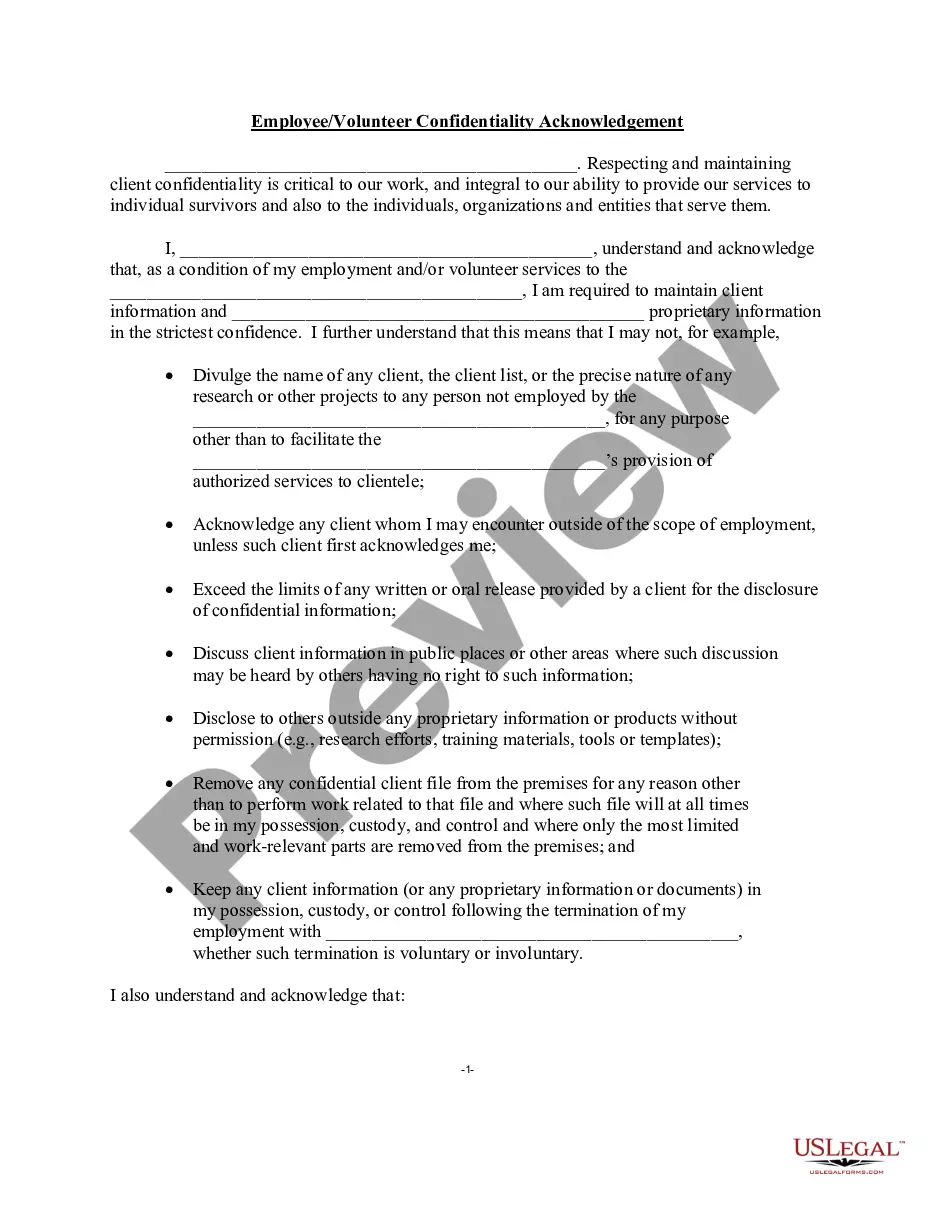
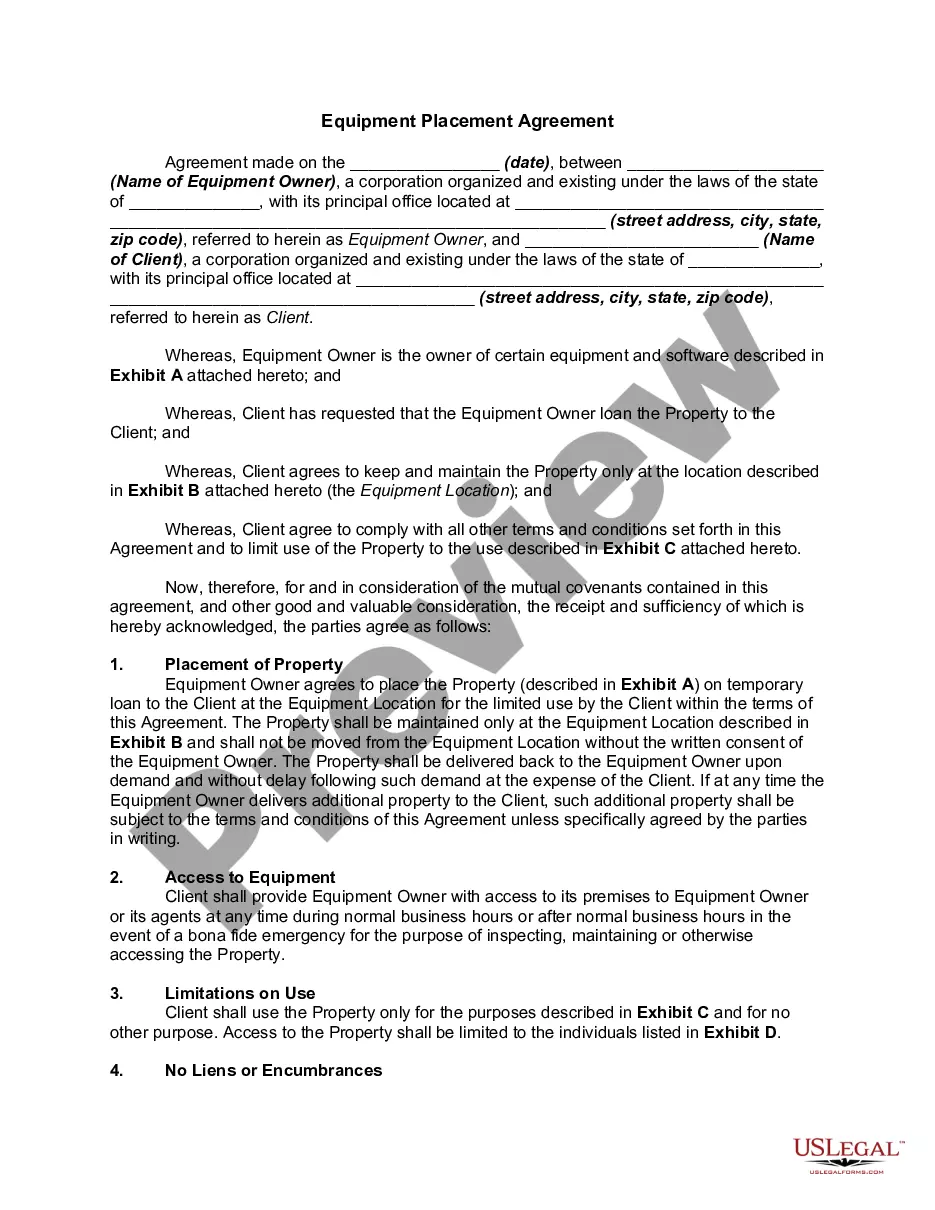
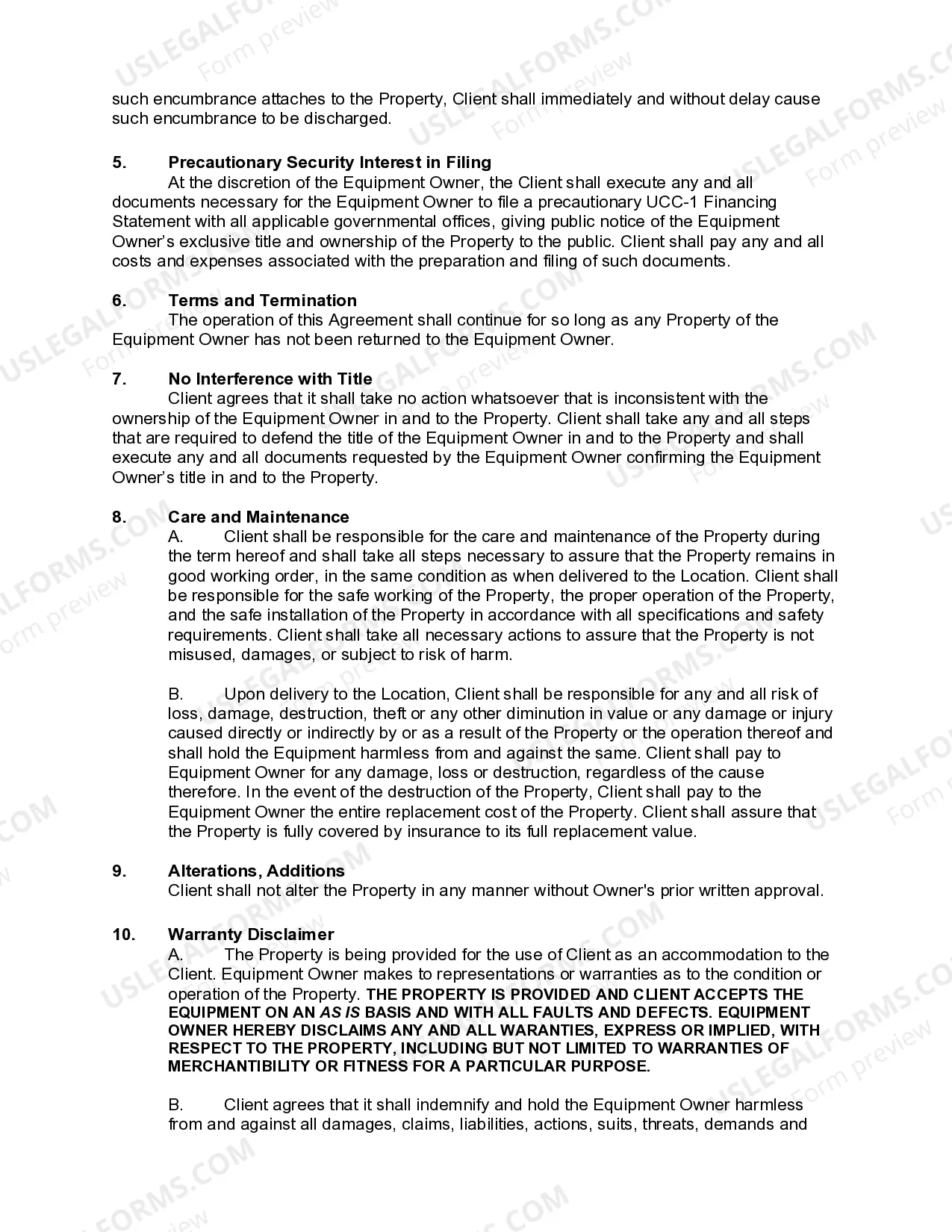
Maine Equipment Placement Agreement
Description
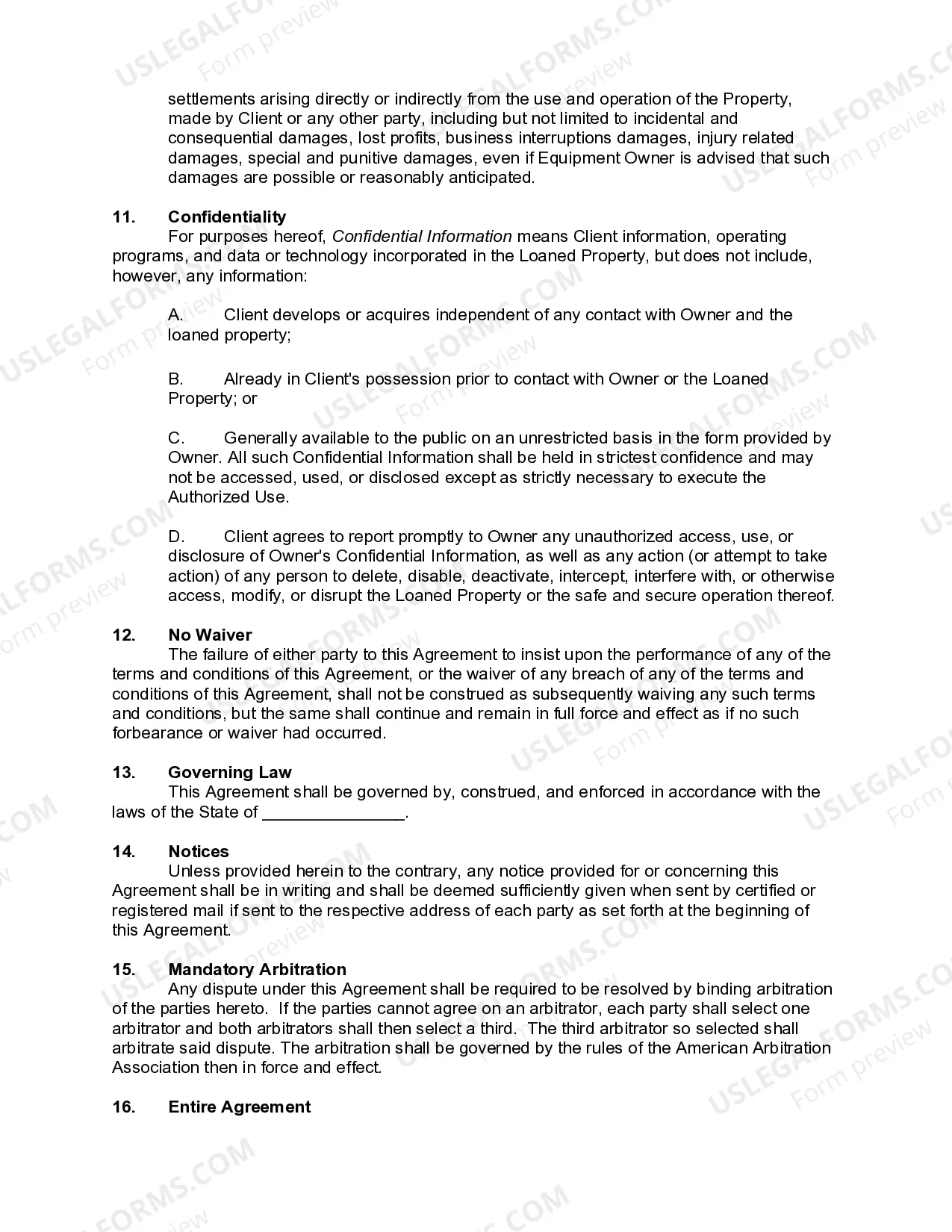
Get your form ready online
Our built-in tools help you complete, sign, share, and store your documents in one place.
Make edits, fill in missing information, and update formatting in US Legal Forms—just like you would in MS Word.
Download a copy, print it, send it by email, or mail it via USPS—whatever works best for your next step.
Sign and collect signatures with our SignNow integration. Send to multiple recipients, set reminders, and more. Go Premium to unlock E-Sign.
If this form requires notarization, complete it online through a secure video call—no need to meet a notary in person or wait for an appointment.
We protect your documents and personal data by following strict security and privacy standards.

Make edits, fill in missing information, and update formatting in US Legal Forms—just like you would in MS Word.

Download a copy, print it, send it by email, or mail it via USPS—whatever works best for your next step.

Sign and collect signatures with our SignNow integration. Send to multiple recipients, set reminders, and more. Go Premium to unlock E-Sign.

If this form requires notarization, complete it online through a secure video call—no need to meet a notary in person or wait for an appointment.

We protect your documents and personal data by following strict security and privacy standards.
Looking for another form?



How to fill out Equipment Placement Agreement?
If you want to be thorough, secure, or generate authorized document formats, utilize US Legal Forms, the largest repository of legal templates available online.
Make the most of the site's user-friendly search tool to locate the documents you require.
A variety of templates for business and personal purposes are organized by categories and jurisdictions, or keywords.
Every legal document format you acquire is your property indefinitely. You can access each document you've downloaded from your account. Click on the My documents section and choose a document to print or download again.
Be proactive and download and print the Maine Equipment Placement Agreement using US Legal Forms. There are numerous professional and state-specific forms available for your business or personal needs.
- Use US Legal Forms to locate the Maine Equipment Placement Agreement with just a few clicks.
- If you are already a US Legal Forms user, sign in to your account and click on the Acquire button to find the Maine Equipment Placement Agreement.
- You can also access forms you have previously downloaded in the My documents section of your account.
- For first-time users of US Legal Forms, follow the steps outlined below.
- Step 1. Ensure you have selected the form for your specific city/state.
- Step 2. Utilize the Review option to assess the form's information. Be sure to read the summary.
- Step 3. If you are not content with the form, use the Search field at the top of the screen to find alternative versions of the legal document format.
- Step 4. Once you've identified the form you need, click the Purchase now button. Choose the payment plan you prefer and enter your credentials to register for the account.
- Step 5. Complete the transaction. You can use your credit card or PayPal account for the payment.
- Step 6. Choose the format of the legal document and download it to your device.
- Step 7. Fill out, modify, and print or sign the Maine Equipment Placement Agreement.
Form popularity
FAQ
An equipment placement agreement details the terms and conditions under which equipment is installed and operated at a designated location. This agreement addresses issues such as delivery, setup, and maintenance requirements. Developing a thorough Maine Equipment Placement Agreement ensures that both parties are clear about their roles, leading to a smoother operation and reducing potential disputes.
A placement agreement is designed to define how and where specific equipment will be placed and used. It can include details about the duration of placement, responsibilities for maintenance, and compliance requirements. Utilizing a Maine Equipment Placement Agreement can enhance clarity and reduce risks, making it easier for both parties to fulfill their obligations.
An equipment agreement is a formal contract that outlines the terms of use, responsibilities, and obligations between parties regarding the delivery and utilization of equipment. This agreement clarifies ownership, maintenance, and liabilities, helping to prevent misunderstandings. When you create a Maine Equipment Placement Agreement, understanding its components can safeguard your interests.
Obtaining an IIC, or Initial Inspection Certificate, in Maine involves submitting an application to the appropriate local authority. Make sure to provide any necessary documentation, including your Maine Equipment Placement Agreement. By following your local guidelines carefully, you can streamline the process and ensure that your equipment is inspected promptly.
When considering the placement of equipment, you should analyze factors such as site conditions, zoning regulations, and local permits. Proper placement ensures safety, accessibility, and compliance with any applicable laws. Understanding these factors is crucial when forming a Maine Equipment Placement Agreement, as it lays the groundwork for effective equipment use.
In Maine, contract law for home construction governs how agreements are created, enforced, and interpreted. It emphasizes the need for a written contract, especially for projects over a certain amount. When using a Maine Equipment Placement Agreement, adhering to these legal standards is essential for protecting both parties. Understanding these laws can help safeguard your investments and ensure project success.
The rules of construction in a contract involve interpreting the language used to clarify the intentions of the parties. Courts often look at the plain meaning of the terms, context, and any relevant external factors. In the context of a Maine Equipment Placement Agreement, using clear and specific language minimizes ambiguity and fosters mutual understanding. Proper interpretation can prevent potential legal issues down the line.
In Maine, construction contracts must comply with state laws, which generally require a written agreement for projects exceeding a certain monetary threshold. Additionally, the contract should specify the scope of work, payment terms, and timeline for completion. A Maine Equipment Placement Agreement should also address local permit requirements and regulations. This ensures that the contract is enforceable and legally sound.
General requirements in a construction contract typically include the scope of work, timelines, payment terms, and responsibilities of both parties. These elements outline what is to be done, how it will be done, and the deadlines for completion. For a Maine Equipment Placement Agreement, including precise language about equipment use and placement is especially important. This clarity ensures that both parties have aligned expectations.
The five essential elements of a construction contract include the offer, acceptance, consideration, mutual assent, and a legal purpose. Each element plays a vital role in forming a legally binding agreement. When drafting a Maine Equipment Placement Agreement, it's crucial to ensure that all these elements are clearly articulated to avoid disputes. Clarity in these areas helps both parties understand their rights and obligations.