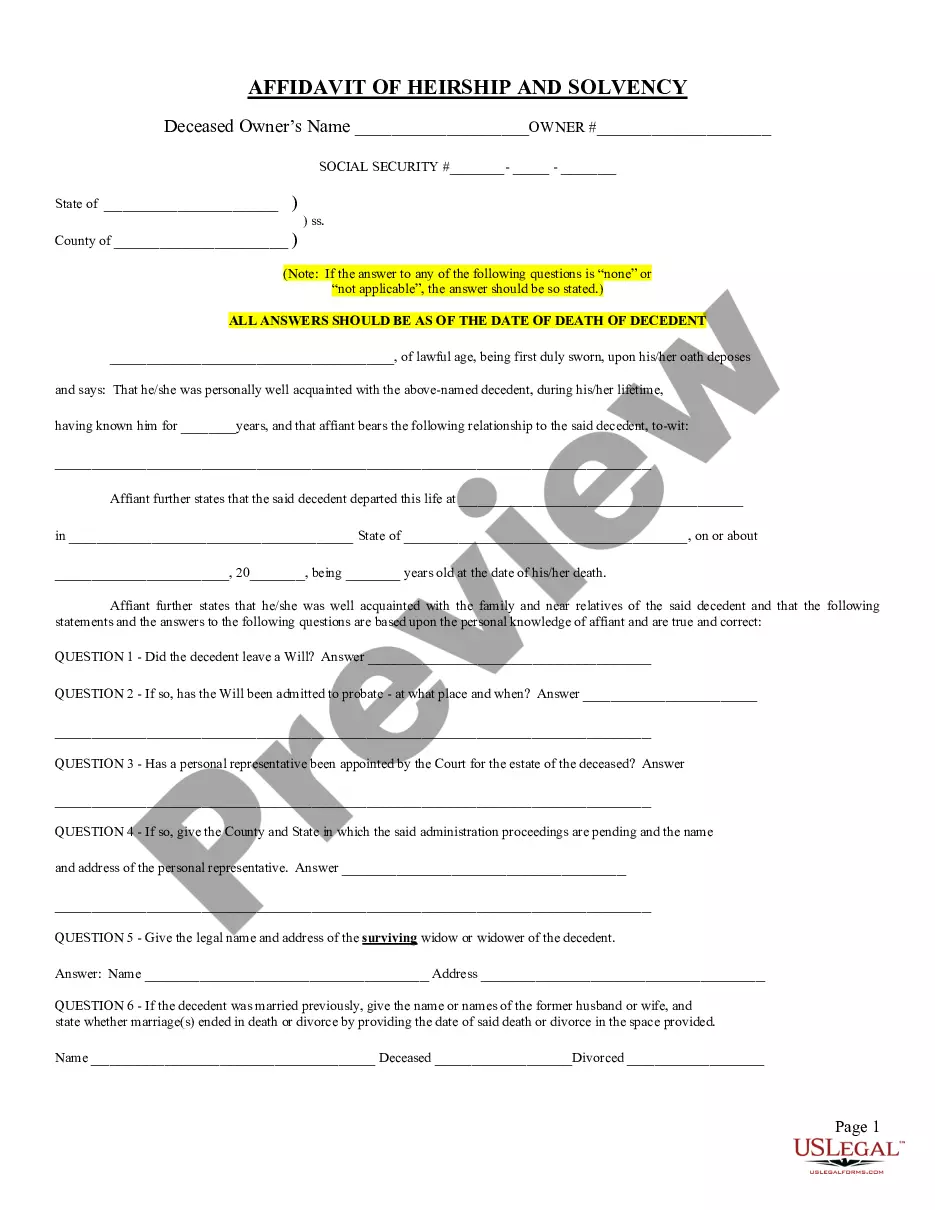
Maine Important Juror Questionnaire
Description
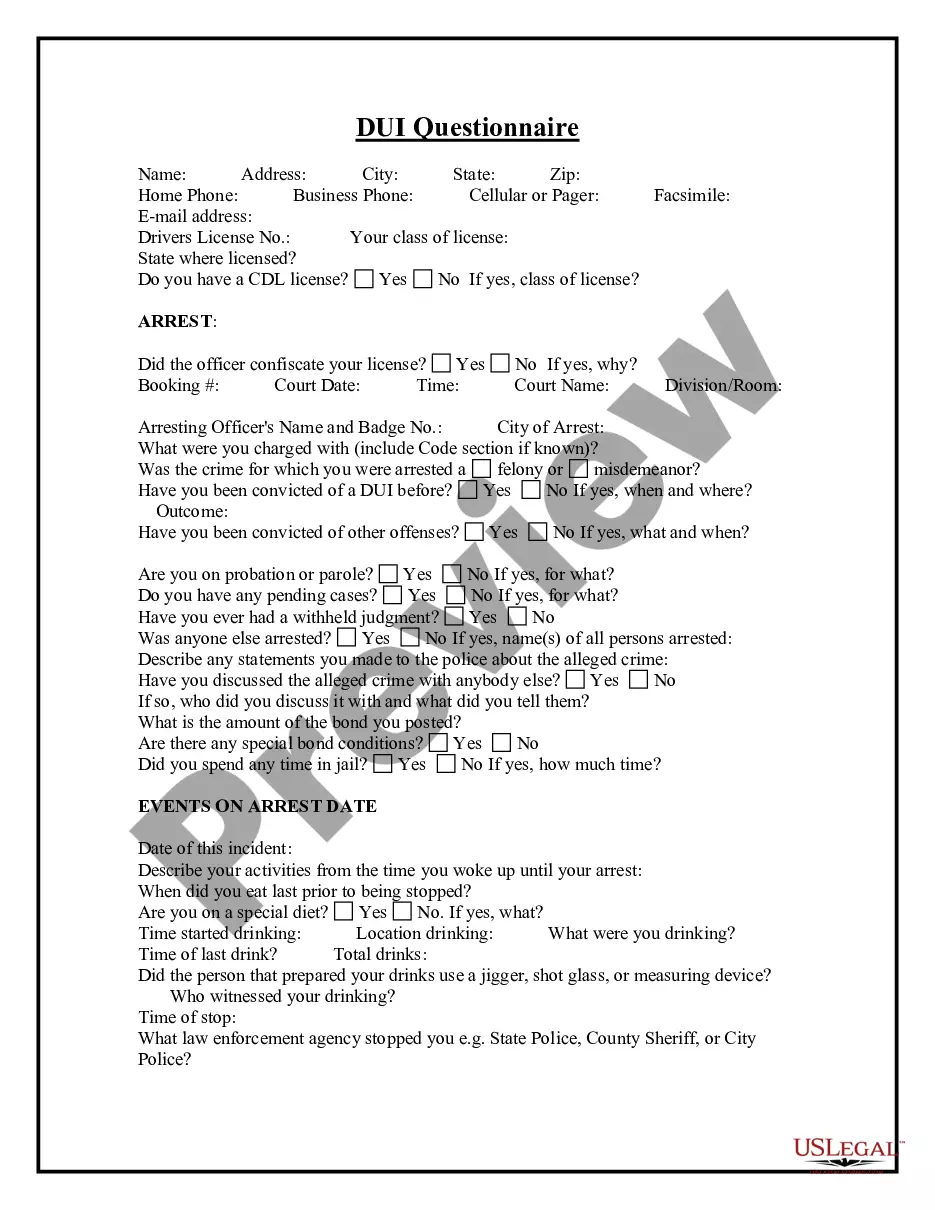
Get your form ready online
Our built-in tools help you complete, sign, share, and store your documents in one place.
Make edits, fill in missing information, and update formatting in US Legal Forms—just like you would in MS Word.
Download a copy, print it, send it by email, or mail it via USPS—whatever works best for your next step.
Sign and collect signatures with our SignNow integration. Send to multiple recipients, set reminders, and more. Go Premium to unlock E-Sign.
If this form requires notarization, complete it online through a secure video call—no need to meet a notary in person or wait for an appointment.
We protect your documents and personal data by following strict security and privacy standards.

Make edits, fill in missing information, and update formatting in US Legal Forms—just like you would in MS Word.

Download a copy, print it, send it by email, or mail it via USPS—whatever works best for your next step.

Sign and collect signatures with our SignNow integration. Send to multiple recipients, set reminders, and more. Go Premium to unlock E-Sign.

If this form requires notarization, complete it online through a secure video call—no need to meet a notary in person or wait for an appointment.

We protect your documents and personal data by following strict security and privacy standards.
Looking for another form?
How to fill out Important Juror Questionnaire?
If you need to extensive, obtain, or printing legal document templates, utilize US Legal Forms, the largest compilation of legal forms, that is available online.
Employ the site's straightforward and user-friendly search to locate the documents you require. Various templates for business and personal purposes are organized by categories and states, or keywords.
Utilize US Legal Forms to acquire the Maine Important Juror Questionnaire with just a few clicks.
Every legal document template you purchase is yours indefinitely. You have access to every form you saved in your account. Click on the My documents section and select a form to print or download again.
Stay competitive and download, and print the Maine Important Juror Questionnaire with US Legal Forms. There are numerous professional and state-specific forms you can use for your business or personal needs.
- If you are already a US Legal Forms customer, Log In to your account and click the Acquire button to find the Maine Important Juror Questionnaire.
- You can also access forms you previously saved from the My documents tab of your account.
- If you are using US Legal Forms for the first time, follow the instructions below.
- Step 1. Ensure you have selected the form for the correct city/state.
- Step 2. Use the Preview option to review the form's content. Don’t forget to read the details.
- Step 3. If you are dissatisfied with the form, use the Search field at the top of the screen to find alternative versions of the legal form template.
- Step 4. Once you have located the form you want, click the Purchase now button. Select the payment plan you prefer and enter your information to register for the account.
- Step 5. Complete the transaction. You may use your credit card or PayPal account to finalize the purchase.
- Step 6. Choose the format of the legal form and download it to your device.
- Step 7. Fill out, edit, and print or sign the Maine Important Juror Questionnaire.
Form popularity
FAQ
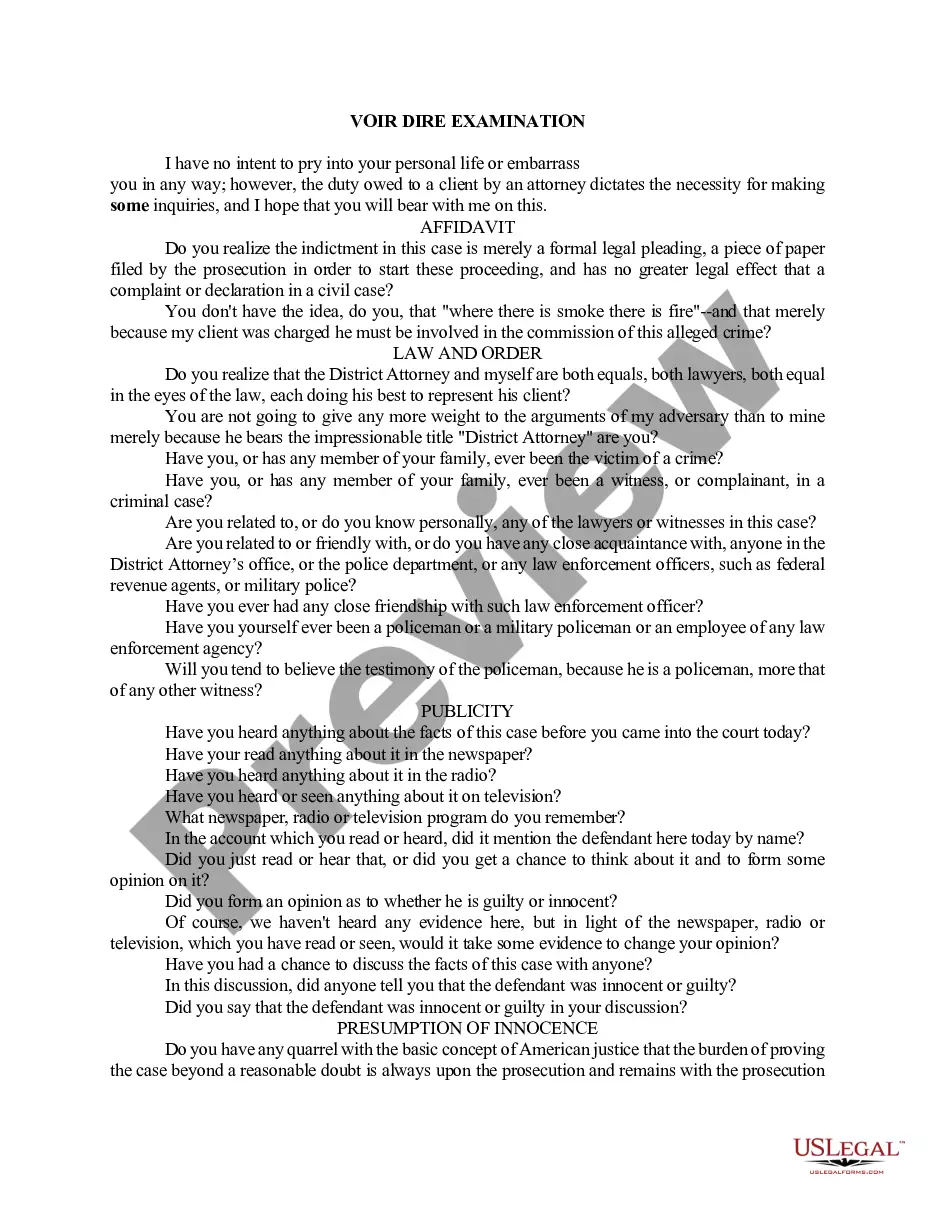
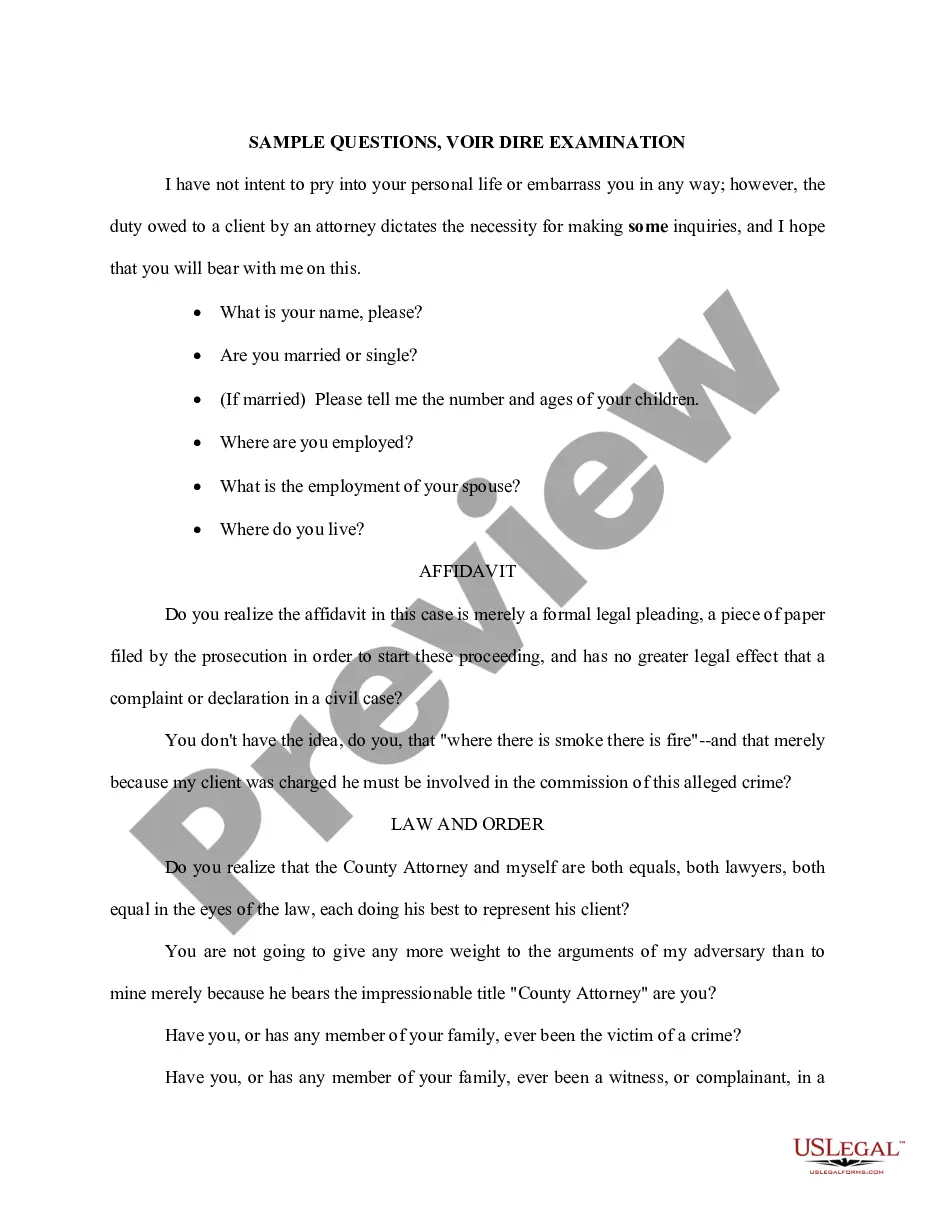
The judge and attorneys ask the potential jurors questions, general or related to the specific case before them, to determine their suitability to serve on the jury. This process is called voir dire, which typically results in some prospective jurors being excused, based on their answers, from serving in that trial.
5 Things to Look for in the Jury Selection Process Relevant Life Experiences. In selecting (or de-selecting) a potential juror, one important element to consider is the person's previous life experience as it relates to the case at hand. ... Social Pressure. ... Online Activity. ... Legal Opinions. ... Ability to Be Impartial.
The jury selection process, though, gives you the opportunity to identify potential jurors' biases so that you can better ensure that you receive a fair trial.
87, §1 (RPR).] 2. Basis for excuse. A qualified prospective juror may be excused from jury service only upon a showing of undue hardship, extreme inconvenience, public necessity or inability to render satisfactory jury service because of physical or mental disability.
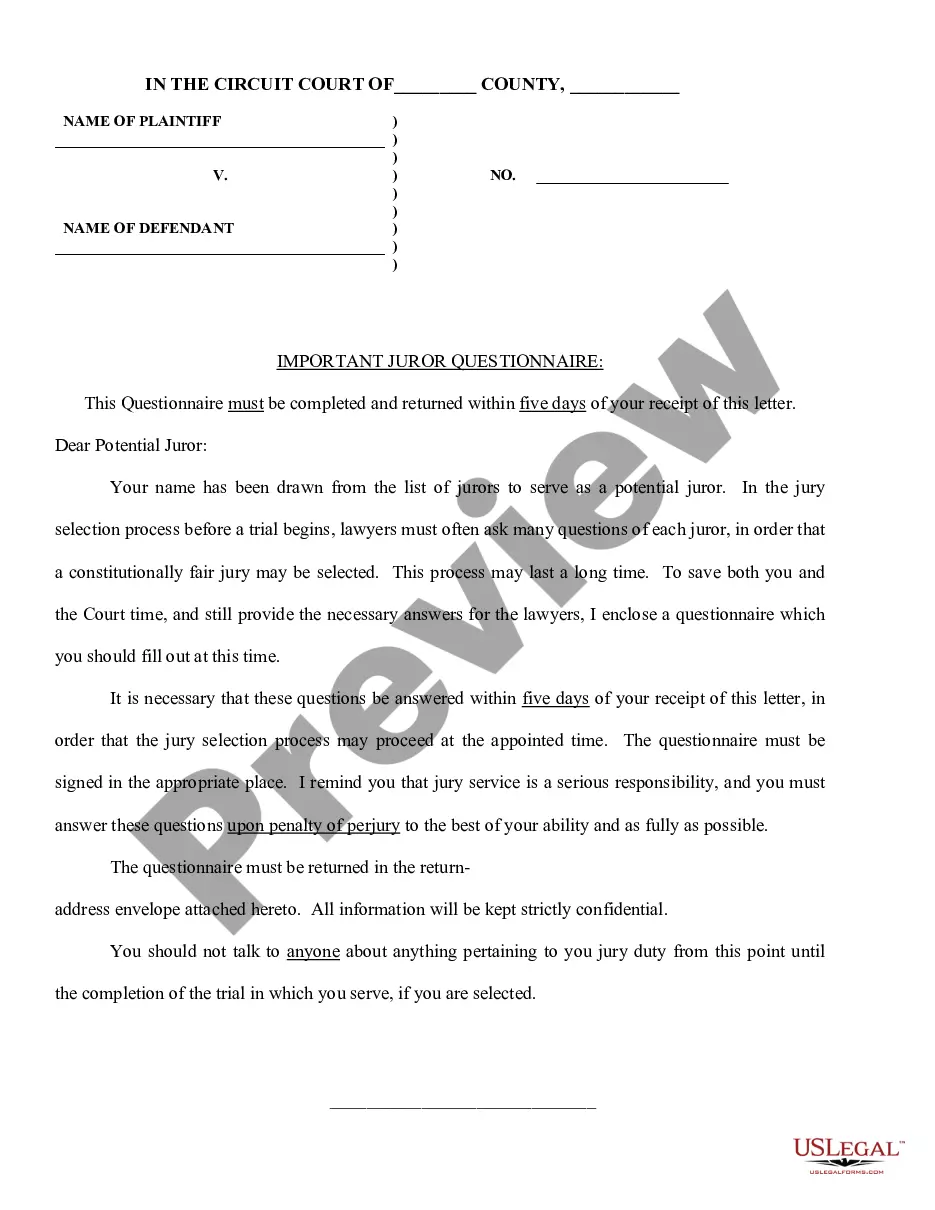
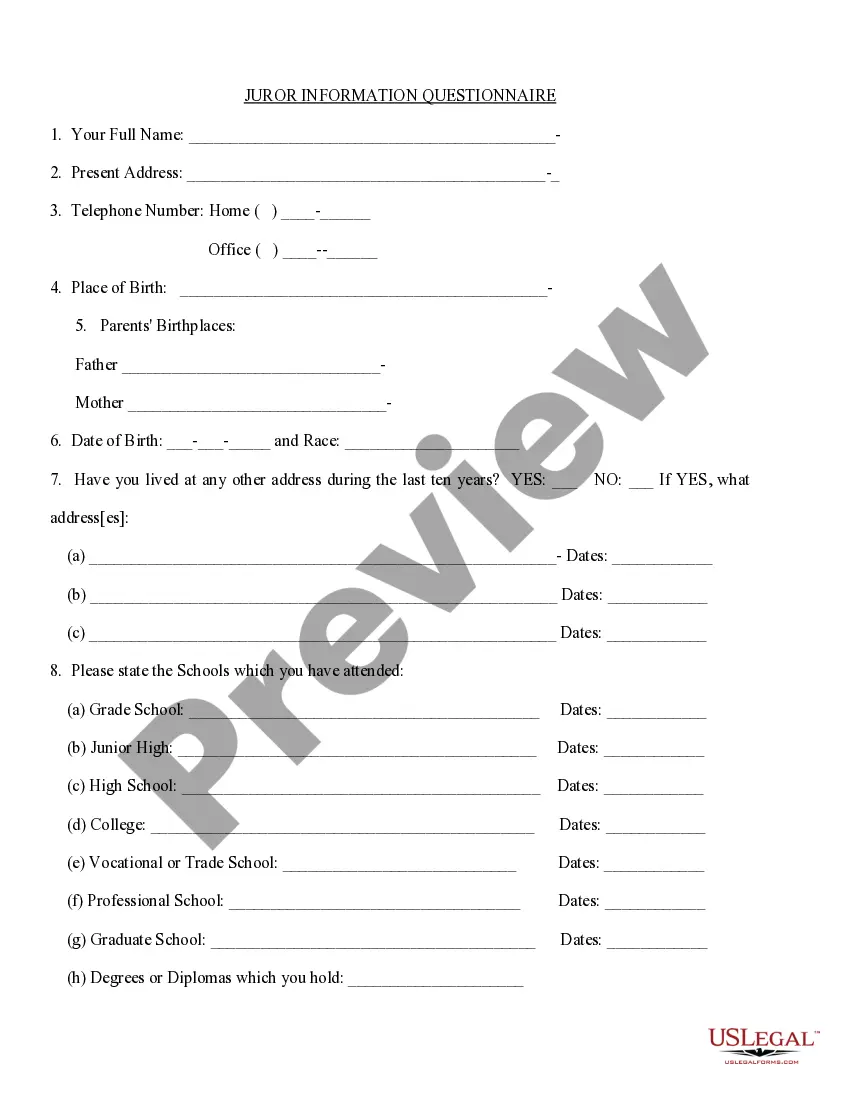
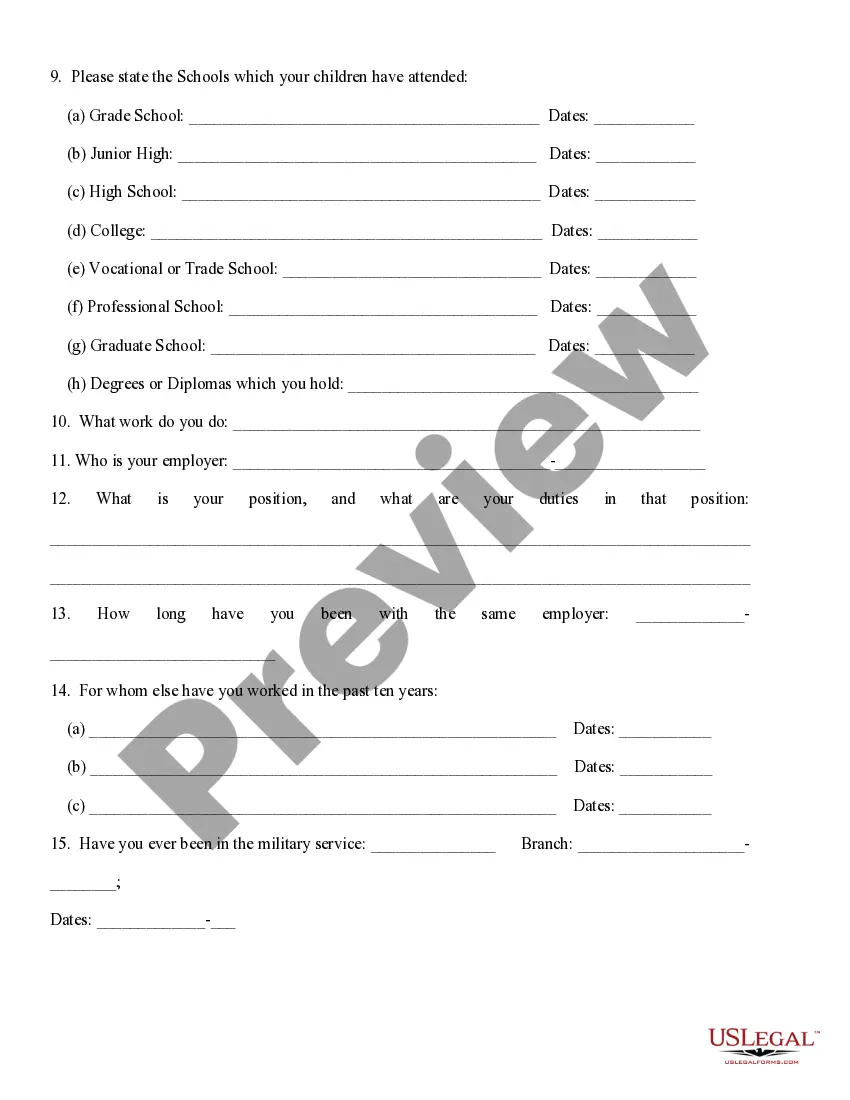
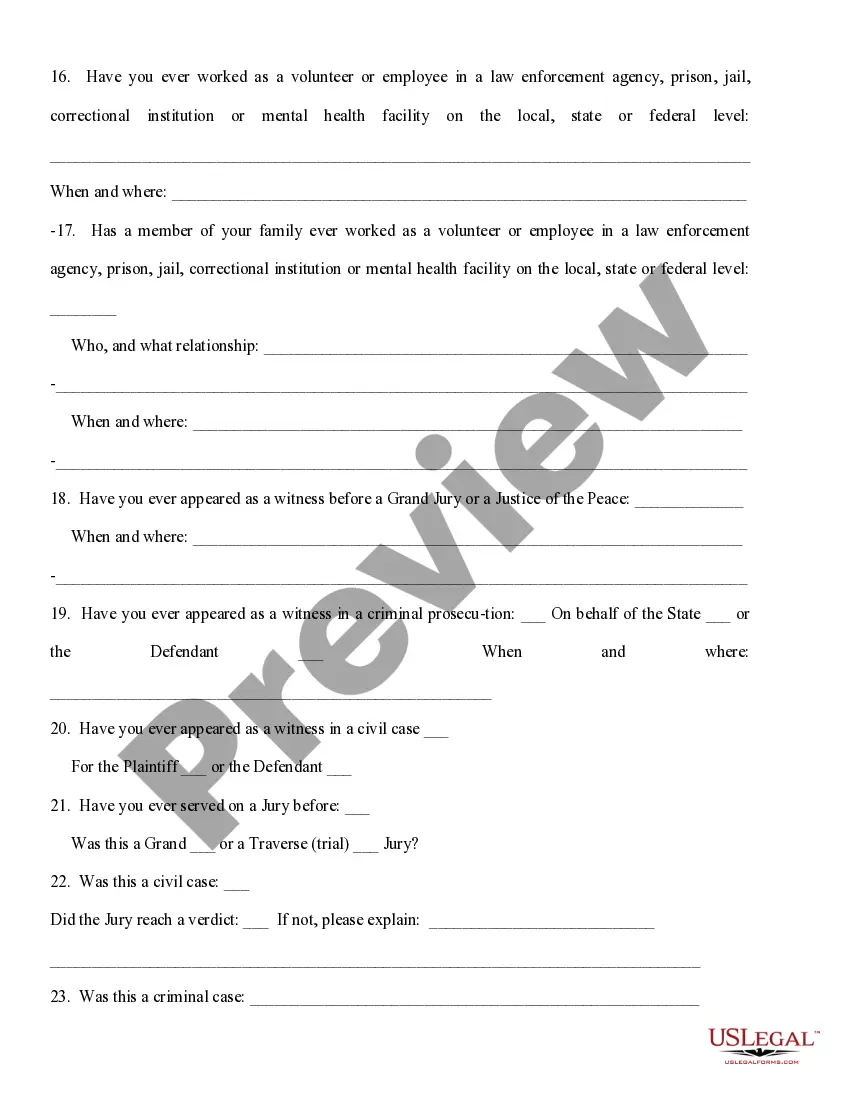
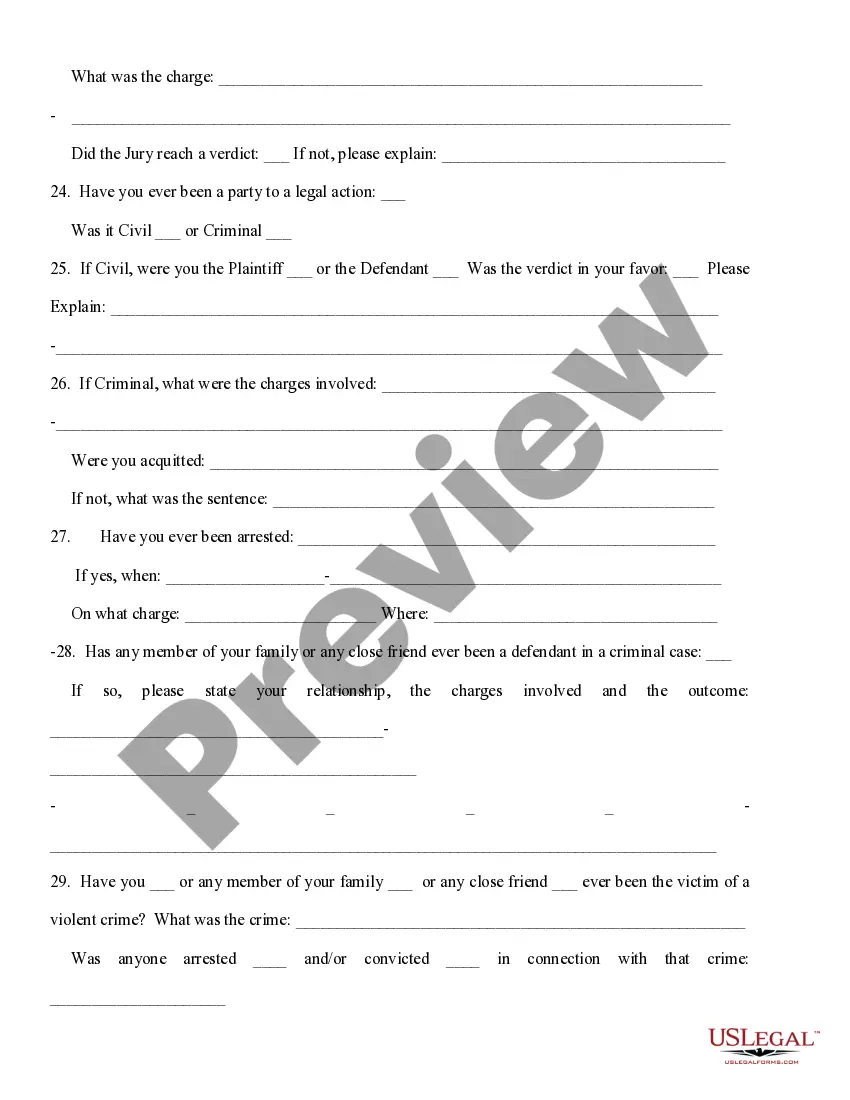
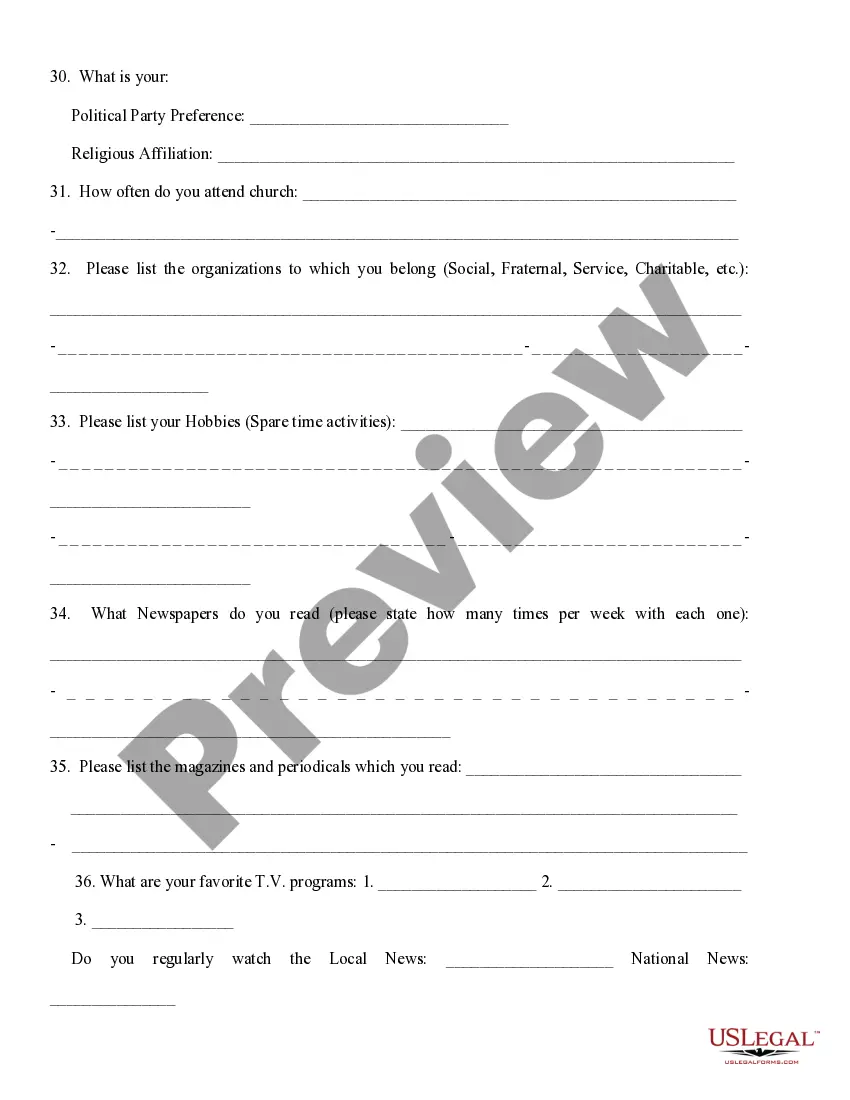
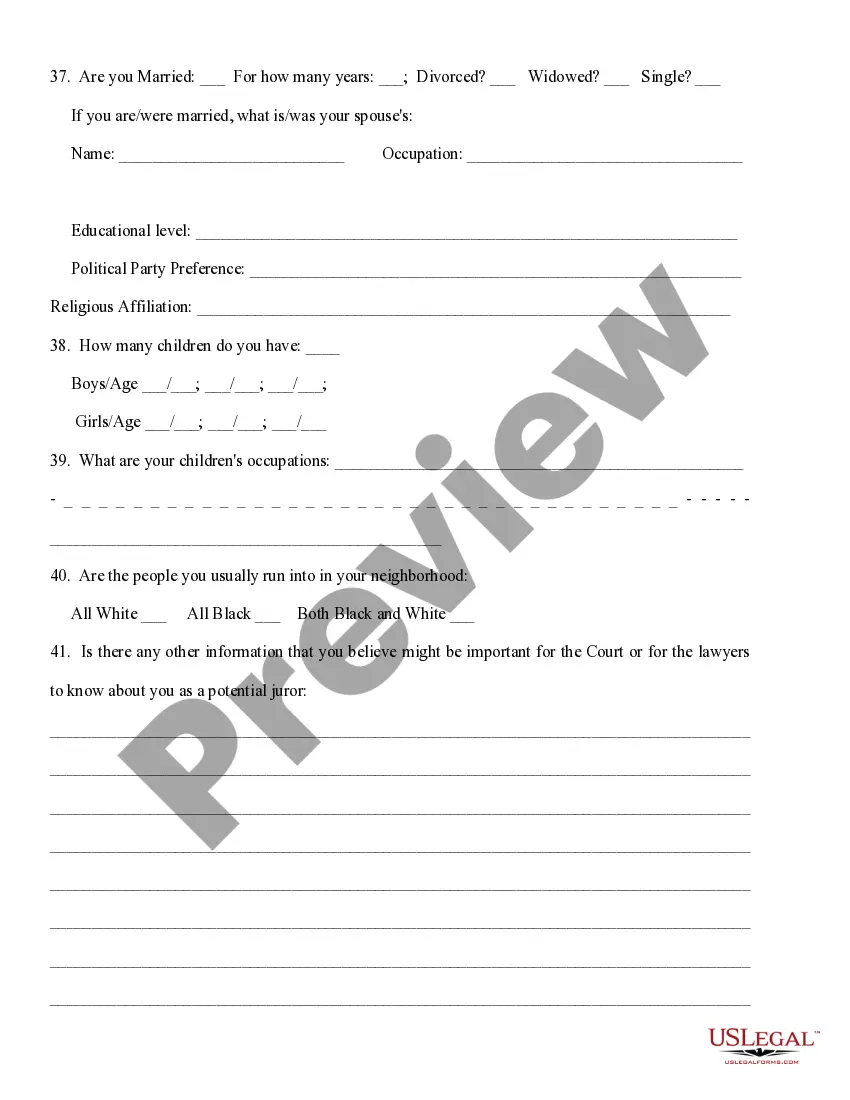
The form is used to obtain information about you so that we can objectively determine whether you are qualified to serve as a juror in the court.
Benefits of jury questionnaires Jurors are more likely to reveal their true beliefs and disclose more information in a questionnaire as opposed to in open court, where they may censor their responses because of social-desirability effects, pressure from the judge to ?be fair,? and a desire to keep out of the spotlight.
The primary purpose of juror questioning should be to clarify the testimony and help the jury to understand the evidence. The Court should decline questions if jurors attempt to be advocates, or become argumentative with a witness, the Court, or counsel.
Often, jurors will be asked to state the neighborhood or area they live in, their profession, whether they have children, are married, and so on. This kind of information helps the judge and lawyers get a feel for the potential jurors, and might even inform an attorney's decision to use a challenge on someone.