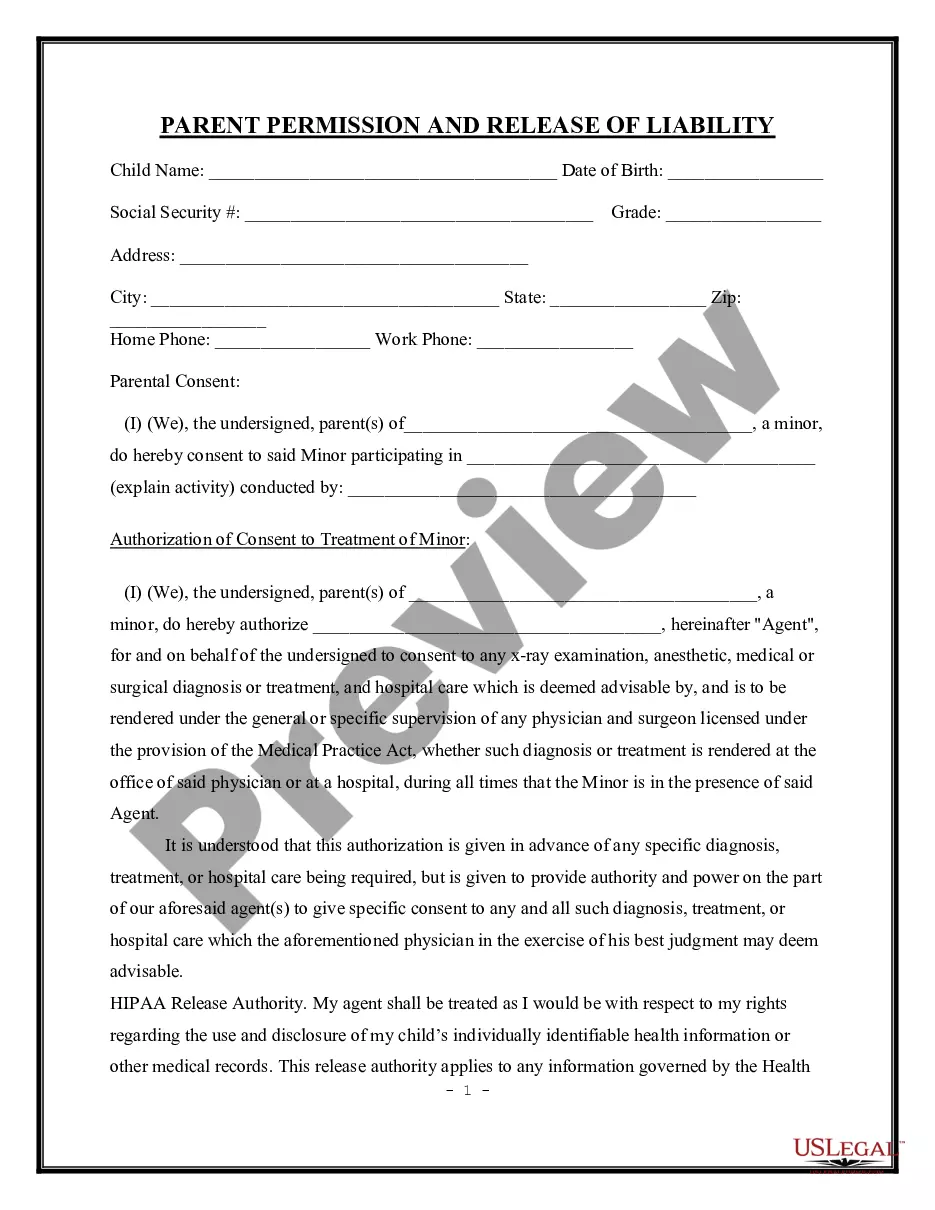
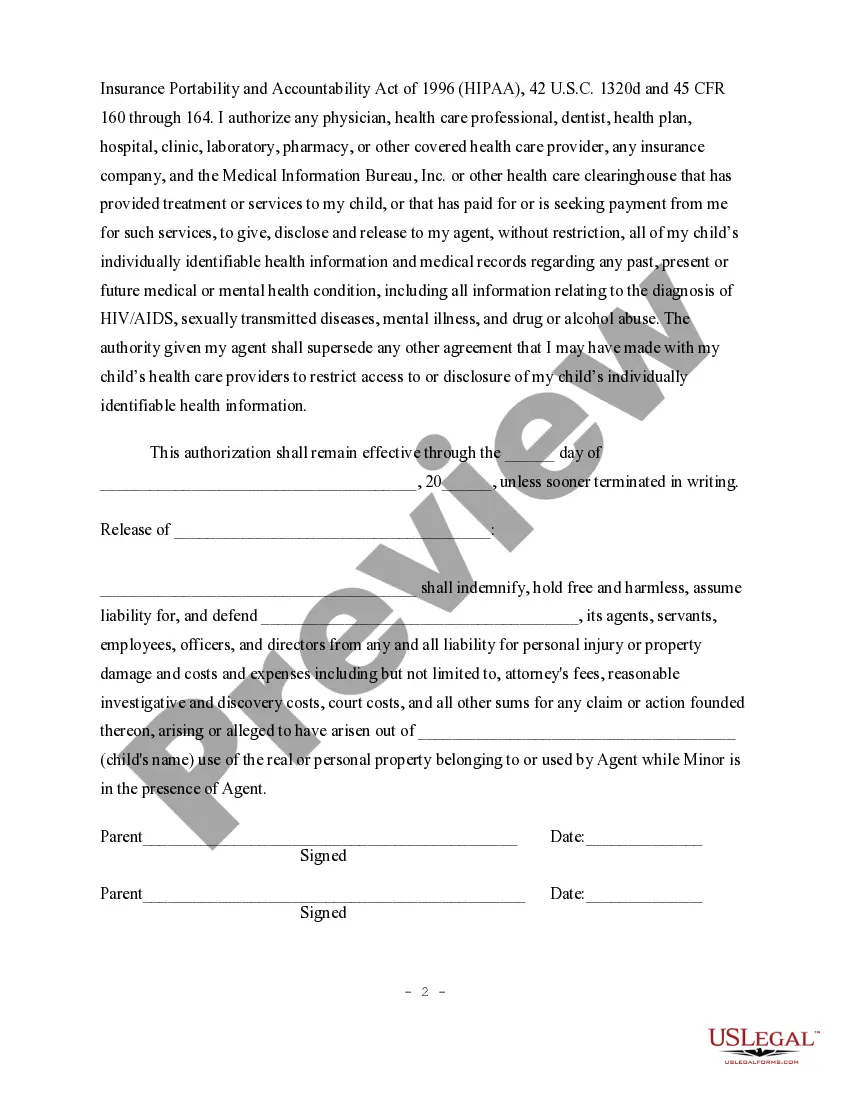
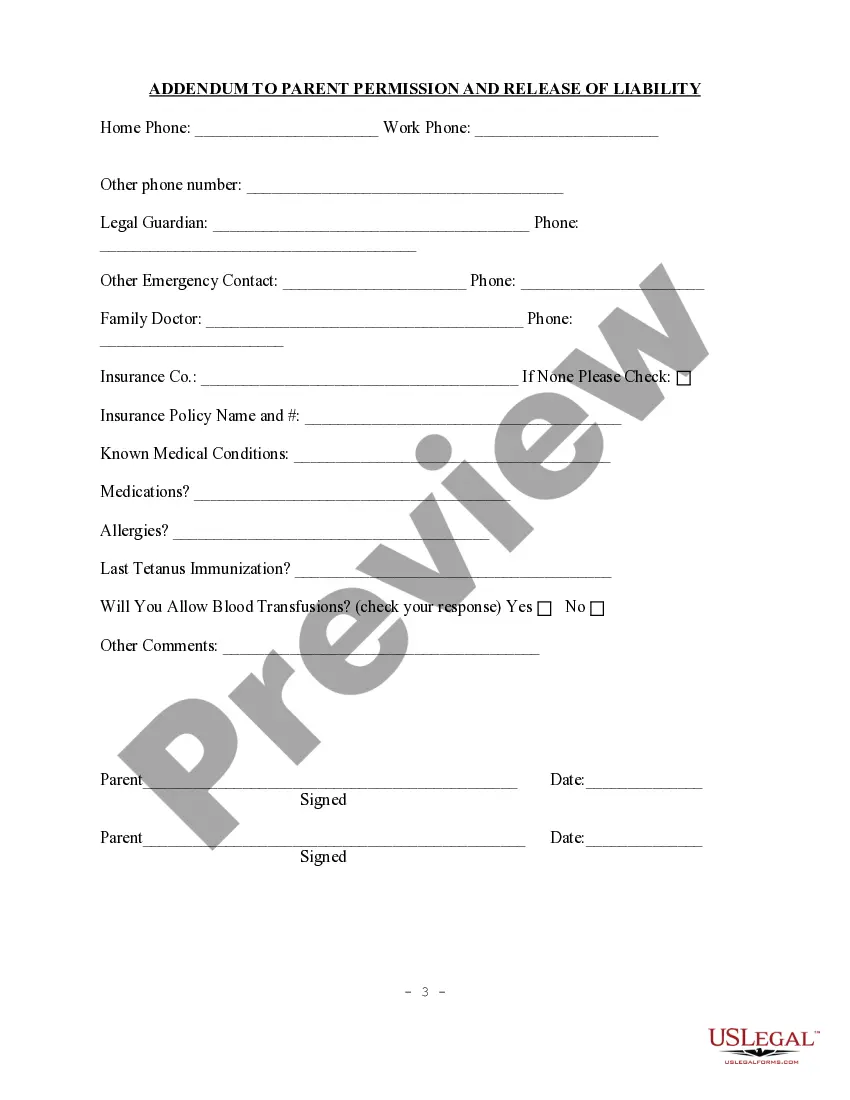
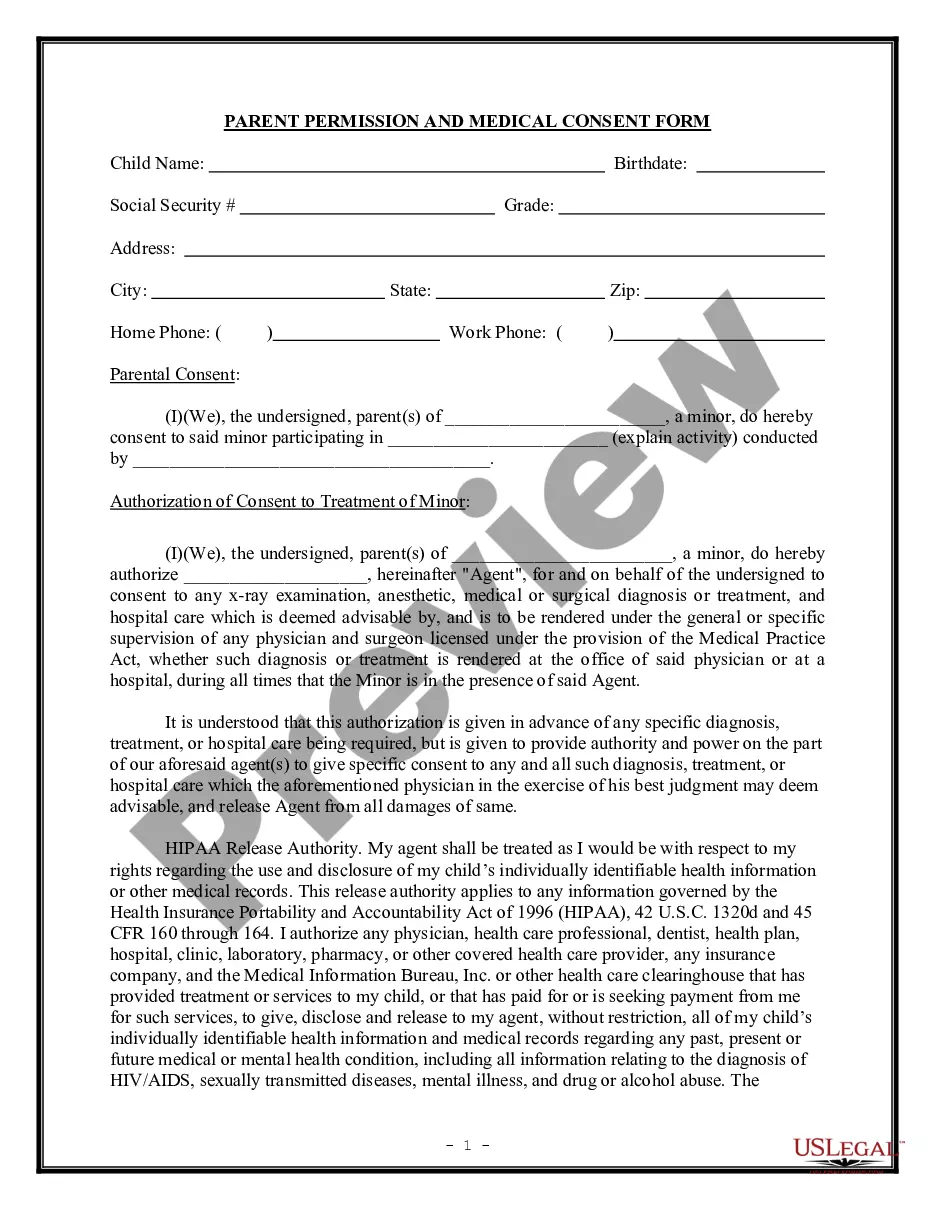
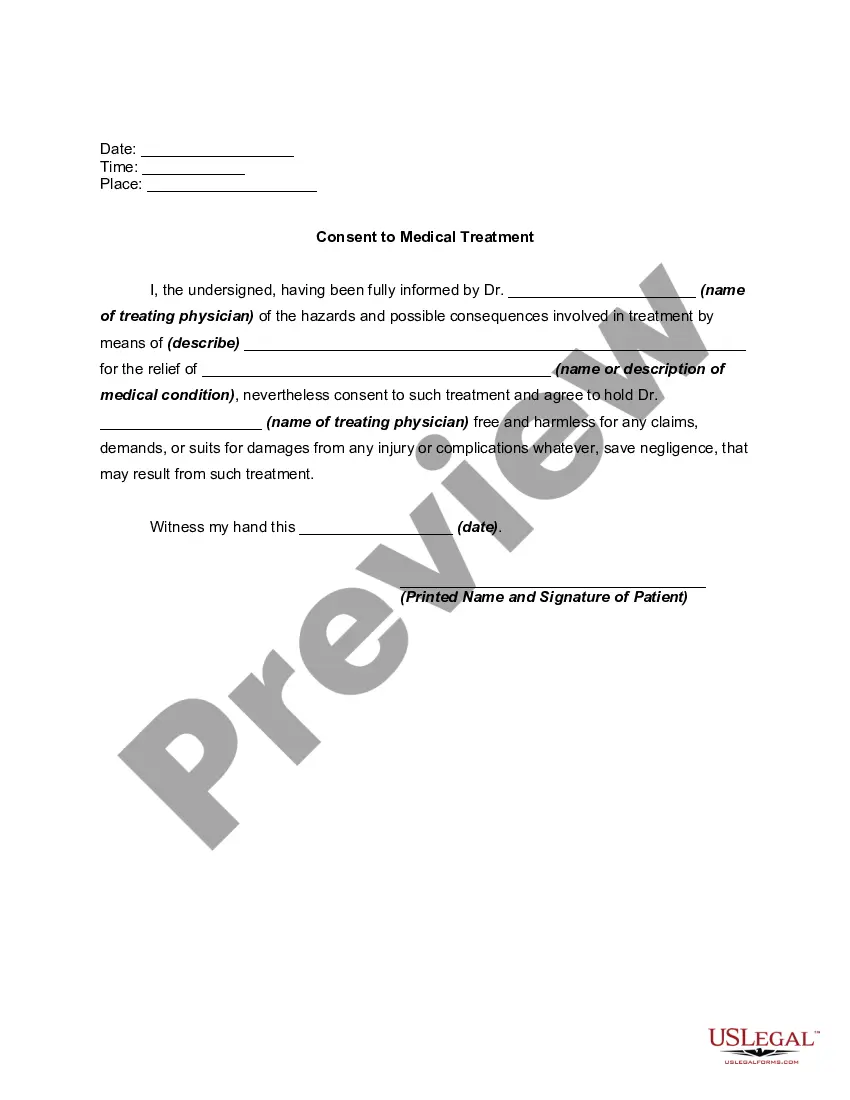
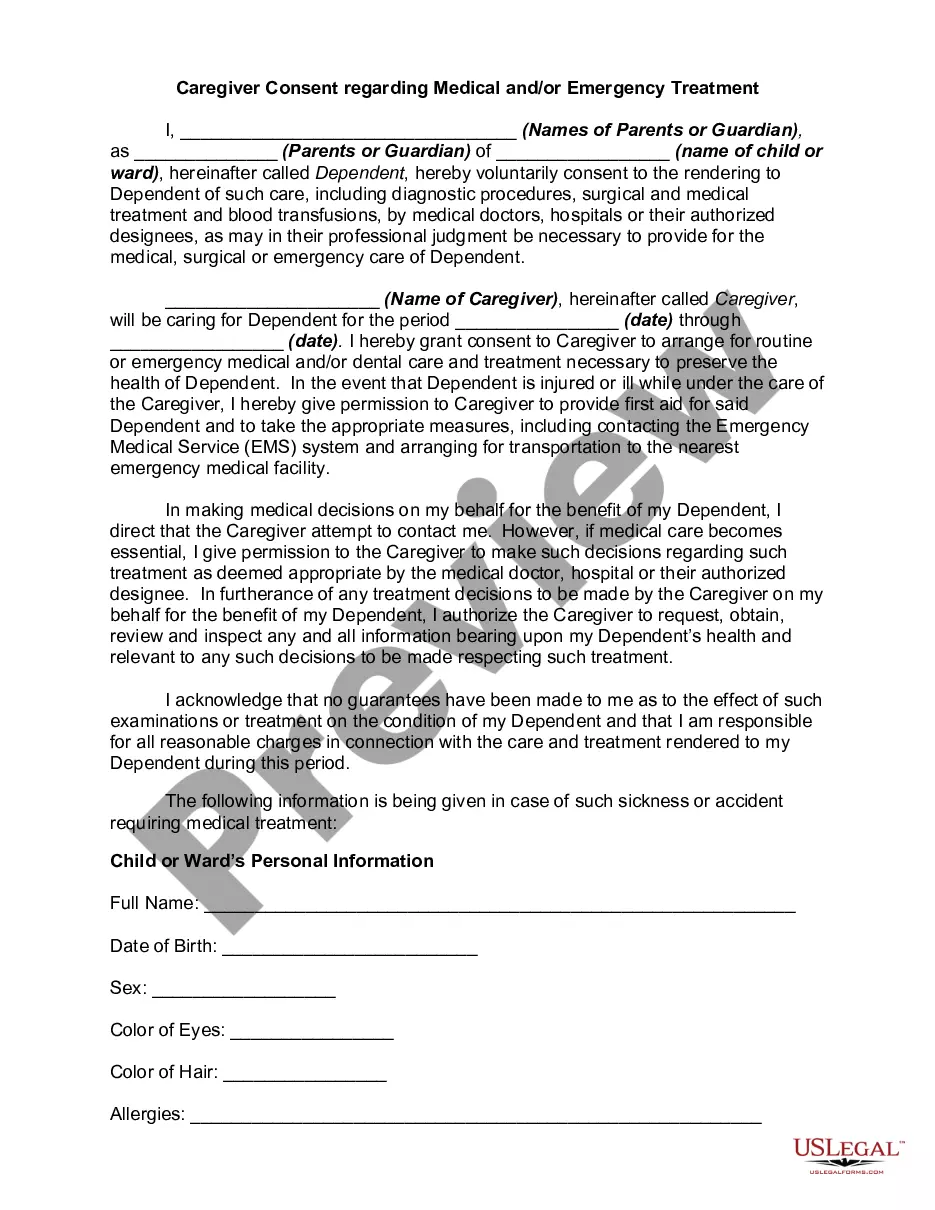
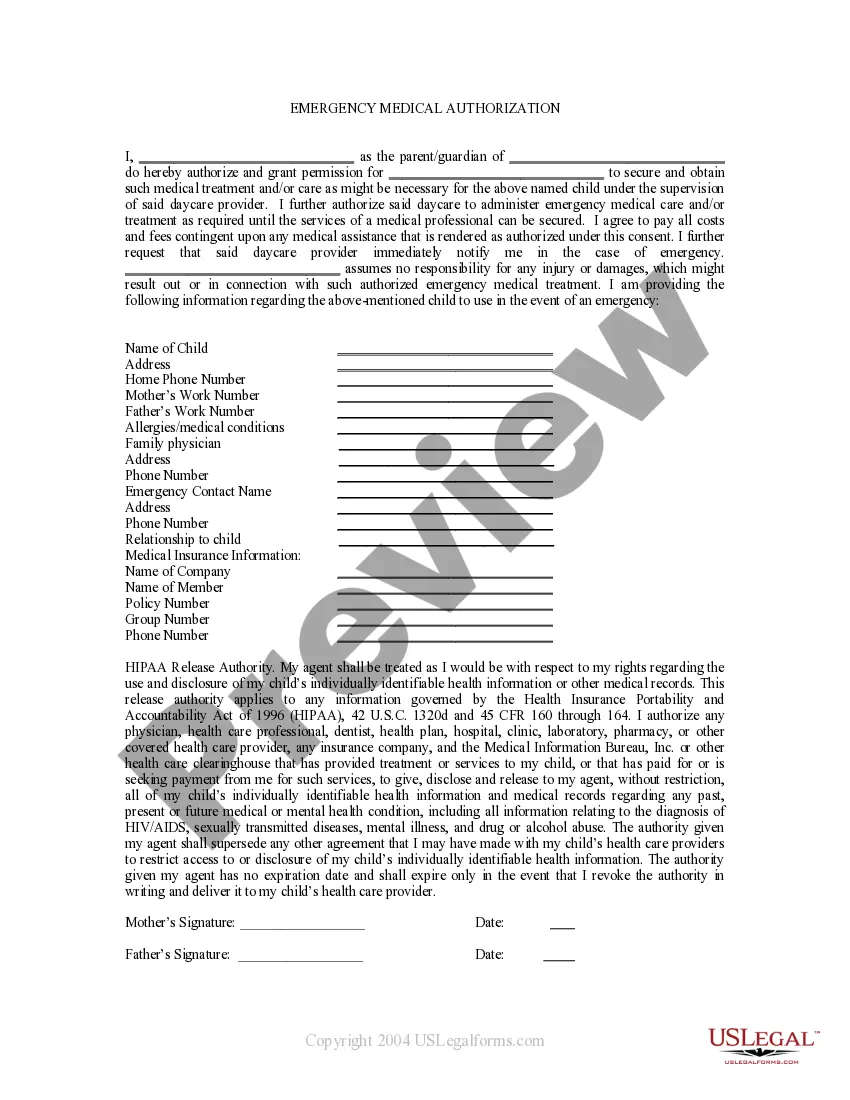
This is a Parental Permission, Medical Consent, and Release form. This form allows the parent to offer his/her consent for a child to participate in an activity and to receive medical care in case of an injury. The form also contains a medical information sheet. The form is the same as US-00675 except that it is broader because contains a release of liability of the person or company sponsoring the event.
Maine Parental Permission, Medical Consent and Release of Liability
State:
Multi-State
Category:
Control #:
US-00660
Format:
Word;
Rich Text
273 downloads
Description
Free preview
Get your form ready online
Our built-in tools help you complete, sign, share, and store your documents in one place.
Built-in online Word editor
Make edits, fill in missing information, and update formatting in US Legal Forms—just like you would in MS Word.
Export easily
Download a copy, print it, send it by email, or mail it via USPS—whatever works best for your next step.
E-sign your document
Sign and collect signatures with our SignNow integration. Send to multiple recipients, set reminders, and more. Go Premium to unlock E-Sign.
Notarize online 24/7
If this form requires notarization, complete it online through a secure video call—no need to meet a notary in person or wait for an appointment.
Store your document securely
We protect your documents and personal data by following strict security and privacy standards.

Make edits, fill in missing information, and update formatting in US Legal Forms—just like you would in MS Word.

Download a copy, print it, send it by email, or mail it via USPS—whatever works best for your next step.

Sign and collect signatures with our SignNow integration. Send to multiple recipients, set reminders, and more. Go Premium to unlock E-Sign.

If this form requires notarization, complete it online through a secure video call—no need to meet a notary in person or wait for an appointment.

We protect your documents and personal data by following strict security and privacy standards.
Looking for another form?

How to fill out Parental Permission, Medical Consent And Release Of Liability?
If you need to complete, download, or create official document templates, utilize US Legal Forms, the largest collection of official forms available online.
Take advantage of the site's user-friendly and convenient search to find the documents you need.
Various templates for commercial and personal purposes are categorized by groups and topics, or keywords.
Step 4. After finding the form you need, click the Purchase now button. Select the payment plan you prefer and enter your details to register for an account.
Step 5. Complete the payment process. You can use your credit card or PayPal account to finalize the transaction.
- Use US Legal Forms to locate the Maine Parental Consent, Medical Approval, and Liability Waiver with just a few clicks.
- If you are an existing US Legal Forms user, Log In to your account and click the Download button to obtain the Maine Parental Consent, Medical Approval, and Liability Waiver.
- You can also access forms you have previously saved in the My documents section of your account.
- If you are using US Legal Forms for the first time, follow the steps outlined below.
- Step 1. Ensure you have chosen the form for the correct city/state.
- Step 2. Use the Review option to examine the form’s details. Be sure to read the information.
- Step 3. If you are dissatisfied with the form, use the Search field at the top of the screen to discover other types of your desired legal form template.
Form popularity
FAQ
The VA code 54.1 2969 outlines the legal requirements for parental permission regarding medical consent and release of liability in certain situations. This code ensures that parents or guardians provide valid consent before any medical procedures or treatments can take place, safeguarding children's rights and wellbeing. Understanding this code is crucial for anyone seeking to navigate Maine Parental Permission, Medical Consent and Release of Liability effectively. To simplify this process, platforms like uslegalforms offer resources and templates that help you comply with these legal obligations.
The consent age in Maine is primarily 18 years old for most legal matters. However, it is important to note that minors aged 16 and over can give consent for certain medical treatments. This knowledge is essential for parents and guardians handling issues of Maine parental permission and medical consent. By understanding these laws, parents can better support their children’s health care needs.
In Maine, the age of consent for medical care is 16 years old. This means that minors at this age can make their own health care decisions, including consenting to treatments. Understanding this age is vital for parents who may need to provide Maine parental permission, medical consent, and the release of liability for their younger children. Clarity on these matters helps ensure proper healthcare access.
In Washington state, minors aged 13 and older can refuse certain medical treatments. While Maine has different regulations, it is still important to understand how consent and refusal work. Familiarity with Maine parental permission and medical consent laws helps parents prepare for medical situations involving their minor children. Knowing the local laws will assist in making informed decisions regarding healthcare.
The youngest age of consent varies by state across the United States, typically ranging from 16 to 18 years. In Maine, young individuals can consent to medical treatments at 16, which aligns with the state’s approach to parental permission. Awareness of these laws helps parents navigate the responsibilities tied to medical consent and release of liability.
The minimum age for medical consent in Maine is generally 18 years old. However, minors who are 16 or older can consent to certain medical treatments without parental permission. This aspect of Maine parental permission facilitates access to necessary healthcare for eligible minors. It is crucial to understand how this impacts medical consent and the release of liability.
In Maine, the age of maturity is 18 years old. At this age, individuals are considered adults and can make independent legal decisions. This includes matters related to Maine parental permission, medical consent, and the release of liability. Knowing this is essential for guardians and parents who manage permissions for minors.
The rules for informed consent in Maine demand that patients receive clear, comprehensive information about their medical care. Patients should have opportunities to ask questions and seek clarification before consenting. Observing these rules supports the foundational aspects of Maine Parental Permission, Medical Consent and Release of Liability, ensuring that caregivers make informed choices regarding their child's health.
The four principles of informed consent include competence, disclosure, understanding, and voluntariness. Competence means that the patient is capable of making an informed decision, while disclosure involves providing necessary information about the treatment. Understanding ensures that the patient comprehends this information, and voluntariness confirms that consent is given freely, without coercion. These principles align with Maine Parental Permission, Medical Consent and Release of Liability.
Maine's informed consent law requires healthcare providers to disclose essential information about treatments and procedures, allowing patients to make educated decisions. This law emphasizes that patients must understand the risks and benefits involved before consenting to care. For parents, grasping Maine Parental Permission, Medical Consent and Release of Liability helps facilitate discussions about informed consent regarding their children's healthcare.