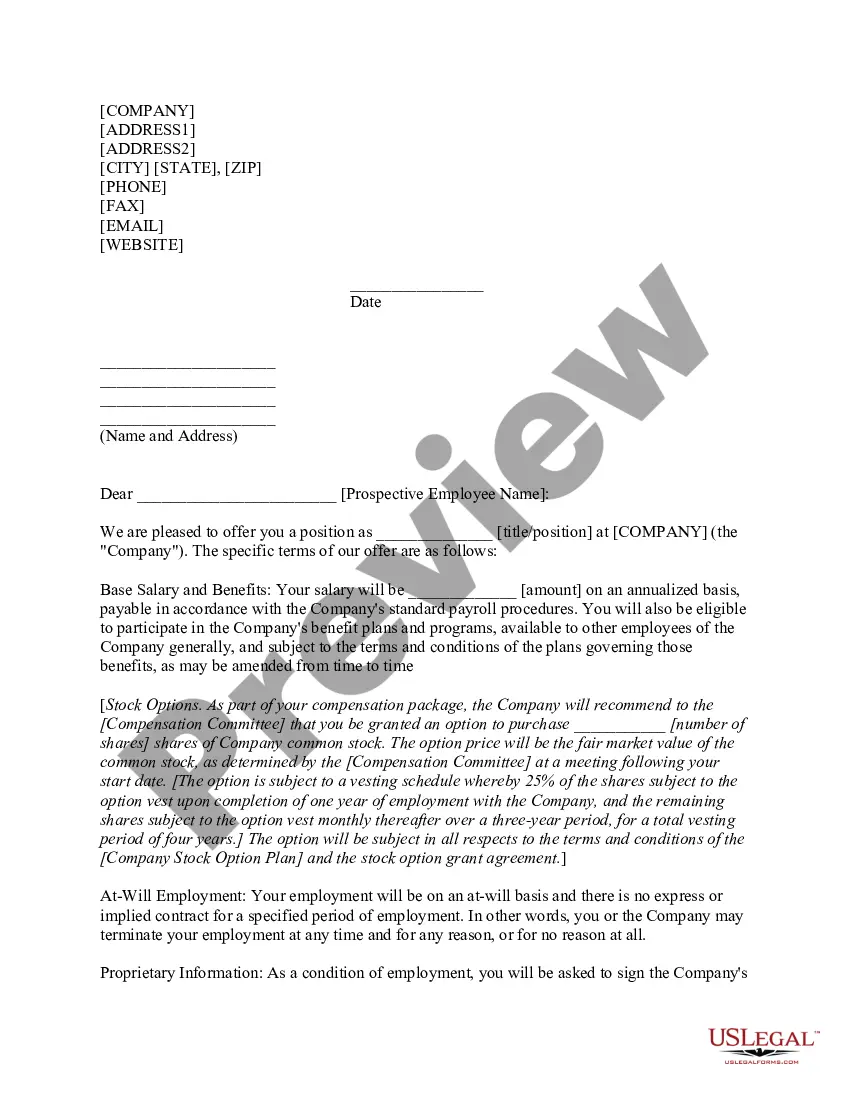
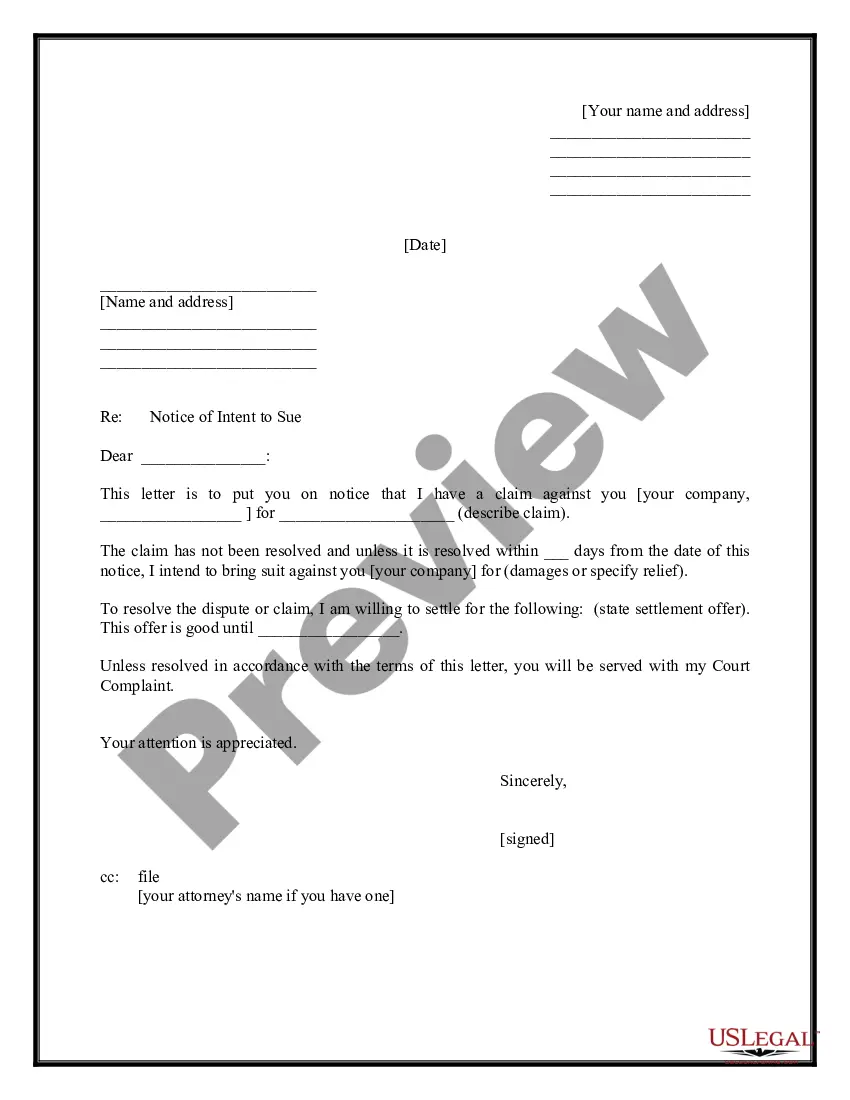
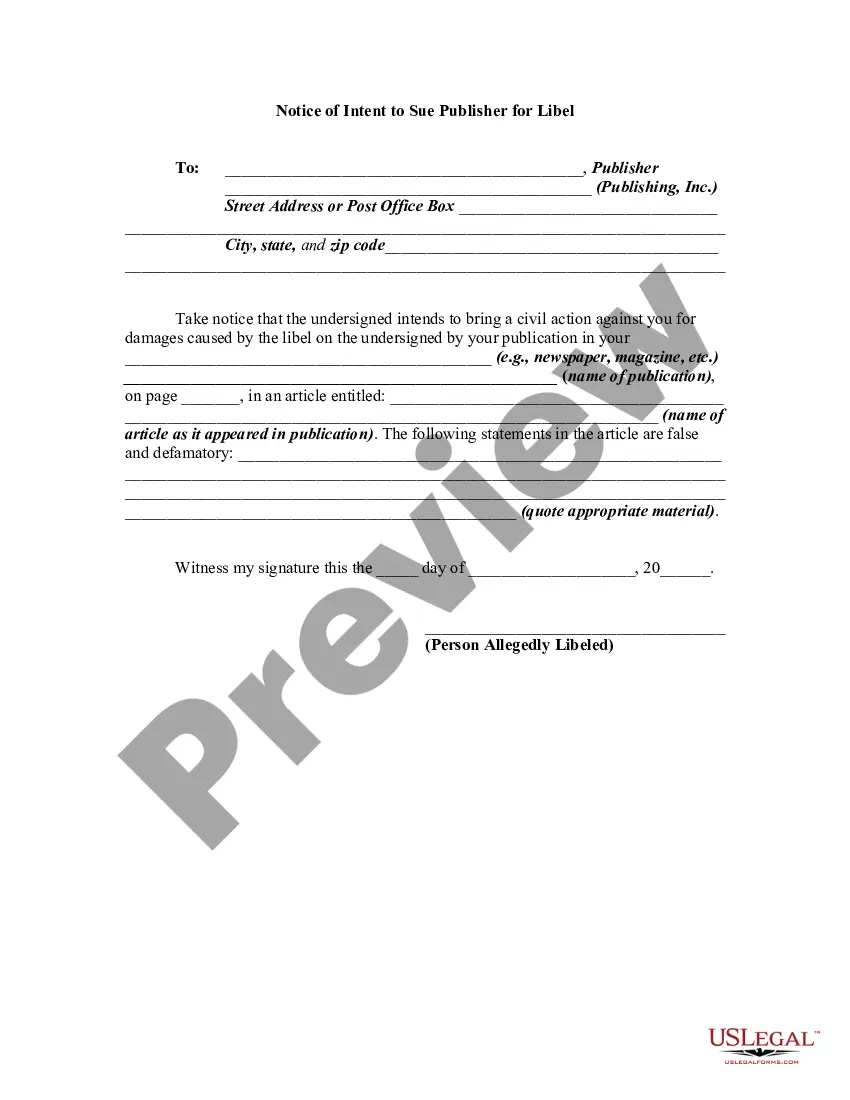
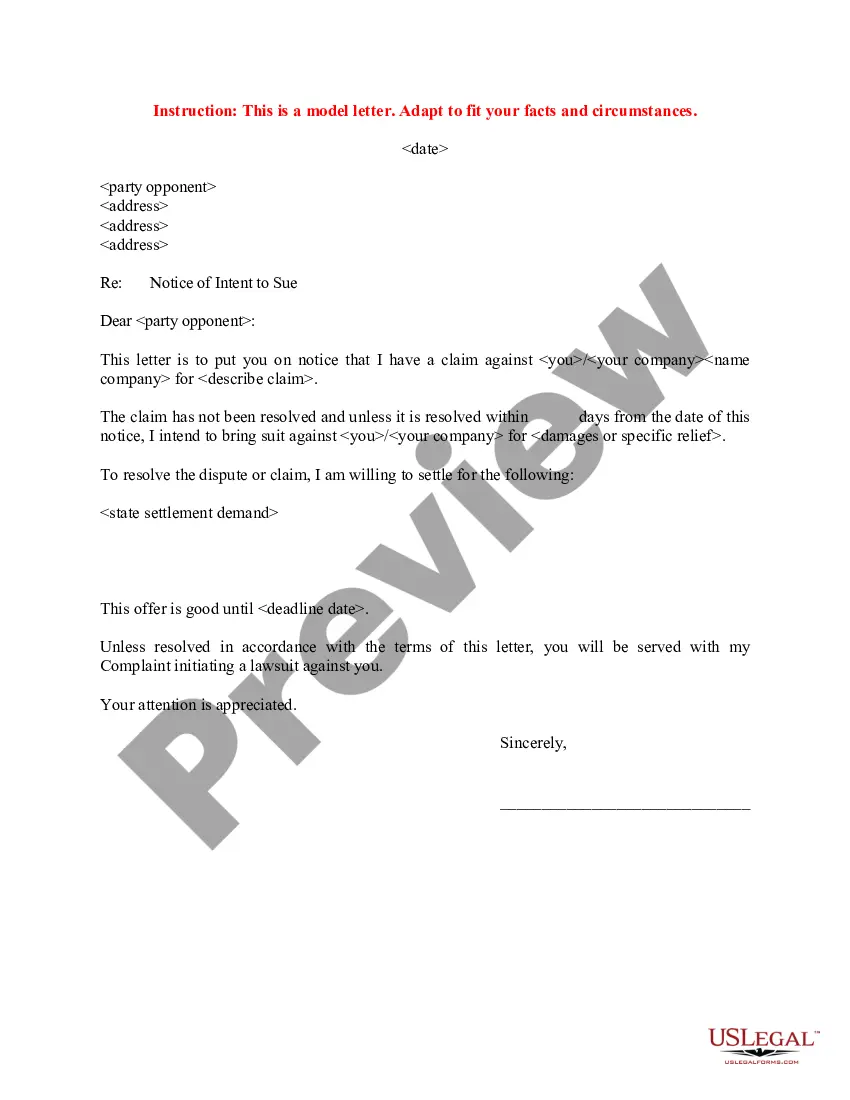
Maine Letter of Intent to Sue
Description
Get your form ready online
Our built-in tools help you complete, sign, share, and store your documents in one place.
Make edits, fill in missing information, and update formatting in US Legal Forms—just like you would in MS Word.
Download a copy, print it, send it by email, or mail it via USPS—whatever works best for your next step.
Sign and collect signatures with our SignNow integration. Send to multiple recipients, set reminders, and more. Go Premium to unlock E-Sign.
If this form requires notarization, complete it online through a secure video call—no need to meet a notary in person or wait for an appointment.
We protect your documents and personal data by following strict security and privacy standards.

Make edits, fill in missing information, and update formatting in US Legal Forms—just like you would in MS Word.

Download a copy, print it, send it by email, or mail it via USPS—whatever works best for your next step.

Sign and collect signatures with our SignNow integration. Send to multiple recipients, set reminders, and more. Go Premium to unlock E-Sign.

If this form requires notarization, complete it online through a secure video call—no need to meet a notary in person or wait for an appointment.

We protect your documents and personal data by following strict security and privacy standards.
Looking for another form?
How to fill out Letter Of Intent To Sue?
Selecting the top authentic document template could be a challenge. Obviously, there are numerous designs accessible online, but how do you find the genuine type you require? Utilize the US Legal Forms website. The service offers a vast selection of templates, including the Maine Letter of Intent to Sue, which you can use for business and personal purposes. All of the forms are reviewed by experts and comply with federal and state regulations.
If you are already registered, Log In to your account and click on the Download button to obtain the Maine Letter of Intent to Sue. Use your account to browse through the legal forms you have purchased previously. Navigate to the My documents tab of your account and retrieve another copy of the document you need.
If you are a new user of US Legal Forms, here are simple instructions you should follow: First, ensure you have selected the correct form for your city/county. You can examine the form using the Review button and read the form description to confirm it is suitable for you. If the form does not meet your needs, use the Search area to find the right form. Once you are certain that the form is appropriate, click on the Get now button to acquire the form. Choose the pricing plan you prefer and enter the required information. Create your account and pay for the transaction using your PayPal account or credit card. Select the document format and download the legal document template to your device. Complete, edit, print, and sign the downloaded Maine Letter of Intent to Sue.
With US Legal Forms, you can simplify your document creation process and ensure you have the right legal paperwork for your needs.
- US Legal Forms is the largest repository of legal forms where you can find various document templates.
- Use the service to obtain professionally crafted paperwork that adheres to state regulations.
- Navigate the website easily to find what you need.
- Benefit from a wide array of legal documents available.
- Ensure compliance with legal standards through verified forms.
- Access your forms anytime through your user account.
Form popularity
FAQ
The judge will give their decision or 'judgment' at the end of the hearing and briefly explain the reasons. If the case is decided without a hearing or one side doesn't attend, the court will send a copy of the judge's reasons to each side. If you win, the judge will order the defendant to pay you.
Small claims basics Generally, you can only sue for up to $10,000 in small claims court (or up to $5,000 if you're a business). You can ask a lawyer for advice before you go to court, but you can't have one with you in court.
Being sued in small claims court can be very stressful. This article explains the procedure for defending yourself against a claim.
Maine's small claims courts can hear civil disputes where the amount in controversy does not exceed $6,000.00. Your local district court has all the forms you need to file or respond to a small claims action.
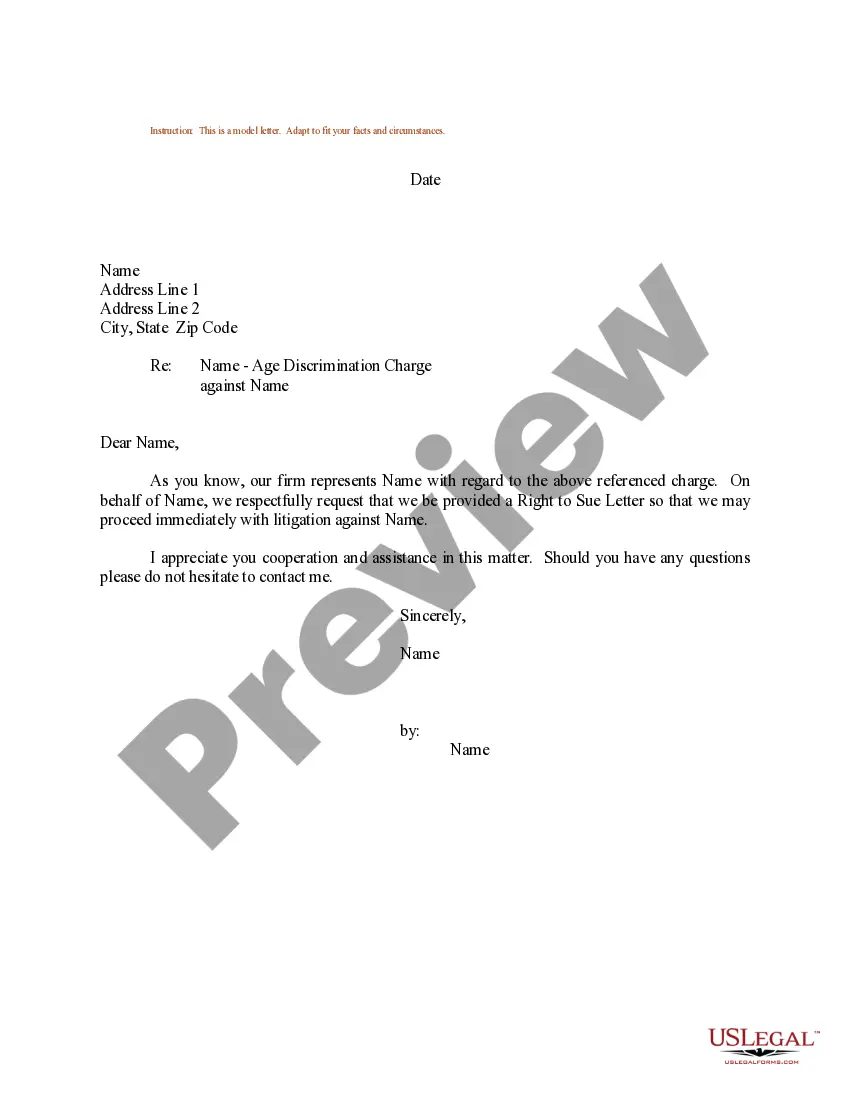
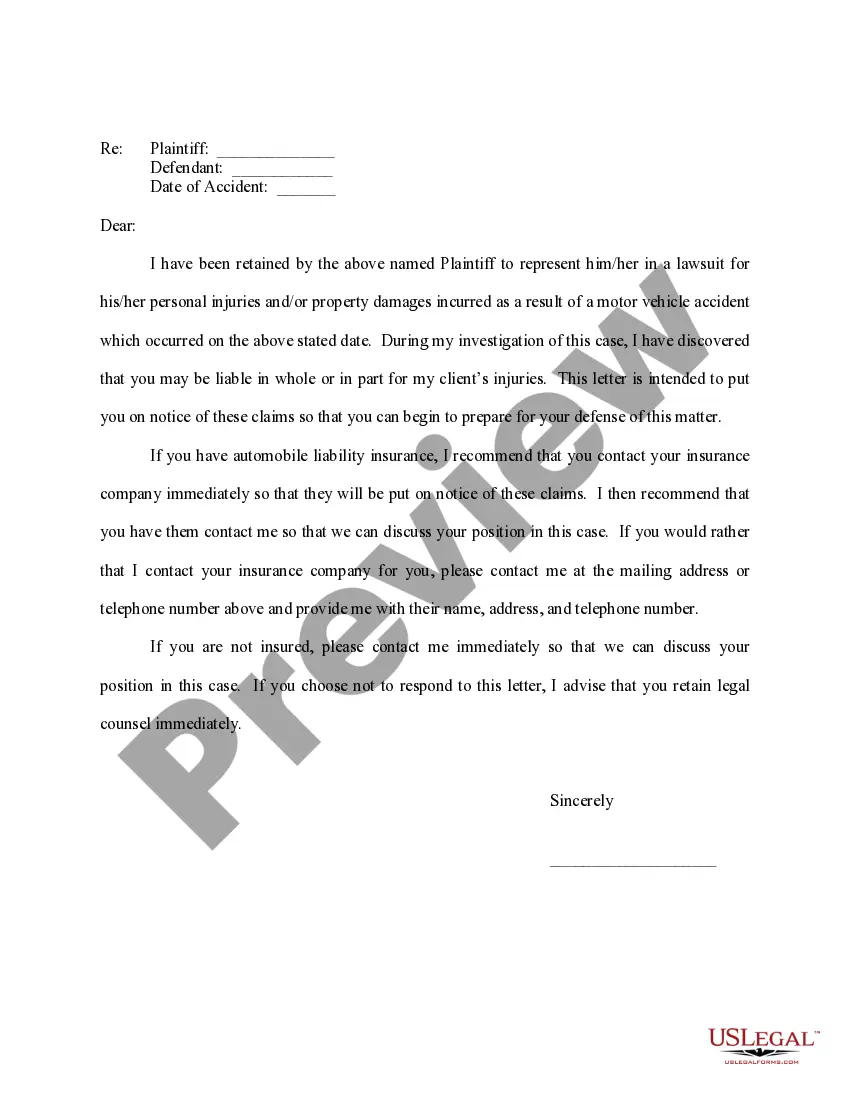
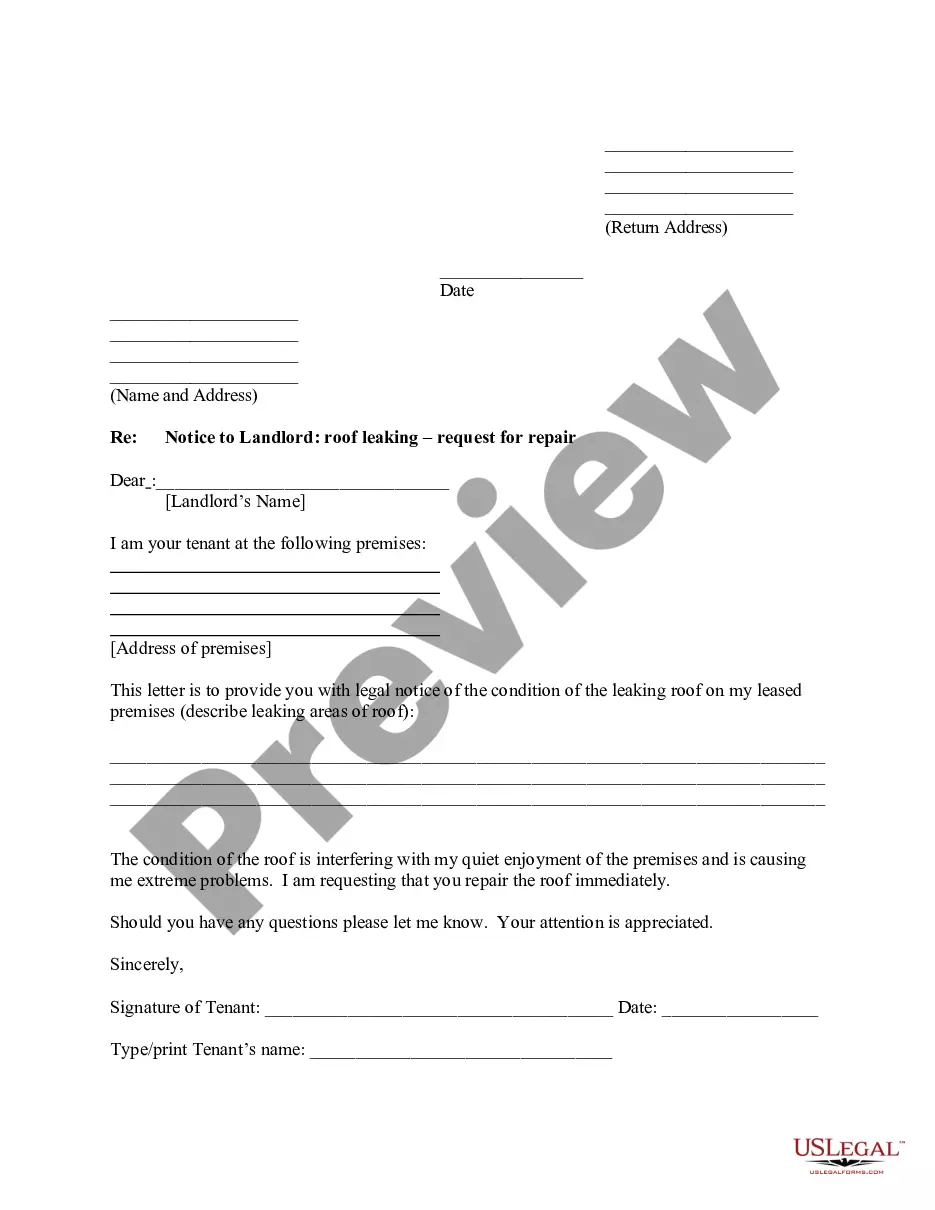
An intent to sue letter should have the addresses of both parties, a detailed description of the dispute, the settlement demand (e.g., payment amount, cease and desist, repair damages, etc.), the sender's contact information, and the deadline for the proposed settlement.
A letter of intent to sue notifies a defendant that a lawsuit may be filed against them in court if demands are not met. The letter will summarize the alleged unlawful act and indicate a time frame in which the defendant may settle the matter to avoid legal proceedings.
A letter of intent to sue is used to notify an individual or business that legal action may be taken against them if the demands included in the letter are not met. By sending an intent to sue letter, you may be able to resolve the dispute without having to initiate a costly lawsuit.
Small claims court provides a speedy and inexpensive way to resolve disputes when the plaintiff's claim is $6,000 or less. Cases are heard and decided in Maine District Court by a judge without a jury.