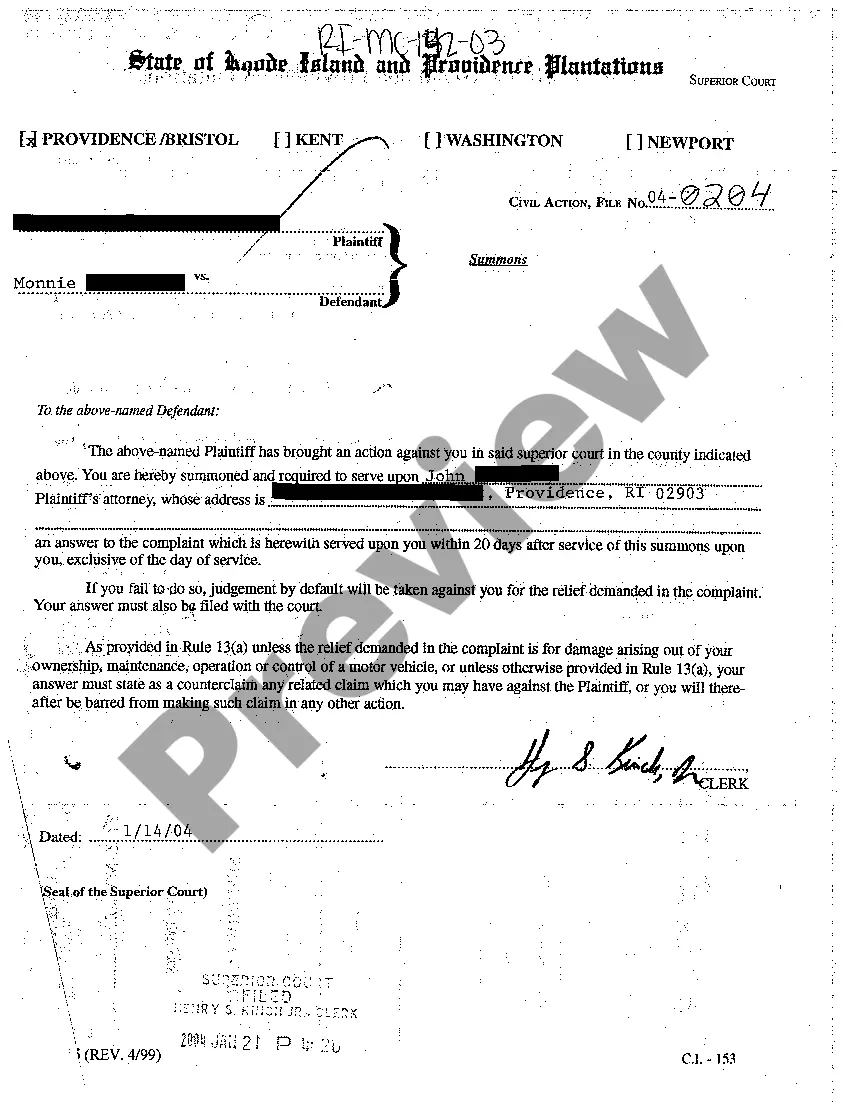
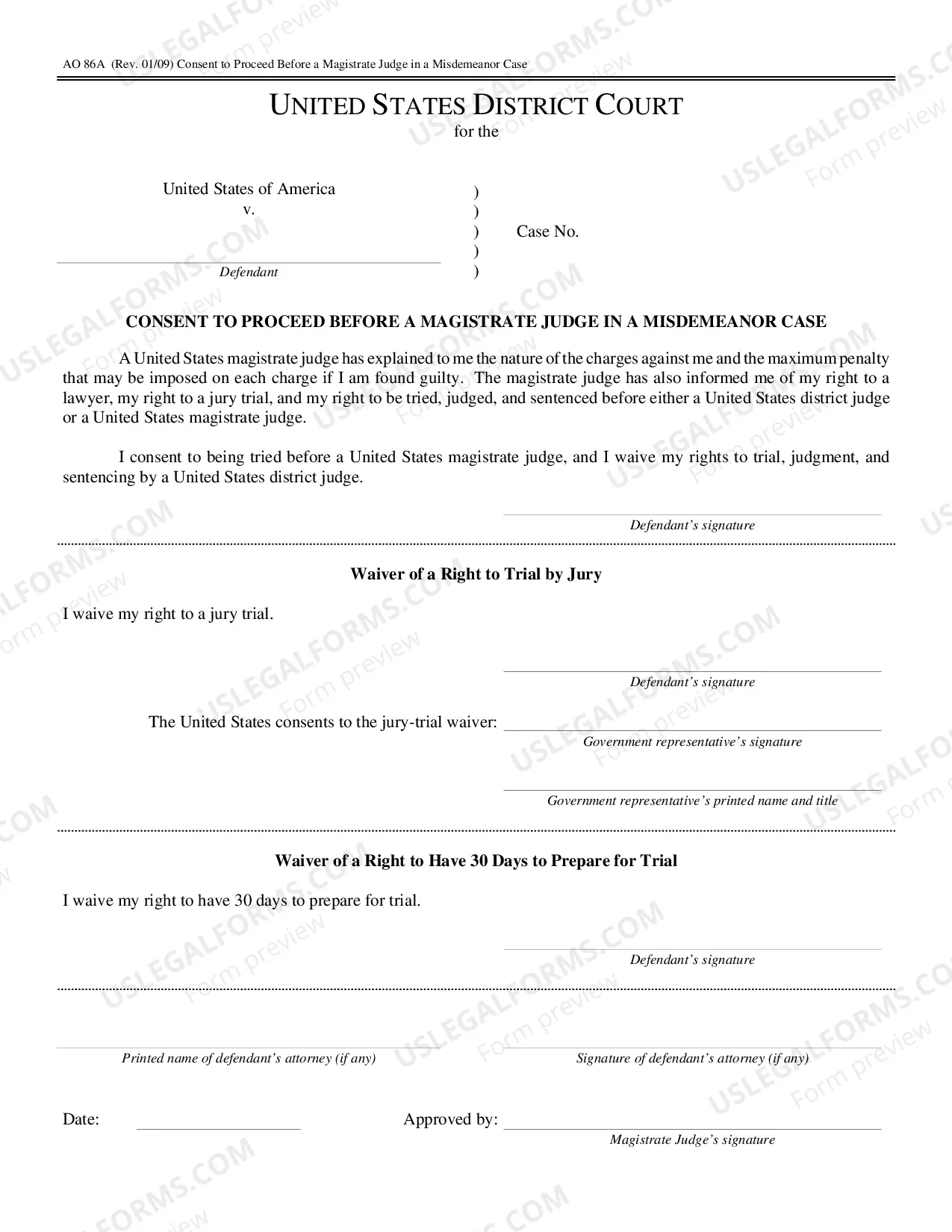
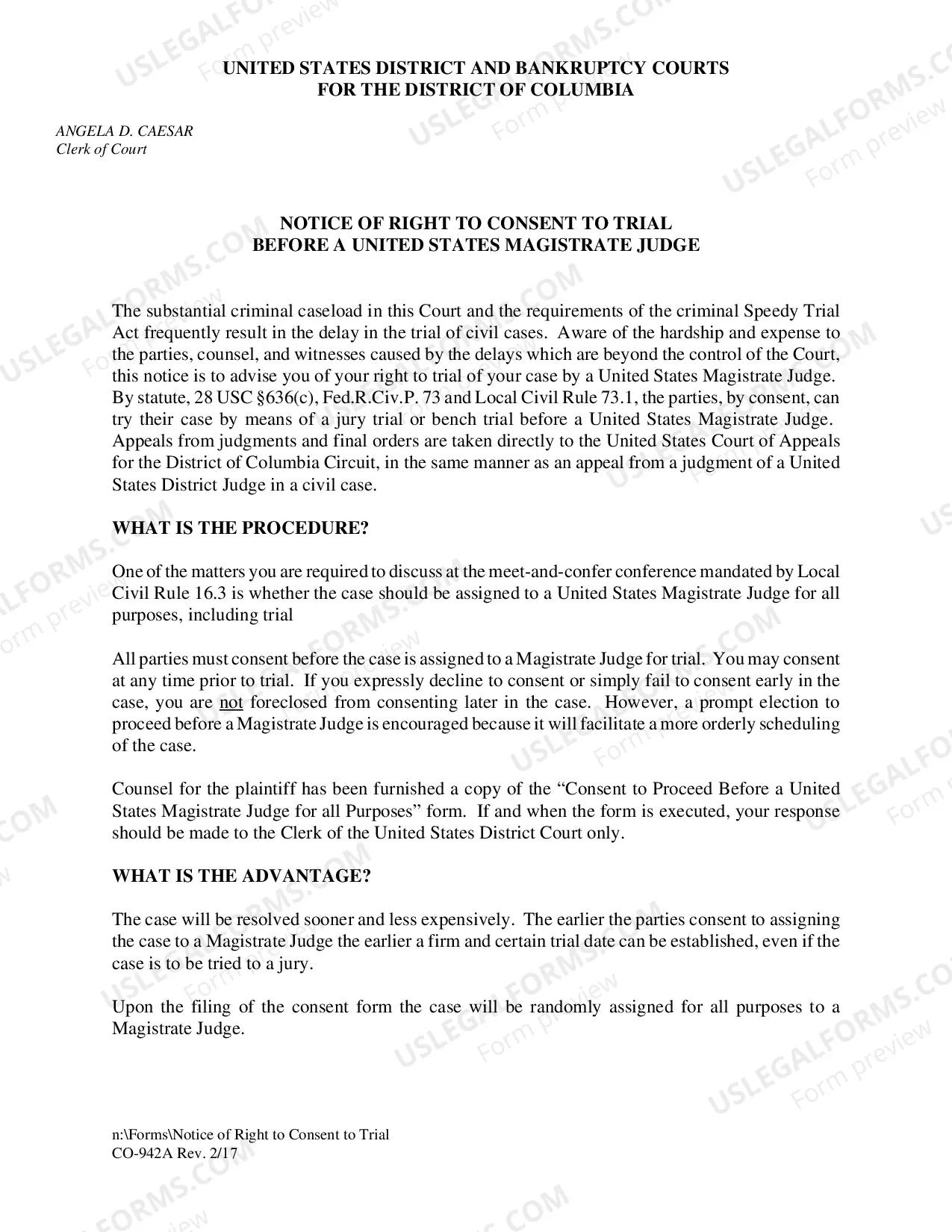
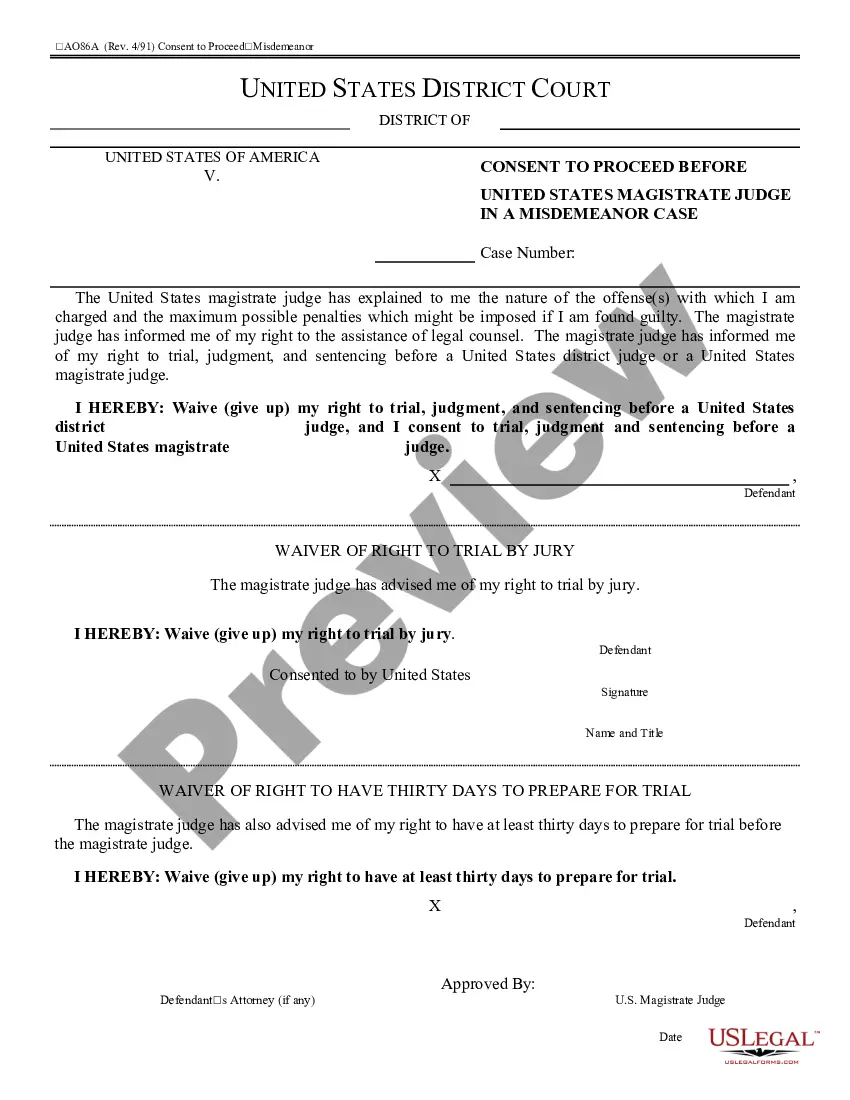
Maine Consents to Proceed Before a Magistrate Judge in a Misdemeanor Case is a document that allows a defendant to waive their right to a jury trial and have their case heard by a magistrate judge. There are two types of Maine Consents to Proceed Before a Magistrate Judge in a Misdemeanor Case: voluntary and mandatory. A voluntary consent is signed by the defendant and the state, with both parties agreeing to waive their right to a jury trial. A mandatory consent is signed by the judge, with the defendant agreeing to waive their right to a jury trial. This document is important because it allows the defendant to have a more speedy and cost-effective trial. It also allows the magistrate judge to hear a case and make a ruling in a timely manner.
Maine Consent to Proceed Before a Magistrate Judge in a Misdemeanor Case
Description
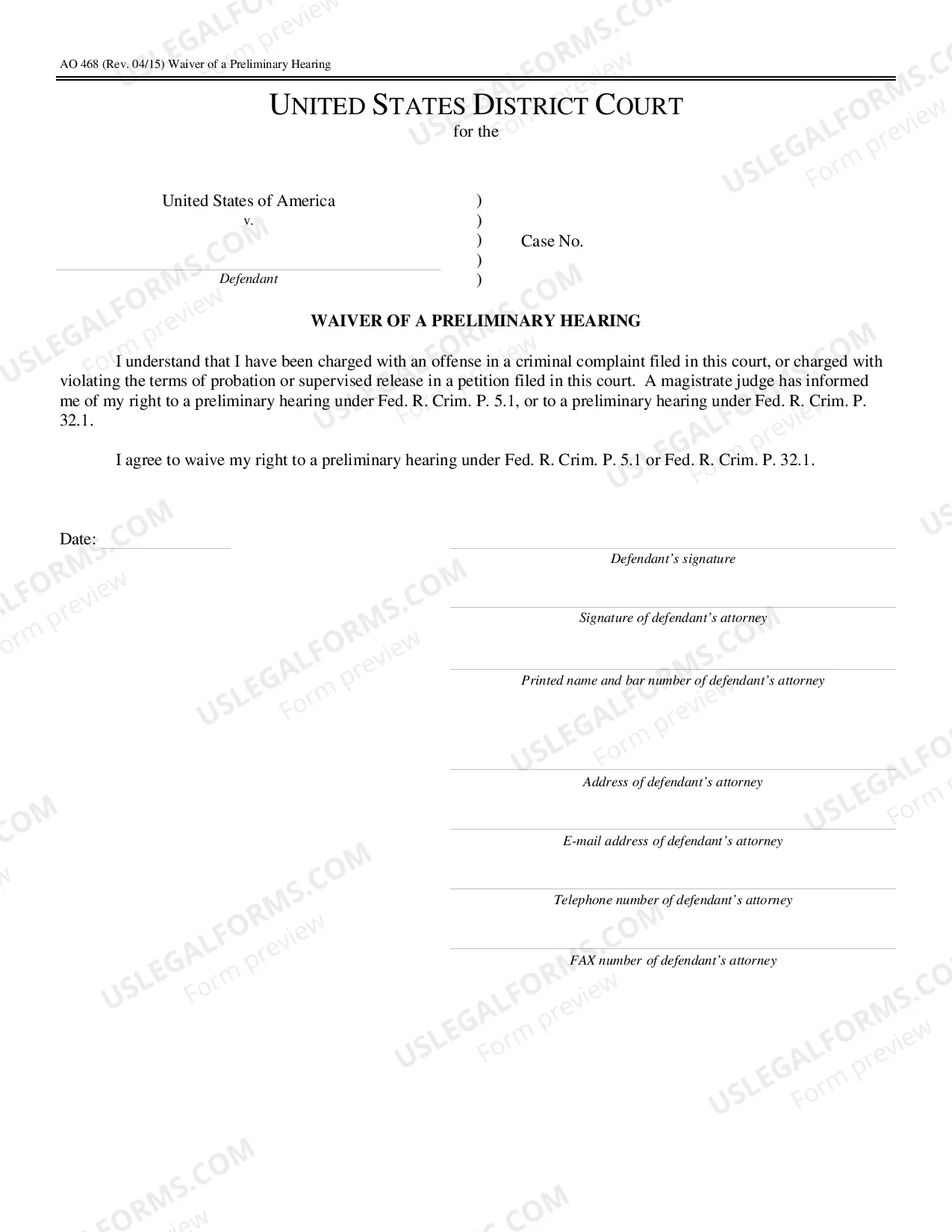
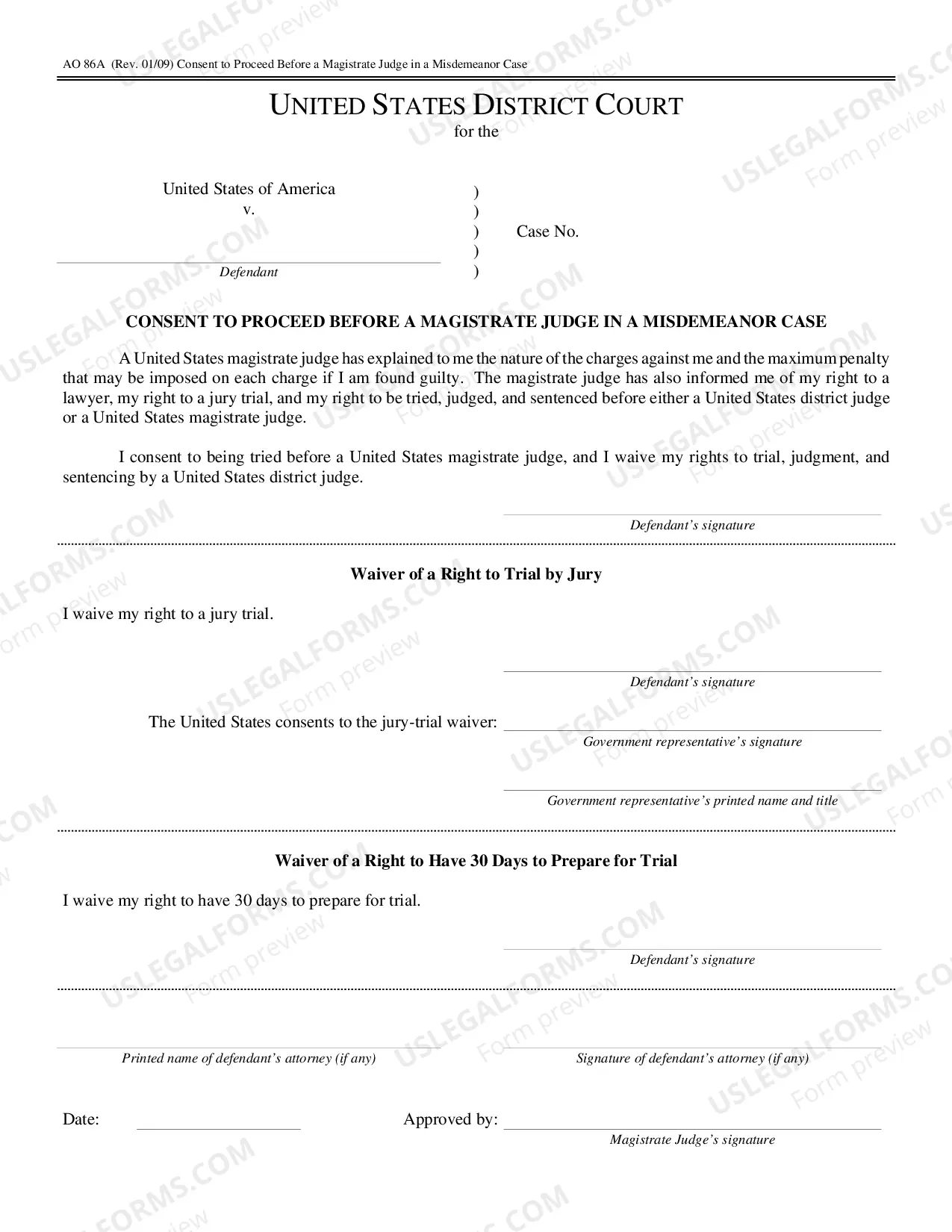
Get your form ready online
Our built-in tools help you complete, sign, share, and store your documents in one place.
Make edits, fill in missing information, and update formatting in US Legal Forms—just like you would in MS Word.
Download a copy, print it, send it by email, or mail it via USPS—whatever works best for your next step.
Sign and collect signatures with our SignNow integration. Send to multiple recipients, set reminders, and more. Go Premium to unlock E-Sign.
If this form requires notarization, complete it online through a secure video call—no need to meet a notary in person or wait for an appointment.
We protect your documents and personal data by following strict security and privacy standards.

Make edits, fill in missing information, and update formatting in US Legal Forms—just like you would in MS Word.

Download a copy, print it, send it by email, or mail it via USPS—whatever works best for your next step.

Sign and collect signatures with our SignNow integration. Send to multiple recipients, set reminders, and more. Go Premium to unlock E-Sign.

If this form requires notarization, complete it online through a secure video call—no need to meet a notary in person or wait for an appointment.

We protect your documents and personal data by following strict security and privacy standards.
Looking for another form?
How to fill out Maine Consent To Proceed Before A Magistrate Judge In A Misdemeanor Case?
If you are looking for a method to correctly fill out the Maine Consent to Proceed Before a Magistrate Judge in a Misdemeanor Case without employing an attorney, then you are in the perfect place.
US Legal Forms has demonstrated itself as the most comprehensive and trustworthy repository of official forms for every individual and corporate circumstance.
Another benefit of US Legal Forms is that you will never misplace the documentation you acquired - you can access any of your downloaded forms in the My documents section of your profile whenever necessary.
- Verify that the document displayed on the page aligns with your legal situation and state laws by reviewing its textual description or navigating through the Preview mode.
- Input the form name in the Search tab at the top of the page and select your state from the dropdown list to find an alternative template in case of any discrepancies.
- Proceed with the content validation and click Buy now when you are satisfied with the documentation's adherence to all requirements.
- Log in to your account and click Download. If you do not have an account, create one with the service and select a subscription plan.
- Utilize your credit card or the PayPal method to purchase your US Legal Forms subscription. The document will be accessible for download immediately afterward.
- Choose the format in which you would like to store your Maine Consent to Proceed Before a Magistrate Judge in a Misdemeanor Case and download it by selecting the appropriate button.
- Upload your document to an online editor for quick completion and signatures, or print it out for preparing a physical copy manually.
Form popularity
FAQ
RULE 5. INITIAL PROCEEDINGS IN THE UNIFIED CRIMINAL DOCKET (a) Initial Appearance Before the Court. (b) Initial Statement of Rights by the Court. (c) Further Statement of Rights by the Court With Respect to Class C or Higher Crimes in the Absence of an Indictment or Information.
(1) If there is unnecessary delay in bringing a defendant to trial, the court may upon motion of the defendant or on the court's own motion dismiss the indictment, information, or complaint. The court shall direct whether the dismissal is with or without prejudice.
(1) If there is unnecessary delay in bringing a defendant to trial, the court may upon motion of the defendant or on the court's own motion dismiss the indictment, information, or complaint. The court shall direct whether the dismissal is with or without prejudice.
Rule 41 - Search and Seizure (a) Scope. This Rule does not modify any special statutory provision regulating search, seizure, or the issuance and execution of search warrants. (b) Authority to Issue a Search Warrant. A search warrant may be issued by the court or a justice of the peace as authorized by law.
Rule 6 - The Grand Jury (a) Number of Grand Jurors. The grand jury shall consist of not fewer than 13 nor more than 23 jurors and a sufficient number of legally qualified persons shall be summoned to meet this requirement.
(1)In General. A defendant may plead not guilty, not criminally responsible by reason of insanity, guilty, or nolo contendere. A defendant may plead both not guilty and not criminally responsible by reason of insanity to the same charge. The court may refuse to accept a plea of guilty or nolo contendere.