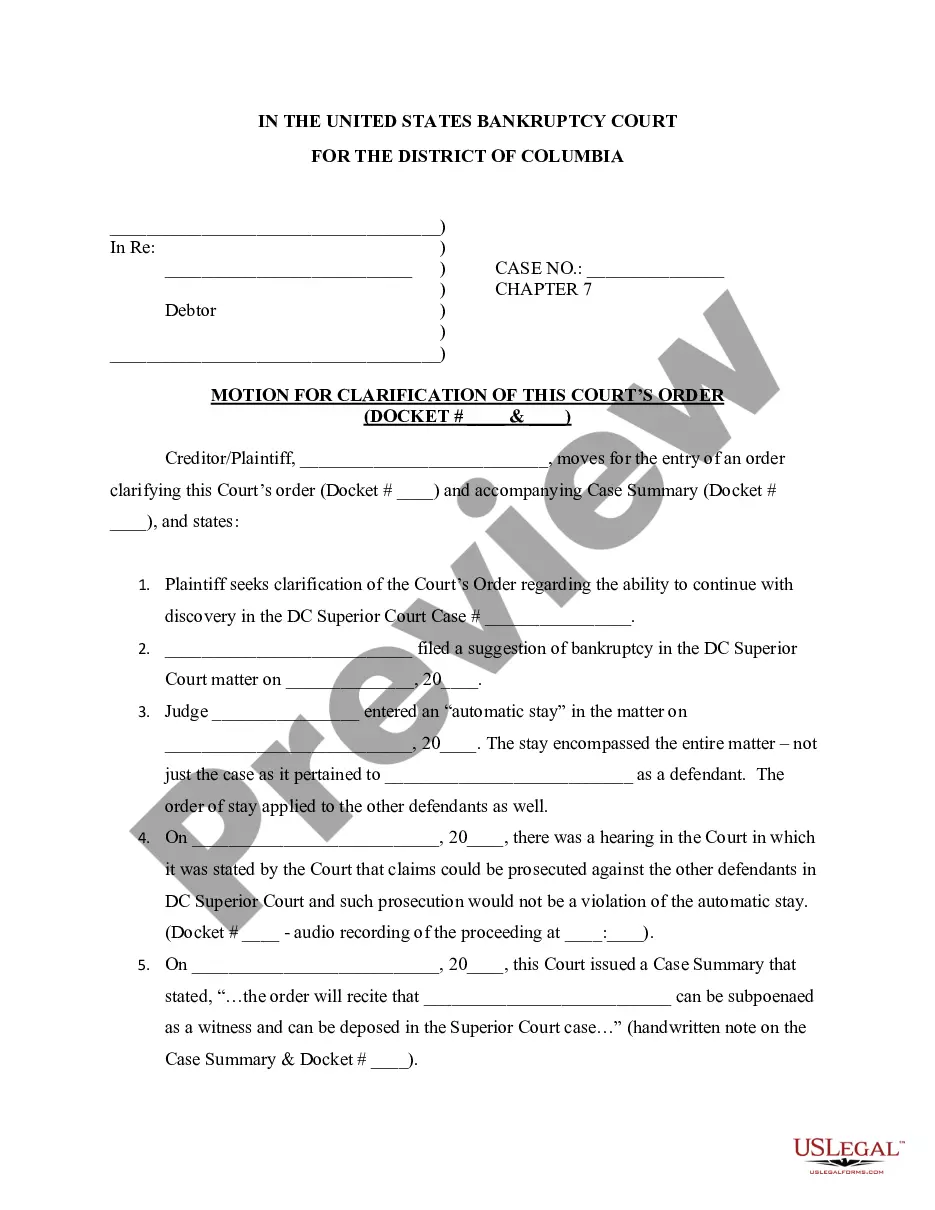
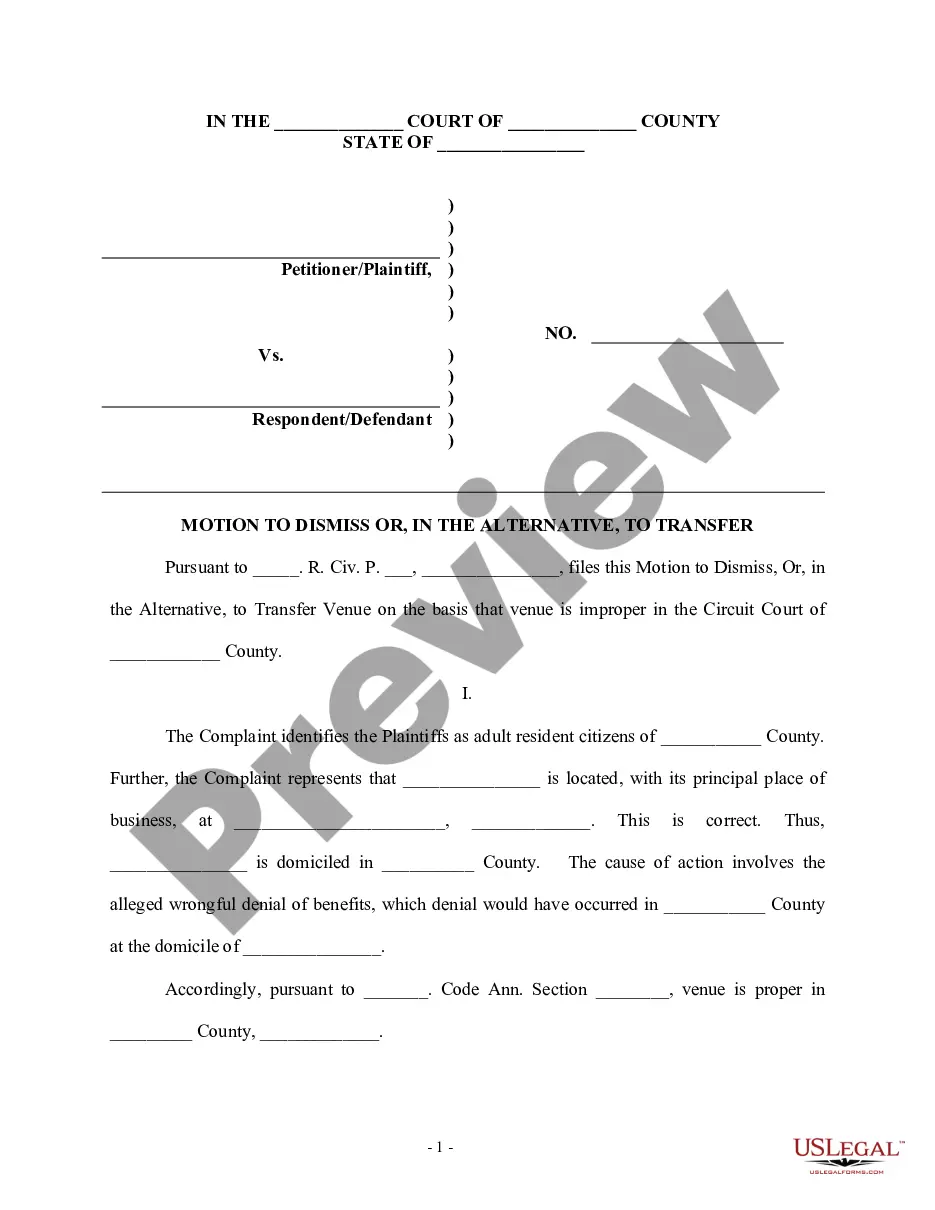
Maine Order on Motion to Dismiss
What is this form?
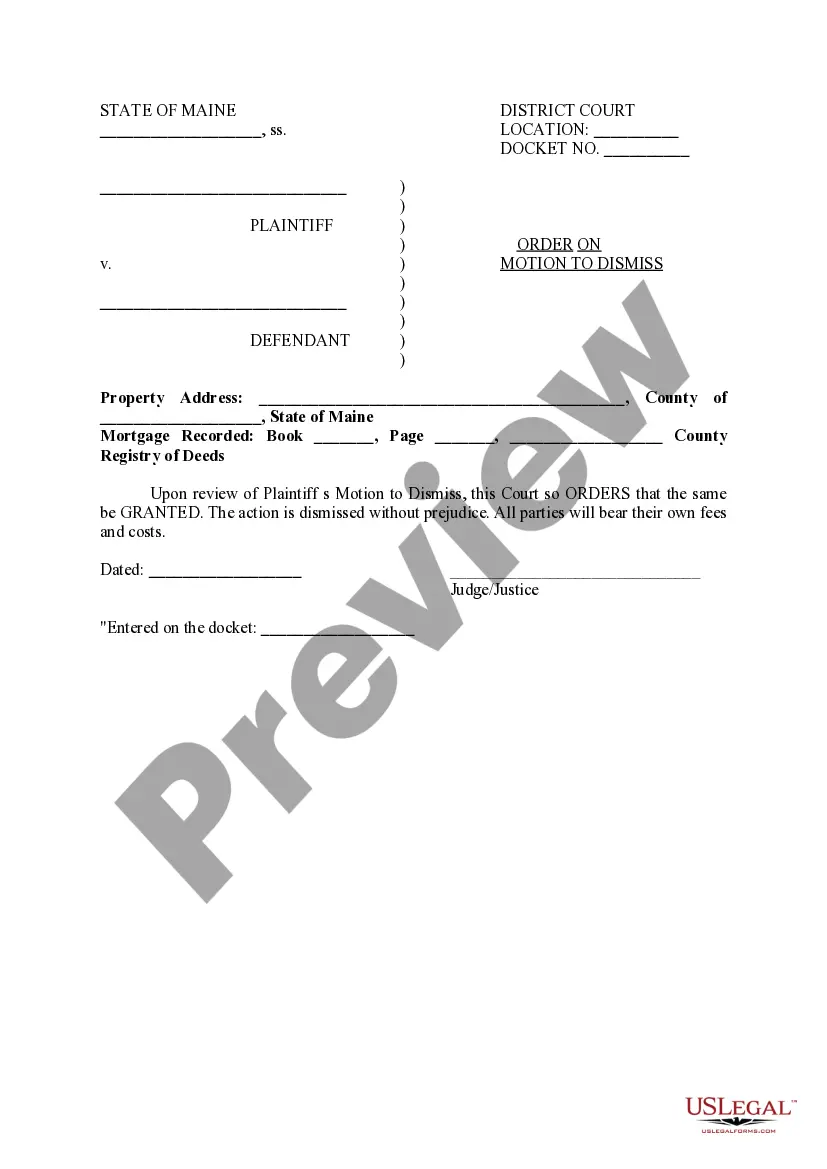
The Order on Motion to Dismiss is a legal document issued by the court to formally grant a plaintiffâs request to dismiss a case without prejudice. This means the plaintiff can refile the case in the future if desired. This form differs from other dismissal orders because it does not impose any conditions on the plaintiff, allowing them to pursue their claims later if necessary.
What’s included in this form
- Court details including the location and docket number.
- Names of the parties involved: plaintiff and defendant.
- Property address relevant to the case.
- Details of the mortgage recorded, if applicable.
- Judicial order indicating the case is dismissed without prejudice.
- Signature of the judge and the date of entry onto the docket.
Situations where this form applies
This form is used when a plaintiff decides to withdraw their legal action voluntarily but wishes to retain the right to refile the case in the future. It is pertinent in situations where the plaintiff believes that further developments may strengthen their case or when they need additional time for various reasons, such as gathering more evidence or negotiating a settlement.
Who can use this document
- Plaintiffs who wish to dismiss their case without affecting their right to refile.
- Individuals involved in a legal dispute who may need to pause legal proceedings.
- Legal representatives acting on behalf of plaintiffs in a case.
Instructions for completing this form
- Identify the court by entering the court name and location.
- Fill in the docket number assigned to your case.
- Enter the names of the plaintiff and defendant accurately.
- Specify the property address relevant to the case, if applicable.
- Include mortgage details, including book and page numbers.
- Ensure the judge signs and date the order to finalize the dismissal.
Is notarization required?
This form does not typically require notarization unless specified by local law. However, always check with the court or legal advisor to ensure compliance with any specific requirements for your situation.
Get your form ready online
Our built-in tools help you complete, sign, share, and store your documents in one place.
Make edits, fill in missing information, and update formatting in US Legal Forms—just like you would in MS Word.
Download a copy, print it, send it by email, or mail it via USPS—whatever works best for your next step.
Sign and collect signatures with our SignNow integration. Send to multiple recipients, set reminders, and more. Go Premium to unlock E-Sign.
If this form requires notarization, complete it online through a secure video call—no need to meet a notary in person or wait for an appointment.
We protect your documents and personal data by following strict security and privacy standards.

Make edits, fill in missing information, and update formatting in US Legal Forms—just like you would in MS Word.

Download a copy, print it, send it by email, or mail it via USPS—whatever works best for your next step.

Sign and collect signatures with our SignNow integration. Send to multiple recipients, set reminders, and more. Go Premium to unlock E-Sign.

If this form requires notarization, complete it online through a secure video call—no need to meet a notary in person or wait for an appointment.

We protect your documents and personal data by following strict security and privacy standards.
Common mistakes
- Failing to accurately fill in the court information.
- Omitting the docket number, which may delay processing.
- Not having the proper signatures from the required parties.
- Using outdated or incorrect language that does not comply with Maine law.
Advantages of online completion
- Convenience of downloading and filling out the form at your own pace.
- Editability allows you to customize the form to fit your specific situation.
- Access to reliable and professionally drafted legal templates ensures compliance with state requirements.
Looking for another form?

Form popularity
FAQ
Rule 45 in Maine pertains to the issuing of subpoenas. This rule provides guidelines on how to compel individuals to produce documents or testify in court. Understanding Rule 45 is essential when preparing legal motions, including motions to dismiss, as it ensures compliance with procedural requirements. Resources from the US Legal Forms platform can help clarify these rules further.
Rule 45 of the Maine Rules of Civil Procedure deals with subpoenas, which are legal documents that require a person to testify or produce evidence. This rule outlines the proper procedures for issuing a subpoena and the rights of the recipient in responding to it. When considering a Maine Order on Motion to Dismiss, it's essential to understand how evidence is gathered and presented, as it may impact the outcome of the dismissal motion. Utilizing resources like USLegalForms can streamline this process and ensure compliance with the rules.
Check that the statute of limitations hasn't expired. Find what you forgot to allege in your original complaint.
Each court has different rules about how long you have to respond to this motion, but usually you will have at least two or three weeks to file an opposition to the defendant's motion to dismiss.
WHAT IS A DISMISSED CASE? A dismissed criminal case is one in which you were not convicted. When a criminal charge is dismissed, you are not guilty and the case is concluded.
An order to dismiss a case can occur when the appellate court, having reversed the conviction on the grounds of a bad search or arrest, examines what's left of the case and determines that there is not enough evidence to warrant another trial.
It means the case was dismissed, either because plaintiff dismissed it or plaintiff didn't show up for the trial.
Yes, it's great to have your case dismissed and you can truthfully claim you have never been convicted of a crime on job applications. However, it will still appear on your criminal record. You should consult with a local criminal attorney for advice on an expungement.
Fill out your court forms. Fill out a Request for Dismissal (Form CIV-110 ). File your forms at the courthouse where you filed your case. Serve the other side with a copy of the dismissal papers. File the Notice of Entry of Dismissal and Proof of Service (Form CIV-120)
When a small claims case is dismissed, the court terminates the case without a trial and prior to the case's completion. A dismissal, in effect, denies the plaintiff's claim to the money requested in the Small Claims Complaint (or a counterclaim), even though the merits of the case have never been heard by the court.