Maine 30 Day Notice to Terminate Tenancy at Will for Residential from Tenant to Landlord
What is this form?
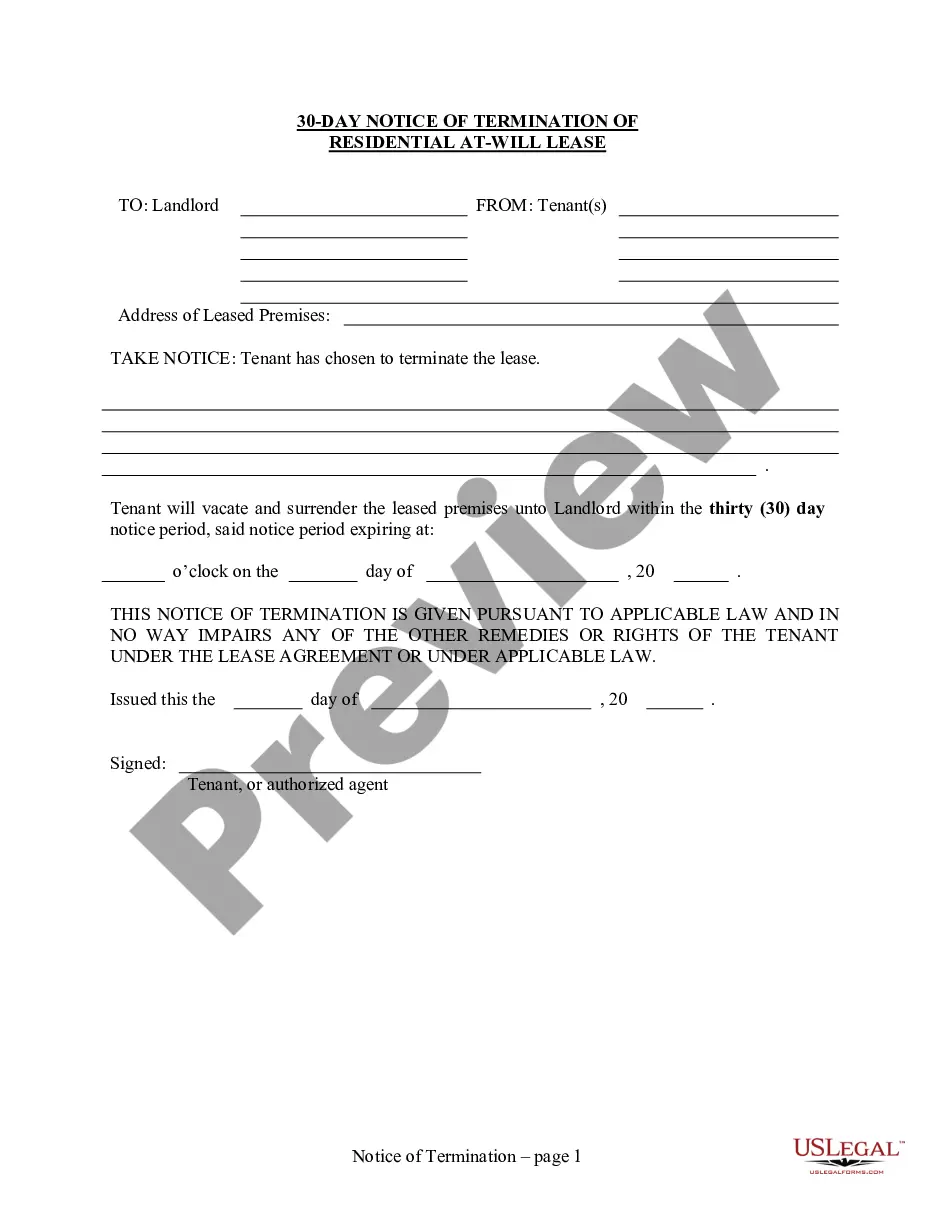
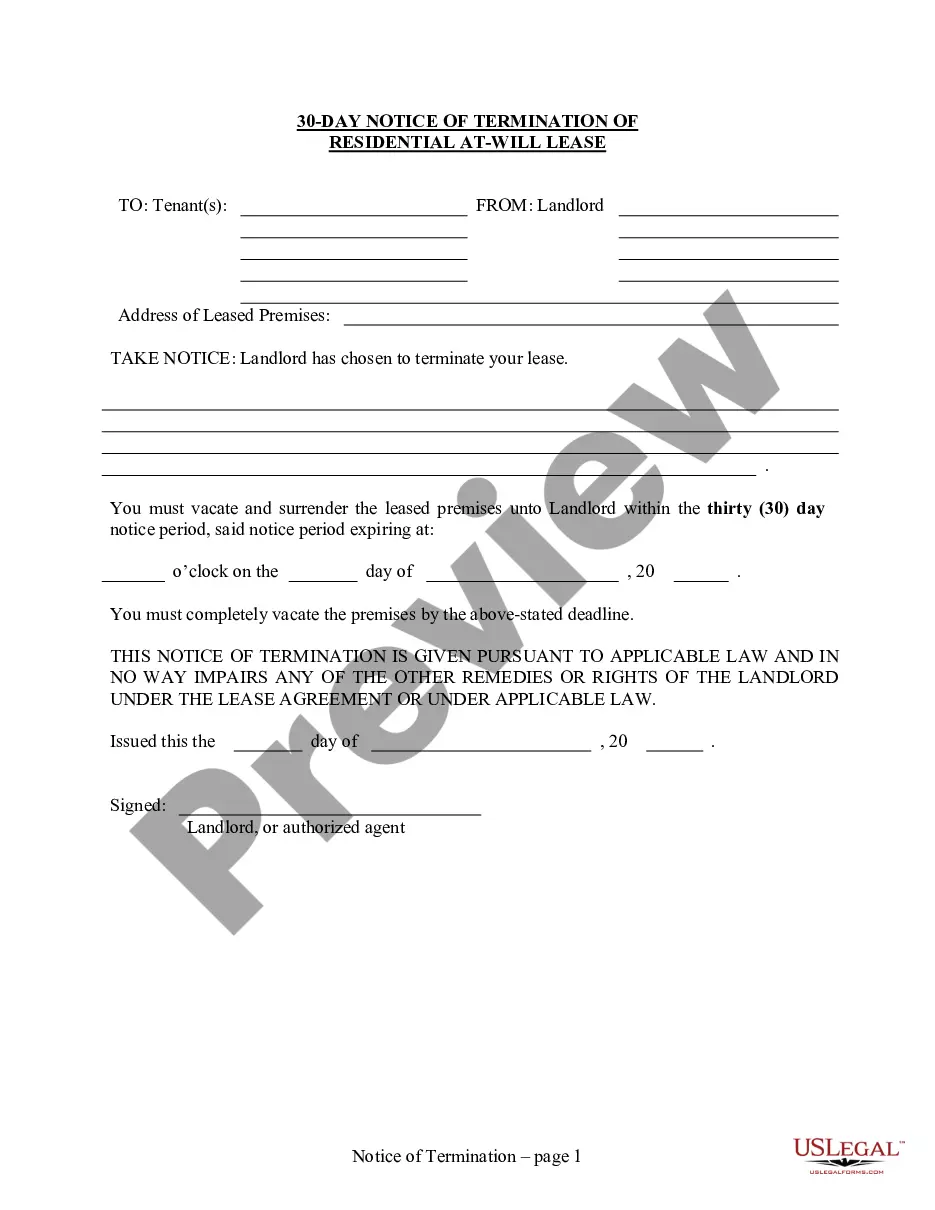
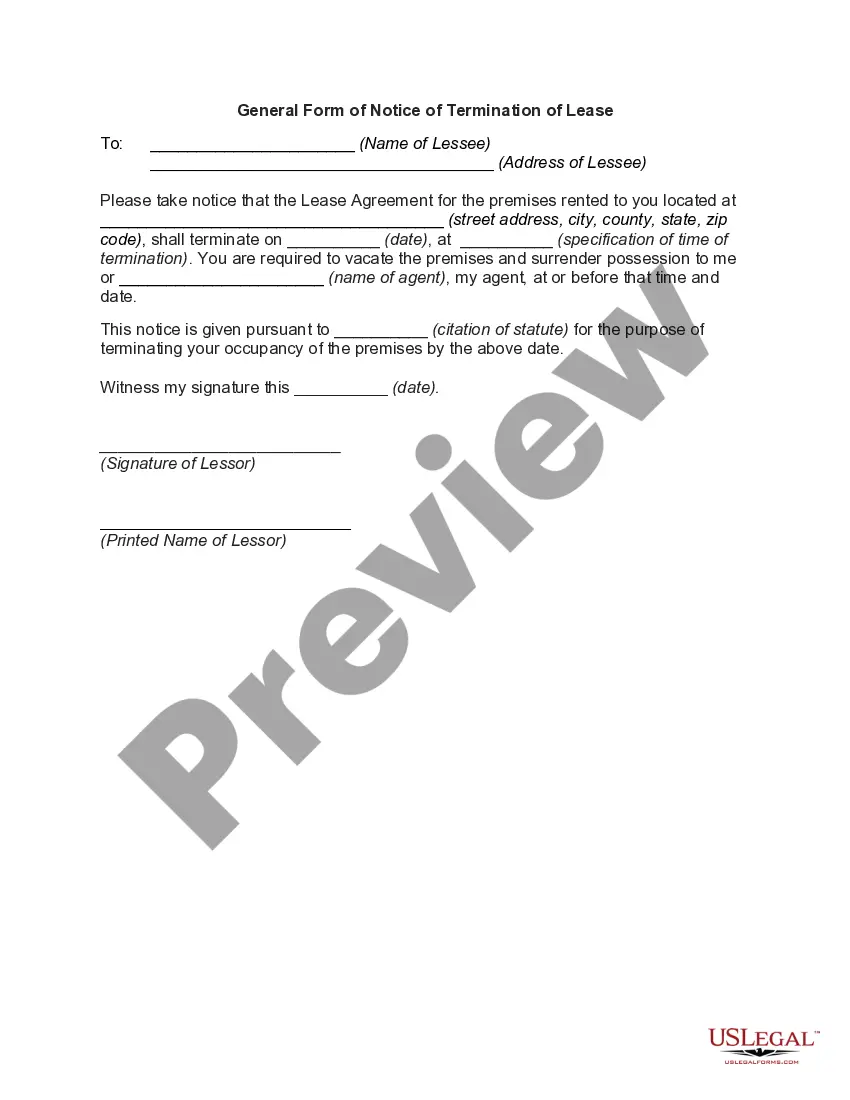
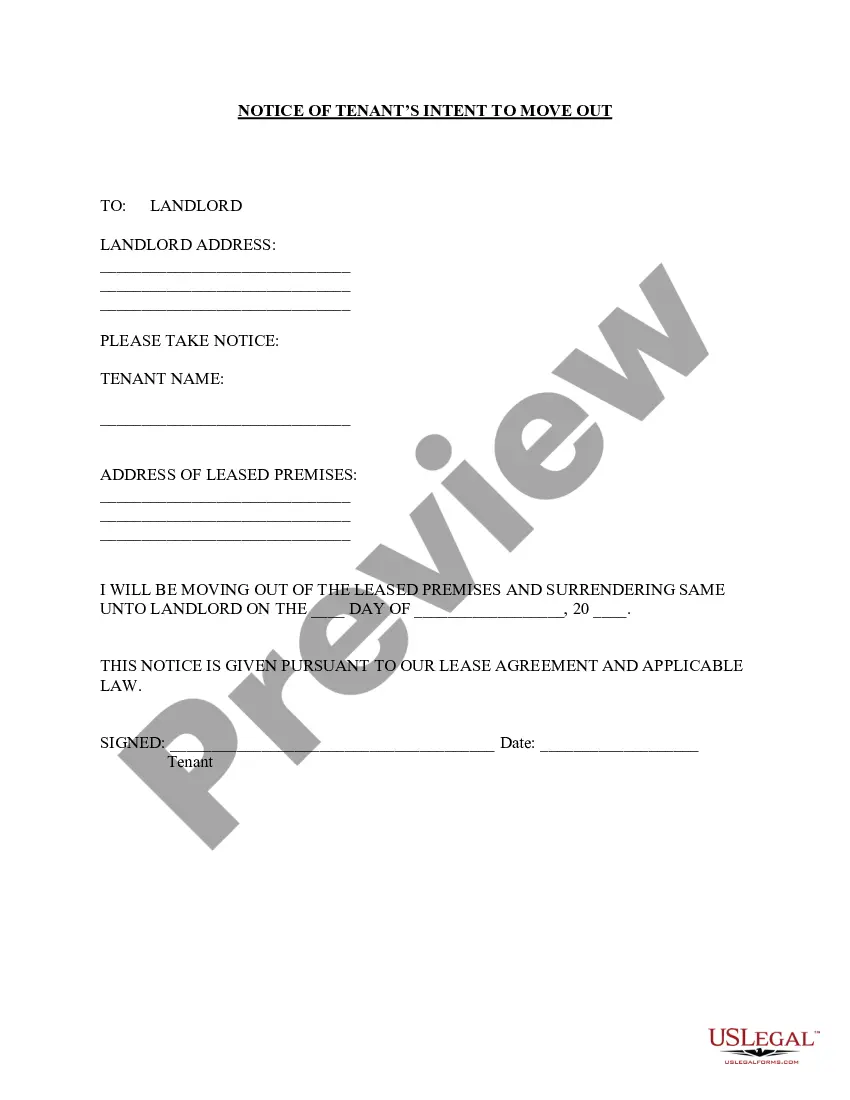
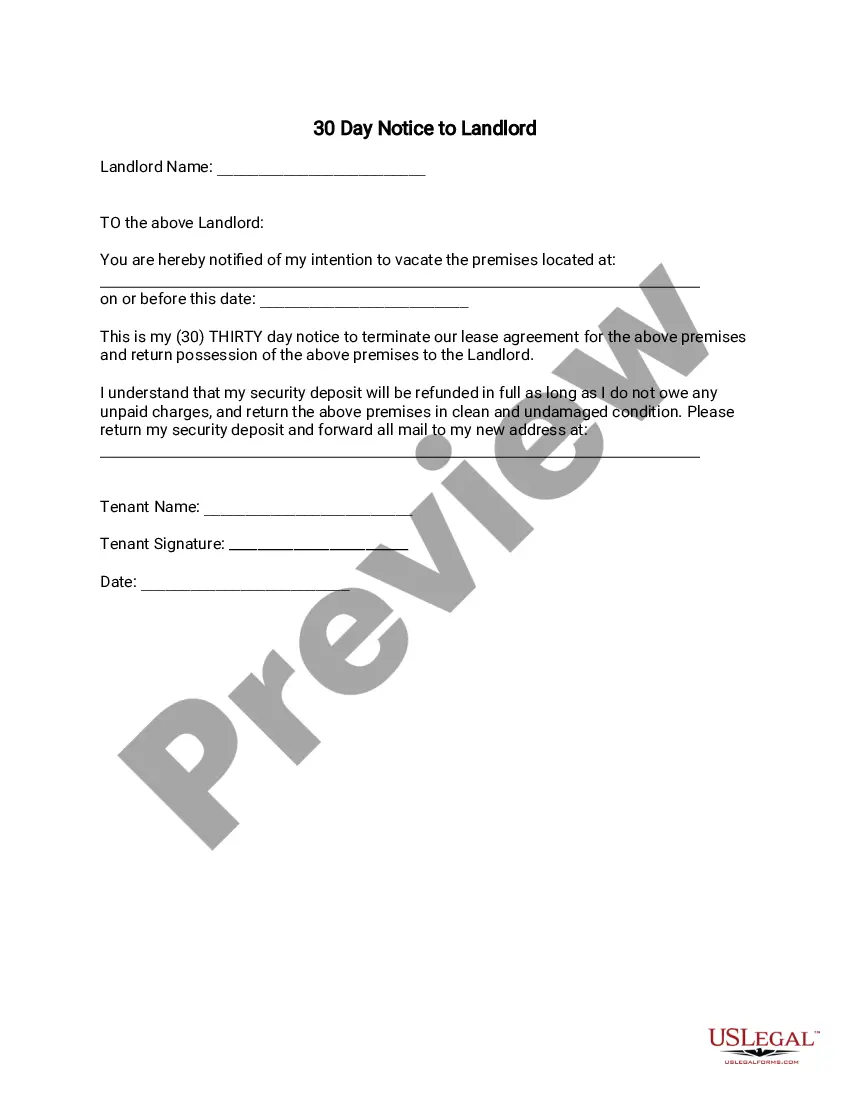
The 30 Day Notice to Terminate Tenancy at Will for Residential from Tenant to Landlord is a legal document that allows a tenant to officially notify their landlord of the intention to end an at-will residential lease. This type of lease can be terminated by either party at any time, without the need for justification. This form specifies a 30-day notice period before the tenant vacates the property, which may include a house, apartment, or condo.
Key components of this form
- Identification of the landlord and tenant
- Address of the leased premises
- Effective termination date after 30 days
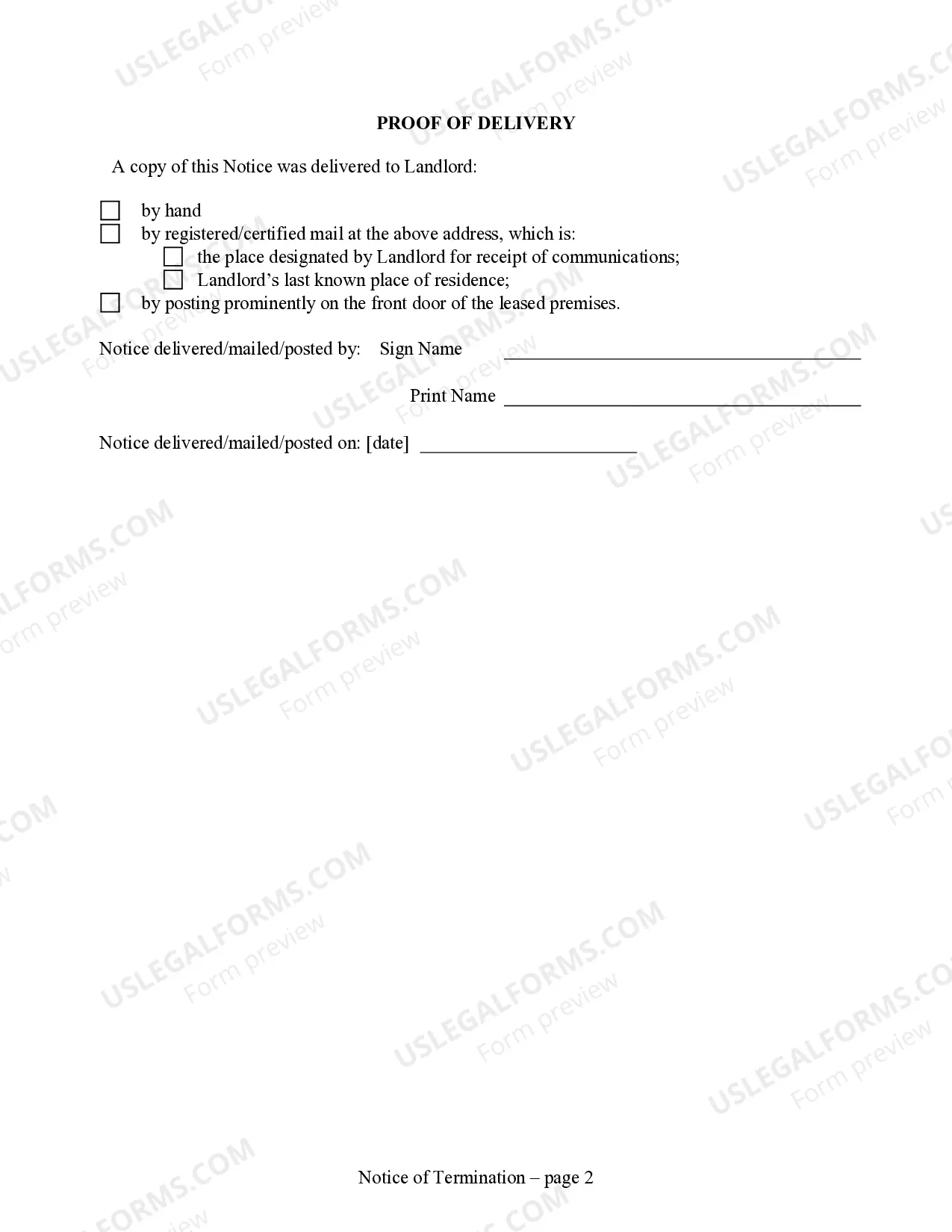
- Proof of delivery method to the landlord
- Signed acknowledgment by the tenant or authorized agent

When to use this form
This form should be used when a tenant wishes to terminate their at-will tenancy, providing the required 30-day notice to the landlord. It is applicable in situations where a tenant no longer wishes to continue renting the residential property, whether due to personal reasons, changes in circumstances, or dissatisfaction with the living conditions.
Who can use this document
- Tenants engaged in an at-will lease agreement
- Individuals wanting to provide formal notice to their landlord
- Anyone seeking to ensure compliance with local rental laws
Completing this form step by step
- Identify the parties involved: fill in the names and addresses of the tenant and landlord.
- Specify the property: provide the address of the leased premises.
- Enter the date of notice: clarify the date of issuance of the notice.
- Indicate the effective termination date: specify the date 30 days from the notice given.
- Sign the document: ensure all signatures are provided by the tenant or authorized agent.
Notarization guidance
This form does not typically require notarization unless specified by local law. It is advisable to check local regulations to ensure compliance.
Get your form ready online
Our built-in tools help you complete, sign, share, and store your documents in one place.
Make edits, fill in missing information, and update formatting in US Legal Forms—just like you would in MS Word.
Download a copy, print it, send it by email, or mail it via USPS—whatever works best for your next step.
Sign and collect signatures with our SignNow integration. Send to multiple recipients, set reminders, and more. Go Premium to unlock E-Sign.
If this form requires notarization, complete it online through a secure video call—no need to meet a notary in person or wait for an appointment.
We protect your documents and personal data by following strict security and privacy standards.

Make edits, fill in missing information, and update formatting in US Legal Forms—just like you would in MS Word.

Download a copy, print it, send it by email, or mail it via USPS—whatever works best for your next step.

Sign and collect signatures with our SignNow integration. Send to multiple recipients, set reminders, and more. Go Premium to unlock E-Sign.

If this form requires notarization, complete it online through a secure video call—no need to meet a notary in person or wait for an appointment.

We protect your documents and personal data by following strict security and privacy standards.
Common mistakes to avoid
- Failing to provide the notice within the required time frame.
- Not including all pertinent information, such as property address.
- Neglecting to sign and date the notice.
- Using an inappropriate delivery method that does not meet local regulations.
Benefits of using this form online
- Convenient access to professionally drafted forms.
- Easily editable to fit specific circumstances.
- Immediate downloadable formats for quick use.
- Ensures compliance with legal standards for notice delivery.
- Providing adequate notice helps avoid potential legal issues with the landlord.
- This notice is a prerequisite for terminating an at-will lease, protecting tenant rights.
- Failure to serve this notice correctly may result in continued liability for rent.
Summary of main points
- The 30 Day Notice to Terminate Tenancy at Will is essential for tenants wishing to end their lease properly.
- Completing the form accurately and providing adequate notice helps avoid legal complications.
- Understanding state-specific requirements ensures compliance and protects tenant rights.
Looking for another form?

Form popularity
FAQ
A. In a month-to-month tenancy, the landlord may raise the rent after giving the tenant 45 days' written notice.
Evicting a tenant in Colorado can take around 2 weeks to 4 months, depending on whether the eviction is for illegal activity or another type of eviction. If the tenant files an answer with the court, the process could take longer (read more).
In Colorado, evictions are sometimes referred to as forcible entry & detainer (FED). Before you can file for eviction, you must generally provide 10 days' notice (increased from 3 days prior) for tenants to correct a deficiency or leave the property, except in certain circumstances.
Substantial Violation If the landlord is evicting the tenant for any of these reasons, the landlord must give the tenant a three-day notice to quit. (Colo. Rev.If the tenant does not move out of the rental unit by the end of three days, then the landlord can file an eviction lawsuit against the tenant.
When the tenancy is month-to-month, the tenant must give the landlord 15 days' notice before the end of any monthly period. (In Miami, the tenant must give the landlord 30 days' notice before the end of the monthly period).
The date you're submitting your notice. The date you're moving. Information on your current home the address and the landlord's name. A statement declaring that you intend to leave the home. A straightforward statement that you're providing this letter, 30 days out, per your lease agreement.
In Illinois, if there is no lease or if the lease does not specify a move out date, the Landlord must give at least 30 days of notice to a tenant that the landlord wants to move out. This notice must be in writing and must arrive to the tenant at least 30 days prior to their move out date.
They must give the landlord at least 21 days notice of termination. Landlord Breaches the Agreement - the tenant can terminate the tenancy if the landlord breaches the agreement. If the landlord challenges the termination in the Tribunal, the breach must be serious enough to justify termination.