This is a multi-state form covering the subject matter of the title.
Maryland Subordination and Attornment Agreement - Landlord - Tenant - Lender
State:
Multi-State
Category:
Control #:
US-XS-0014
Format:
Word;
Rich Text
44 downloads
Description
Free preview
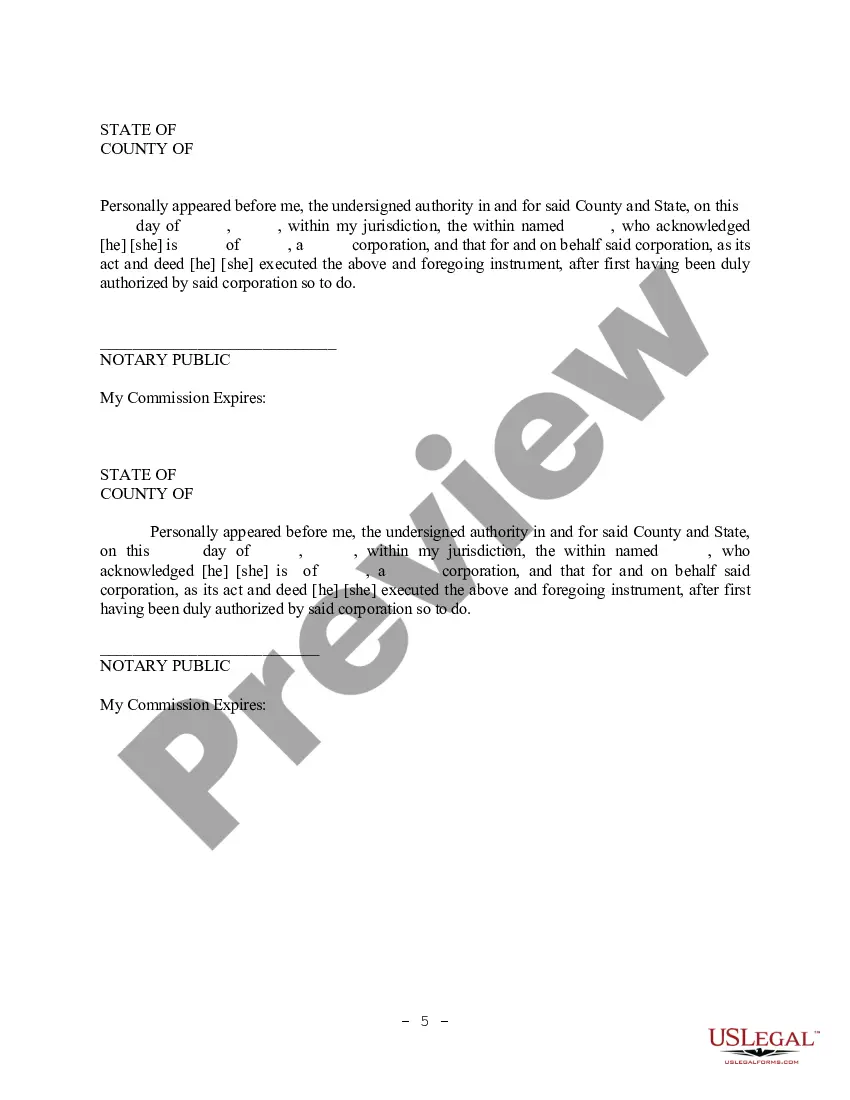
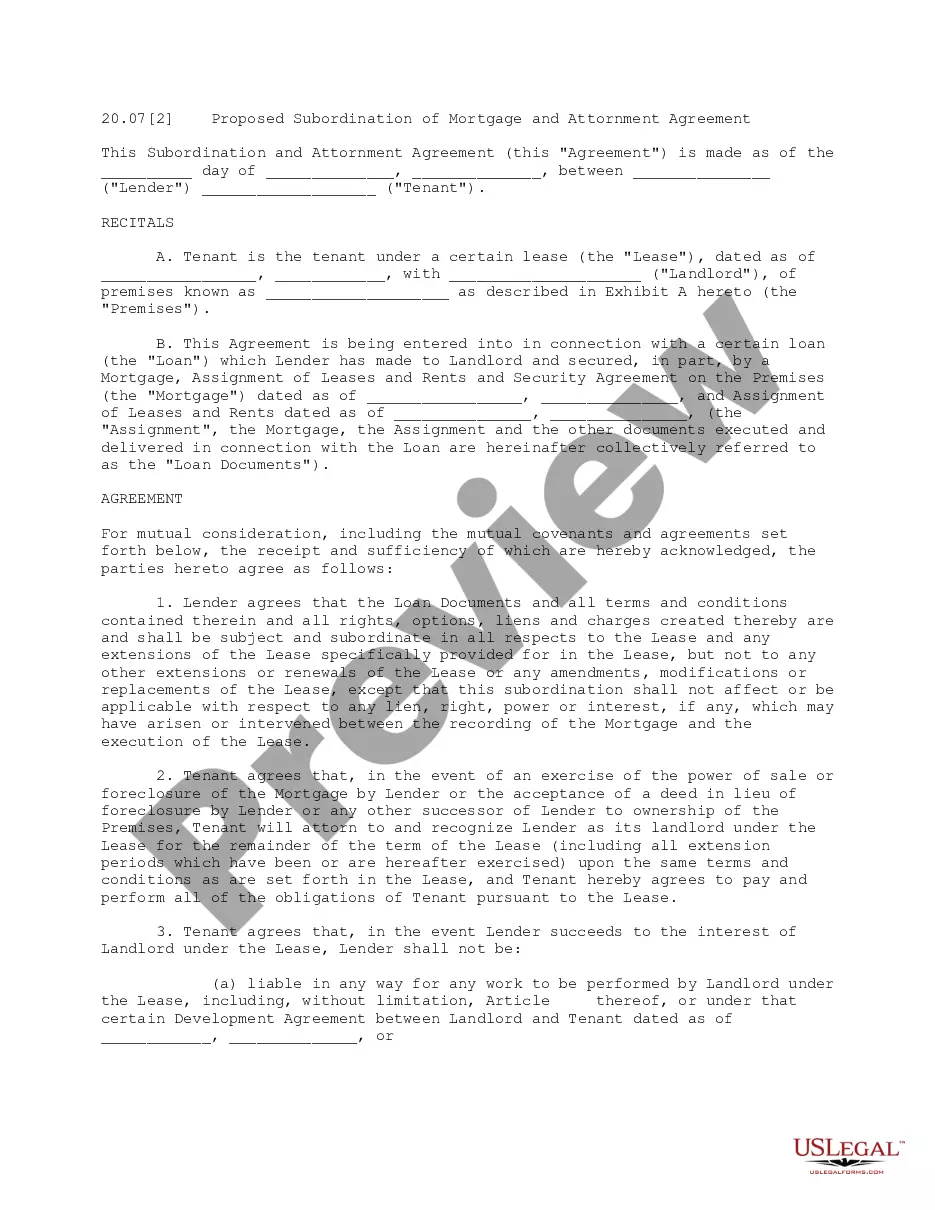
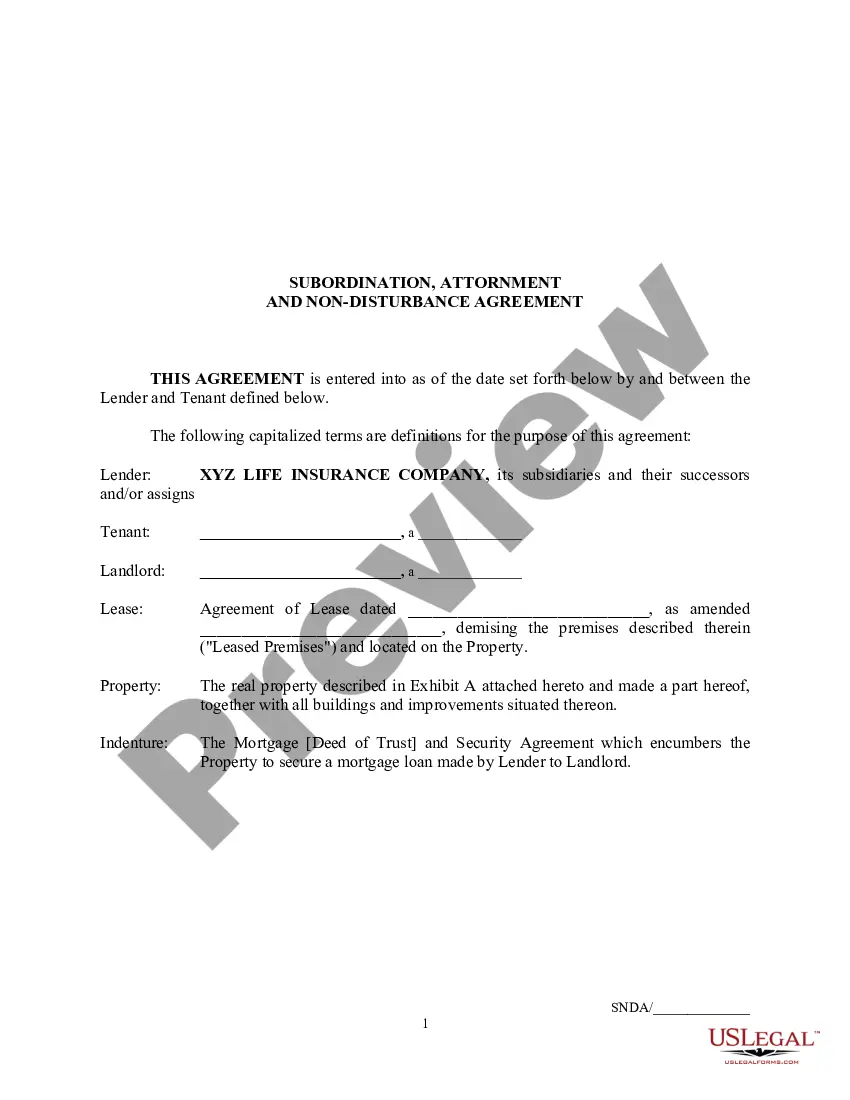
Get your form ready online
Our built-in tools help you complete, sign, share, and store your documents in one place.
Built-in online Word editor
Make edits, fill in missing information, and update formatting in US Legal Forms—just like you would in MS Word.
Export easily
Download a copy, print it, send it by email, or mail it via USPS—whatever works best for your next step.
E-sign your document
Sign and collect signatures with our SignNow integration. Send to multiple recipients, set reminders, and more. Go Premium to unlock E-Sign.
Notarize online 24/7
If this form requires notarization, complete it online through a secure video call—no need to meet a notary in person or wait for an appointment.
Store your document securely
We protect your documents and personal data by following strict security and privacy standards.

Make edits, fill in missing information, and update formatting in US Legal Forms—just like you would in MS Word.

Download a copy, print it, send it by email, or mail it via USPS—whatever works best for your next step.

Sign and collect signatures with our SignNow integration. Send to multiple recipients, set reminders, and more. Go Premium to unlock E-Sign.

If this form requires notarization, complete it online through a secure video call—no need to meet a notary in person or wait for an appointment.

We protect your documents and personal data by following strict security and privacy standards.
Looking for another form?

How to fill out Subordination And Attornment Agreement - Landlord - Tenant - Lender?
It is feasible to devote time online searching for the valid document template that meets the federal and state requirements you desire. US Legal Forms offers thousands of valid forms that have been reviewed by professionals.
You can download or print the Maryland Subordination and Attornment Agreement - Landlord - Tenant - Lender from the service. If you already possess a US Legal Forms account, you may Log In and click the Download option. After that, you can complete, modify, print, or sign the Maryland Subordination and Attornment Agreement - Landlord - Tenant - Lender.
Each valid document template you purchase is yours for an extended period. To obtain another copy of the bought form, navigate to the My documents tab and select the relevant option. If you are utilizing the US Legal Forms website for the first time, follow the simple instructions below: First, ensure that you have chosen the right document template for the state/region of your choice. Review the form description to confirm you have selected the correct template. If available, use the Preview option to view the document template simultaneously.
Utilize professional and state-specific templates to address your business or personal needs.
- To find another version of your form, utilize the Search field to locate the template that fulfills your needs and requirements.
- Once you have identified the template you want, click on Purchase now to continue.
- Choose the pricing plan you want, enter your details, and sign up for your account on US Legal Forms.
- Complete the transaction. You can use your Visa or Mastercard or PayPal account to pay for the valid form.
- Select the format of your document and download it to your system.
- Make adjustments to the document if necessary. You can complete, modify, and sign and print the Maryland Subordination and Attornment Agreement - Landlord - Tenant - Lender.
- Download and print thousands of document templates using the US Legal Forms website, which provides the largest collection of valid forms.
Form popularity
FAQ
Attornment is not always legally required for leases, but it is highly recommended, especially in the context of a Maryland Subordination and Attornment Agreement - Landlord - Tenant - Lender. This process ensures that tenants recognize the rights of a new landlord if the property changes ownership. By including attornment in your lease agreement, you can safeguard your tenancy rights and maintain a stable living arrangement. US Legal Forms can assist you in drafting an effective attornment clause that suits your needs.
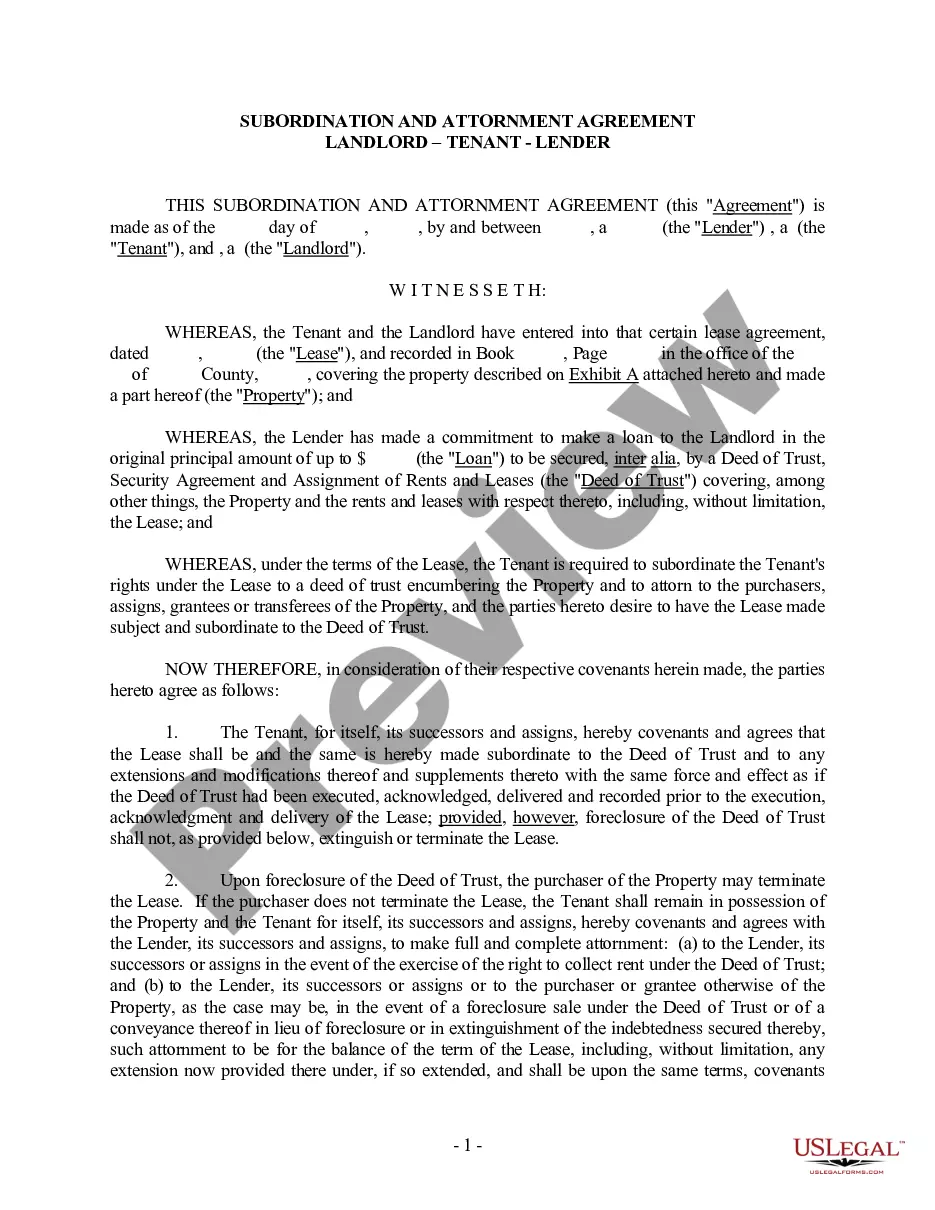
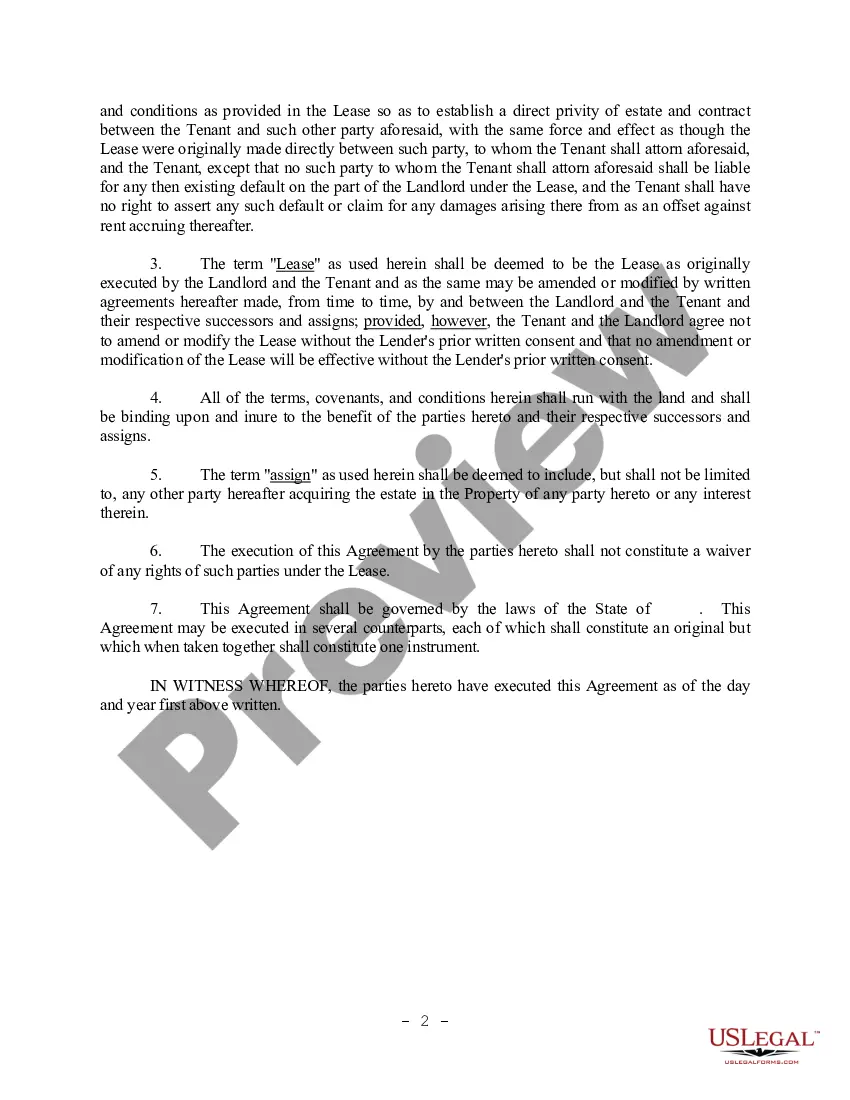
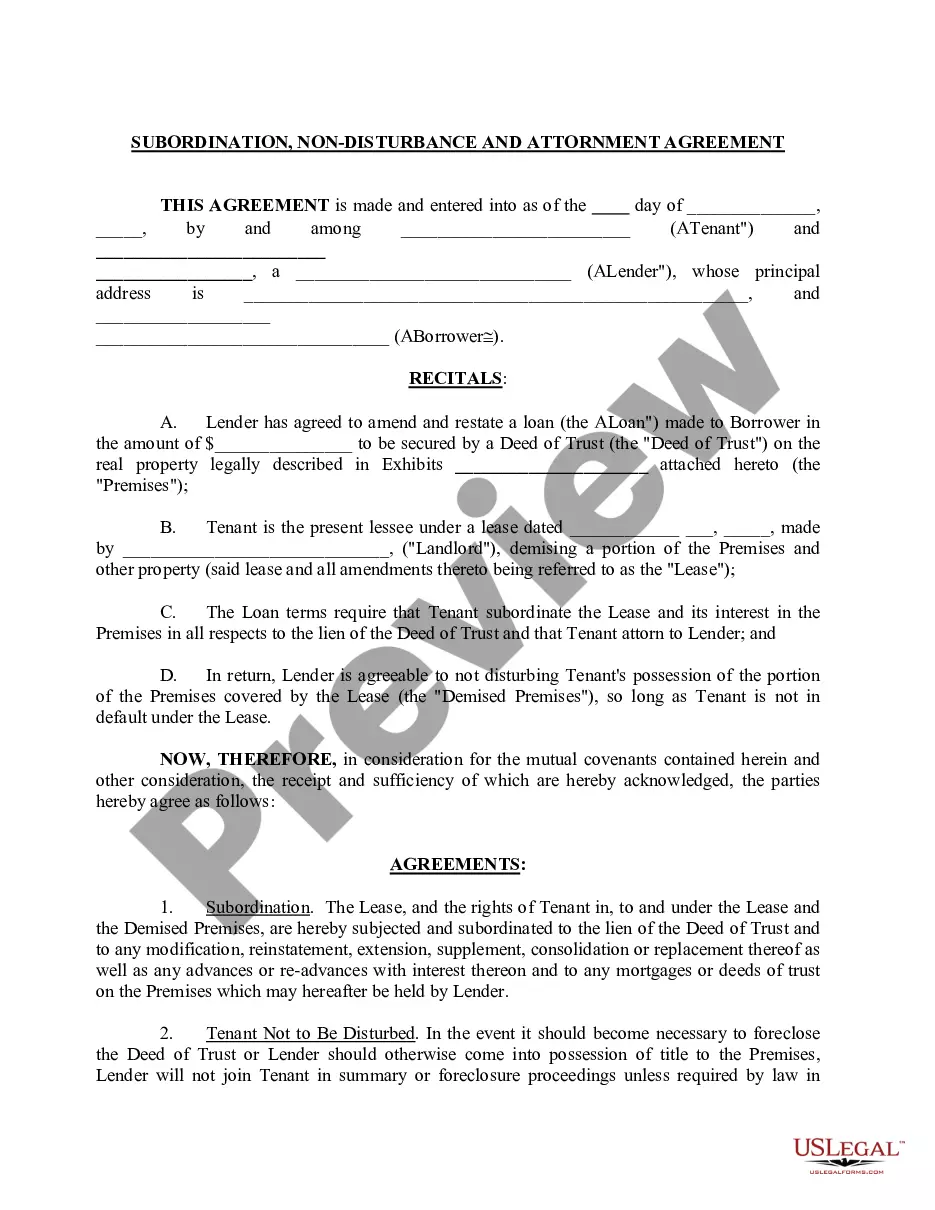
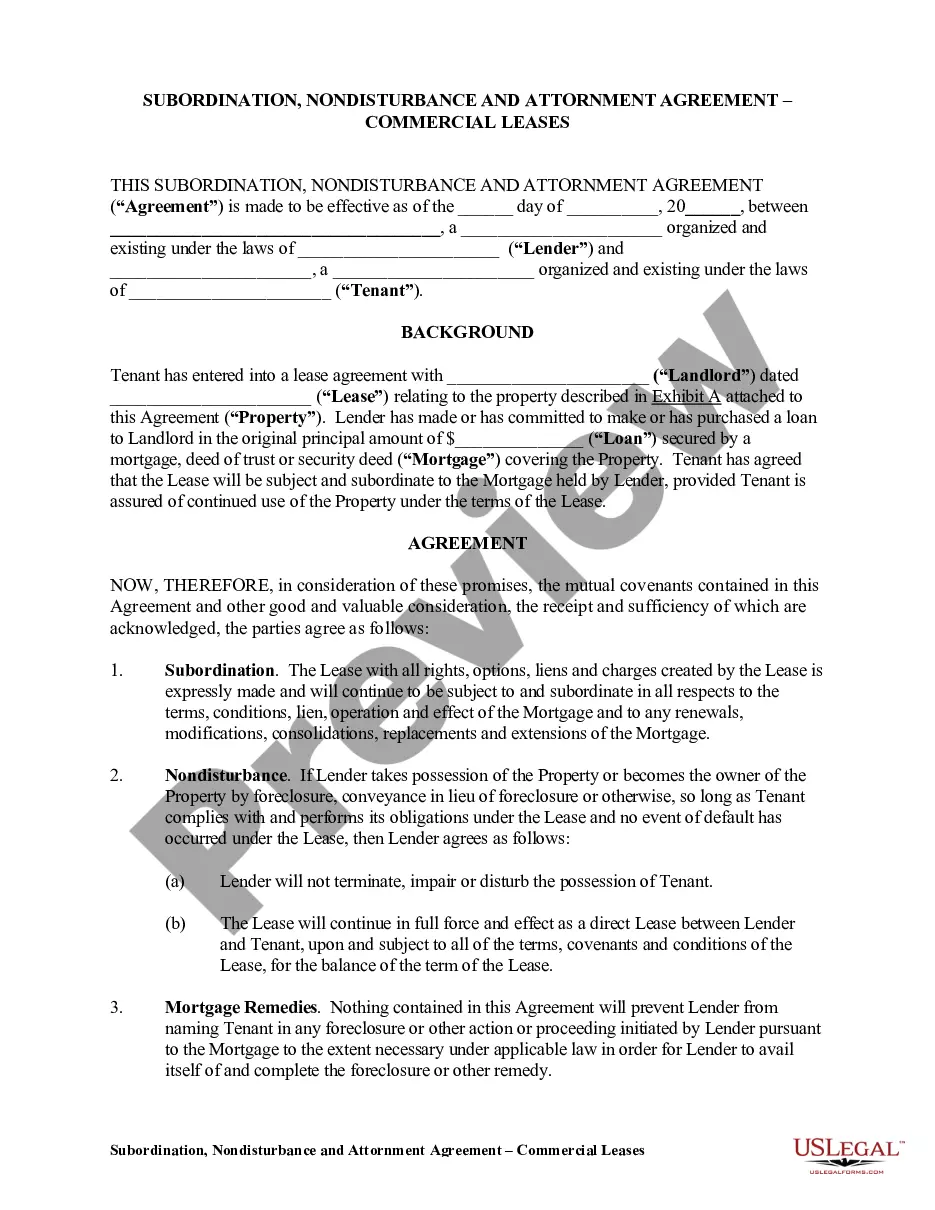
A Maryland Subordination and Attornment Agreement - Landlord - Tenant - Lender is a legal document that establishes the priority of lease agreements in relation to a mortgage. It allows tenants to acknowledge that their lease is subordinate to the lender's mortgage, while also ensuring that the lender agrees to the terms of the lease. This agreement protects both the landlord's and tenant's interests, especially during property sales or foreclosures. Understanding this document is crucial for all parties in a leasing arrangement.
Typically, a qualified attorney drafts the Maryland Subordination and Attornment Agreement - Landlord - Tenant - Lender. This professional ensures that the agreement meets legal requirements and serves the interests of all parties involved. Engaging a knowledgeable attorney can prevent potential disputes and provide clarity in the lease terms. You can also use platforms like US Legal Forms to find templates and guidelines for drafting these agreements.
Overview. An SNDA is a tri-party agreement between a tenant, landlord, and landlord's mortgagee under which the tenant agrees to subordinate its lease to the mortgagee's lien in exchange for the mortgagee's agreement to honor the terms of the lease if mortgagee forecloses on the property.
Attornment is the act of granting authority or jurisdiction to a party even though no legal rights exist. It applies mainly to real estate transactions and may occur when a tenant acknowledges a new owner of the property as their new landlord.
In other words, an estoppel prohibits someone from taking a position that is contrary to what they have previously stated. When it comes to commercial real estate, the tenant estoppel is a document, signed by a tenant, that verifies the terms, conditions, and status of the lease they have signed off on.
A lender typically wants to have an SNDA because of its subordination clause if, in the absence of such an agreement, the lease would be prior to the mortgage.
Definition of 'Subordination of Lease' Subordination of lease refers to the tenant's consent to subordinate his or her rights over a property to the rights of the bank holding the mortgage on the property. A subordination of lease agreement is created for this purpose.
What are they, and why do landlords require them? Estoppel certificates and Subordination and Non-Disturbance Agreements (SNDAs) are the legal documentation that assures the rights of all parties are upheld. Tenants should not be concerned, but rather should welcome the documents with open arms.