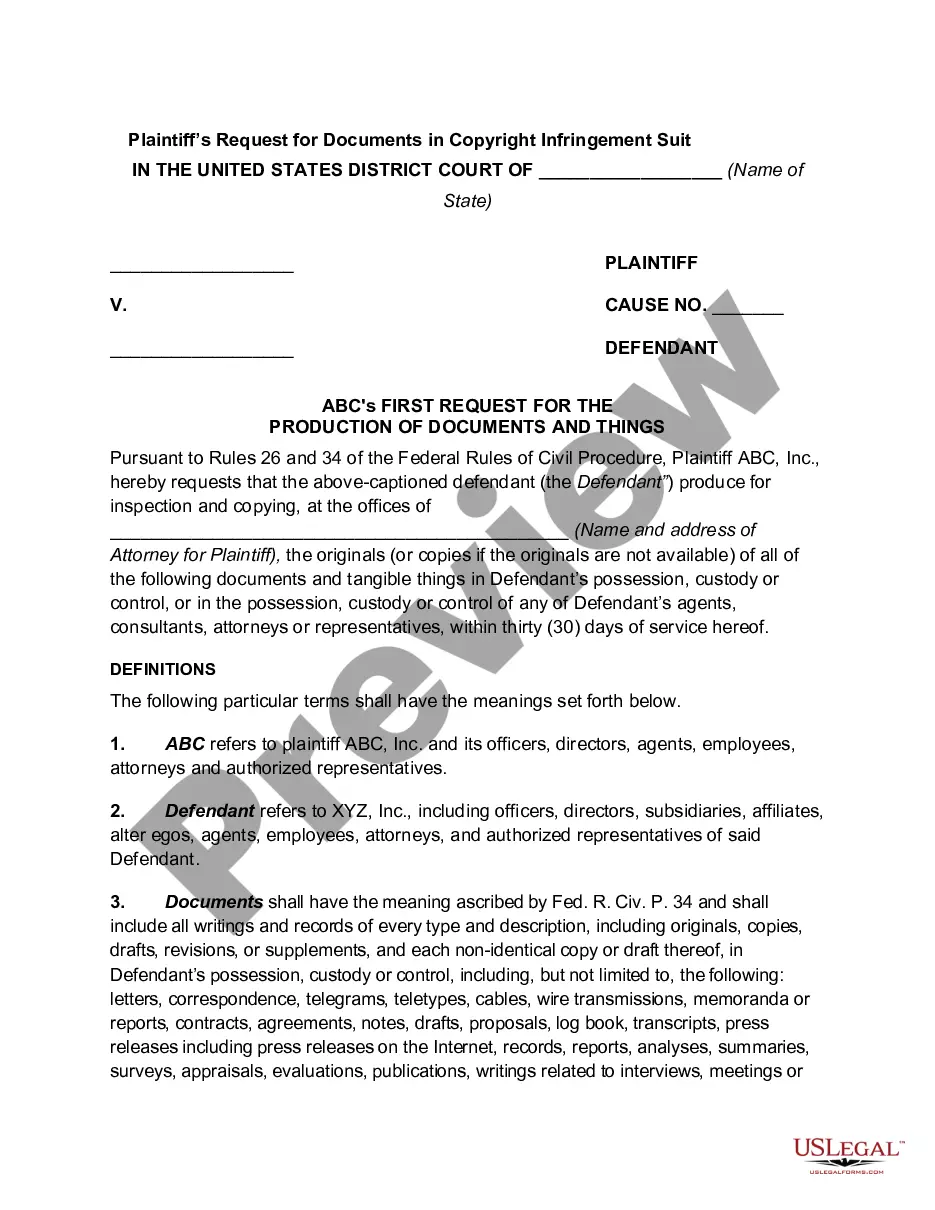
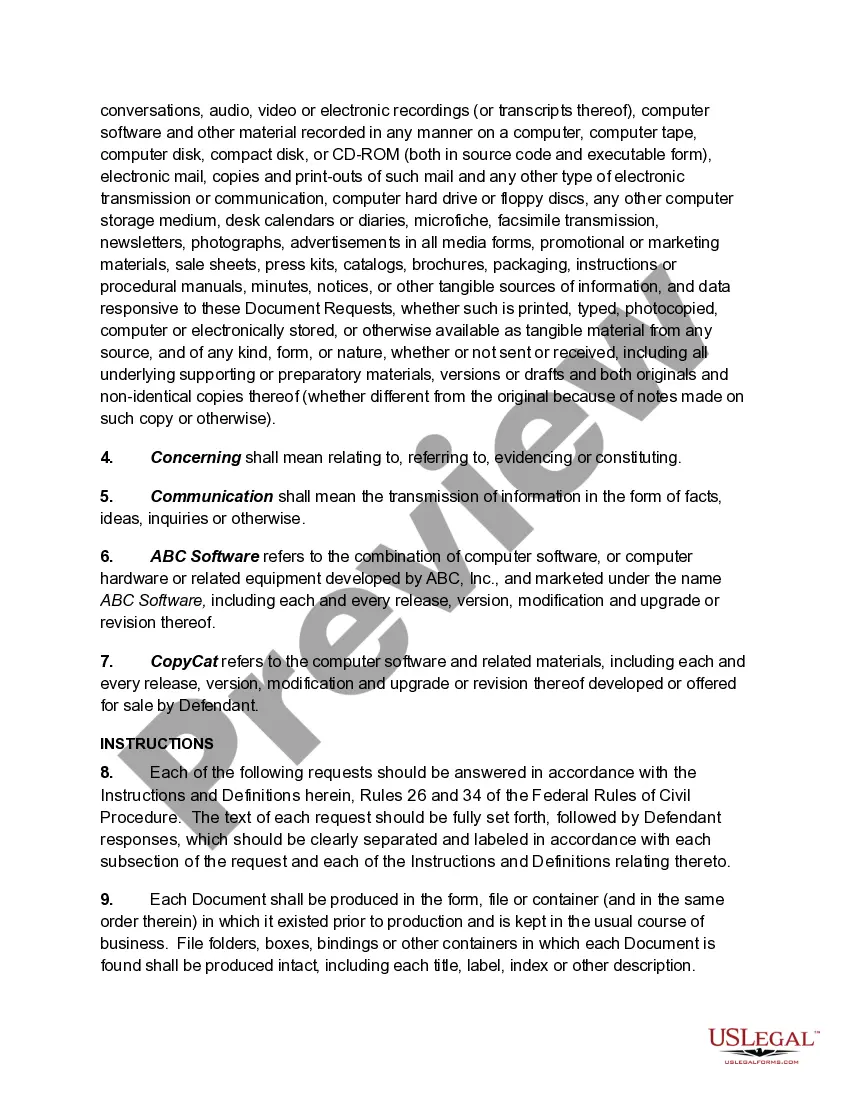
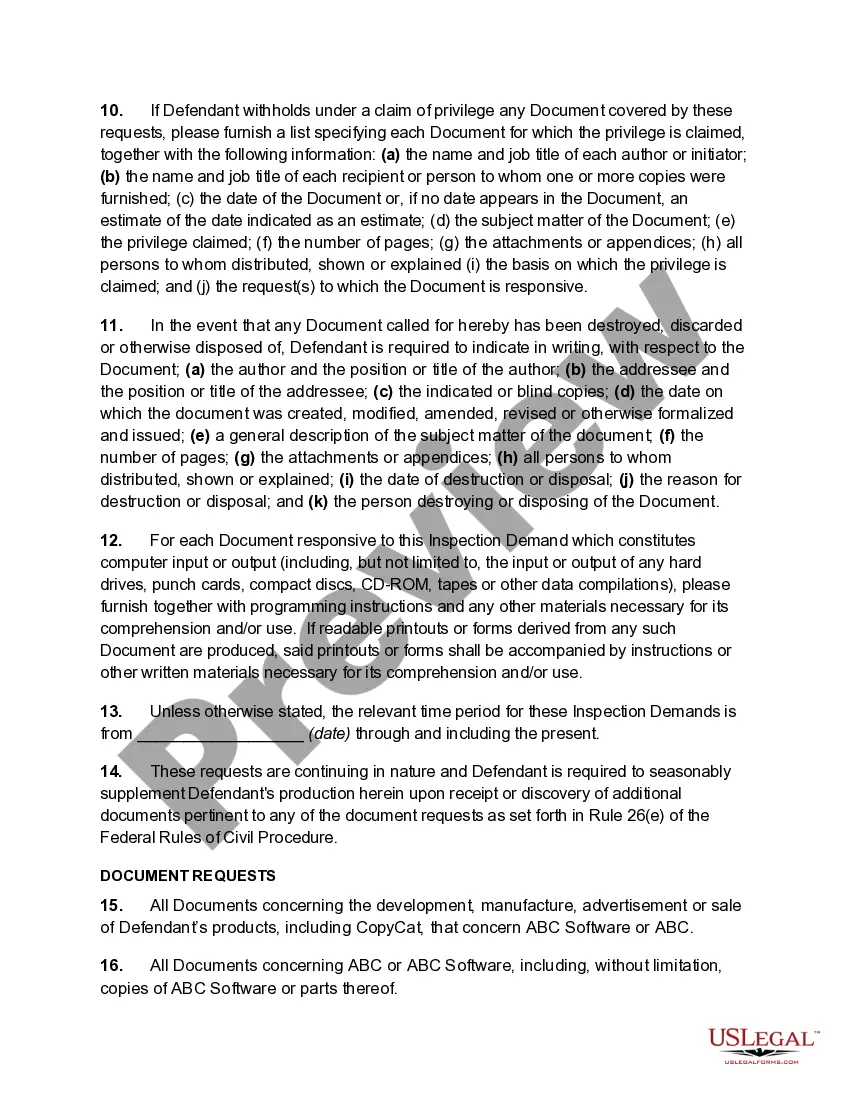
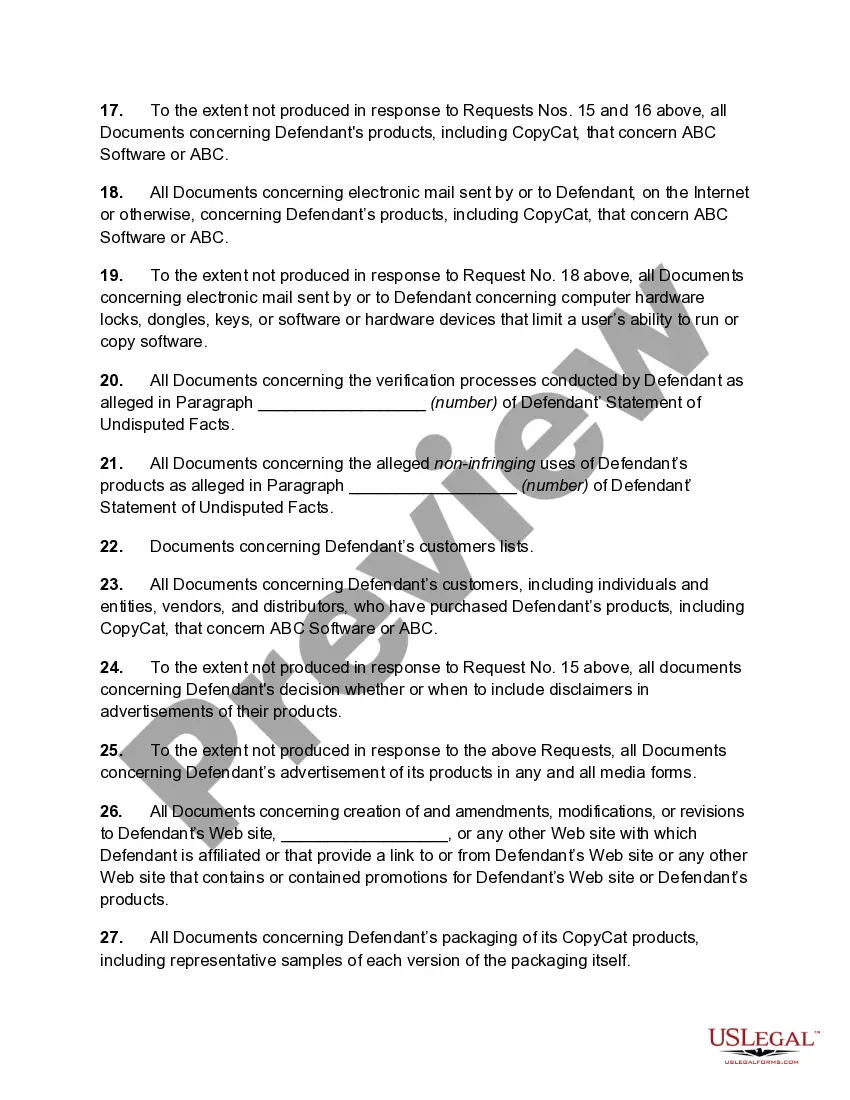
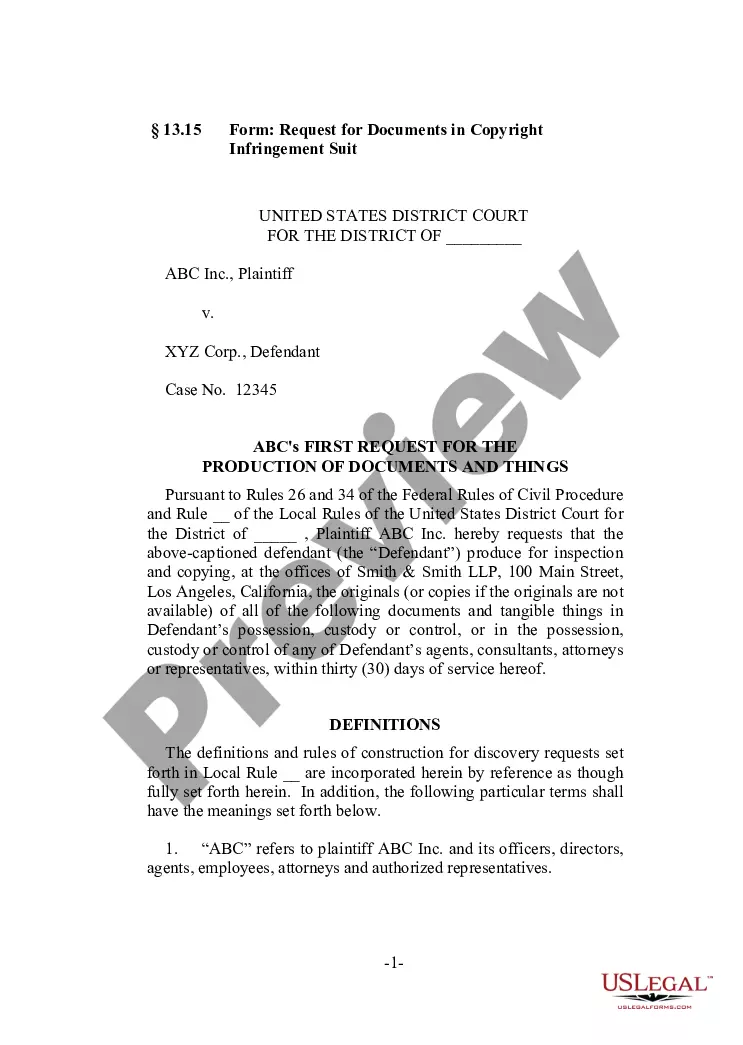
Maryland Plaintiff's Request for Documents in Copyright Infringement Suit
Description
Get your form ready online
Our built-in tools help you complete, sign, share, and store your documents in one place.
Make edits, fill in missing information, and update formatting in US Legal Forms—just like you would in MS Word.
Download a copy, print it, send it by email, or mail it via USPS—whatever works best for your next step.
Sign and collect signatures with our SignNow integration. Send to multiple recipients, set reminders, and more. Go Premium to unlock E-Sign.
If this form requires notarization, complete it online through a secure video call—no need to meet a notary in person or wait for an appointment.
We protect your documents and personal data by following strict security and privacy standards.

Make edits, fill in missing information, and update formatting in US Legal Forms—just like you would in MS Word.

Download a copy, print it, send it by email, or mail it via USPS—whatever works best for your next step.

Sign and collect signatures with our SignNow integration. Send to multiple recipients, set reminders, and more. Go Premium to unlock E-Sign.

If this form requires notarization, complete it online through a secure video call—no need to meet a notary in person or wait for an appointment.

We protect your documents and personal data by following strict security and privacy standards.
Looking for another form?
How to fill out Plaintiff's Request For Documents In Copyright Infringement Suit?
It is feasible to spend hours online searching for the valid document template that meets the state and federal requirements you need.
US Legal Forms offers thousands of valid templates that are reviewed by professionals.
You can easily download or print the Maryland Plaintiff’s Request for Documents in Copyright Infringement Suit from my service.
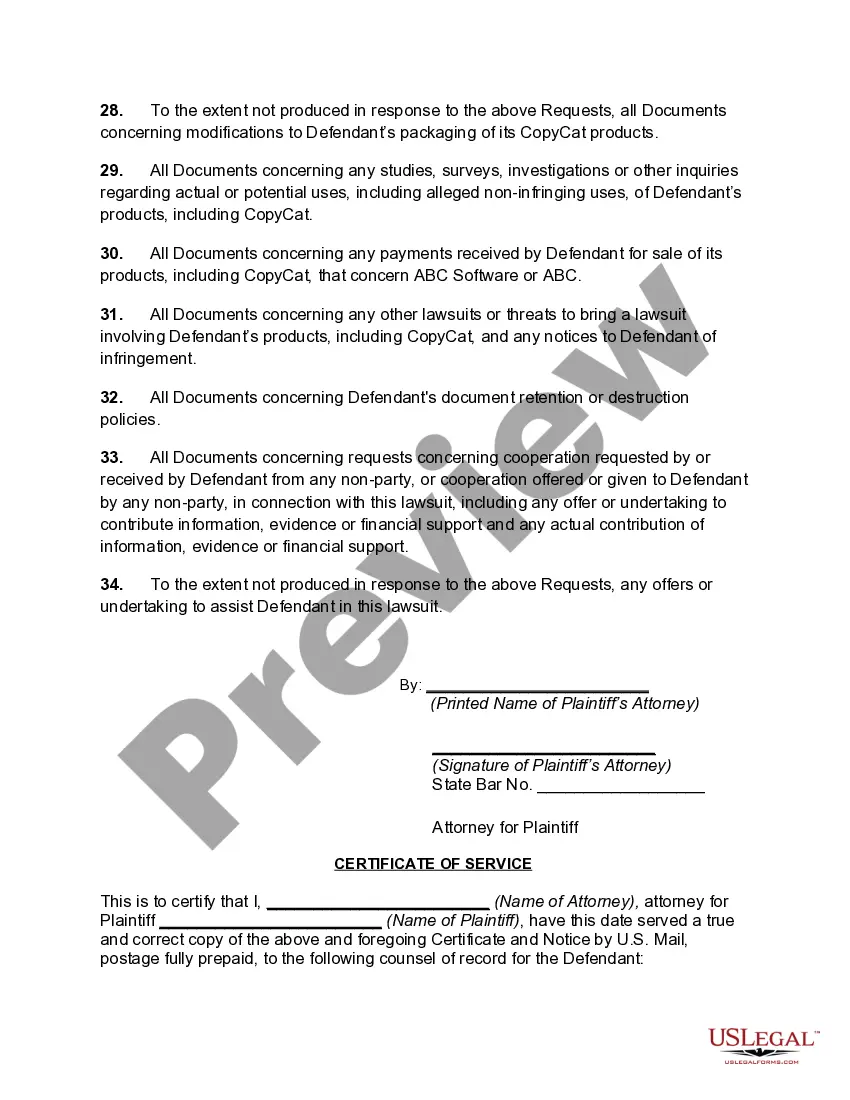
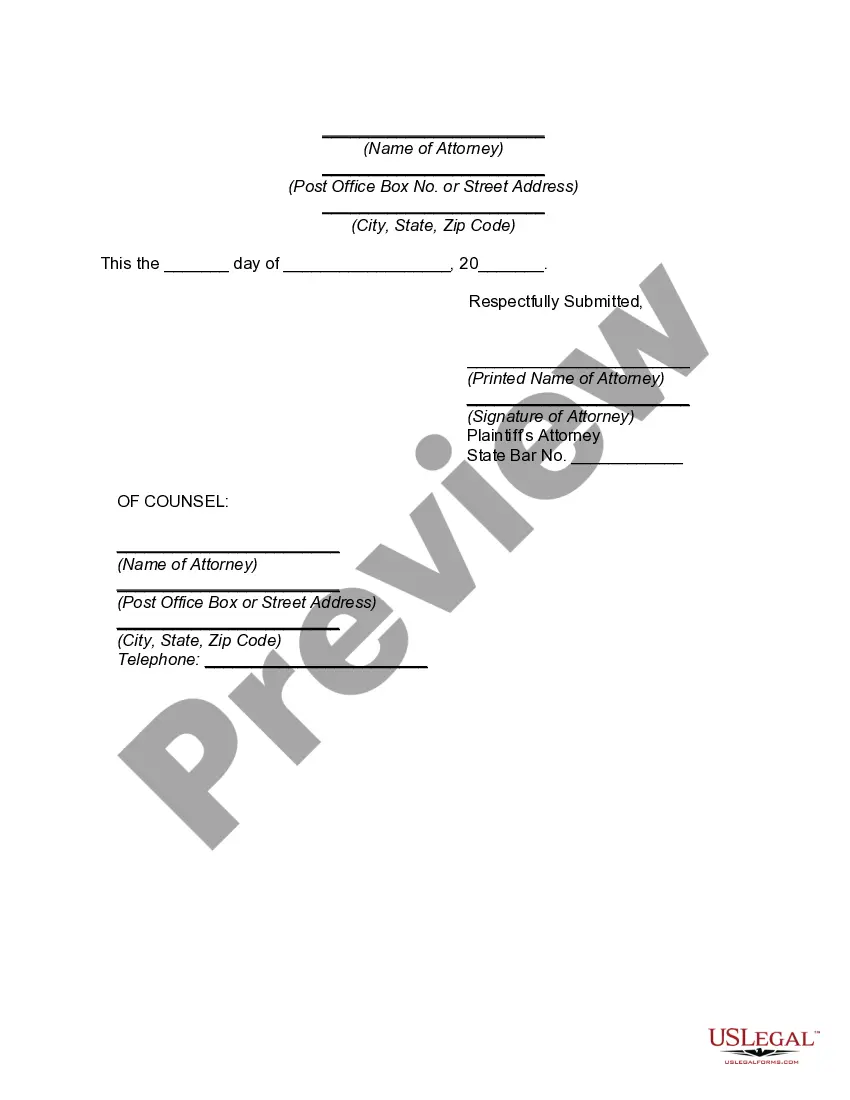
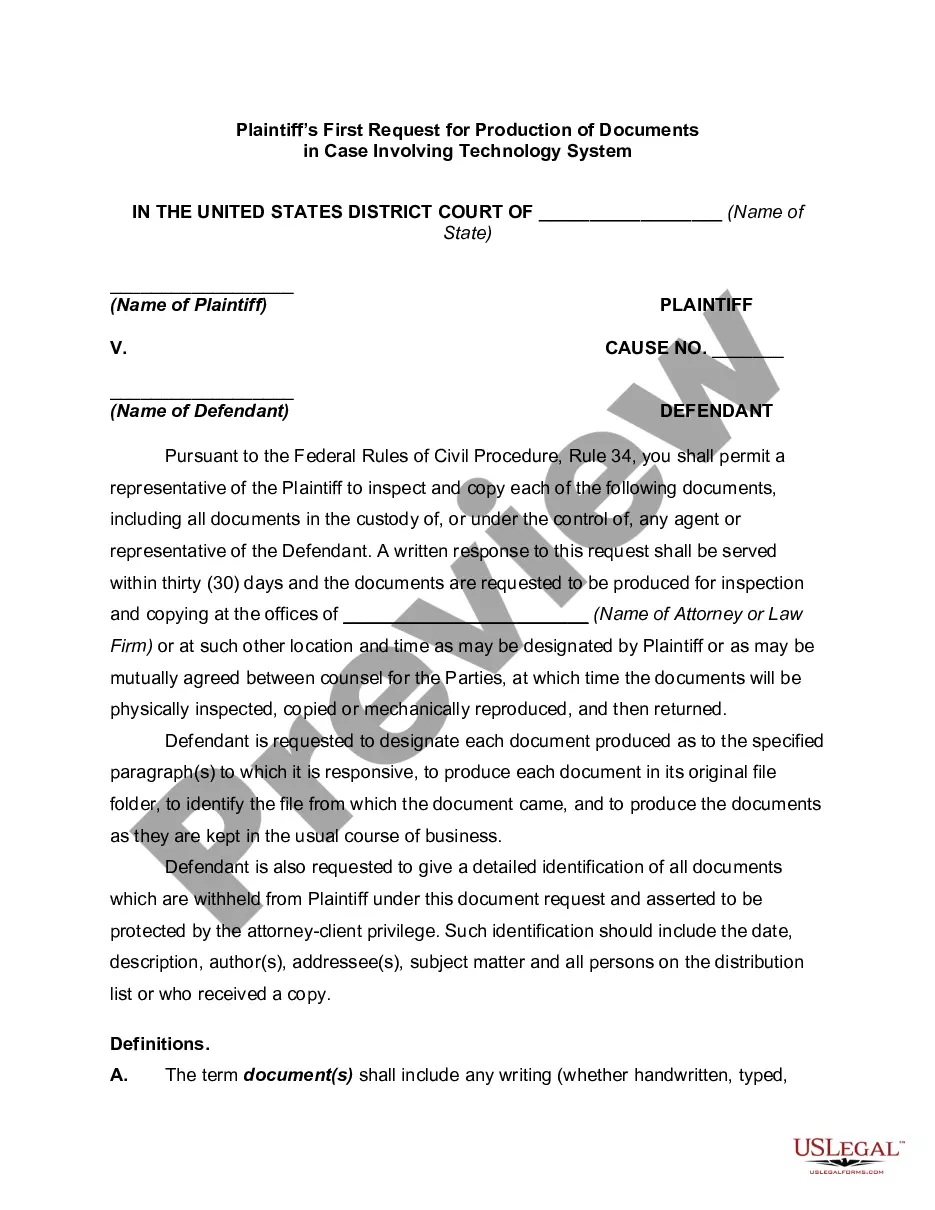
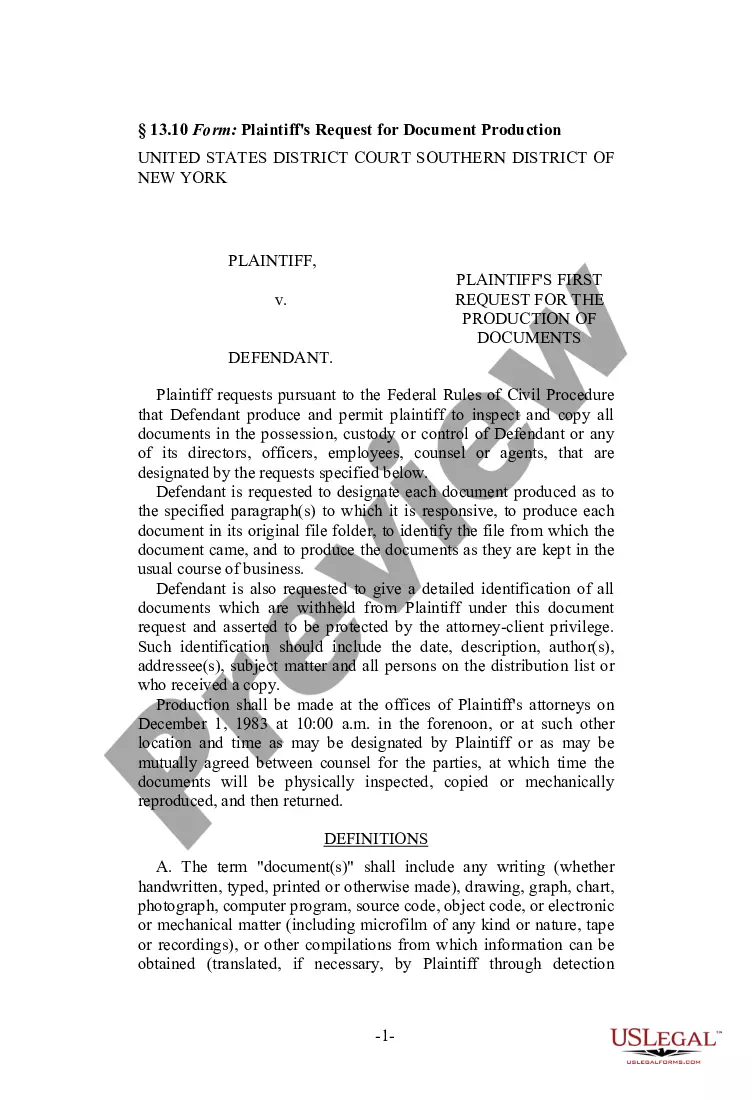
If available, take advantage of the Preview button to view the document template as well.
- If you have a US Legal Forms account, you may Log In and then click the Download button.
- Afterward, you can complete, edit, print, or sign the Maryland Plaintiff’s Request for Documents in Copyright Infringement Suit.
- Each valid document template you purchase is yours permanently.
- To obtain another copy of any purchased form, navigate to the My documents tab and click the appropriate button.
- If you are using the US Legal Forms site for the first time, follow the simple instructions below.
- First, ensure you have selected the correct document template for the state/county of your choice.
- Read the form description to confirm you have selected the correct form.
Form popularity
FAQ
A request for production is a legal request for documents, electronically stored information, or other tangible items made in the course of litigation.
How do I get discovery?Request for Production of Documents: You can ask the plaintiff to produce documents that prove what they are claiming: like bills, their ledger and contract with you.Request for Interrogatories: You can ask the plaintiff to answer questions in writing about your case and the debt, like.More items...
The process of delivering, or making available for review, documents in response to a request for documents, such as a request for production and a subpoena. A request for documents may call for the production of paper (hard copy) documents and electronically stored information (ESI).
To begin preparing for trial, both sides engage in discovery . This is the formal process of exchanging information between the parties about the witnesses and evidence they ll present at trial. Discovery enables the parties to know before the trial begins what evidence may be presented.
Generally, a request for production of documents asks the responding party to make available the original documents, but the propounding (asking) party may request that photocopies be sent instead, if inspection of the original document is not necessary.
Failing To Respond To Discovery Can Lead To A Dismissal Of Your Case With Prejudice. In the practice of law, the discovery phase can be your best friend or your worst nightmare. Interrogatories, requests for documents, and depositions can make or break your case.
California law places strict limits on the number of discovery requests a party can make. In a limited civil case (cases less than $25,000) you may ask each party only 35 questions total, whether they are form interrogatories, special interrogatories, requests for admission, or requests for production.
If a request asks for a document, make a copy of the document; in your response, describe the document and say that a copy is attached; and attach a copy of the document to the responses you send back to the other side.
A party in an out-of-state proceeding who is requesting a Maryland subpoena must request issuance of a subpoena by submitting a foreign subpoena to the clerk of the circuit court for the county in which discovery is sought. The clerk then issues a Maryland subpoena that incorporates the terms of the foreign subpoena.
Interrogatories are lists of questions sent to the other party that s/he must respond to in writing. You can use interrogatories to find out facts about a case but they cannot be used for questions that draw a legal conclusion.