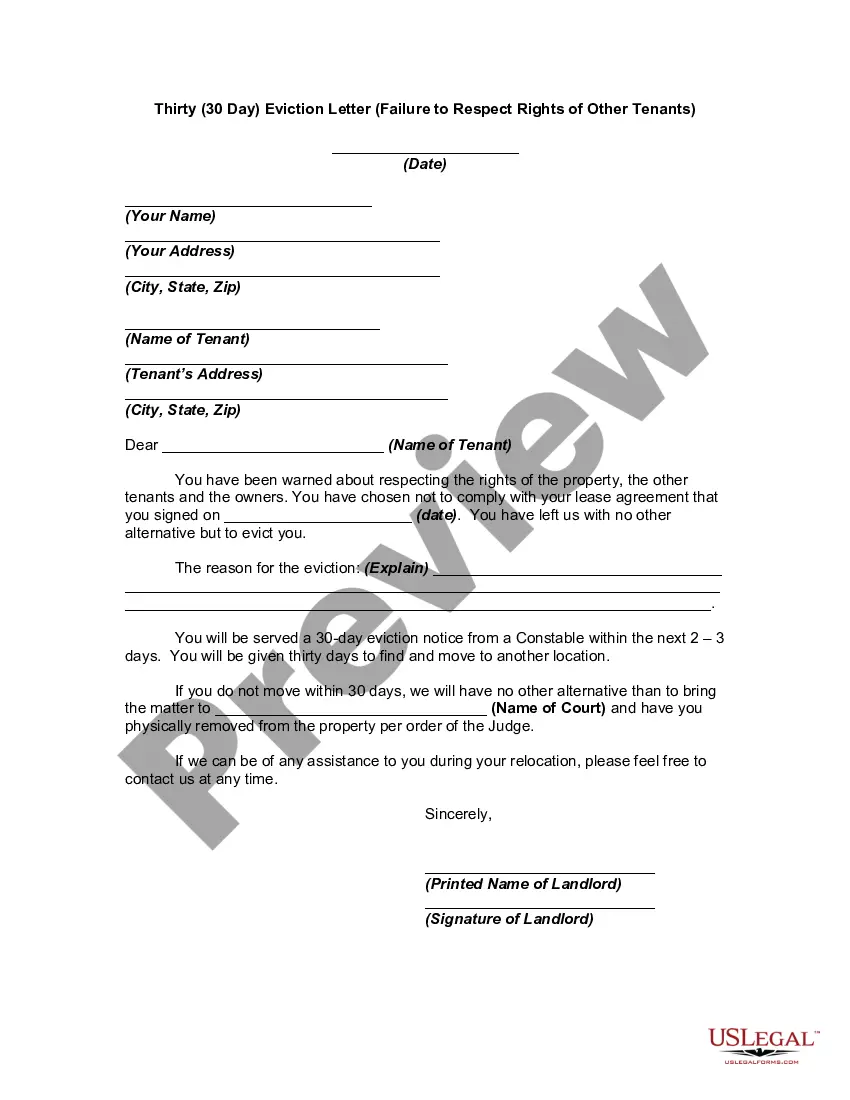
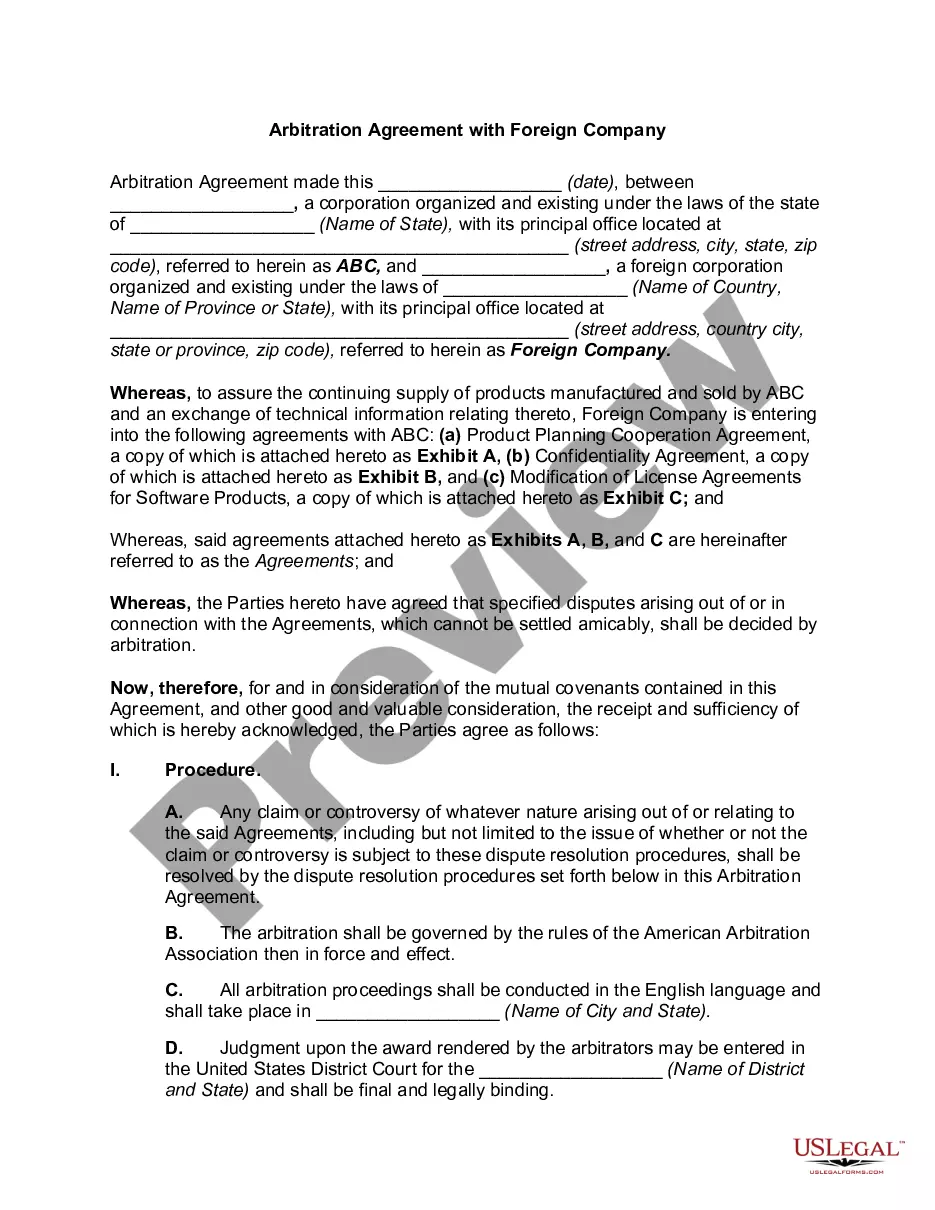
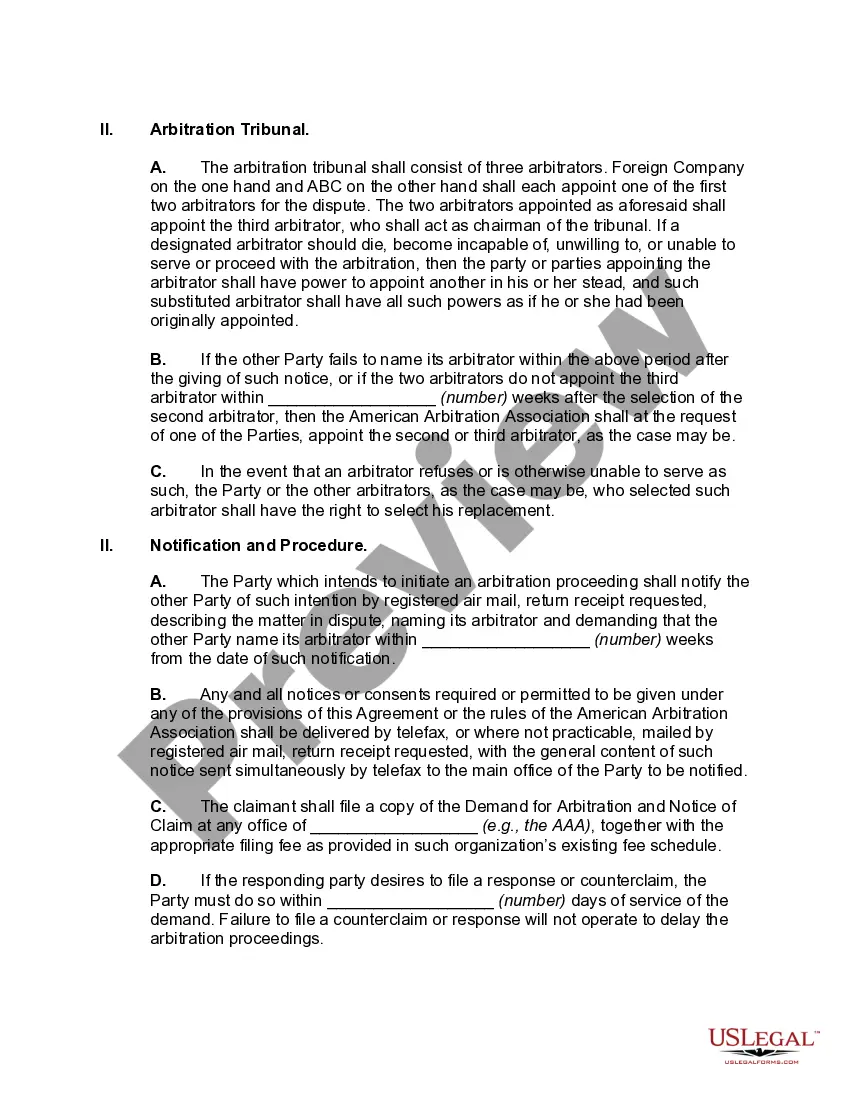
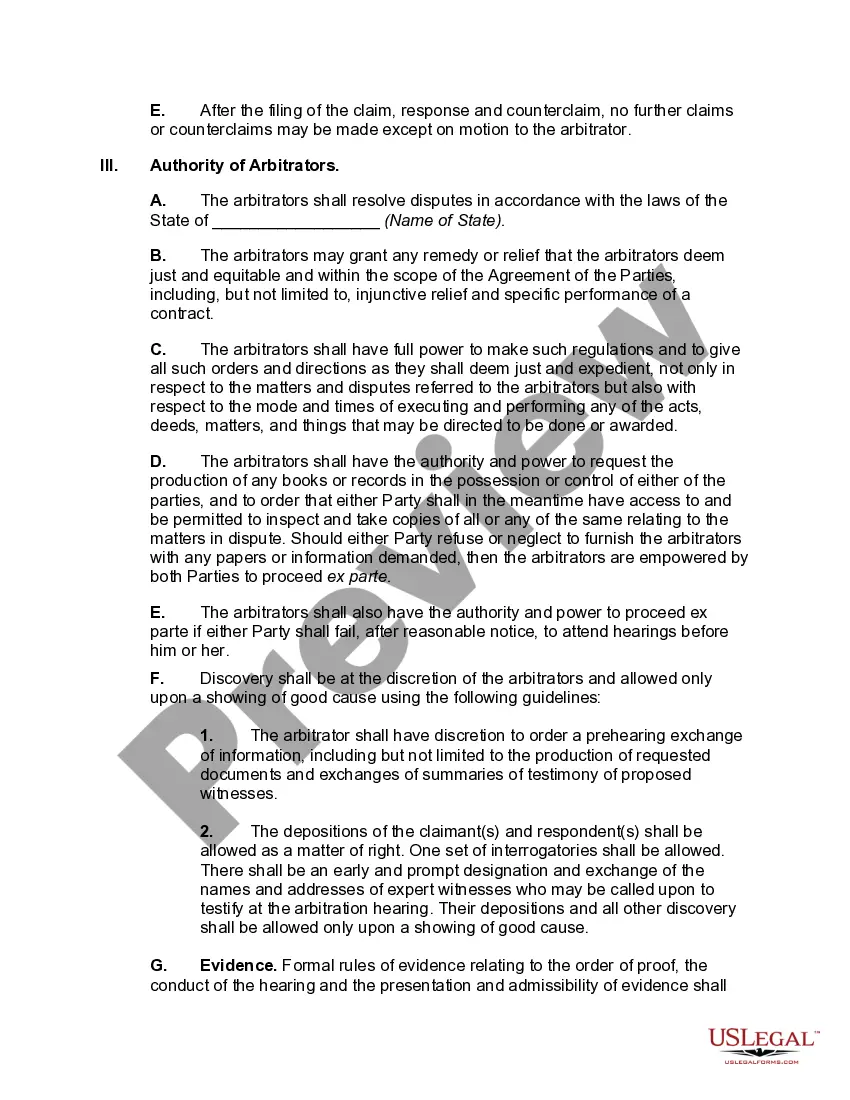
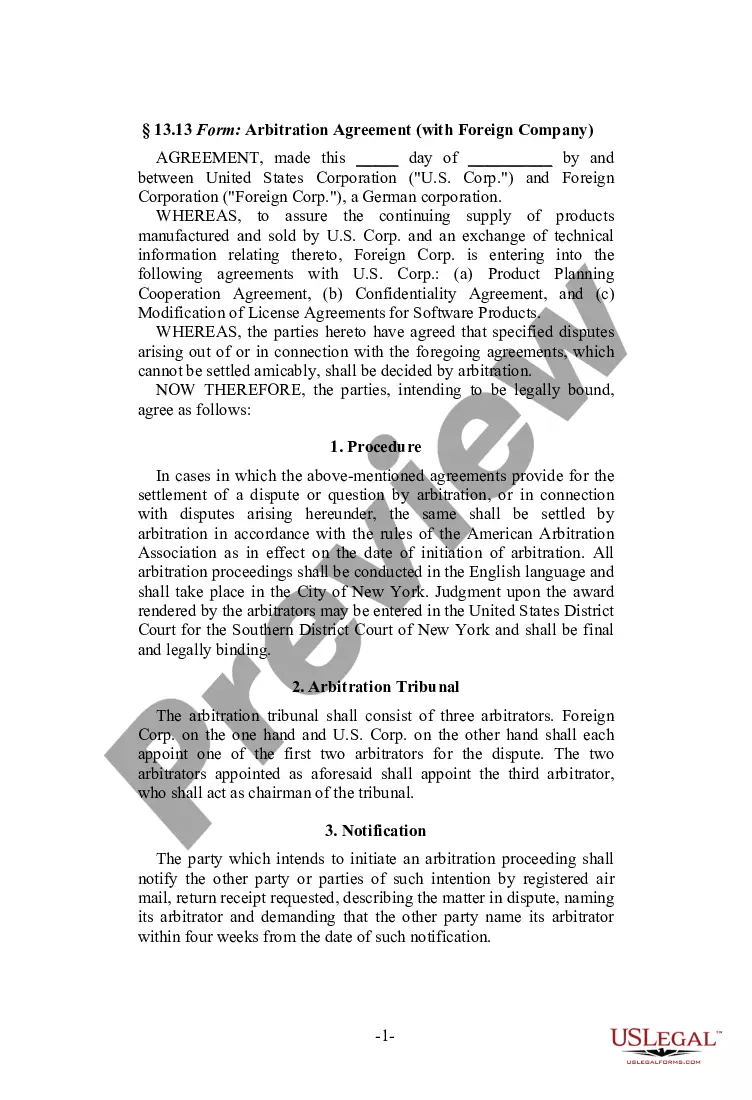
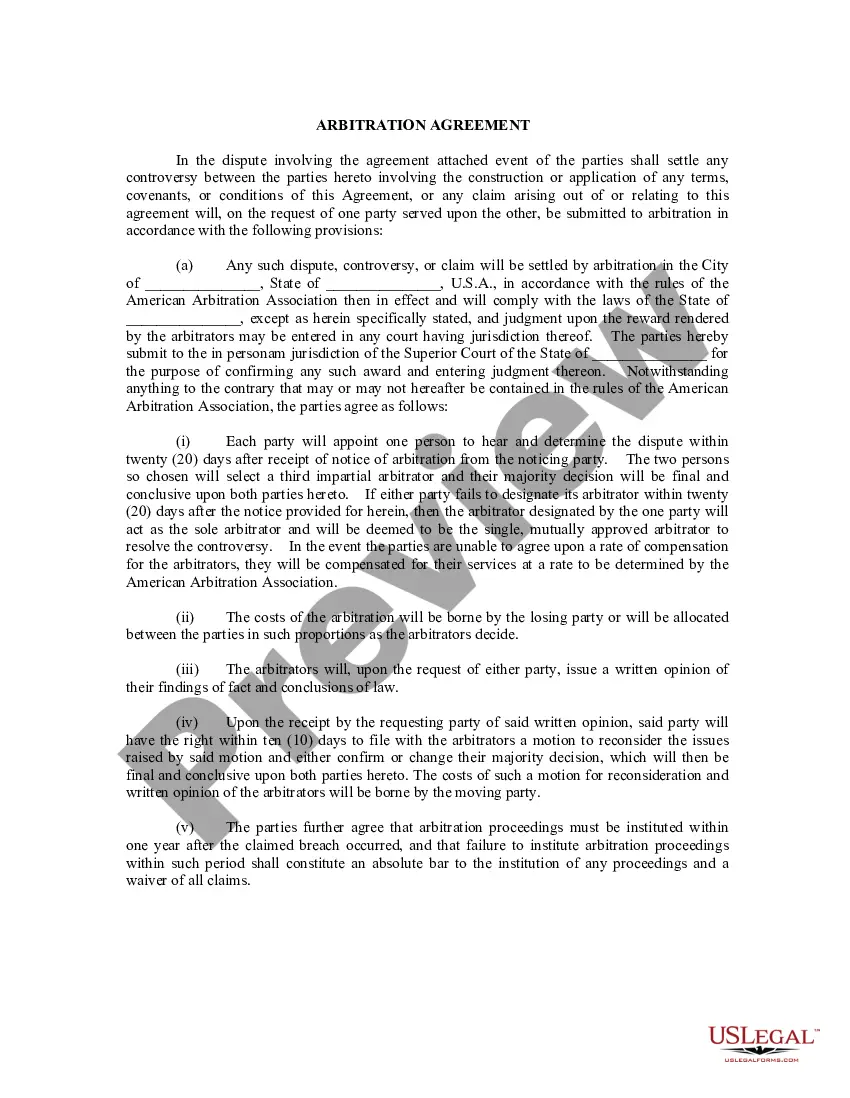
Maryland Arbitration Agreement with Foreign Company
Description
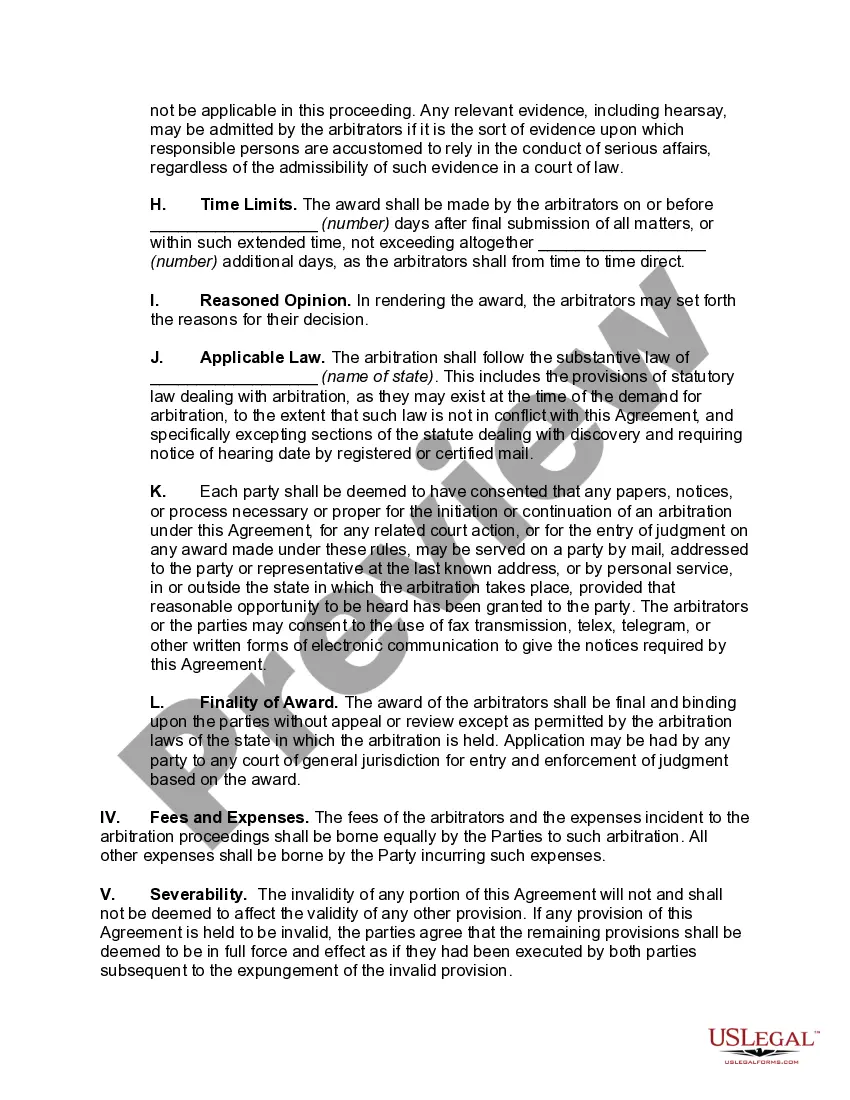
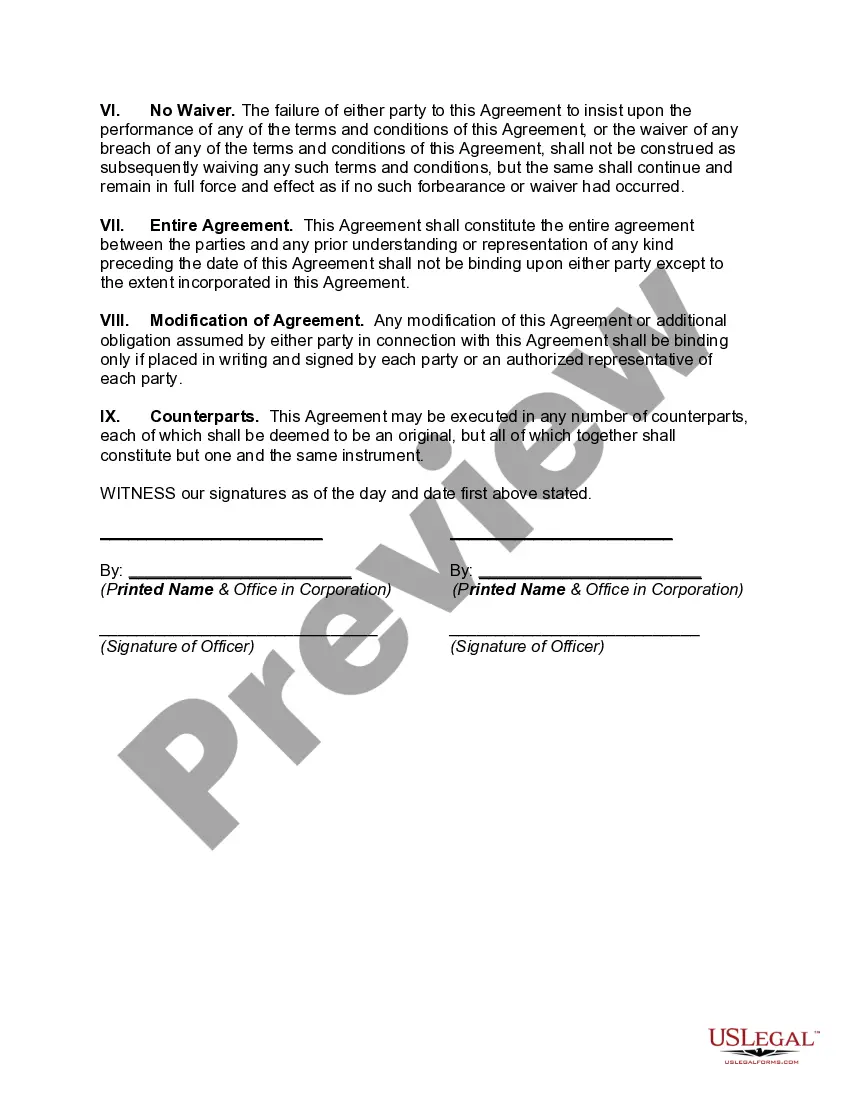

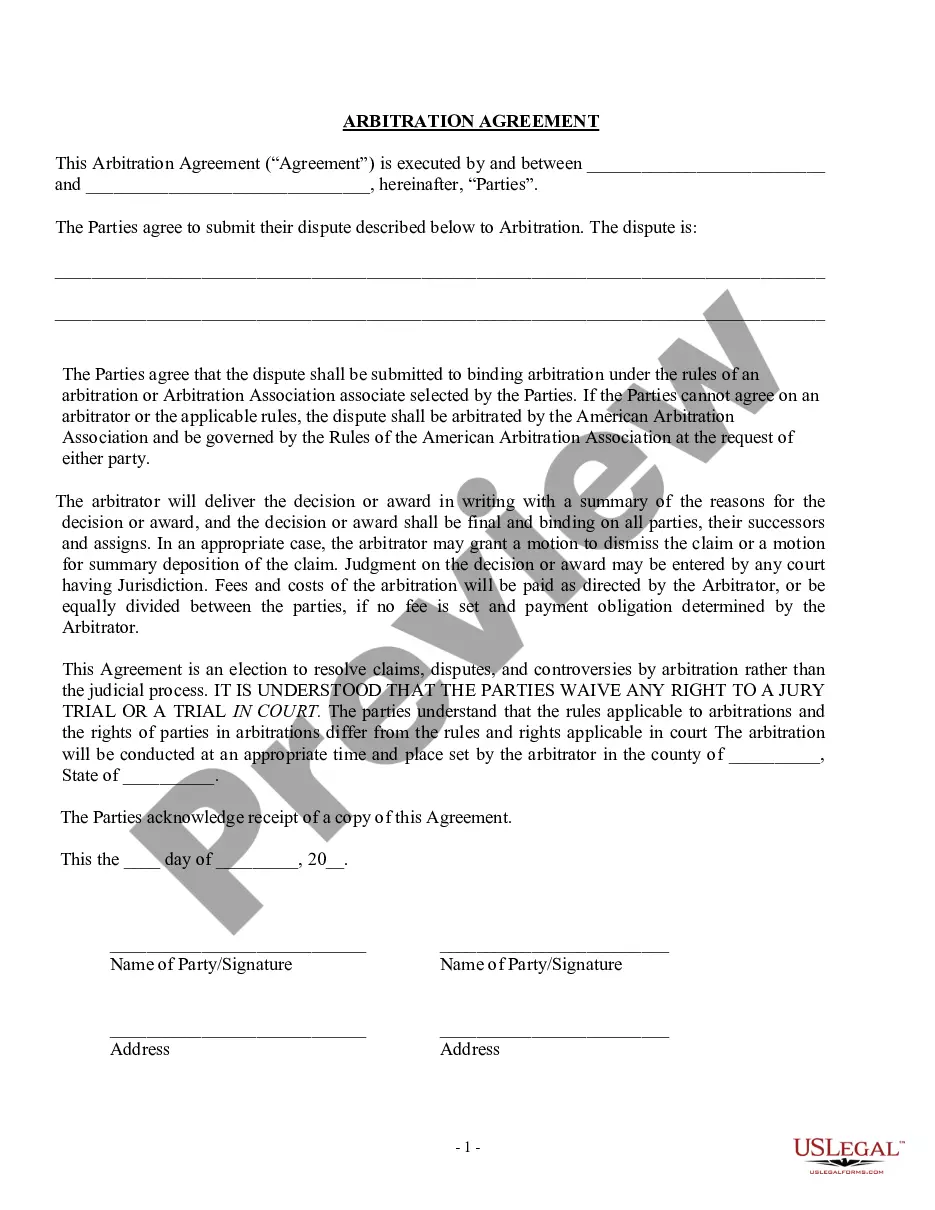
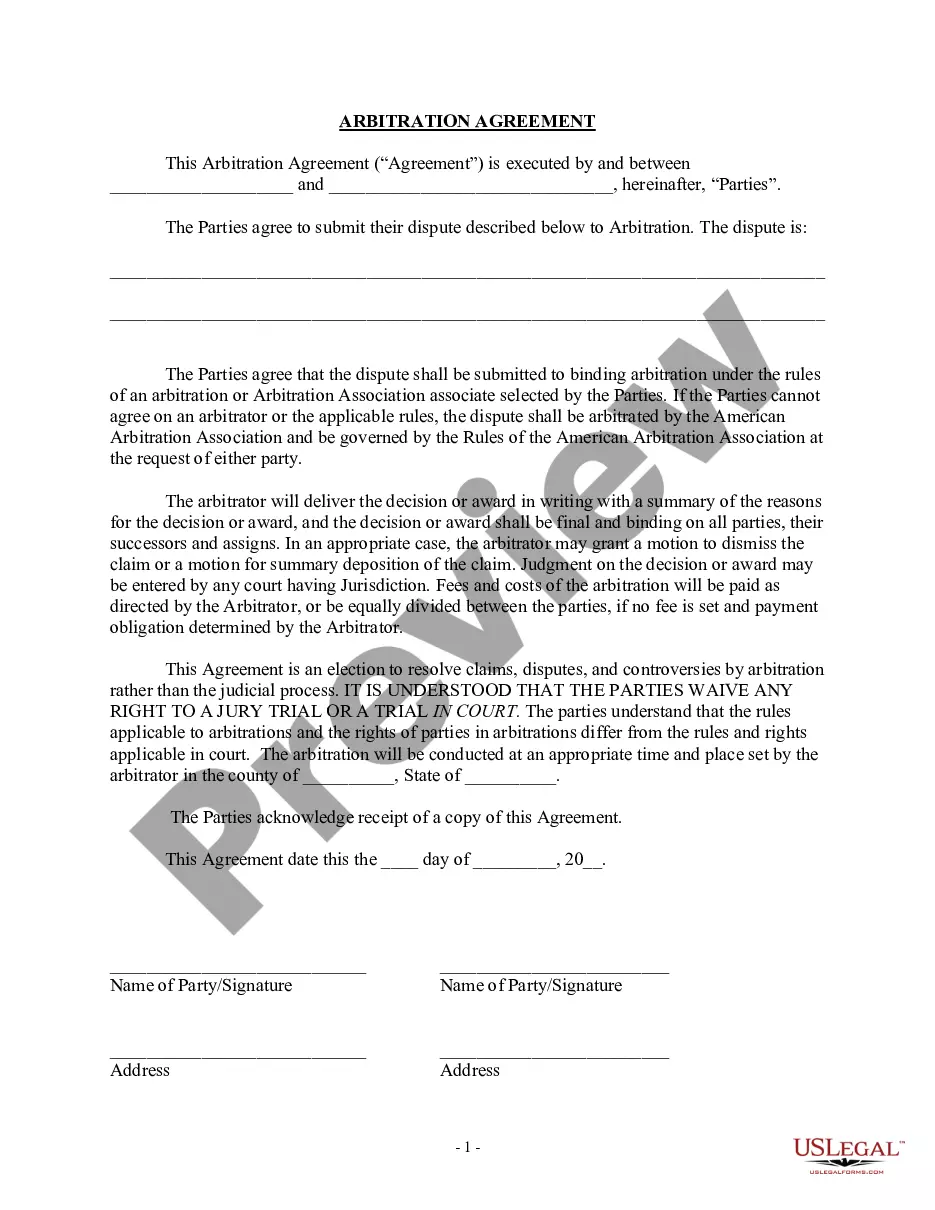
Get your form ready online
Our built-in tools help you complete, sign, share, and store your documents in one place.
Make edits, fill in missing information, and update formatting in US Legal Forms—just like you would in MS Word.
Download a copy, print it, send it by email, or mail it via USPS—whatever works best for your next step.
Sign and collect signatures with our SignNow integration. Send to multiple recipients, set reminders, and more. Go Premium to unlock E-Sign.
If this form requires notarization, complete it online through a secure video call—no need to meet a notary in person or wait for an appointment.
We protect your documents and personal data by following strict security and privacy standards.

Make edits, fill in missing information, and update formatting in US Legal Forms—just like you would in MS Word.

Download a copy, print it, send it by email, or mail it via USPS—whatever works best for your next step.

Sign and collect signatures with our SignNow integration. Send to multiple recipients, set reminders, and more. Go Premium to unlock E-Sign.

If this form requires notarization, complete it online through a secure video call—no need to meet a notary in person or wait for an appointment.

We protect your documents and personal data by following strict security and privacy standards.
Looking for another form?



How to fill out Arbitration Agreement With Foreign Company?
If you wish to accumulate, fetch, or reproduce authentic document templates, utilize US Legal Forms, the largest repository of official forms available online.
Employ the site’s user-friendly and convenient search feature to acquire the documents you require.
Numerous templates for business and personal purposes are organized by categories and jurisdictions, or keywords.
Step 4. Once you have found the form you need, click the Purchase now button. Choose the pricing plan you prefer and provide your information to register for an account.
Step 5. Complete the transaction. You may use your credit card or PayPal account to finalize the purchase.
- Use US Legal Forms to retrieve the Maryland Arbitration Agreement with a Foreign Company in just a few clicks.
- If you are an existing US Legal Forms user, Log In to your account and click the Obtain button to access the Maryland Arbitration Agreement with a Foreign Company.
- You can also find forms you previously obtained from the My documents section of your account.
- If you are using US Legal Forms for the first time, follow the instructions below.
- Step 1. Confirm you have selected the form for the appropriate city/state.
- Step 2. Utilize the Preview feature to review the information of the form. Be sure to check the details.
- Step 3. If you are not satisfied with the form, use the Search field at the top of the screen to locate other forms in the official format design.
Form popularity
FAQ
To enforce the right to arbitrate, the party must then file a motion to stay the lawsuit in favor of arbitration. If both parties to the agreement ignore the right to arbitrate, the right is waived.
International commercial arbitration is a means of resolving disputes arising under international commercial contracts. It is used as an alternative to litigation and is controlled primarily by the terms previously agreed upon by the contracting parties, rather than by national legislation or procedural rules.
An arbitration clause can be either binding or nonbinding. A binding arbitration clause means that the arbitrator's decision on a specific dispute will be final. The courts will enforce that decision, and neither party can appeal or fail to act according to the decision.
Under the Armendariz standards, an arbitration agreement will not be enforced in California if it is both "procedurally unconscionable" and "substantively unconscionable." Any arbitration agreement required as a condition of employment (i.e., any mandatory arbitration agreement) is automatically considered procedurally
International arbitration addresses any case or potential dispute between parties usually located in two different countries and is the most common form of alternative dispute resolution (ADR).
First, U.S. parties and those with close economic ties to the U.S. only rarely rely on arbitration. Whereas 25% of international agreements include arbitration clauses, 34% include clauses referring parties to domestic courts.
Arbitration is an out-of-court method for resolving a dispute between a worker and an employer. Arbitration takes place in front of a neutral decision-maker called an arbitrator (or in some cases, a group or panel of arbitrators) who will listen to each side and make a decision about the case.
Arbitration Act, or common law rules governing arbitration, an arbitrator makes a decision which is binding on the parties. If conducted solely pursuant to Title 17 of the Maryland Rules, and there is no agreement to the contrary, the arbitration is non-binding and the parties may accept or reject the award.
VALid ArbitrAtion AGreement Under the MUAA, written arbitration agreements are valid, enforceable, and irrevocable, except where there are grounds at law or in equity for the revocation of a contract (Md.