If you are planning on buying a home, condominium, townhouse, or other property, you must take note of whether any restrictive covenants will affect your ability to use your new residence.
Maryland Agreement Creating Restrictive Covenants
Instant download
Description
Free preview
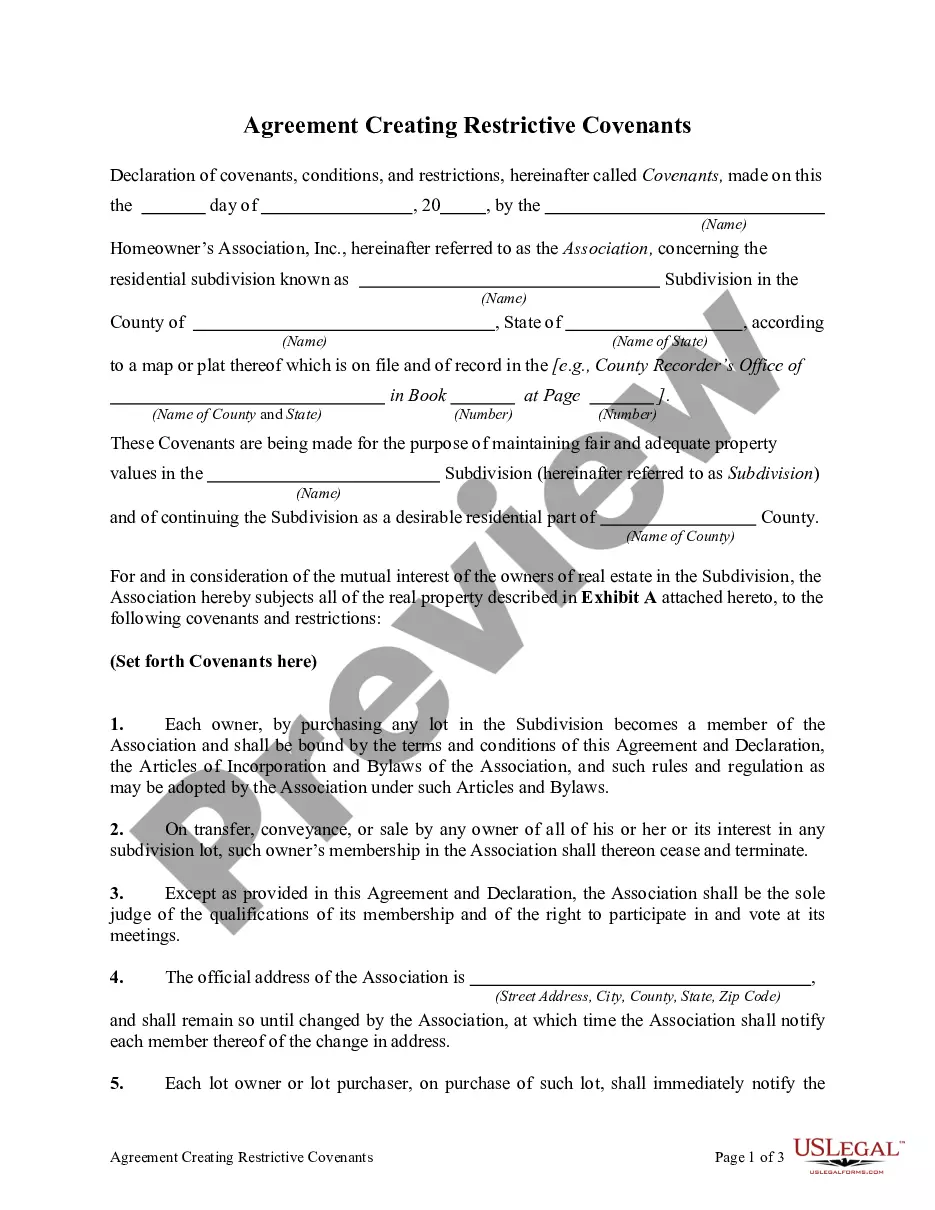
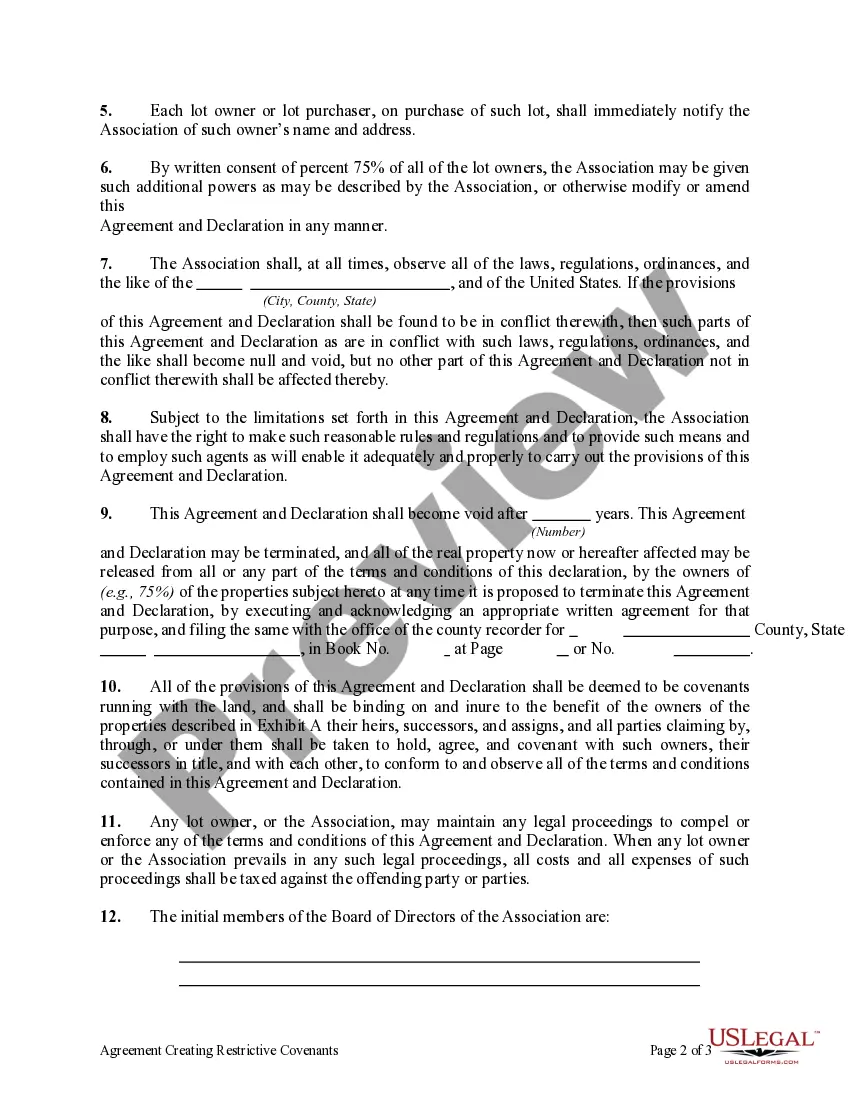
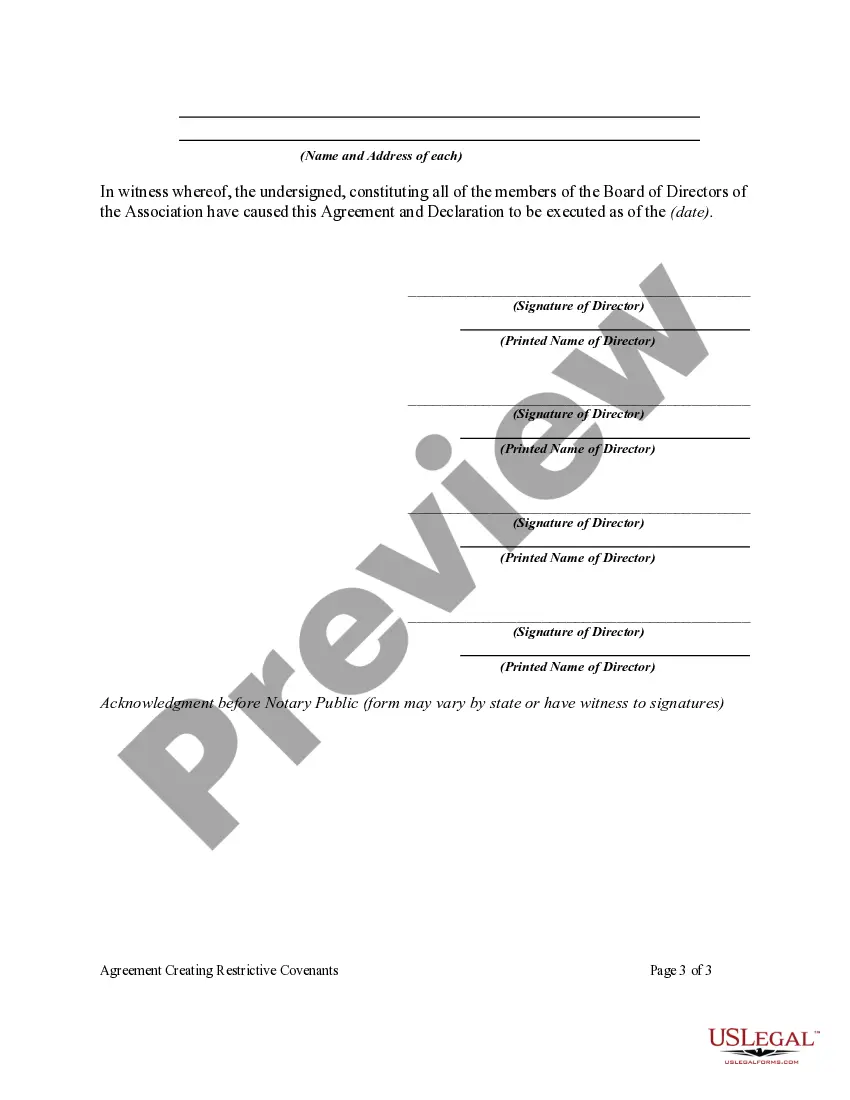

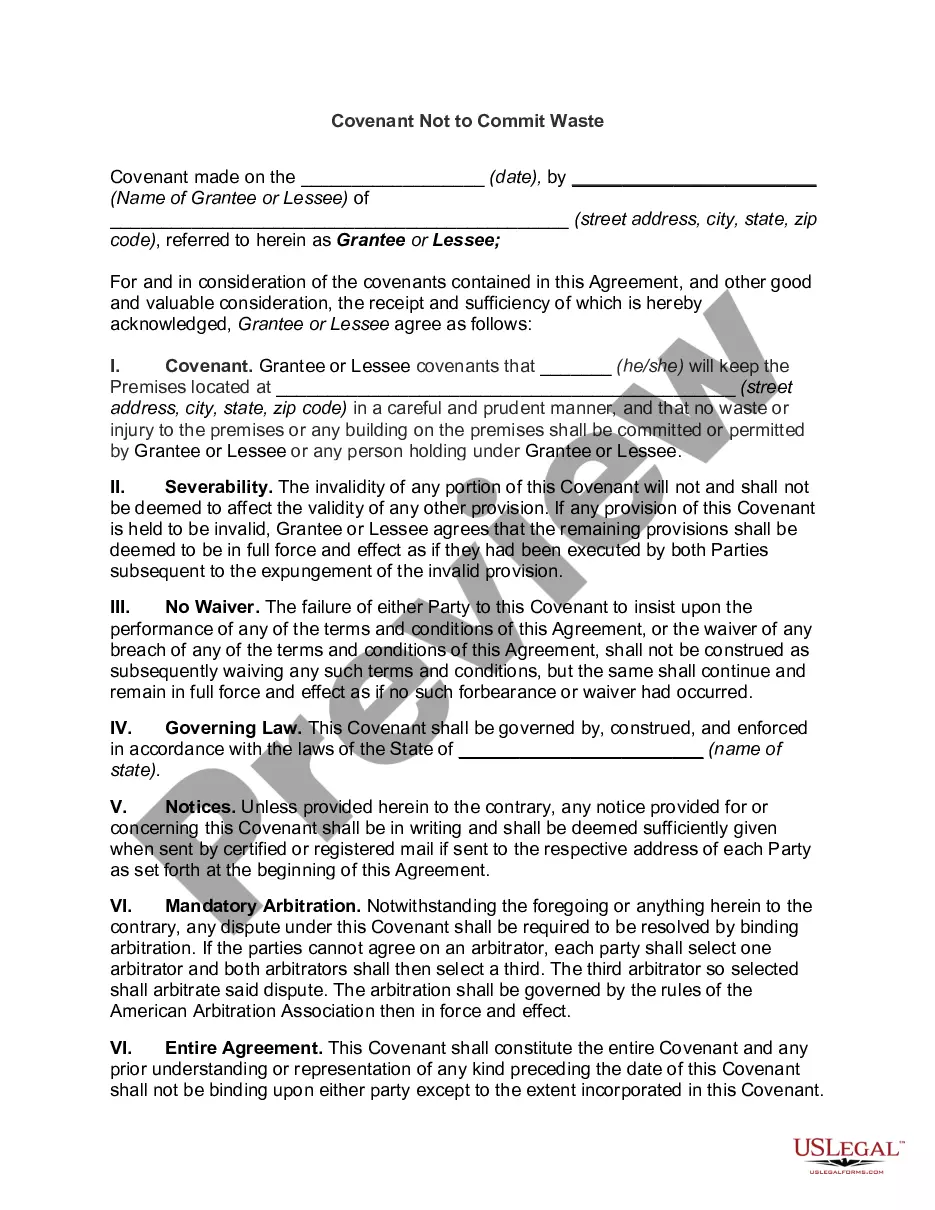
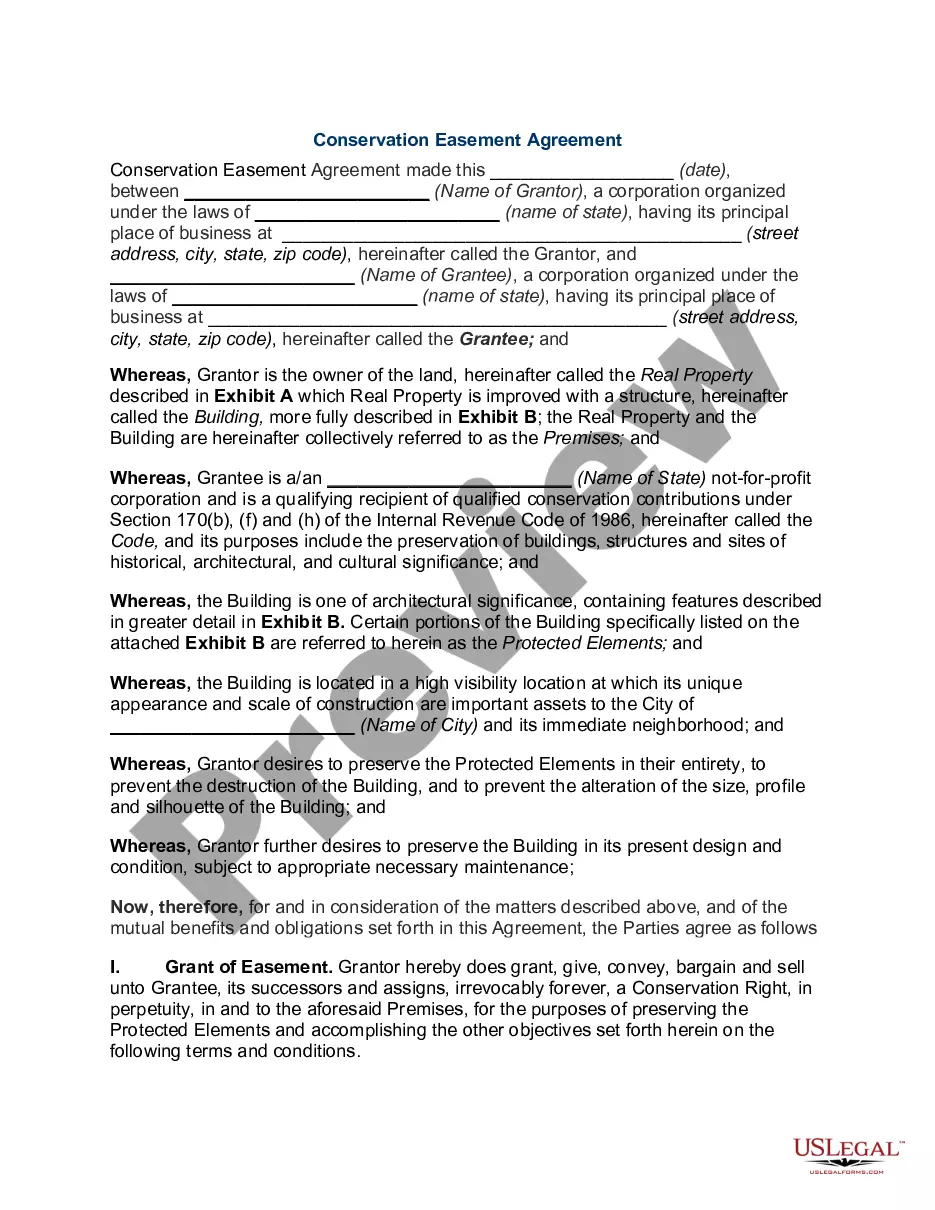
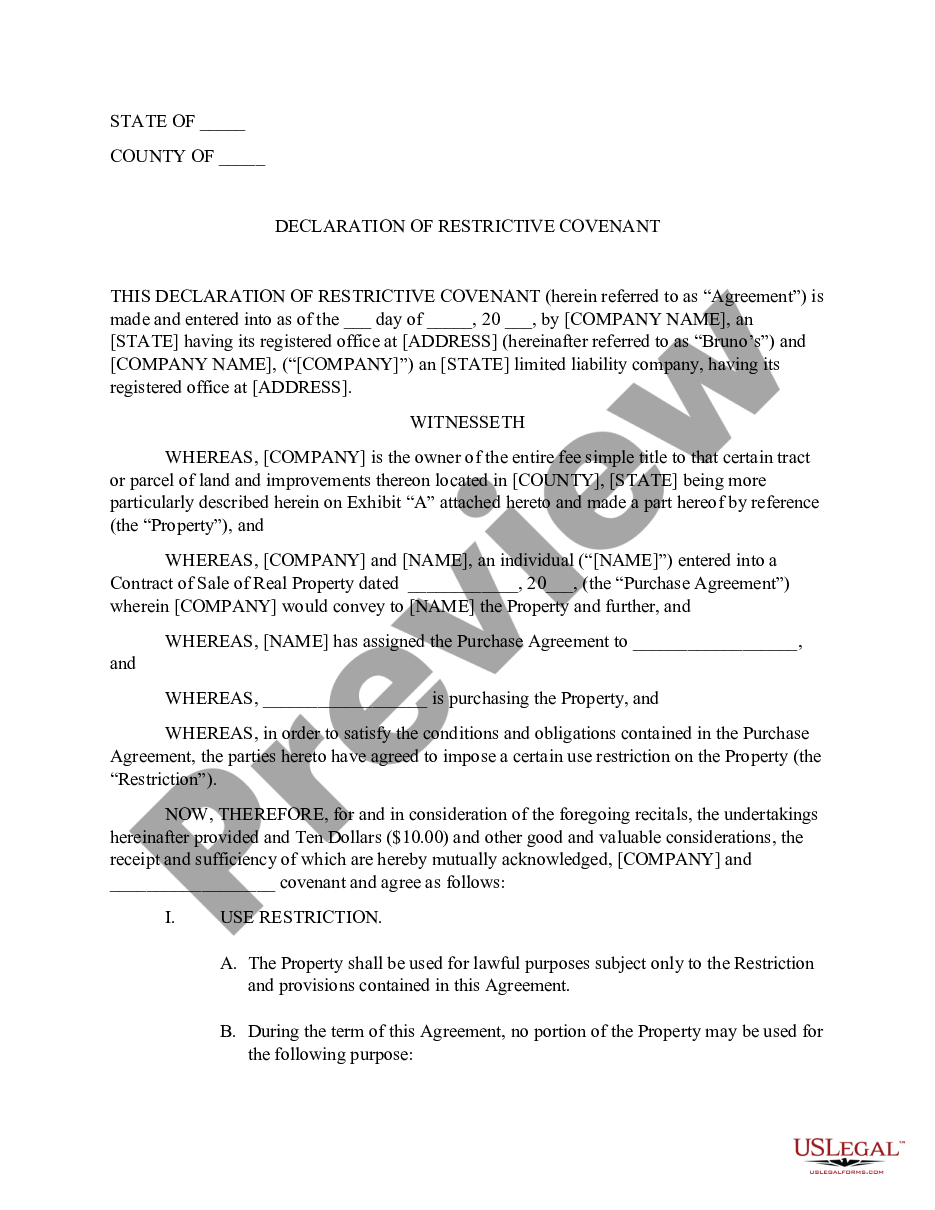
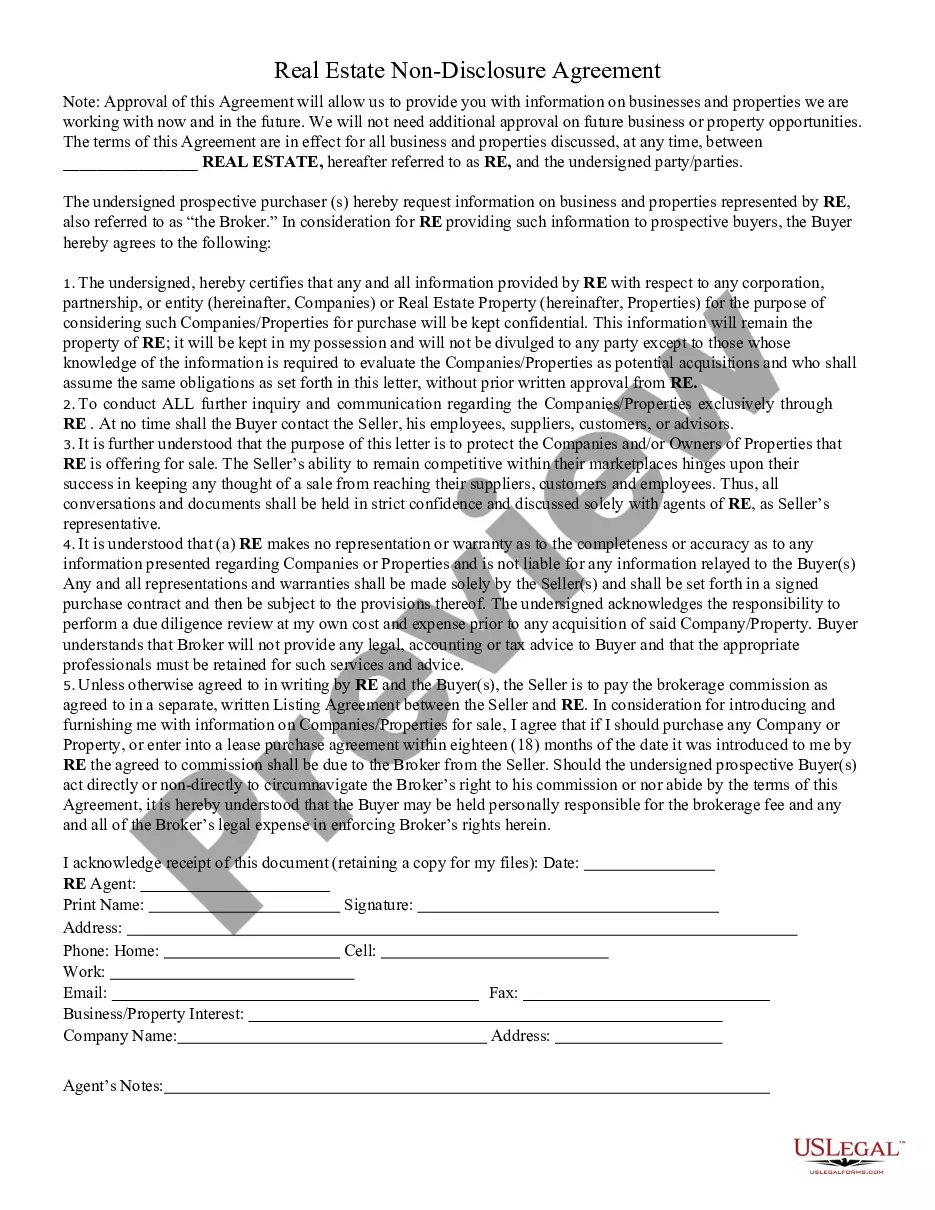
Get your form ready online
Our built-in tools help you complete, sign, share, and store your documents in one place.
Built-in online Word editor
Make edits, fill in missing information, and update formatting in US Legal Forms—just like you would in MS Word.
Export easily
Download a copy, print it, send it by email, or mail it via USPS—whatever works best for your next step.
E-sign your document
Sign and collect signatures with our SignNow integration. Send to multiple recipients, set reminders, and more. Go Premium to unlock E-Sign.
Notarize online 24/7
If this form requires notarization, complete it online through a secure video call—no need to meet a notary in person or wait for an appointment.
Store your document securely
We protect your documents and personal data by following strict security and privacy standards.

Make edits, fill in missing information, and update formatting in US Legal Forms—just like you would in MS Word.

Download a copy, print it, send it by email, or mail it via USPS—whatever works best for your next step.

Sign and collect signatures with our SignNow integration. Send to multiple recipients, set reminders, and more. Go Premium to unlock E-Sign.

If this form requires notarization, complete it online through a secure video call—no need to meet a notary in person or wait for an appointment.

We protect your documents and personal data by following strict security and privacy standards.
Looking for another form?





How to fill out Agreement Creating Restrictive Covenants?
Have you ever been in a situation where you require documents for either business or personal reasons almost daily? There are numerous legal document templates available online, but locating ones you can trust is not easy.
US Legal Forms offers thousands of template forms, such as the Maryland Agreement Drafting Restrictive Covenants, which are designed to comply with state and federal regulations.
If you are already acquainted with the US Legal Forms website and possess an account, simply Log In. After that, you can download the Maryland Agreement Drafting Restrictive Covenants template.
Access all the document templates you have purchased in the My documents section. You can obtain another copy of the Maryland Agreement Drafting Restrictive Covenants at any time, if necessary. Just select the desired form to download or print the document template.
Utilize US Legal Forms, perhaps the most extensive collection of legal forms, to save time and avoid errors. The service provides well-crafted legal document templates that can be used for various purposes. Create your account on US Legal Forms and start making your life easier.
- Obtain the form you need and ensure it is for the correct state/region.
- Use the Review button to evaluate the form.
- Check the details to confirm that you have selected the correct form.
- If the form is not what you are looking for, utilize the Search field to find the form that suits your requirements.
- Once you locate the correct form, click Get now.
- Select the pricing plan you prefer, fill in the necessary information to create your account, and pay for your order using PayPal or Visa or Mastercard.
- Choose a convenient format and download your copy.
Form popularity
FAQ
There are four factors that courts generally consider when deciding the enforceability of a non-compete agreement: The Employer's Legitimate Business Interest; The Geographic Limitation of the Restraint; The Duration of the Restraint; and. The Industry Covered by the Restraint.
It provides that a restrictive covenant is reasonable, and thus, enforceable, if: (1) its terms are no greater than is required to protect the employer's legitimate business interest; (2) it does not impose undue hardship on the former employee; and (3) it is not injurious to the public.
Effective October 1, 2023, Maryland has raised the salary threshold on its non-compete ban to 150% of the state's minimum wage, meaning $19.88 or less per hour (the current minimum wage of $13.25 * 150%), or $41,350 annually.
Are discriminatory restrictive covenants illegal? Generally, yes. Since the United States Supreme Court's 1948 decision in the case Shelley v. Kraemer, restrictive covenants based on race have been unenforceableA contract will not be enforced by a court of law..
Restrictive covenants in the labor and employment context are agreements between an employer and employee that restrict the activities of an employee following a separation of employment.
To be enforceable, the restrictive covenant must define reasonable limits, either ing to a period of time, geographical area, or type of work. In some states, such as California, there are specific laws that make non-solicitation agreements unenforceable unless they are introduced to protect trade secrets.
Covenants are generally considered valid only if reasonable and of benefit to all the property owners within the community. A Declaration of Covenants, Conditions, and Restrictions (CC&Rs) is a legal document that outlines the rules for a planned community.
It provides that a restrictive covenant is reasonable, and thus, enforceable, if: (1) its terms are no greater than is required to protect the employer's legitimate business interest; (2) it does not impose undue hardship on the former employee; and (3) it is not injurious to the public.