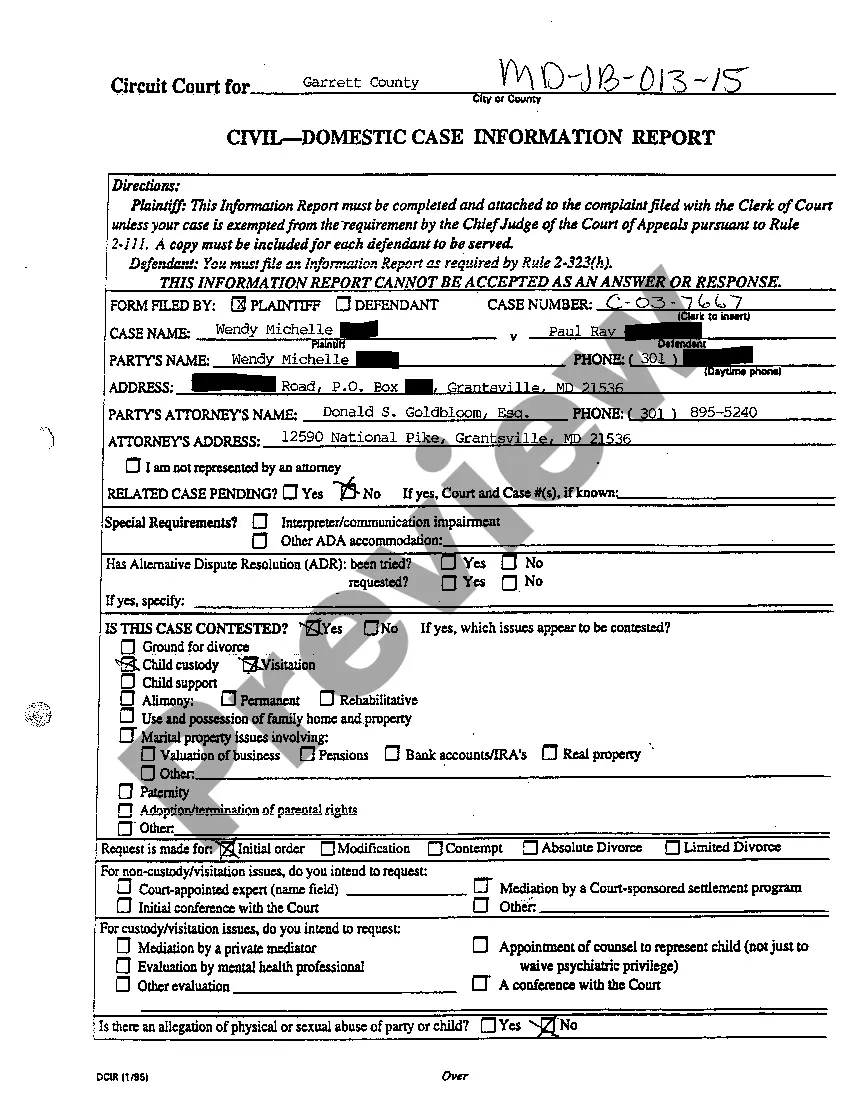
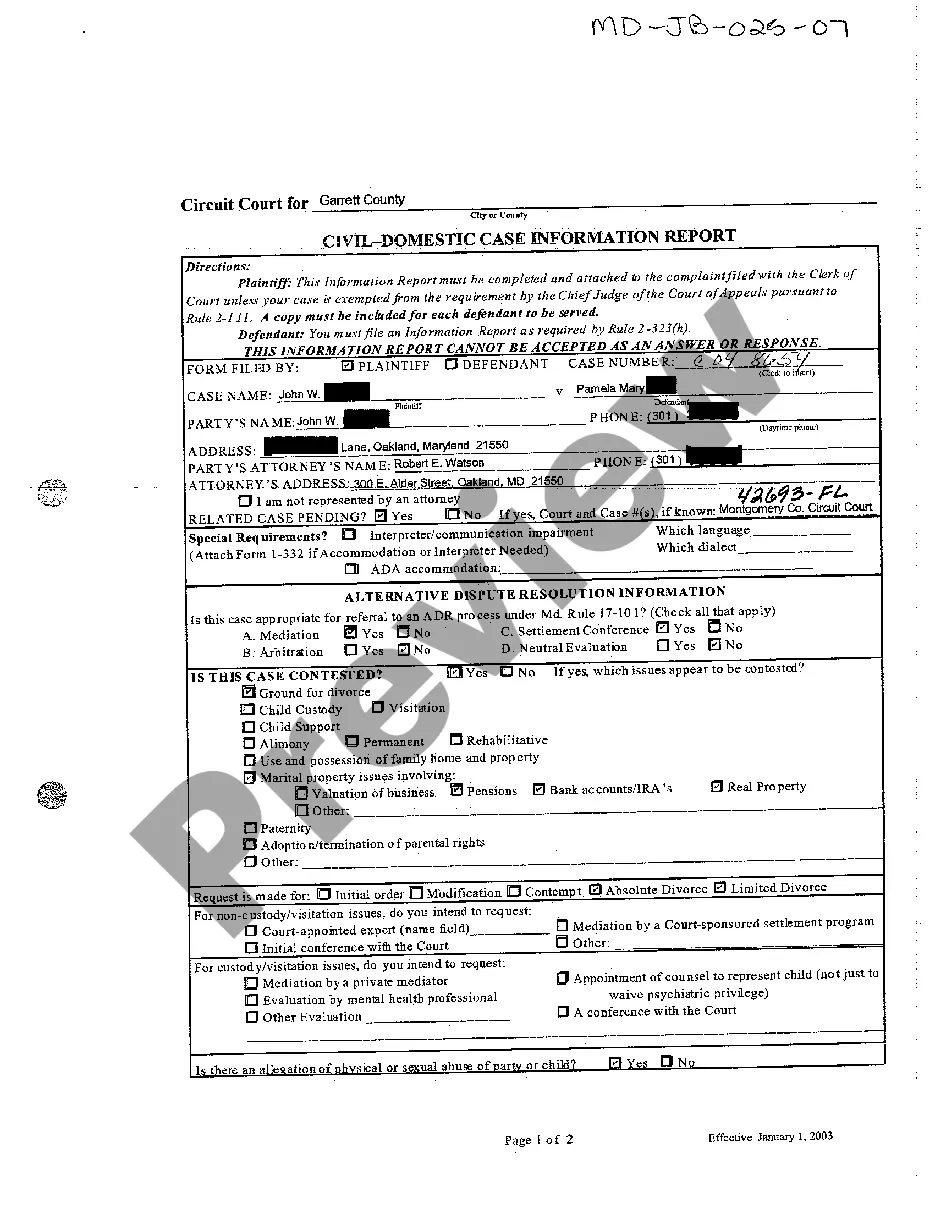
Maryland Civil Domestic Case Information Report
Description
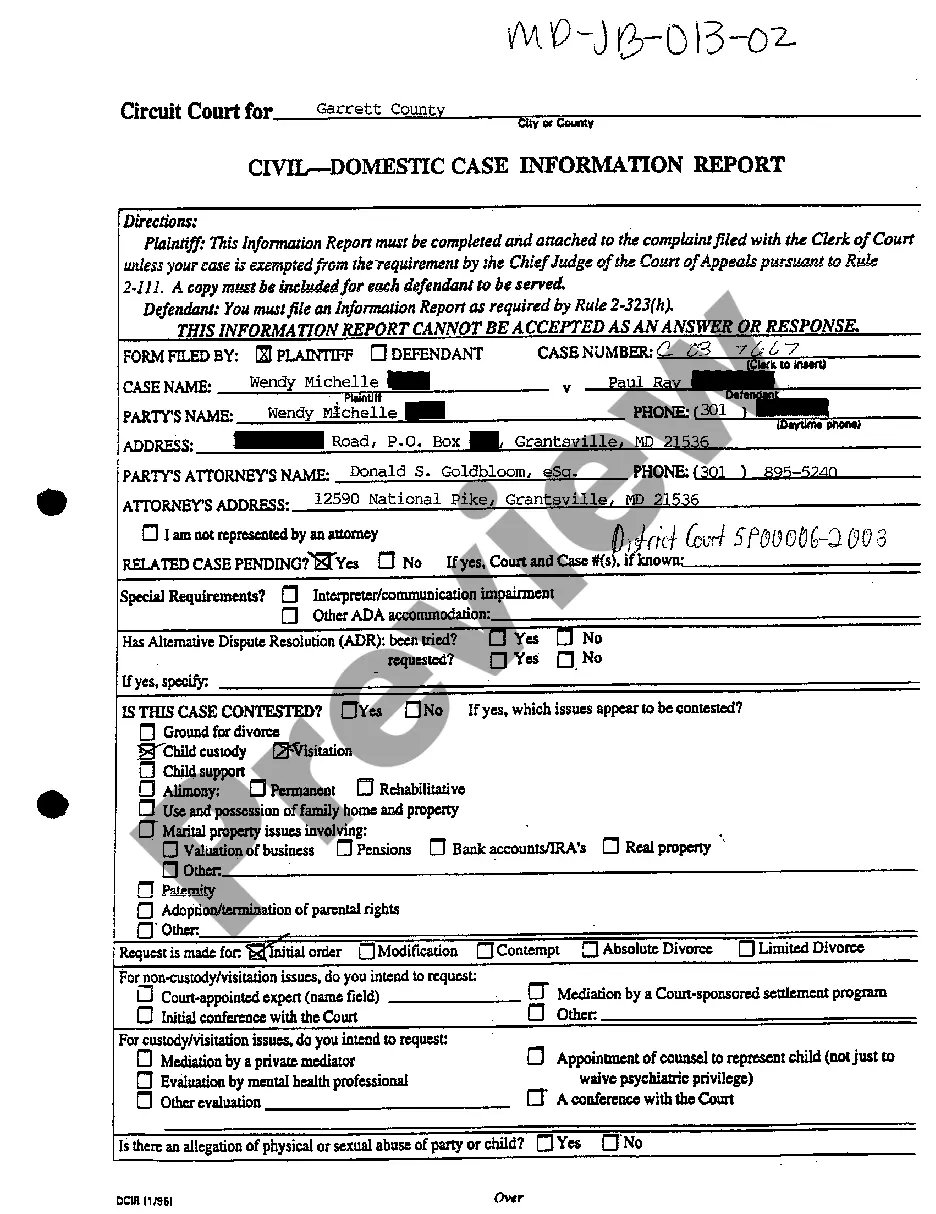
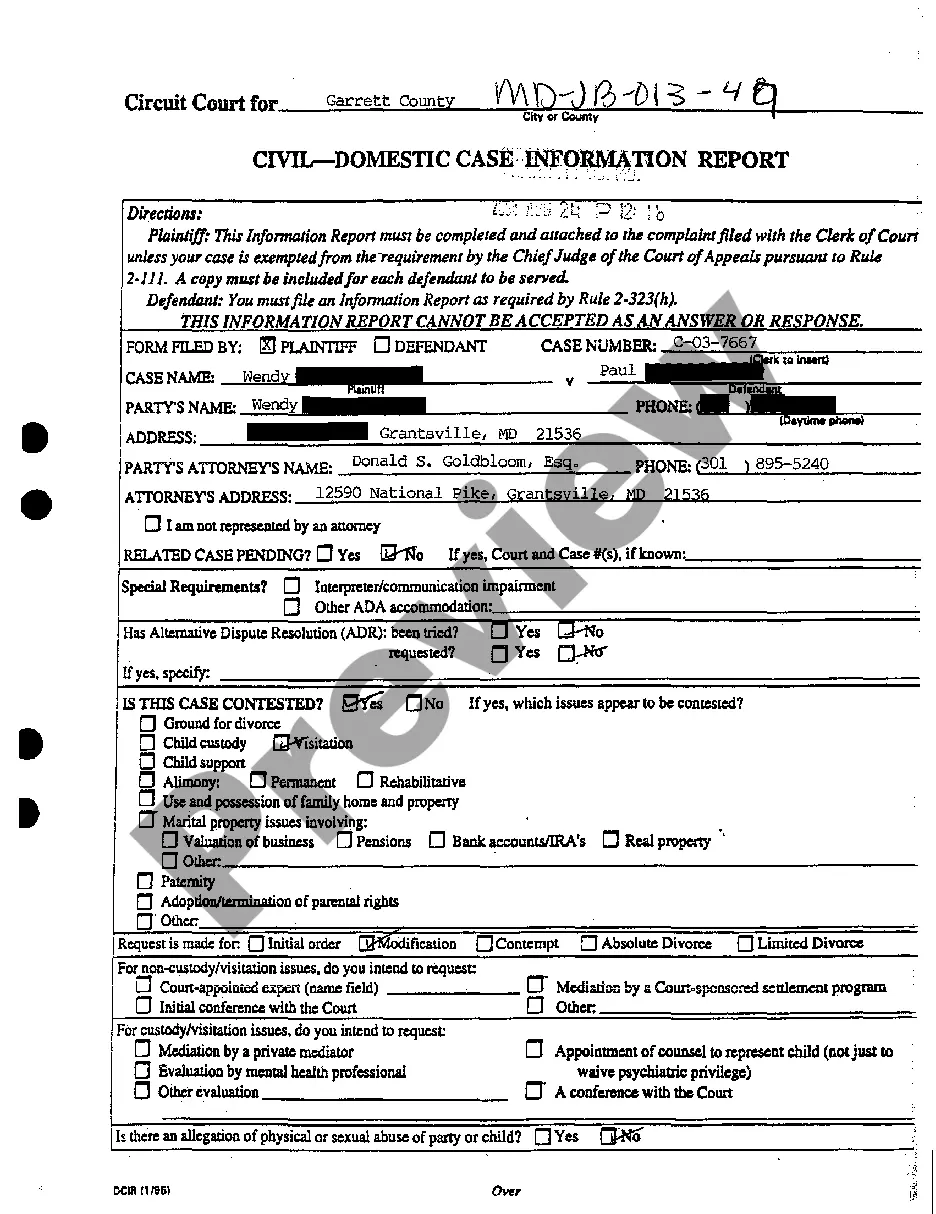
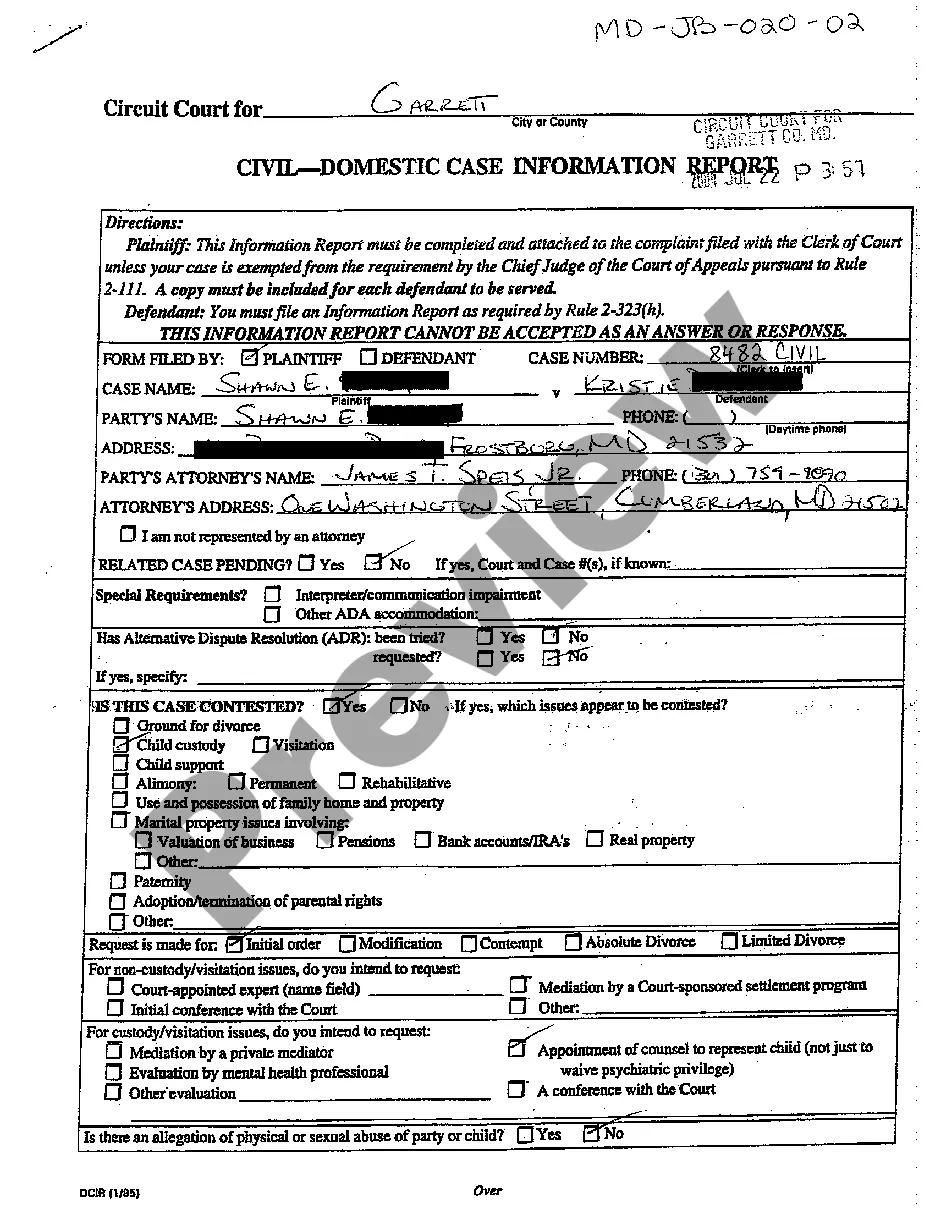
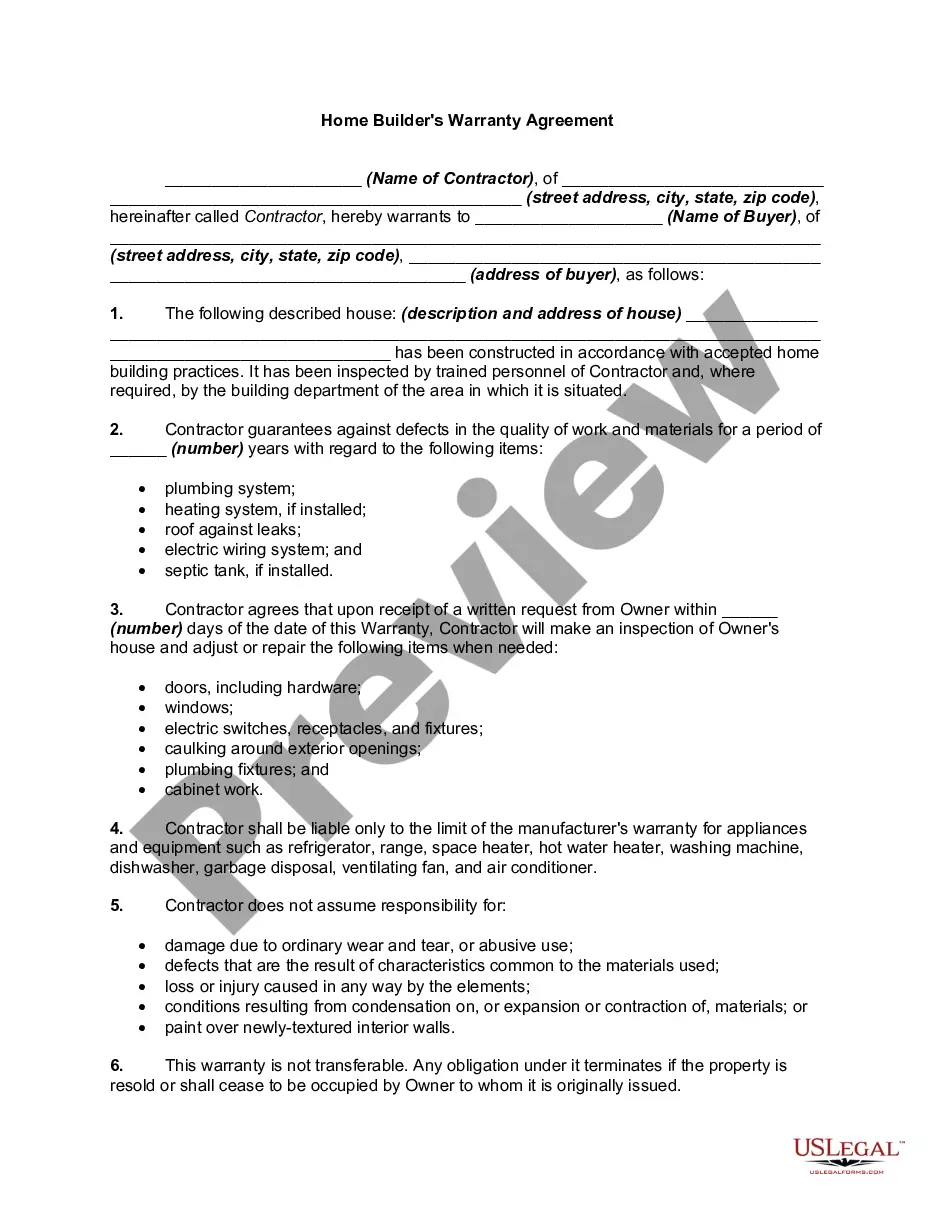
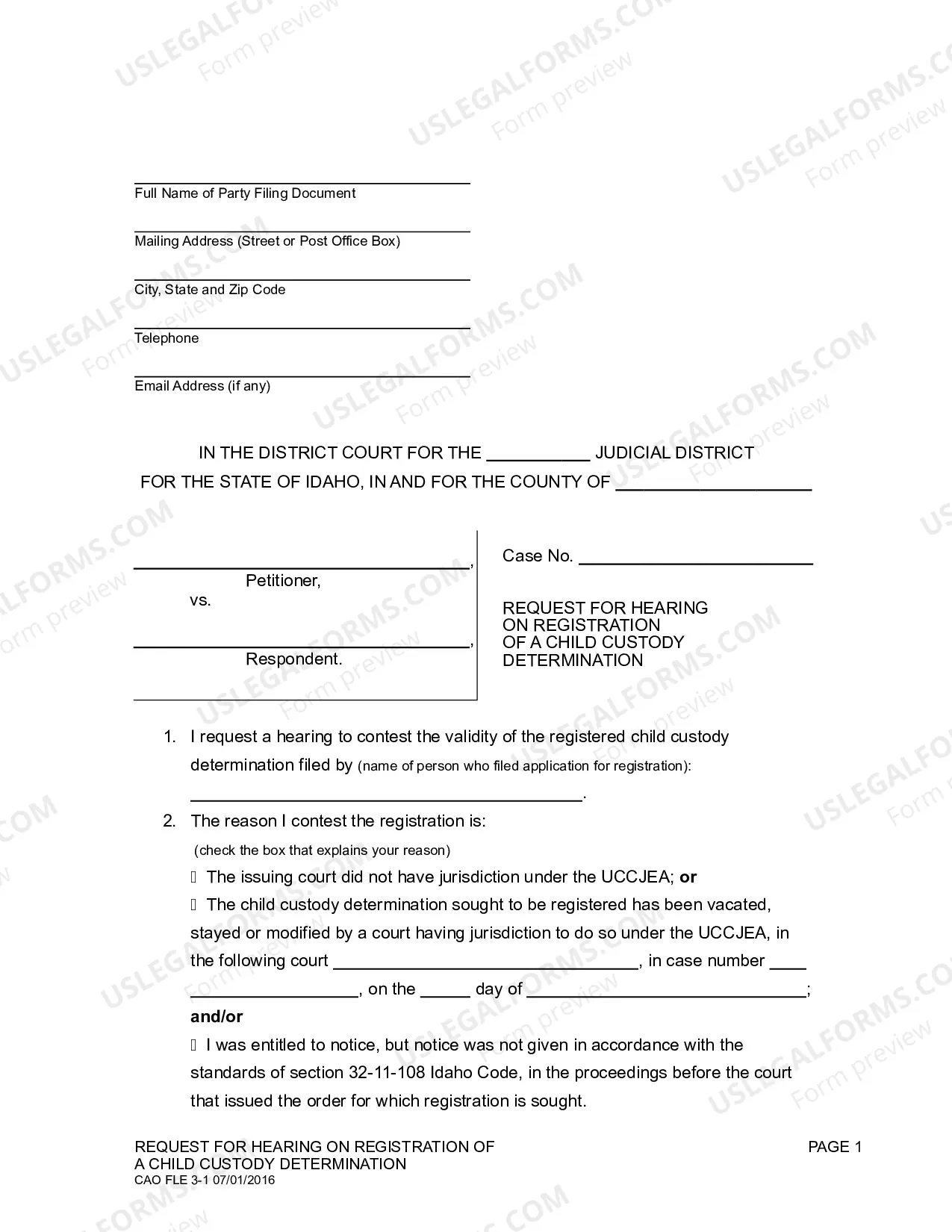
How to fill out Maryland Civil Domestic Case Information Report?
You are invited to the most important legal documents repository, US Legal Forms. Here you can locate any example including Maryland Civil Domestic Case Information Report templates and save them (as many as you desire/need). Prepare official documents in just a few hours, rather than days or weeks, without having to spend a fortune on a legal expert.
Obtain the state-specific form with just a few clicks and feel confident knowing that it was created by our licensed attorneys.
If you’re already a subscribed member, simply Log In to your account and then click Download next to the Maryland Civil Domestic Case Information Report you need. Since US Legal Forms is web-based, you’ll usually have access to your saved templates, no matter which device you’re using. Access them in the My documents section.
Print the document and fill it out with your or your business’s information. Once you’ve completed the Maryland Civil Domestic Case Information Report, send it to your attorney for confirmation. It’s an additional step but a crucial one to ensure you’re fully protected. Join US Legal Forms today and gain access to a multitude of reusable templates.
- If you don't have an account yet, what are you waiting for? Follow our guidelines below to get started.
- If this is a state-specific sample, verify its legitimacy in the state where you reside.
- Examine the description (if available) to determine if it’s the correct example.
- Utilize the Preview feature to see more content.
- If the example fulfills all your needs, click Buy Now.
- To create your account, select a pricing plan.
- Use a credit card or PayPal account to sign up.
- Download the template in your preferred format (Word or PDF).
Form popularity
FAQ
Step 1- Complaint. plaintiff/ defendant, describes suit. Step 2- Summons. sent by court to defendant. Step 3- Discovery. find evidence in the case by both the defendant and the plaintiff. Step 4- Settlement. Step 5- Trial. Step 6- Appeal.
In Maryland, most cases must be filed within three years of the time when it was first possible to sue, but some must be filed sooner and some may be filed later. In order to commence an action, you must file a Complaint which will be supplied to you by the clerk of the court and you must pay certain court costs.
Pre-filing stage. During this stage, the dispute arises and the parties gather information, try to negotiate a resolution, and prepare for the possibility of a court case. Pleading stage. Discovery stage. Pre-trial stage. Trial Stage. Post-trial stage.
File a Complaint form (DC-CV-001) with the court. Pay the filing fee. Check the District Court's Civil Cost Schedule (DCA-109) for fees. The court will issue a Writ of Summons to officially notify the other side (called the defendant) that a suit has been filed.
Step 1: Consult With Representatives. If you are considering going to court, talk to your potential representatives before filing a lawsuit. Step 2: File Complaint / Pleading. Step 3: Discovery. Step 4: Trial. Step 5: Verdict. Step 6: Appeal.
Writing and filing the complaint. Paying the filing fee (or getting it waived) Notifying the party you are suing (this notification is usually called service of process) Proving to the court that the party you are suing (the Defendant) has been served.
Civil lawsuits generally proceed through distinct steps: pleadings, discovery, trial, and possibly an appeal. However, parties can halt this process by voluntarily settling at any time. Most cases settle before reaching trial. Arbitration is sometimes another alternative to a trial.
Defend yourself in court; File a cross claim, counter claim or third party claim; Assert that the Writ of Summons was not served properly; or. Simply ignore the debt collection case.