Maryland 90 Day Notice to Terminate Year to Year Lease - Residential from Landlord to Tenant
Overview of this form
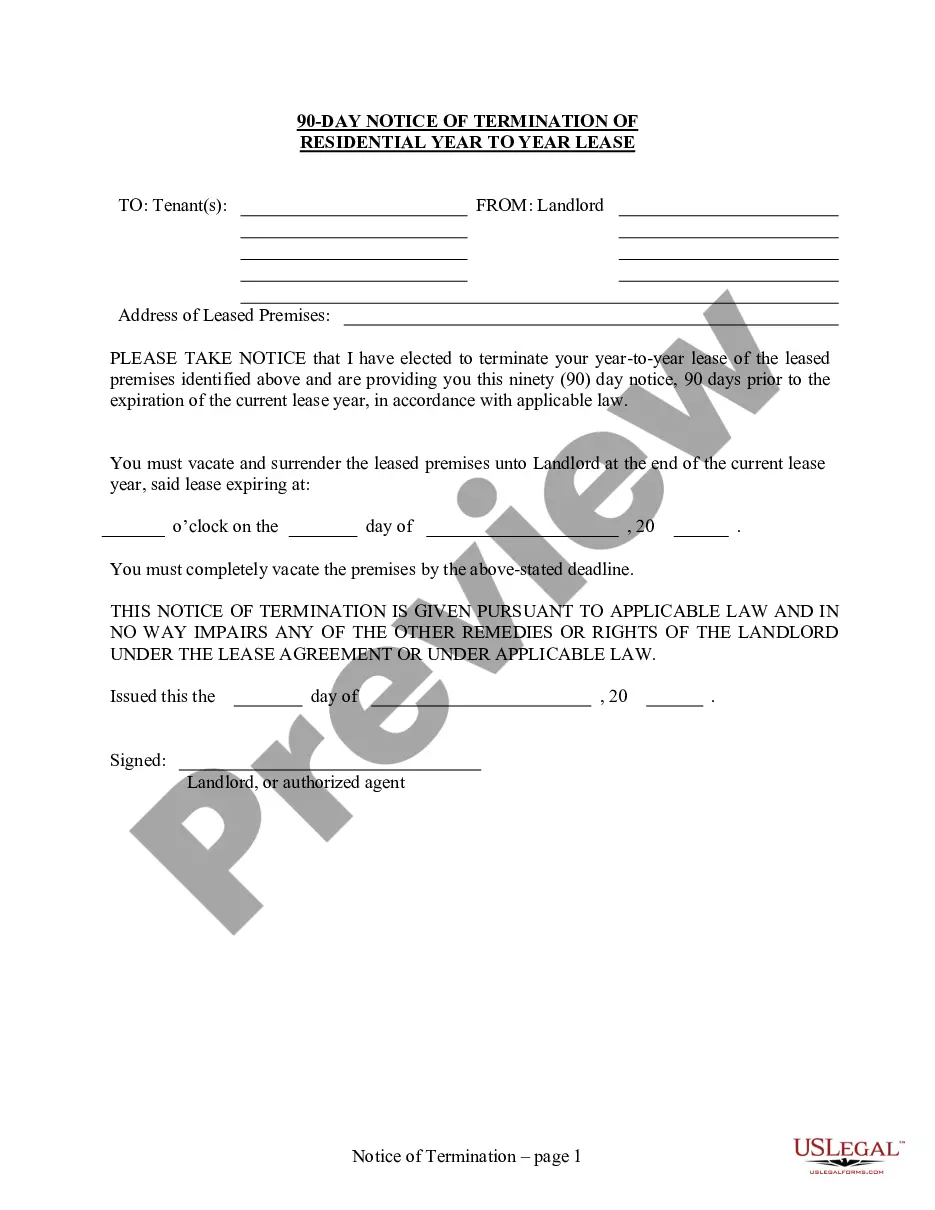
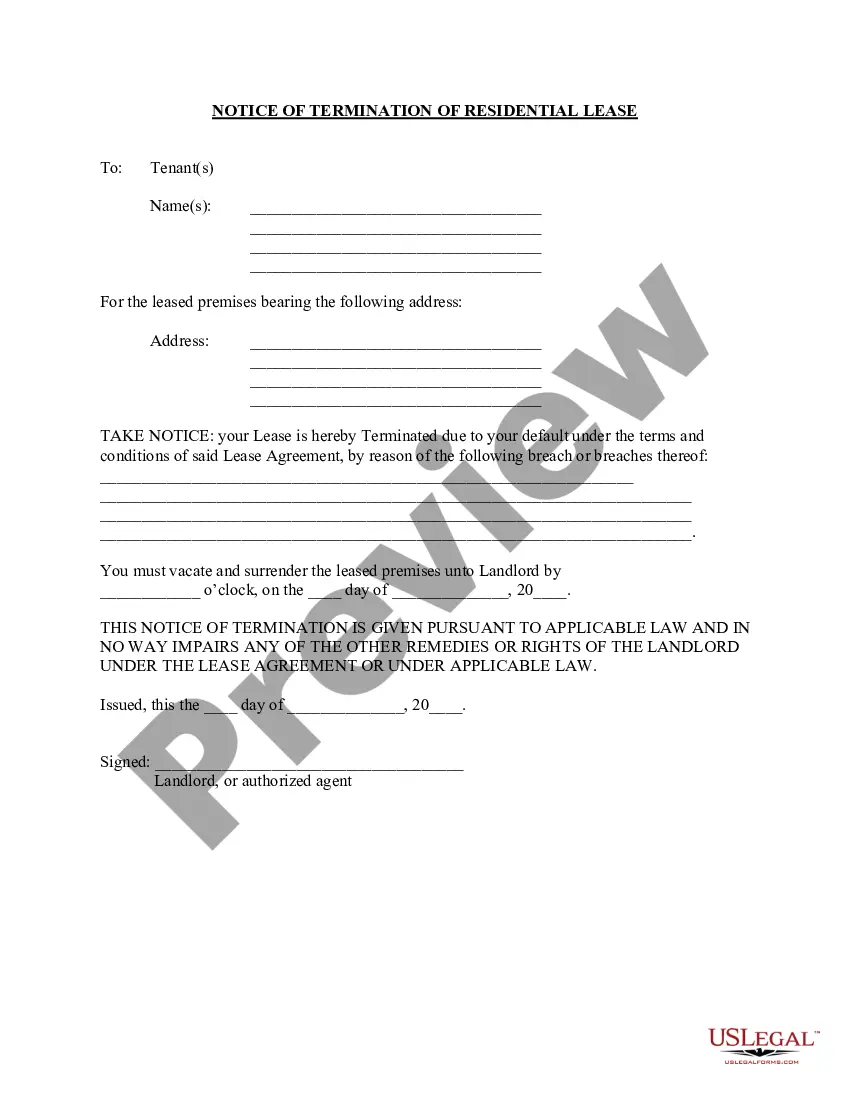
The 90 Day Notice to Terminate Year to Year Lease is a legal document used by landlords to officially end a year-to-year residential lease agreement. This form allows landlords to terminate the lease for any reason, provided they give the tenant a minimum of ninety days' notice prior to the end of the lease year. Unlike other forms that may require grounds for termination, this notice simply indicates the landlord's intention to end the lease, ensuring clarity for both parties involved.
Main sections of this form
- Notice of termination from landlord to tenant.
- Effective date indicating when the lease will end.
- Deadline by which the tenant must vacate the premises.
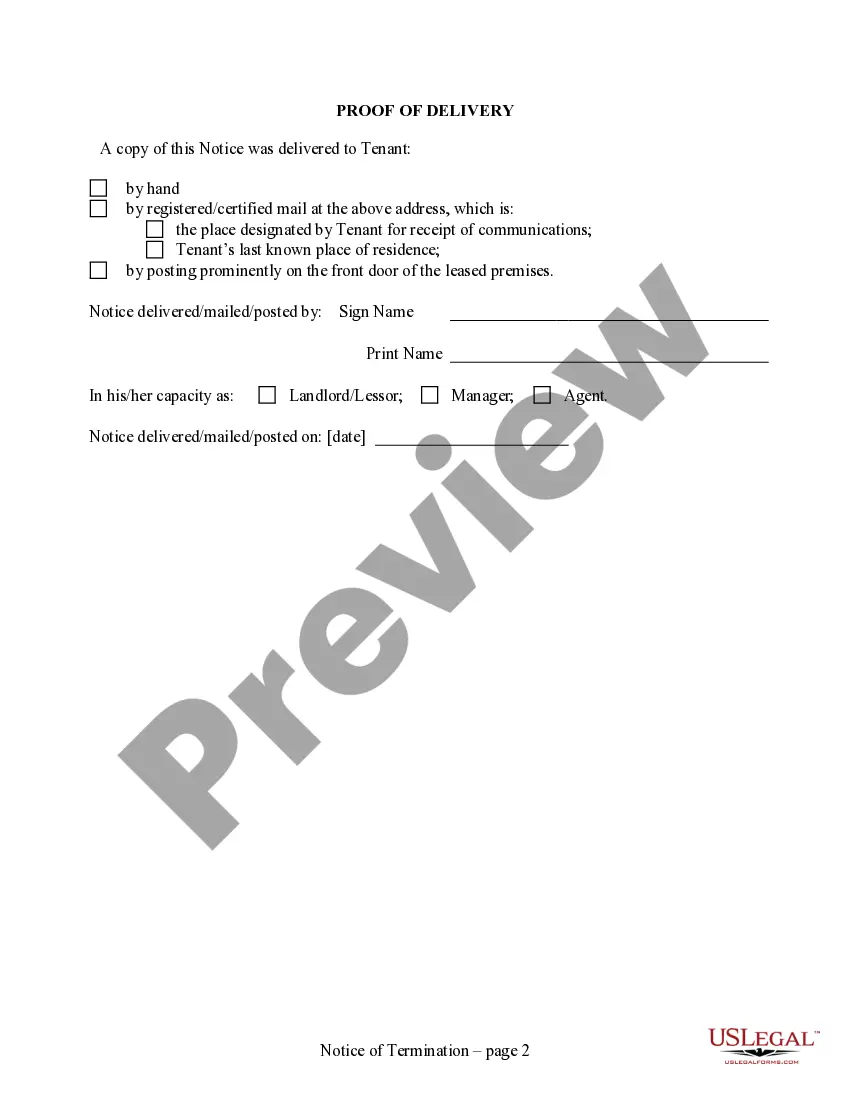
- Proof of delivery section detailing how the notice was delivered to the tenant.
- Signature section for the landlord or authorized agent.
Situations where this form applies
This form should be used when a landlord wishes to terminate a residential lease that runs year-to-year. Common situations might include a decision not to renew the lease, a change in rental strategy, or simply the landlord's desire to end the tenancy without needing to provide a specific reason.
Who this form is for
- Landlords who manage residential properties under a year-to-year lease agreement.
- Property managers acting on behalf of landlords.
- Landlords seeking to ensure legal compliance in terminating a lease.
How to prepare this document
- Identify the landlord and tenant by entering their names and addresses.
- Include the address of the leased premises.
- Specify the end date of the current lease year and when the tenant must vacate.
- Indicate the date when this notice is being issued.
- Sign the document as the landlord or authorized agent.
- Deliver the notice to the tenant in accordance with the proof of delivery requirements.
Notarization requirements for this form
This form does not typically require notarization unless specified by local law. It is advisable to check state-specific regulations to ensure compliance and avoid future disputes.
Get your form ready online
Our built-in tools help you complete, sign, share, and store your documents in one place.
Make edits, fill in missing information, and update formatting in US Legal Forms—just like you would in MS Word.
Download a copy, print it, send it by email, or mail it via USPS—whatever works best for your next step.
Sign and collect signatures with our SignNow integration. Send to multiple recipients, set reminders, and more. Go Premium to unlock E-Sign.
If this form requires notarization, complete it online through a secure video call—no need to meet a notary in person or wait for an appointment.
We protect your documents and personal data by following strict security and privacy standards.

Make edits, fill in missing information, and update formatting in US Legal Forms—just like you would in MS Word.

Download a copy, print it, send it by email, or mail it via USPS—whatever works best for your next step.

Sign and collect signatures with our SignNow integration. Send to multiple recipients, set reminders, and more. Go Premium to unlock E-Sign.

If this form requires notarization, complete it online through a secure video call—no need to meet a notary in person or wait for an appointment.

We protect your documents and personal data by following strict security and privacy standards.
Avoid these common issues
- Failing to provide the full 90 days' notice.
- Not delivering the notice according to the specified methods.
- Leaving out important details such as the property address or effective termination date.
- Not signing the notice before delivery.
Benefits of using this form online
- Convenient download and editing capabilities.
- Professionally drafted by licensed attorneys, ensuring legal compliance.
- Time-saving as forms are readily available for immediate use.
- Easy to fill out with clear guidance on required information.
Legal use & context
- This notice serves as a formal agreement to terminate the lease, protecting the landlordâs rights.
- Failure to follow proper notice procedures can lead to legal disputes.
Key takeaways
- The 90 Day Notice to Terminate Year to Year Lease allows landlords to terminate tenancy with proper notice.
- Correctly completing and delivering this form is crucial to avoid legal issues.
- Review local laws for any specific requirements related to lease termination.
Looking for another form?


Form popularity
FAQ
Gives the landlord 30 days' written notice either hand-delivered or by first-class mail prior to ending the lease, along with a copy of the court order.
Declare a Constructive Eviction. Point Out Landlord Breaches to Reduce Your Debt. Landlords Have a Duty to Mitigate Their Damages. Consequences for Breaking Your Lease. Look for These Clauses in Your Lease. Your Landlord May Have a Duty to Mitigate. Declare a Constructive Eviction.
You can help the situation a lot by providing as much notice as possible and writing a sincere letter to your landlord explaining why you need to leave early. Ideally you can offer your landlord a qualified replacement tenant, someone with good credit and excellent references, to sign a new lease with your landlord.
Early Termination Clause. Some modern lease agreements may provide specific terms that would allow a tenant to terminate a lease early in exchange for a penalty fee. Active Military Duty. Unit is Uninhabitable. Landlord Harassment or Privacy Violation. Domestic Violence.
Your landlord can end the let at any time by serving a written 'notice to quit'. The notice period will depend on the tenancy or agreement, but is often at least 4 weeks.
When you sign a lease, you have signed a binding contract. Unless the landlord signed a document agreeing to terminate the lease, the lease will still be in effect. Most leases specifically state that the lease may not be modified verbally, and that any modification must be in writing for it to be valid.
Under Maryland law, tenants have a right to freedom from housing discrimination, a right to certain security deposit protections, the right to freedom from landlord retaliation, and the right to be protected after domestic violence.
In Colorado, evictions are sometimes referred to as forcible entry & detainer (FED). Before you can file for eviction, you must generally provide 10 days' notice (increased from 3 days prior) for tenants to correct a deficiency or leave the property, except in certain circumstances.
Give the landlord/agent a written termination notice and vacate move out and return the keys according to your notice, and/or. apply to the NSW Civil & Administrative Tribunal (NCAT) for a termination order.