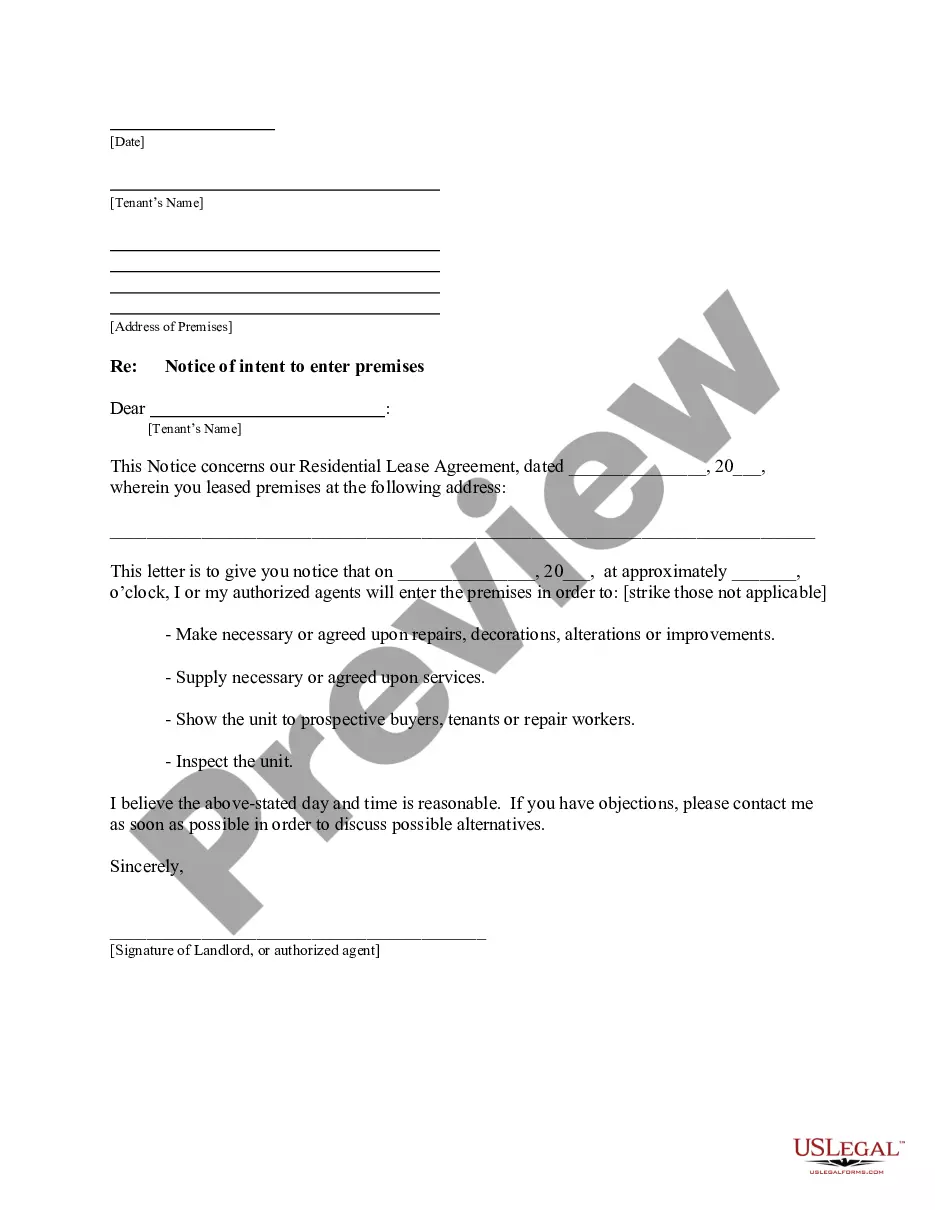
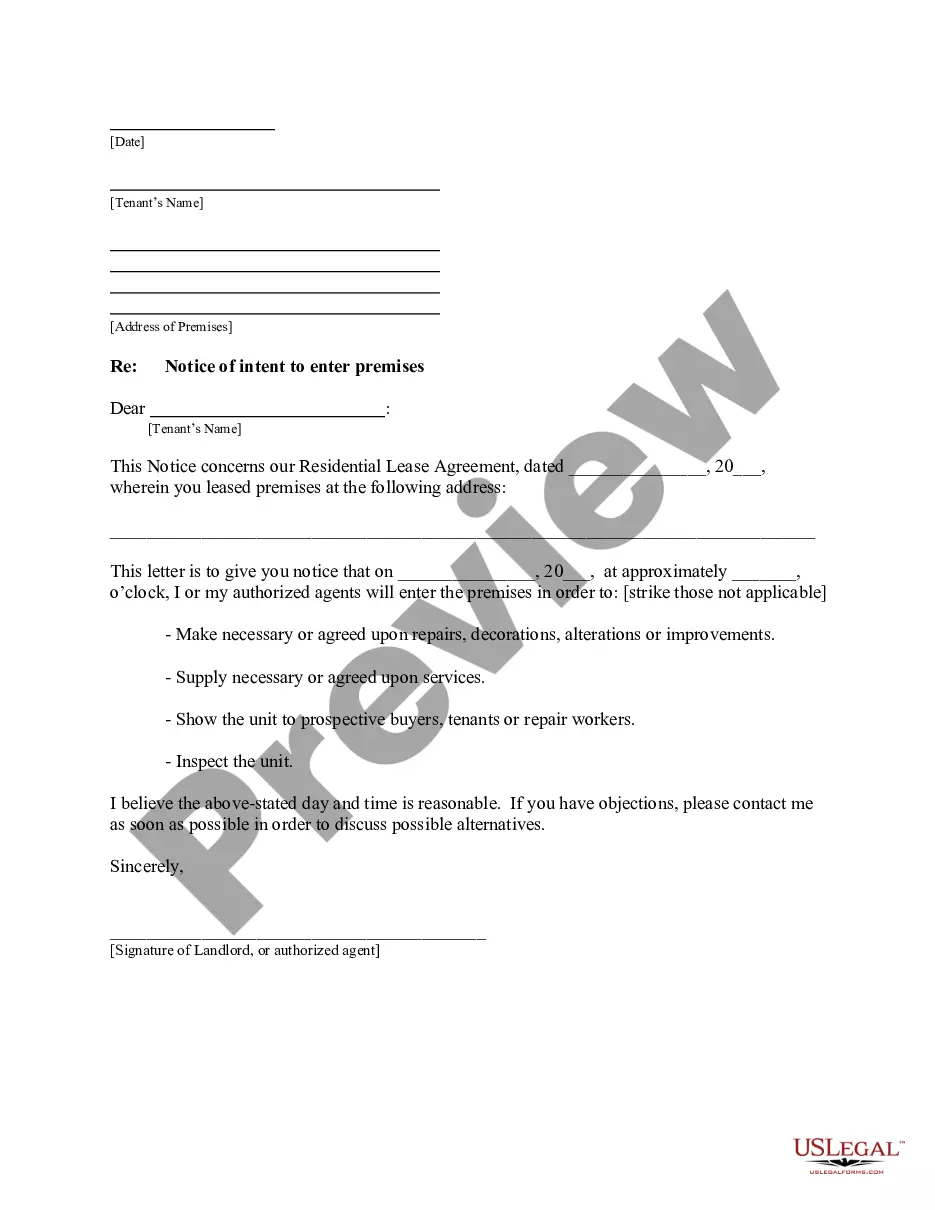
Maryland Letter from Landlord to Tenant about time of intent to enter premises
Understanding this form
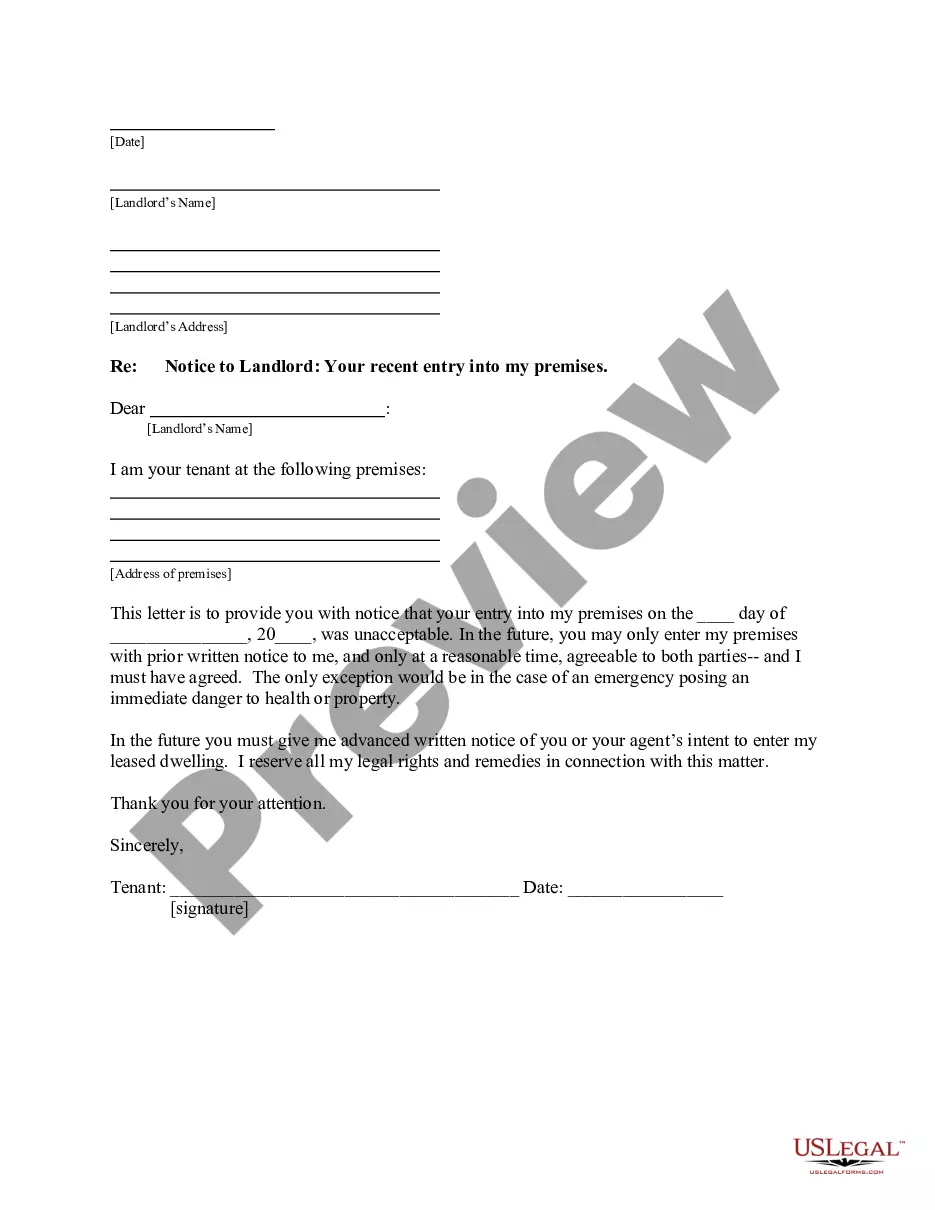
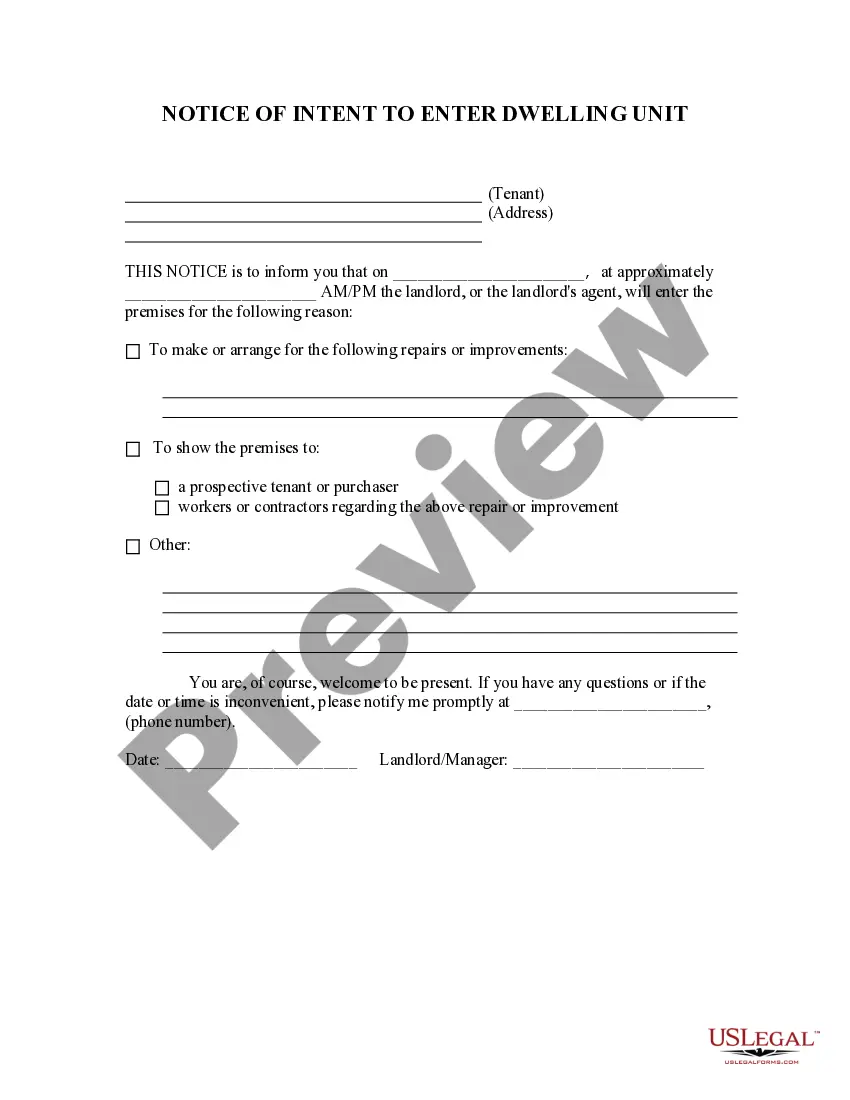
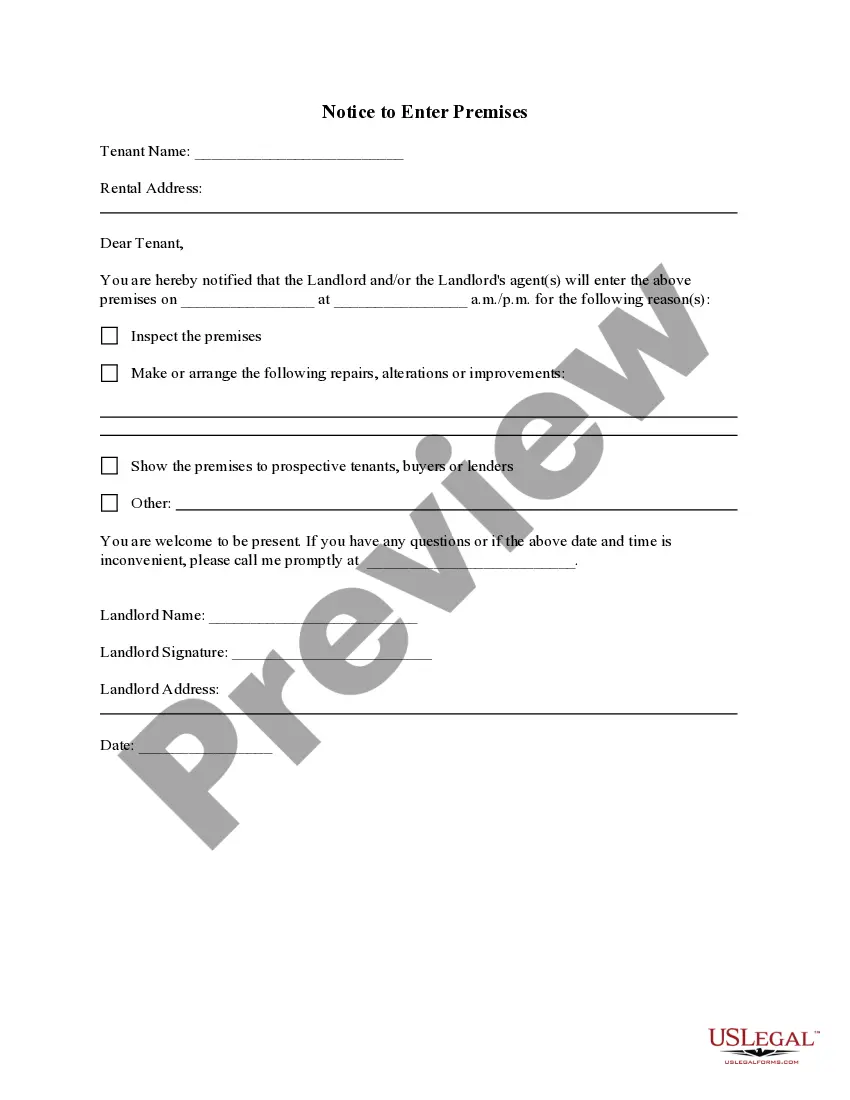
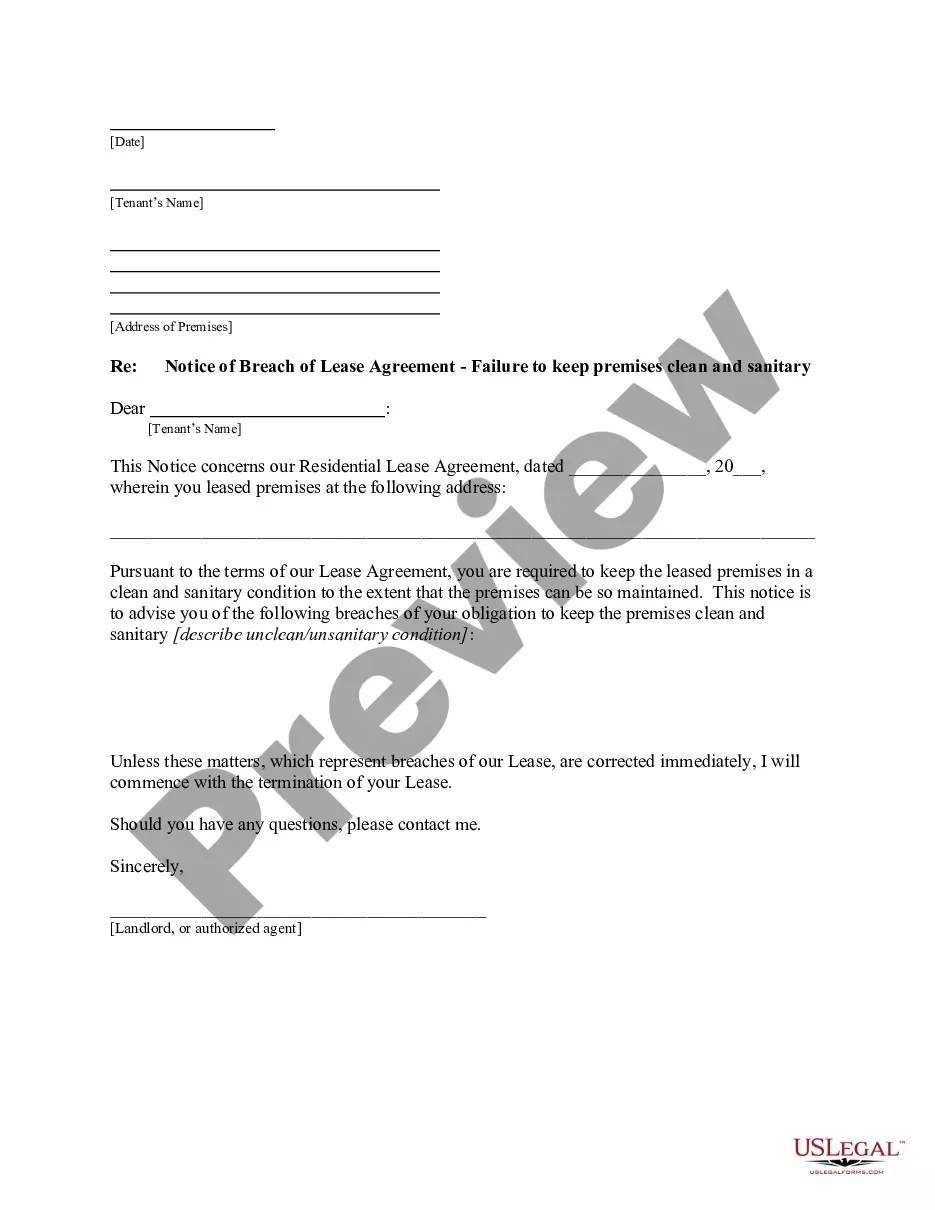
This form is a letter from a landlord to a tenant, providing notice of intent to enter the leased premises. Its primary purpose is to inform the tenant of upcoming access for reasons such as maintenance, inspections, or showings. This form ensures compliance with notification requirements and distinguishes itself from other notices by specifying entry intent and timing.
Key components of this form
- Identification of the residential lease agreement and premises address.
- Specific date and time of intended entry.
- Reasons for entering the premises, including repairs or inspections.
- A section for tenant objections or alternative arrangements.
- Signature of the landlord or authorized agent.
When to use this form
This form should be used when a landlord needs to notify a tenant about entering the rental property. Common scenarios include performing necessary maintenance, making agreed repairs, conducting an inspection, or showing the unit to prospective buyers or tenants. Providing this notice helps to maintain clear communication between the landlord and tenant and complies with local laws regarding entry notices.
Who can use this document
- Landlords who rent residential properties.
- Property managers acting on behalf of the landlord.
- Tenants who wish to ensure proper notice is provided by the landlord.
How to complete this form
- Provide the date of the residential lease agreement and the rental property's address.
- Specify the intended date and time for entry.
- Select and indicate the reason(s) for entering the premises.
- Include any relevant notes regarding tenant objections or alternatives.
- Sign the letter as the landlord or authorized agent.
Does this form need to be notarized?
This form does not typically require notarization unless specified by local law. It's a straightforward notification that is valid once delivered according to the terms outlined in the lease agreement.
Get your form ready online
Our built-in tools help you complete, sign, share, and store your documents in one place.
Make edits, fill in missing information, and update formatting in US Legal Forms—just like you would in MS Word.
Download a copy, print it, send it by email, or mail it via USPS—whatever works best for your next step.
Sign and collect signatures with our SignNow integration. Send to multiple recipients, set reminders, and more. Go Premium to unlock E-Sign.
If this form requires notarization, complete it online through a secure video call—no need to meet a notary in person or wait for an appointment.
We protect your documents and personal data by following strict security and privacy standards.

Make edits, fill in missing information, and update formatting in US Legal Forms—just like you would in MS Word.

Download a copy, print it, send it by email, or mail it via USPS—whatever works best for your next step.

Sign and collect signatures with our SignNow integration. Send to multiple recipients, set reminders, and more. Go Premium to unlock E-Sign.

If this form requires notarization, complete it online through a secure video call—no need to meet a notary in person or wait for an appointment.

We protect your documents and personal data by following strict security and privacy standards.
Typical mistakes to avoid
- Failing to provide adequate notice as required by state law.
- Not specifying the reason for entry clearly.
- Omitting the date and time of entry.
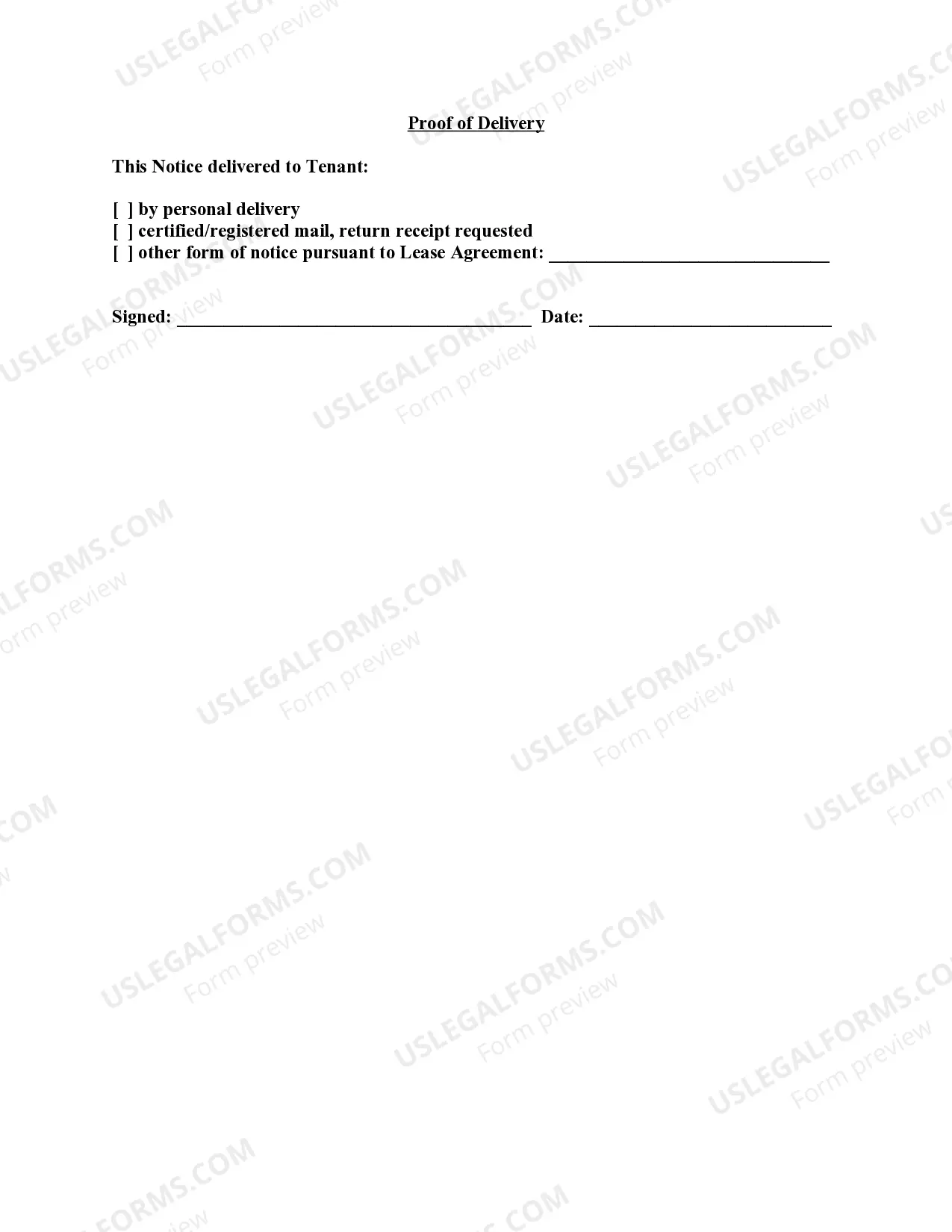
- Neglecting to document the method of delivery of the notice.
Why complete this form online
- Convenience of downloading and customizing the form at your convenience.
- Ensures that the form is drafted by licensed attorneys, providing peace of mind regarding legal compliance.
- Editable format allows for easy adjustments based on specific situations.
Legal use & context
- This form serves as a legally recognized notification, helping establish a clear record of communication between landlord and tenant.
- It reinforces tenant rights by ensuring they are informed of entries, promoting transparency in landlord practices.
- Failure to provide notice can lead to disputes regarding landlord access and tenant rights.
Key takeaways
- This form serves to notify tenants of a landlord's intent to enter the premises.
- Proper notification fosters good landlord-tenant relationships and complies with legal requirements.
- The form should be customized to reflect the specific circumstances of the intended entry.
Looking for another form?
Form popularity
FAQ
Keep it short and only reference information relevant for an apartment application. If you are a landlord or property manager, outline your rental history and your experience with the tenant. Know what you can or cannot say. Be honest and accountable. Never lie. Keep emotions at bay. Keep it structured.
Tenants can always give the landlord or agent permission to enter the property at any time for any reason.
How much notice must my landlord give? A landlord must give 24 hours' written notice before they can enter a property - assuming they are given permission by the tenant - and can only arrange to visit at a 'reasonable' time of the day; so ideally not late at night or early in the morning.
You should give your landlord access to the property to inspect it or carry out repairs. Your landlord has to give you at least 24 hours' notice and visit at a reasonable time of day, unless it's an emergency and they need immediate access.
Refer to your financial records and the tenant's lease when writing the proof of rent letter. Write the letter in a professional business format. Explain who you are and the purpose of the letter in the first paragraph.
Let's be clear, other than in emergency it's illegal for a landlord or agent to enter a property without agreement from the tenant. The golden rule to abide by is always to provide your tenants with written notice at least 24 hours before any planned visits.
When you rent a property from a landlord it becomes your home. They should only enter the property without you being present, if you have given permission for them to do so, or in a genuine emergency.
There is no statewide standard on landlord entry notification. As such, Maryland landlords are free to enter without permission, unless lease provisions state the contrary. Both parties must agree to entry notification procedures in a lease agreement.
Rental History Include bulleted information or a few sentences about previous rental properties you have lived. It should include the address, your landlord's or property manager's name and contact information, the length of time at the property and the rent amount. It is also a good idea to state why you moved.