Massachusetts Last Will and Testament for Civil Union Partner with Minor Children from Prior Marriage
What is this form?
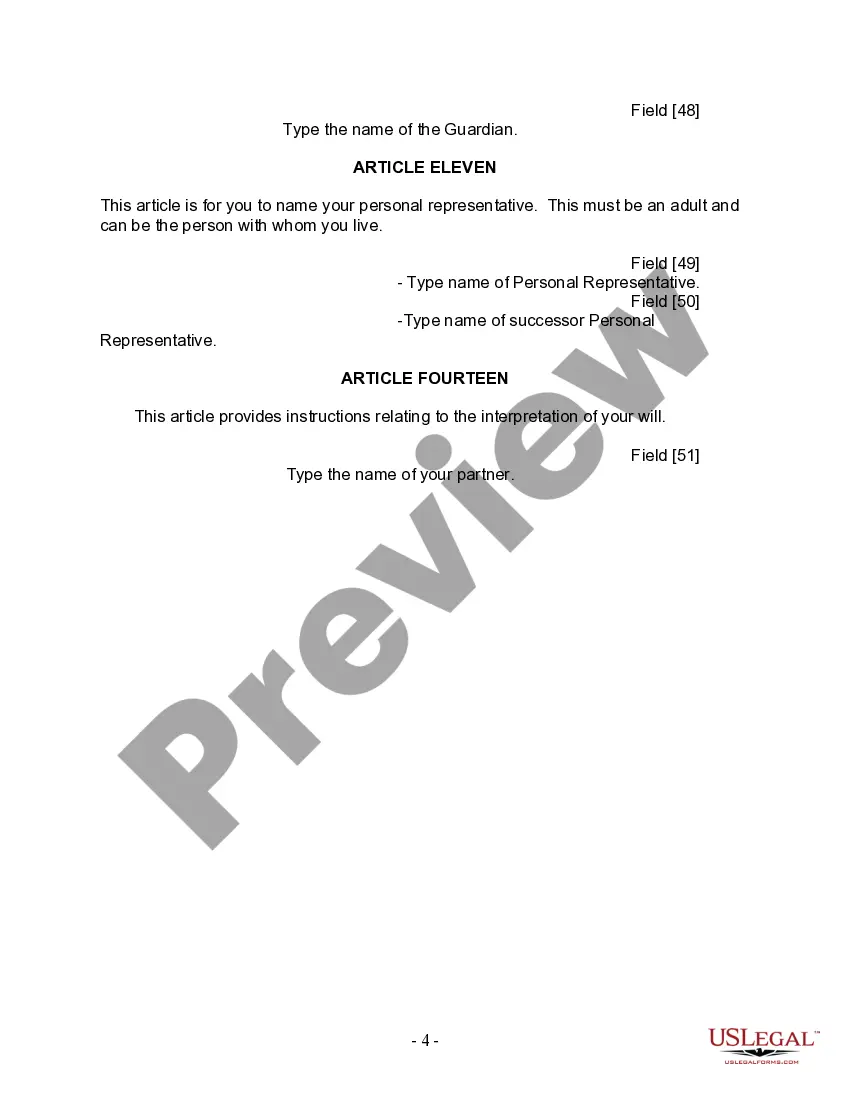
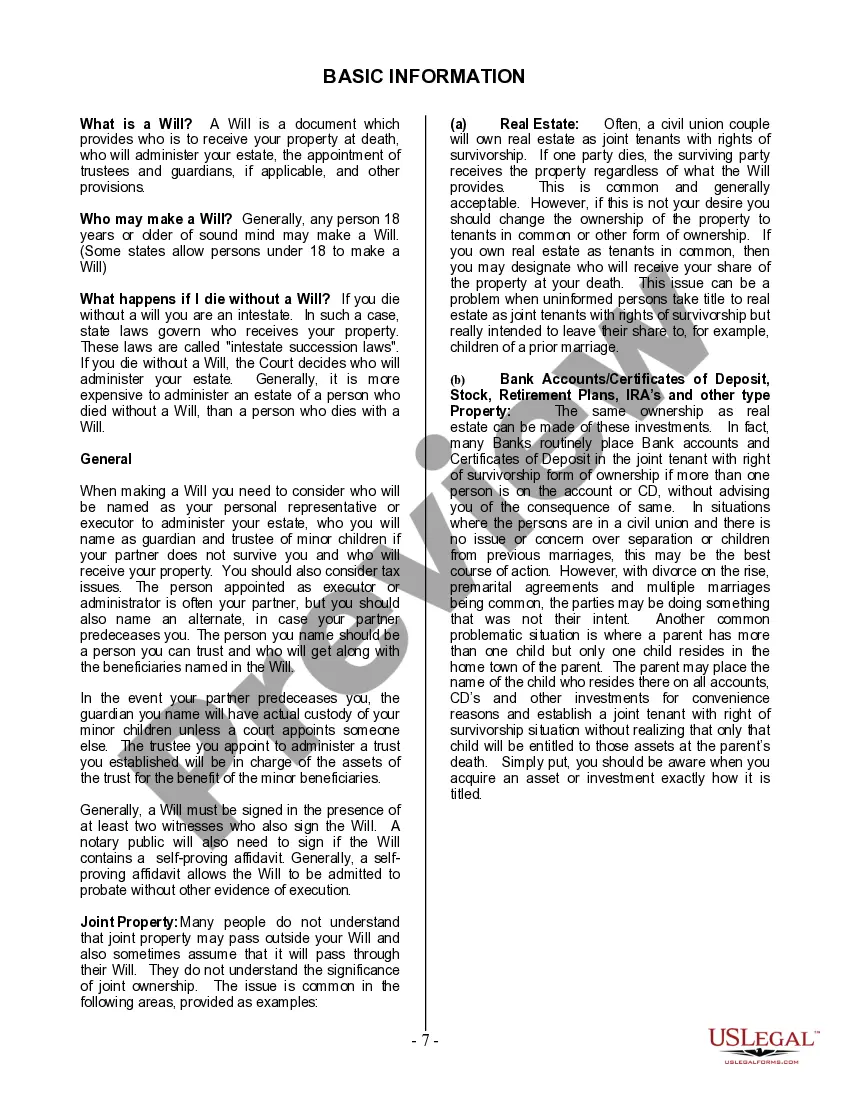
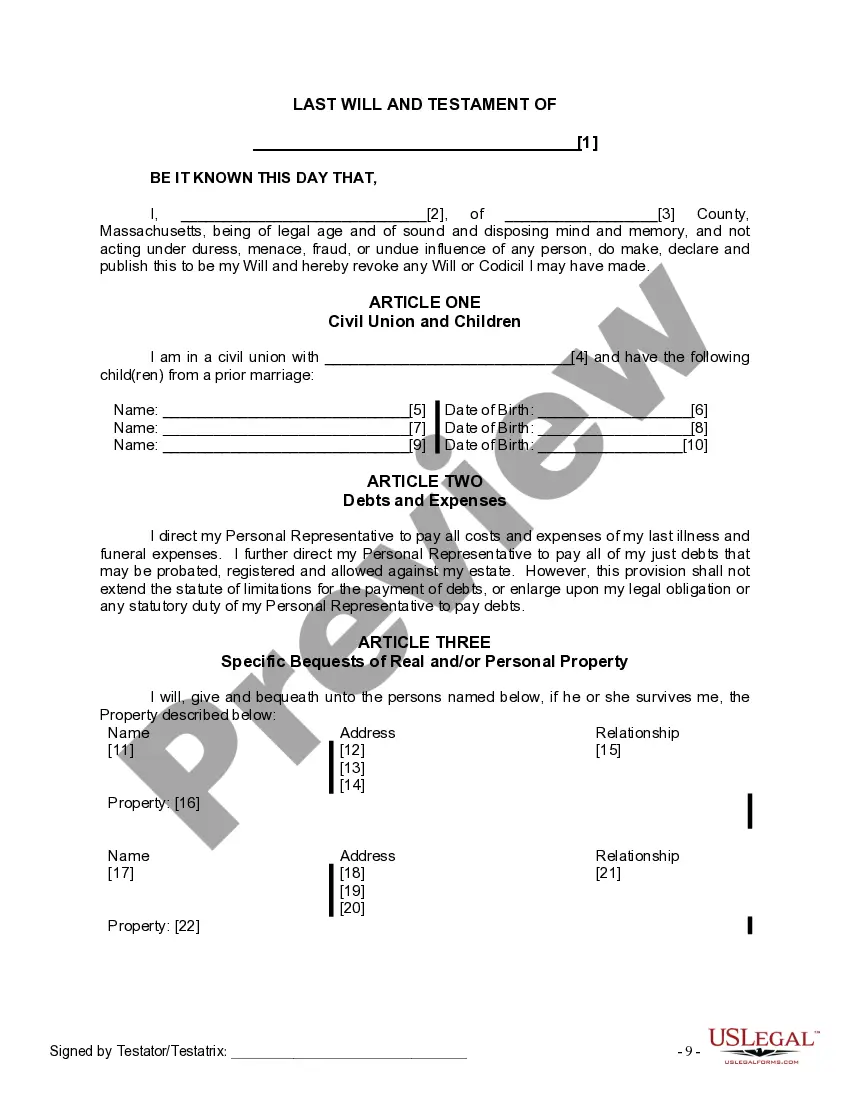
The Last Will and Testament for Civil Union Partner with Minor Children from Prior Marriage is a crucial legal document that outlines how you want your assets distributed upon your death. Unlike a standard will, this form specifically addresses the needs of an individual in a civil union who has minor children from a previous marriage, ensuring that both the civil union partner and the children are adequately provided for. This will facilitates the appointment of a personal representative, distribution of property, and management of assets meant for minor children.
What’s included in this form
- Appointment of a personal representative or executor.
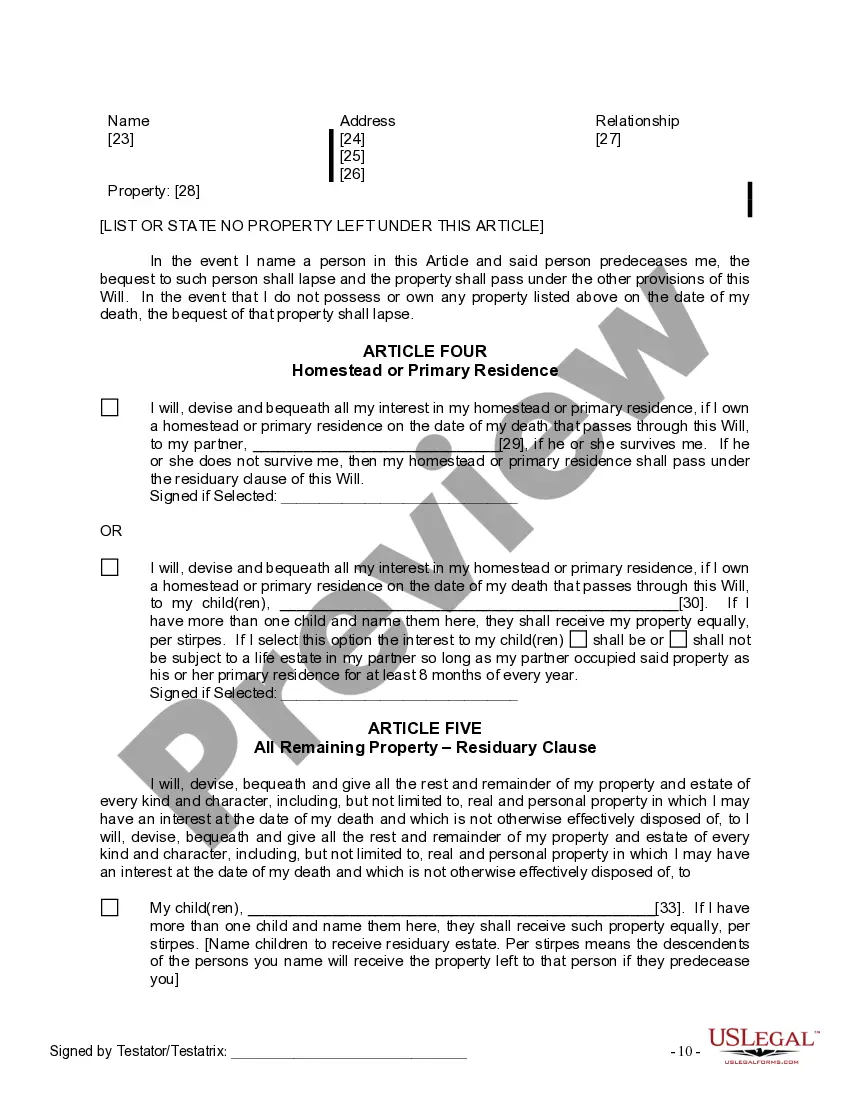
- Designation of beneficiaries for your property.
- Provision for the appointment of a trustee for assets left to minor children.
- Specific bequests of property to individuals.
- Instructions related to guardianship for minor children.
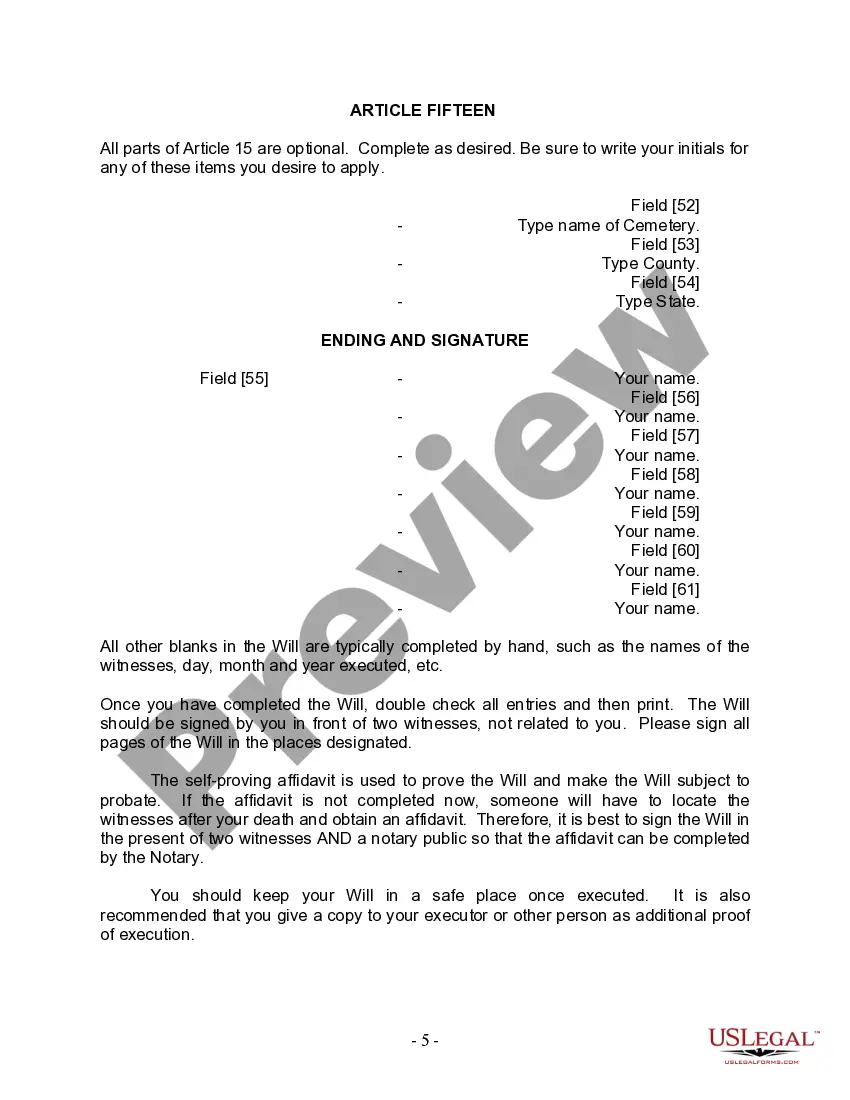
- Self-proving affidavit for ease of probate process.





Situations where this form applies
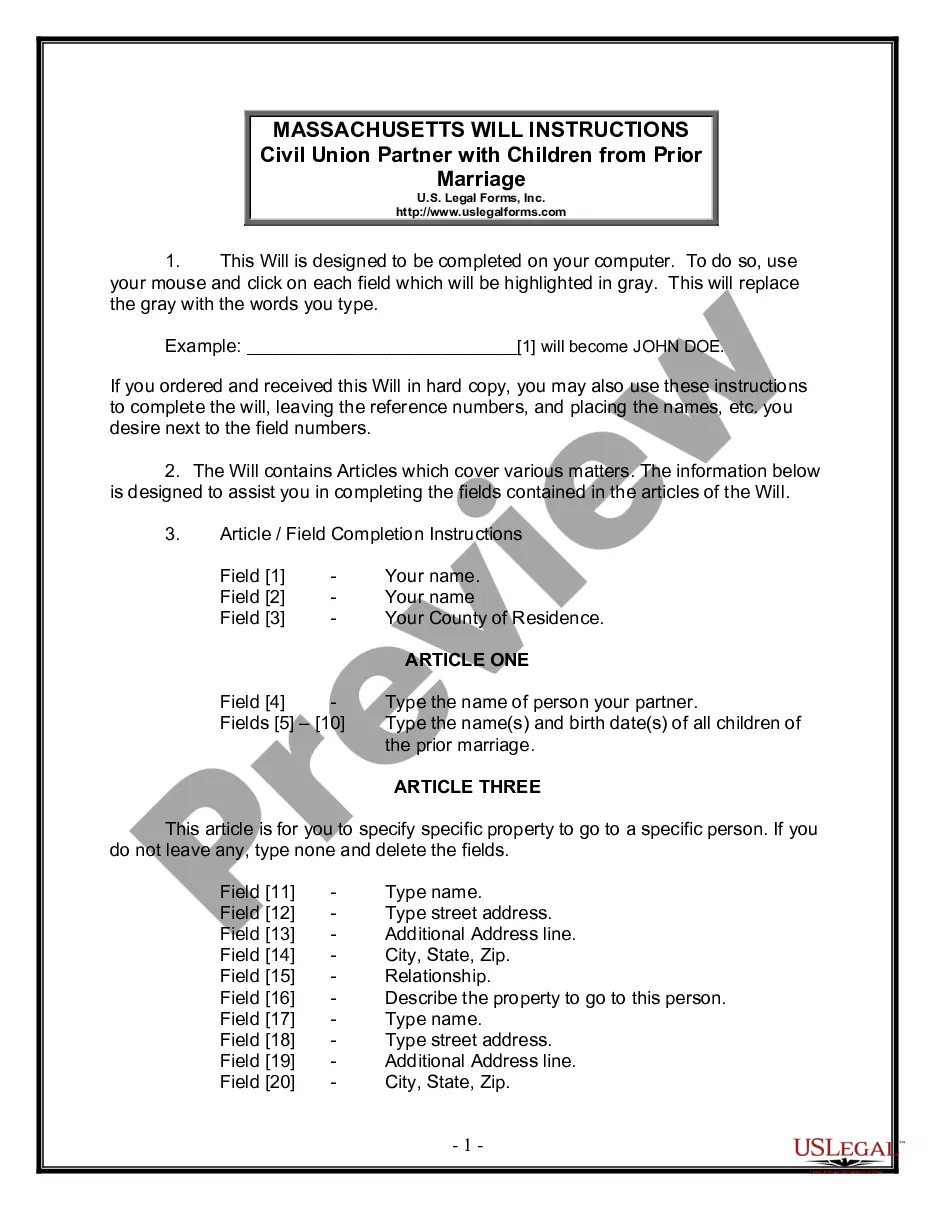
This form should be utilized when a civil union partner wants to ensure that their estate is distributed according to their wishes after their death, particularly when there are minor children from a prior marriage. It serves to clarify the distribution of assets, appoint guardians for minors, and protect the interests of both the civil union partner and the children involved.
Who should use this form
- Individuals in a civil union who have minor children from a previous marriage.
- Those looking to establish clear instructions for the distribution of their estate.
- Anyone seeking to appoint a guardian for their minor children in the event of their passing.
- People who wish to provide for their civil union partner alongside their children from a prior marriage.
Steps to complete this form
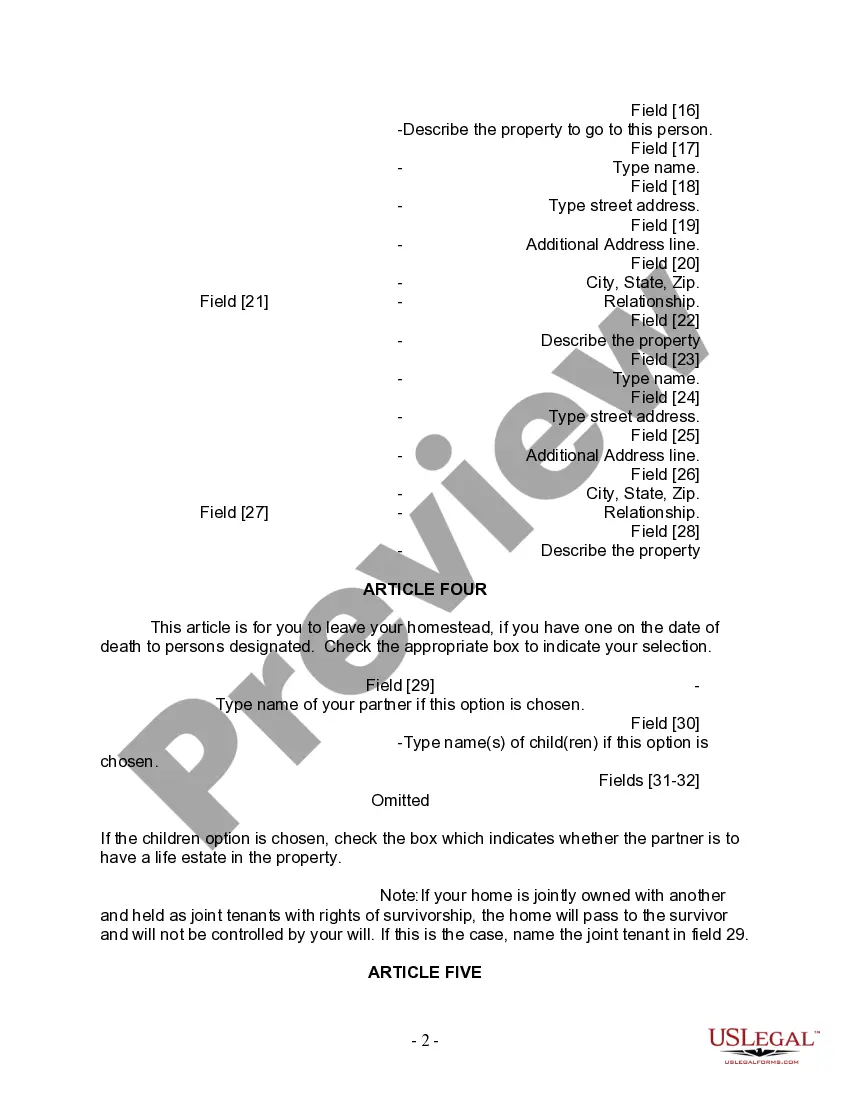
- Begin by entering your full name and residence details in the designated fields.
- Specify the name of your civil union partner and list all children with their birth dates.
- Indicate specific property you wish to bequeath, using the provided fields for names and details.
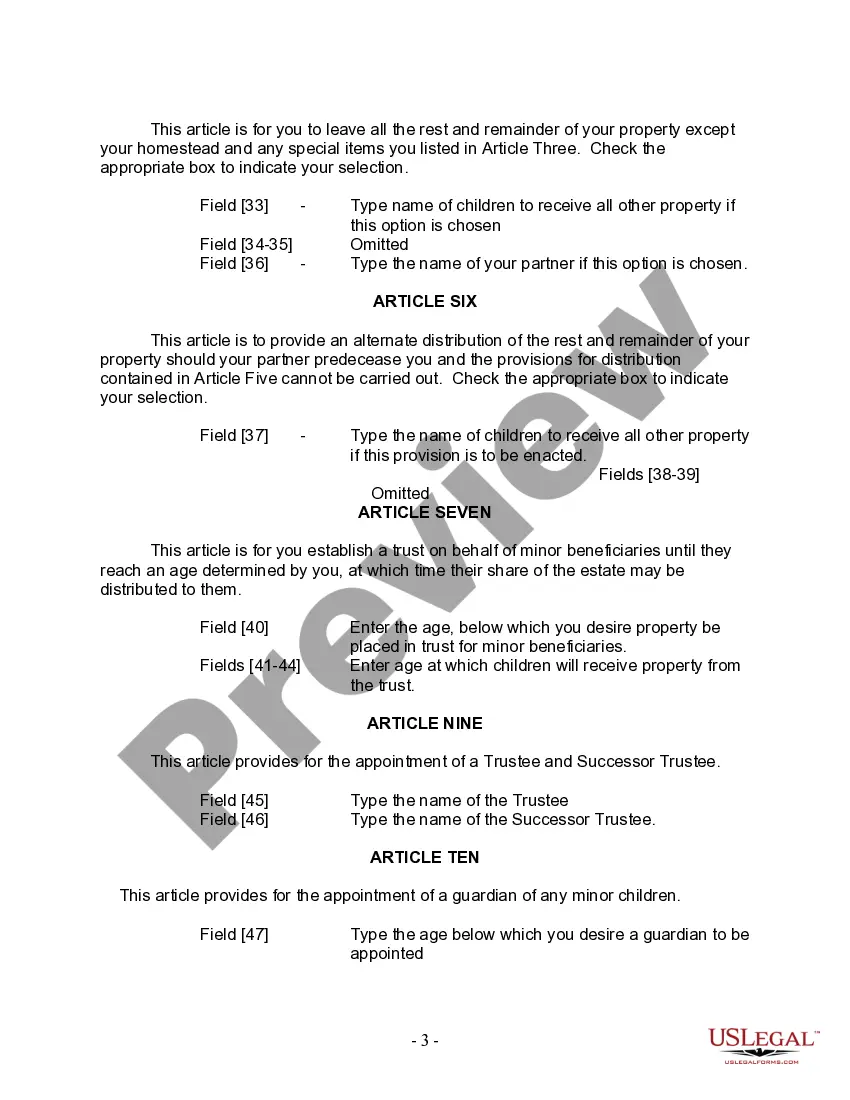
- Complete the sections for appointing a guardian and a trustee, detailing their names and duties.
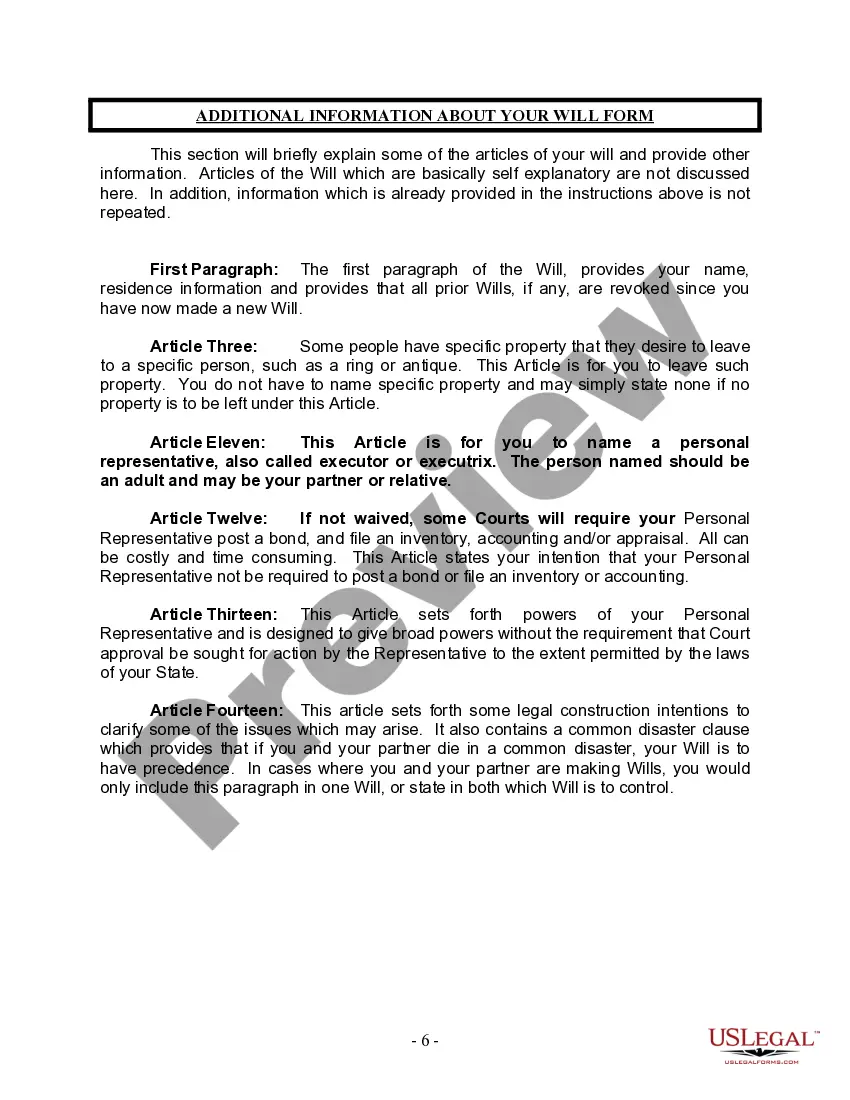
- Sign the document in the presence of two witnesses and complete the self-proving affidavit with a notary, if applicable.
Does this document require notarization?
Yes, this form must be notarized to be legally valid. Online notarization services are available through U.S. Legal Forms, allowing you to complete the notarization securely and conveniently from anywhere.
Get your form ready online
Our built-in tools help you complete, sign, share, and store your documents in one place.
Make edits, fill in missing information, and update formatting in US Legal Forms—just like you would in MS Word.
Download a copy, print it, send it by email, or mail it via USPS—whatever works best for your next step.
Sign and collect signatures with our SignNow integration. Send to multiple recipients, set reminders, and more. Go Premium to unlock E-Sign.
If this form requires notarization, complete it online through a secure video call—no need to meet a notary in person or wait for an appointment.
We protect your documents and personal data by following strict security and privacy standards.

Make edits, fill in missing information, and update formatting in US Legal Forms—just like you would in MS Word.

Download a copy, print it, send it by email, or mail it via USPS—whatever works best for your next step.

Sign and collect signatures with our SignNow integration. Send to multiple recipients, set reminders, and more. Go Premium to unlock E-Sign.

If this form requires notarization, complete it online through a secure video call—no need to meet a notary in person or wait for an appointment.

We protect your documents and personal data by following strict security and privacy standards.
Typical mistakes to avoid
- Failing to sign in the presence of two witnesses, which may invalidate the will.
- Not updating the form after significant life changes, such as marriage or divorce.
- Neglecting to appoint a successor trustee or guardian, leading to ambiguity.
- Forgetting to provide accurate details of assets and specific bequests.
Benefits of completing this form online
- Convenient access to legal documents anytime and anywhere.
- Editable format allows for personal adjustments before finalizing.
- Cost-effective way to create a professional legal document without attorney fees.
- Integrated online tools for ensuring proper completion and compliance with legal standards.
Looking for another form?

Form popularity
FAQ
There must be multiple witnesses of a will in order for it to be valid. In Massachusetts, there must be a minimum of two witnesses, and in most circumstances, they should not be set to benefit from the outcome of the will.
A domestic partnership is a legally-recognized relationship that offers non-married couples the same or similar benefits as those provided to married couples. Not all states recognize domestic partnerships within a legal context.
What is Domestic Partnership in MA? A domestic partnership is very similar to marriage. It can apply to couples who are not married but live together. Domestic partnerships provide some legal benefits that married couples enjoy.
The basic requirements for a Massachusetts last will and testament include the following:Witnesses: A Massachusetts will must be signed by at least two witnesses, who should not also be beneficiaries in the will. Writing: A Massachusetts will must be in writing. Beneficiaries: A testator can leave property to anyone.
With the recent introduction of the Massachusetts Uniform Probate Code, a will is no longer revoked automatically upon marriage.
Fraud or Undue Influence A nonfamily caregiver forcing the testator to leave them an inheritance. A family member getting the testator to sign a will by pretending it is just a general legal document that needs a signature.
You must be at least 18 years old; Neither partner may be married to, or the domestic partner of, anyone else; You must reside together, and intend to do so permanently; You must not be so closely related by blood (or marriage) as to bar marriage in the state;
Massachusetts does not recognize common law marriage unless it involves a couple who were considered married by it in another state. In other words, the only way to obtain a common law marriage in Massachusetts is by obtaining one while living outside of the state.
What is Domestic Partnership in MA? A domestic partnership is very similar to marriage. It can apply to couples who are not married but live together. Domestic partnerships provide some legal benefits that married couples enjoy.