Massachusetts Solar Installation Agreement
Description
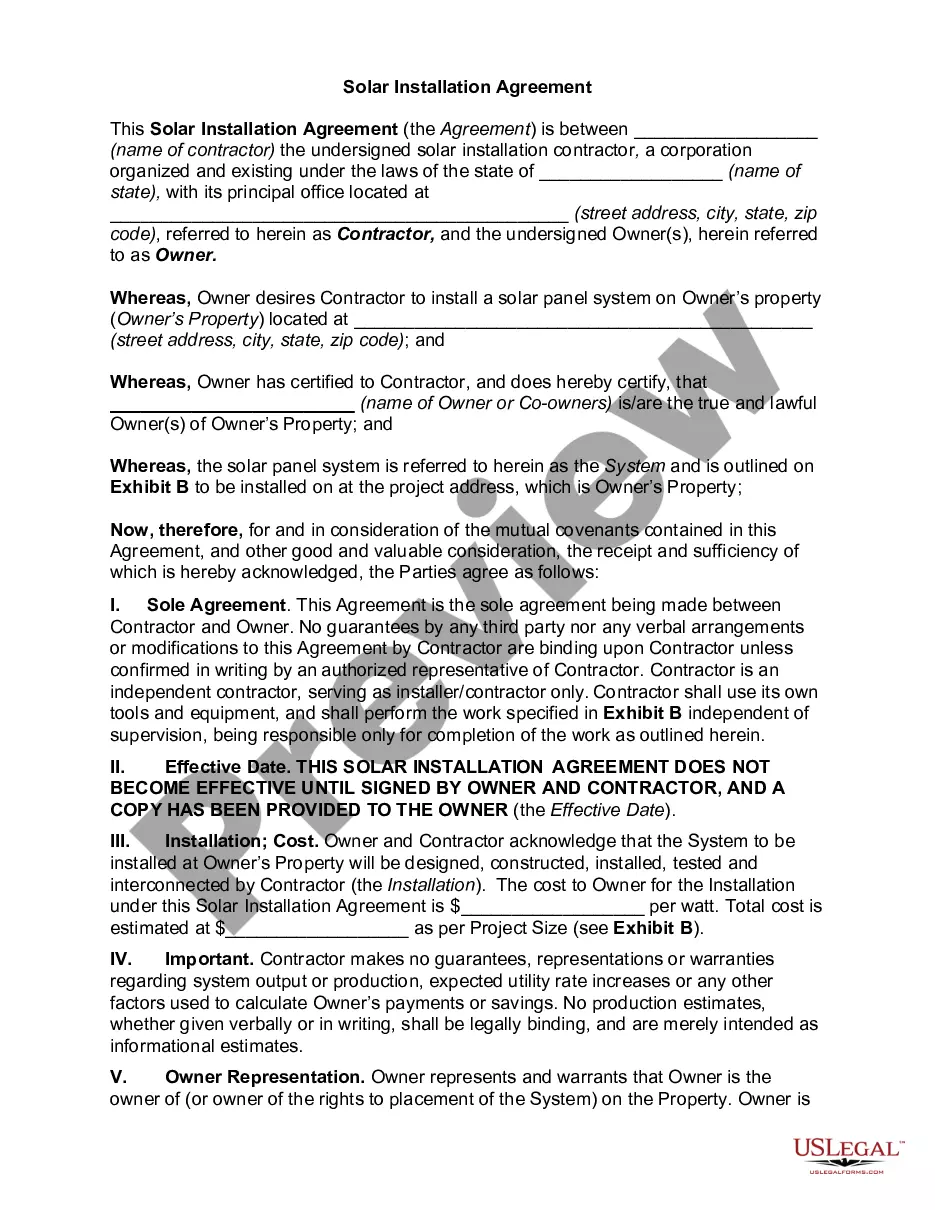
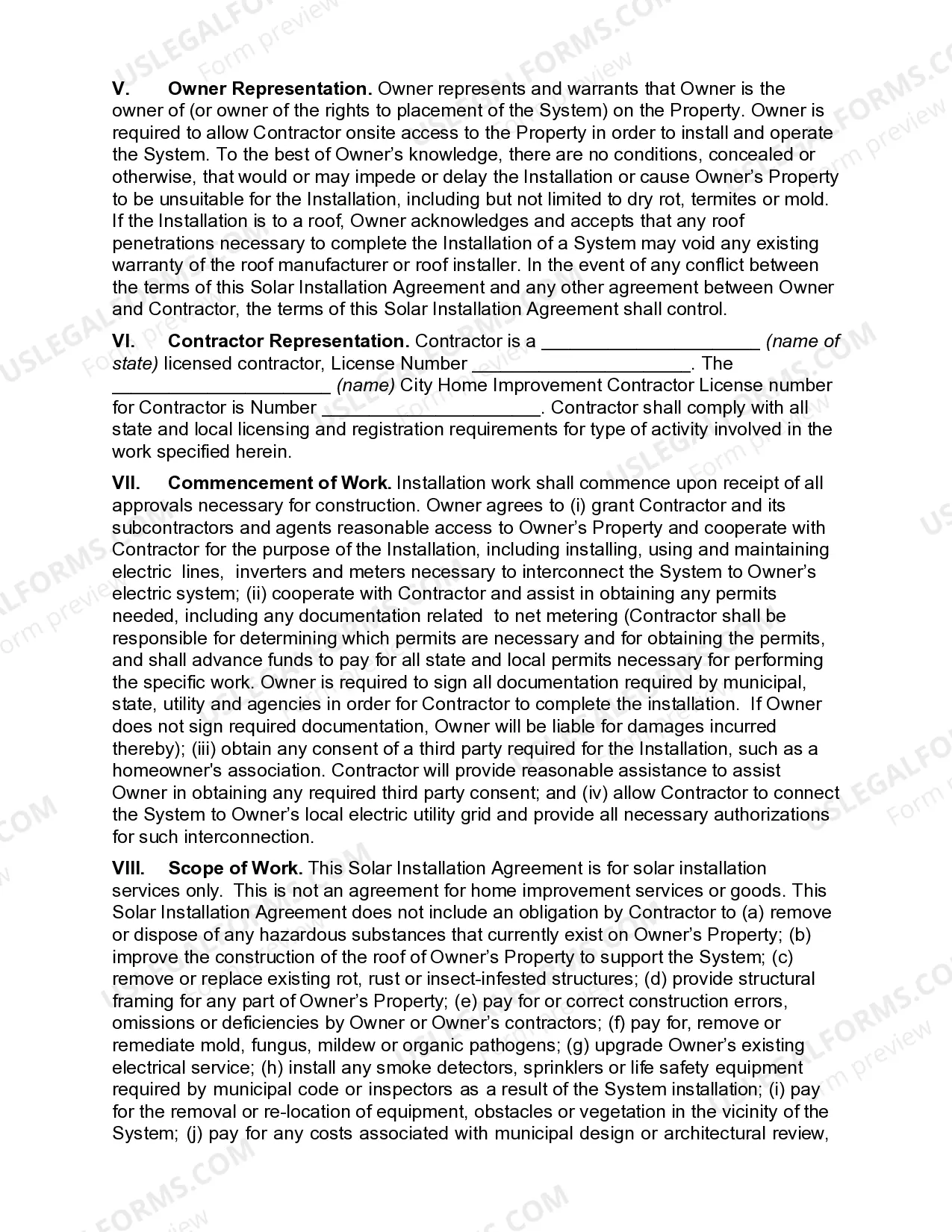
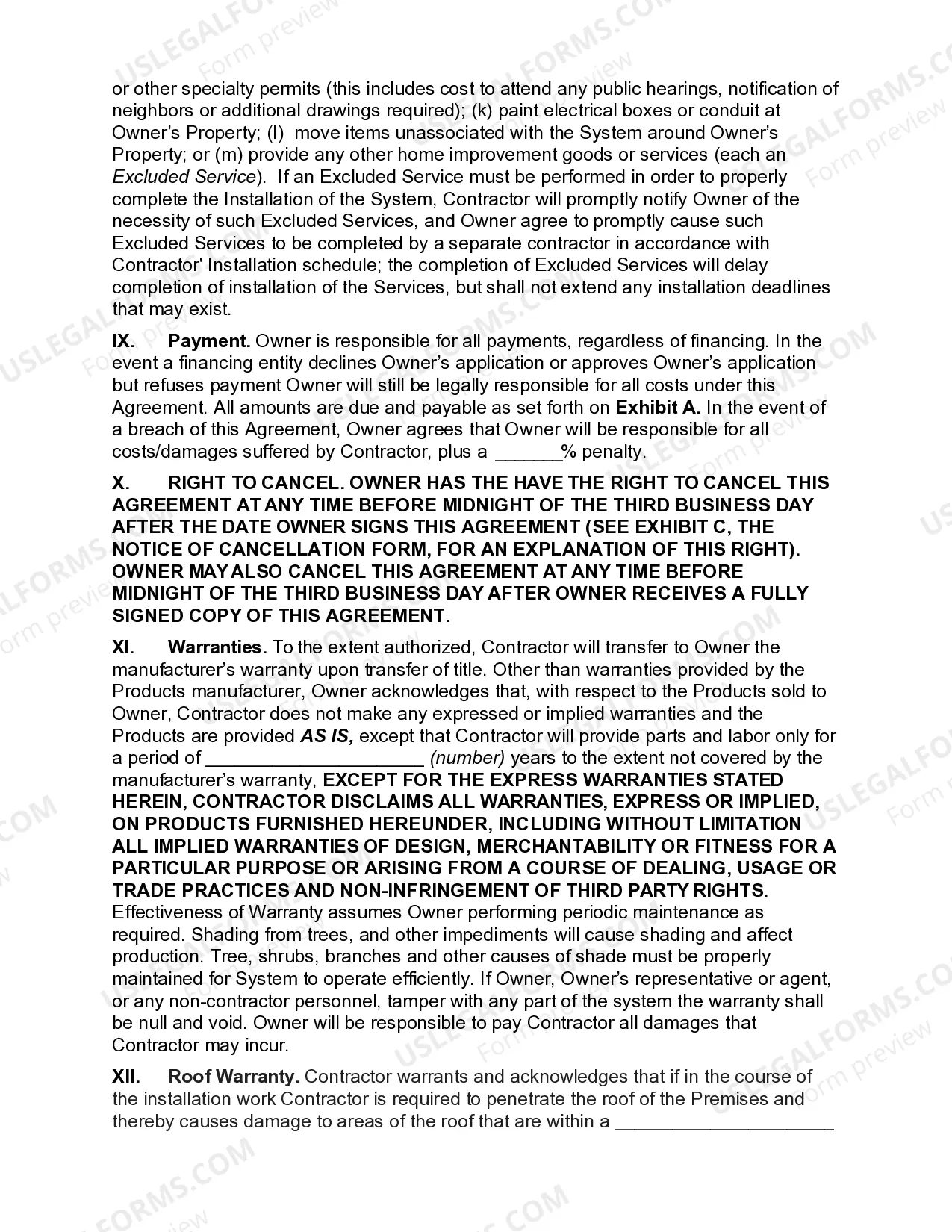
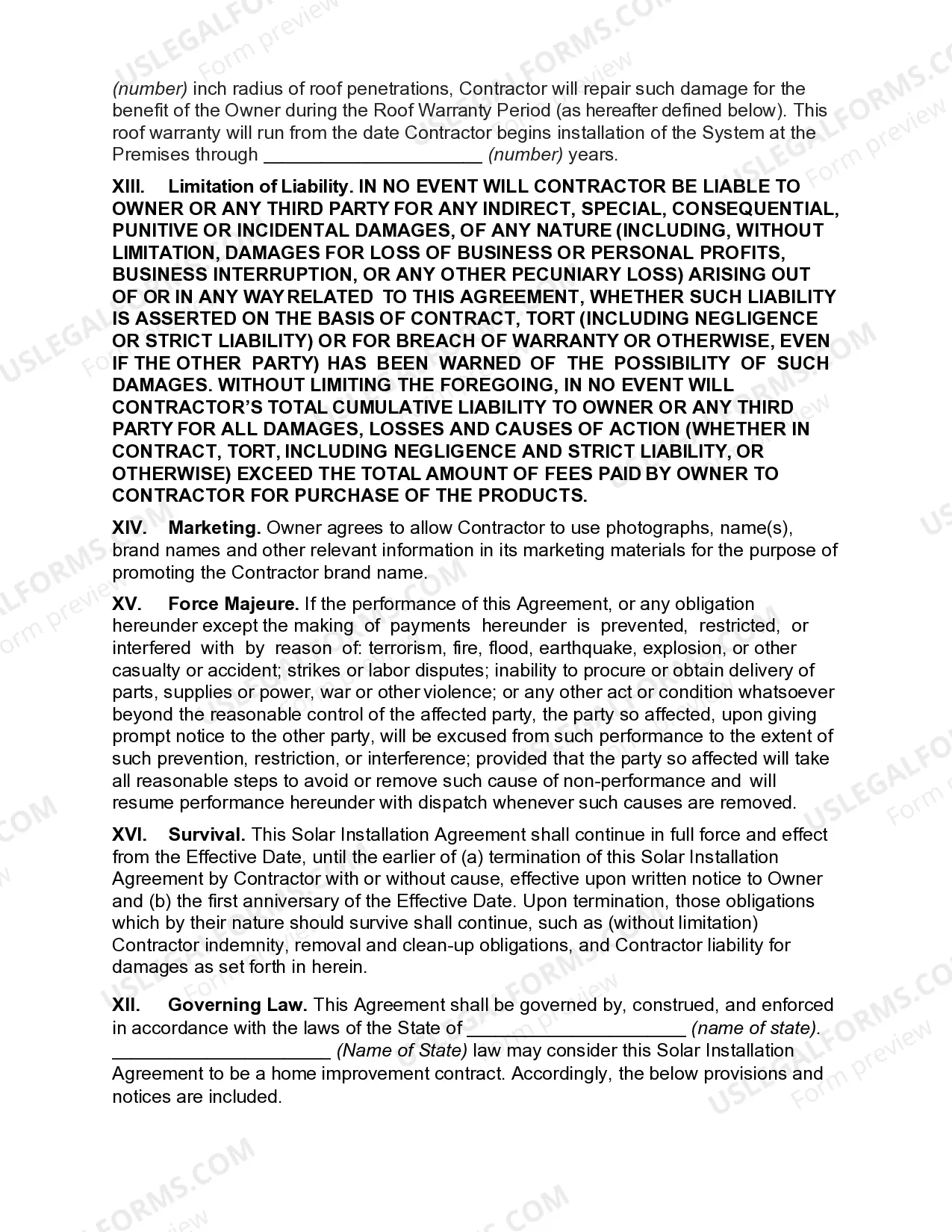
Get your form ready online
Our built-in tools help you complete, sign, share, and store your documents in one place.
Make edits, fill in missing information, and update formatting in US Legal Forms—just like you would in MS Word.
Download a copy, print it, send it by email, or mail it via USPS—whatever works best for your next step.
Sign and collect signatures with our SignNow integration. Send to multiple recipients, set reminders, and more. Go Premium to unlock E-Sign.
If this form requires notarization, complete it online through a secure video call—no need to meet a notary in person or wait for an appointment.
We protect your documents and personal data by following strict security and privacy standards.

Make edits, fill in missing information, and update formatting in US Legal Forms—just like you would in MS Word.

Download a copy, print it, send it by email, or mail it via USPS—whatever works best for your next step.

Sign and collect signatures with our SignNow integration. Send to multiple recipients, set reminders, and more. Go Premium to unlock E-Sign.

If this form requires notarization, complete it online through a secure video call—no need to meet a notary in person or wait for an appointment.

We protect your documents and personal data by following strict security and privacy standards.
Looking for another form?





How to fill out Solar Installation Agreement?
Are you presently in a circumstance where you require documents for both professional or personal motives almost each time.
There are numerous legal document templates available online, but acquiring ones you can trust is not simple.
US Legal Forms provides thousands of form templates, including the Massachusetts Solar Installation Agreement, that are designed to fulfill state and federal regulations.
When you find the right form, simply click Buy now.
Select the pricing plan you want, fill out the required information to create your account, and pay for the transaction using your PayPal or Visa or Mastercard.
- If you are already familiar with the US Legal Forms website and possess an account, just Log In.
- After that, you may download the Massachusetts Solar Installation Agreement template.
- If you do not have an account and wish to use US Legal Forms, follow these steps.
- Locate the form you need and ensure it is for the correct city/county.
- Utilize the Review option to inspect the form.
- Read the description to confirm you have selected the correct form.
- If the form is not what you are looking for, use the Search field to find the form that meets your needs.
Form popularity
FAQ
Yes, installing solar panels in Massachusetts requires the appropriate licenses and permits. Professionals need to be certified to ensure safety and adherence to local regulations. When entering into a Massachusetts Solar Installation Agreement, verify that your installer holds the necessary licenses to protect your investment and guarantee compliance.
We would love to live in a world where free solar power for your home was a reality. When you own your own solar panels you can generate free renewable energy to power your home. But sadly, there is no such thing as free solar panel installation in Massachusetts, despite what you may have seen online.
A PPA is a great option for households who cannot afford to buy solar panels outright. However for those homeowners who do have the spare cash required to purchase solar panels outright, the return on investment will be much greater by buying instead of leasing or entering a Power Purchase Agreement.
There are no grants for solar panels in the traditional sense of the word from the Government that will pay in full or in part for your solar panel installation.
No, there is no such thing as a no-cost solar program. These programs are actually solar leases or power purchase agreements (PPAs) in which a company will install solar panels on your roof for no money up-front, but they will charge you for the electricity produced.
A solar service agreement is an agreement with an independent company who agrees to provide cheaper power than that offered by a local centralized utility. They can be structured as a lease, power purchase agreement (PPA), or a levelized PPA.
You'll have to do plenty of research, compare products, consult with a roofer, pull permits, apply for SMART incentives, and have your system inspected by an electrician before it can be connected to the grid.
The Massachusetts Solar Loan Program includes an interest rate buy-down, income-based loan support, and a loan loss reserve for qualified programs to help you get started. Lease your panels or sign a power purchase agreement (PPA) through a Third-Party Owner (TPO).
Massachusetts has a solar tax credit called the Residential Renewable Energy Income Tax Credit. Homeowners can claim this credit on their state tax filing, and it's worth 15% of the cost of the solar system (up to a maximum tax credit of $1,000).
Purchase a new home solar system in Massachusetts and get a 15% credit of the final cost of your solar installation against your personal income taxes. This is limited to a $1,000 state tax reduction. Any excess credit amount can be carried over to your personal income taxes for up to three years.