Courts vary in their approach to enforcing releases depending on the particular facts of each case, the effect of the release on other statutes and laws, and the view of the court of the benefits of releases as a matter of public policy. Many courts will invalidate documents signed on behalf of minors. Also, Courts do not permit persons to waive their responsibility when they have exercised gross negligence or misconduct that is intentional or criminal in nature. Such an agreement would be deemed to be against public policy because it would encourage dangerous and illegal behavior.
A lactation consultant is a healthcare provider recognized as having expertise in the fields of human lactation and breastfeeding
This form is a generic example that may be referred to when preparing such a form for your particular state. It is for illustrative purposes only. Local laws should be consulted to determine any specific requirements for such a form in a particular jurisdiction.
Massachusetts Irrevocable Trust Agreement for the Benefit of Spouse, Children and Grandchildren
Instant download
Description
Free preview
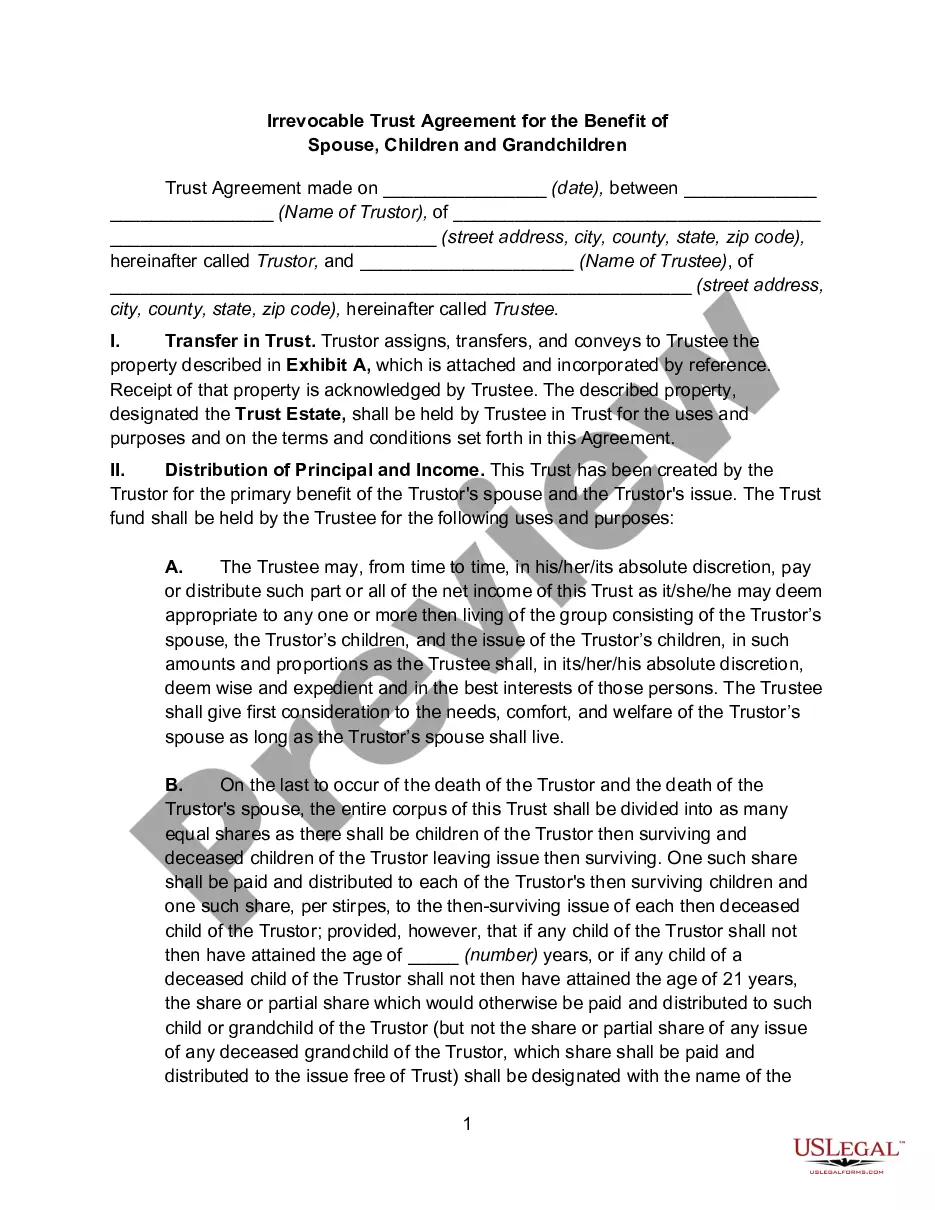
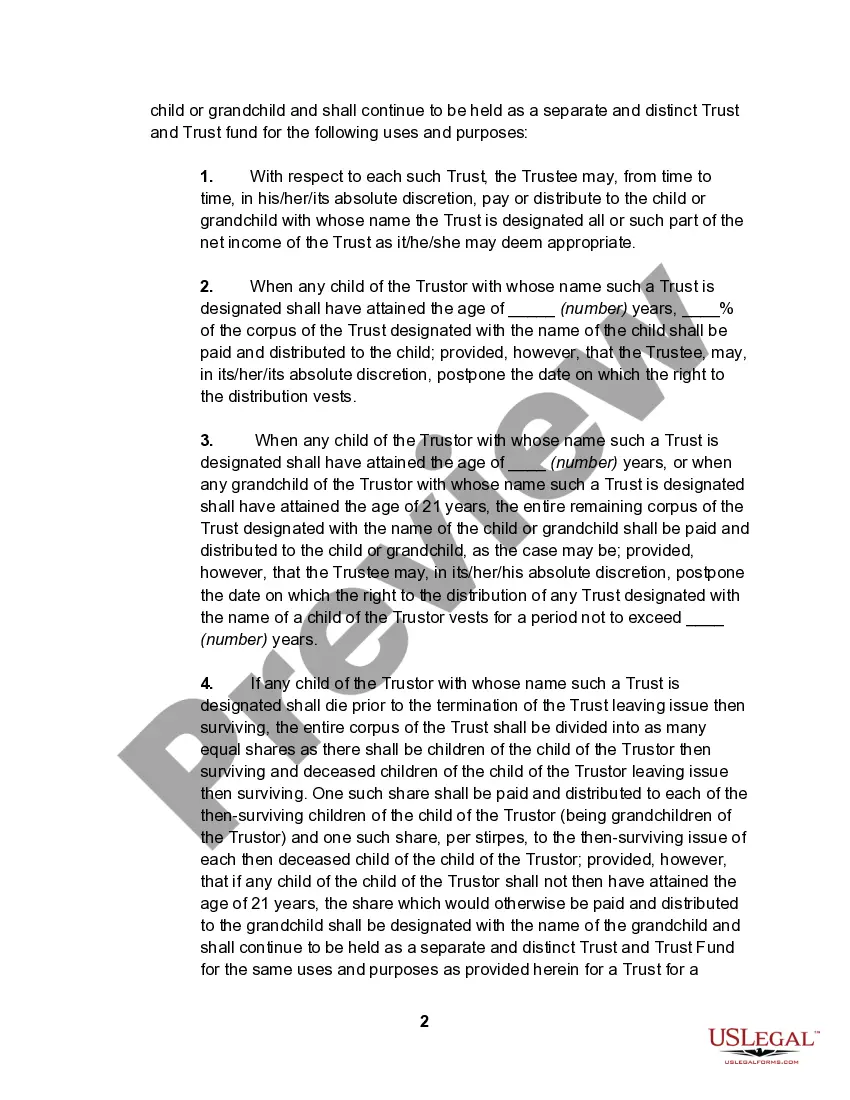

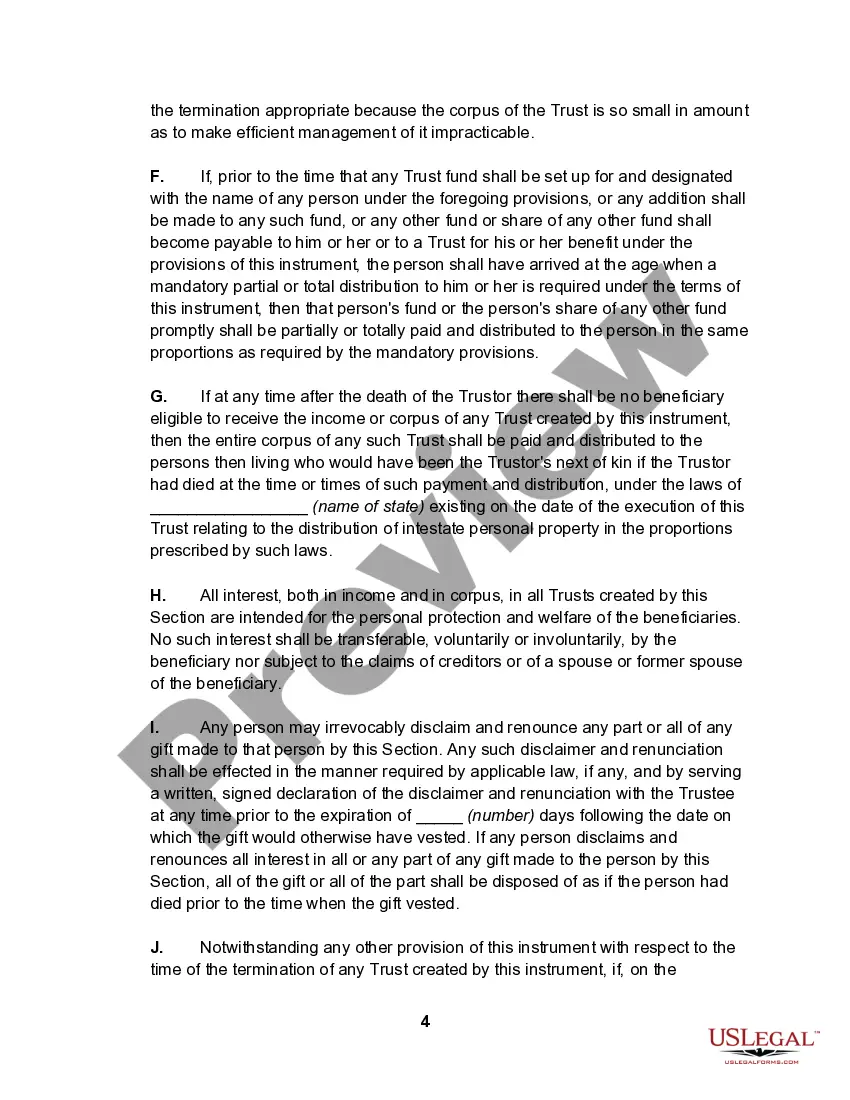
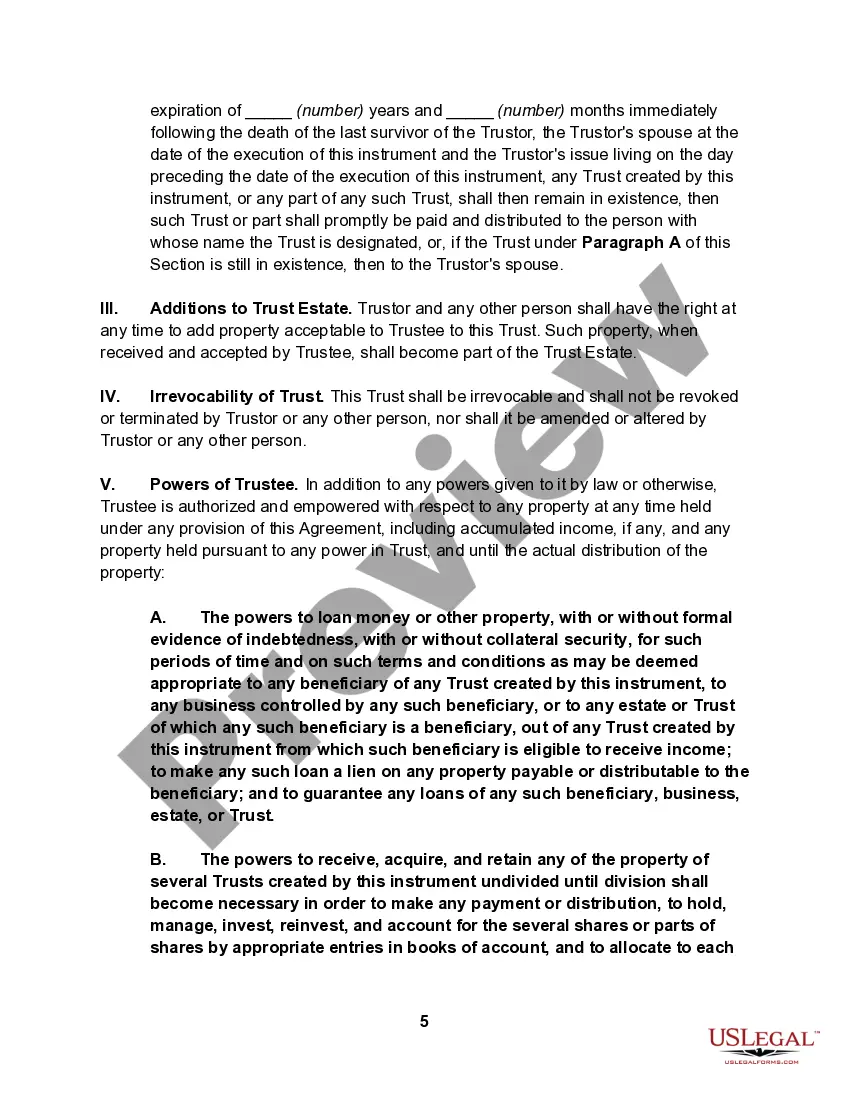



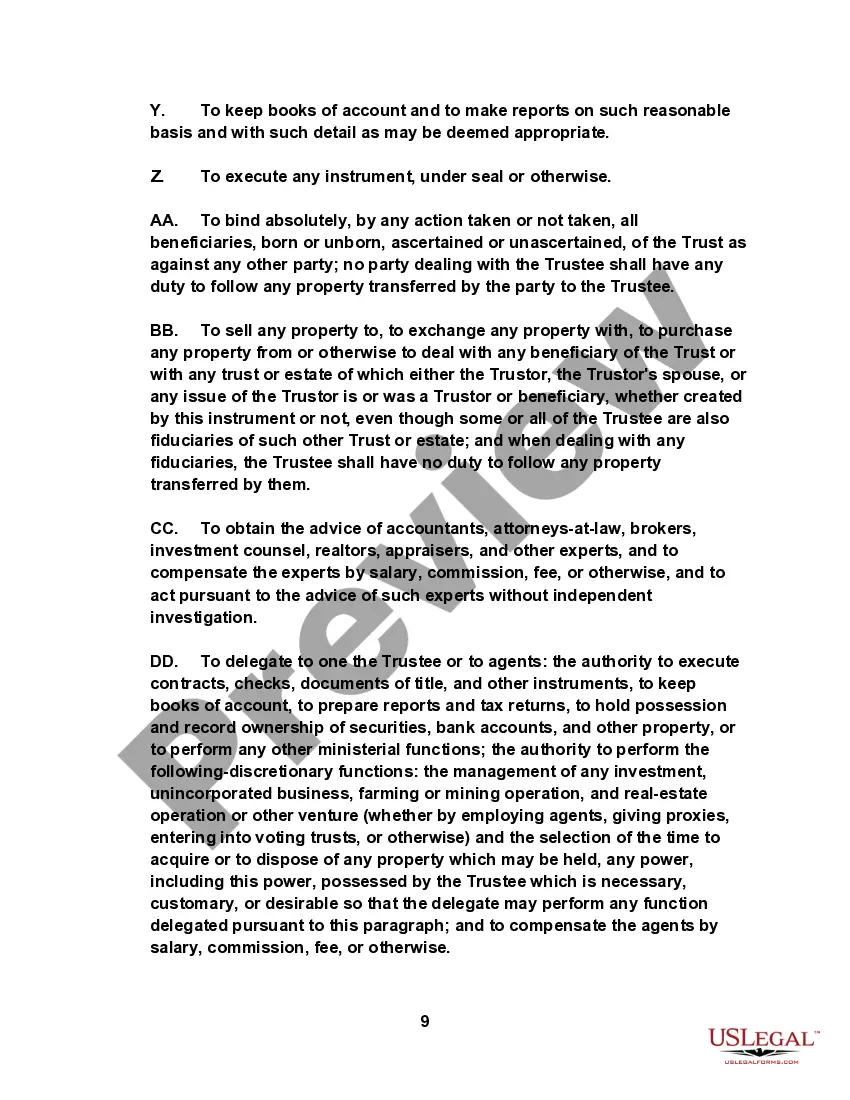
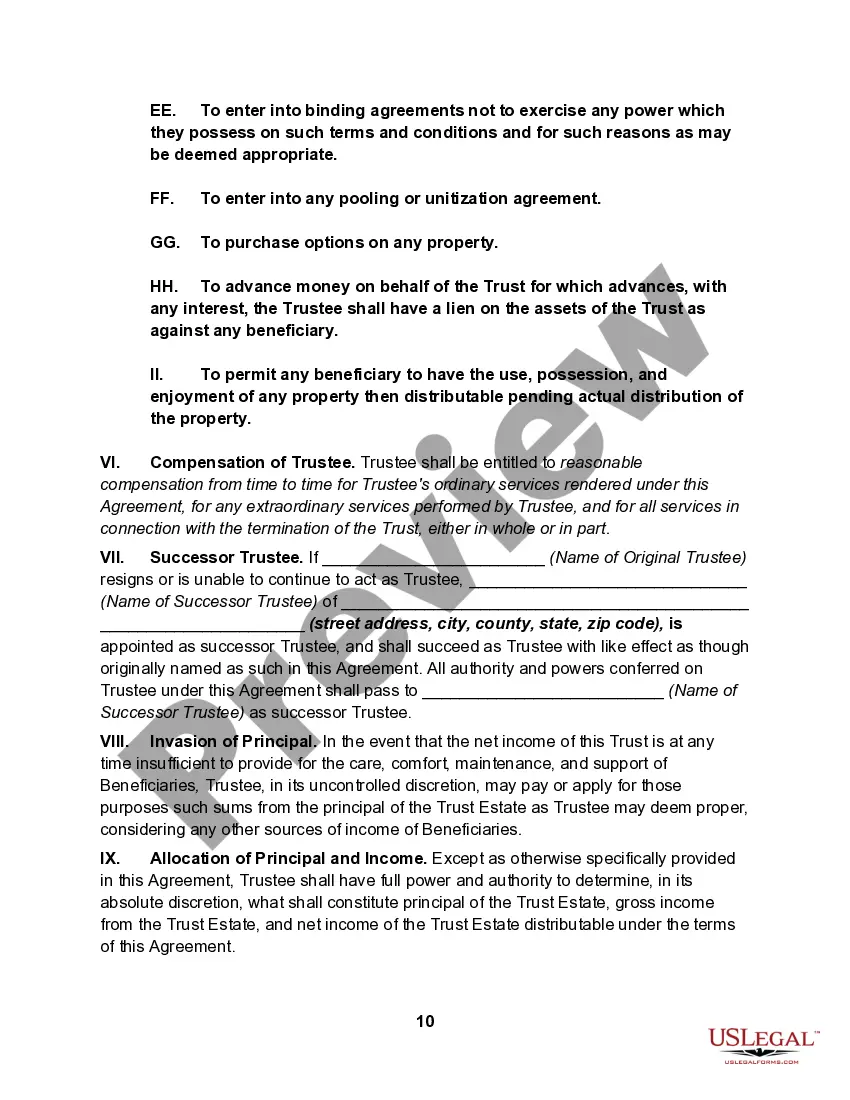

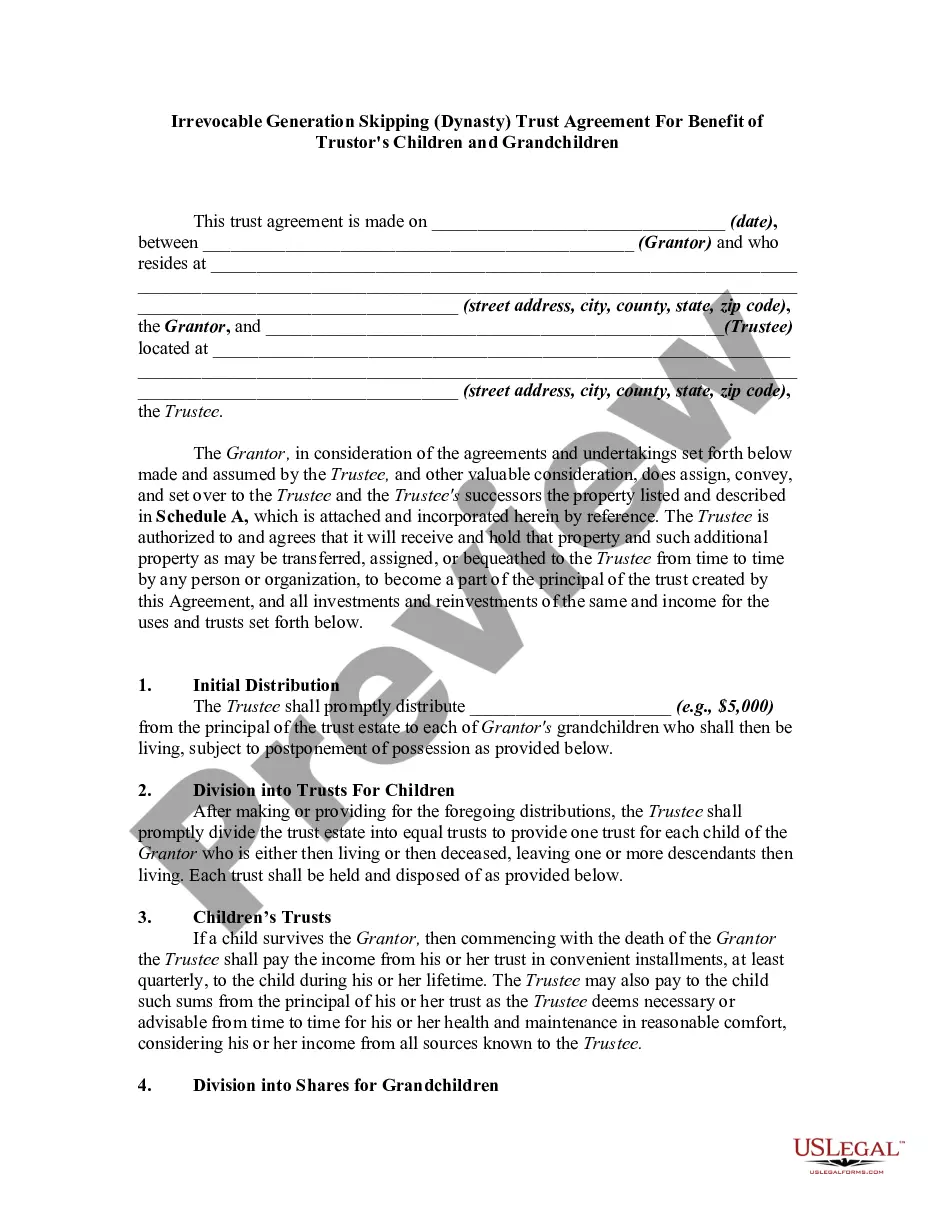


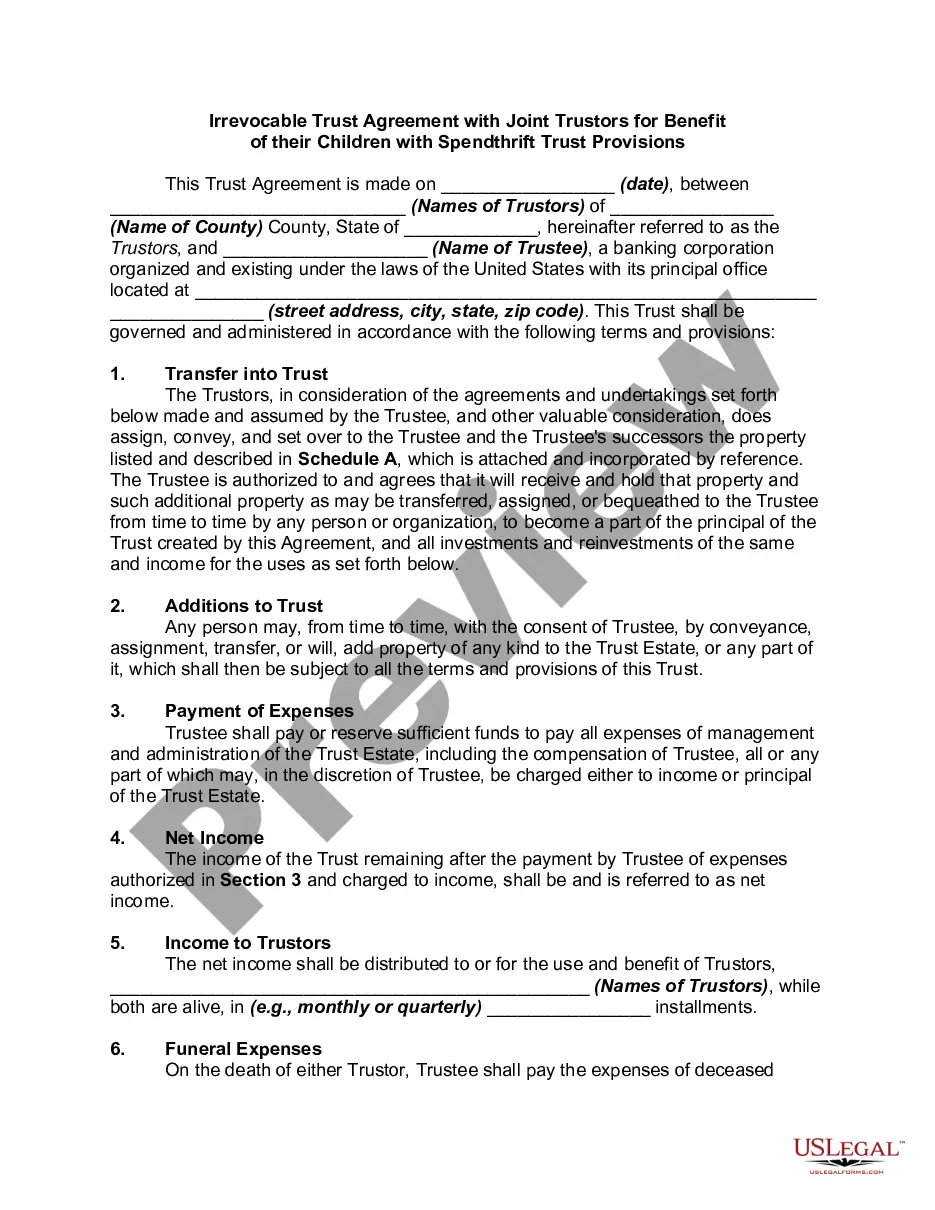





How to fill out Irrevocable Trust Agreement For The Benefit Of Spouse, Children And Grandchildren?
US Legal Forms - one of the largest collections of legal documents in the USA - offers a variety of legal document templates that you can download or print.
By using the website, you can access thousands of forms for business and personal purposes, organized by categories, states, or keywords.
You can quickly find the most up-to-date versions of documents such as the Massachusetts Irrevocable Trust Agreement for the Benefit of Spouse, Children, and Grandchildren.
If the form does not meet your requirements, use the Search field at the top of the page to find one that does.
If you are satisfied with the document, confirm your selection by clicking the Buy now button. Then, choose the payment plan you prefer and provide your credentials to register for an account.
- If you already have a subscription, Log In and download the Massachusetts Irrevocable Trust Agreement for the Benefit of Spouse, Children, and Grandchildren from the US Legal Forms database.
- The Download button will be visible on every form you view.
- You will have access to all previously acquired forms in the My documents section of your account.
- If you're using US Legal Forms for the first time, here are some straightforward instructions to help you start.
- Ensure you have selected the right form for your location/area. Click the Review button to evaluate the form's content.
- Check the form summary to confirm that you have chosen the correct document.
Form popularity
FAQ
An irrevocable trust agreement is a legal document that establishes a trust where the terms cannot be modified or revoked once signed. In a Massachusetts Irrevocable Trust Agreement for the Benefit of Spouse, Children and Grandchildren, you permanently transfer assets into the trust for specified beneficiaries. This arrangement provides benefits such as asset protection and potential tax advantages, making it a valuable tool for estate planning.
A Trust (or Marital Trust)The surviving spouse must be the only beneficiary of the trust during his/her lifetime, however, at the time of the second spouse's death, the trust can pass to any other named beneficiaries like children, grandchildren, etc.
Beneficiaries of an irrevocable trust have rights to information about the trust and to make sure the trustee is acting properly. The scope of those rights depends on the type of beneficiary. Current beneficiaries are beneficiaries who are currently entitled to income from the trust.
The trust remains revocable while both spouses are alive. The couple may withdraw assets or cancel the trust completely before one spouse dies. When the first spouse dies, the trust becomes irrevocable and splits into two parts: the A trust and the B trust.
Irrevocable trusts can also protect assets from being used in determining Medicare eligibility. Once an irrevocable trust is funded, the trust property cannot be taken back by the grantor without the consent of the beneficiary. It is legal to name a beneficiary as trustee, such as a spouse.
Trusts can have more than one beneficiary and they commonly do. In cases of multiple beneficiaries, the beneficiaries may hold concurrent interests or successive interests.
Establishing and funding a trust for your grandchild enables you to: Set guidelines on how you'd like the money to be used. Release funds at key milestoneslike graduating college, getting married, or turning 35over your grandchild's lifetime, rather than all at once.
While there's no limit to how many trustees one trust can have, it might be beneficial to keep the number low. Here are a few reasons why: Potential disagreements among trustees. The more trustees you name, the greater the chance they'll have different ideas about how your trust should be managed.
An irrevocable trust is a trust that can't be amended or modified. However, like any other trust an irrevocable trust can have multiple beneficiaries. The Internal Revenue Service allows irrevocable trusts to be created as grantor, simple or complex trusts.
Often there is someone the grantor knows who the grantor suggests to be the trustee. Typical choices are the grantor's spouse, sibling, child, or friend. Any of these may be an acceptable choice from a legal perspective, but may be a poor choice for other reasons.