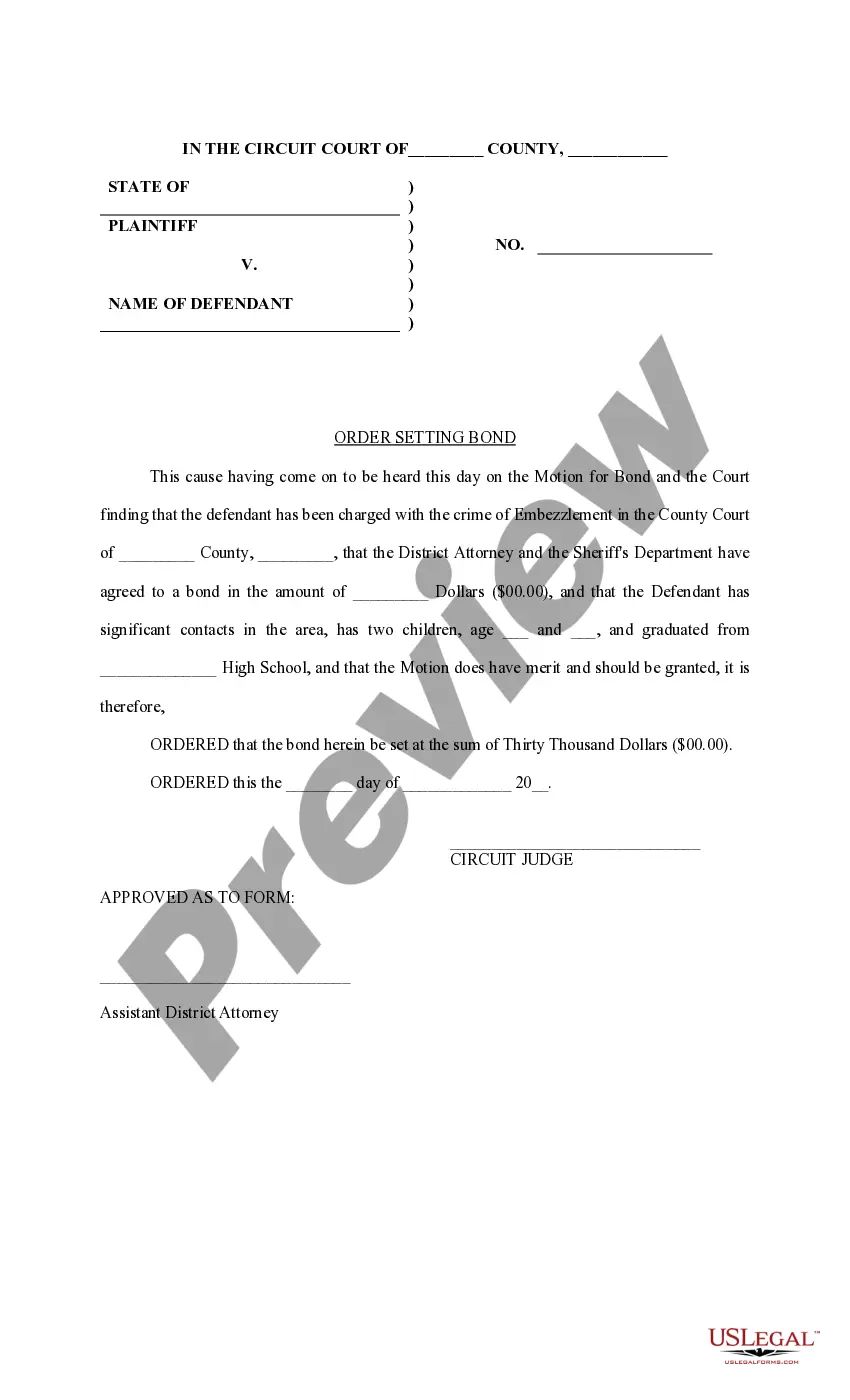
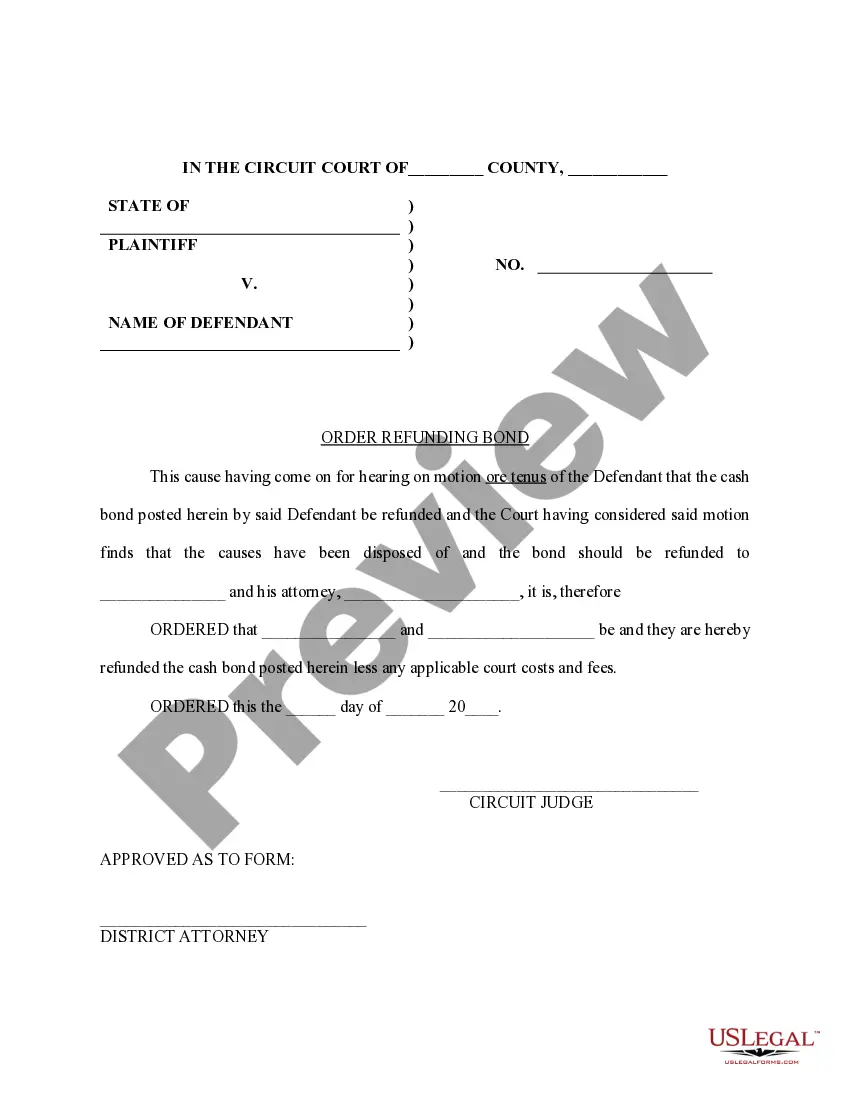
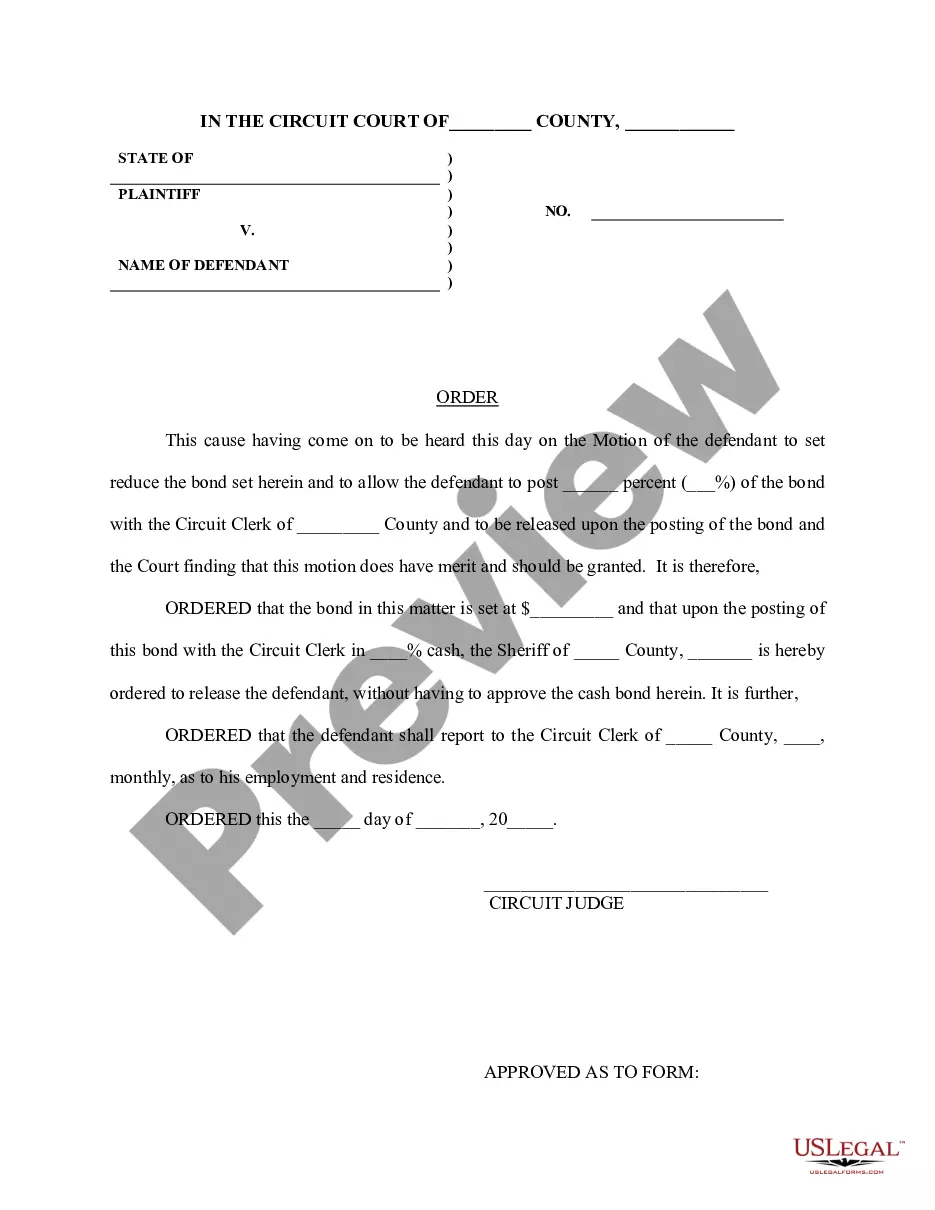
Massachusetts Order Setting Bond
Description
Get your form ready online
Our built-in tools help you complete, sign, share, and store your documents in one place.
Make edits, fill in missing information, and update formatting in US Legal Forms—just like you would in MS Word.
Download a copy, print it, send it by email, or mail it via USPS—whatever works best for your next step.
Sign and collect signatures with our SignNow integration. Send to multiple recipients, set reminders, and more. Go Premium to unlock E-Sign.
If this form requires notarization, complete it online through a secure video call—no need to meet a notary in person or wait for an appointment.
We protect your documents and personal data by following strict security and privacy standards.

Make edits, fill in missing information, and update formatting in US Legal Forms—just like you would in MS Word.

Download a copy, print it, send it by email, or mail it via USPS—whatever works best for your next step.

Sign and collect signatures with our SignNow integration. Send to multiple recipients, set reminders, and more. Go Premium to unlock E-Sign.

If this form requires notarization, complete it online through a secure video call—no need to meet a notary in person or wait for an appointment.

We protect your documents and personal data by following strict security and privacy standards.
Looking for another form?





How to fill out Order Setting Bond?
US Legal Forms - one of the largest collections of legal documents in the United States - offers a diverse selection of legal document templates that you can download or print. By using the website, you can find thousands of forms for business and personal purposes, organized by categories, states, or keywords. You can access the most recent versions of forms like the Massachusetts Order Setting Bond in just a few seconds.
If you already have a subscription, Log In and download the Massachusetts Order Setting Bond from the US Legal Forms collection. The Download button will appear on every form you view. You can access all previously downloaded forms from the My documents section of your account.
If you are looking to use US Legal Forms for the first time, here are simple steps to get you started: Ensure you have selected the correct form for your city/region. Click the Preview button to review the form's content. Check the form details to confirm that you have chosen the right form. If the form doesn’t suit your requirements, use the Search section at the top of the screen to find one that does. Once you are satisfied with the form, confirm your choice by clicking the Get now button. Then, select the payment plan you prefer and provide your information to register for the account. Process the transaction. Use your Visa or Mastercard or PayPal account to complete the transaction. Choose the file format and download the form to your device. Make modifications. Fill out, edit, print, and sign the downloaded Massachusetts Order Setting Bond. Every template you add to your account has no expiration date and is yours indefinitely. Therefore, if you wish to download or print another copy, simply go to the My documents section and click on the form you need.
- Access the Massachusetts Order Setting Bond with US Legal Forms, the most comprehensive library of legal document templates.
- Utilize a vast array of professional and state-specific templates that cater to your business or individual needs and requirements.
Form popularity
FAQ
In exchange for the capital, the company pays an interest coupon, which is the annual interest rate paid on a bond expressed as a percentage of the face value. The company pays the interest at predetermined intervals (usually annually or semiannually) and returns the principal on the maturity date, ending the loan.
A person who has been arrested can either be released on personal recognizance or will have to pay a cash bail.
Bail reform in Massachusetts In 2017, a Supreme Judicial Court ruling held that a judge must consider a defendant's financial resources when setting bail in the landmark decision Brangan v. Commonwealth. A criminal justice reform law in 2018 codified the decision.
Defense defendants may pay bail either with cash or collateral; this enables those unable to provide large sums up front the opportunity for release while still having an incentive for court attendance.
One of the most common types of bail in Massachusetts is cash bail. This type of bail requires the defendant to pay the full amount of bail in cash to the court. If the defendant attends all court hearings, the cash bail will be returned at the end of the case.
Either the court or the bail commissioner will set a bail for you to be released. Bail is the amount of money you must deposit to be released from jail. For State cases, it's entirely in cash ? there are no bail bondsmen in Massachusetts.
At the end of the case, whoever posted the bail money gets it back. If bail is ordered in your case, you will not be released from custody until it is posted. You will be held at the county jail until the end of your case, or until the bail is posted.
The bail magistrate sets bail. In Massachusetts, a person arrested when courts are closed can request to be released until the court is next open.