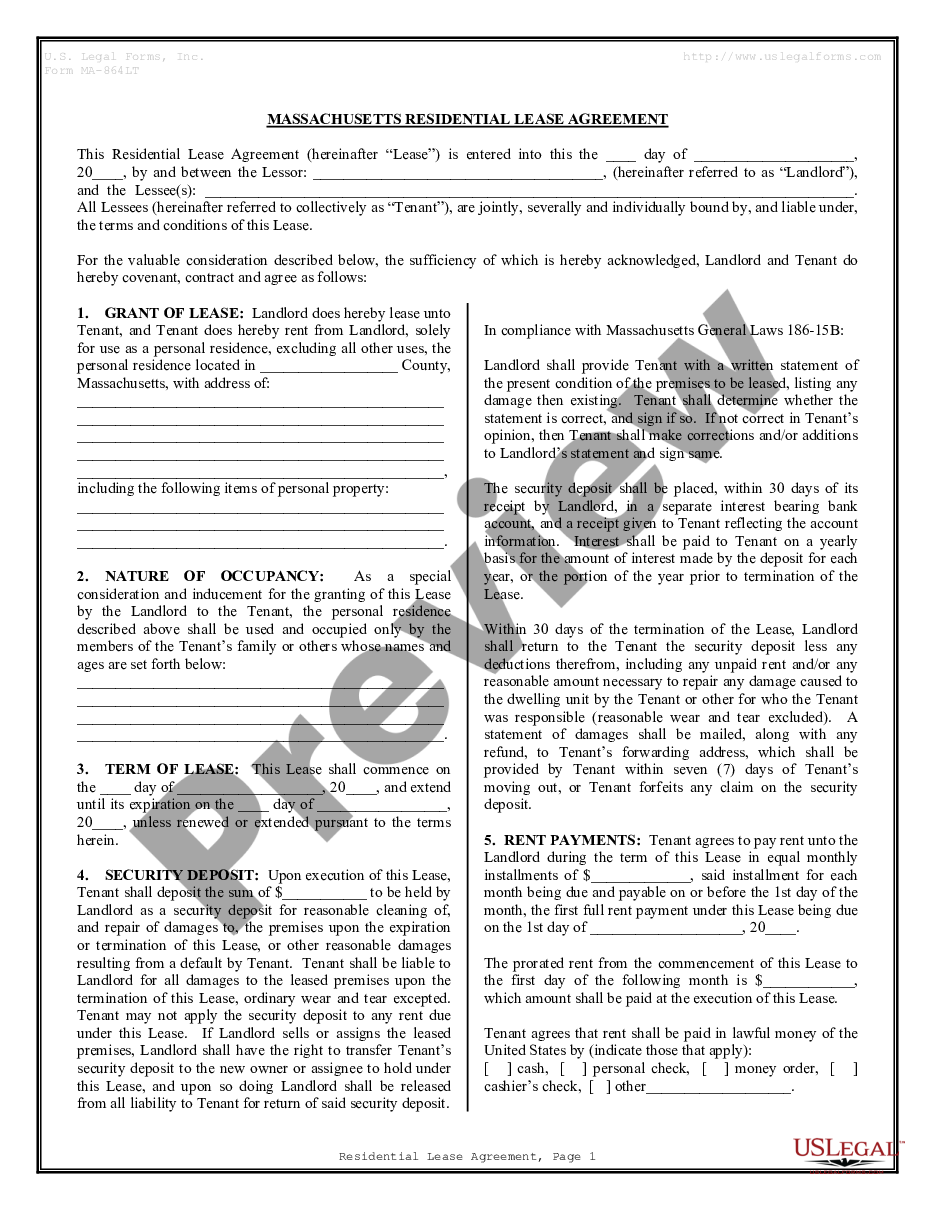
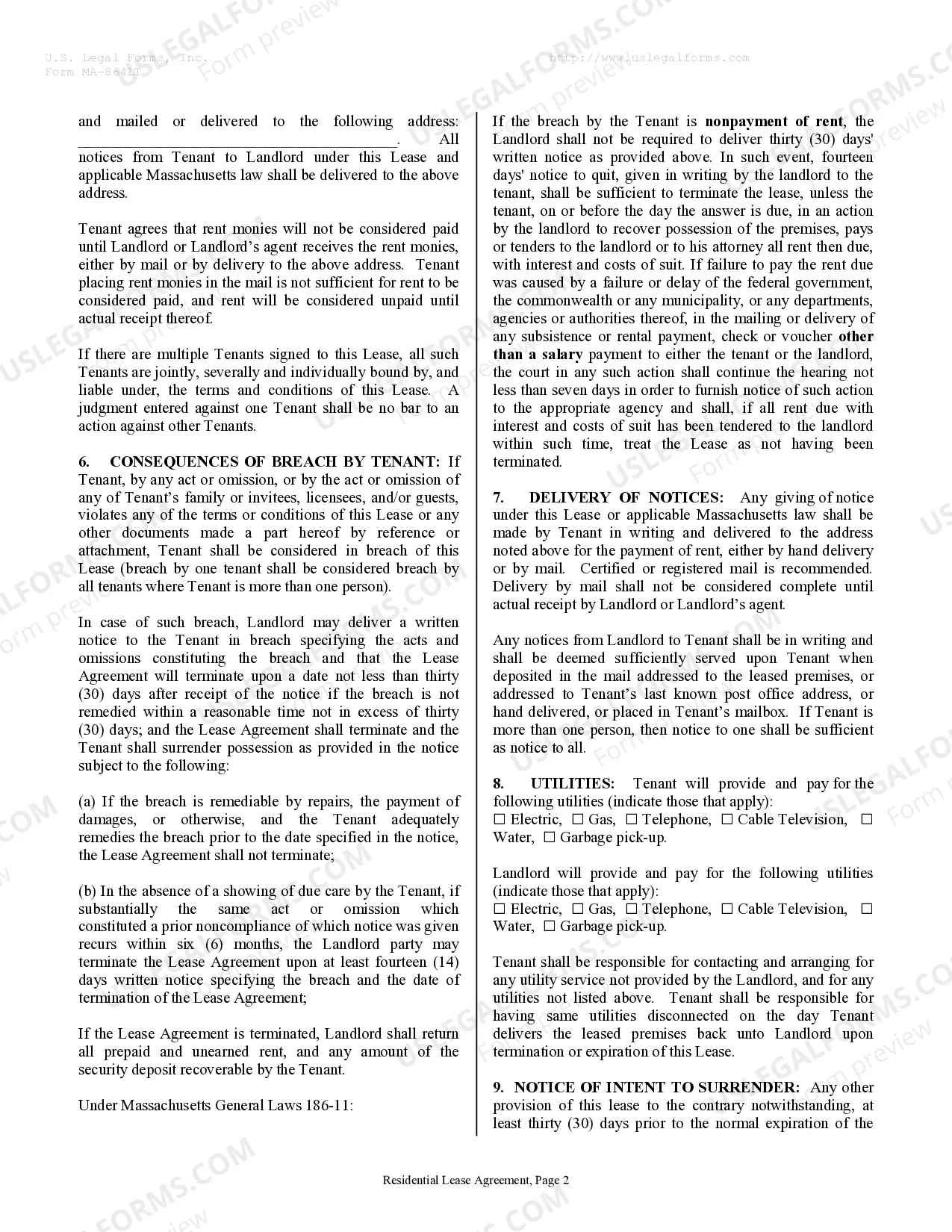
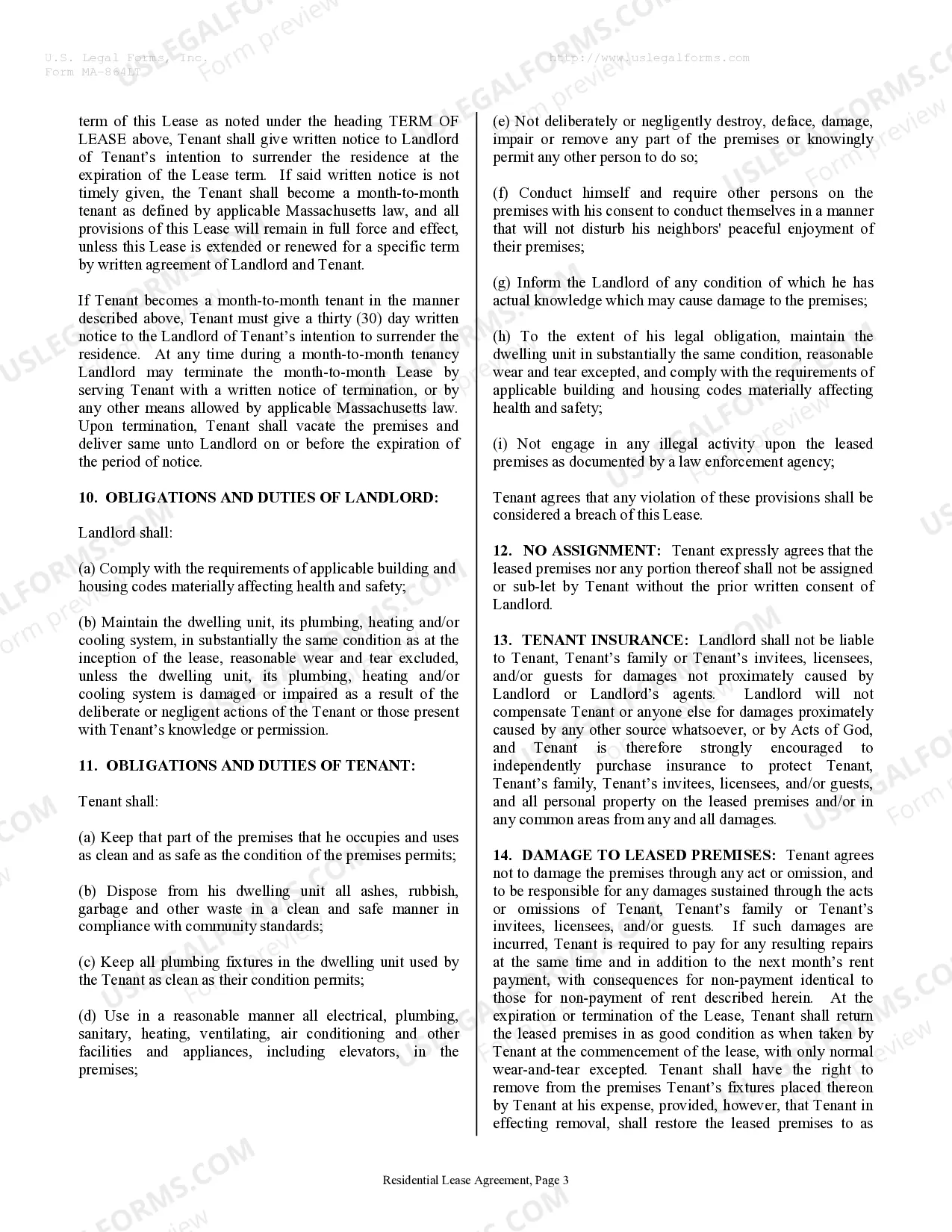
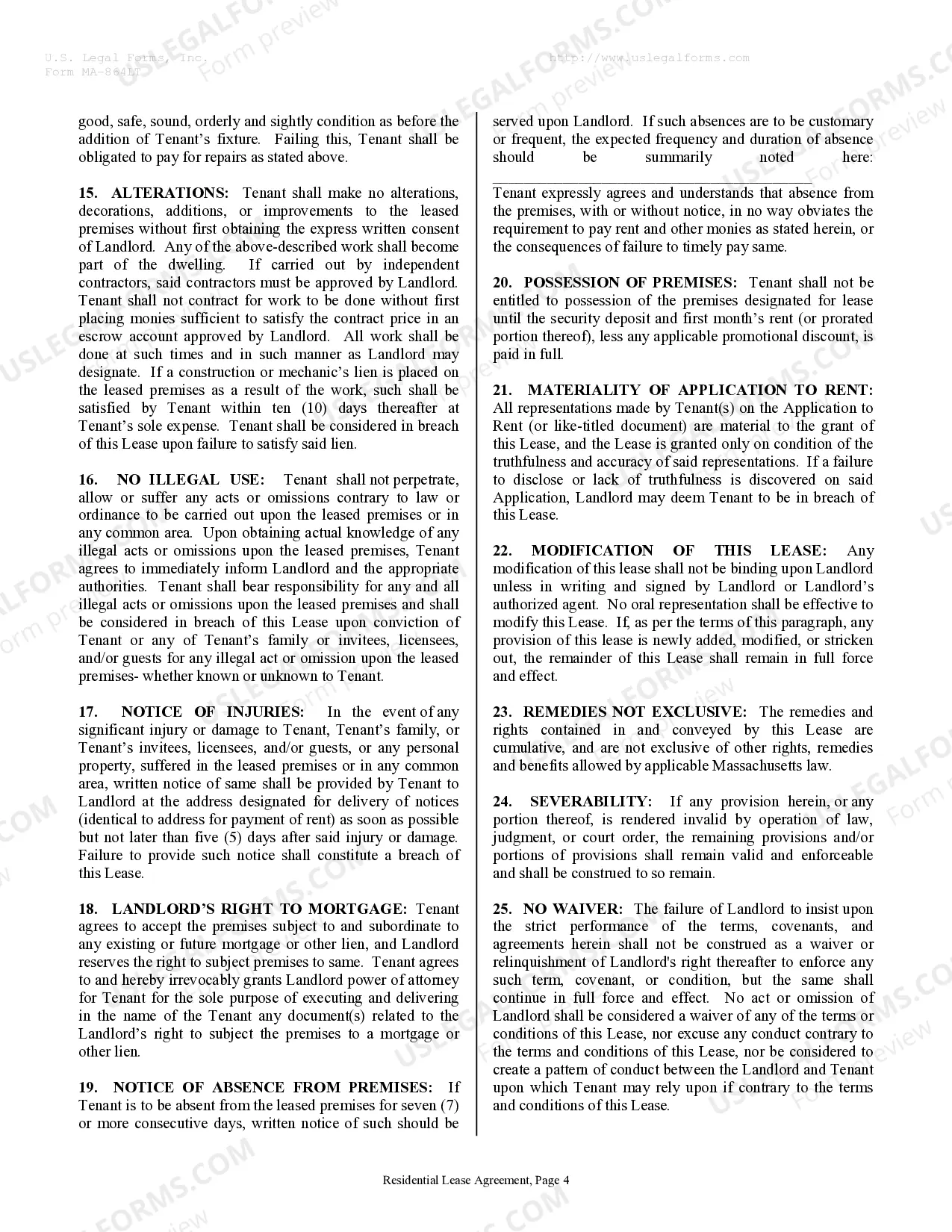
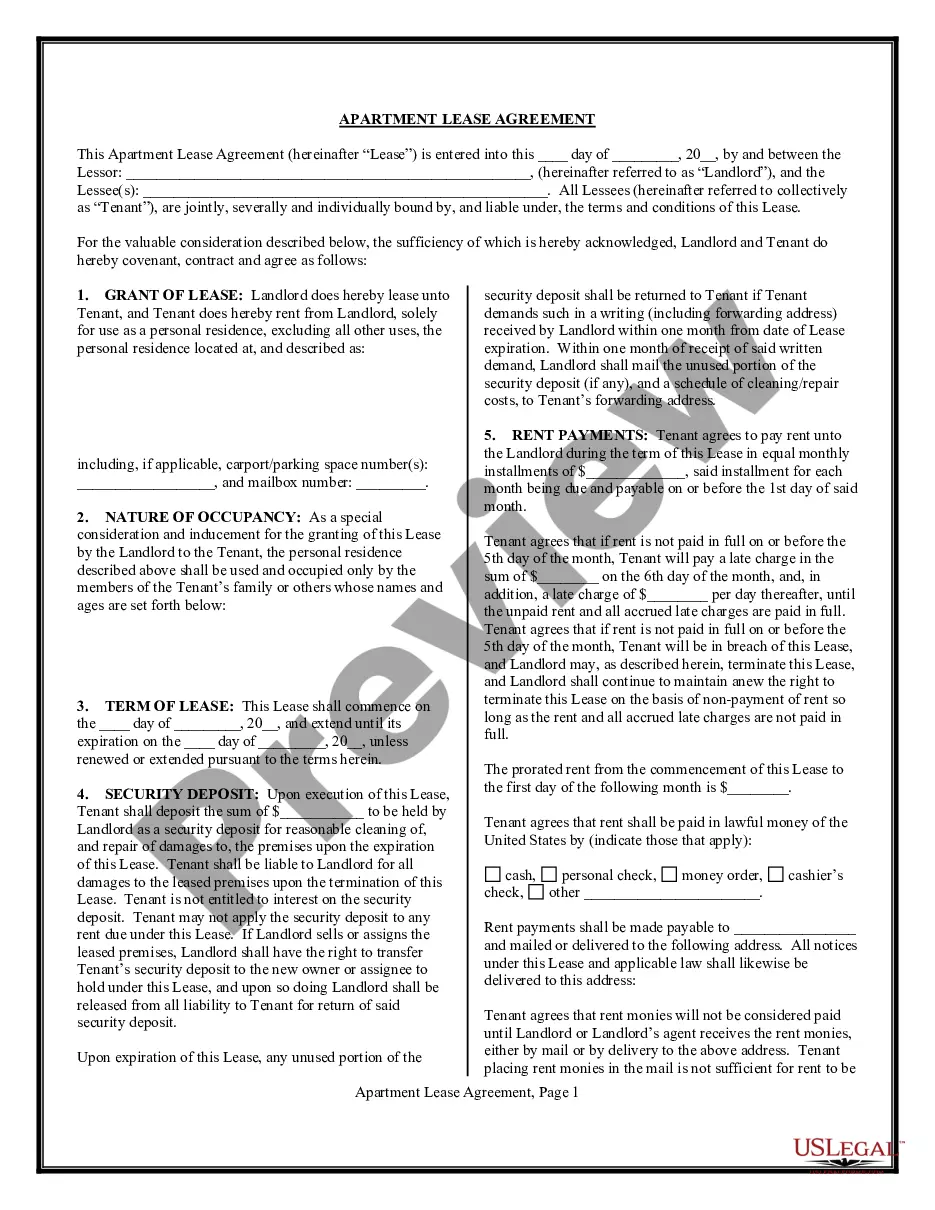
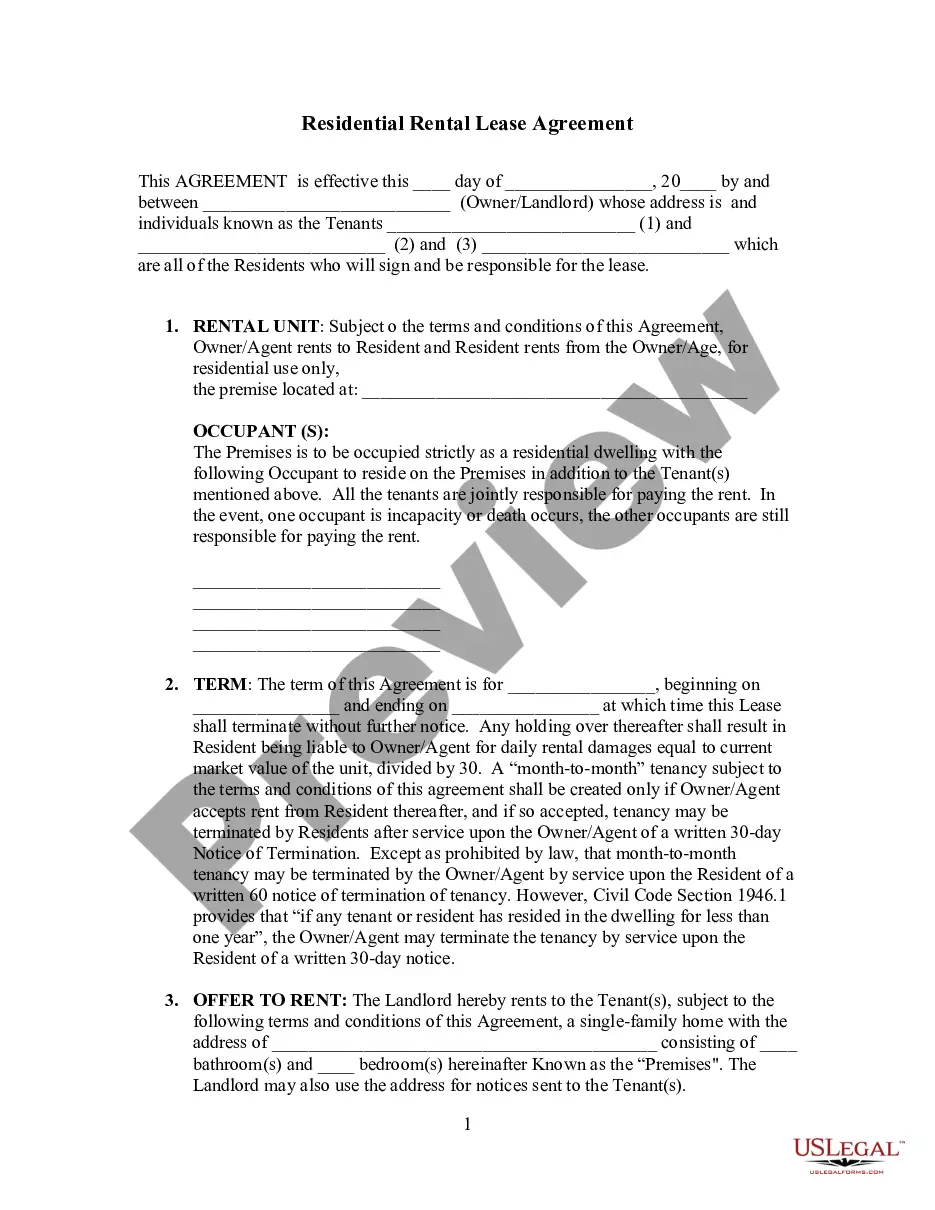
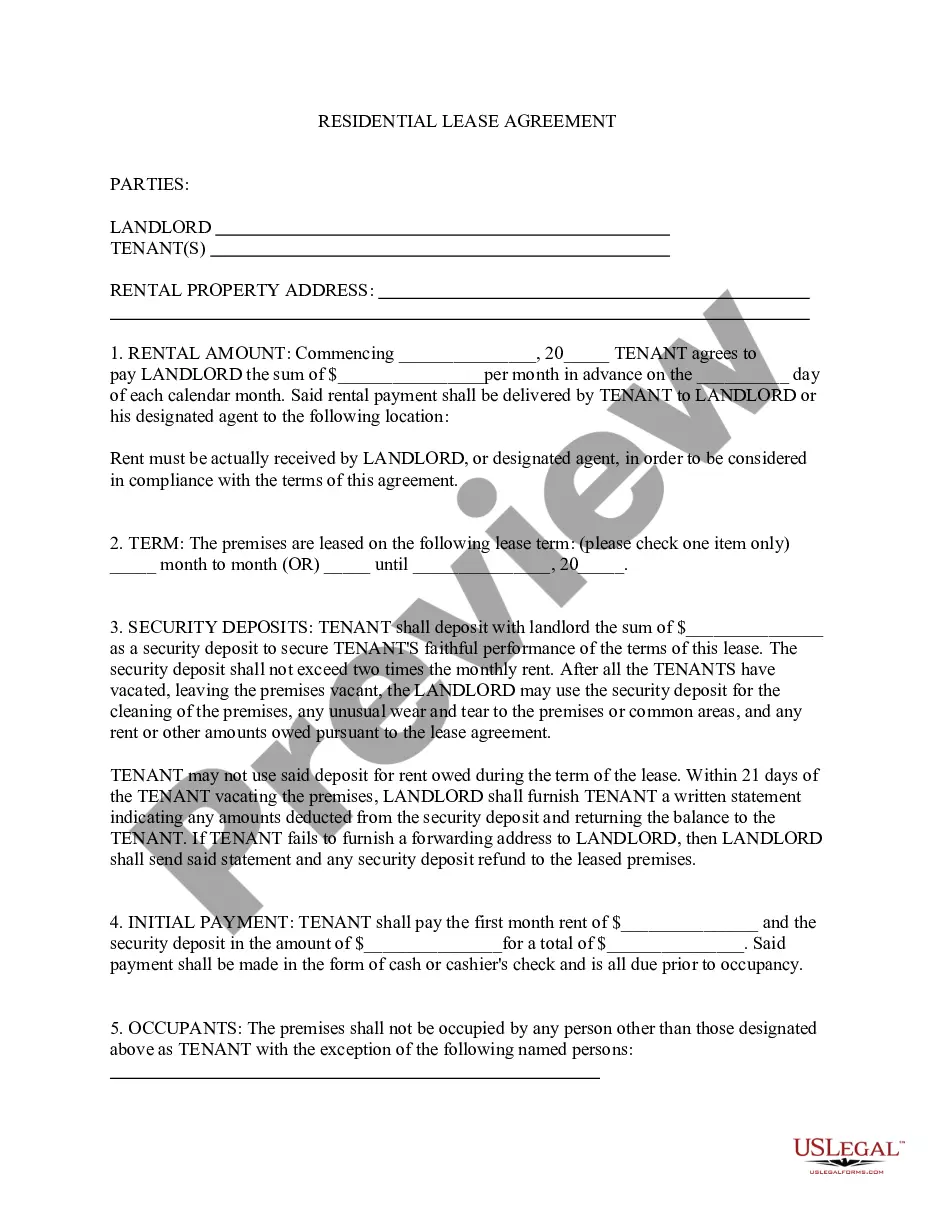
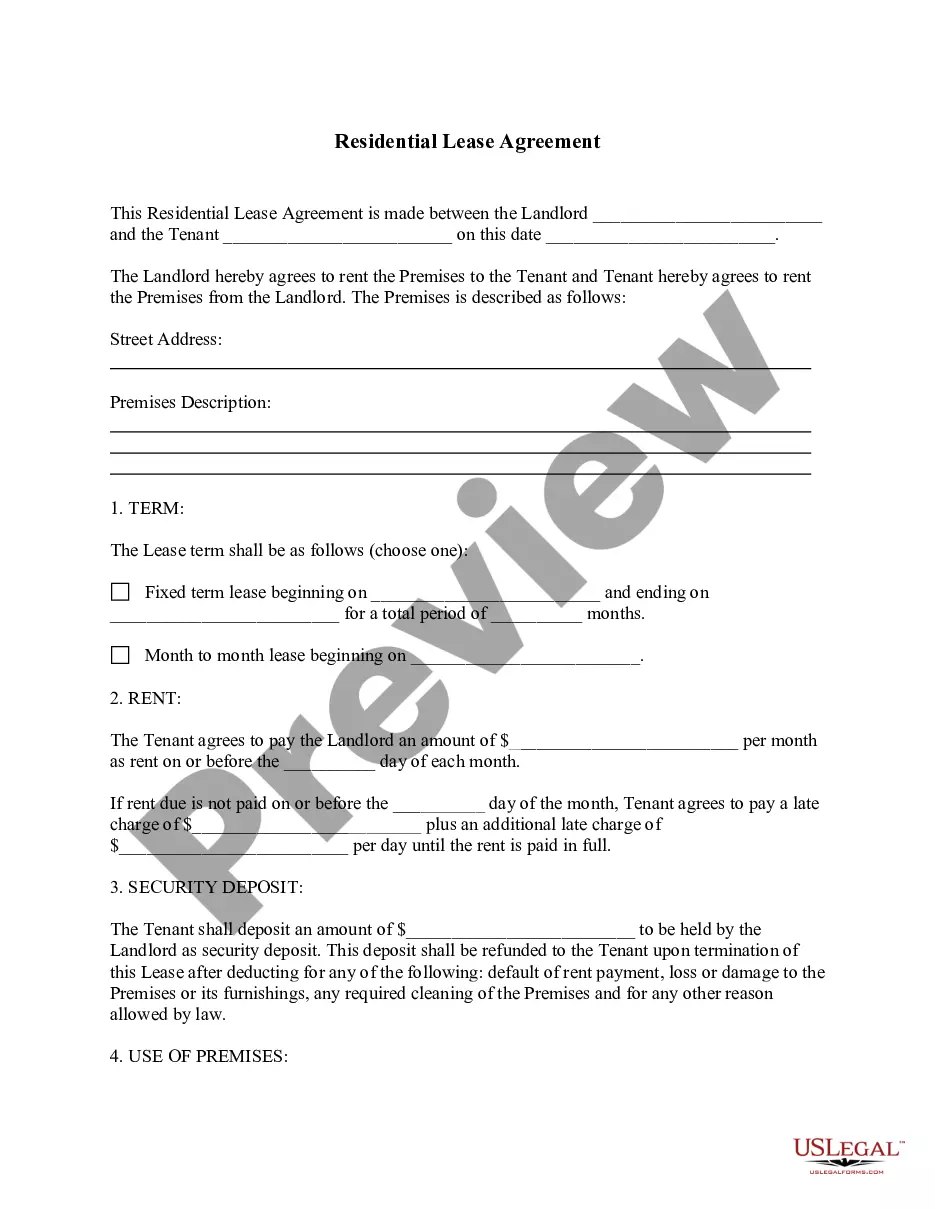
Residential Rental Lease Agreement
PART II.
REAL AND PERSONAL PROPERTY AND DOMESTIC RELATIONS.
TITLE I.
TITLE TO REAL PROPERTY.
Long term interests; treatment as freeholder.
If land is demised for the term of one hundred
years or more, the term shall, so long as fifty years thereof remain unexpired,
be regarded as an estate in fee simple as to everything concerning the
descent and devise thereof, upon the decease of the owner, the right of
dower as defined in section one of chapter one hundred and eighty-nine
therein, the sale thereof by executors, administrators, guardians, conservators
or trustees, the levy of execution thereon, and the redemption thereof
if mortgaged or taken on execution; and whoever holds as lessee or assignee
under such a lease shall, so long as fifty years of the term remain unexpired,
be regarded as a freeholder for all purposes. Title 1, Part 2, Section
1.
Assignment of dower.
If dower as defined in section one of chapter
one hundred and eighty-nine is assigned out of such land, the husband or
widow and his or her assigns shall pay to the owner of the unexpired residue
of the term one third of the rent reserved in the lease under which the
wife or husband held the term. Title 1, Part 2, Section 2.
Tenancy at sufferance; liability for rent.
Tenants at sufferance in possession of land
or tenements shall be liable to pay rent therefor for such time as they
may occupy or detain the same. Title 1, Part 2, Section 3.
Liability of tenant for rent for proportion of land in possession.
A person in possession of land out of which
rent is due shall be liable for the amount or proportion of rent due from
the land in his possession although it is only a part of that originally
demised. Title 1, Part 2, Section 4.
Action to recover rent; evidence.
Such rent may be recovered in contract, and
the deed of demise or other written instrument, if any, showing the provisions of the lease, may be
used in evidence by either party to prove the amount of rent due from the
defendant. Title 1, Part 2, Section 5.
Survival of action.
Such action may be brought by or against executors
and administrators for any arrears of rent accrued in the lifetime of the
deceased parties, respectively, in the same manner as for debts due from
or to the same parties in their lifetime on a personal contract.
Title 1, Part 2, Section 6.
Remedies of landlords.
The six preceding sections shall not deprive
landlords of any other legal remedy for the recovery of rents, whether
secured by lease or by law. Title 1, Part 2, Section 7.
Recovery of rent accruing before determination of lease.
If land is held by lease of a person having
an estate therein determinable on a life or on a contingency, and such
estate determines before the end of a period for which rent is payable,
or if an estate created by a written lease or an estate at will is determined
before the end of such period by surrender, either express or by operation
of law, by notice to quit for non-payment of rent, or by the death of any
party, the landlord or his executor or administrator may recover in contract,
a proportional part of such rent according to the portion of the last period
for which such rent was accruing which had expired at such determination.
Title 1, Part 2, Section 8.
Recovery of rent paid in advance.
If, upon the determination of a tenancy, in
any manner mentioned in the preceding section, before the end of a period for which rent is payable,
the rent therefor has been paid before such determination, a proportionate
part thereof, according to the portion of such period then unexpired, may
be recovered back in contract. Title 1, Part 2, Section 9.
Rent as a necessary.
Debts for the rent of a dwelling house occupied
by the debtor or his family shall be considered as claims for necessaries.
Title 1, Part 2, Section 10.
Determination of lease for nonpayment of rent.
Upon the neglect or refusal to pay the rent
due under a written lease, fourteen days' notice to quit, given in writing
by the landlord to the tenant, shall be sufficient to determine the lease,
unless the tenant, on or before the day the answer is due, in an action
by the landlord to recover possession of the premises, pays or tenders
to the landlord or to his attorney all rent then due, with interest and
costs of suit. If the neglect or refusal to pay the rent due was caused
by a failure or delay of the federal government, the commonwealth or any
municipality, or any departments, agencies or authorities thereof, in the
mailing or delivery of any subsistence or rental payment, check or voucher
other than a salary payment to either the tenant or the landlord, the court
in any such action shall continue the hearing not less than seven days
in order to furnish notice of such action to the appropriate agency and
shall, if all rent due with interest and costs of suit has been tendered
to the landlord within such time, treat the tenancy as not having been
terminated. Title 1, Part 2, Section 11.
Termination of lease for nonpayment of rent.
Upon the neglect or refusal by the tenant to
pay the rent due under a written lease of premises for other than dwelling
purposes, the landlord shall be entitled to terminate the lease either
(i) in accordance with the provisions of the lease or (ii) in the absence
of such lease provisions, by at least fourteen days notice to quit, given
in writing to the tenant. If a landlord terminates the lease by at least
fourteen days notice pursuant to clause (ii) of the preceding sentence,
the tenant shall be entitled to cure on or before the day the answer is
due in any action by the landlord to recover possession of the premises, by paying
or tendering to the landlord or to his attorney all rent then due, with
interest and costs of such action. The rights to cure provided herein,
shall apply only to termination pursuant to clause (ii) and shall not apply
to termination in accordance with the provisions of the lease. Title
1, Part 2, Section 11A.
Notice to determine estate at will.
Estates at will may be determined by either
party by three months' notice in writing for that purpose given to the
other party; and, if the rent reserved is payable at periods of less than
three months, the time of such notice shall be sufficient if it is equal
to the interval between the days of payment or thirty days, whichever is
longer. Such written notice may include an offer to establish a new tenancy
for the same premises on terms different from that of the tenancy being terminated and the validity of such written notice shall not be
affected by the inclusion of such offer. In case of neglect or refusal
to pay the rent due from a tenant at will, fourteen days' notice to quit,
given in writing by the landlord to the tenant, shall be sufficient to
determine the tenancy; provided, that the tenancy of a tenant who has not
received a similar notice from the landlord within the twelve months next
preceding the receipt of such notice shall not be determined if the tenant, within ten days after the receipt thereof, pays or tenders
to the landlord, the landlord's attorney, or the person to whom the tenant
customarily pays rent, the full amount of any rent due. Every notice to
determine an estate at will for nonpayment of rent shall contain the following
notification to the tenant: "If you have not received a notice to quit
for nonpayment of rent within the last twelve months, you have a right
to prevent termination of your tenancy by paying or tendering to your landlord, your landlord's attorney or the person
to whom you customarily pay your rent the full amount of rent due within
ten days after your receipt of this notice." If any notice to determine
an estate at will for nonpayment of rent shall fail to contain such notification,
the time within which the tenant receiving the notice would be entitled
to pay or tender rent pursuant to this section shall be extended to the day the answer is due in
any action by the landlord to recover possession of the premises. Failure
to include such notice shall not otherwise affect the validity of the said
notice. If the neglect or refusal to pay the rent due was caused by a failure
or delay of the federal government, the commonwealth or any municipality,
or any departments, agencies or authorities thereof, in the mailing or
delivery of any subsistence or rental payment, check or voucher other than a salary payment to either the tenant
or the landlord, the court in any action for possession shall continue
the hearing not less than seven days in order to furnish notice of such
action to the appropriate agency and shall, if all rent due with interest
and costs of suit has been tendered to the landlord within such time, treat
the tenancy as not having been terminated. Title 1, Part 2, Section
12.
Recovery of possession after termination of tenancy at will.
Whenever a tenancy at will of premises occupied
for dwelling purposes, other than a room or rooms in a hotel, is terminated,
without fault of the tenant, either by operation of law or by act of the
landlord, except as provided in section twelve, no action to recover possession
of the premises shall be brought, nor shall the tenant be dispossessed,
until after the expiration of a period, equal to the interval between the
days on which the rent reserved is payable or thirty days, whichever is
longer, from the time when the tenant receives notice in writing of such
termination; but such tenant shall be liable to pay rent for such time
during the said period as he occupies or retains the premises, at the same
rate as theretofore payable by him while a tenant at will; provided, that
in the case of a rooming house, an action to recover possession of premises
occupied for dwelling purposes may be brought seven days after written
notice if the rent is payable on either a weekly or daily basis. A tenancy
at will of property occupied for dwelling purposes shall not be terminated
by operation of law by the conveyance, transfer or leasing of the premises
by the owner or landlord thereof. Title 1, Part 2, Section 13.
Wrongful acts of lessor or landlord of buildings or premises
occupied for dwelling or residential purposes; criminal penalties; civil
remedies; jurisdiction; sections applicable to acts of reprisal, waiver
in leases or rental agreements prohibited.
Any lessor or landlord of any building or part
thereof occupied for dwelling purposes, other than a room or rooms in a hotel, but including
a manufactured home or land therefor, who is required by law or by the
express or implied terms of any contract or lease or tenancy at will to
furnish water, hot water, heat, light, power, gas, elevator service, telephone
service, janitor service or refrigeration service to any occupant of such
building or part thereof,who willfully or intentionally fails to furnish
such water, hot water, heat, light, power, gas, elevator service, telephone
service, janitor service or refrigeration service at any time when the
same is necessary to the proper or customary use of such building or part
thereof, or any lessor or landlord who directly or indirectly interferes
with the furnishing by another of such utilities or services, or who transfers
the responsibility for payment for any utility services to the occupant
without his knowledge or consent, or any lessor or landlord who directly
or indirectly interferes with the quiet enjoyment of any residential premises
by the occupant, or who attempts to regain possession of such premises
by force without benefit of judicial process, shall be punished by a fine of not less than twenty-five dollars nor more than three hundred
dollars, or by imprisonment for not more than six months. Any person who
commits any act in violation of this section shall also be liable for actual
and consequential damages or three month's rent, whichever is greater,
and the costs of the action, including a reasonable attorney's fee, all
of which may be applied in setoff to or in recoupment against any claim
for rent owed or owing. The superior and district courts shall have jurisdiction
in equity to restrain violations of this section. The provisions of section eighteen of chapter one hundred and eighty-six and section
two A of chapter two hundred and thirty-nine shall apply to any act taken
as a reprisal against any person for reporting or proceeding against violations
of this section. Any waiver of this provision in any lease or other rental
agreement, except with respect to any restriction on the provision of a
service specified in this section imposed by the United States or any agency
thereof or the commonwealth or any agency or political subdivision thereof
and not resulting from the acts or omissions of the landlord or lessor, and except for interruptions of any specified service
during the time required to perform necessary repairs to apparatus necessary
for the delivery of said service or interruptions resulting from natural
causes beyond the control of the lessor or landlord, shall be void and
unenforceable. Title 1, Part 2, Section 14.
Provisions of lease or rental agreement pertaining to non-liability
of landlord.
Any provision of a lease or other rental agreement
relating to real property whereby a lessee or tenant enters into a covenant,
agreement or contract, by the use of any words whatsoever, the effect of
which is to indemnify the lessor or landlord or hold the lessor or landlord
harmless, or preclude or exonerate the lessor or landlord from any or all
liability to the lessee or tenant, or to any other person, for any injury,
loss, damage or liability arising from any omission, fault, negligence
or other misconduct of the lessor or landlord on or about the leased or
rented premises or on or about any elevators, stairways, hallways or other
appurtenance used in connection therewith, shall be deemed to be against
public policy and void. Title 1, Part 2, Section 15.
Agreement to waive notices; effect upon lease.
Any provision of a lease or other rental agreement
relating to residential real property whereby a lessee or tenant enters into a covenant, agreement
or contract, by the use of any words whatsoever, the effect of which is
to waive the notices required under section eleven or twelve, shall be
deemed to be against public policy and void. Title 1, Part 2, Section 15A.
Entrance of premises prior to termination of lease; payments;
receipts; interest; records; security deposits.
(1)
(a) No lease relating to residential real property shall contain
a provision that a lessor may, except to inspect the premises, to make
repairs thereto or to show the same to a prospective tenant, purchaser,
mortgagee or its agents, enter the premises before the termination date
of such lease. A lessor may, however, enter such premises:
(i) in accordance with a court order;
(ii) if the premises appear to have been abandoned by the lessee;
or
(iii) to inspect, within the last thirty days of the tenancy or
after either party has given notice to the other of intention to terminate
the tenancy, the premises for the purpose of determining the amount of
damage, if any, to the premises which would be cause for deduction from
any security deposit held by the lessor pursuant to this section.
(b) At or prior to the commencement of any tenancy, no lessor may
require a tenant or prospective tenant to pay any amount in excess of the
following:
(i) rent for the first full month of occupancy; and,
(ii) rent for the last full month of occupancy calculated at the
same rate as the first month; and,
(iii) a security deposit equal to the first month's rent provided
that such security deposit is deposited as required by subsection (3) and
that the tenant is given the statement of condition as required by subsection
(2); and,
(iv) the purchase and installation cost for a key and lock.
(c) No lease or other rental agreement shall impose any interest
or penalty for failure to pay rent until thirty days after such rent shall
have been due.
(d) No lessor or successor in interest shall at any time subsequent
to the commencement of a tenancy demand rent in advance in excess of the
current month's rent or a security deposit in excess of the amount allowed
by this section. The payment in advance for occupancy pursuant to this
section shall be binding upon all successors in interest.
(e) A security deposit shall continue to be the property of the
tenant making such deposit, shall not be commingled with the assets of
the lessor, and shall not be subject to the claims of any creditor of the
lessor or of the lessor's successor in interest, including a foreclosing
mortgagee or trustee in bankruptcy; provided, however, that the tenant
shall be entitled to only such interest as is provided for in subsection
(3) (b).
(2)
(a) Any lessor or his agent who receives, at or prior to the commencement
of a tenancy, rent in advance for the last month of the tenancy from a
tenant or prospective tenant shall give to such tenant or prospective tenant
at the time of such advance payment a receipt indicating the amount of
such rent, the date on which it was received, its intended application
as rent for the last month of the tenancy, the name of the person receiving
it and, in the case of an agent, the name of the lessor for whom the rent
is received, and a description of the rented or leased premises, and a
statement indicating that the tenant is entitled to interest on said rent
payment at the rate of five per cent per year or other such lesser amount
of interest as has been received from the bank where the deposit has been
held payable in accordance with the provisions of this clause, and a statement
indicating that the tenant should provide the lessor with a forwarding
address at the termination of the tenancy indicating where such interest
may be given or sent.
Any lessor or his agent who receives said rent in advance for the
last month of tenancy shall, beginning with the first day of tenancy, pay
interest at the rate of five per cent per year or other such lesser amount
of interest as has been received from the bank where the deposit has been
held. Such interest shall be paid over to the tenant each year as provided
in this clause; provided, however, that in the event that the tenancy is
terminated before the anniversary date of such tenancy, the tenant shall
receive all accrued interest within thirty days of such termination. Interest
shall not accrue for the last month for which rent was paid in advance.
At the end of each year of tenancy, such lessor shall give or send to the
tenant from whom rent in advance was collected a statement which shall
indicate the amount payable by such lessor to the tenant. The lessor shall
at the same time give or send to such tenant the interest which is due
or shall notify the tenant that he may deduct the interest from the next
rental payment of such tenant. If, after thirty days from the end of each
year of the tenancy, the tenant has not received said interest due or said
notice to deduct the interest from the next rental payment, the tenant
may deduct from his next rent payment the interest due.
If the lessor fails to pay any interest to which the tenant is then
entitled within thirty days after the termination of the tenancy, the tenant
upon proof of the same in an action against the lessor shall be awarded
damages in an amount equal to three times the amount of interest to which
the tenant is entitled, together with court costs and reasonable attorneys
fees.
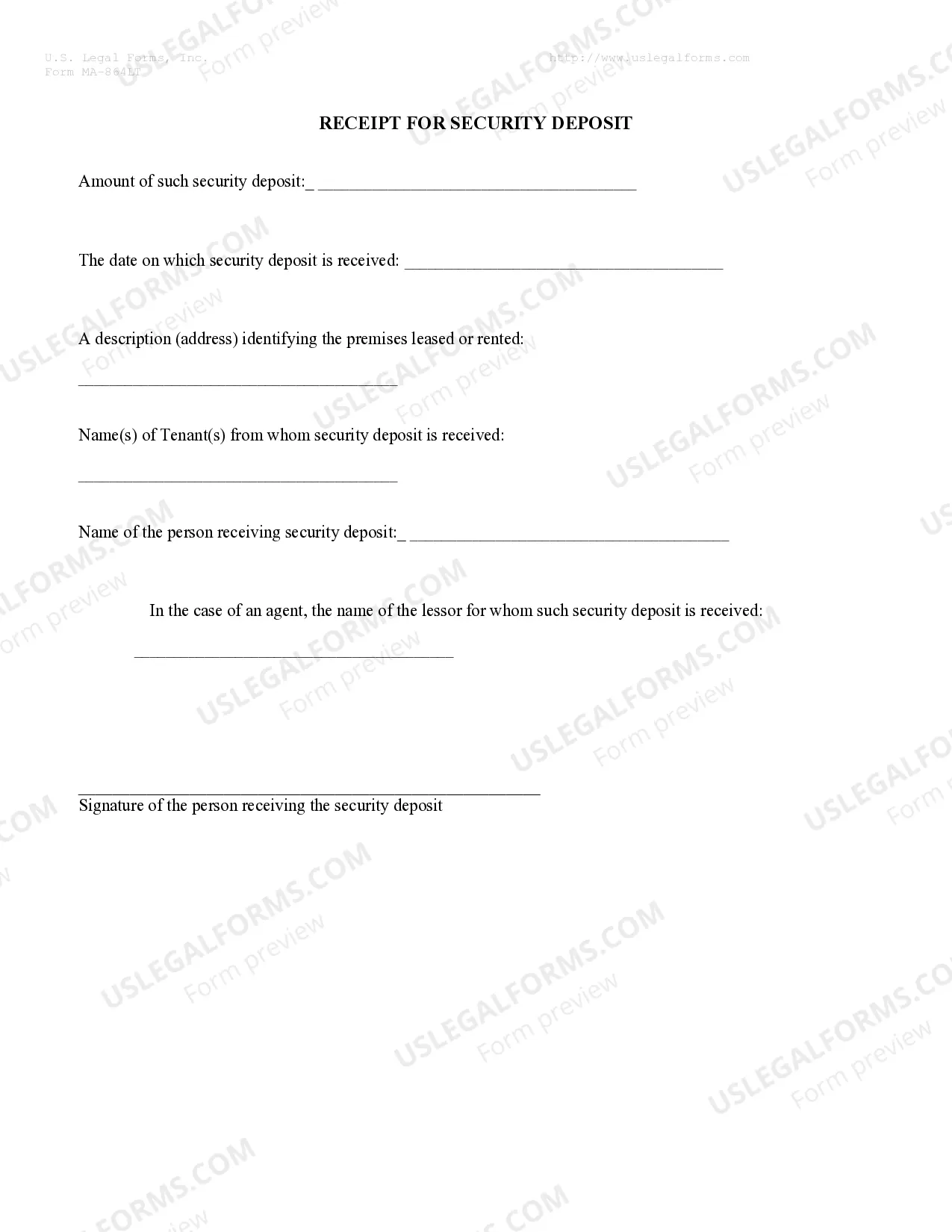
(b) Any lessor or his agent who receives a security deposit from
a tenant or prospective tenant shall give said tenant or prospective tenant
at the time of receiving such security deposit a receipt indicating the
amount of such security deposit, the name of the person receiving it and,
in the case of an agent, the name of the lessor for whom such security
deposit is received, the date on which it is received, and a description
of the premises leased or rented. Said receipt shall be signed by the person
receiving the security deposit.
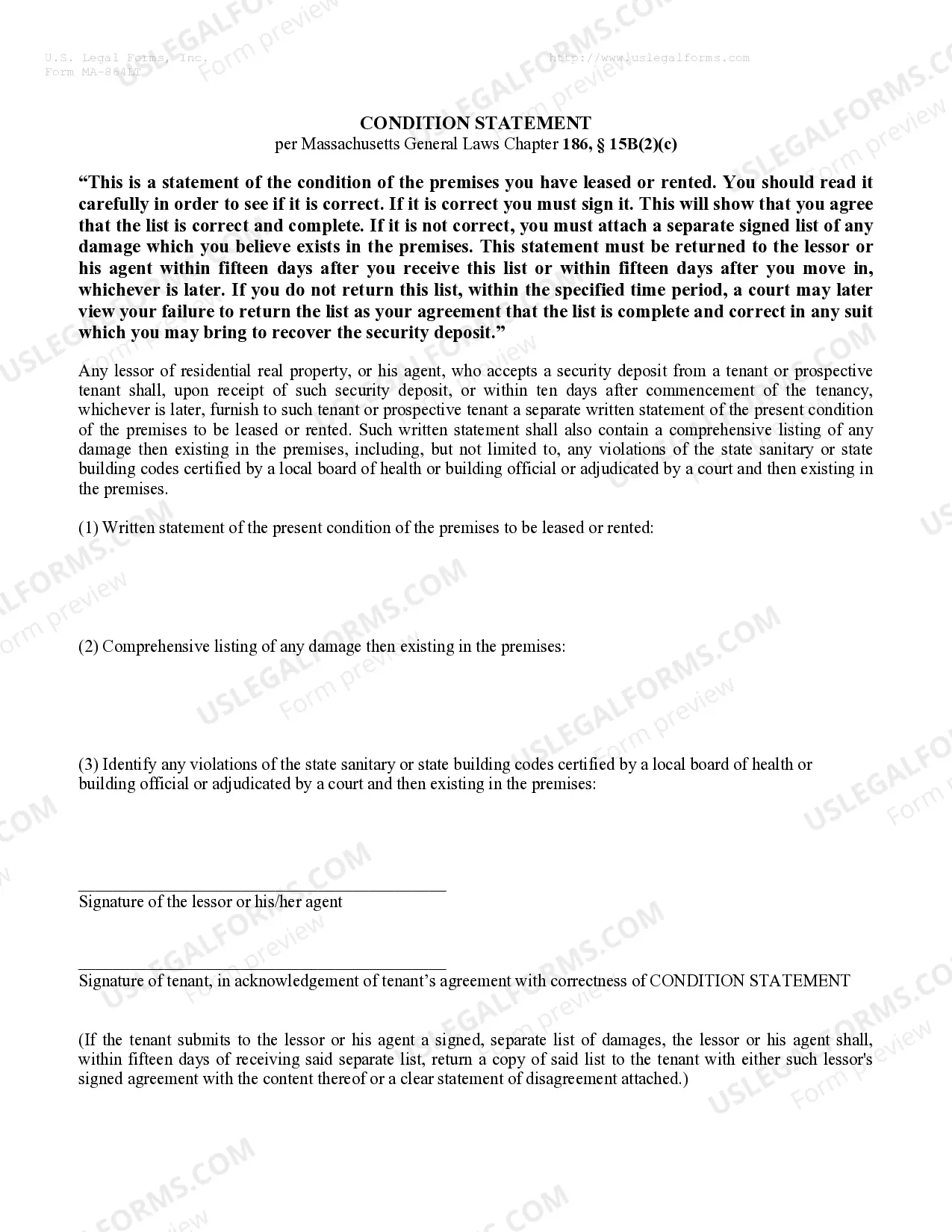
(c) Any lessor of residential real property, or his agent, who accepts
a security deposit from a tenant or prospective tenant shall, upon receipt
of such security deposit, or within ten days after commencement of the
tenancy, whichever is later, furnish to such tenant or prospective tenant
a separate written statement of the present condition of the premises to
be leased or rented. Such written statement shall also contain a comprehensive
listing of any damage then existing in the premises, including, but not
limited to, any violations of the state sanitary or state building codes
certified by a local board of health or building official or adjudicated
by a court and then existing in the premises. Such statement shall be signed
by the lessor or his agent and contain the following notice in twelve-point
bold-face type at the top of the first page thereof:
"This is a statement of the condition of the premises you have
leased or rented. You should read it carefully in order to see if it is
correct. If it is correct you must sign it. This will show that you agree
that the list is correct and complete. If it is not correct, you must attach
a separate signed list of any damage which you believe exists in the premises.
This statement must be returned to the lessor or his agent within fifteen
days after you receive this list or within fifteen days after you move
in, whichever is later. If you do not return this list, within the specified
time period, a court may later view your failure to return the list as
your agreement that the list is complete and correct in any suit which
you may bring to recover the security deposit."
If the tenant submits to the lessor or his agent a separate list
of damages, the lessor or his agent shall, within fifteen days of receiving
said separate list, return a copy of said list to the tenant with either
such lessor's signed agreement with the content thereof or a clear statement
of disagreement attached.
(d) Every lessor who accepts a security deposit shall maintain a
record of all such security deposits received which contains the following
information:
(i) a detailed description of any damage done to each of the dwelling
units or premises for which a security deposit has been accepted, returned
to any tenant thereof or for which the lessor has brought suit against
any tenant;
(ii) the date upon which the occupancy of the tenant or tenants
charged with such damage was terminated; and
(iii) whether repairs were performed to remedy such damage, the
dates of said repairs, the cost thereof, and receipts therefor.
Said record shall also include copies of any receipt or statement
of condition given to a tenant or prospective tenant as required by this
section.
Said record shall be available for inspection upon request of a
tenant or prospective tenant during normal business hours in the office
of the lessor or his agent. Upon a wrongful failure by the lessor or his
agent to make such record available for inspection by a tenant or prospective
tenant, said tenant or prospective tenant shall be entitled to the immediate
return of any amount paid in the form of a security deposit together with
any interest which has accrued thereon.
The lessor or his agent shall maintain said record for each dwelling
unit or premises for which a security deposit was accepted for a period
of two years from the date of termination of the tenancy or occupancy upon
which the security deposit was conditioned.
(3)
(a) Any security deposit received by such lessor shall be held
in a separate, interest-bearing account in a bank, located within the commonwealth
under such terms as will place such deposit beyond the claim of creditors
of the lessor, including a foreclosing mortgagee or trustee in bankruptcy,
and as will provide for its transfer to a subsequent owner of said property.
A receipt shall be given to the tenant within thirty days after such deposit
is received by the lessor which receipt shall indicate the name and location
of the bank in which the security deposit has been deposited and the amount
and account number of said deposit. Failure to comply with this paragraph
shall entitle the tenant to immediate return of the security deposit.
(b) A lessor of residential real property who holds a security deposit
pursuant to this section for a period of one year or longer from the commencement
of the term of the tenancy shall, beginning with the first day of the tenancy,
pay interest at the rate of five per cent per year, or other such lesser
amount of interest as has been received from the bank where the deposit
has been held payable to the tenant at the end of each year of the tenancy.
Such interest shall be paid over to the tenant each year as provided
in this clause, provided, however, that in the event that the tenancy is
terminated before the anniversary date of the tenancy, the tenant shall
receive all accrued interest within thirty days of such termination. Such
interest shall be beyond the claims of such lessor, except as provided
for in this section. At the end of each year of a tenancy, such lessor
shall give or send to the tenant from whom a security deposit has been
received a statement which shall indicate the name and address of the bank
in which the security deposit has been placed, the amount of the deposit,
the account number, and the amount of interest payable by such lessor to
the tenant. The lessor shall at the same time give or send to each such
tenant the interest which is due or shall include with the statement required
by this clause a notification that the tenant may deduct the interest from
the tenant's next rental payment. If, after thirty days from the end of
each year of the tenancy, the tenant has not received such notice or payment,
the tenant may deduct from his next rent payment the interest due.
(4) The lessor shall, within thirty days after the termination
of occupancy under a tenancy-at-will or the end of the tenancy as specified
in a valid written lease agreement, return to the tenant the security deposit
or any balance thereof; provided, however, that the lessor may deduct from
such security deposit for the following:
(i) any unpaid rent which has not been validly withheld or deducted
pursuant to the provisions of any special or general law and
(ii) any unpaid increase in real estate taxes which the tenant is
obligated to pay pursuant to a tax escalation clause which conforms to
the requirements of section fifteen C; and
(iii) a reasonable amount necessary to repair any damage caused
to the dwelling unit by the tenant or any person under the tenant's control
or on the premises with the tenant's consent, reasonable wear and tear
excluded. In the case of such damage, the lessor shall provide to the tenant
within such thirty days an itemized list of damages, sworn to by the lessor
or his agent under pains and penalties of perjury, itemizing in precise
detail the nature of the damage and of the repairs necessary to correct
such damage, and written evidence, such as estimates, bills, invoices or
receipts, indicating the actual or estimated cost thereof. No amount shall
be deducted from the security deposit for any damage to the dwelling unit
which was listed in the separate written statement of the present condition
of the premises which was required to be given to the tenant prior to the
execution of the lease or creation of the tenancy pursuant to clause (c)
of subsection (2) or any damages listed in any separate list submitted
by the tenant and signed by the lessor or his agent pursuant to said clause
(c), unless the lessor subsequently repaired or caused to be repaired said
damage and can prove that the renewed damage was unrelated to the prior
damage and was caused by the tenant or by any person under the tenant's
control or on the premises with the tenant's consent. Nothing in this section
shall limit the right of a landlord to recover from a tenant, who wilfully
or maliciously destroys or damages the real or personal property of said
landlord, to the forfeiture of a security deposit, when the cost of repairing
or replacing such property exceeds the amount of such security deposit.
No deduction may be made from the security deposit for any purpose
other than those set forth in this section.
(5) Whenever a lessor who receives a security deposit transfers
his interest in the dwelling unit for which the security deposit is held,
whether by sale, assignment, death, appointment of a receiver or trustee
in bankruptcy, or otherwise, the lessor shall transfer such security deposit
together with any interest which has accrued thereon for the benefit of
the tenant who made such security deposit to his successor in interest,
and said successor in interest shall be liable for the retention and return
of said security deposit in accordance with the provisions of this section
from the date upon which said transfer is made; provided however, that
the granting of a mortgage on such premises shall not be a transfer of
interest. The successor in interest shall, within forty-five days from
the date of said transfer, notify the tenant who made such security deposit
that such security deposit was transferred to him and that he is holding
said security deposit. Such notice shall also contain the lessor's name,
business address, and business telephone number, and the name, business
address, and business telephone number of his agent, if any. Said notice
shall be in writing.
Upon such transfer, the lessor or his agent shall continue to be
liable with respect to the provisions of this section until:
(a) there has been a transfer of the amount of the security deposit
so held to the lessor's successor in interest and the tenant has been notified
in writing of the transfer and of the successor in interest's name, business
address, and business telephone number;
(b) there has been compliance with this clause by the successor
in interest; or
(c) the security deposit has been returned to the tenant.
In the event that the lessor fails to transfer said security deposit
to his successor an interest as required by this subsection the successor
in interest shall, without regard to the nature of the transfer, assume
liability for payment of the security deposit to the tenant in accordance
with the provisions of this section; provided, however, that if the tenant
still occupies the dwelling unit for which the security deposit was given,
said successor in interest may satisfy such obligation by granting the tenant free use and occupancy of the dwelling unit
for a period of time equivalent to that period of time for which the dwelling
unit could be leased or occupied if the security deposit were deemed to
be rent. The liability imposed by this paragraph shall not apply to a city
or town which acquires title to property pursuant to chapter sixty or to
a foreclosing mortgagee or a mortgagee in possession which is a financial
institution chartered by the commonwealth or the United States. The term
"rent", as used in the preceding sentence, shall mean the periodic sum paid by the tenant for the use and occupation of the dwelling unit
in accordance with the terms of his lease or other rental agreement.
(6) The lessor shall forfeit his right to retain any portion of
the security deposit for any reason, or, in any action by a tenant to recover
a security deposit, to counterclaim for any damage to the premises if he:
(a) fails to deposit such funds in an account as required by subsection
(3);
(b) fails to furnish to the tenant within thirty days after the
termination of the occupancy the itemized list of damages, if any, in compliance
with the provisions of this section;
(c) uses in any lease signed by the tenant any provision which conflicts
with any provision of this section and attempts to enforce such provision
or attempts to obtain from the tenant or prospective tenant a waiver of
any provision of this section;
(d) fails to transfer such security deposit to his successor in
interest or to otherwise comply with the provisions of subsection (5) after
he has succeeded to an interest in residential real property;
or,
(e) fails to return to the tenant the security deposit or balance
thereof to which the tenant is entitled after deducting therefrom any sums
in accordance with the provisions of this section, together with any interest
thereon, within thirty days after termination of the tenancy.
(7) If the lessor or his agent fails to comply with clauses (a),
(d), or (e) of subsection 6, the tenant shall be awarded damages in an
amount equal to three times the amount of such security deposit or balance
thereof to which the tenant is entitled plus interest at the rate of five
per cent from the date when such payment became due, together with court
costs and reasonable attorney's fees.
(7A) Whenever a lessor who receives rent in advance for the last
month of tenancy transfers his interest in the dwelling unit for which
the rental advance was received, whether by sale, assignment, death, appointment
of a receiver or trustee in bankruptcy, or otherwise, the lessor shall
credit an amount equal to such rental advance together with any interest
which has accrued thereon for the benefit of the tenant who made such rental
advance, to the successor in interest of such lessor, and said successor
in interest shall be liable for crediting the tenant with such rental advance,
and for paying all interest accrued thereon in accordance with the provisions
of this section from the date upon which said transfer is made; provided,
however, that the granting of a mortgage on such premises shall not be
deemed a transfer of interest. The successor in interest shall, within
forty-five days from the date of said transfer, notify the tenant who made
such rental advance that such rental advance was so credited, and that
such successor has assumed responsibility therefor pursuant to the foregoing
provision. Such notice shall also contain the lessor's name, business address,
and business telephone number, and the name, business address, and business
telephone number of his agent, if any. Said notice shall be in writing.
Upon such transfer, the lessor or his agent shall continue to be
liable with respect to the provisions of this section until:ª (a)
there has been a credit of the amount of the rental advance so held to
the lessor's successor in interest and the tenant has been notified in
writing of the transfer and of the successor in interest's name, business
address, and business telephone number; (b) there has been compliance with
this clause by the successor in interest; or (c) the rental advance has
been credited to the tenant and all accrued interest has been paid thereon.
In the event that the lessor fails to credit said rental advance
to his successor in interest as required by this subsection, the successor
in interest shall, without regard to the nature of the transfer, assume
liability for crediting of the rental advance, and payment of all interest
thereon to the tenant in accordance with the provisions of this section;
provided, however, that if the tenant still occupies the dwelling unit
for which the rental advance was given, said successor in interest may
satisfy such obligation by granting the tenant free use and occupancy of
the dwelling unit for a period of time equivalent to the period of time
covered by the rental advance. The liability imposed by this subsection
shall not apply to a city or town which acquires title to property pursuant
to chapter sixty or to a foreclosing mortgagee or a mortgagee in possession
which is a financial institution chartered by the commonwealth or by the
United States.
(8) Any provision of a lease which conflicts with any provision
of this section and any waiver by a tenant or prospective tenant of any
provision of this section shall be deemed to be against public policy and
therefore void and unenforceable.
(9) The provisions of this section shall not apply to any lease,
rental, occupancy or tenancy of one hundred days or less in duration which
lease or rental is for a vacation or recreational purpose. Title
1, Part 2, Section 15B.
Residential real estate, lease payments based on real estate
tax increases.
No lease relating to residential real estate
shall contain a provision which obligates a lessee to make payments to
the lessor on account of an increased real estate tax levied during the
term of the lease, unless such provision expressly sets forth (1) that
the lessee shall be obligated to pay only that proportion of such increased
tax as the unit leased by him bears to the whole of the real estate so
taxed, (2) the exact percentage of any such increase which the lessee shall
pay, and (3) that if the lessor obtains an abatement of the real estate
tax levied on the whole of the real estate of which the unit leased by
the lessee is a part, a proportionate share of such abatement, less reasonable
attorney's fees, if any, shall be refunded to said lessee. Any provision
of a lease in violation of the provisions of this section shall be deemed
to be against public policy and void.
If the exact percentage of any such increased
tax contained in such a provision is found to exceed that proportion of
such increased tax as the lessee's unit bears to the whole of the real
estate so taxed, then the lessor shall return to the lessee that amount
of the tax payment collected from the lessee which exceeded the lessee's
proportionate share of the increased tax, plus interest calculated at the
rate of five per cent per year from the date of collection. Title 1, Part
2, Section 15C.
Delivery of copy of lease to lessee; penalty; waiver prohibited.
A lessor who has agreed orally to execute a
lease and obtains the signature of the lessee shall, within thirty days
thereafter, deliver a copy of said lease to the lessee, duly signed and
executed by said lessor. Whoever violates any provision of this section
shall be punished by a fine of not more than three hundred dollars. Any
waiver of this provision in any lease or other rental agreement shall be
void and unenforceable. Title 1, Part 2, Section 15D.
Action against property owner by lessee sustaining injury caused
by defect in common area; certain defense barred, waiver in lease or other
rental agreement prohibited.
An owner of a building shall be precluded from
raising as a defense in an action brought by a lessee, tenant or occupant of said building who has
sustained an injury caused by a defect in a common area, that said defect
existed at the time of the letting of the property, if said defect is at
the time of the injury a violation of the building code of the city or
town wherein the property is situated. Any waiver of this provision in
any lease or other rental agreement shall be void and unenforceable.
Title 1, Part 2, Section 15E.
Certain provisions of lease or rental agreement relating to residential
real property as to litigation and liability of landlord deemed void; remedies
of tenant.
Any provision of a lease or other rental agreement
relating to residential real
property whereby the tenant agrees to waive his right to trial
by jury in any subsequent litigation with the landlord, or agrees that
no action or failure to act by the landlord shall be construed as a constructive
eviction, shall be deemed to be against public policy and void.
If a tenant is removed from the premises or excluded
therefrom by the landlord or his agent except pursuant to a valid court
order, the tenant may recover possession or terminate the rental agreement
and, in either case, recover three months' rent or three times the damages
sustained by him, and the cost of suit, including reasonable attorney's
fees.
Any agreement or understanding between a landlord
and a tenant which purports to exempt the landlord from any liability imposed
by this section shall be deemed to be against public policy and void.
Title 1, Part 2, Section 15F.
Provisions of lease or rental agreement pertaining to children.
Any provision of a lease or other rental agreement
relating to real property whereby a lessee or tenant enters into a covenant,
agreement or contract, by the use of any words whatsoever, the effect of
which is to terminate, or to provide that the lessor or landlord may terminate,
such lease or agreement if the tenant has or shall have a child or children,
who shall occupy the premises covered by such lease or agreement, shall
be deemed to be against public policy and void. Title 1, Part 2,
Section 16.
Occupancy constituting tenancy at will; termination.
For the purposes of this chapter, chapter one
hundred and eleven and chapter two hundred and thirty-nine, occupancy of a dwelling unit within premises
licensed as a rooming house or lodging house, except for fraternities,
sororities and dormitories of educational institutions, for three consecutive
months shall constitute a tenancy at will; provided, however, that if the
rent for occupancy in such premises is payable either daily or weekly,
seven days written notice to the occupant shall be sufficient to terminate
the tenancy where the tenant is committing or permitting to exist a nuisance
in or is causing substantial damage to the rental unit, or is creating
substantial damage to the rental unit, or is creating a substantial interference
with the comfort, safety, or enjoyment of the landlord or other occupants
of the accommodation; and provided, further, that the notice shall specify
the nuisance or interference. Occupancy of a dwelling unit within a rooming
house or lodging house, except for fraternities, sororities and dormitories
of educational institutions, for more than thirty consecutive days and
less than three consecutive months, or within a fraternity, sorority or dormitory
of an educational institution for any length of time, may only be terminated
by seven days' notice in writing to the occupant by the operator of such
dwelling unit. Title 1, Part 2, Section 17.
Reprisal for reporting violations of law or for tenant's union
activity; damages and costs; notice of termination, presumption; waiver
in leases or other rental agreements prohibited.
Any person or agent thereof who threatens to
or takes reprisals against any tenant of residential premises for the tenant's
act of, commencing, proceeding with, or obtaining relief in any judicial
or administrative action the purpose of which action is to obtain damages
under, or otherwise enforce, any federal, state or local law, regulation,
by-law or ordinance, which has as its objective the regulation of residential
premises; or exercising the tenant's rights pursuant to section one hundred
and twenty-four D of chapter one hundred and sixty-four; or reporting to the board of health or, in the city of Boston to the commissioner
of housing inspection or to any other board having as its objective the
regulation of residential premises a violation or a suspected violation
of any health or building code or of any other municipal by-law or ordinance,
or state or federal law or regulation which has as its objective the regulation
of residential premises; or reporting or complaining of such violation
or suspected violation in writing to the landlord or to the agent of the landlord; or for organizing or
joining a tenants' union or similar organization, or for making or expressing
an intention to make, a payment of rent to an organization of unit owners
pursuant to paragraph (c) of section six of chapter one hundred and eighty-three
A shall be liable for damages which shall not be less than one month's
rent or more than three month's rent, or the actual damages sustained by
the tenant, whichever is greater, and the costs of the suit, including
a reasonable attorney's fee.
The receipt of any notice of termination of tenancy,
except for nonpayment of rent, or, of increase in rent, or, of any substantial
alteration in the terms of tenancy within six months after the tenant has
commenced, proceeded with, or obtained relief in such action, exercised
such rights, made such report or complaint, or organized or joined such
tenants' union or within six months after any other person has taken such
action or actions on behalf of the tenant or in, or relating to, the building
in which the tenant resides, shall create a rebuttable presumption that
such notice or other action is a reprisal against the tenant for engaging
in such activities. Such presumption shall be rebutted only by clear and
convincing evidence that such person's action was not a reprisal against
the tenant and that such person had sufficient independent justification
for taking such action, and would have in fact taken such action, in the
same manner and at the same time the action was taken, regardless of tenants
engaging in, or the belief that tenants had engaged in, activities protected under this section.
Any waiver of this provision in any lease or
other rental agreement shall be void and unenforceable. Title 1,
Chap. 2, Section 18.
Notice to landlord of unsafe condition; tort actions for injuries
resulting from uncorrected condition.
A landlord or lessor of any real estate except
an owner-occupied two- or three-family dwelling shall, within a reasonable time following
receipt of a written notice from a tenant forwarded by registered or certified
mail of an unsafe condition, not caused by the tenant, his invitee, or
any one occupying through or under the tenant, exercise reasonable care
to correct the unsafe condition described in said notice except that such
notice need not be given for unsafe conditions in that portion of the premises
not under control of the tenant. The tenant or any person rightfully on said premises injured as a result of the failure
to correct said unsafe condition within a reasonable time shall have a
right of action in tort against the landlord or lessor for damages. Any
waiver of this provision in any lease or other rental agreement shall be
void and unenforceable. The notice requirement of this section shall be
satisfied by a notice from a board of health or other code enforcement
agency to a landlord or lessor of residential premises not exempted by
the provisions of this section of a violation of the state sanitary code
or other applicable by-laws, ordinances, rules or regulations. Title
1, Part 2, Section 19.
Attorneys' fees in certain residential landlord-tenant actions.
Whenever a lease of residential property shall
provide that in any action or summary proceeding the landlord may recover
attorneys' fees and expenses incurred as the result of the failure of the
tenant to perform any covenant or agreement contained in such lease, or
that amounts paid by the landlord therefor shall be paid by the tenant
as additional rent, there shall be implied in such lease a covenant by
the landlord to pay to the tenant the reasonable attorneys' fees and expenses
incurred by the tenant as the result of the failure of the landlord to
perform any covenant or agreement on its part to be performed under the
lease or in the successful defense of any action or summary proceeding
commenced by the landlord against the tenant arising out of the lease,
and an agreement that such fees and expenses may be recovered as provided
by law in an action commenced against the landlord or by way of counterclaim
in any action or summary proceeding commenced by the landlord against the
tenant. Any waiver of this section shall be void as against public policy.
Title 1, Part 2, Section 20.
Disclosure of insurance information by lessor; violations; waiver.
The landlord or lessor of any residential or
commercial property, upon the written request of any tenant or lawful occupant,
of any code or other law enforcement official or of any official of the
municipality in which the property is situated, shall disclose in writing
within fifteen days of such request the name of the company insuring the
property against loss or damage by fire and the amount of insurance provided
by each such company and the name of and person who would receive payment
for a loss covered by such insurance. Whoever violates the provisions of
this section shall be punished by a fine of not more than five hundred
dollars. A waiver of this section in any lease or other rental agreement
shall be void and unenforceable. Title 1, Part 2, Section 21.