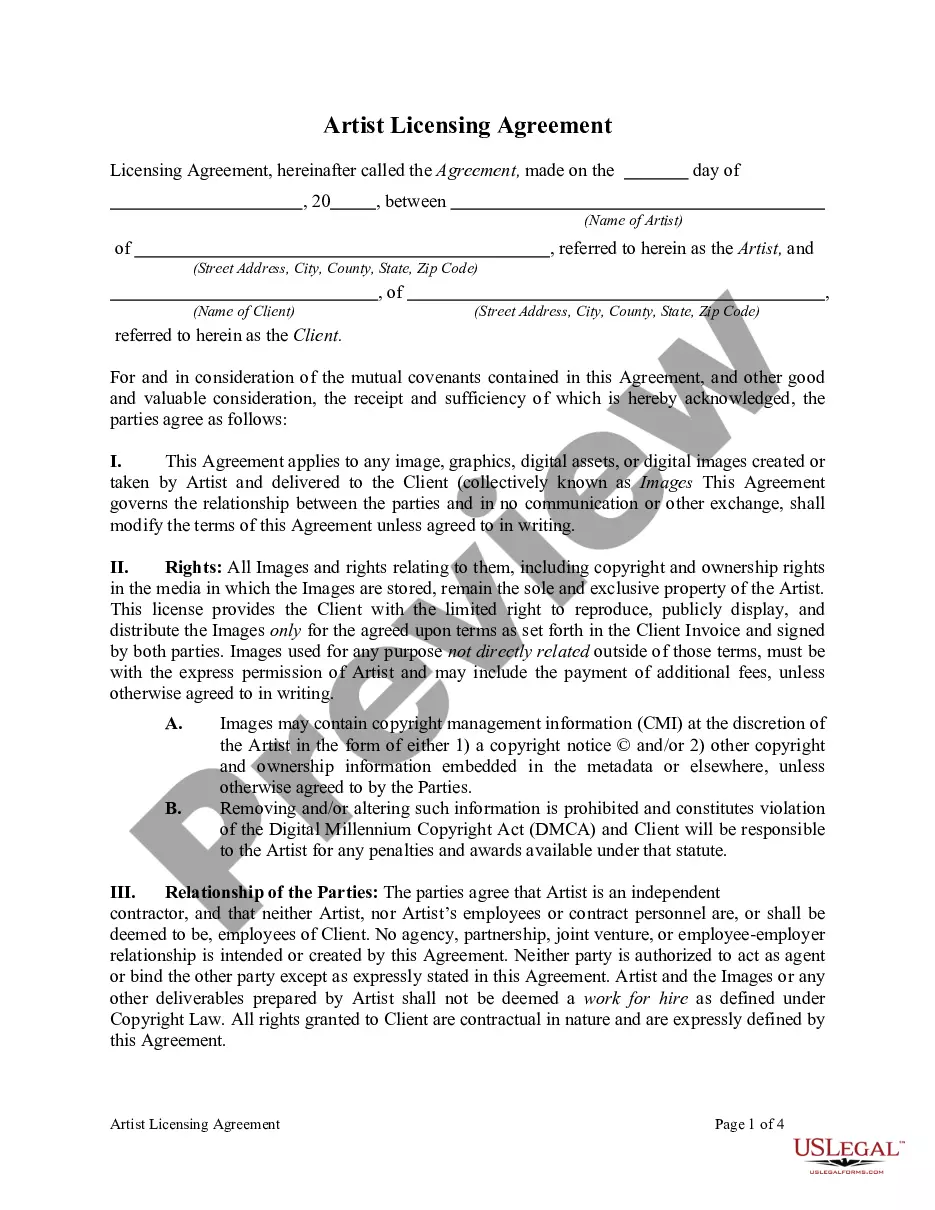
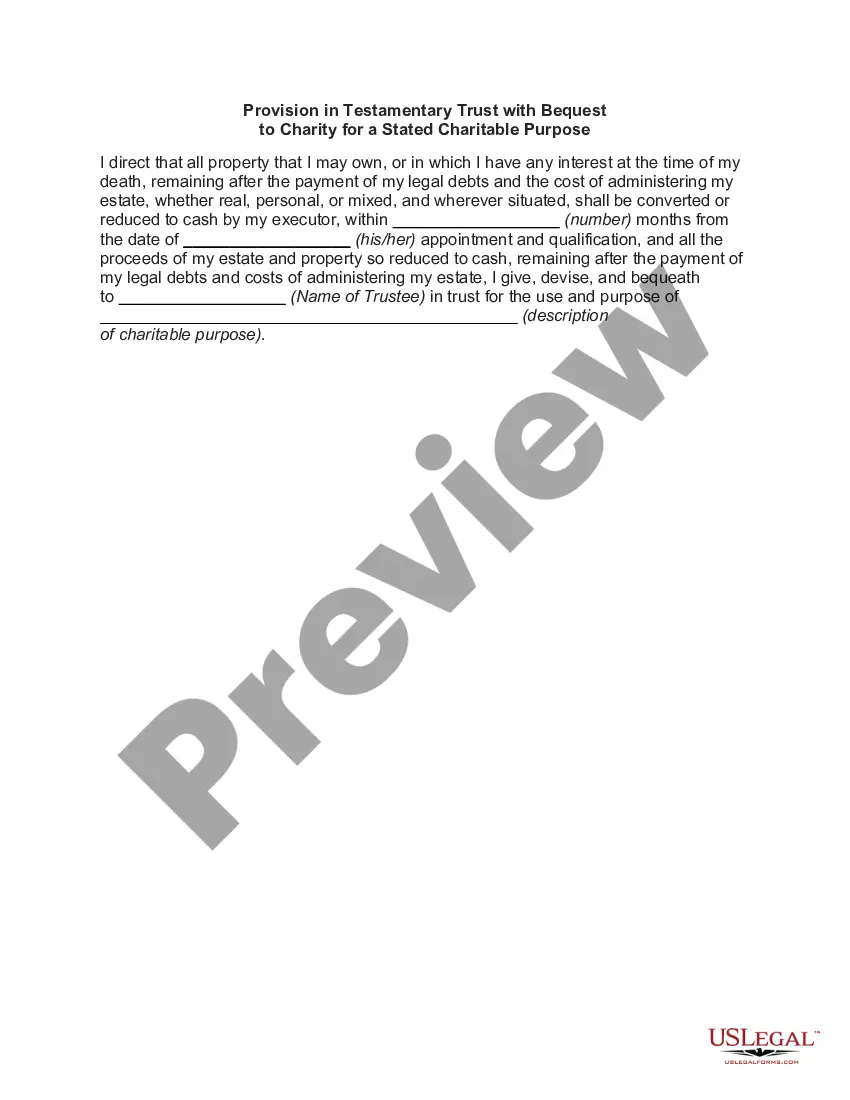
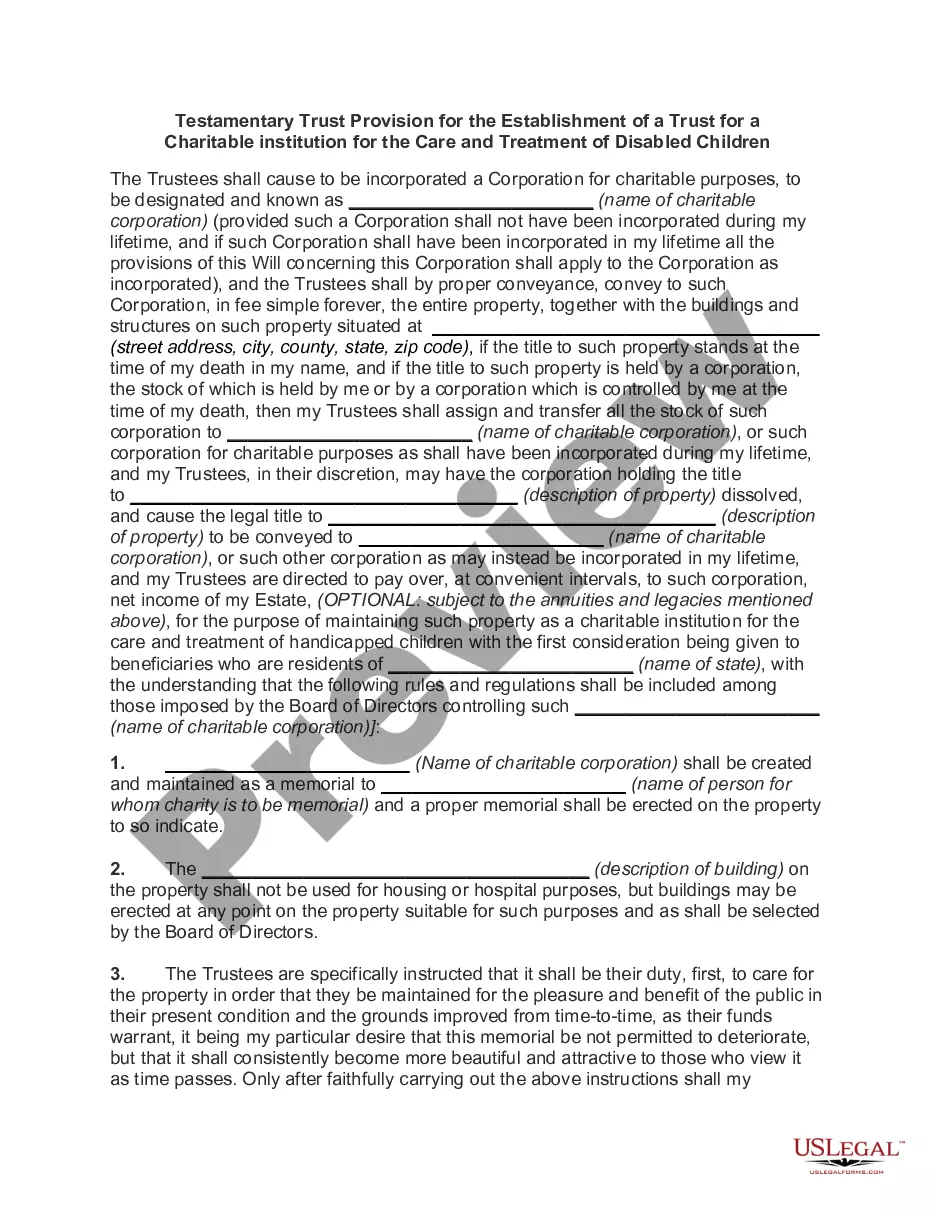
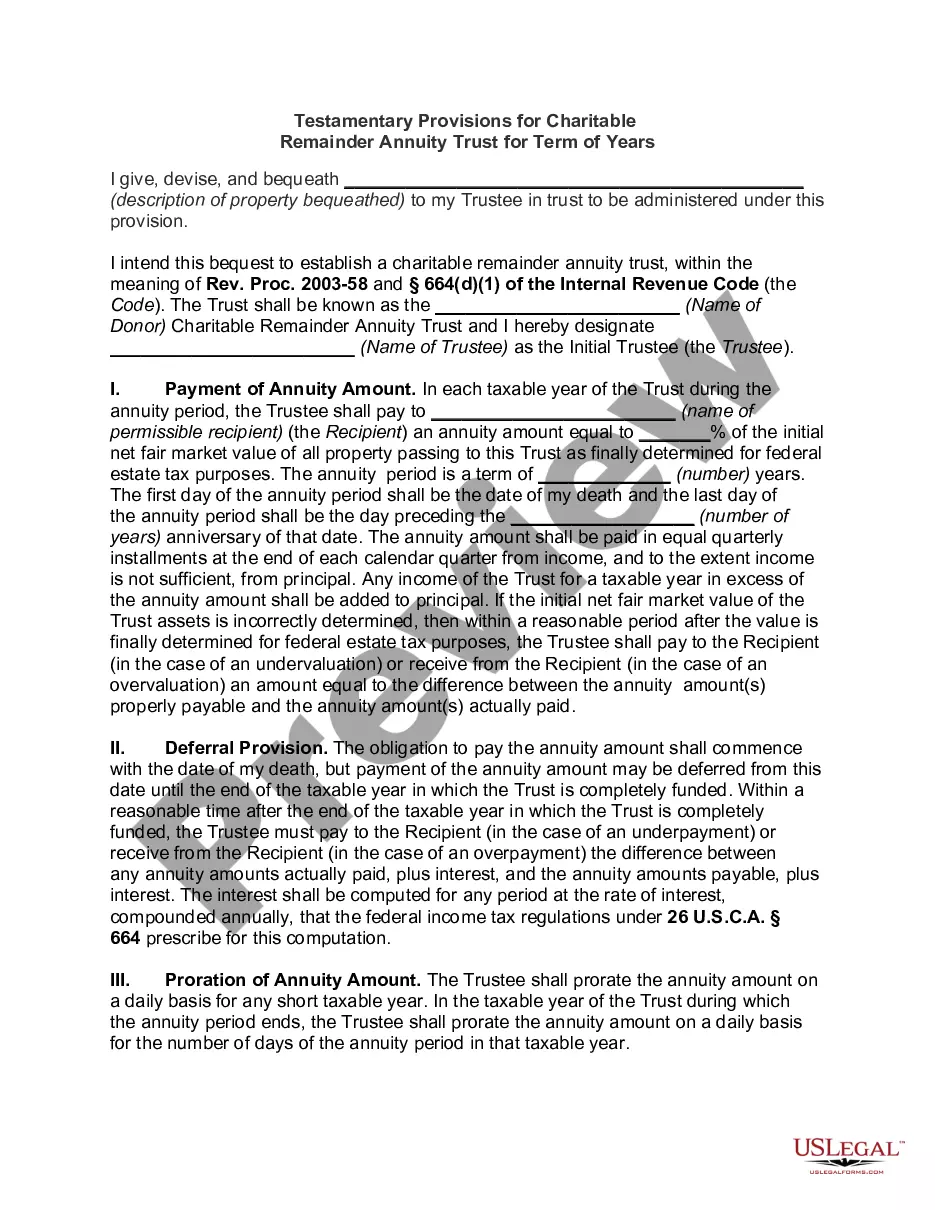
Louisiana Provisions for Testamentary Charitable Remainder Unitrust for One Life
Description


Get your form ready online
Our built-in tools help you complete, sign, share, and store your documents in one place.
Make edits, fill in missing information, and update formatting in US Legal Forms—just like you would in MS Word.
Download a copy, print it, send it by email, or mail it via USPS—whatever works best for your next step.
Sign and collect signatures with our SignNow integration. Send to multiple recipients, set reminders, and more. Go Premium to unlock E-Sign.
If this form requires notarization, complete it online through a secure video call—no need to meet a notary in person or wait for an appointment.
We protect your documents and personal data by following strict security and privacy standards.

Make edits, fill in missing information, and update formatting in US Legal Forms—just like you would in MS Word.

Download a copy, print it, send it by email, or mail it via USPS—whatever works best for your next step.

Sign and collect signatures with our SignNow integration. Send to multiple recipients, set reminders, and more. Go Premium to unlock E-Sign.

If this form requires notarization, complete it online through a secure video call—no need to meet a notary in person or wait for an appointment.

We protect your documents and personal data by following strict security and privacy standards.
Looking for another form?

How to fill out Provisions For Testamentary Charitable Remainder Unitrust For One Life?
It is feasible to spend hours online trying to locate the valid document template that meets the federal and state requirements you need.
US Legal Forms provides thousands of valid forms that are evaluated by experts.
You can obtain or print the Louisiana Provisions for Testamentary Charitable Remainder Unitrust for One Life from our services.
If available, utilize the Preview option to browse through the document template as well.
- If you already have a US Legal Forms account, you may Log In and click the Download button.
- After that, you can complete, modify, print, or sign the Louisiana Provisions for Testamentary Charitable Remainder Unitrust for One Life.
- Each valid document template you receive is yours permanently.
- To access another copy of any acquired form, navigate to the My documents section and click the relevant option.
- If you are using the US Legal Forms website for the first time, follow the basic steps outlined below.
- First, ensure you have selected the correct document template for your county/city of choice.
- Review the form details to confirm that you have chosen the correct one.
Form popularity
FAQ
A charitable remainder annuity trust or a charitable remainder unitrust is exempt from California income tax, except for years when it has unrelated business taxable income (UBTI). Even though exempt from California income tax, such a trust must file Form 541-B for the calendar year.
A trust may be "qualified" or "non-qualified," according to the IRS. A qualified plan carries certain tax benefits. To be qualified, a trust must be valid under state law and must have identifiable beneficiaries. In addition, the IRA trustee, custodian, or plan administrator must receive a copy of the trust instrument.
(4) Beneficiary means a person who has a present or future beneficial interest in a trust, vested or contingent, or who holds a power of appointment over trust property in a capacity other than that of trustee.
Generally, the Gross Estate does not include property owned solely by the decedent's spouse or other individuals. Lifetime gifts that are complete (no powers or other control over the gifts are retained) are not included in the Gross Estate (but taxable gifts are used in the computation of the estate tax).
A remainder beneficiary is a person who is entitled to receive principal when the income interest in a trust ends. This typically means that the income from a trust goes to one or more income beneficiaries, either for a fixed period of time or until a future event (such as their deaths).
If an individual establishes a charitable remainder trust for his or her life only, the trust assets will be included in his or her gross estate under IRC section 2036. The amount included, however, will wash out as an estate tax charitable deduction under IRC section 2055.
For example, contingent remainder beneficiaries of a trust are qualified beneficiaries under §736.0103(16), F.S. because of their interest in the distribution of any principal remaining after the death of a lifetime beneficiary.
Louisiana law recognizes your marriage partnership and classifies most property acquired during marriage as community property that belongs to both spouses. When one spouse dies, one-half of the community property immediately becomes the separate property of the surviving spouse.
2036 alone covers the inclusion and valuation of two types of grantor trusts in a decedent's gross estate: charitable remainder trusts and grantor retained income trusts. Prior to this amendment the IRS had argued that at least some of these trusts might also be covered by Sec.
A qualified beneficiary in this context refers to someone who is either currently entitled to receive the income or principal of the trust, someone who would be entitled to receive the income or principal if the current recipients' rights are terminated, or someone entitled to receive the income or principal upon the