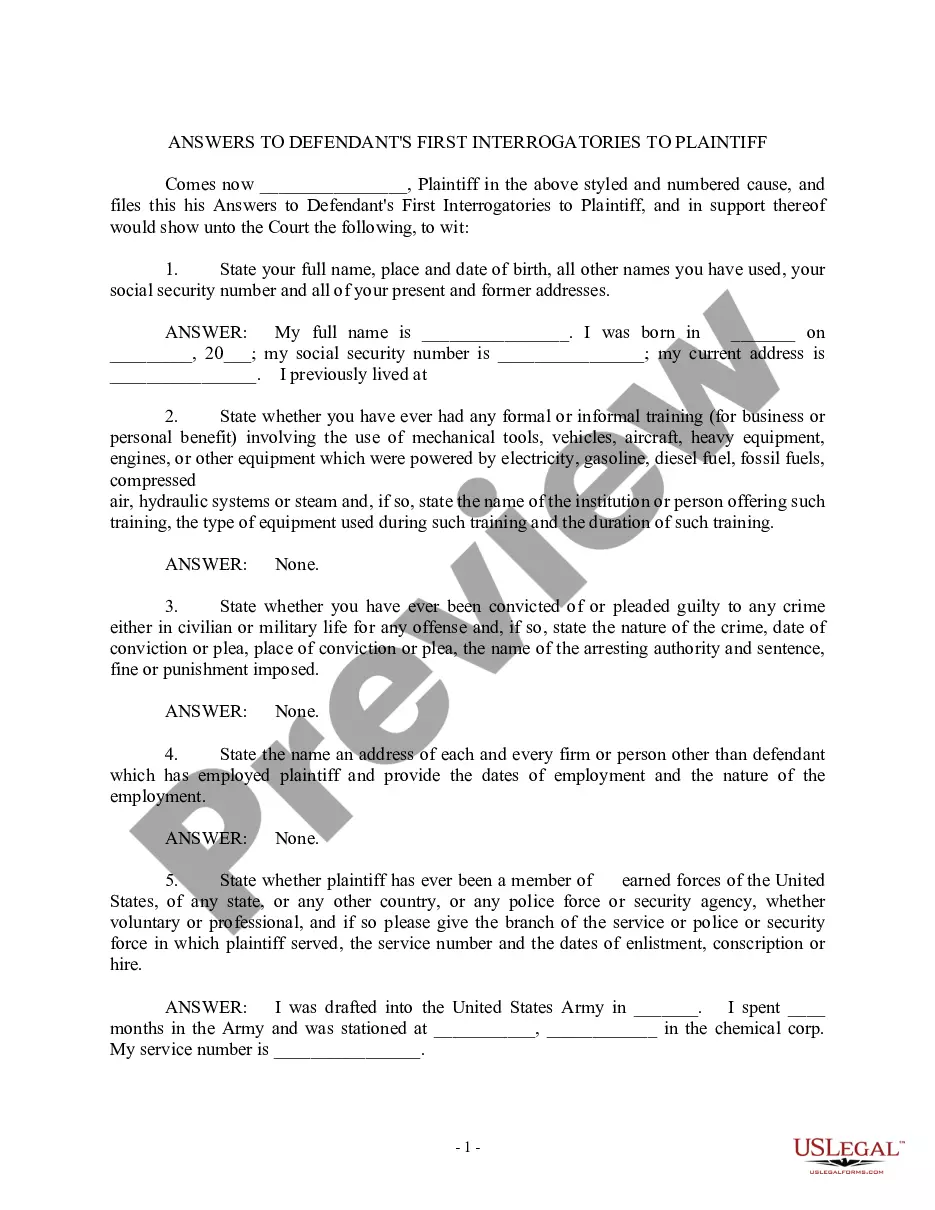
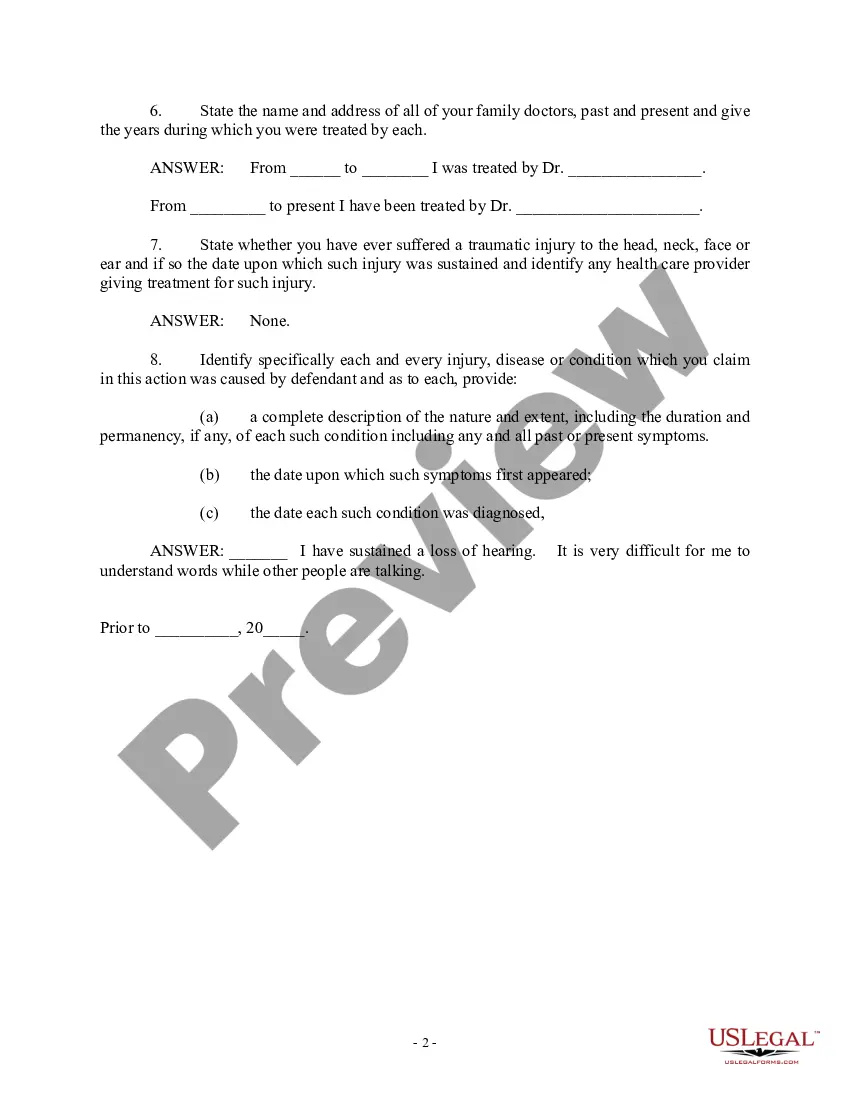
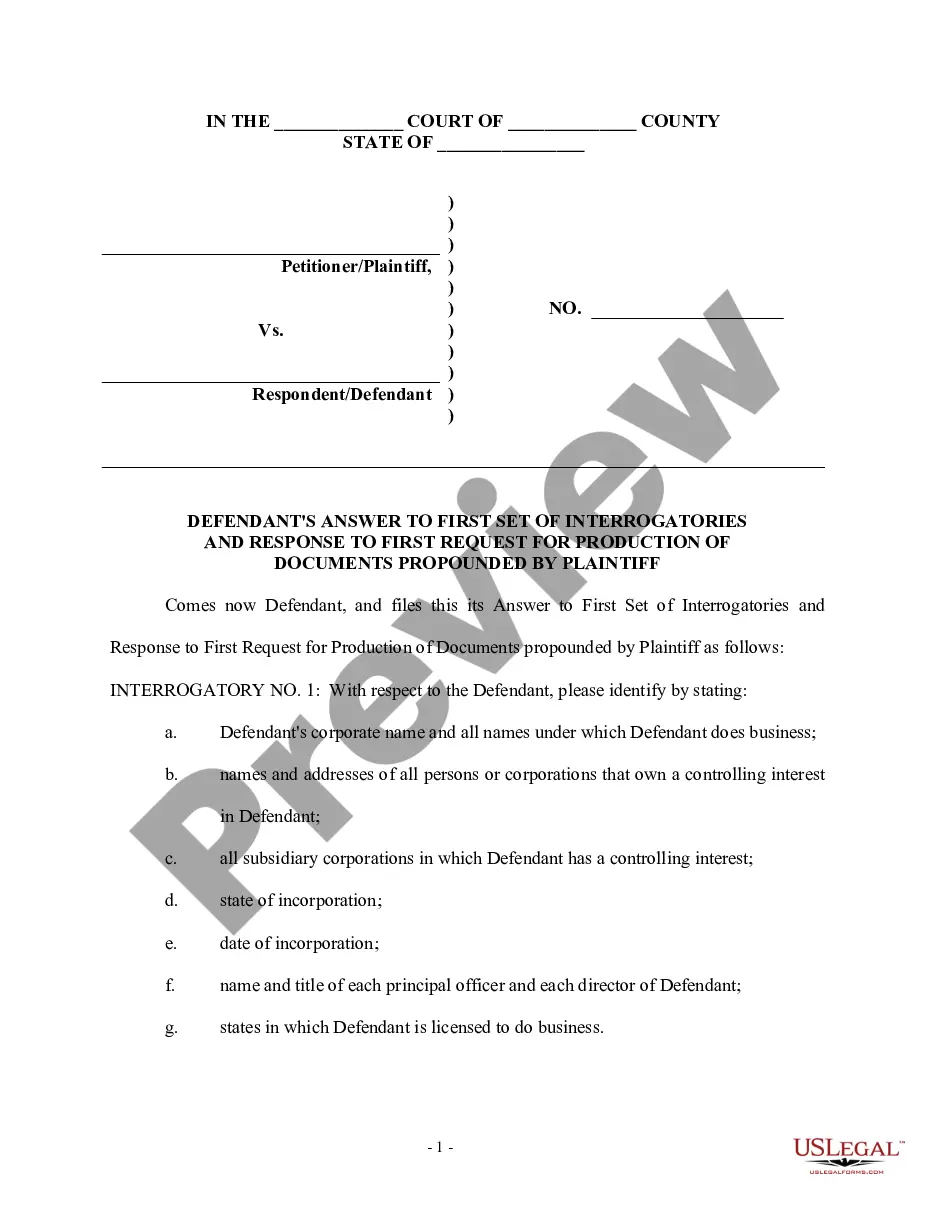
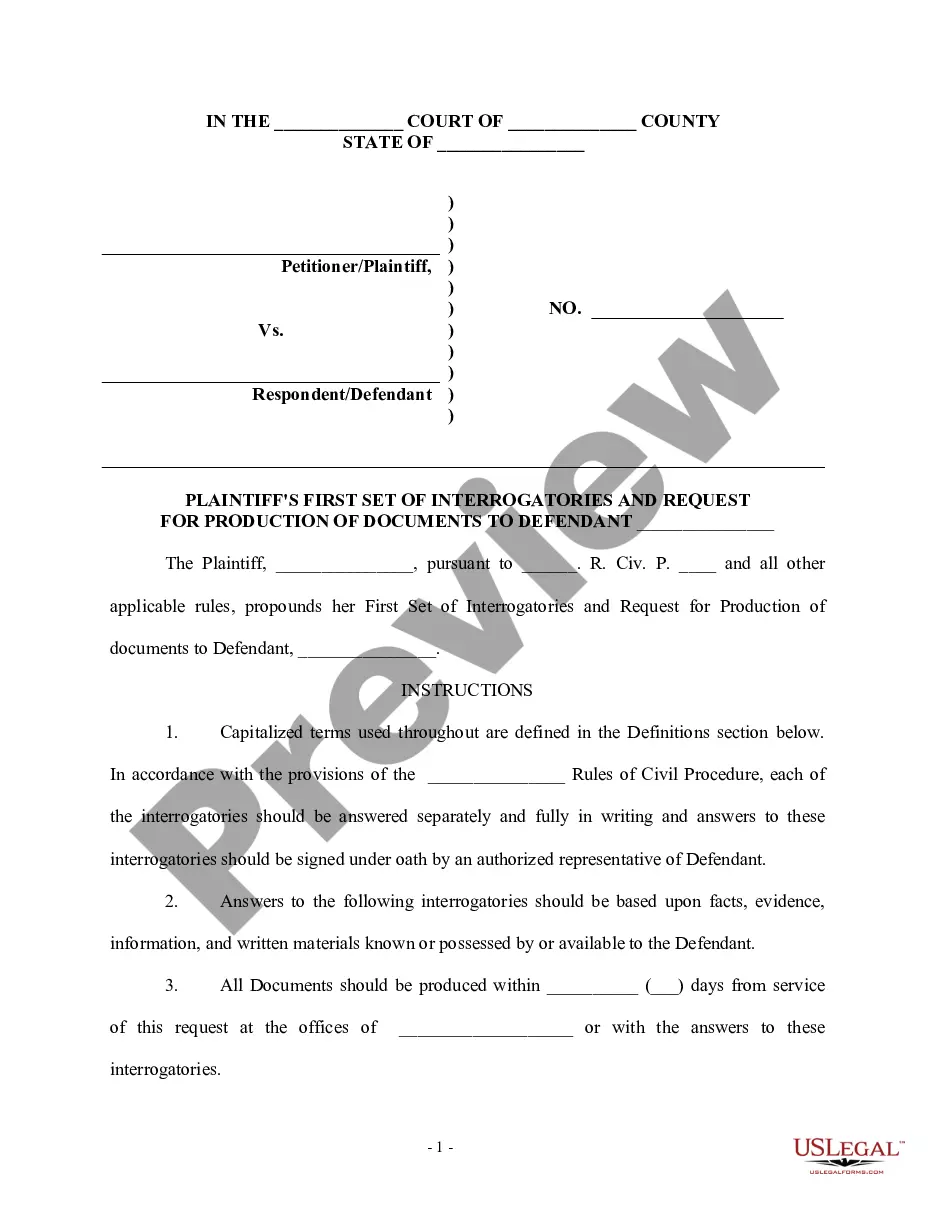
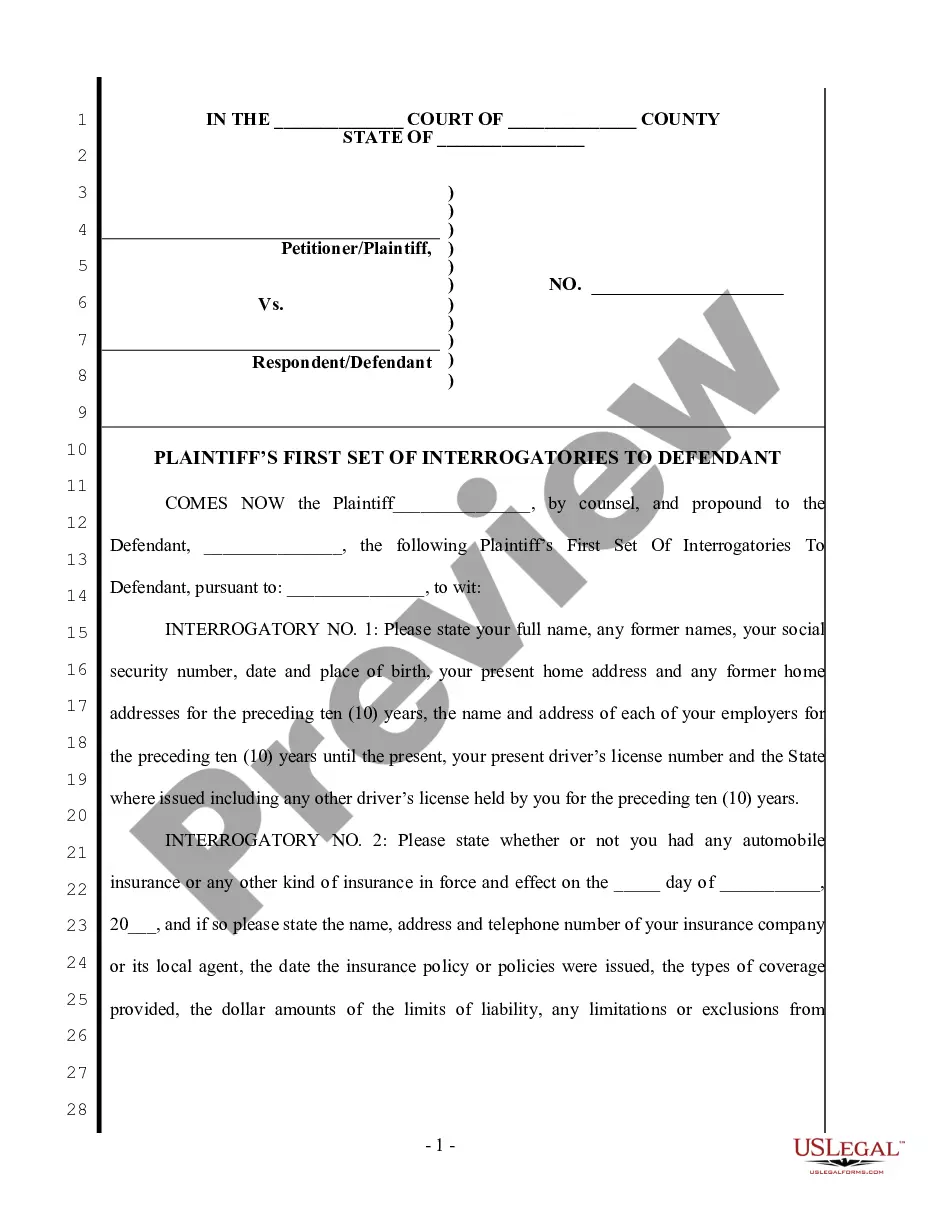
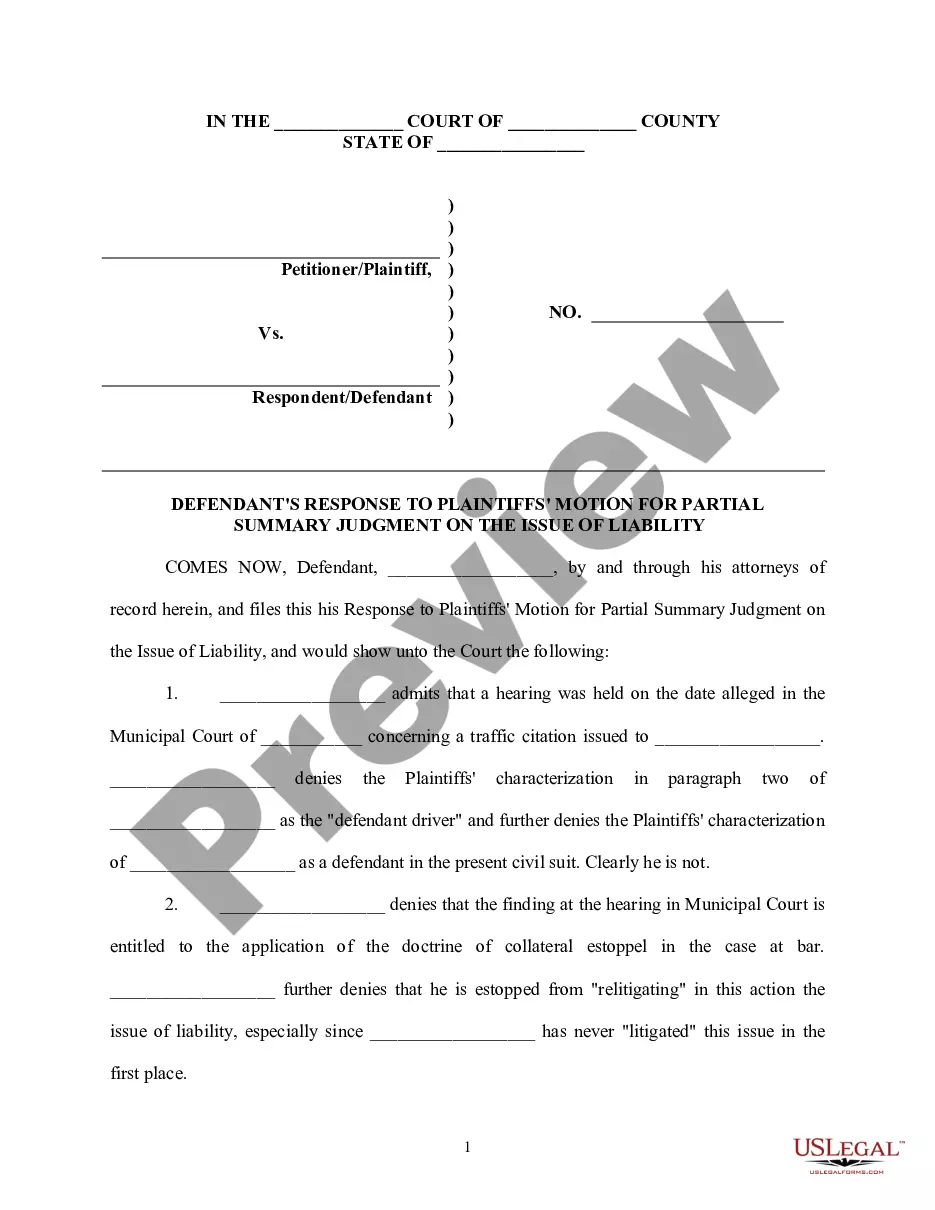
This form contains Answers to Defendant's First Interrogatories to Plaintiff. Plaintiff seeks to answer all questions truthfully before the court.
Louisiana Answers To Defendant's First Interrogatories To Plaintiff
State:
Multi-State
Control #:
US-01615
Format:
Word;
Rich Text
247 downloads
Description
Free preview
Get your form ready online
Our built-in tools help you complete, sign, share, and store your documents in one place.
Built-in online Word editor
Make edits, fill in missing information, and update formatting in US Legal Forms—just like you would in MS Word.
Export easily
Download a copy, print it, send it by email, or mail it via USPS—whatever works best for your next step.
E-sign your document
Sign and collect signatures with our SignNow integration. Send to multiple recipients, set reminders, and more. Go Premium to unlock E-Sign.
Notarize online 24/7
If this form requires notarization, complete it online through a secure video call—no need to meet a notary in person or wait for an appointment.
Store your document securely
We protect your documents and personal data by following strict security and privacy standards.

Make edits, fill in missing information, and update formatting in US Legal Forms—just like you would in MS Word.

Download a copy, print it, send it by email, or mail it via USPS—whatever works best for your next step.

Sign and collect signatures with our SignNow integration. Send to multiple recipients, set reminders, and more. Go Premium to unlock E-Sign.

If this form requires notarization, complete it online through a secure video call—no need to meet a notary in person or wait for an appointment.

We protect your documents and personal data by following strict security and privacy standards.
Looking for another form?



How to fill out Answers To Defendant's First Interrogatories To Plaintiff?
You might spend time online looking for the appropriate legal document template that satisfies the federal and state requirements you will need. US Legal Forms offers a wide array of lawful templates that are evaluated by professionals. It is easy to download or print the Louisiana Answers To Defendant's First Interrogatories To Plaintiff from the service.
If you possess a US Legal Forms account, you can Log In and click on the Download button. Subsequently, you can complete, modify, print, or sign the Louisiana Answers To Defendant's First Interrogatories To Plaintiff. Each legal document template you receive is yours permanently. To obtain another copy of the downloaded form, navigate to the My documents section and click the corresponding button.
If you are using the US Legal Forms website for the first time, follow the straightforward instructions below: First, ensure you have selected the correct document template for the county/city of your preference. Check the form description to confirm you have chosen the right one. If available, utilize the Review button to view the document template as well.
Avoid altering or removing any HTML tags. Only synonymize plain text outside of the HTML tags.
- If you wish to obtain another copy of your form, use the Search field to find the template that meets your needs and requirements.
- Once you have located the template you want, click on Get now to proceed.
- Select the pricing plan you prefer, enter your details, and register for a free account on US Legal Forms.
- Complete the transaction. You can use your credit card or PayPal account to pay for the legal form.
- Choose the file format of your document and download it to your device.
- Make adjustments to the document if necessary. You can complete, modify, sign, and print the Louisiana Answers To Defendant's First Interrogatories To Plaintiff.
- Download and print numerous document templates using the US Legal Forms website, which provides the largest selection of legal templates. Utilize professional and state-specific templates to address your business or personal needs.
Form popularity
FAQ
They are provided for your information. There is no form for your answer, but you typically have to respond in a specified format, using paper with numbers down the left-hand side, with your name and address at the top left, the name of the court and of the case, and the case number.
Read each question (interrogatory) very carefully. Answer only the question that is asked, and avoid the temptation to over-explain your answer. If the question contains several parts, you may break your answer into parts as well. It is also possible that you might object to the question.
Interrogatories are limited to the parties in a certain case. Thus, nonparties are not obligated to respond to interrogatories. Parties should use other discovery devices at their disposal to get information from nonparties, like depositions. At the state level, each state court has its own interrogatory rules.
Your answers to the interrogatories should usually be short, clear, and direct and should answer only the question that is being asked. This is not the time to set out your entire case or defense to the other side. Take the time to make sure your answers are correct and truthful.
(a) Time for response. The responding party must serve a written response on the requesting party within 30 days after service of the interrogatories, except that a defendant served with interrogatories before the defendant's answer is due need not respond until 50 days after service of the interrogatories.
Your answers to the interrogatories should usually be short, clear, and direct and should answer only the question that is being asked. This is not the time to set out your entire case or defense to the other side. Take the time to make sure your answers are correct and truthful.
You have to respond to interrogatories in writing to the best of your ability. If you do not answer an interrogatory question, and then the other side learns that you did in fact know the answer, it could have a negative impact on your case at trial.
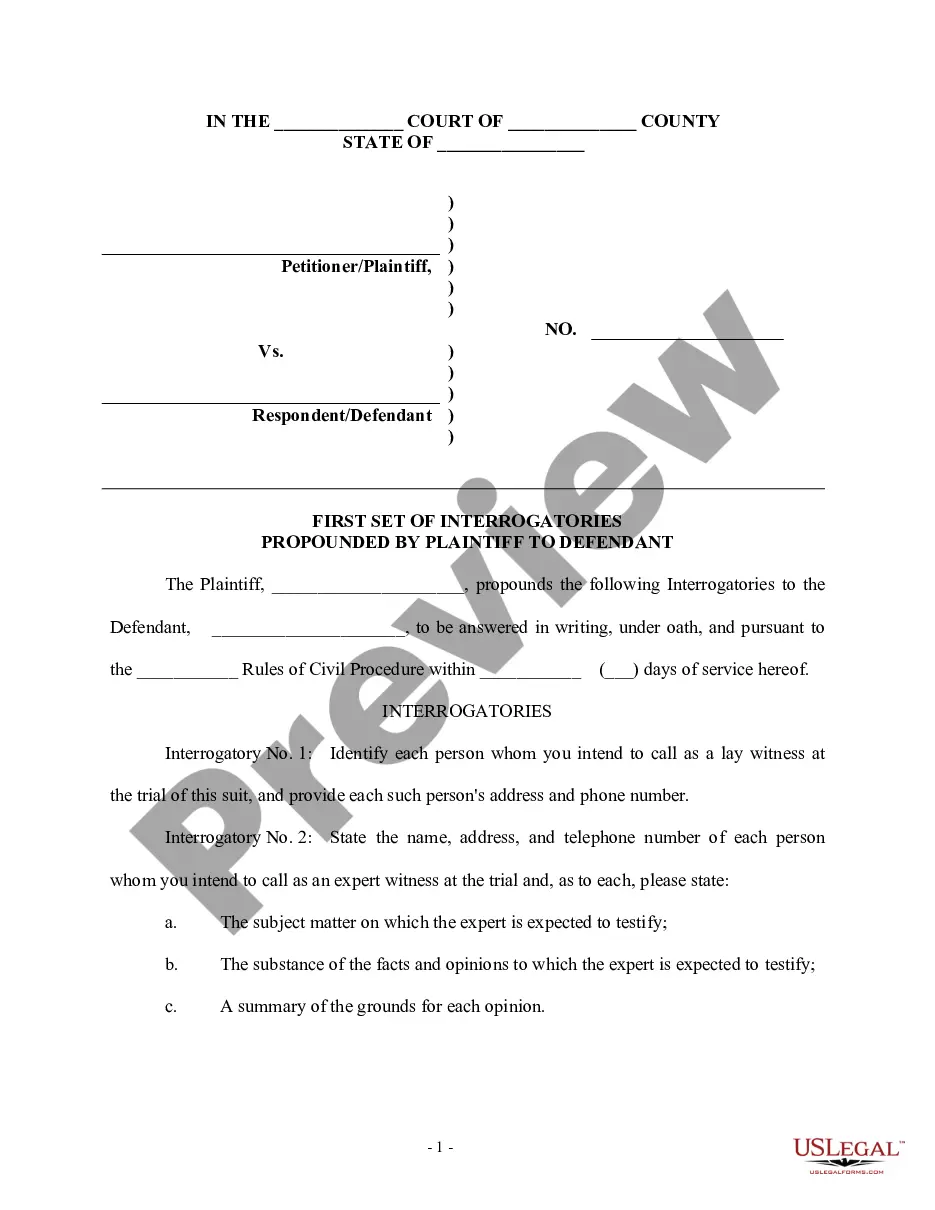
First Set of Interrogatories means the Applicant's first set of interrogatories served on Opposer contemporaneously with these Requests.