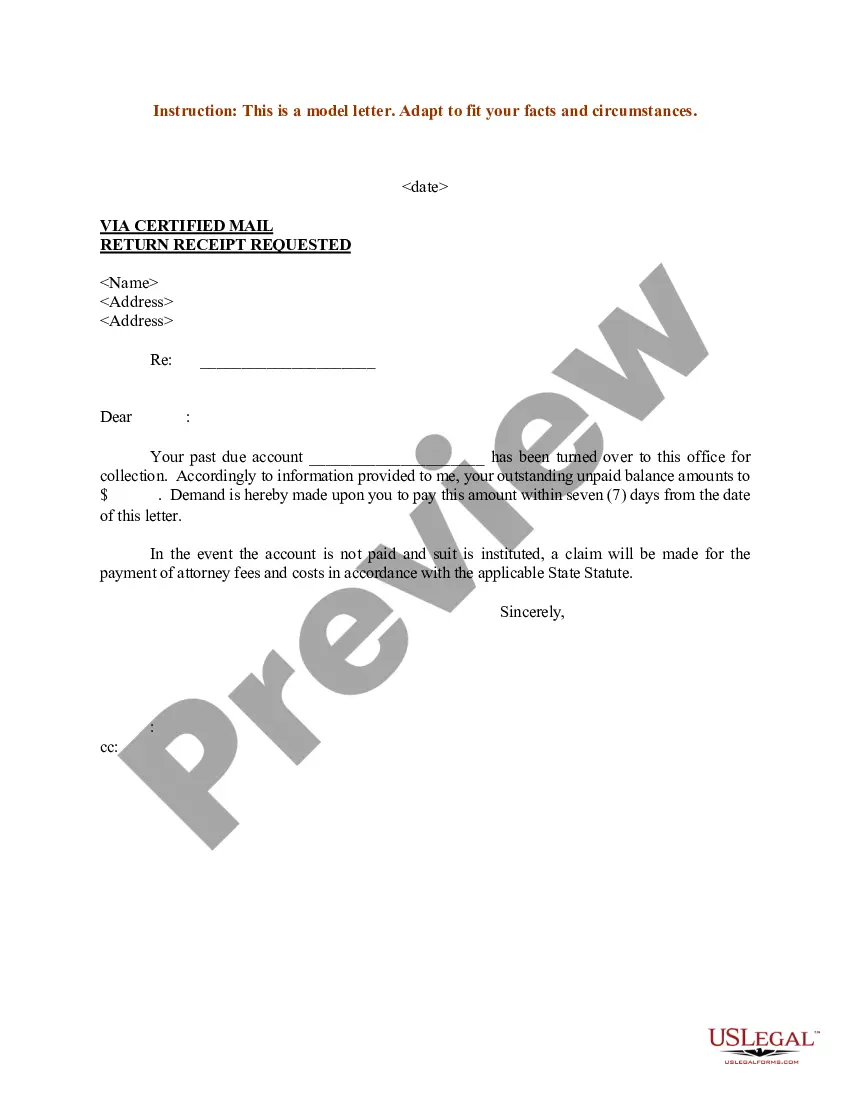
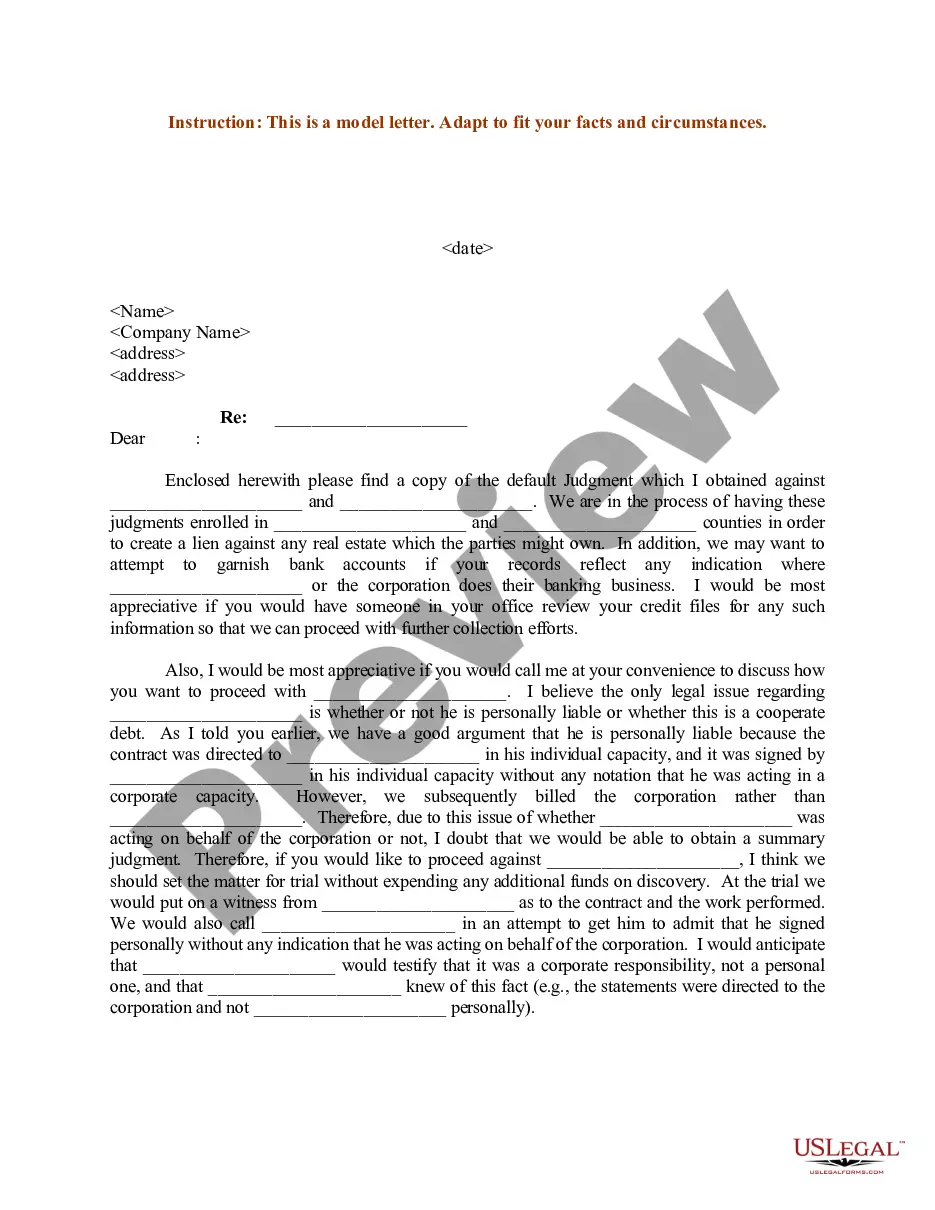
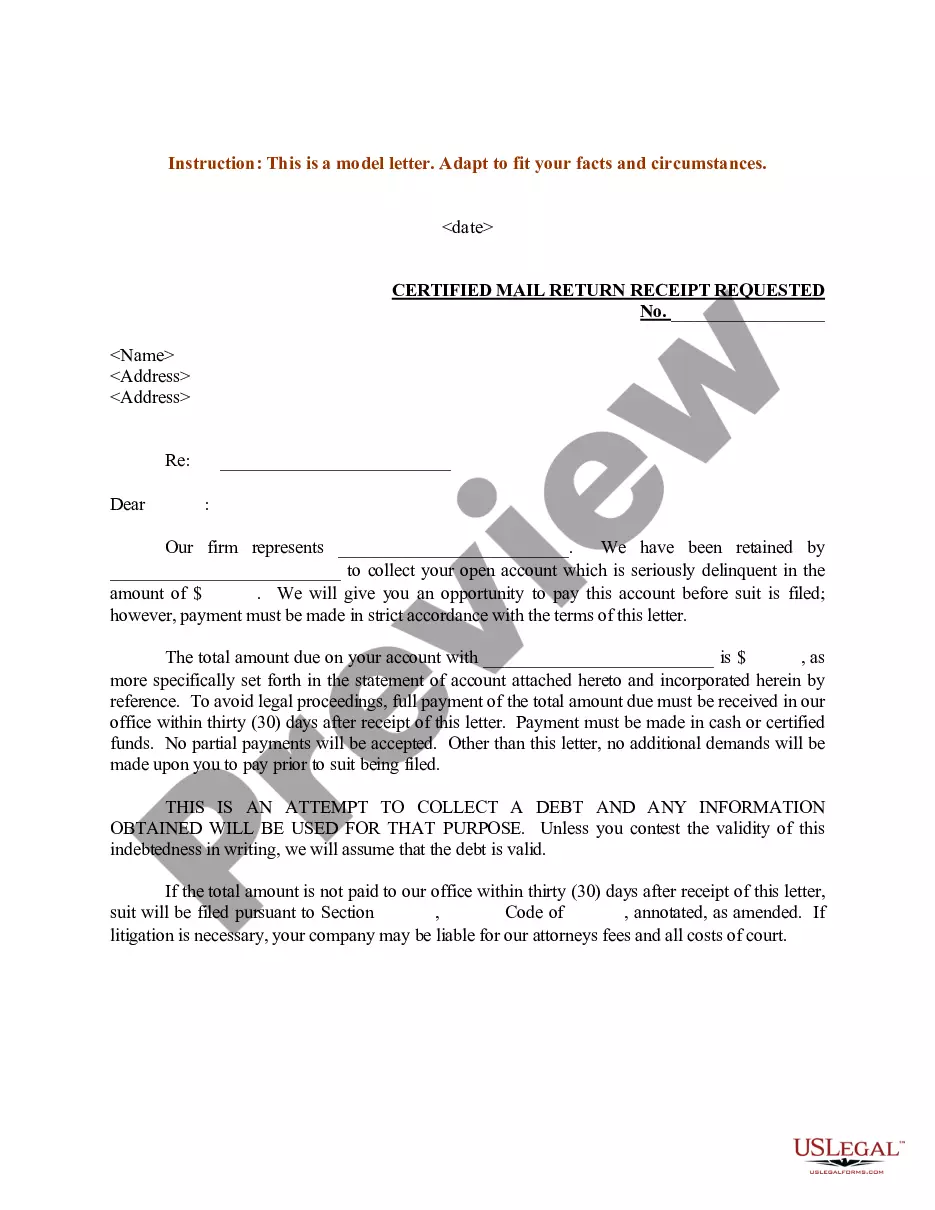
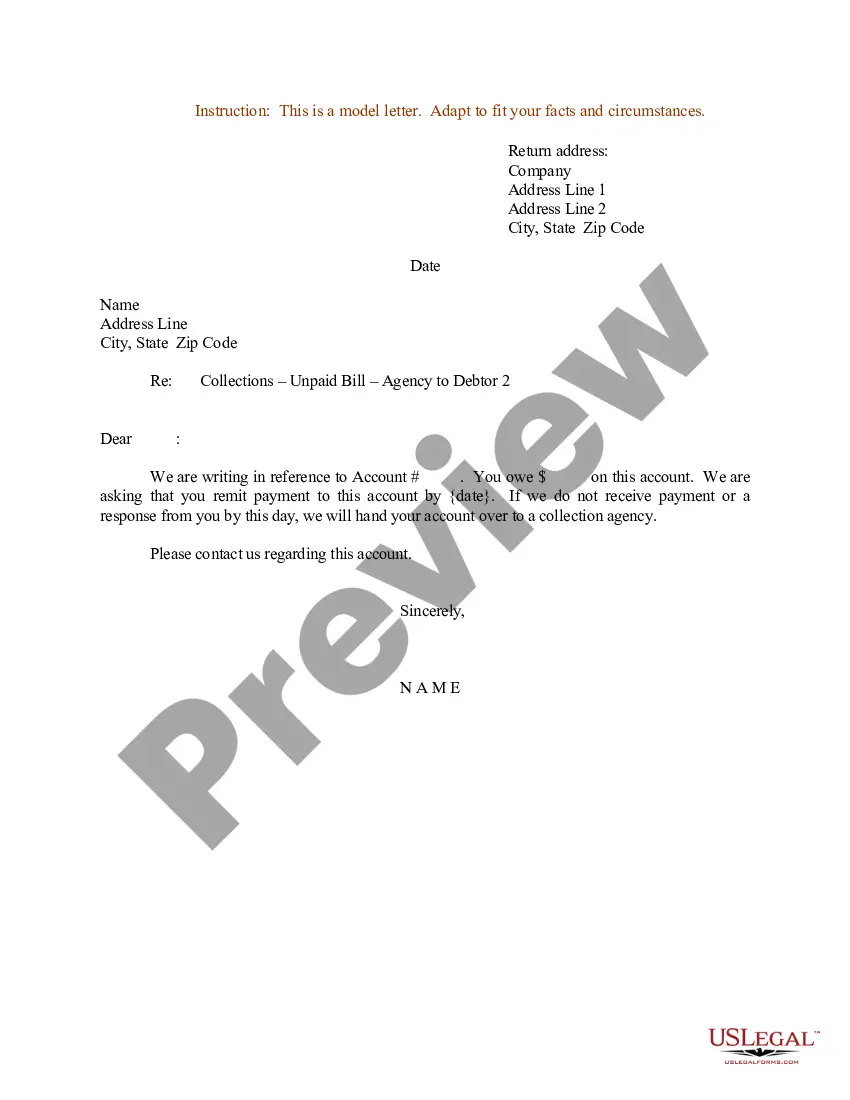
Louisiana Sample Letter for Debt Collection for Client
Description
Get your form ready online
Our built-in tools help you complete, sign, share, and store your documents in one place.
Make edits, fill in missing information, and update formatting in US Legal Forms—just like you would in MS Word.
Download a copy, print it, send it by email, or mail it via USPS—whatever works best for your next step.
Sign and collect signatures with our SignNow integration. Send to multiple recipients, set reminders, and more. Go Premium to unlock E-Sign.
If this form requires notarization, complete it online through a secure video call—no need to meet a notary in person or wait for an appointment.
We protect your documents and personal data by following strict security and privacy standards.

Make edits, fill in missing information, and update formatting in US Legal Forms—just like you would in MS Word.

Download a copy, print it, send it by email, or mail it via USPS—whatever works best for your next step.

Sign and collect signatures with our SignNow integration. Send to multiple recipients, set reminders, and more. Go Premium to unlock E-Sign.

If this form requires notarization, complete it online through a secure video call—no need to meet a notary in person or wait for an appointment.

We protect your documents and personal data by following strict security and privacy standards.
Looking for another form?
How to fill out Sample Letter For Debt Collection For Client?
Selecting the optimal legal document template can be a challenge. Naturally, there are numerous formats accessible online, but how do you find the legal form you require? Utilize the US Legal Forms platform. The service provides a vast array of templates, including the Louisiana Sample Letter for Debt Collection for Client, suitable for both business and personal needs. All forms are reviewed by professionals and comply with federal and state regulations.
If you are already a member, sign in to your account and click the Download button to access the Louisiana Sample Letter for Debt Collection for Client. Use your account to search for the legal forms you have previously ordered. Navigate to the My documents section of your account and retrieve another copy of the document you need.
If you are a new user of US Legal Forms, here are straightforward steps to follow: First, ensure you have selected the correct form for your city/state. You can preview the form using the Review button and examine the form description to confirm it is indeed the right one for you. If the form does not meet your needs, utilize the Search field to find the appropriate form. Once you are confident that the form is suitable, click the Purchase now button to acquire the form. Choose the pricing option you desire and input the necessary information. Create your account and complete your order using your PayPal account or Visa or Mastercard. Select the file format and download the legal document template to your device. Complete, modify, print, and sign the acquired Louisiana Sample Letter for Debt Collection for Client.
Make the most of this service to obtain the legal documents you need efficiently.
- US Legal Forms is the largest collection of legal forms.
- You can find a variety of document templates.
- Utilize the service to download properly crafted papers.
- All documents adhere to state requirements.
- Ensure compliance with legal standards.
- Access a wide range of templates for different needs.
Form popularity
FAQ
The main body should be informative about the reason behind writing the letter and the pending payment to be made. In conclusion, thank the recipient and then end the main body content. Inclusion of any informal information in the letter should be avoided. Keep the tone of the letter polite and respectful.
Summary: A "creditor" is not required to inform their clients before passing an account to collections. A debt collection agency is responsible for sending an initial demand letter, also known as a ?validation notice,? to notify your debtor about their account being assigned to the agency.
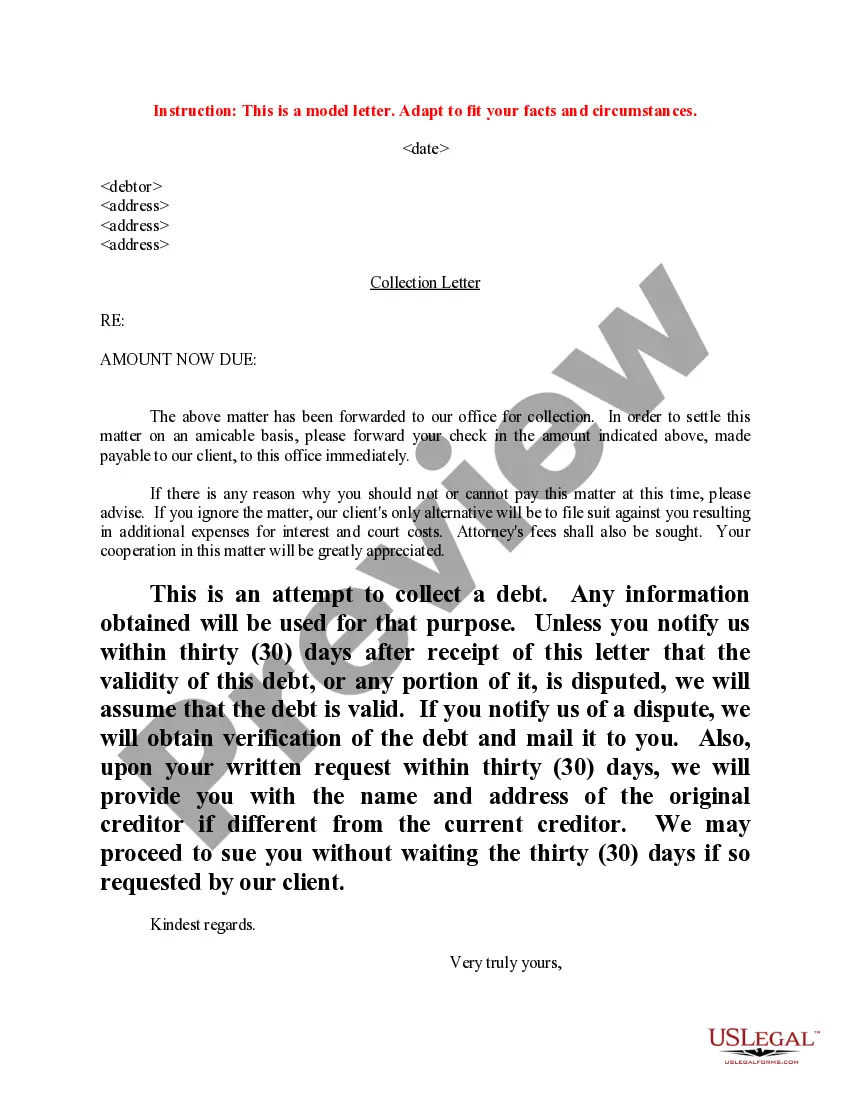
This first collection letter should contain the following information: Days past due. Amount due. Note previous attempts to collect. Summary of account. Instructions- what would you like them to do next? Due date for payment- it is important to use an actually date, not ?in the next 7 business days? as this can be vague.
What do you include in a debt collection letter? The amount the debtor owes you, including any interest (attach the original invoice as well); The initial date of payment and the new date of payment; Clear instructions on how to pay the outstanding debt (banking details, etc);
- Send a text message to someone who owes you money. Example: ?Hey, I'm just wondering when you might be able to pay back the money I lent you last month.? - Wait until you're alone with them in person to avoid embarrassment or confrontation. - Give them a friendly reminder when you are out with them socially.
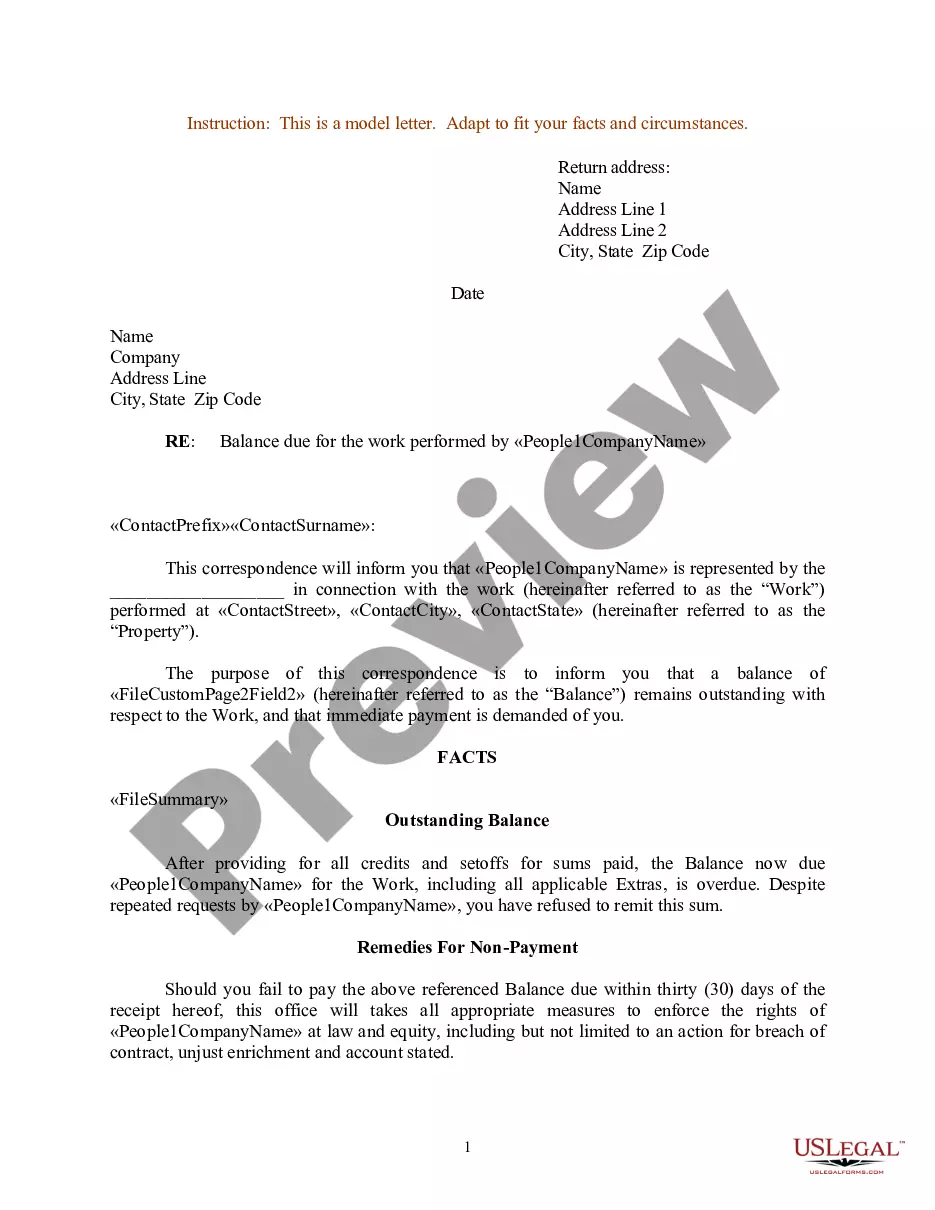
Dear [customer name], We are writing to inform you that [invoice #] is now [time] overdue. Our company has reached out to you multiple times requesting payment for the [product/service] that you received on January 15, 2023. However, as of writing, the funds still have not landed in our account.
How to write demand letters Your information and the debtors' information (contact details, address etc.) The date when the debt began and the amount of money owed. Details and dates of any disputes relating to this payment. Description of the nature of the agreement and breach of contract.
Frequently Asked Questions (FAQ) Type your letter. ... Concisely review the main facts. ... Be polite. ... Write with your goal in mind. ... Ask for exactly what you want. ... Set a deadline. ... End the letter by stating you will promptly pursue legal remedies if the other party does not meet your demand. Make and keep copies.