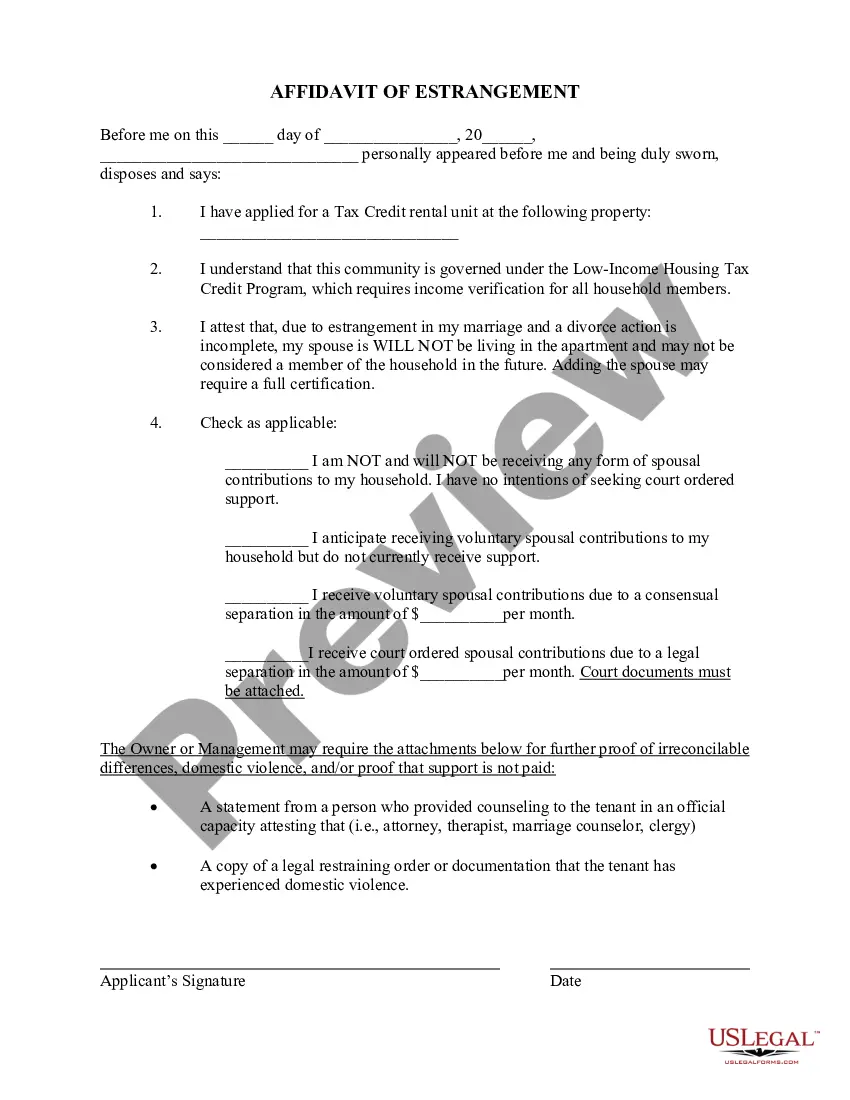
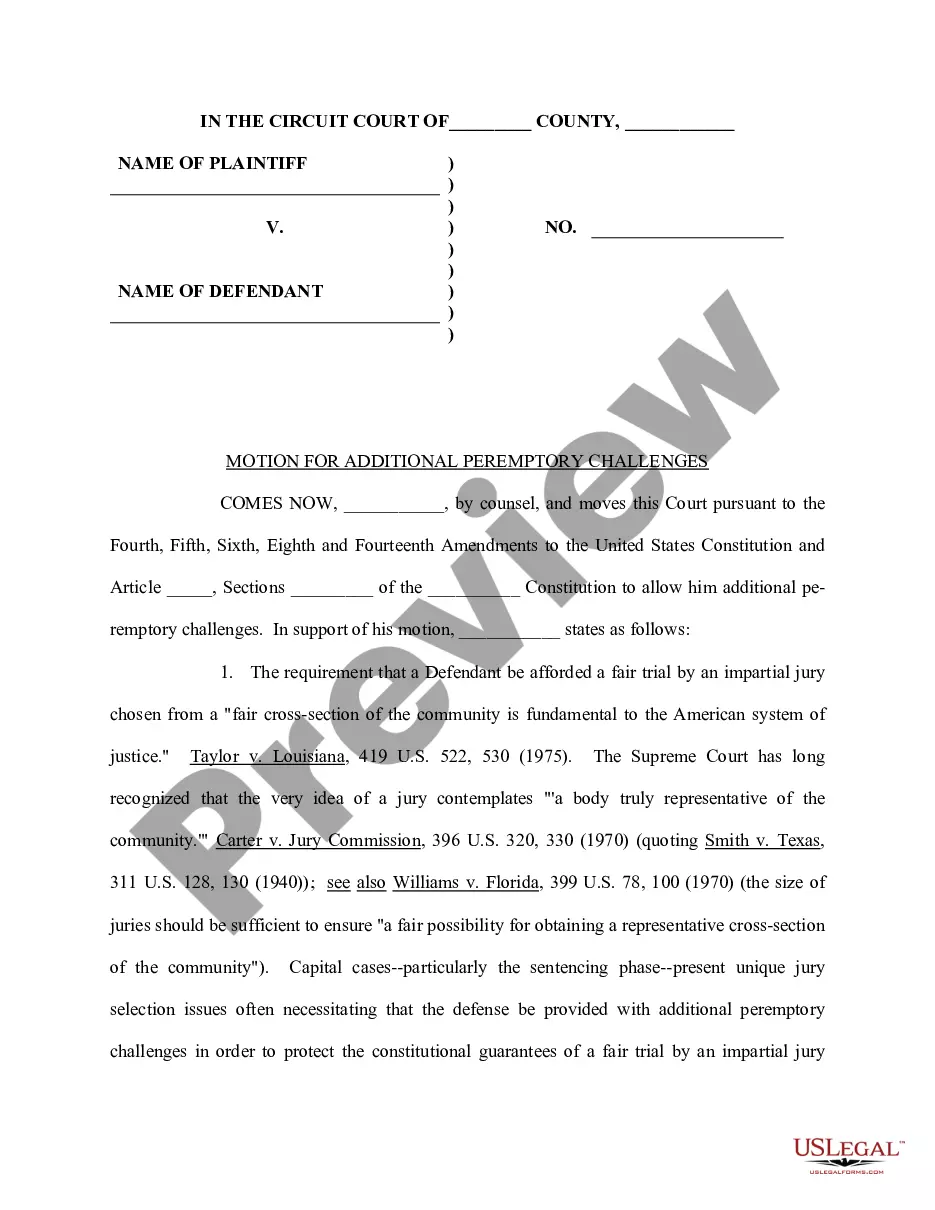
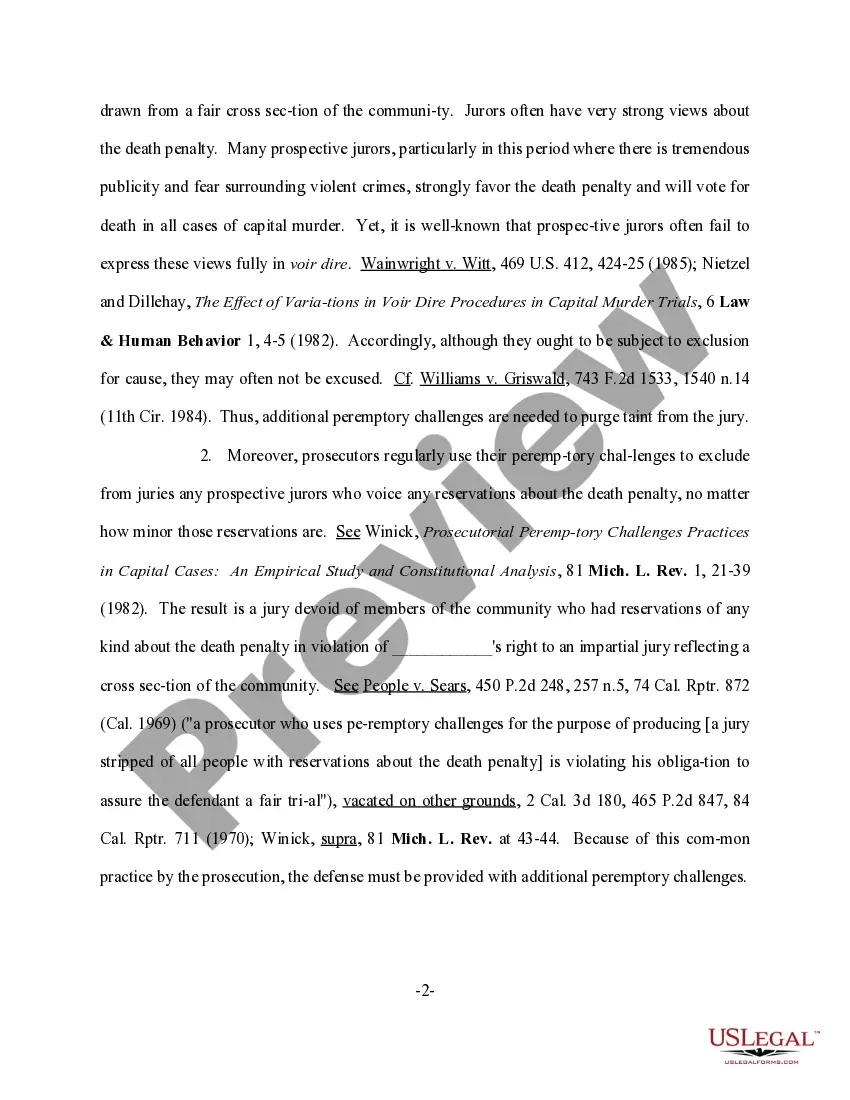
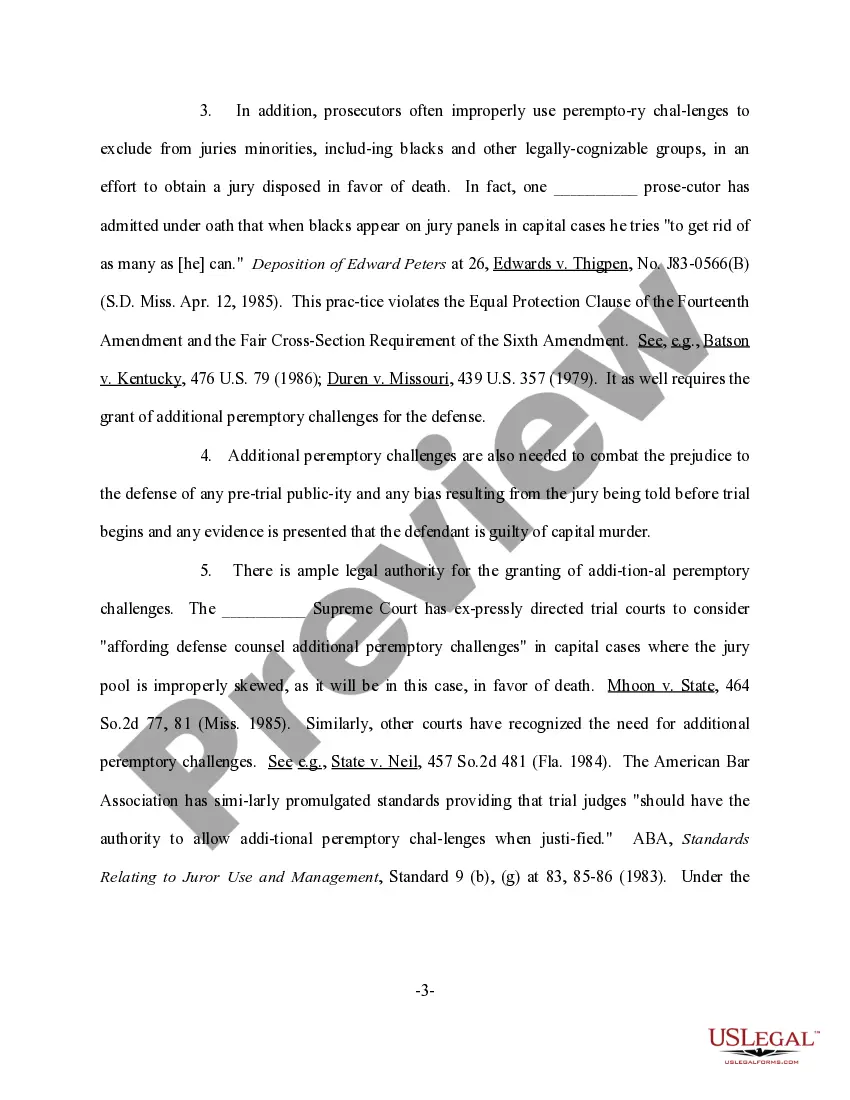
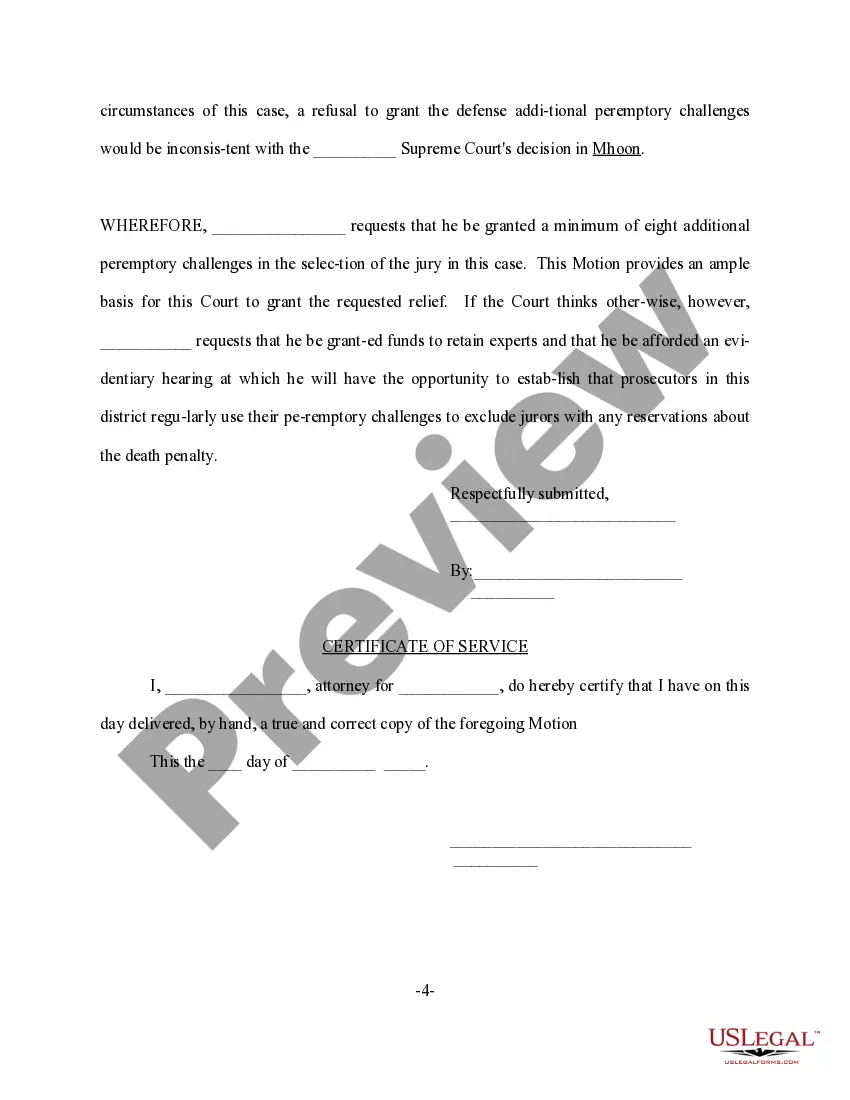
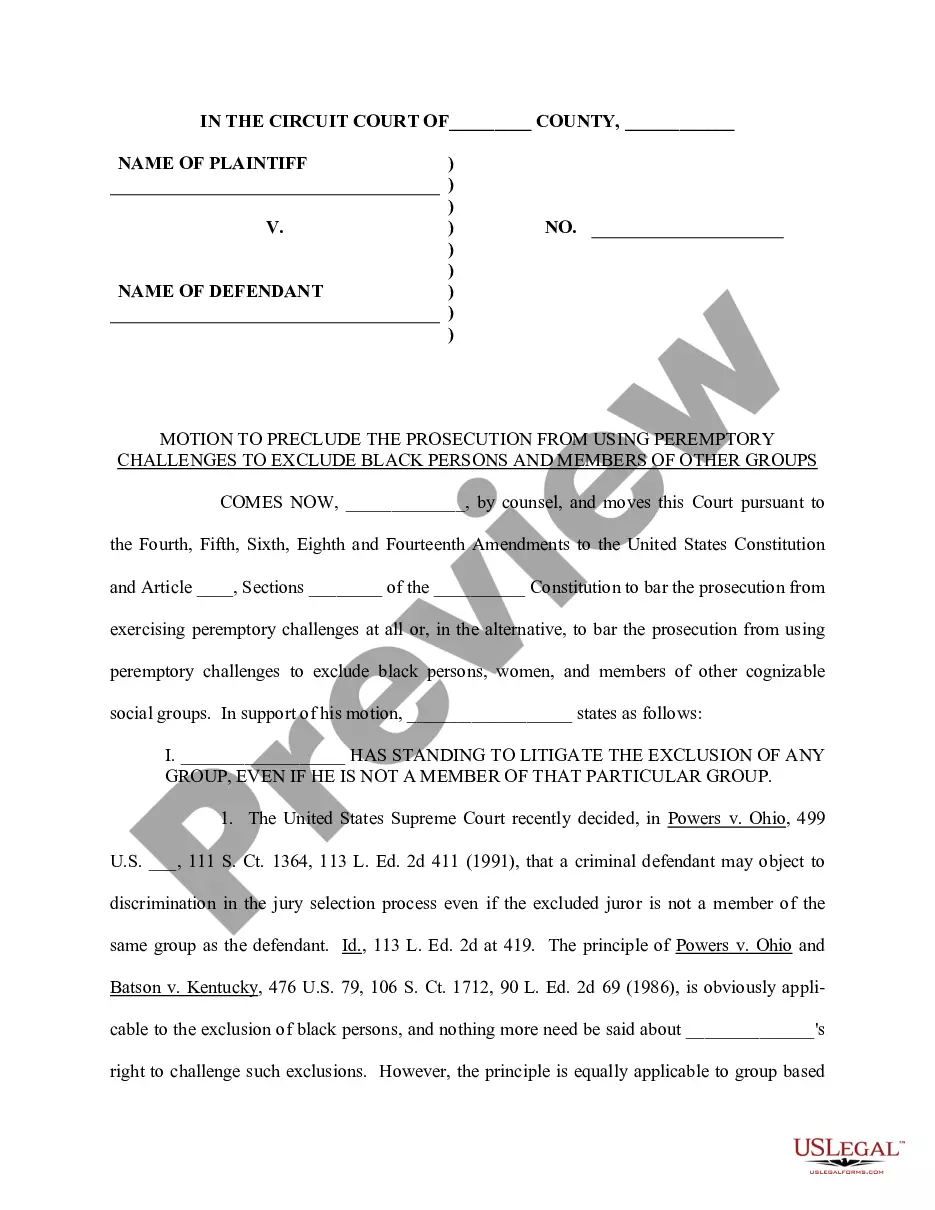
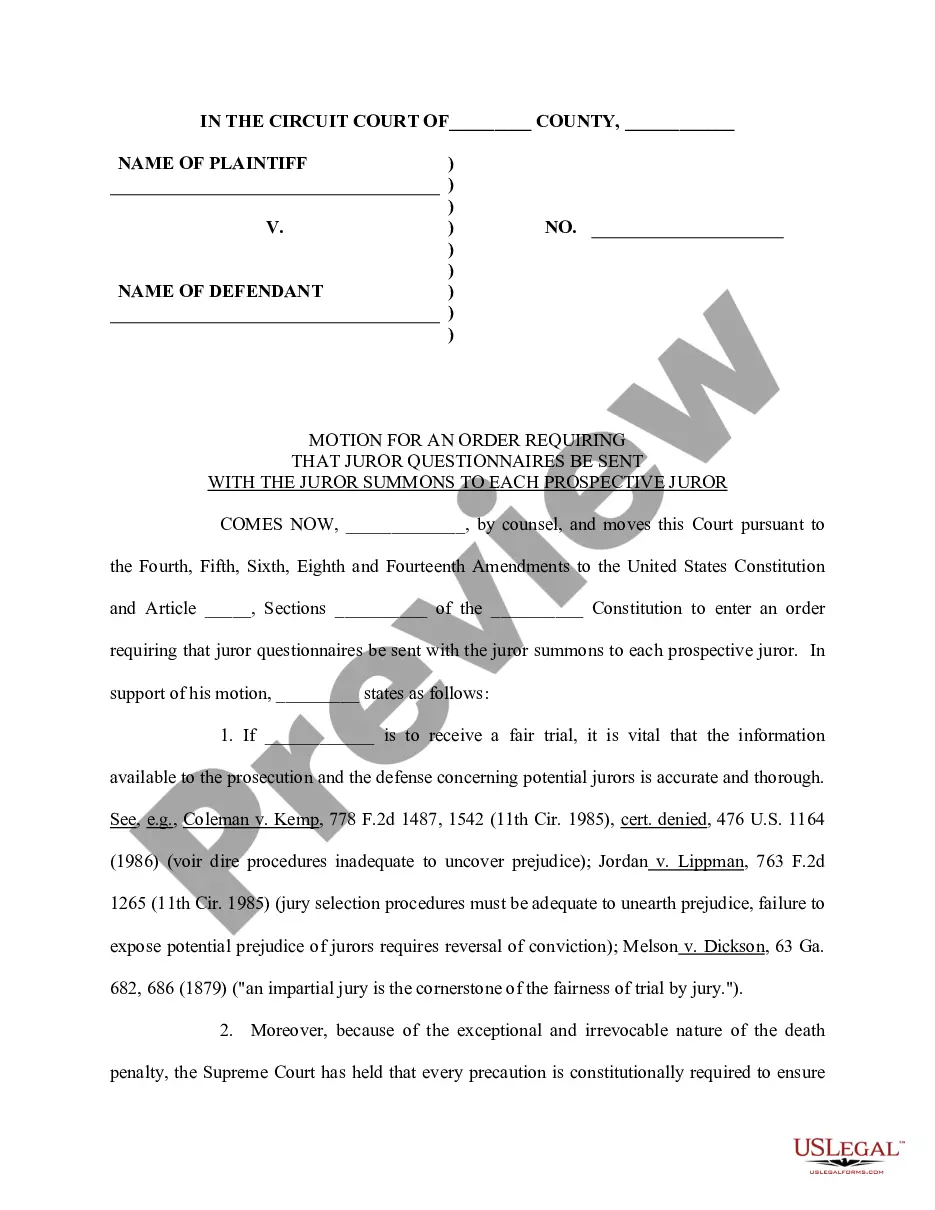
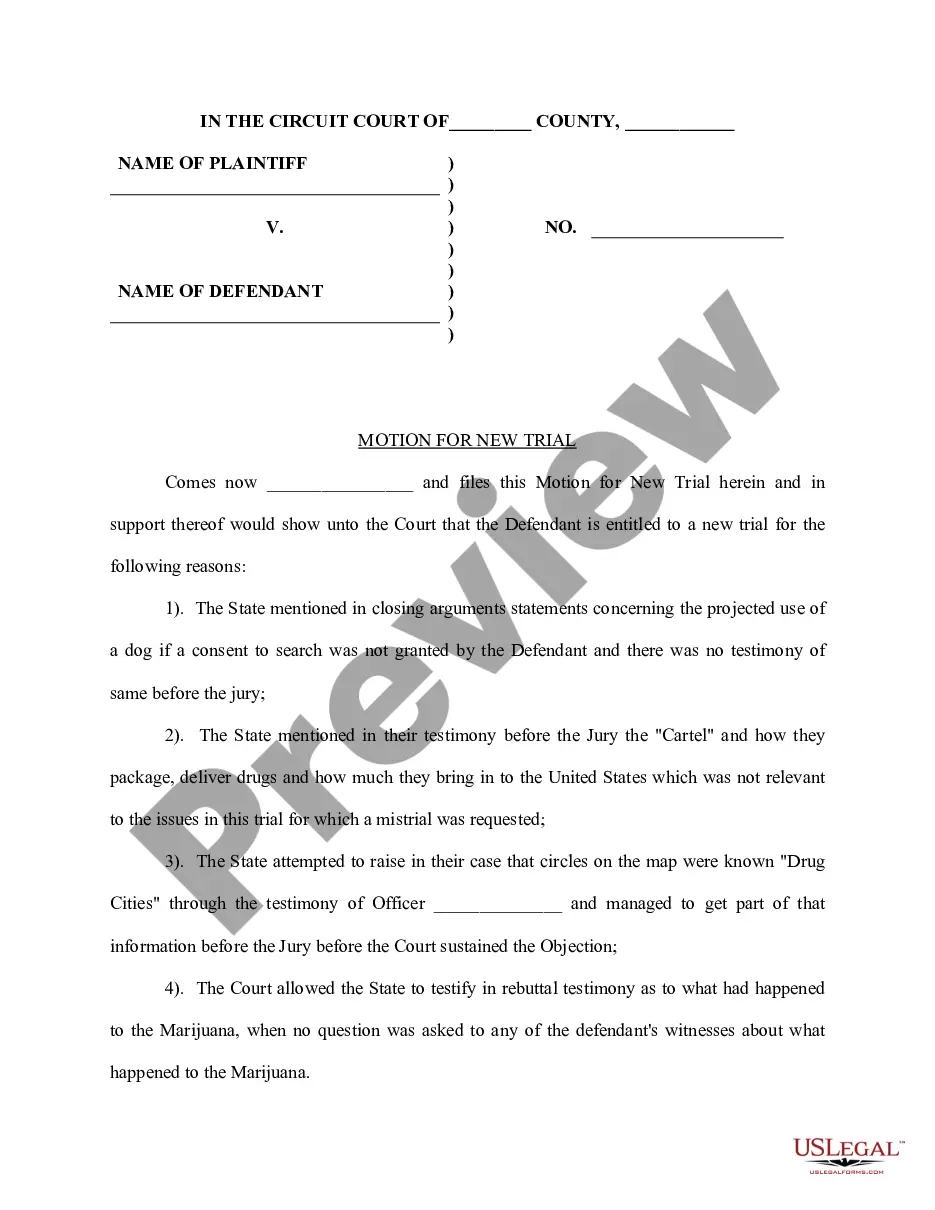
Louisiana Motion for Additional Peremptory Challenges
Description
Get your form ready online
Our built-in tools help you complete, sign, share, and store your documents in one place.
Make edits, fill in missing information, and update formatting in US Legal Forms—just like you would in MS Word.
Download a copy, print it, send it by email, or mail it via USPS—whatever works best for your next step.
Sign and collect signatures with our SignNow integration. Send to multiple recipients, set reminders, and more. Go Premium to unlock E-Sign.
If this form requires notarization, complete it online through a secure video call—no need to meet a notary in person or wait for an appointment.
We protect your documents and personal data by following strict security and privacy standards.

Make edits, fill in missing information, and update formatting in US Legal Forms—just like you would in MS Word.

Download a copy, print it, send it by email, or mail it via USPS—whatever works best for your next step.

Sign and collect signatures with our SignNow integration. Send to multiple recipients, set reminders, and more. Go Premium to unlock E-Sign.

If this form requires notarization, complete it online through a secure video call—no need to meet a notary in person or wait for an appointment.

We protect your documents and personal data by following strict security and privacy standards.
Looking for another form?


How to fill out Motion For Additional Peremptory Challenges?
Have you ever found yourself needing documents for either professional or personal reasons nearly every day.
There exists a range of legal document templates accessible online, but locating reliable versions can be challenging.
US Legal Forms provides a vast array of form templates, such as the Louisiana Motion for Additional Peremptory Challenges, designed to comply with federal and state regulations.
If you find the correct form, click Buy now.
Select your preferred pricing plan, complete the necessary information to create your account, and purchase your order using PayPal or a credit card.
- If you are already familiar with the US Legal Forms website and have an account, simply Log In.
- After logging in, you can download the Louisiana Motion for Additional Peremptory Challenges template.
- If you do not have an account and want to start using US Legal Forms, follow these steps.
- Obtain the form you require and ensure it is for the correct city/county.
- Use the Preview button to examine the document.
- Review the information to confirm that you have chosen the appropriate form.
- If the document is not what you are looking for, use the Search field to find the form that fits your needs.
Form popularity
FAQ
Except as provided in subdivision (b), in a trial for any other offense, the defendant is entitled to 10 and the state to 10 peremptory challenges.
The to challenge a potential juror without disclosing the reason for the challenge. Prosecutors and defense attorneys routinely use peremptory challenges to eliminate from juries individuals who, although they express no obvious bias, are thought to be capable of swaying the jury in an undesirable direction.
In trials of offenses punishable by death or necessarily by imprisonment at hard labor, each defendant shall have twelve peremptory challenges, and the state twelve for each defendant. In all other cases, each defendant shall have six peremptory challenges, and the state six for each defendant.
In criminal cases, parties may challenge jurors for cause during jury selection (for example, when a juror expresses an inability to be fair and impartial) or may use a certain number of peremptory challenges to remove jurors without cause.
The function of the peremptory exception of no cause of action tests the legal sufficiency of the petition by determining whether Louisiana law affords a remedy on the alleged facts.
For example, if the potential juror has a family member who was a victim of a similar crime, the defense attorney may use a peremptory challenge to exclude them from the jury.
Typical reasons include an acquaintanceship with either of the parties, prior knowledge that would prevent impartial evaluation of the evidence presented in court, bias, obvious prejudice, or an inability to serve (such as being seriously mentally ill).
When selecting a jury, both parties may remove potential jurors using an unlimited number of challenges for cause (e.g., stated reasons such as bias) and a limited number of peremptory challenges (i.e., do not need to state a reason).