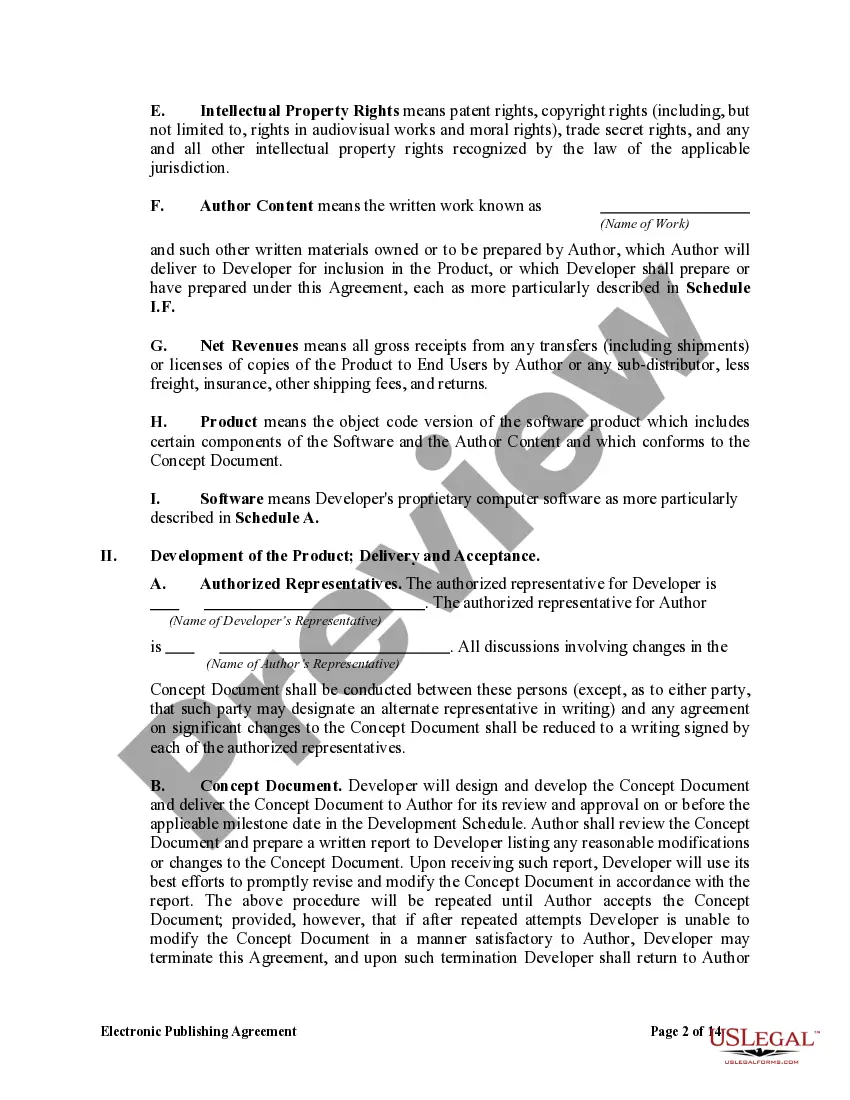
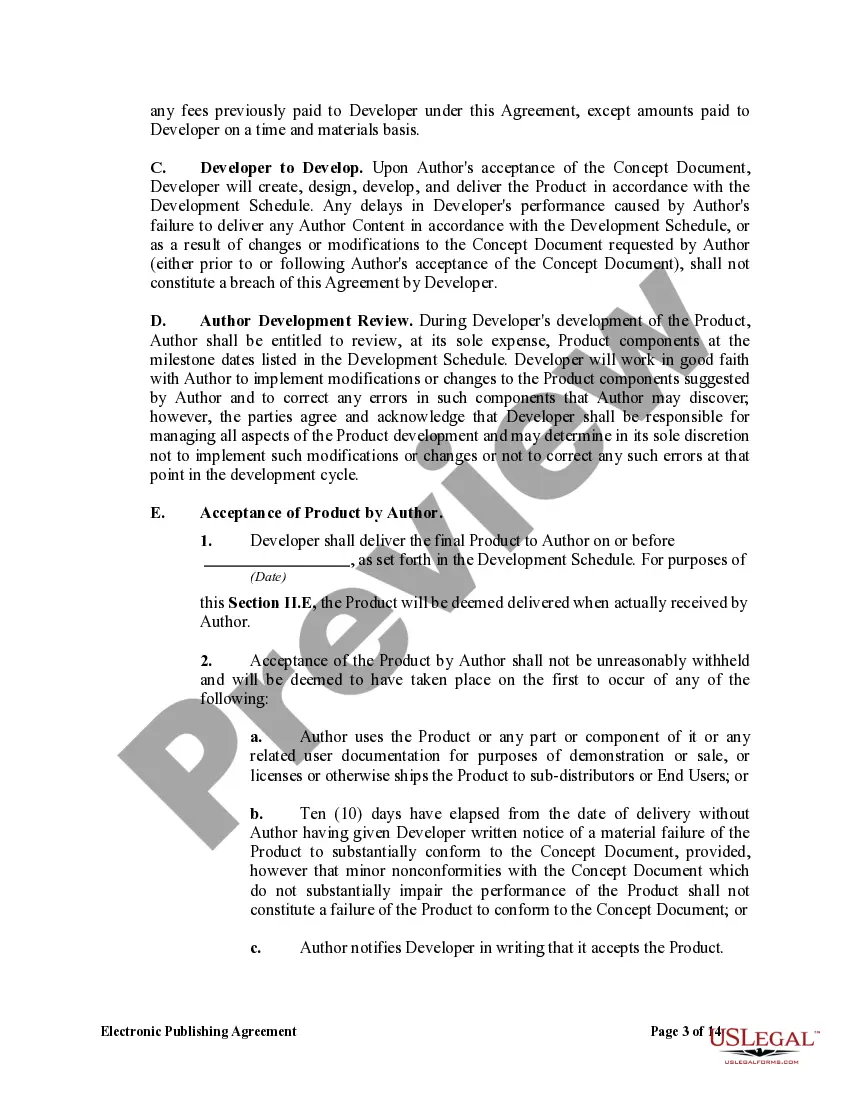
Louisiana Electronic Publishing Agreement
Description

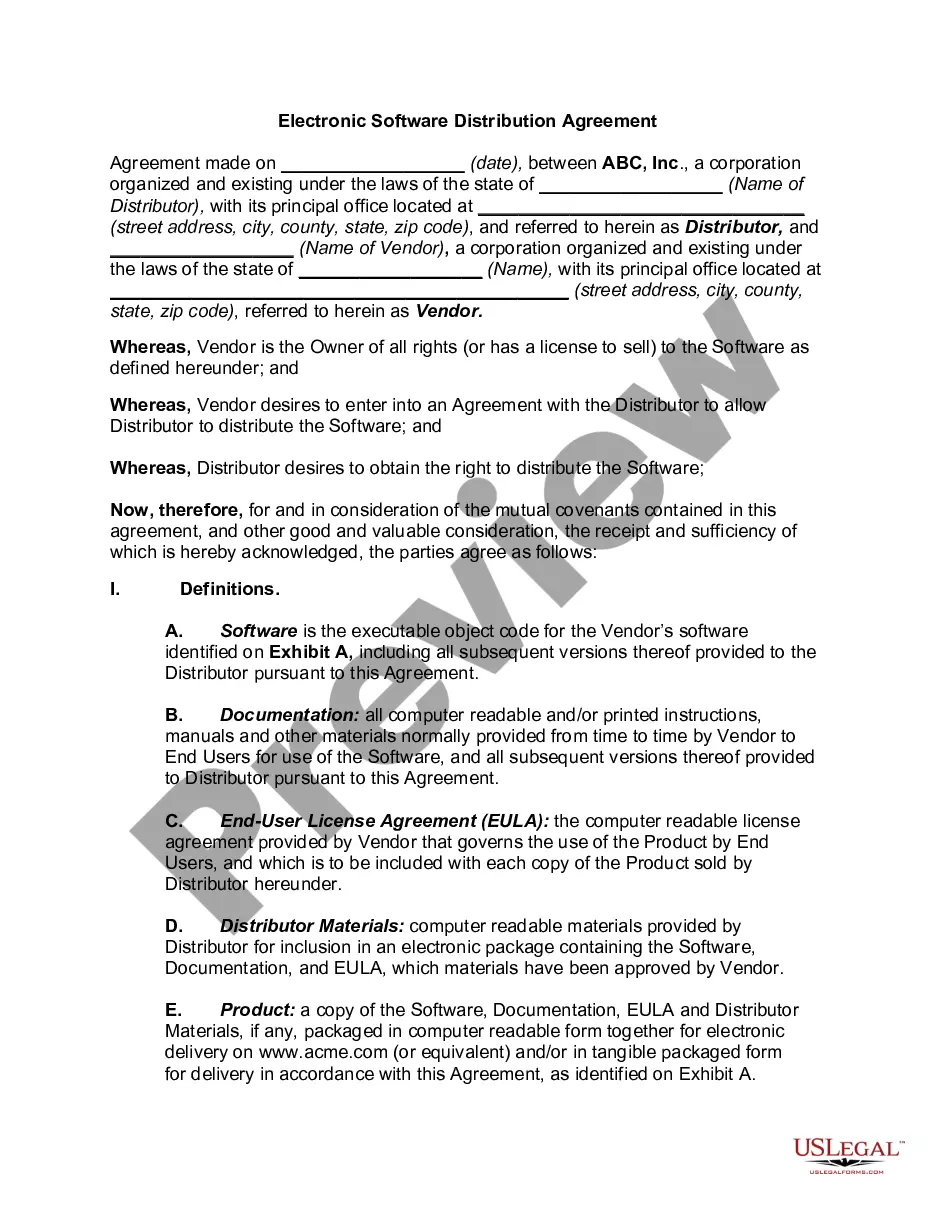
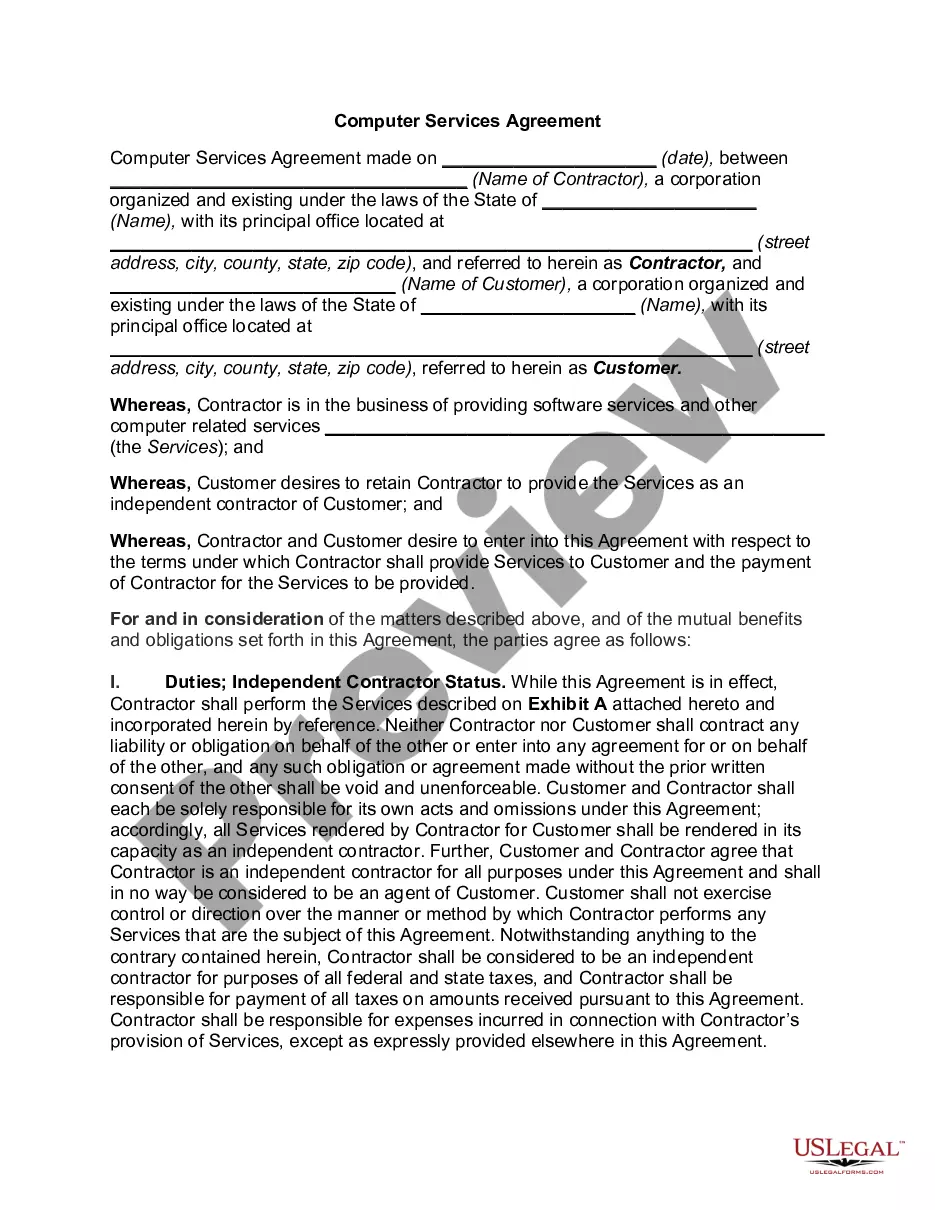
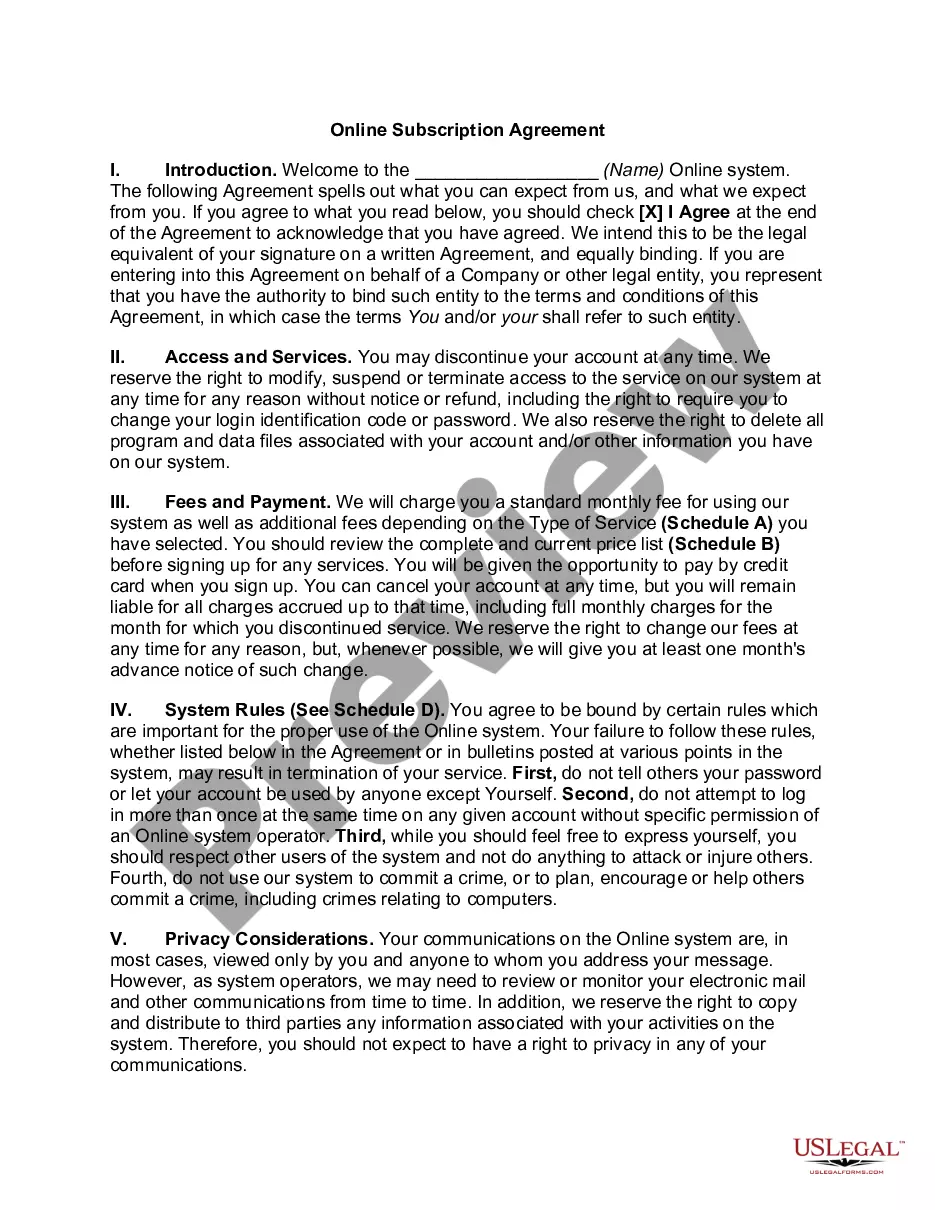
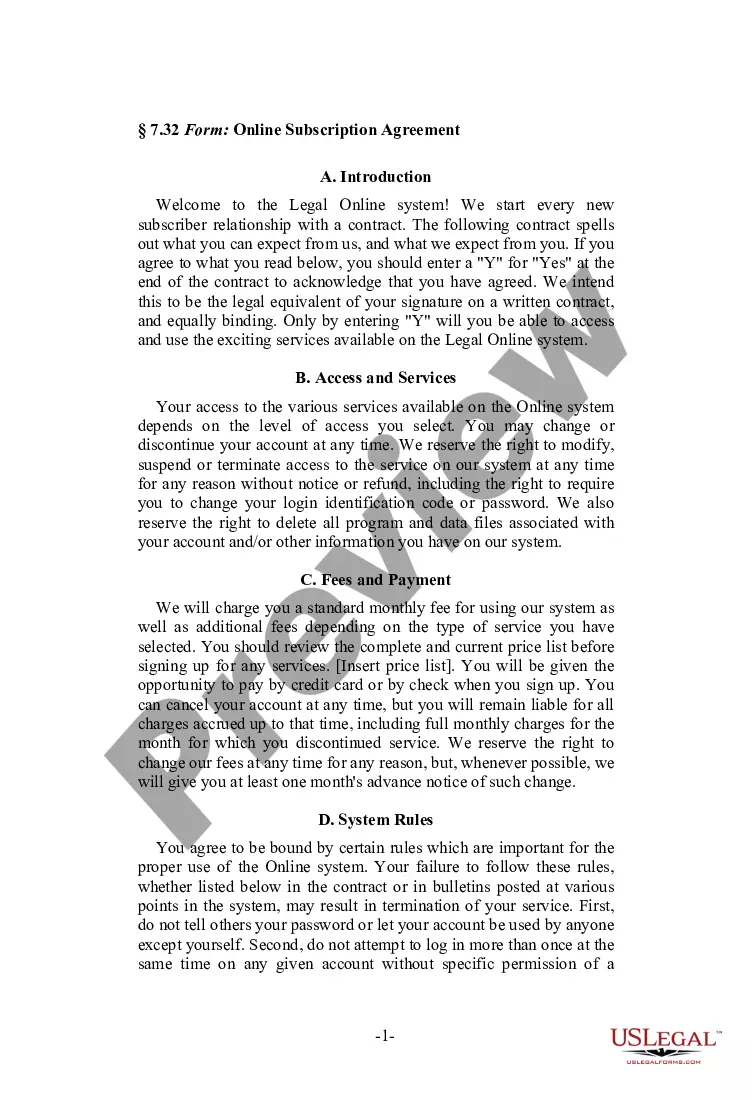
Get your form ready online
Our built-in tools help you complete, sign, share, and store your documents in one place.
Make edits, fill in missing information, and update formatting in US Legal Forms—just like you would in MS Word.
Download a copy, print it, send it by email, or mail it via USPS—whatever works best for your next step.
Sign and collect signatures with our SignNow integration. Send to multiple recipients, set reminders, and more. Go Premium to unlock E-Sign.
If this form requires notarization, complete it online through a secure video call—no need to meet a notary in person or wait for an appointment.
We protect your documents and personal data by following strict security and privacy standards.

Make edits, fill in missing information, and update formatting in US Legal Forms—just like you would in MS Word.

Download a copy, print it, send it by email, or mail it via USPS—whatever works best for your next step.

Sign and collect signatures with our SignNow integration. Send to multiple recipients, set reminders, and more. Go Premium to unlock E-Sign.

If this form requires notarization, complete it online through a secure video call—no need to meet a notary in person or wait for an appointment.

We protect your documents and personal data by following strict security and privacy standards.
Looking for another form?





How to fill out Electronic Publishing Agreement?
Selecting the optimal authentic document format can be challenging.
There are numerous templates available online, but how can you find the authentic version you require.
Utilize the US Legal Forms website. The service offers a vast array of templates, including the Louisiana Electronic Publishing Agreement, which can be utilized for both business and personal purposes.
You can preview the document using the Preview button and read the document description to confirm it is suitable for you.
- All documents are reviewed by professionals and comply with state and federal regulations.
- If you are already registered, sign in to your account and click the Download button to obtain the Louisiana Electronic Publishing Agreement.
- Use your account to browse through the authentic documents you have previously ordered.
- Visit the My documents section of your account to download another copy of the document you need.
- If you are a new user of US Legal Forms, here are simple instructions to follow.
- First, ensure you have selected the correct document for your city/state.
Form popularity
FAQ
Find a traditional publisher who will offer you a book contract. This is what most writers have in mind when they think of publishing their book. A traditional publisher pays you, the author, for the right to publish your work, under certain terms and conditions. Hire a company to help you publish your book.
The publisher submits a draft contract to the author's agent after they've reached an initial publishing agreement. The agent then negotiates any needed changes to the draft contract for the author. Since contracts tend to favor the publishing house, agents can be vital in the negotiation of terms.
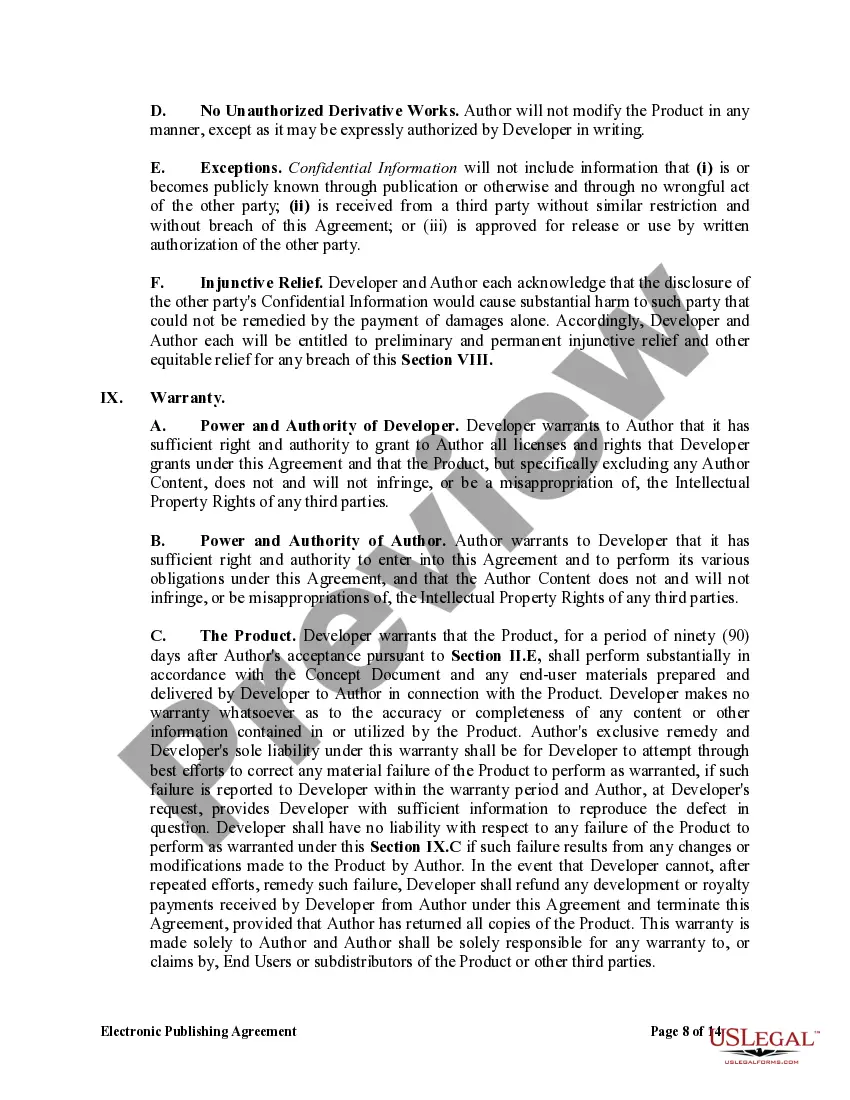
The typical book publishing agreement recites its duration as the full term of copyright and applicable extensions and renewals if any. Under current US law, the full term of copyright is the life of the author (or surviving joint author) plus 70 years. Say, an author writes a book at age 30 and lives till age 80.
The contract will also include basic things such as your word count (usually 85-100,000 words for commercial fiction), how many books the publisher is buying from you at this stage (usually one or two for a first deal), your delivery dates and planned publication dates, your responsibilities if there are any (such as
How to Draft Publishing Contracts As a Small Publisher Beginning the Contract. Granting Rights to the Book. Identifying How Royalties are Calculated. Explaining the Author's Duties. Explaining Termination and Reversion of Rights. Protecting Yourself from Lawsuits. Finalizing the Contract.
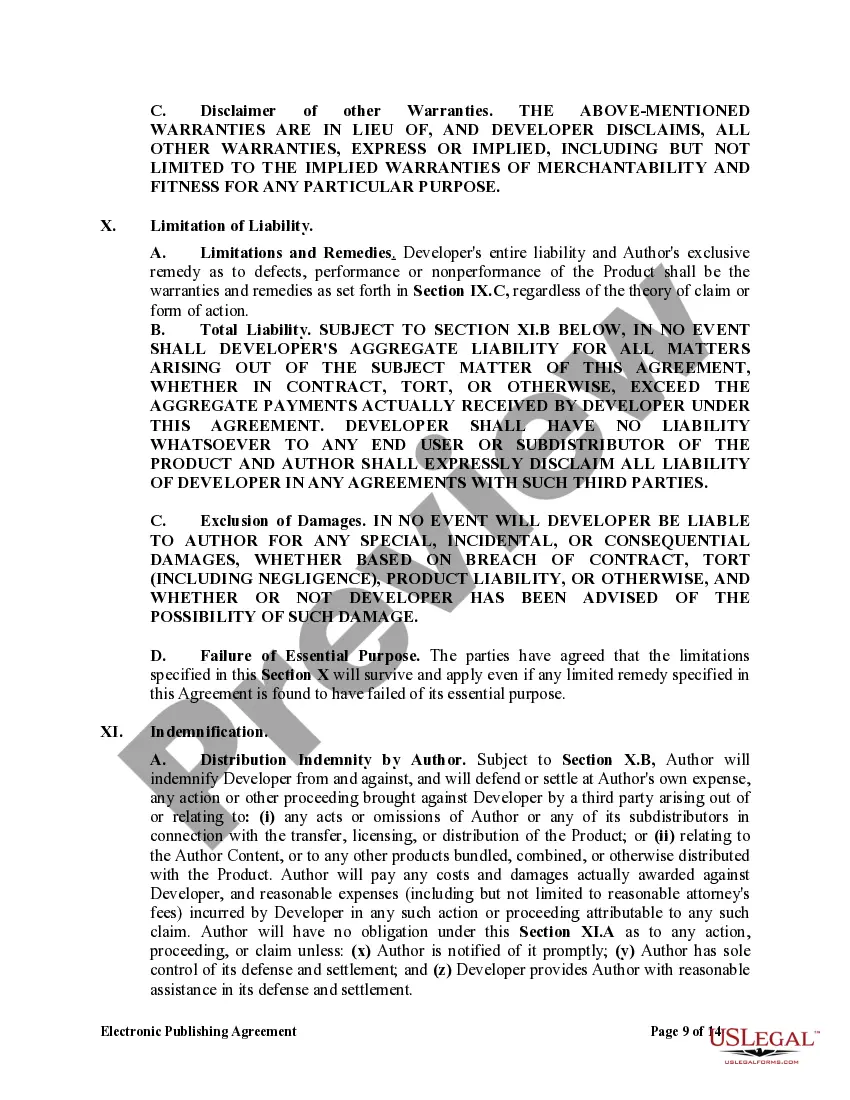
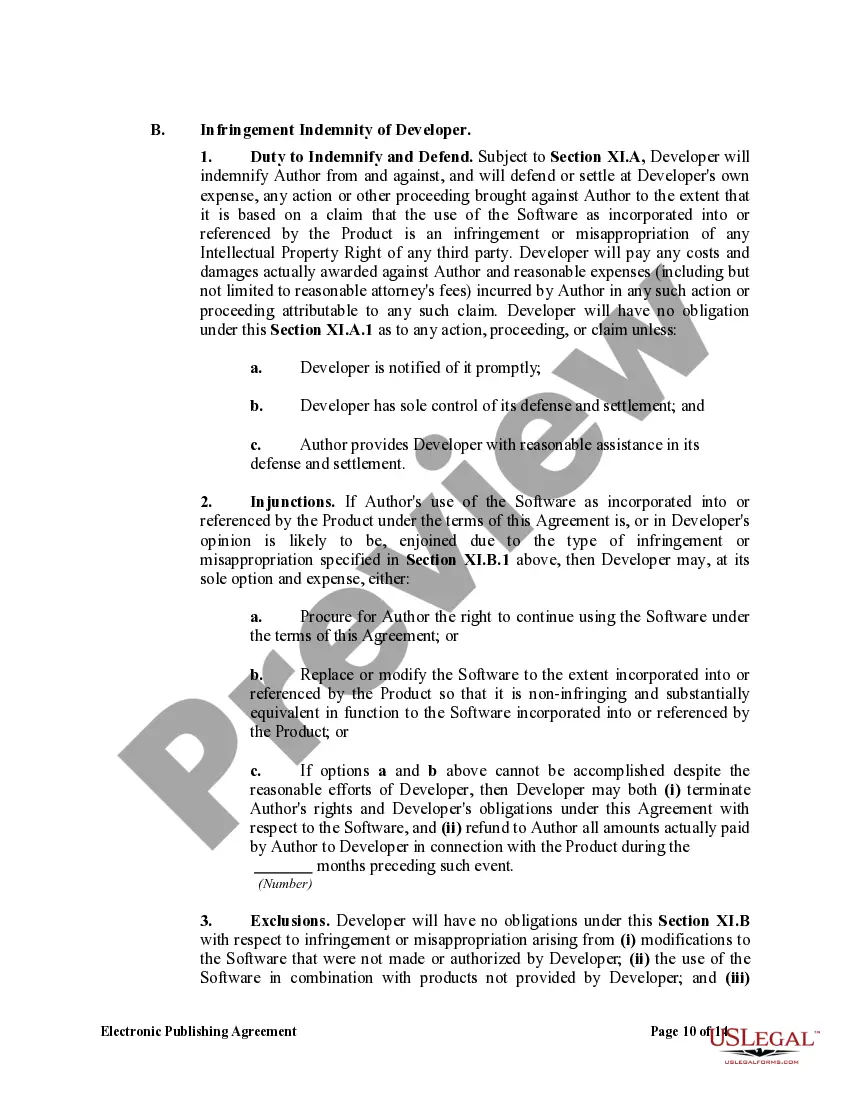
The path to publication generally requires authors to sign a publishing contract that covers such topics as: manuscript delivery and acceptance, copyright ownership and grants; royalty advances, rates and payment; author warranties and indemnities; contract duration and rights reversion (out-of-print); options on new
The path to publication generally requires authors to sign a publishing contract that covers such topics as: manuscript delivery and acceptance, copyright ownership and grants; royalty advances, rates and payment; author warranties and indemnities; contract duration and rights reversion (out-of-print); options on new
What is a Publishing Deal? In general terms, a typical publishing deal involves the assignment of some part of the ownership of your songs to a publishing company in exchange for a share of the royalties received by the publisher for exploitation of the songs.