Louisiana Commercial Building or Space Lease

About this form
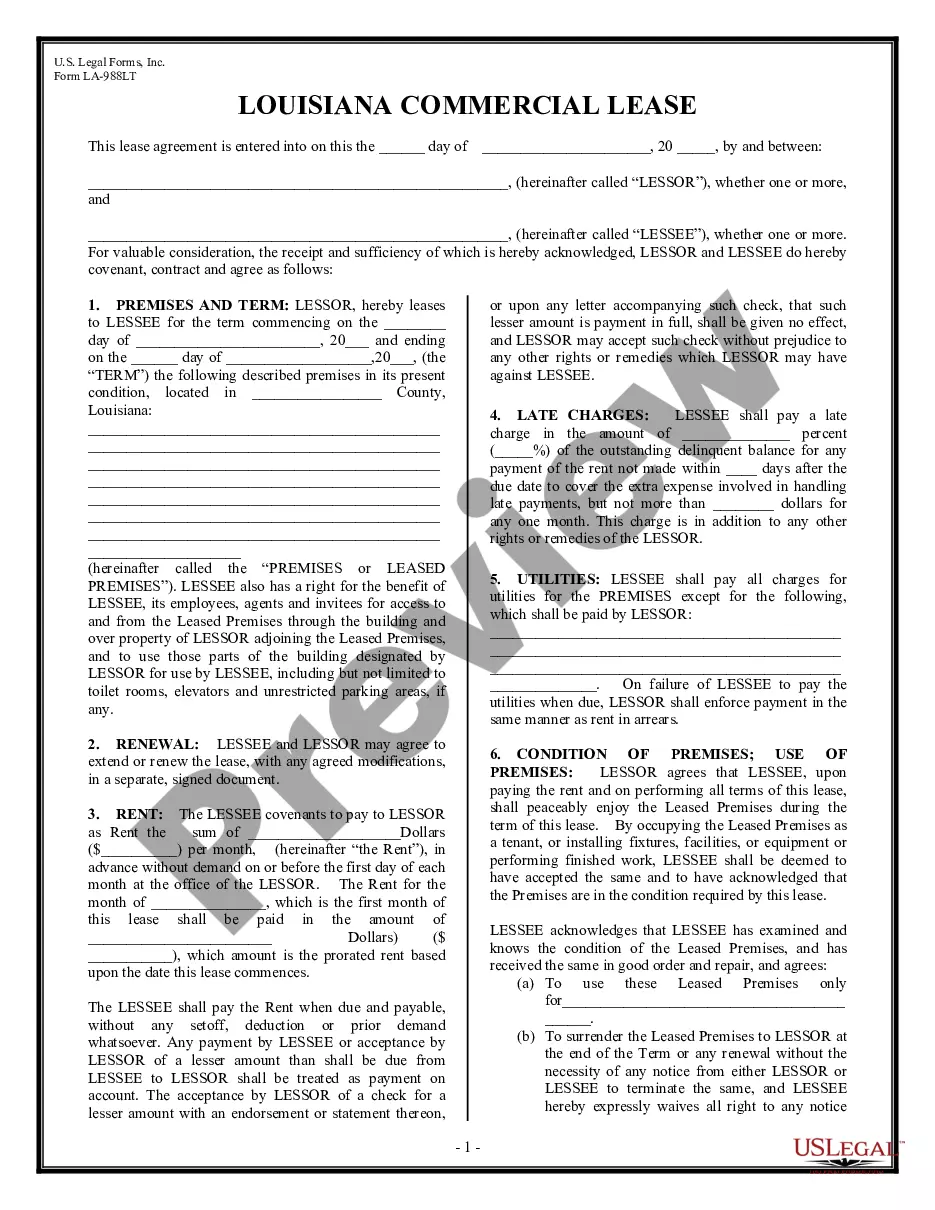
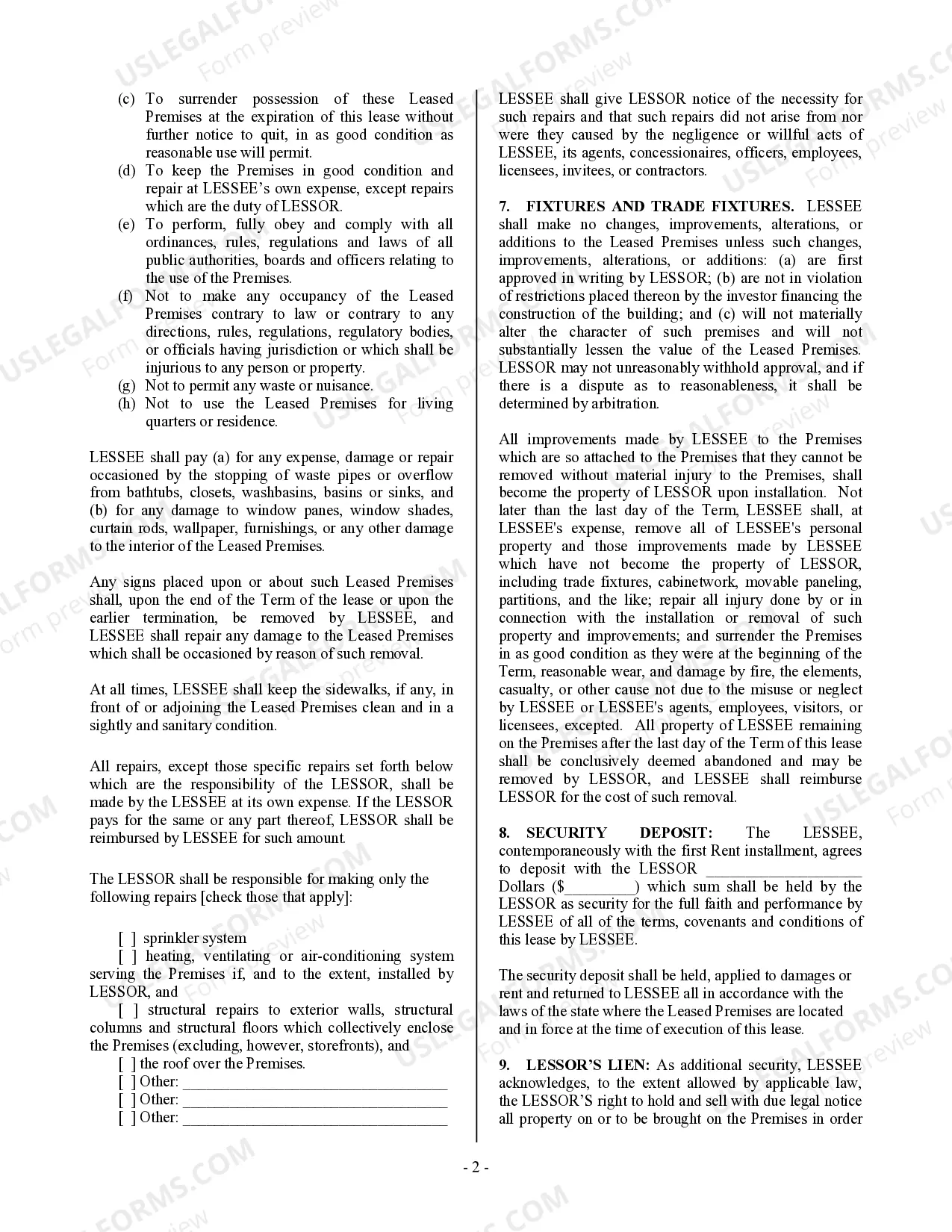
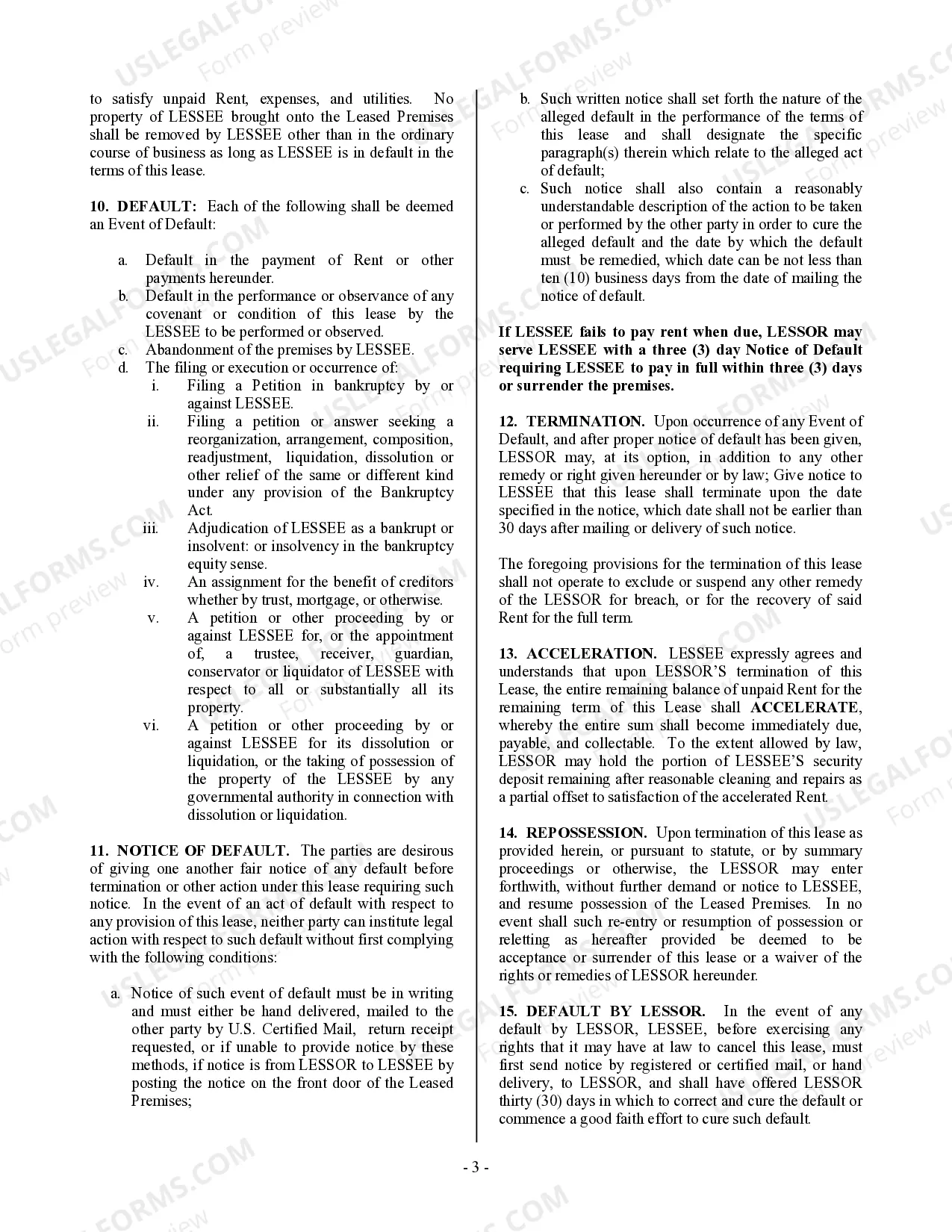
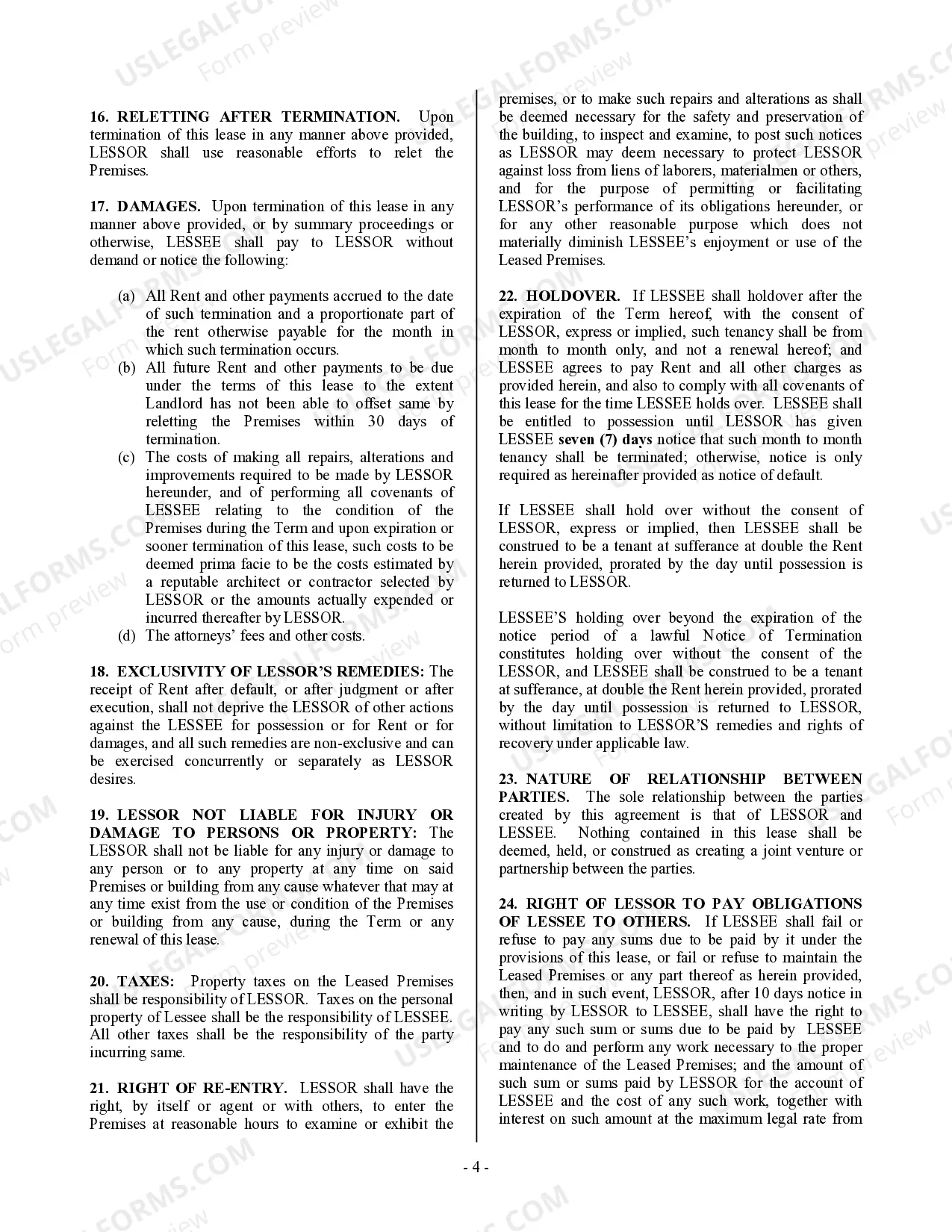
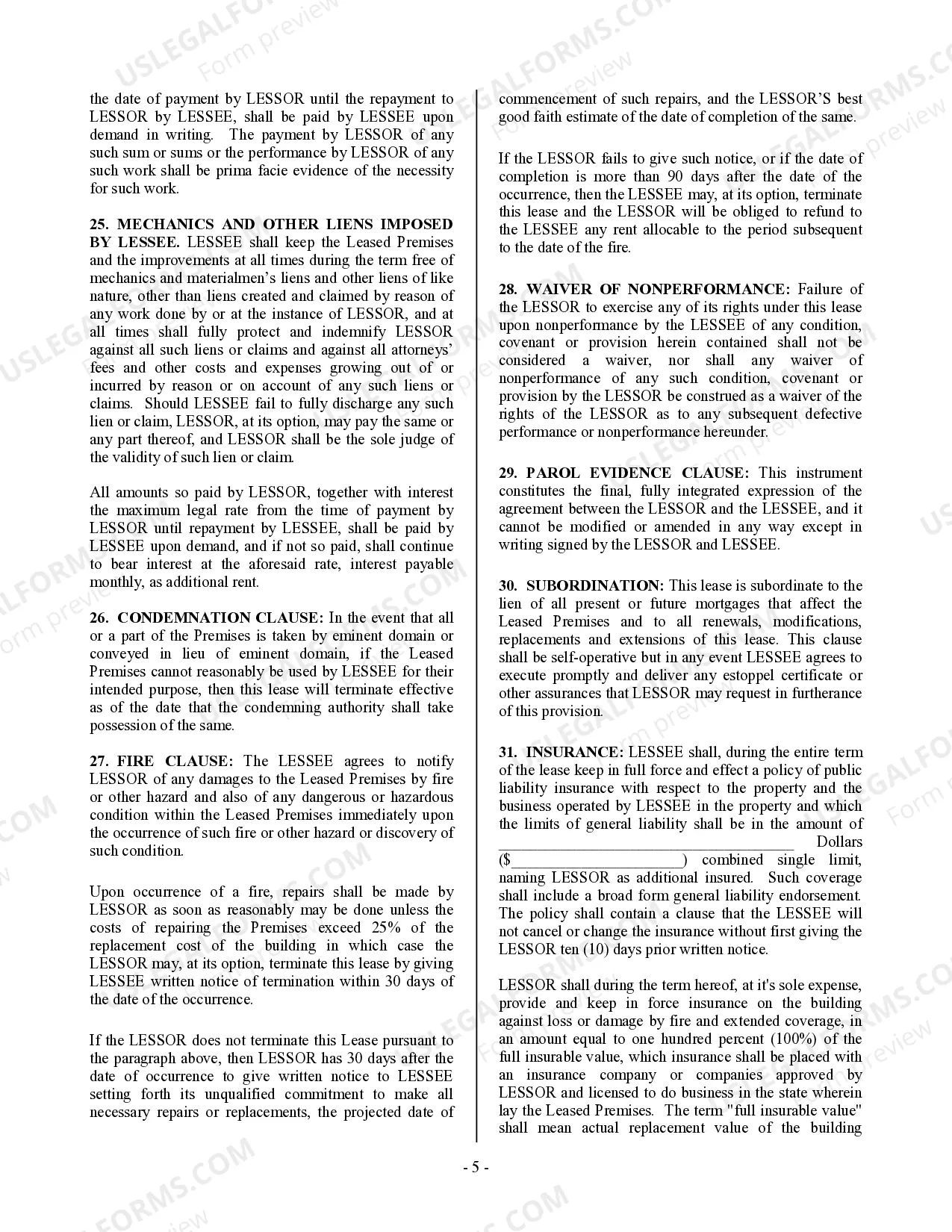
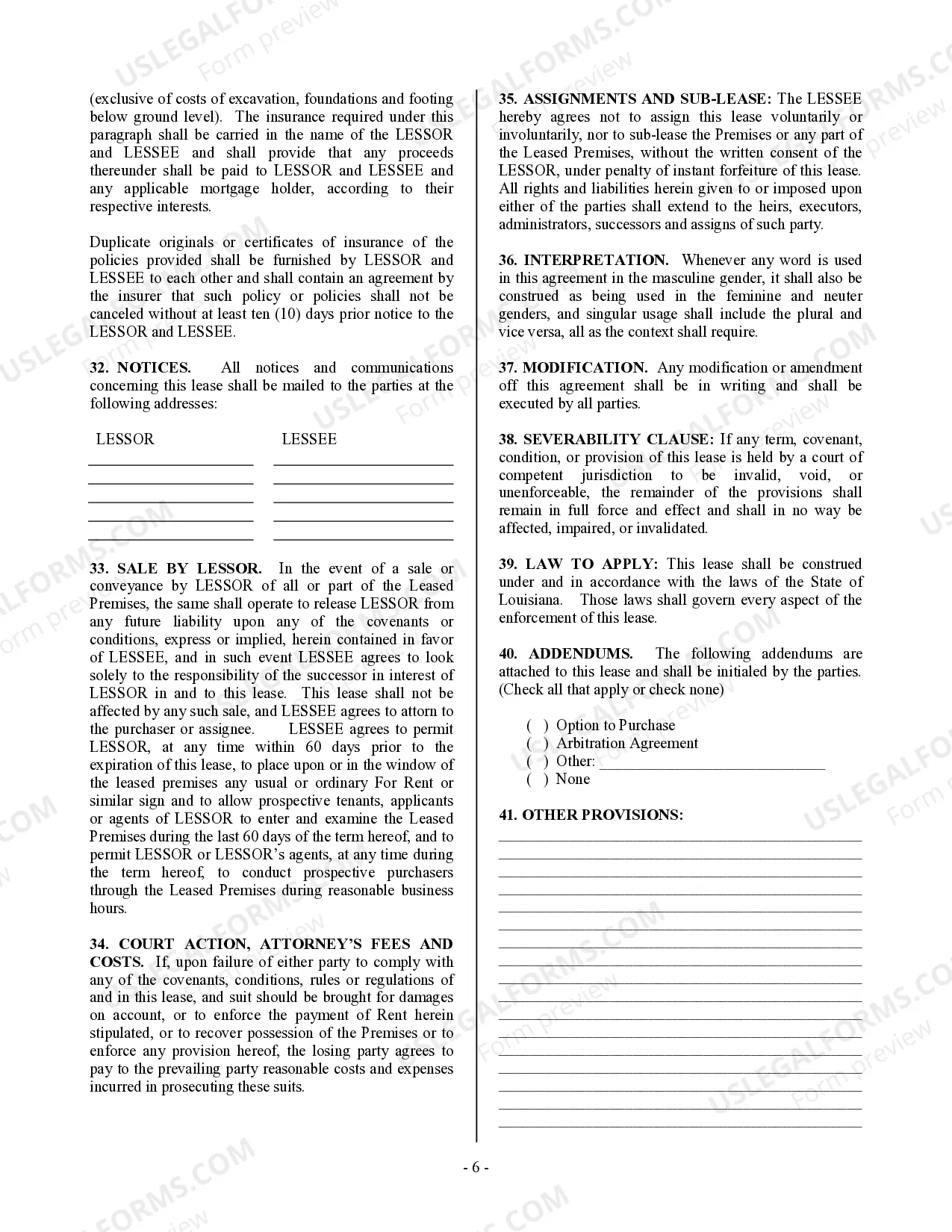
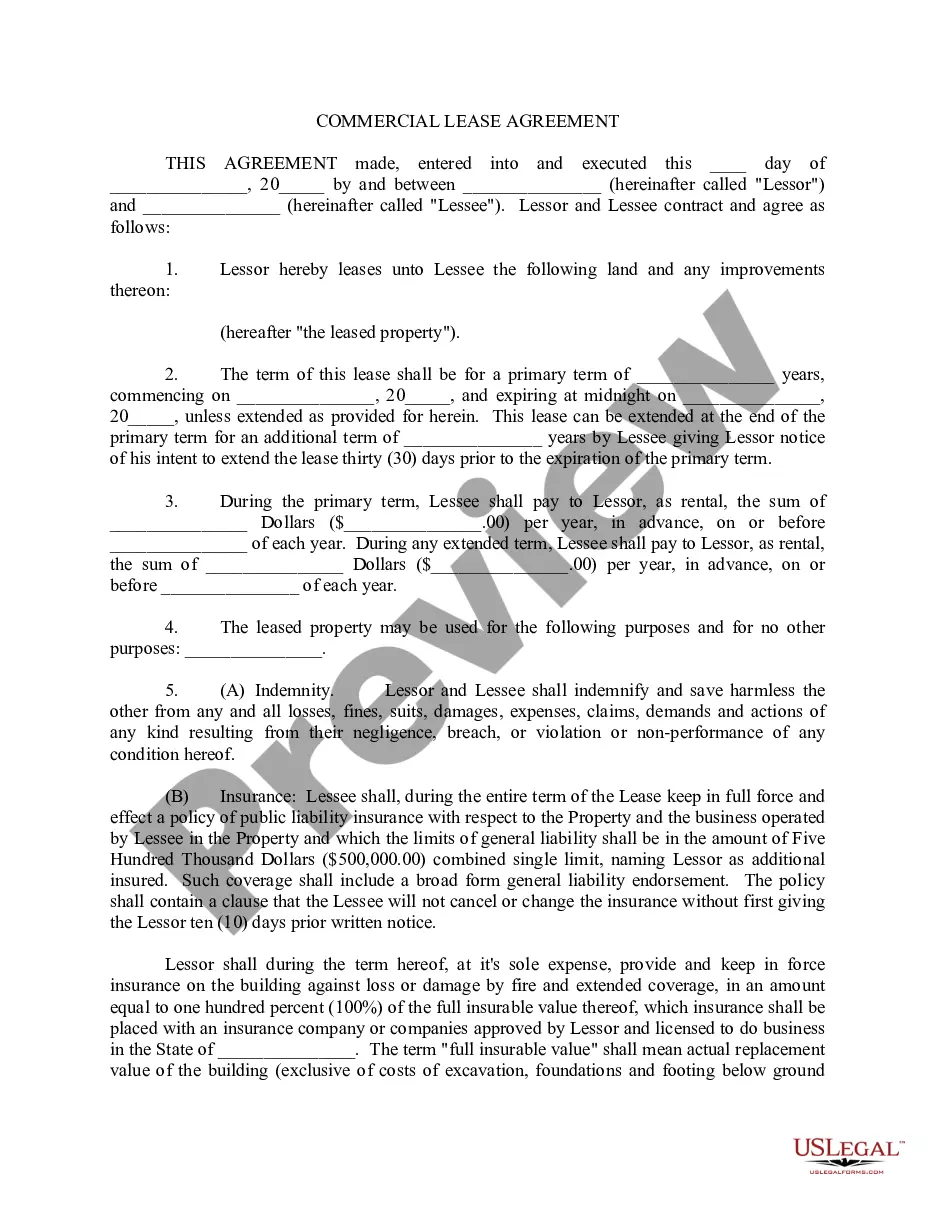
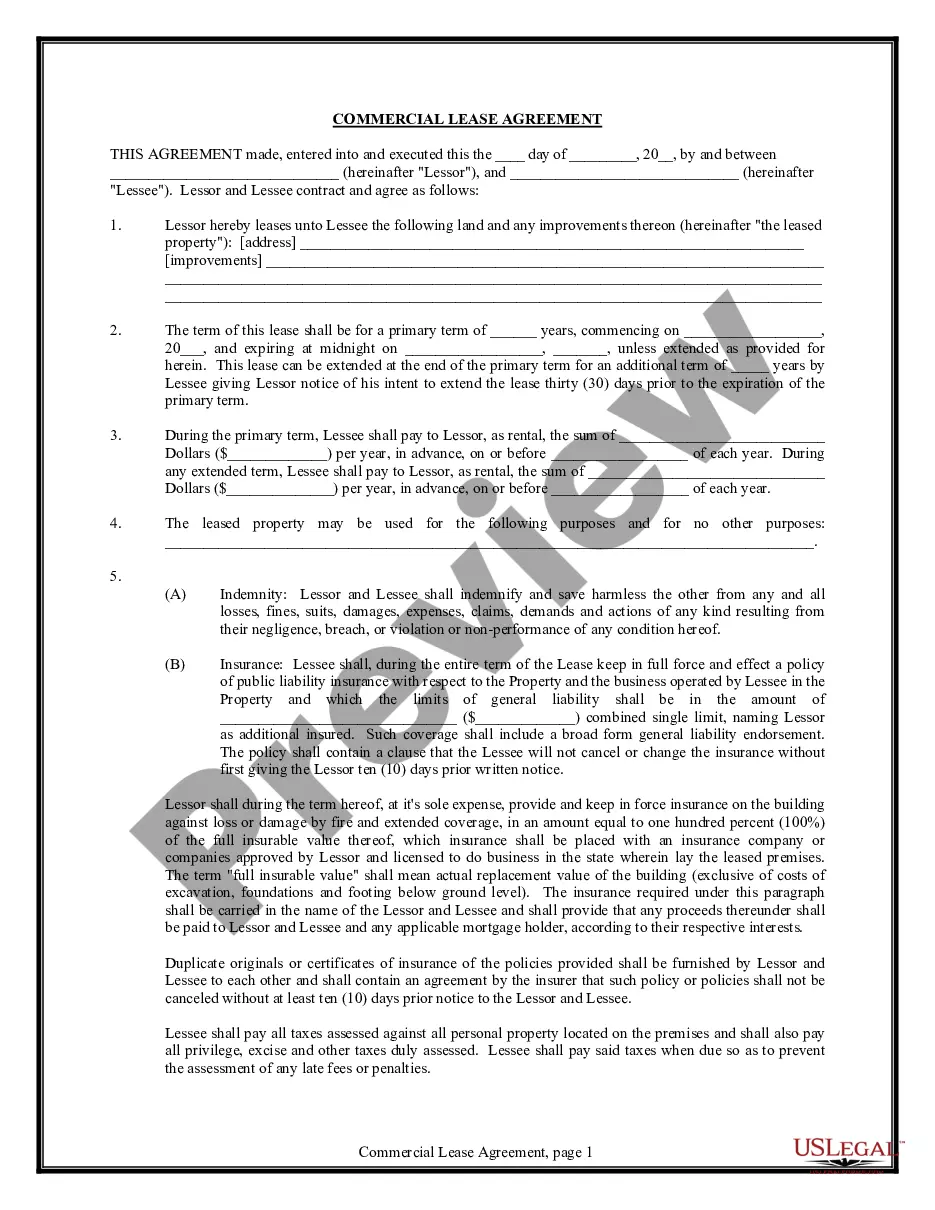
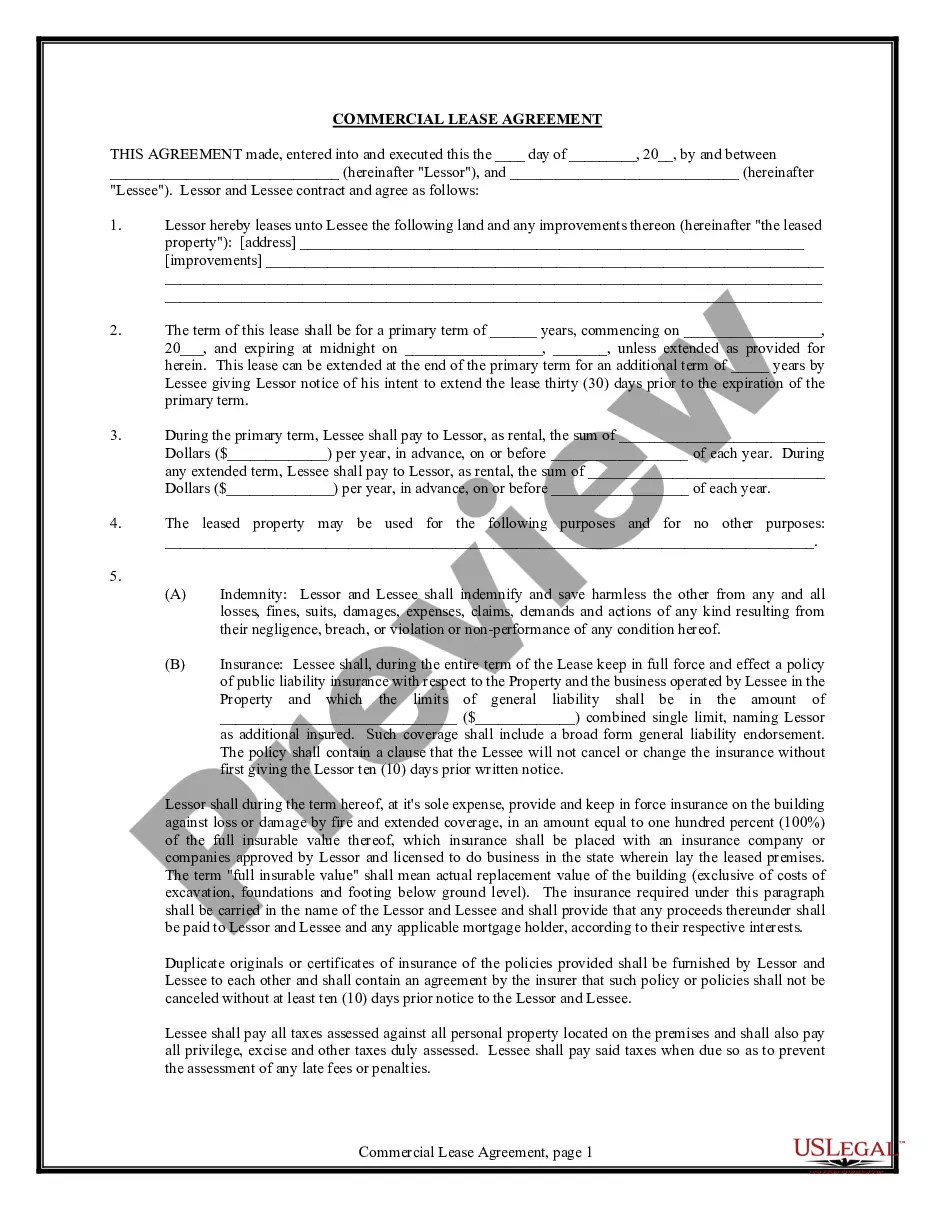
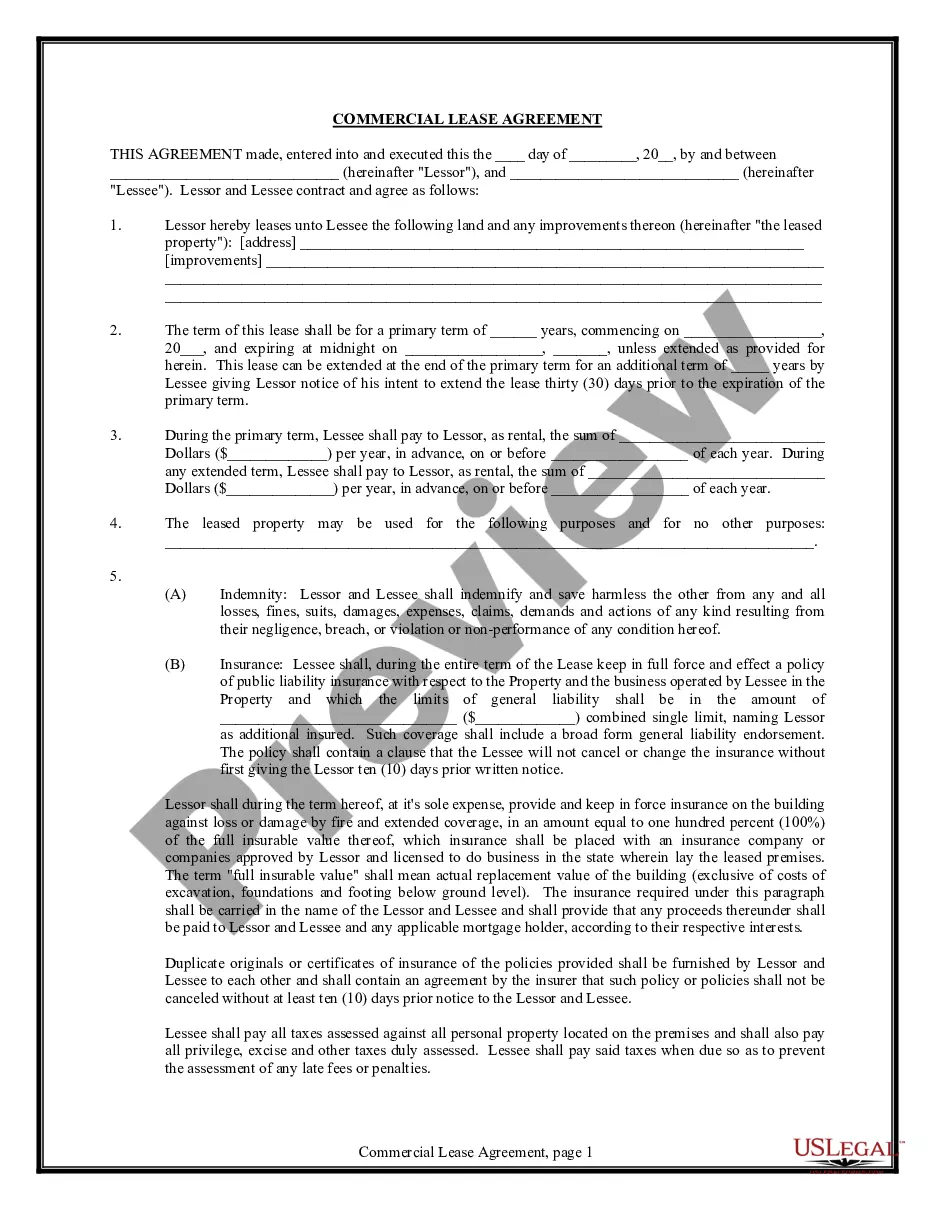
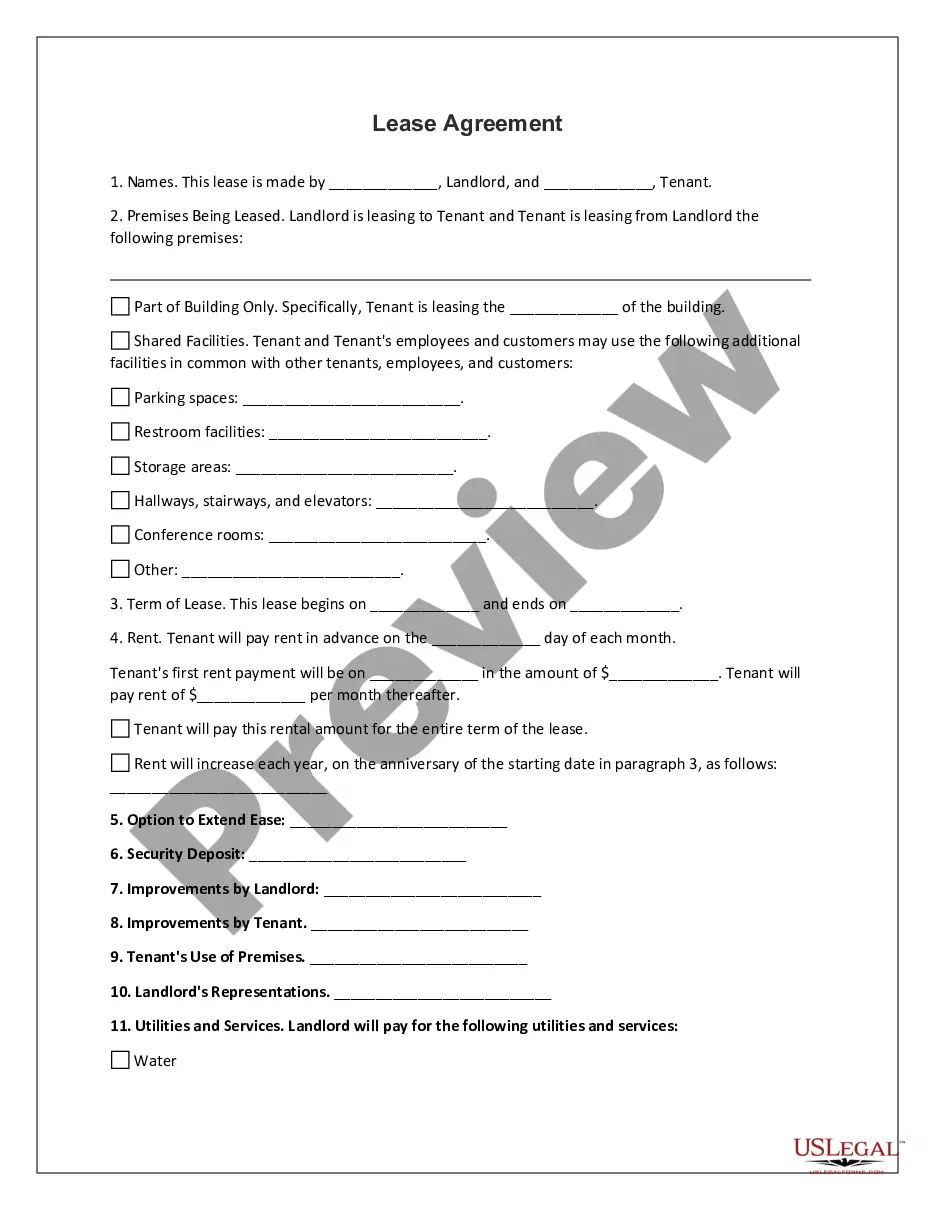
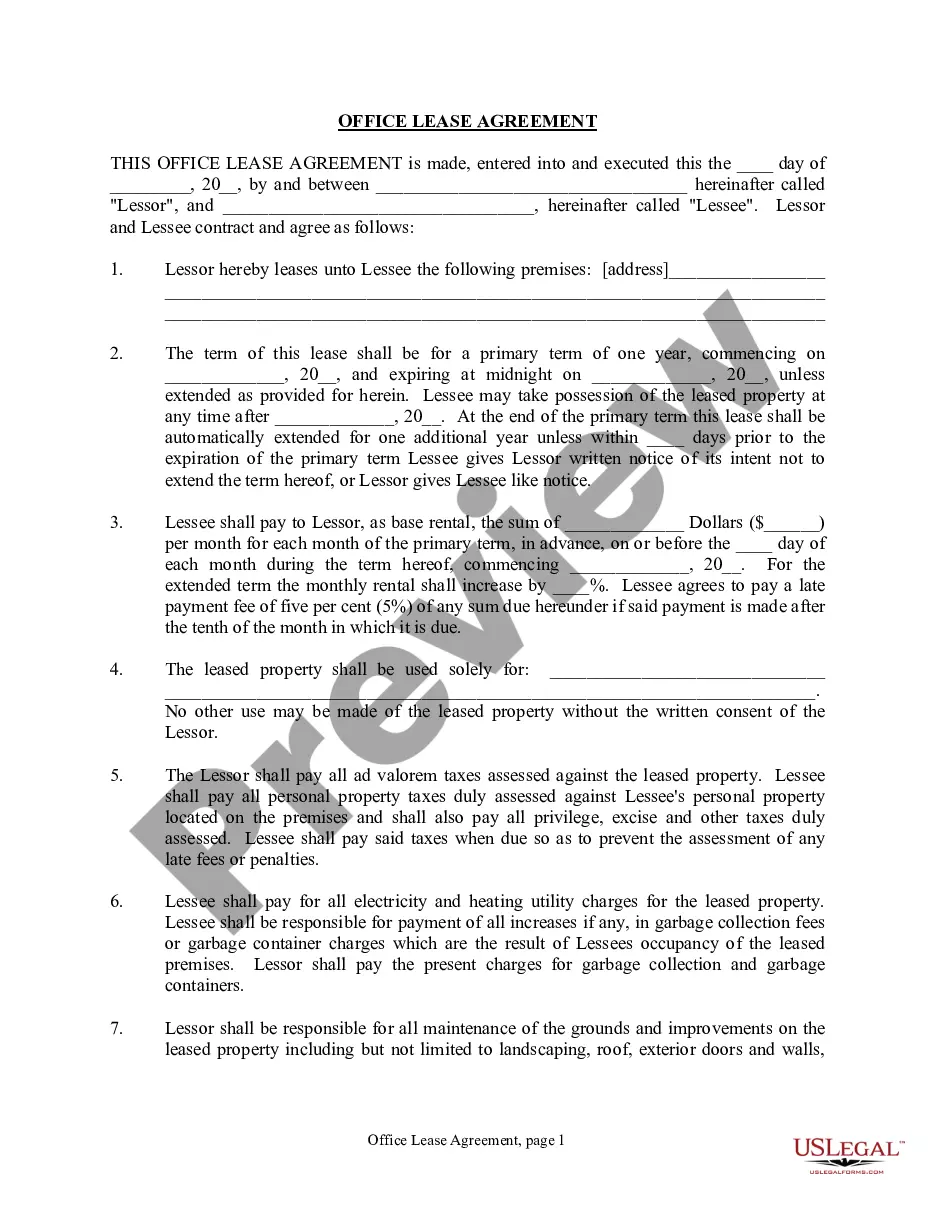
The Commercial Building or Space Lease form is a legally binding agreement for leasing commercial property in Louisiana. This detailed lease covers essential aspects such as lease terms, payment of rent, utilities, security deposits, and various legal clauses to protect both the lessor and lessee. Unlike simpler rental agreements, this form is tailored to accommodate a range of commercial uses, ensuring clear expectations and legal protection for all parties involved.
Main sections of this form
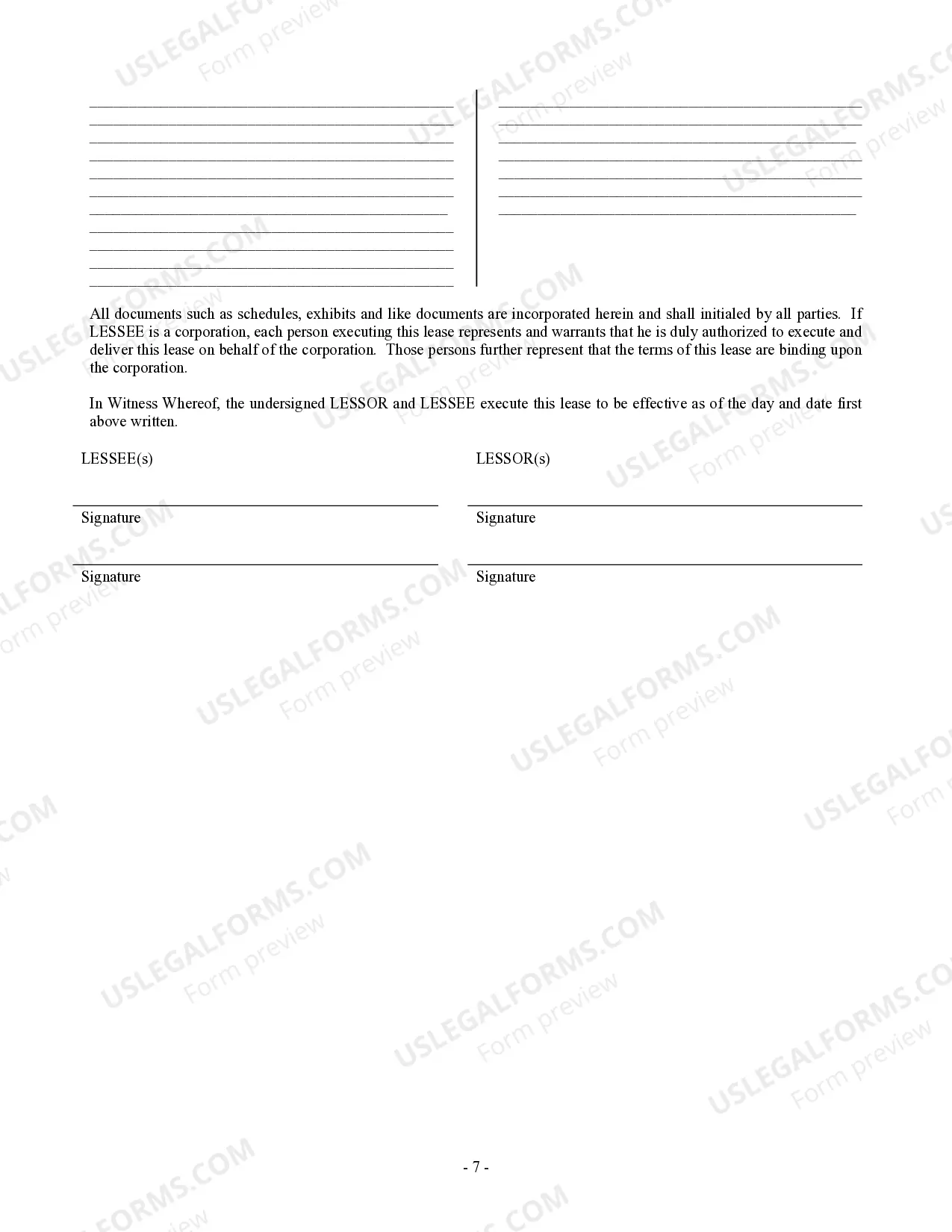
- Details of the lessor and lessee, including names and signatures.
- Terms of the lease, including start and end dates.
- Rent payment structure, including amounts and due dates.
- Conditions regarding utilities and maintenance responsibilities.
- Provisions for default, termination, and renewal of the lease.
- Security deposit requirements and conditions for its return.
When to use this document
This form is essential when renting commercial space for business purposes, such as an office, retail store, or warehouse. Use this lease when you want a thorough, legally sound agreement that outlines the rights and obligations of both the landlord and tenant. It is particularly useful for businesses looking to establish clear terms around the use and maintenance of the property, ensuring compliance with local laws and expectations.
Who needs this form
- Property owners or landlords leasing commercial space.
- Businesses seeking to lease commercial premises in Louisiana.
- Individuals or organizations requiring a detailed legal lease agreement.
- Attorneys or legal representatives assisting with commercial leases.
Completing this form step by step
- Identify and enter the names of the lessor and lessee at the beginning of the lease.
- Specify the property details, including the address and description of the premises.
- Enter the start and end dates of the lease term.
- Specify the monthly rent amount and payment due dates.
- Complete any clauses related to utilities, deposits, and maintenance responsibilities.
- Both parties should sign and date the agreement to finalize it.
Does this form need to be notarized?
This form does not typically require notarization unless specified by local law. However, it is advisable to consult with a legal professional to ensure compliance with any particular regulations that may affect your lease agreement.
Get your form ready online
Our built-in tools help you complete, sign, share, and store your documents in one place.
Make edits, fill in missing information, and update formatting in US Legal Forms—just like you would in MS Word.
Download a copy, print it, send it by email, or mail it via USPS—whatever works best for your next step.
Sign and collect signatures with our SignNow integration. Send to multiple recipients, set reminders, and more. Go Premium to unlock E-Sign.
If this form requires notarization, complete it online through a secure video call—no need to meet a notary in person or wait for an appointment.
We protect your documents and personal data by following strict security and privacy standards.

Make edits, fill in missing information, and update formatting in US Legal Forms—just like you would in MS Word.

Download a copy, print it, send it by email, or mail it via USPS—whatever works best for your next step.

Sign and collect signatures with our SignNow integration. Send to multiple recipients, set reminders, and more. Go Premium to unlock E-Sign.

If this form requires notarization, complete it online through a secure video call—no need to meet a notary in person or wait for an appointment.

We protect your documents and personal data by following strict security and privacy standards.
Common mistakes
- Failing to clearly define the lease term can lead to disputes over rental dates.
- Not specifying maintenance responsibilities can result in misunderstandings about property upkeep.
- Ignoring local laws that may affect lease terms, such as zoning regulations.
- Neglecting to include late payment penalties can make it difficult to enforce rent collection.
Why complete this form online
- Convenience of downloading and printing the form for immediate use.
- Editability allows customization to fit specific needs and agreements.
- Access to a legally vetted template drafted by licensed attorneys.
- Cost-effective solution compared to hiring legal professionals for drafting from scratch.
- This lease is legally binding once signed by both parties.
- Ensures compliance with Louisiana state regulations concerning commercial leases.
- Includes provisions for resolving disputes, should they arise during the lease term.
Quick recap
- The Commercial Building or Space Lease is essential for legal protection between landlords and tenants.
- Understanding each clause leads to better management of responsibilities and expectations.
- Customizing the lease form is encouraged to fit particular leasing arrangements.
Looking for another form?
Form popularity
FAQ
The Introduction. The beginning of the lease agreement should contain the name of the landlord and tenant, as well as a statement of the agreement into which they are entering. Rent. Deposit. Taxes. Property Insurance. Utilities and Amenities. Remodeling and Improvements. Repairs and Maintenance.
The Lease Must be in Writing It does not matter if the lease is handwritten or typed. If the lease is for more than one year, it must be in written form and contain the following terms.
Settle ahead of time on your budget, your must-haves, and your nice-to-haves. Get an agent or lawyer to negotiate for you. Do negotiate on more than one location at the same time. Don't pay asked base rent. Check the square footage yourself.
As long as the contract spells out specific details and both parties have signed that they agree to the contract's terms, a handwritten contract is legally binding and enforceable in court.
Under California law, a lease does have to be in writing to be enforceable, but only when the lease is for a period of more than a year.There is, however, an additional legal doctrine called partial performance which does make oral contracts enforceable even if they are covered by the Statute of Frauds.
Research is the key to signing the right business lease. Specifically, look at the building owner, landlord, zoning laws, environmental expectations and nuisance laws. Know how much you have to pay, what exactly you're covering and how much your rent will increase each year.
Fill in your name, the landlord's name if you know it and the property address. Fill in the date the lease commences--the day the lease term begins.
Names of all tenants. Limits on occupancy. Term of the tenancy. Rent. Deposits and fees. Repairs and maintenance. Entry to rental property. Restrictions on tenant illegal activity.
Name the parties. A simple rental agreement form needs to name the parties signing the lease and where they live. Describe the premises. Define the term of the lease. Set how much rent is owed. Assign a security deposit amount. Finalize the lease.