Louisiana Answer to Plaintiff's Petition
What this document covers
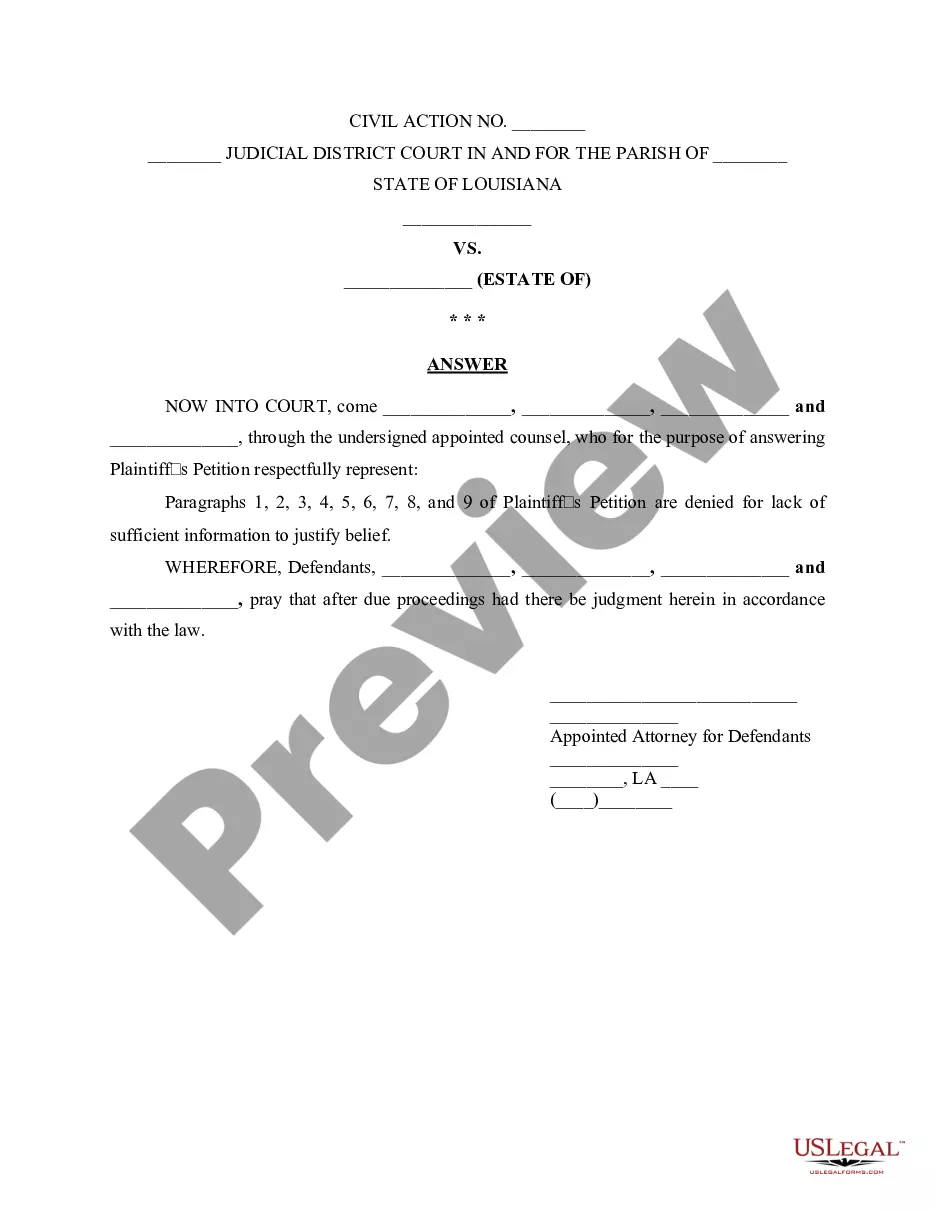
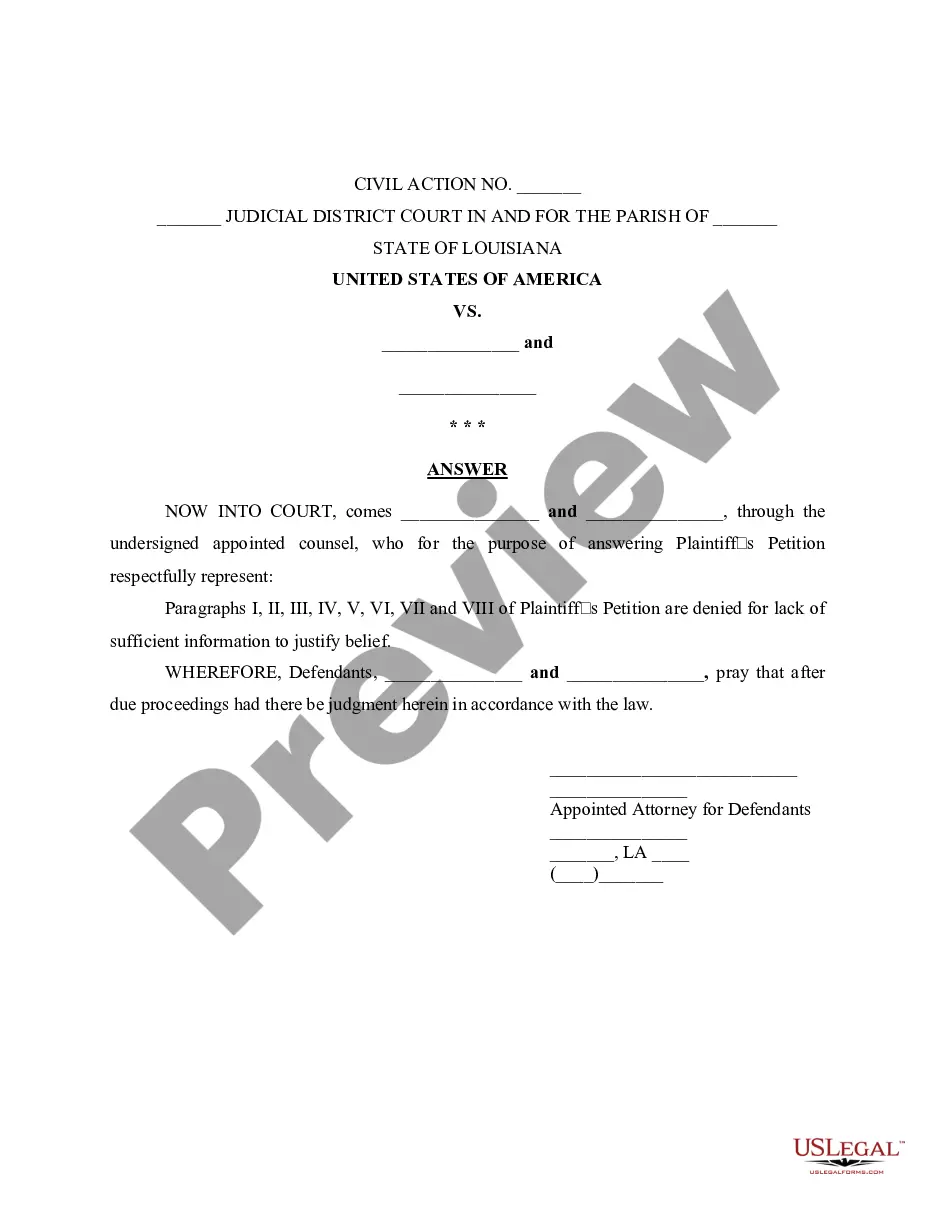
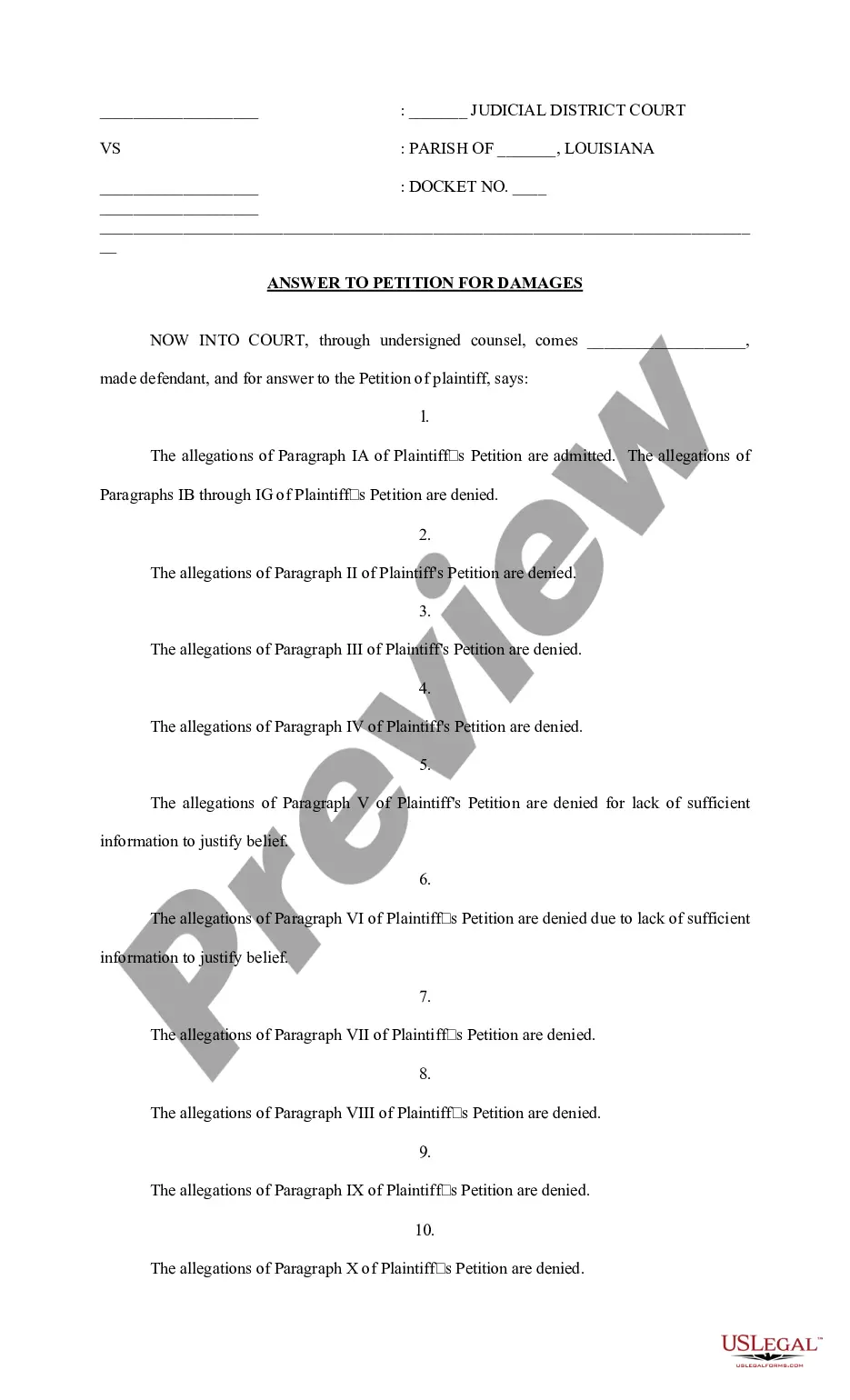
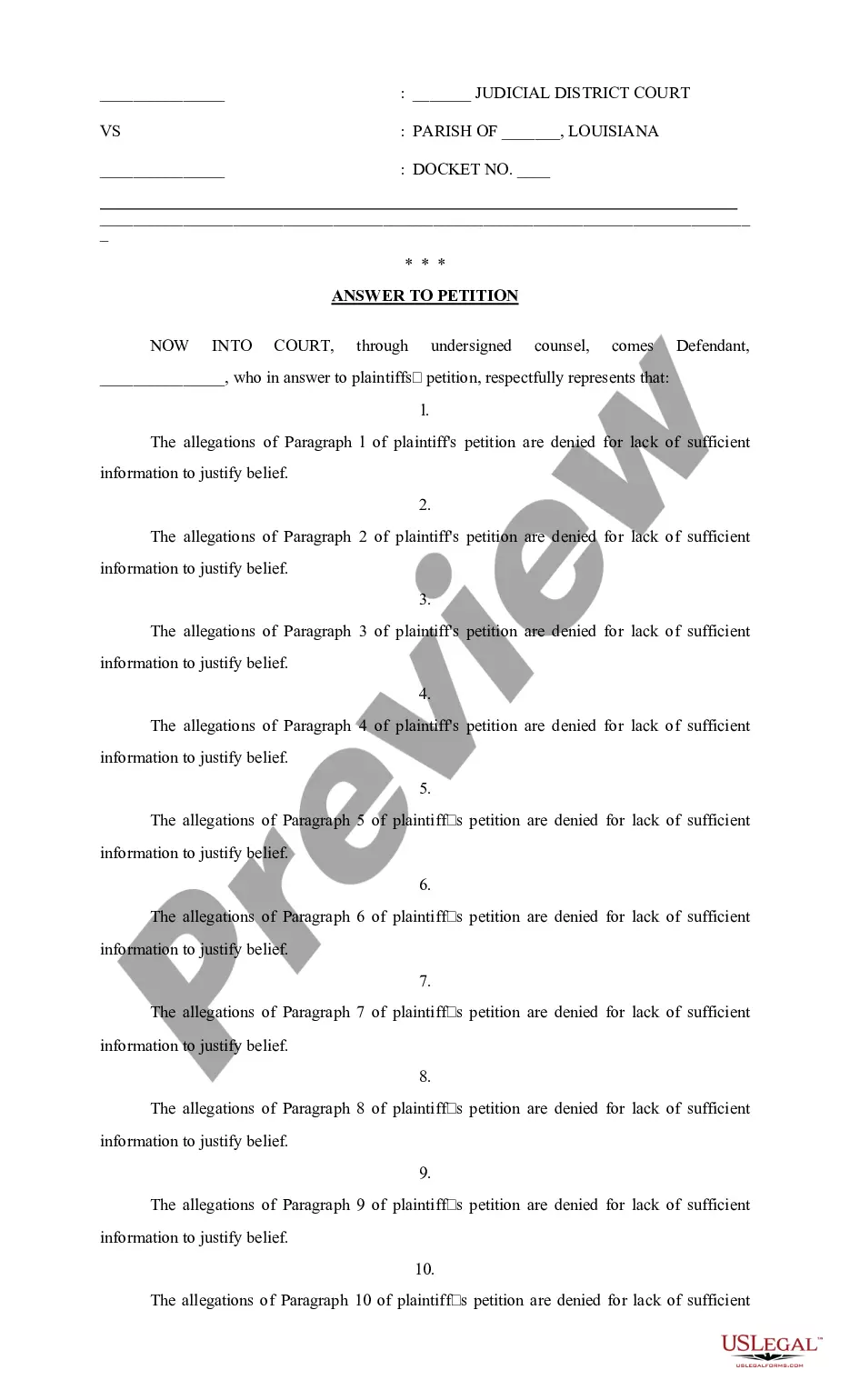
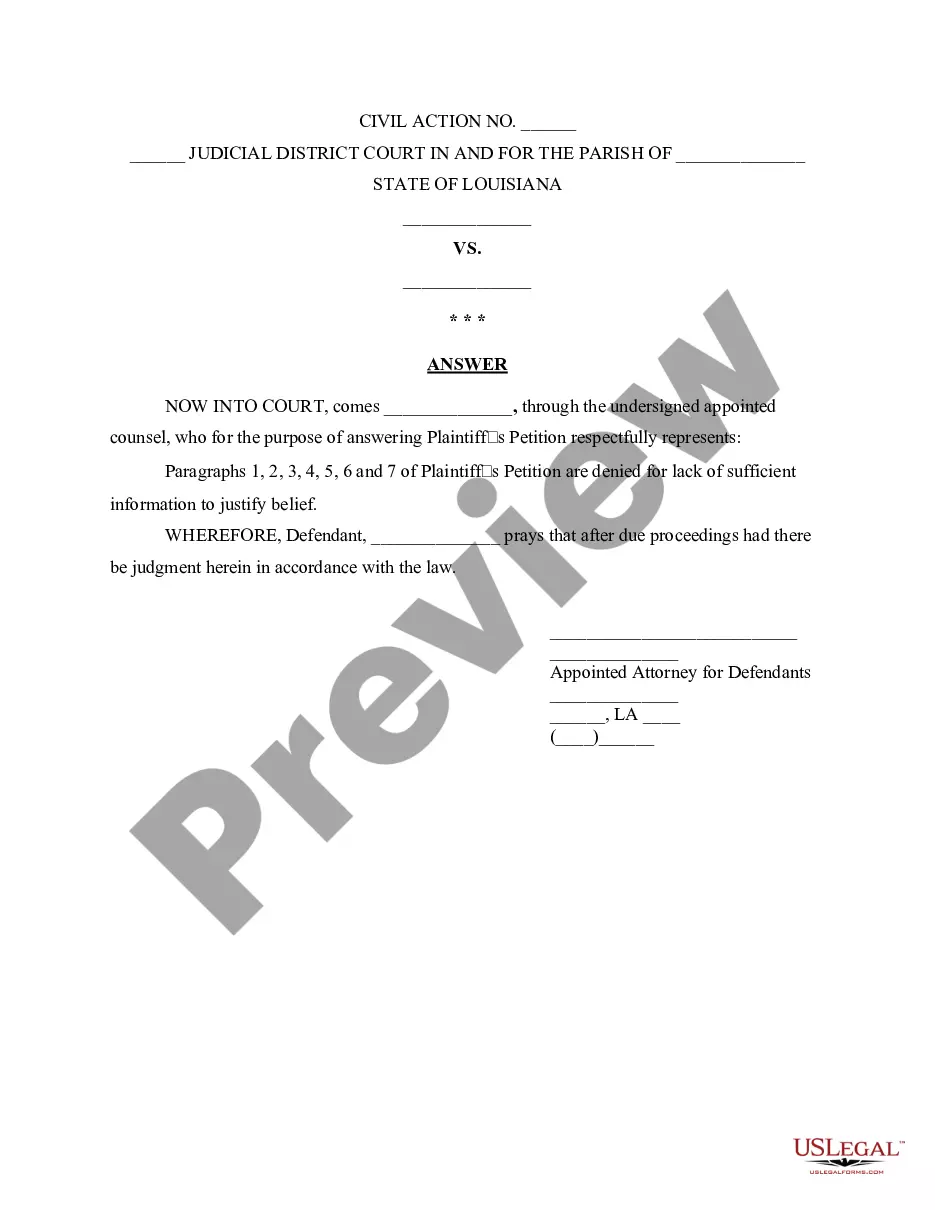
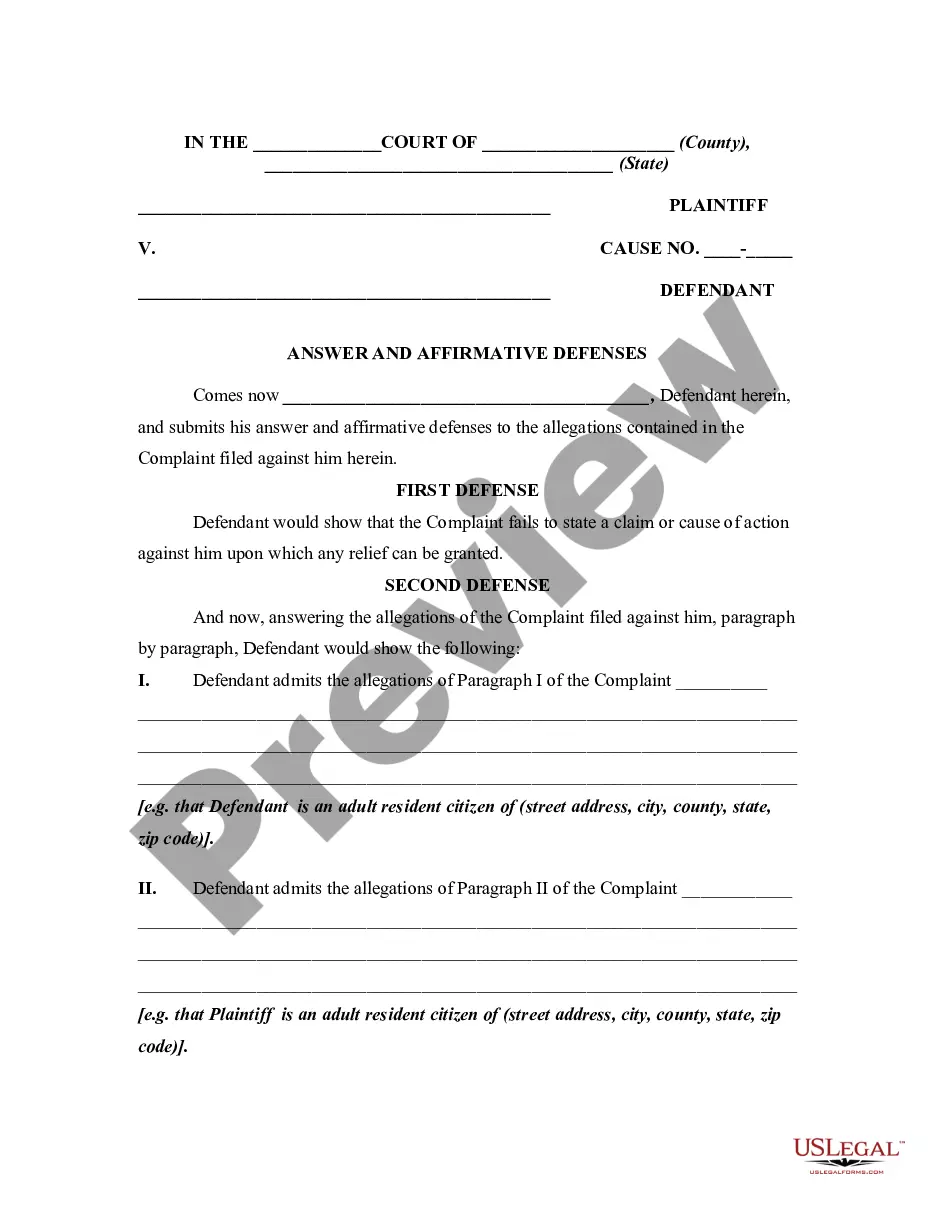
The Answer to Plaintiff's Petition is a legal document used by a defendant in a civil case to respond formally to the allegations made by the plaintiff. This form allows the defendant to deny or admit the claims and request a judgment in accordance with applicable laws. Unlike other response forms, this document specifically articulates the defendant's position and defenses, making it a crucial step in the legal process.
Form components explained
- Identification of the court and case details, including judicial district and parties involved.
- Denial of allegations, stating lack of sufficient information to either confirm or deny the claims made by the plaintiff.
- A request for judgment, establishing the defendant's legal position and expectations for the court's rulings.
- Signature and contact information of the appointed attorney representing the defendant.
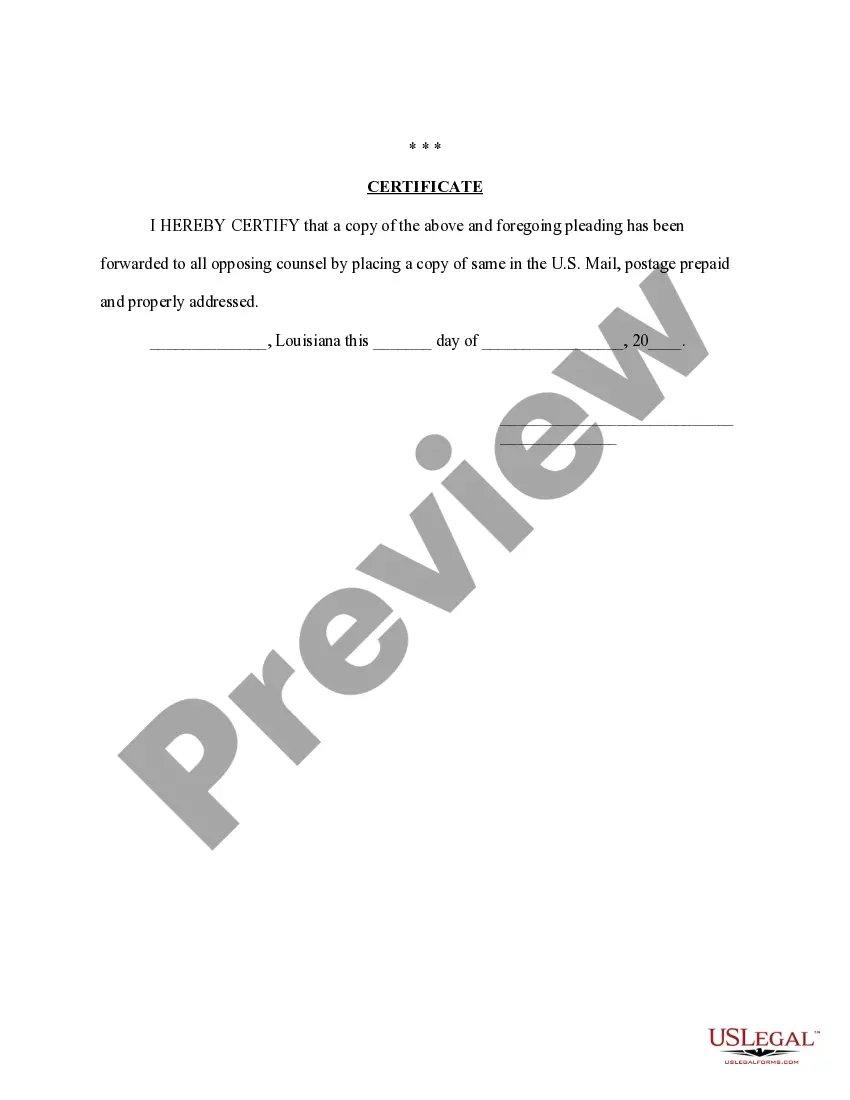
- Certification of service to opposing counsel, confirming that a copy of the response has been sent.
Situations where this form applies
This form should be used when a defendant receives a petition from a plaintiff in a civil lawsuit. It is important to respond promptly, as failing to file an answer can result in a default judgment against the defendant. Scenarios include disputes over contract enforcement, claims of negligence, or property disputes where the defendant needs to assert defenses against the allegations presented.
Who can use this document
- Defendants in civil lawsuits who have been served with a petition from a plaintiff.
- Attorneys representing the estate of a deceased individual in response to claims against the estate.
- Individuals or organizations seeking to protect their legal rights after being sued in a civil court.
Instructions for completing this form
- Identify and enter the names of all parties involved, including the name of the plaintiff and the defendant.
- Clearly deny or admit the allegations made in the plaintiff's petition, responding to each relevant paragraph.
- Include a request for judgment according to the law, highlighting your position as the defendant.
- Sign the document as the appointed attorney for the defendant, including your contact information.
- Mail a copy of the signed answer to all opposing counsel, ensuring it is sent to the correct addresses.
Does this document require notarization?
Notarization is generally not required for this form. However, certain states or situations might demand it. You can complete notarization online through US Legal Forms, powered by Notarize, using a verified video call available anytime.
Get your form ready online
Our built-in tools help you complete, sign, share, and store your documents in one place.
Make edits, fill in missing information, and update formatting in US Legal Forms—just like you would in MS Word.
Download a copy, print it, send it by email, or mail it via USPS—whatever works best for your next step.
Sign and collect signatures with our SignNow integration. Send to multiple recipients, set reminders, and more. Go Premium to unlock E-Sign.
If this form requires notarization, complete it online through a secure video call—no need to meet a notary in person or wait for an appointment.
We protect your documents and personal data by following strict security and privacy standards.

Make edits, fill in missing information, and update formatting in US Legal Forms—just like you would in MS Word.

Download a copy, print it, send it by email, or mail it via USPS—whatever works best for your next step.

Sign and collect signatures with our SignNow integration. Send to multiple recipients, set reminders, and more. Go Premium to unlock E-Sign.

If this form requires notarization, complete it online through a secure video call—no need to meet a notary in person or wait for an appointment.

We protect your documents and personal data by following strict security and privacy standards.
Avoid these common issues
- Failing to respond within the required time frame, which can lead to default judgments.
- Using vague language; it is important to be clear and specific in denials and admissions.
- Neglecting to serve the document to all opposing parties, which may hinder your legal position.
Benefits of completing this form online
- Convenient access to legally sound templates tailored by licensed attorneys.
- Editable forms that allow for customization to meet specific case needs without legal jargon.
- Immediate availability for download and completion at your convenience, avoiding delays in legal responses.
Looking for another form?




Form popularity
FAQ
Filing an An answer is a formal statement, in writing, of your defense to the lawsuit. You can say that what the plaintiff claims is not true. Or you can say it is true but give more information and reasons to defend your actions or explain the situation.
Pull the header information from the plaintiff's petition. Title your Answer Answer to Plaintiff's Petition/Complaint. Center this title and make it bold. Introduce yourself. Admit, deny, or claim that you lack sufficient knowledge to admit or deny each of the plaintiff's numbered allegations.
Don't ignore it. If you do this, the court will simply rule in the issuer or debt collector's favor. Try to work things out. Answer the summons. Consult an attorney. Go to court. Respond to the ruling.
Contact the clerk's office of the court where the lawsuit was filed. You'll find a phone number and address for the clerk's office on your summons. The clerk will be able to tell you exactly what documents you should file with your answer and whether any filing fee is required.
File an answer. The most common way to respond to a complaint is by filing an answer. Negotiate. Being served with a lawsuit does not automatically mean you need to appear in court. Request more information from the plaintiff. Cross-complain. File a motion to dismiss.