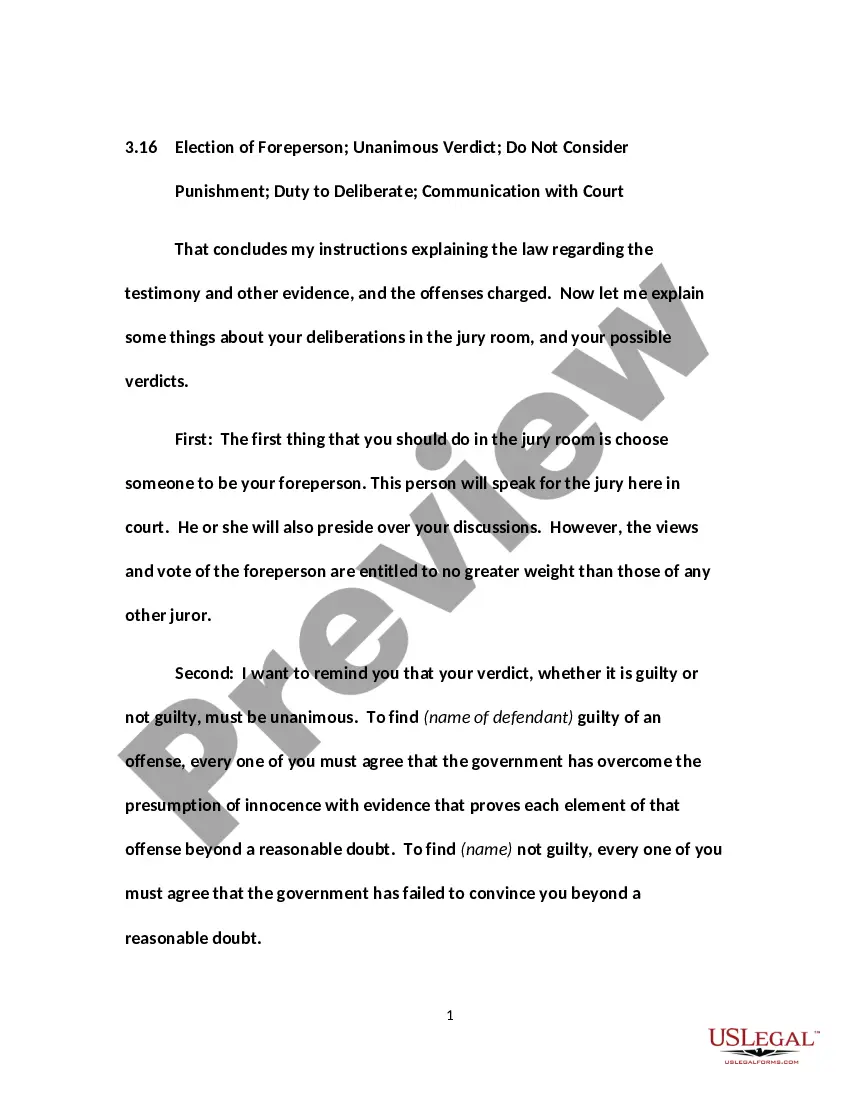
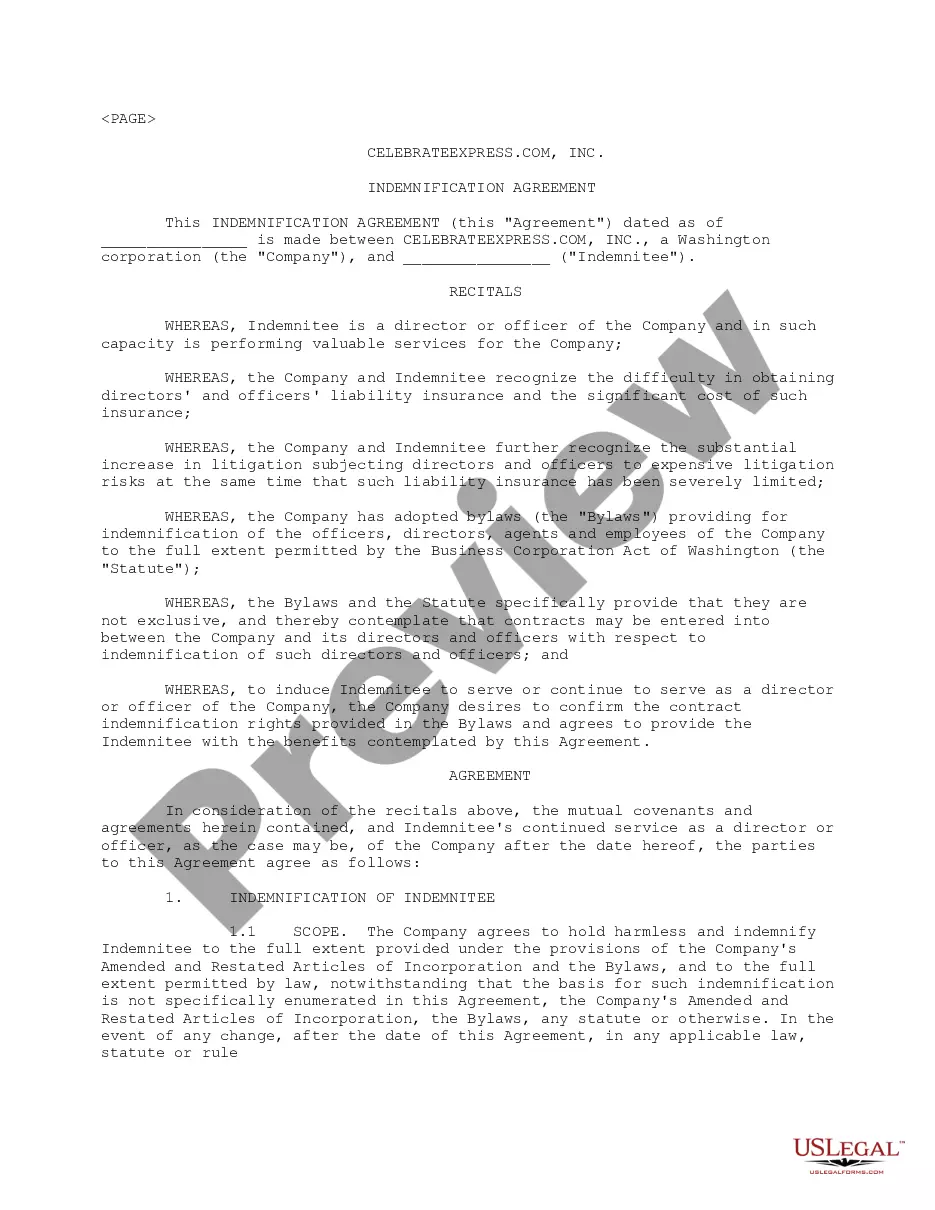
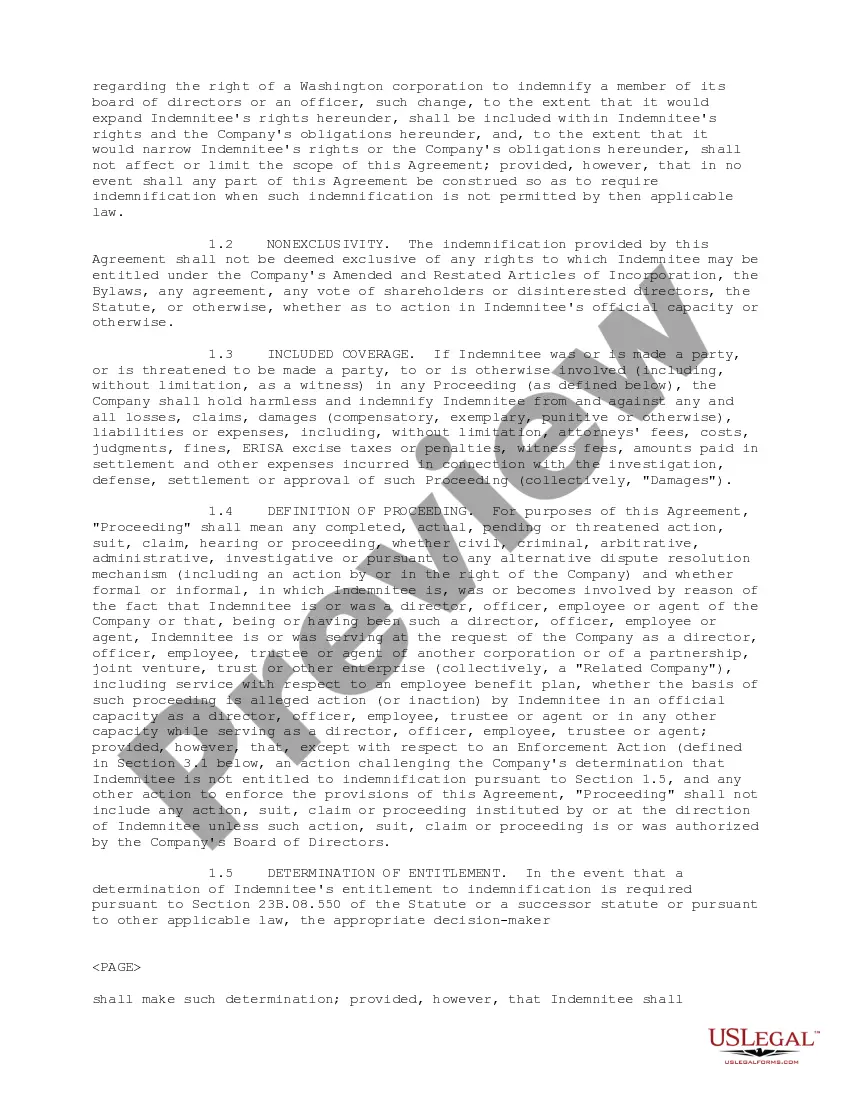
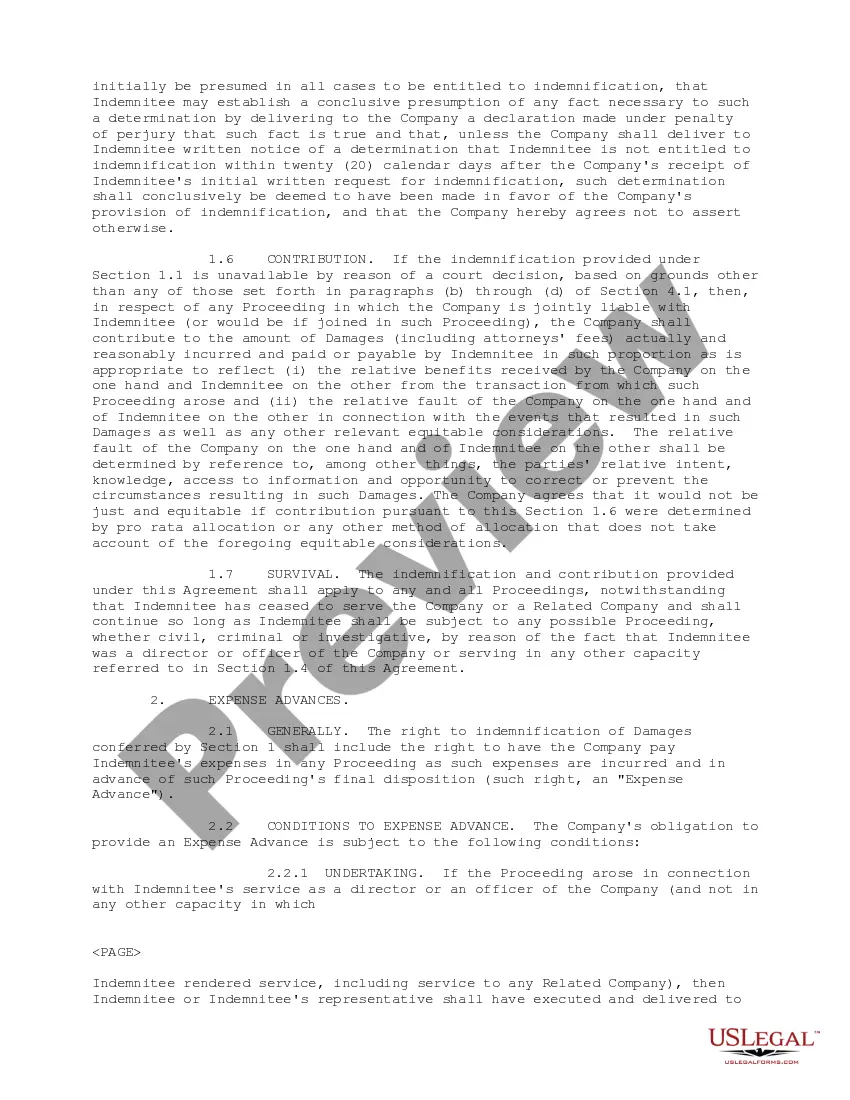
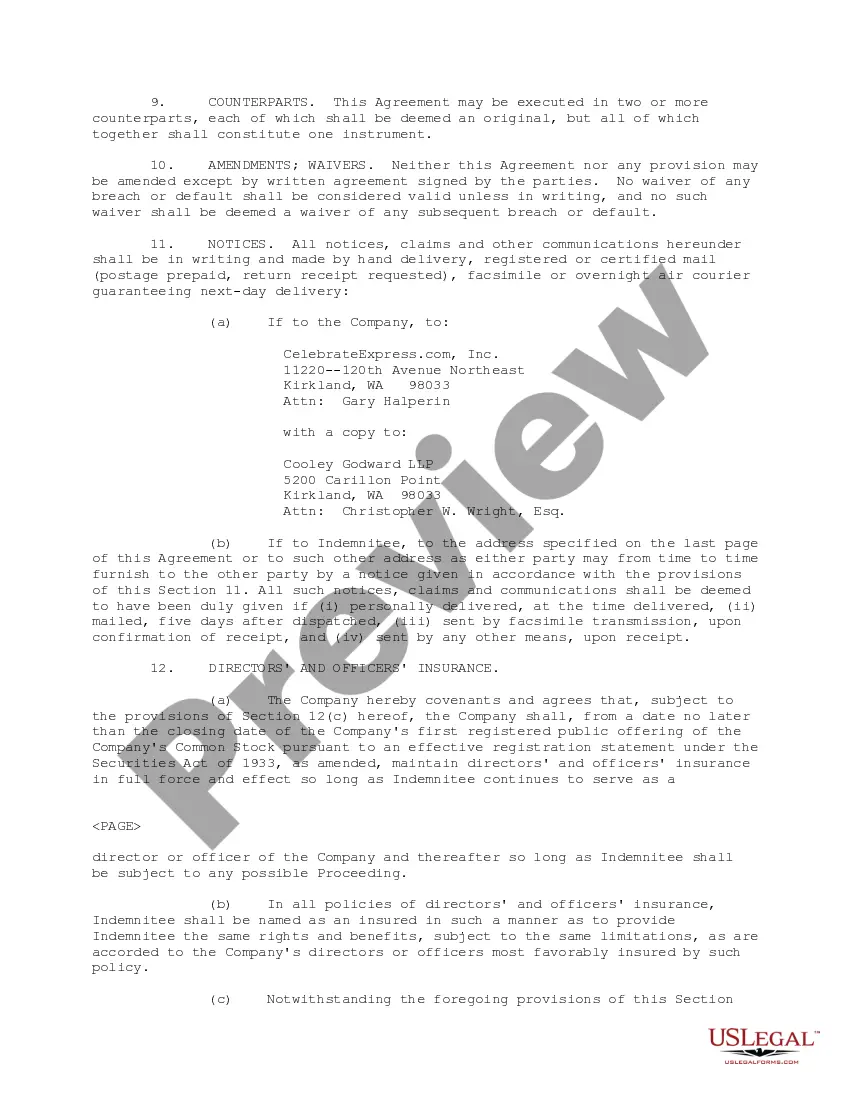
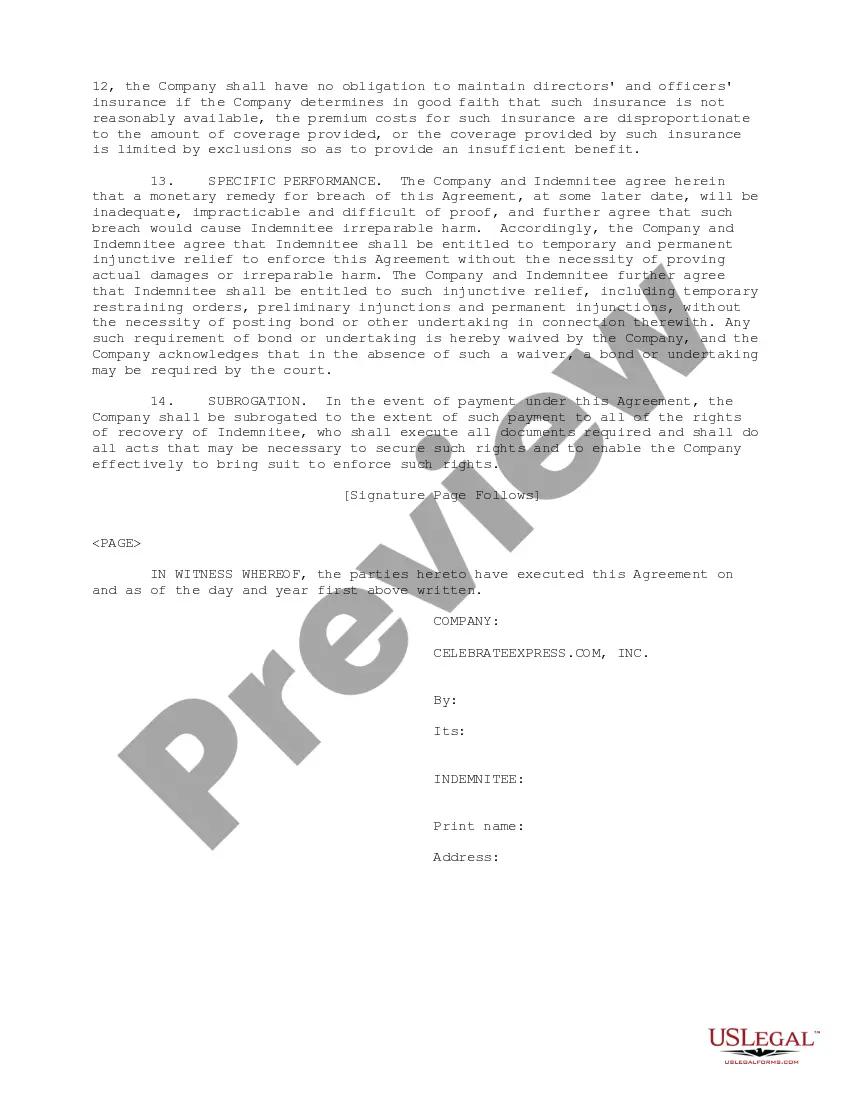
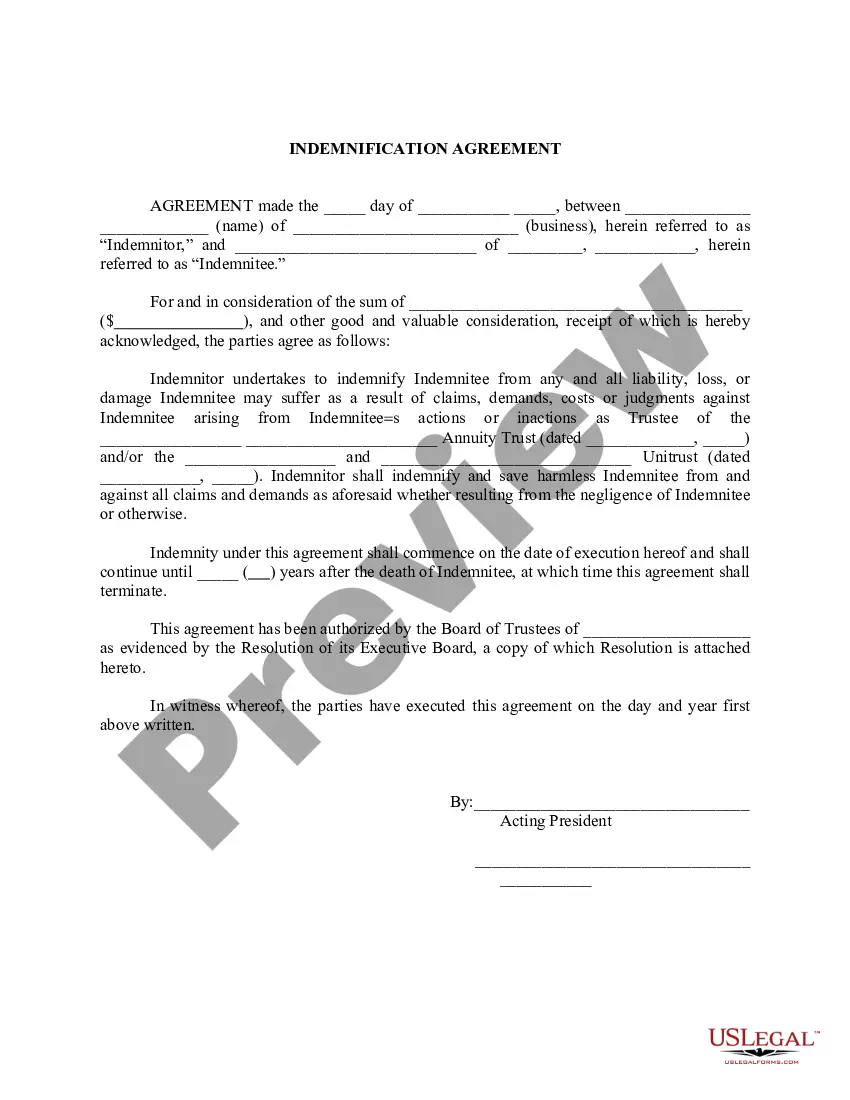
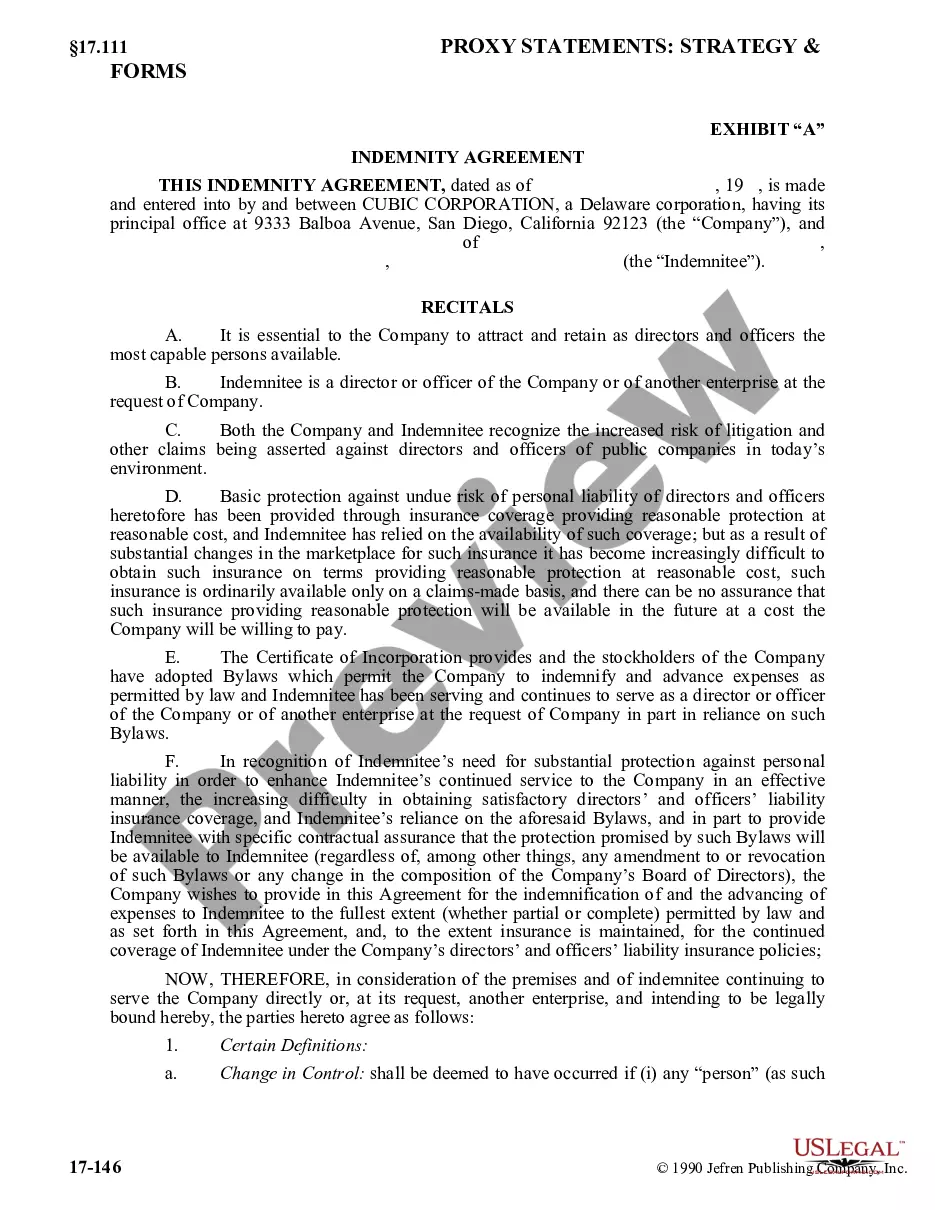
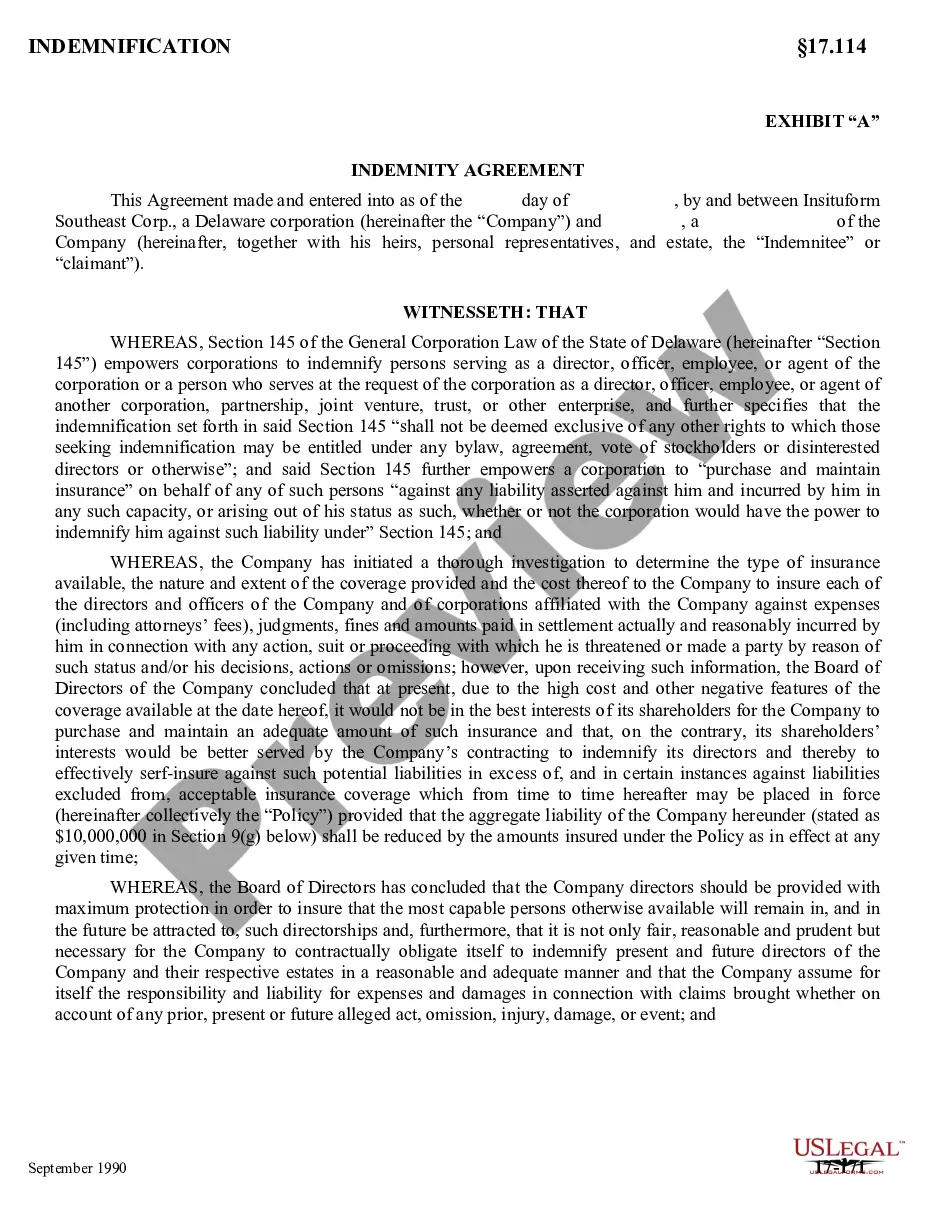
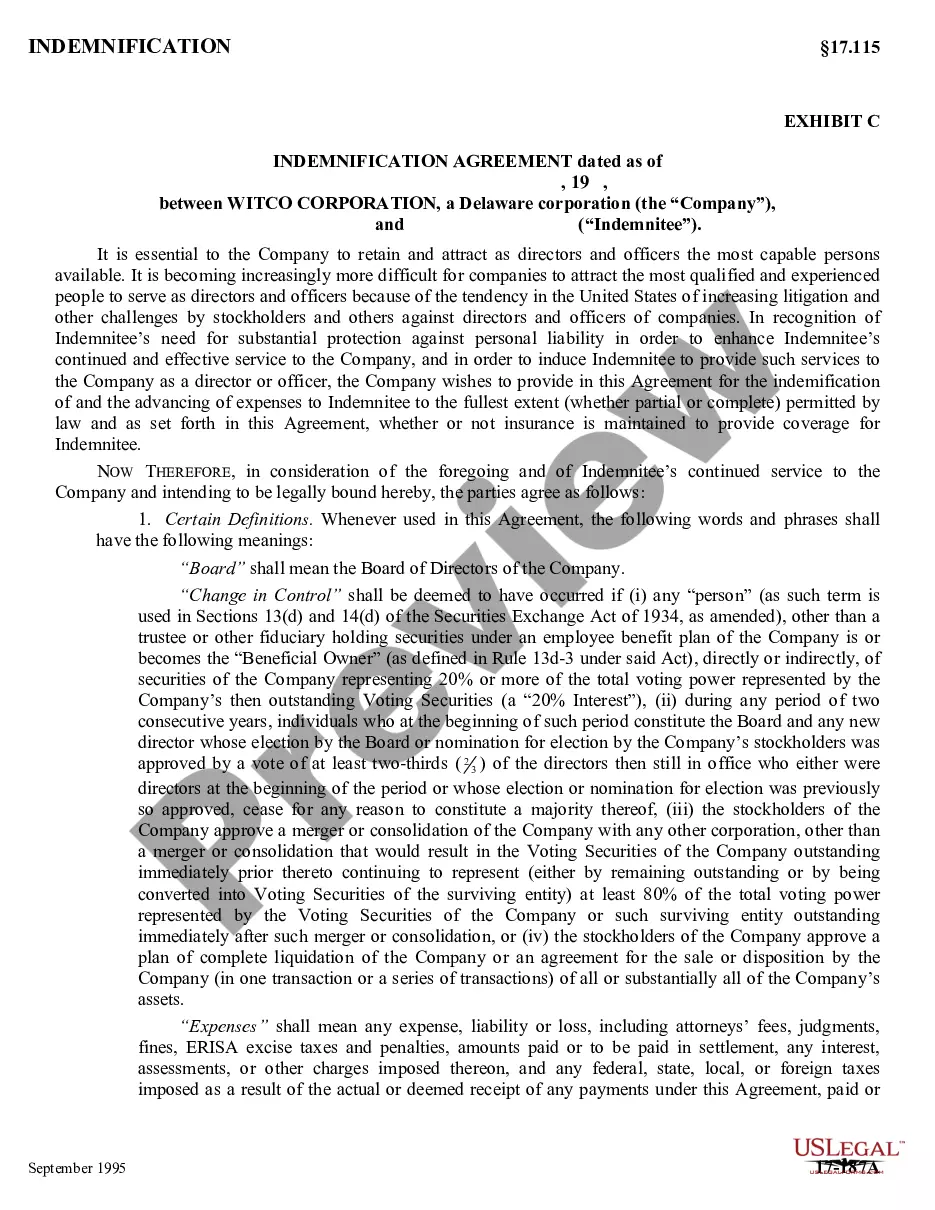
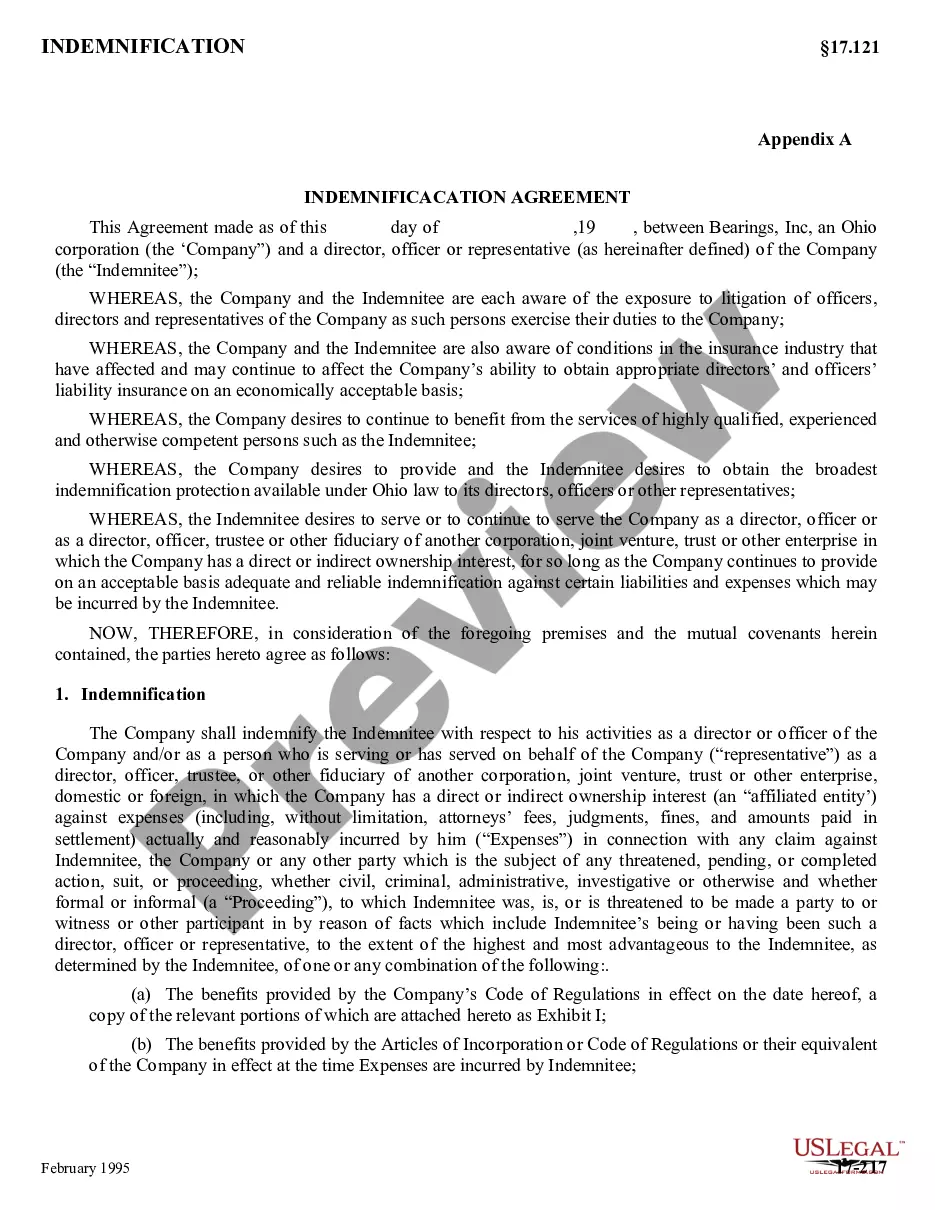
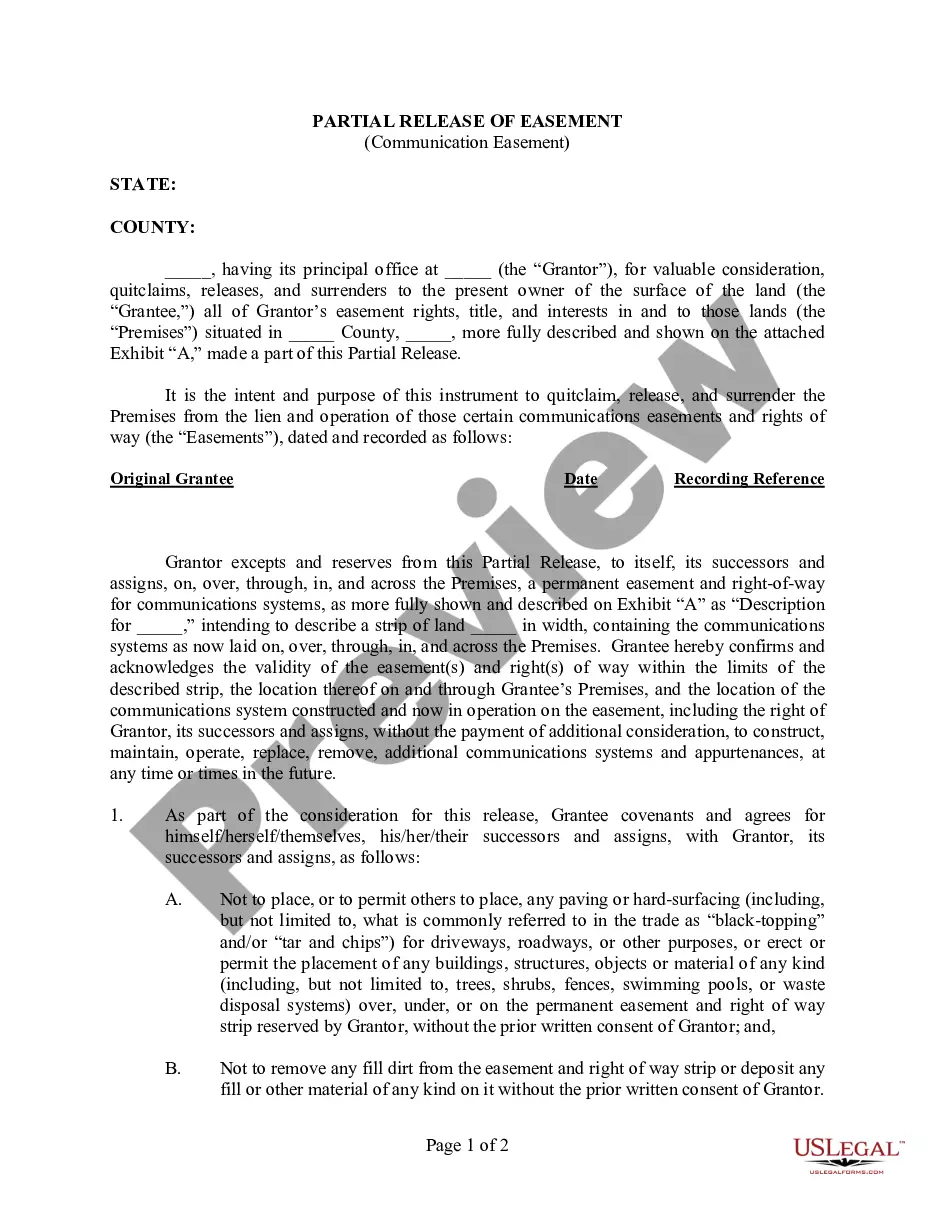
Kentucky Indemnification Agreement regarding Holding Harmless Indemnitee from any Losses Claims or Damages
Description
Get your form ready online
Our built-in tools help you complete, sign, share, and store your documents in one place.
Make edits, fill in missing information, and update formatting in US Legal Forms—just like you would in MS Word.
Download a copy, print it, send it by email, or mail it via USPS—whatever works best for your next step.
Sign and collect signatures with our SignNow integration. Send to multiple recipients, set reminders, and more. Go Premium to unlock E-Sign.
If this form requires notarization, complete it online through a secure video call—no need to meet a notary in person or wait for an appointment.
We protect your documents and personal data by following strict security and privacy standards.

Make edits, fill in missing information, and update formatting in US Legal Forms—just like you would in MS Word.

Download a copy, print it, send it by email, or mail it via USPS—whatever works best for your next step.

Sign and collect signatures with our SignNow integration. Send to multiple recipients, set reminders, and more. Go Premium to unlock E-Sign.

If this form requires notarization, complete it online through a secure video call—no need to meet a notary in person or wait for an appointment.

We protect your documents and personal data by following strict security and privacy standards.
Looking for another form?


How to fill out Indemnification Agreement Regarding Holding Harmless Indemnitee From Any Losses Claims Or Damages?
US Legal Forms - one of the largest libraries of lawful varieties in the States - provides an array of lawful papers layouts you are able to down load or produce. Using the internet site, you can find 1000s of varieties for business and specific functions, sorted by categories, claims, or search phrases.You will find the latest types of varieties just like the Kentucky Indemnification Agreement regarding Holding Harmless Indemnitee from any Losses Claims or Damages in seconds.
If you have a subscription, log in and down load Kentucky Indemnification Agreement regarding Holding Harmless Indemnitee from any Losses Claims or Damages through the US Legal Forms library. The Down load button can look on every single develop you look at. You get access to all formerly acquired varieties inside the My Forms tab of the bank account.
If you want to use US Legal Forms the very first time, allow me to share straightforward directions to help you get started out:
- Be sure to have picked the best develop to your city/county. Go through the Review button to analyze the form`s information. Browse the develop description to actually have selected the proper develop.
- In case the develop does not fit your needs, make use of the Lookup industry near the top of the display to obtain the one who does.
- Should you be content with the shape, confirm your option by visiting the Purchase now button. Then, choose the costs strategy you like and give your accreditations to register on an bank account.
- Approach the deal. Make use of bank card or PayPal bank account to perform the deal.
- Pick the formatting and down load the shape in your device.
- Make changes. Fill out, modify and produce and indicator the acquired Kentucky Indemnification Agreement regarding Holding Harmless Indemnitee from any Losses Claims or Damages.
Each and every template you included with your bank account does not have an expiry day and is your own property forever. So, if you would like down load or produce an additional version, just proceed to the My Forms area and click on the develop you require.
Gain access to the Kentucky Indemnification Agreement regarding Holding Harmless Indemnitee from any Losses Claims or Damages with US Legal Forms, by far the most comprehensive library of lawful papers layouts. Use 1000s of expert and condition-certain layouts that fulfill your company or specific demands and needs.
Form popularity
FAQ
The word 'indemnity' finds its roots in the Latin word 'indemnis', which stands for 'unhurt' or 'free from loss'. Hence, indemnities are also referred to as 'hold harmless' agreements. Indemnities are contractual agreements that provide compensation for losses, damages, or liabilities sustained by another party.
Ing to how it is typically drafted, an indemnity clause covers all damages, not just direct losses. As a result, an indemnity clause might allow for the recovery of remote, indirect, or consequential losses and damages. However, this claim is not without dispute.
Indemnity is a type of insurance compensation paid for damage or loss. When the term is used in the legal sense, it also may refer to an exemption from liability for damage. Indemnity is a contractual agreement between two parties in which one party agrees to pay for potential losses or damage caused by another party.
To indemnify, also known as indemnity or indemnification, means compensating a person for damages or losses they have incurred or will incur related to a specified accident, incident, or event.
Hold Harmless Agreement: An agreement whereby the first party (the indemnitor) agrees to hold a second party (the indemnitee) harmless from tort liability arising out of the indemnitor's negligent act or omission.
Indemnity is a common law principle whereby a party seeks "restitution for damages he/she was required to pay for injuries sustained by another and which were entirely or primarily caused by the party against whom indemnity is sought." Degener v. Hall Contracting Corp., 27 S.W. 3d 775, 781-82 (Ky.
Indemnity is based on a contractual agreement in which one party agrees to pay for any damages or losses that are caused to another party. For example, in an insurance contract, one party agrees to pay the other party for losses or damages in return for a premium payment that is paid to the insurer.
An indemnification clause is a legally binding agreement between two parties specifying that one party (the indemnifying party) will compensate the other party (the indemnified party) for any losses or damages that may arise from a particular event or circumstance.
Indemnification clauses allow a contracting party to: Customize the amount of risk it is willing to undertake in each transaction and with every counterparty. Protect itself from damages and lawsuits that are more efficiently borne by the counterparty.
An indemnification clause may allow: The indemnified party to recover certain types of losses, such as attorney's fees, which are not typically recoverable under a common law cause of action. The indemnifying party to reduce its liability by incorporating: Liability cap.