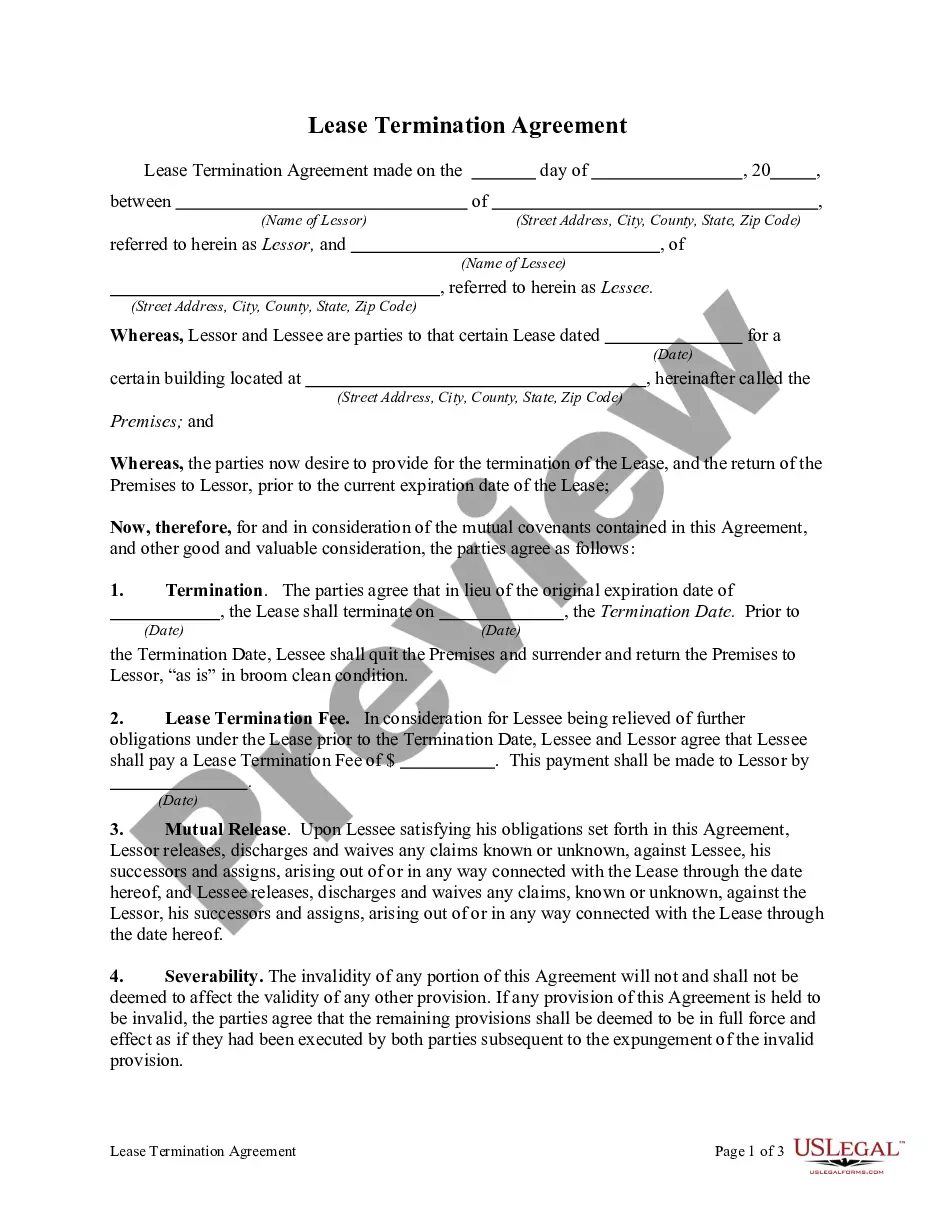
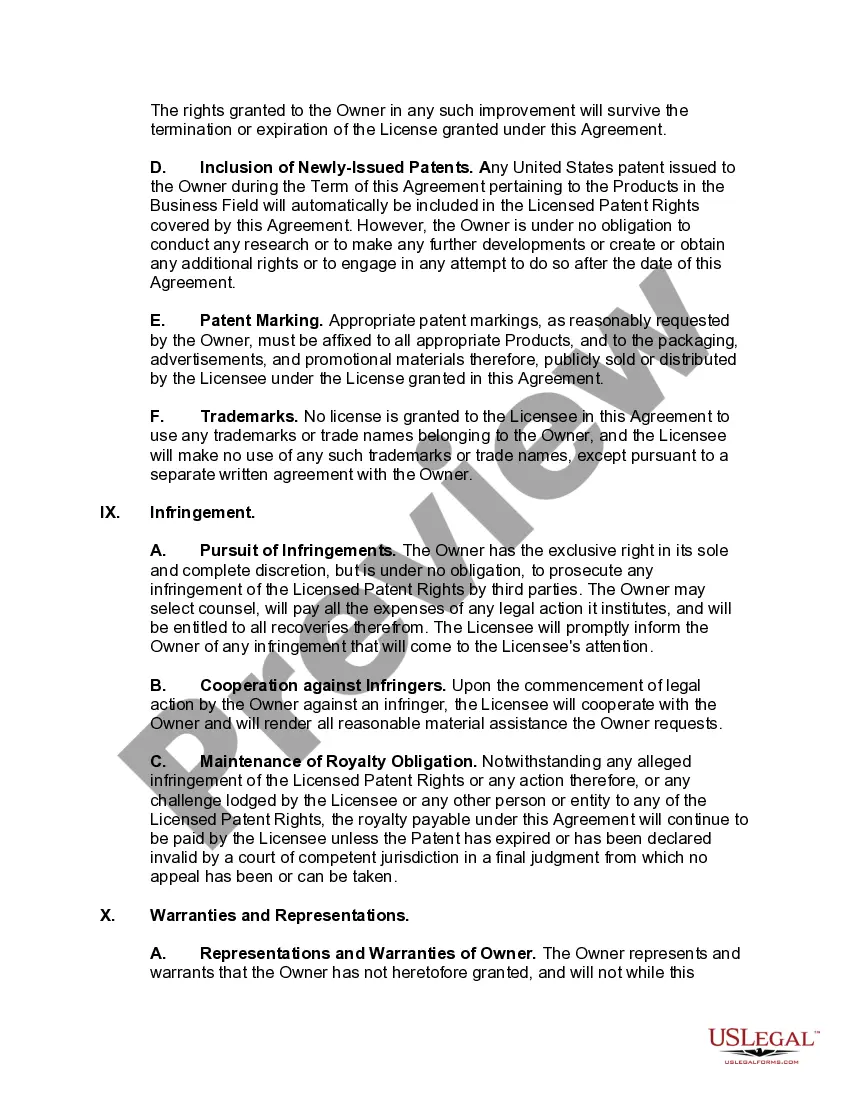
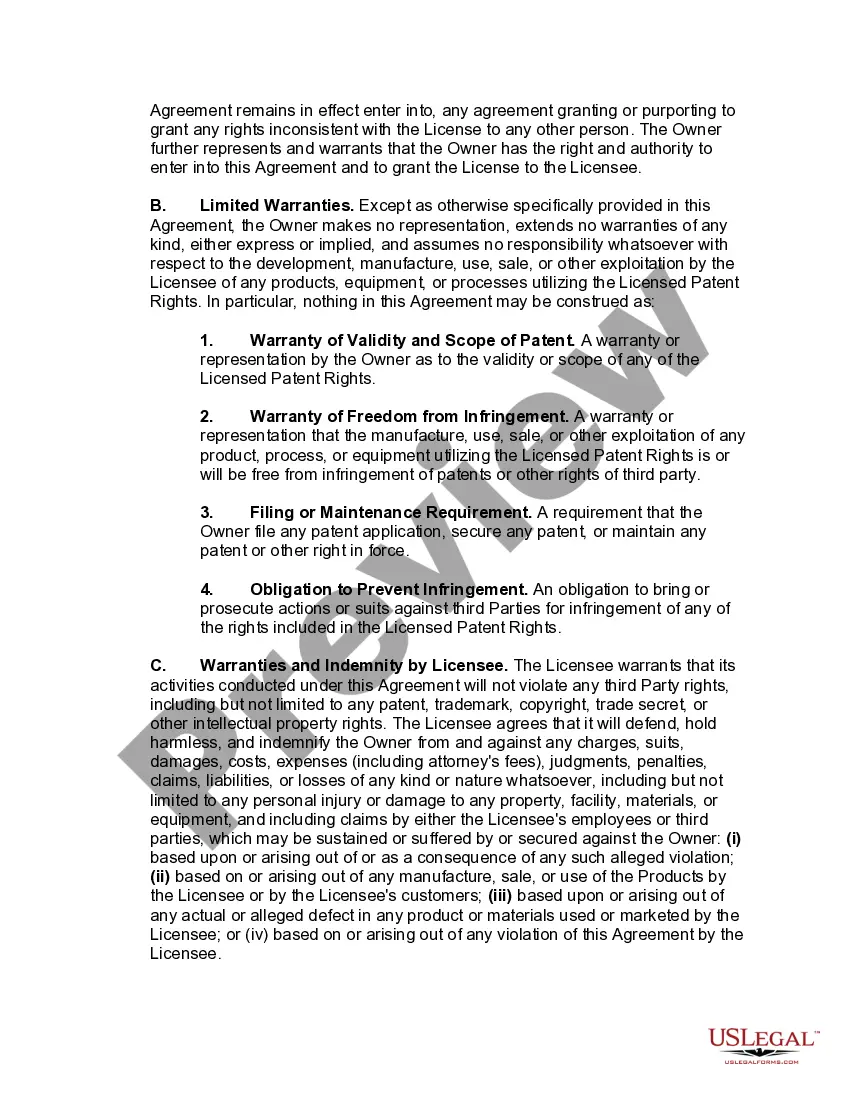
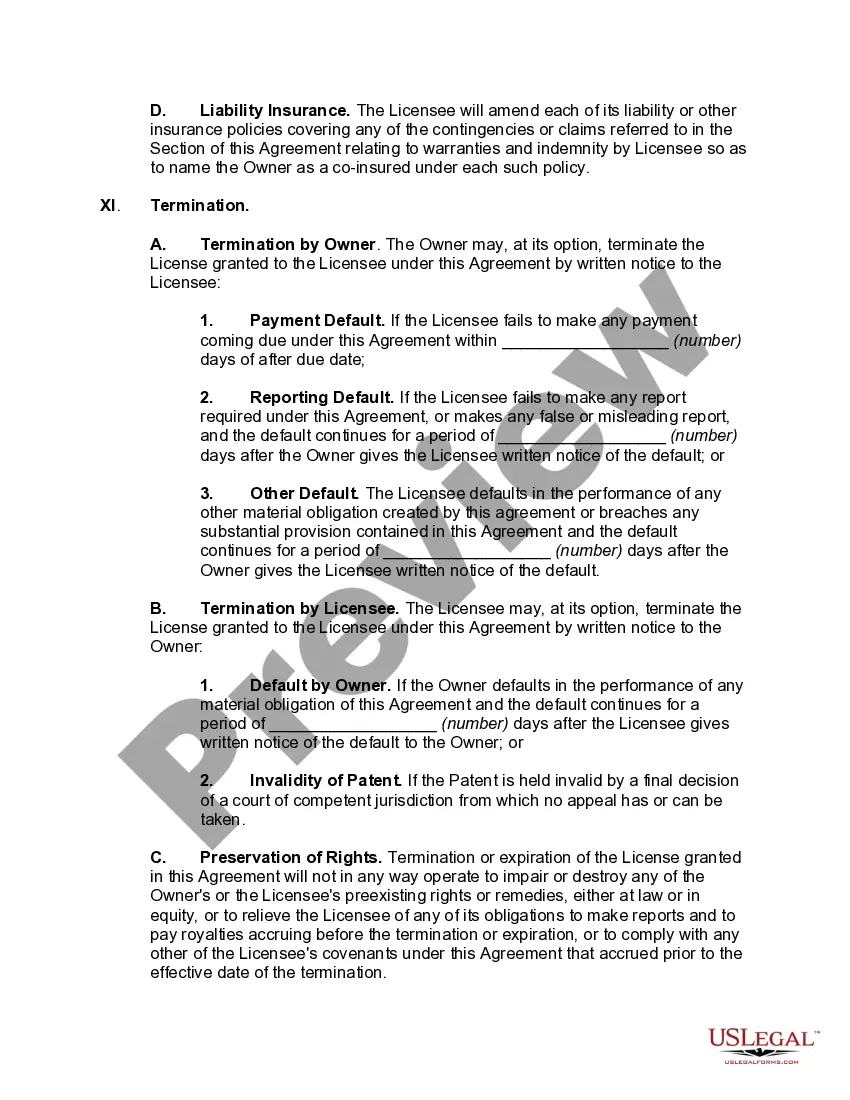
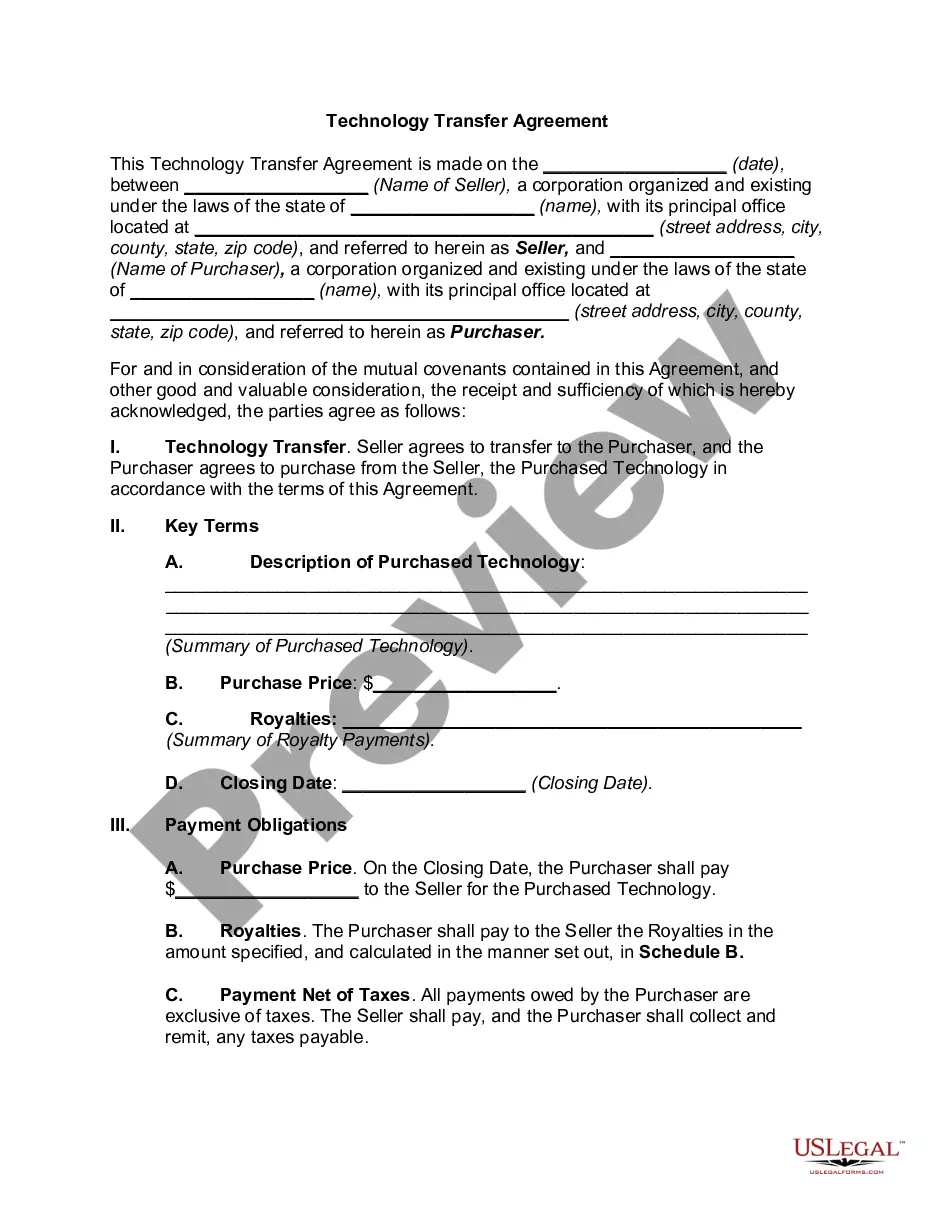
Technology Licensing is the process by which patentable intellectual property is made
marketable and is licensed or otherwise disposed for use by the pubic.
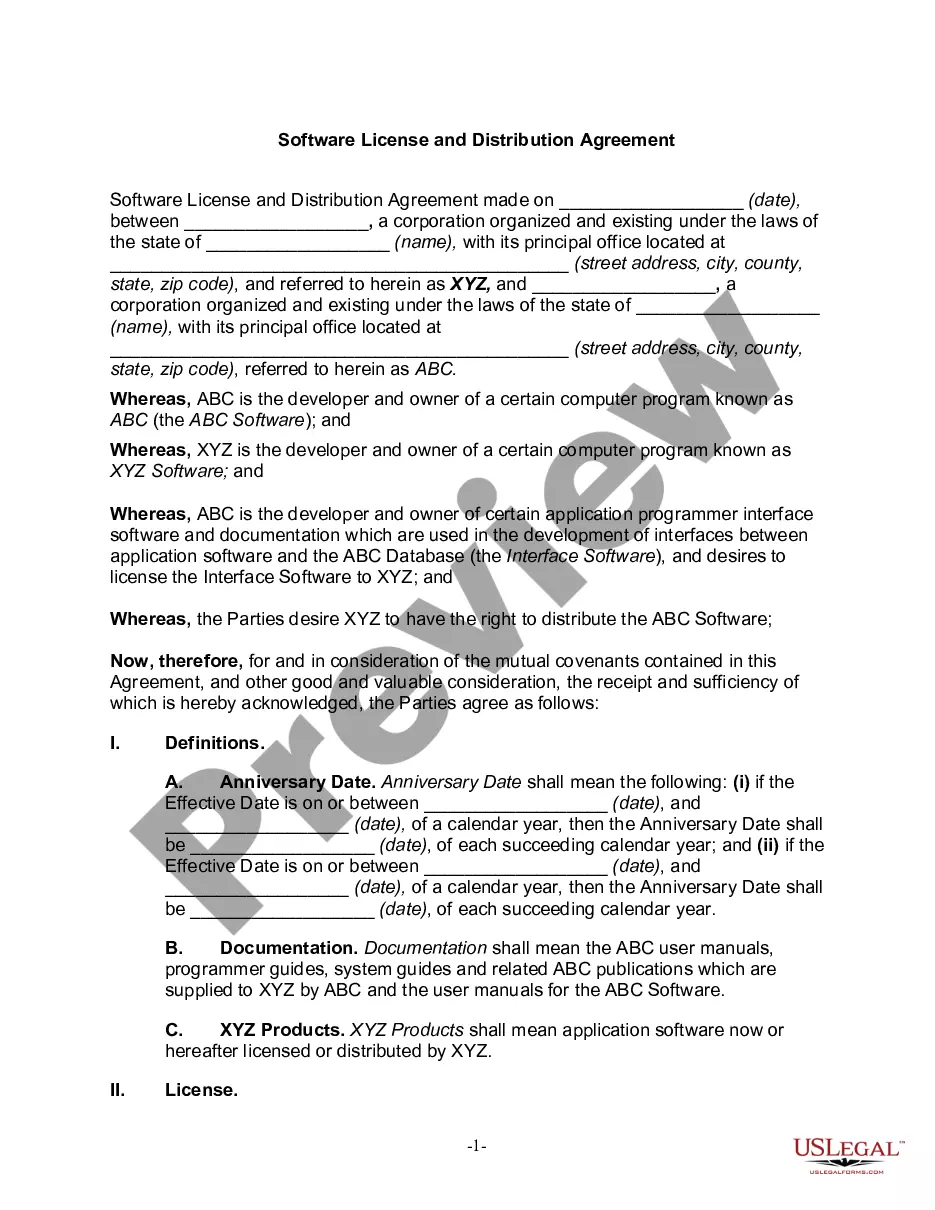
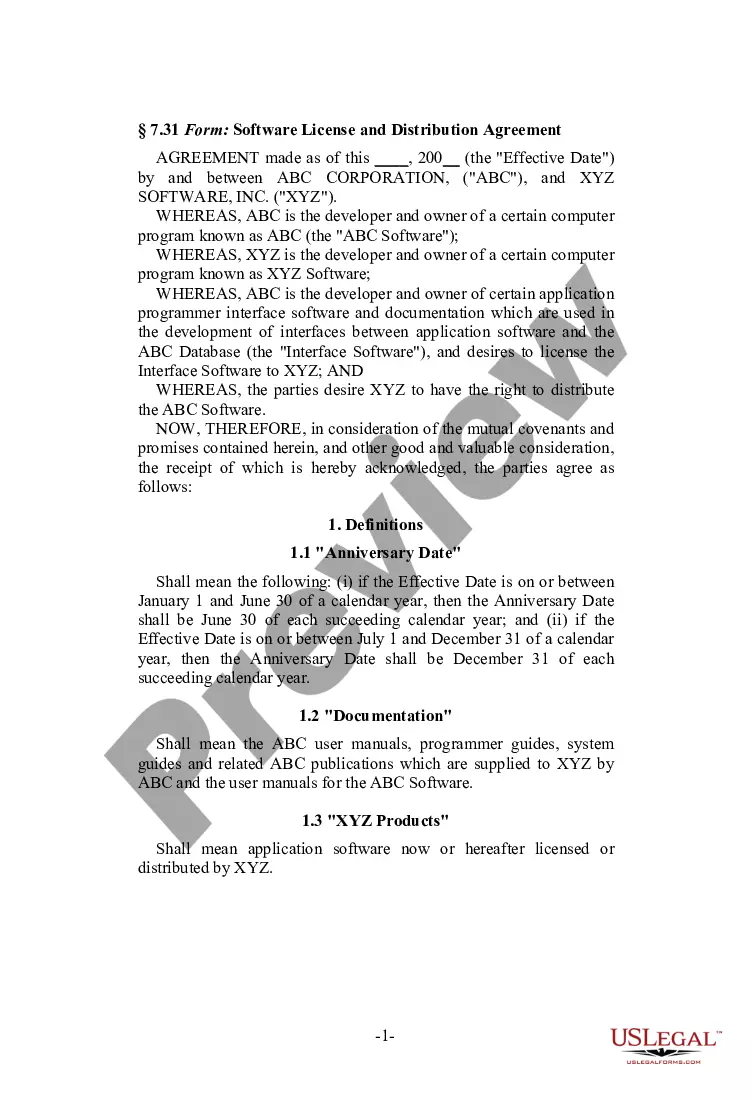
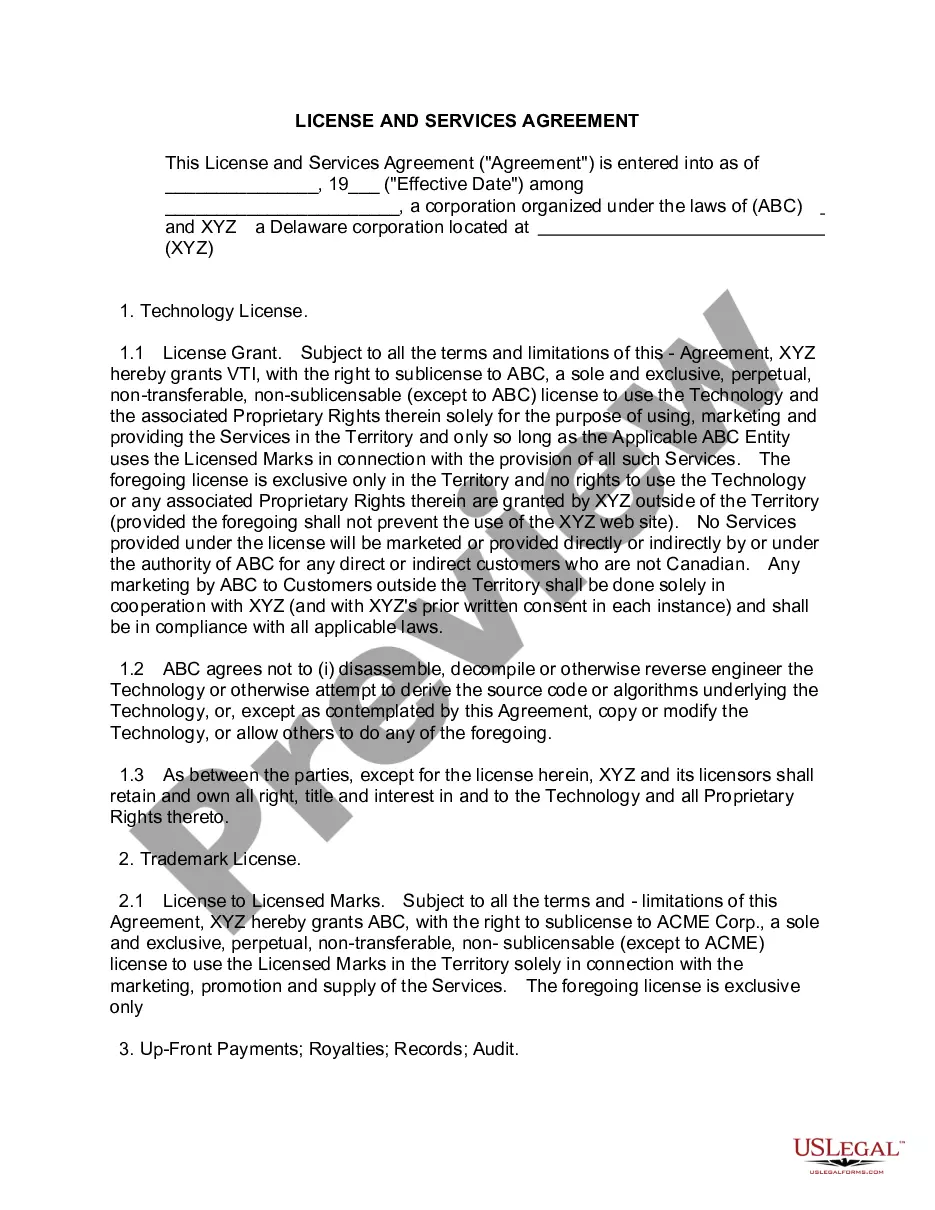
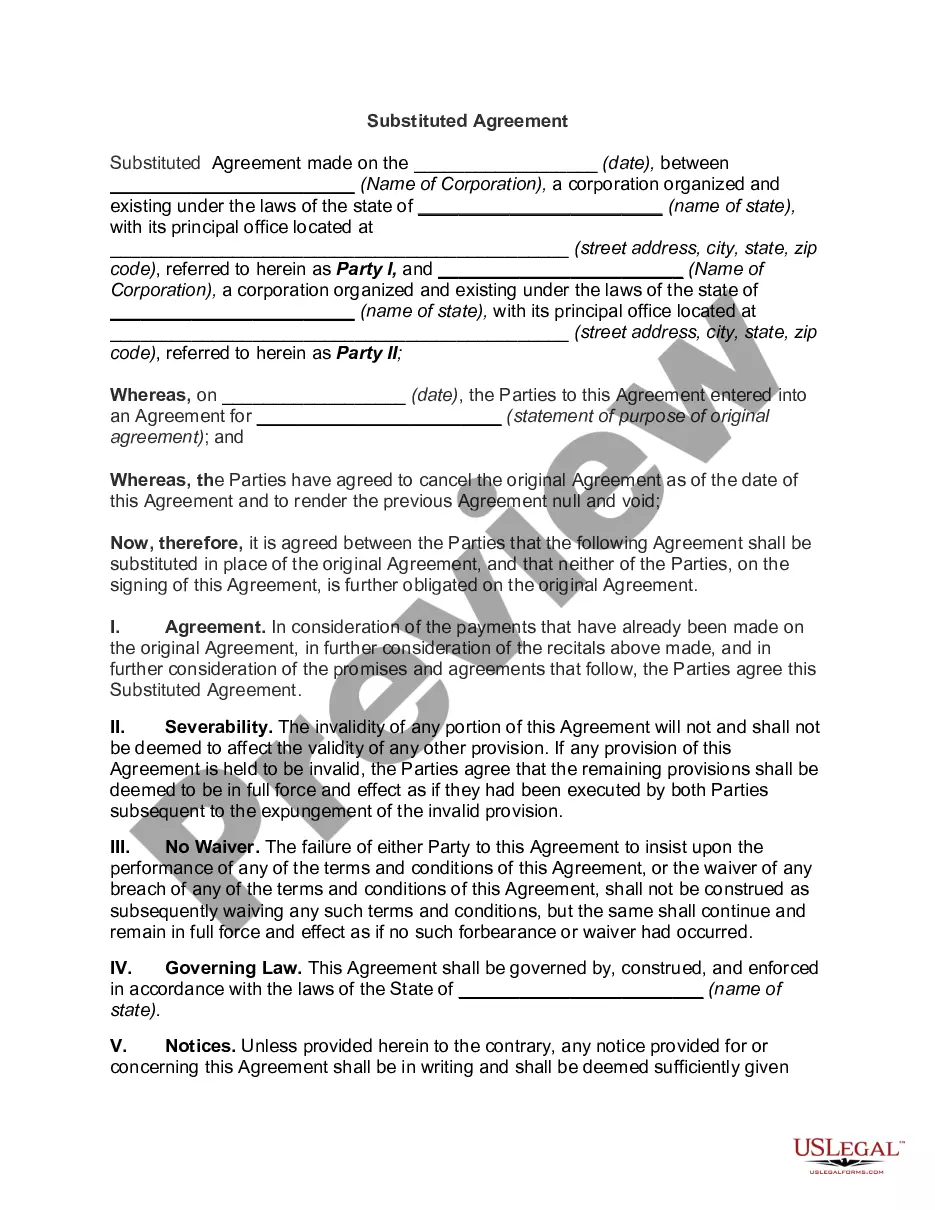
Kentucky Technology Licensing Agreement
Instant download
Description
Free preview


Get your form ready online
Our built-in tools help you complete, sign, share, and store your documents in one place.
Built-in online Word editor
Make edits, fill in missing information, and update formatting in US Legal Forms—just like you would in MS Word.
Export easily
Download a copy, print it, send it by email, or mail it via USPS—whatever works best for your next step.
E-sign your document
Sign and collect signatures with our SignNow integration. Send to multiple recipients, set reminders, and more. Go Premium to unlock E-Sign.
Notarize online 24/7
If this form requires notarization, complete it online through a secure video call—no need to meet a notary in person or wait for an appointment.
Store your document securely
We protect your documents and personal data by following strict security and privacy standards.

Make edits, fill in missing information, and update formatting in US Legal Forms—just like you would in MS Word.

Download a copy, print it, send it by email, or mail it via USPS—whatever works best for your next step.

Sign and collect signatures with our SignNow integration. Send to multiple recipients, set reminders, and more. Go Premium to unlock E-Sign.

If this form requires notarization, complete it online through a secure video call—no need to meet a notary in person or wait for an appointment.

We protect your documents and personal data by following strict security and privacy standards.
Looking for another form?




How to fill out Technology Licensing Agreement?
Have you ever encountered a scenario where you consistently require documents for potential business or personal purposes.
There are numerous legal document templates accessible online, but finding reliable ones can be challenging.
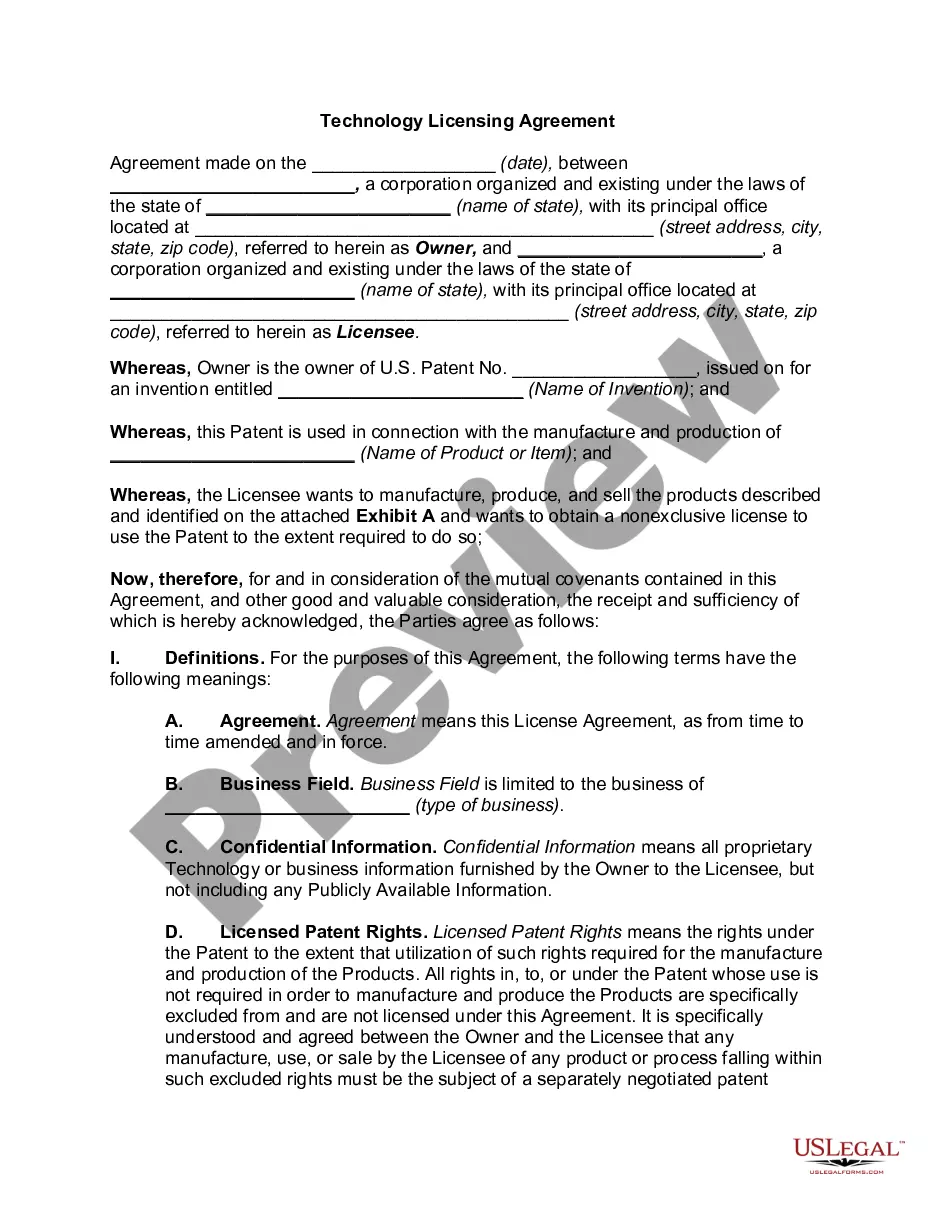
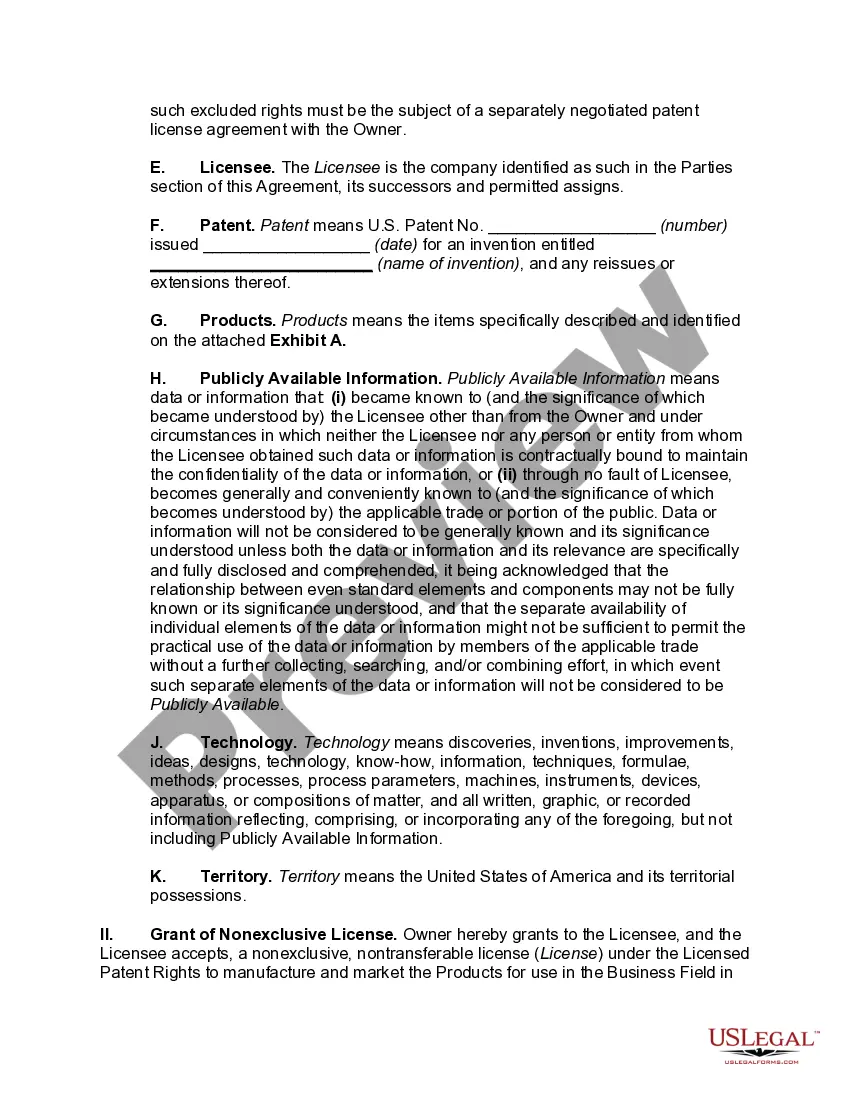
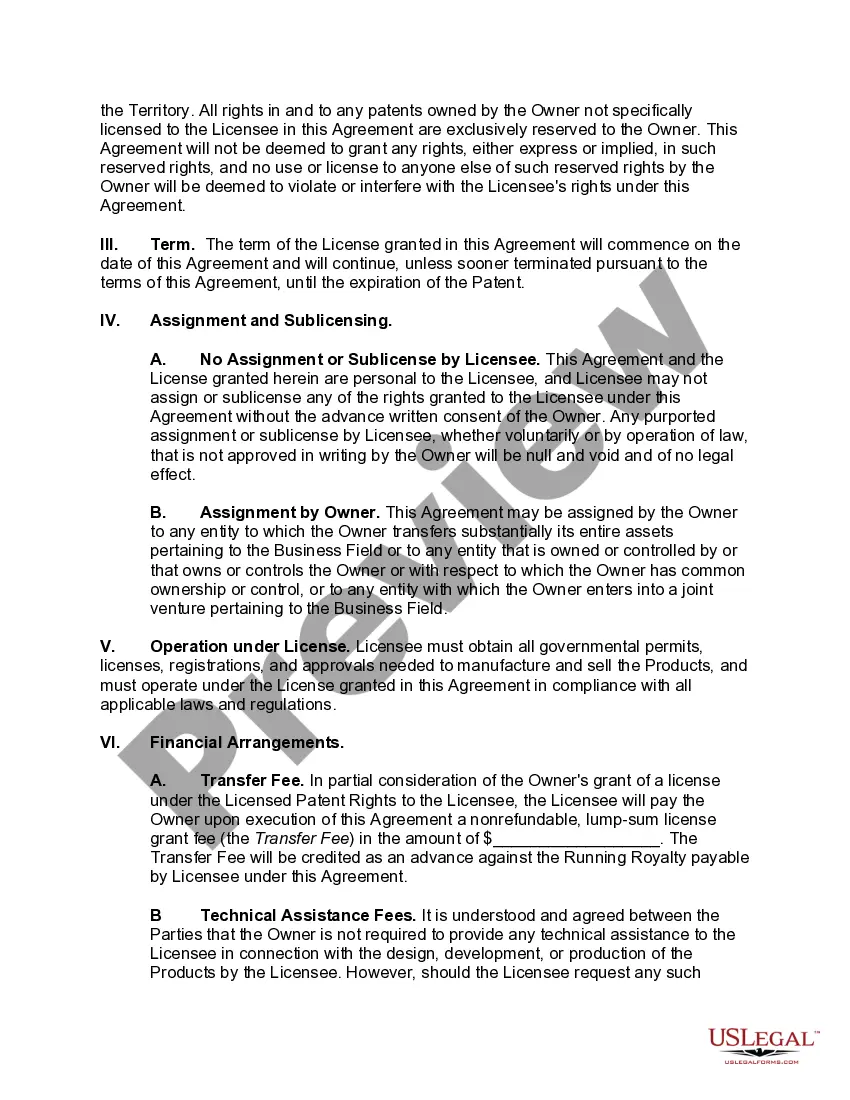
US Legal Forms offers a vast selection of form templates, such as the Kentucky Technology Licensing Agreement, designed to meet state and federal regulations.
Once you identify the appropriate form, click Get now.
Select the payment plan you desire, fill in the necessary details to create your account, and complete the transaction using your PayPal or credit card. Choose a convenient document format and download your copy. Access all the document templates you have purchased in the My documents menu. You can obtain an additional copy of the Kentucky Technology Licensing Agreement at any time if required. Just select the desired form to download or print the template.
- If you are already familiar with the US Legal Forms website and have an account, simply Log In.
- After that, you can download the Kentucky Technology Licensing Agreement template.
- If you do not have an account and wish to start using US Legal Forms, follow these instructions.
- Find the form you need and ensure it's for the correct city/state.
- Use the Review button to examine the form.
- Check the description to confirm you have chosen the right form.
- If the form isn’t what you’re looking for, utilize the Search field to locate the form that suits your needs.
Form popularity
FAQ
A licensing agreement allows one party (the licensee) to use and/or earn revenue from the property of the owner (the licensor). Licensing agreements generate revenues, called royalties, earned by a company for allowing its copyrighted or patented material to be used by another company.
Precisely identifying which intellectual property will be the subject of the license is necessary to ensure both parties are on the same page and not exceeding their rights.Scope of the Grant.Exclusivity.Territory.Term.Compensation.Termination.Conclusion.
The licensing agreement should explain what the licensee can do with the license. It should say whether the license is exclusive or not. It should also discuss whether the licensor gets to use the license or cedes all rights to the licensee.
Technology licenses are agreements in which the owner of technological IP lets another party use, change, or even resell the property in exchange for compensation. The compensation can be either a lump sum royalty, royalties based on the value of production, or the right to use the licensee's technology.
In technology licensing, the licensor (firm selling the technology) agrees to unilaterally transfer know-how and intellectual property (IP) related to a technology to the licensee (firm buying the technology).
The steps for making a license agreement are as follows:Download a template for a licensing agreement.Choose your role as the licensor or licensee.Define the license(s) in the agreement.Decide whether the license is exclusive or not.Settle the matter of fees and payment schedule.Add a renewal date and rules.More items...?28-Jun-2020
One of the most lucrative types of business relationships today is one between a licensee and a licensor....Scope of the AgreementExclusivity.Territory Rights.Guarantees of Sales.
Practitioners and licensing executives often refer to three basic types of voluntary licenses: non-exclusive, sole, and exclusive. A non-exclusive licence allows the licensor to retain the right to use the licensed property and the right to grant additional licenses to third parties.
The term may bring specific industries or types of arrangements to mind, such as a publisher licensing content from authors and illustrators or the licensing of logos, processes and even recipes in a franchise agreement.
The term licensing agreement refers to a legal, written contract between two parties wherein the property owner gives permission to another party to use their brand, patent, or trademark.