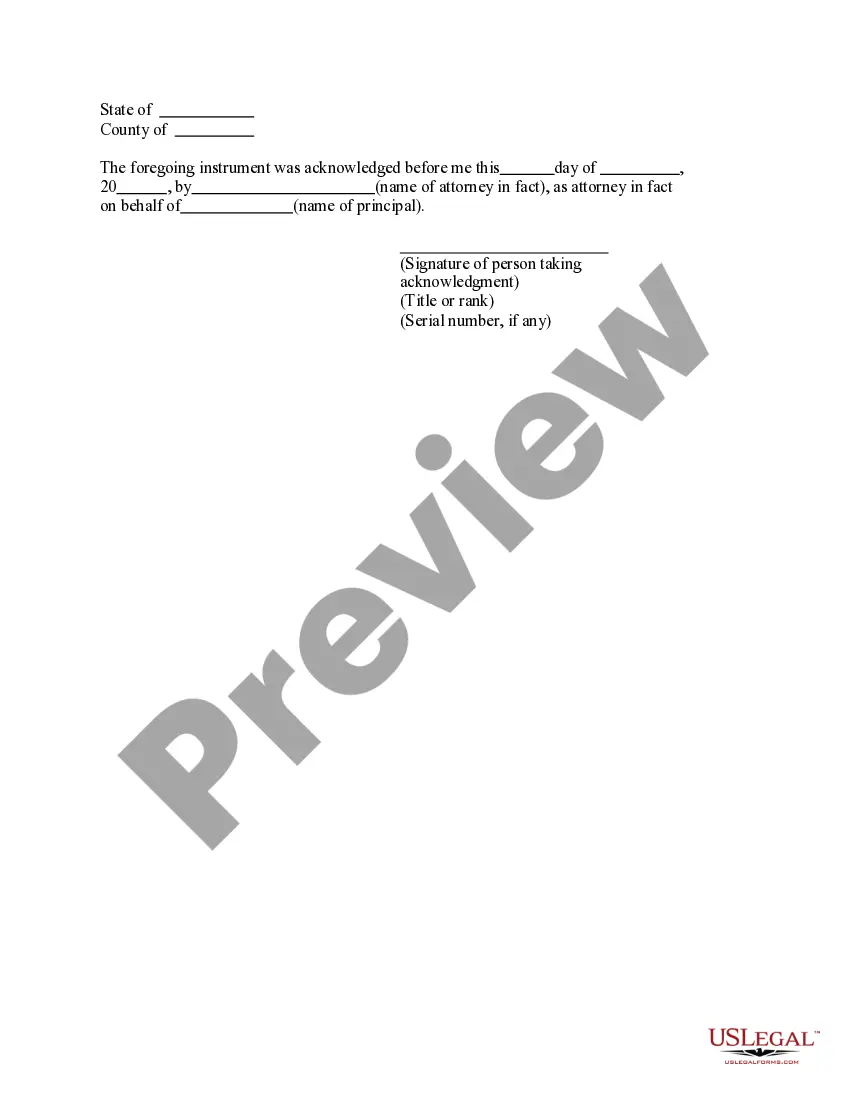
Kentucky Acknowledgment for Individual acting as principal by an attorney
About this form
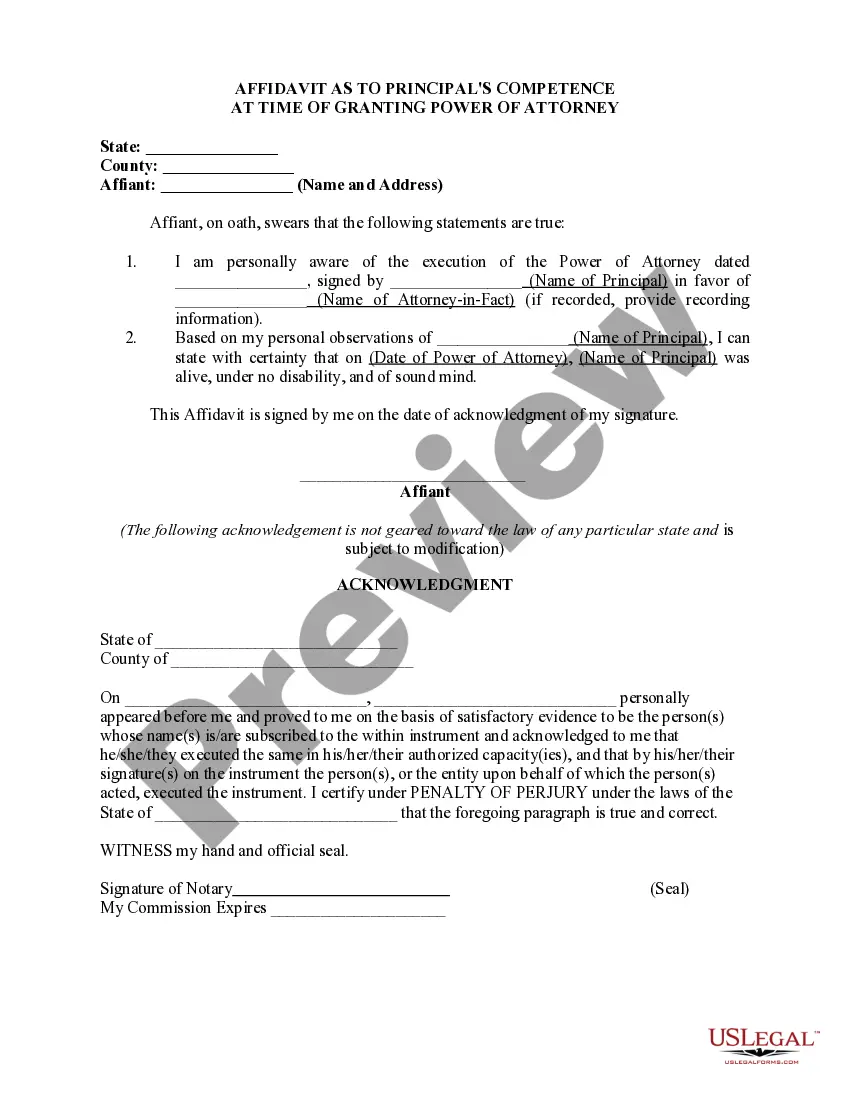
The Acknowledgment for Individual Acting as Principal by an Attorney is a legal document that confirms the authority of an attorney in fact to act on behalf of an individual, also known as the principal. This form is essential when an individual needs to empower another person to manage their affairs or make decisions in their stead. This document serves as proof of acknowledgment and clarifies the relationship between the principal and the attorney in fact, distinguishing it from other power of attorney documents that may not require such acknowledgment.
Key parts of this document
- Identification of the principal and the attorney in fact.
- Date the acknowledgment is being executed.
- Signature of the person taking the acknowledgment.
- Title or rank of the individual signing the acknowledgment.
- Any relevant serial numbers, if applicable.

When this form is needed
This form is typically used when an individual wishes to delegate powers to an attorney in fact, particularly in situations where formal acknowledgment is necessary. For instance, if an individual is unable to attend to personal or financial matters due to health issues, travel, or other reasons, they may use this acknowledgment form to empower someone else to act on their behalf. It can also be used during real estate transactions, financial account management, or any legal situation requiring the principal's clear consent.
Intended users of this form
- Individuals who need to appoint an attorney in fact.
- Those who want to ensure that their legal authority is formally acknowledged.
- Professionals managing legal affairs for clients who require a durable acknowledgment.
- Individuals involved in real estate or financial transactions requiring formal acknowledgment.
Instructions for completing this form
- Identify the parties involved by entering the names of the principal and attorney in fact.
- Specify the date on which the acknowledgment is being signed.
- Have the person taking the acknowledgment sign the document in the designated area.
- Include the title or rank of the person signing to establish authority.
- Add any required serial numbers if applicable.
Notarization guidance
This form needs to be notarized to ensure legal validity. US Legal Forms provides secure online notarization powered by Notarize, allowing you to complete the process through a verified video call, available anytime.
Get your form ready online
Our built-in tools help you complete, sign, share, and store your documents in one place.
Make edits, fill in missing information, and update formatting in US Legal Forms—just like you would in MS Word.
Download a copy, print it, send it by email, or mail it via USPS—whatever works best for your next step.
Sign and collect signatures with our SignNow integration. Send to multiple recipients, set reminders, and more. Go Premium to unlock E-Sign.
If this form requires notarization, complete it online through a secure video call—no need to meet a notary in person or wait for an appointment.
We protect your documents and personal data by following strict security and privacy standards.

Make edits, fill in missing information, and update formatting in US Legal Forms—just like you would in MS Word.

Download a copy, print it, send it by email, or mail it via USPS—whatever works best for your next step.

Sign and collect signatures with our SignNow integration. Send to multiple recipients, set reminders, and more. Go Premium to unlock E-Sign.

If this form requires notarization, complete it online through a secure video call—no need to meet a notary in person or wait for an appointment.

We protect your documents and personal data by following strict security and privacy standards.
Common mistakes
- Failing to provide signatures in the appropriate areas.
- Not including the date of acknowledgment.
- Missing the title or rank of the signing person.
- Using incorrect names for the attorney in fact or principal.
Benefits of using this form online
- Convenience of downloading and completing the form at your own pace.
- Editable templates allow easy customization to fit your specific situation.
- Access to documents drafted by licensed attorneys ensuring legal compliance.
Looking for another form?
Form popularity
FAQ
Step 1: Require Personal Appearance. Step 2: Check Over The Document. Step 3: Carefully Identify The Signer. Step 4: Record Your Journal Entry. Step 5: Complete The Notarial Certificate. A Last Note: Never Give Advice.
The Individual Acknowledgment certificate is used when an individual is signing and acknowledging on his or her own behalf.
Unlike jurats, an acknowledgment does not need to be signed in the presence of a notary. However, the affiant does need to swear or affirm that they signed under their own free will.
For an acknowledgment, the signer must always: Be positively identified by the Notary. The Notary must always identify the signer for an acknowledgement; whether the signer personally knows the Notary, presents an ID document, or is identified by a credible witness depends on the circumstances.
An attorney in fact is a person authorized to sign documents on someone else's behalf, but is not necessarily a practicing lawyer.When an attorney in fact signs a document, the signature should include the name of the principal he or she represents.
When you see (here insert the name and character of the officer) next to a blank as shown below, it means you should insert Your name, Notary Public in the blank.
What Is An Acknowledgment? The purpose of an acknowledgment is for a signer, whose identity has been verified, to declare to a Notary or notarial officer that he or she has willingly signed a document.The signer may either sign the document before appearing before you, or in your presence.
This is a form that shows that a notary public has established the identity of the signer(s) and witnessed the signature of a document. It only demonstrates that the document has been signed and does not make any claims about the information in the document.