Kentucky Non-Marital Cohabitation Living Together Agreement

State:
Kentucky
Control #:
KY-513R
Format:
Word; 
Rich Text
Instant download

About this form

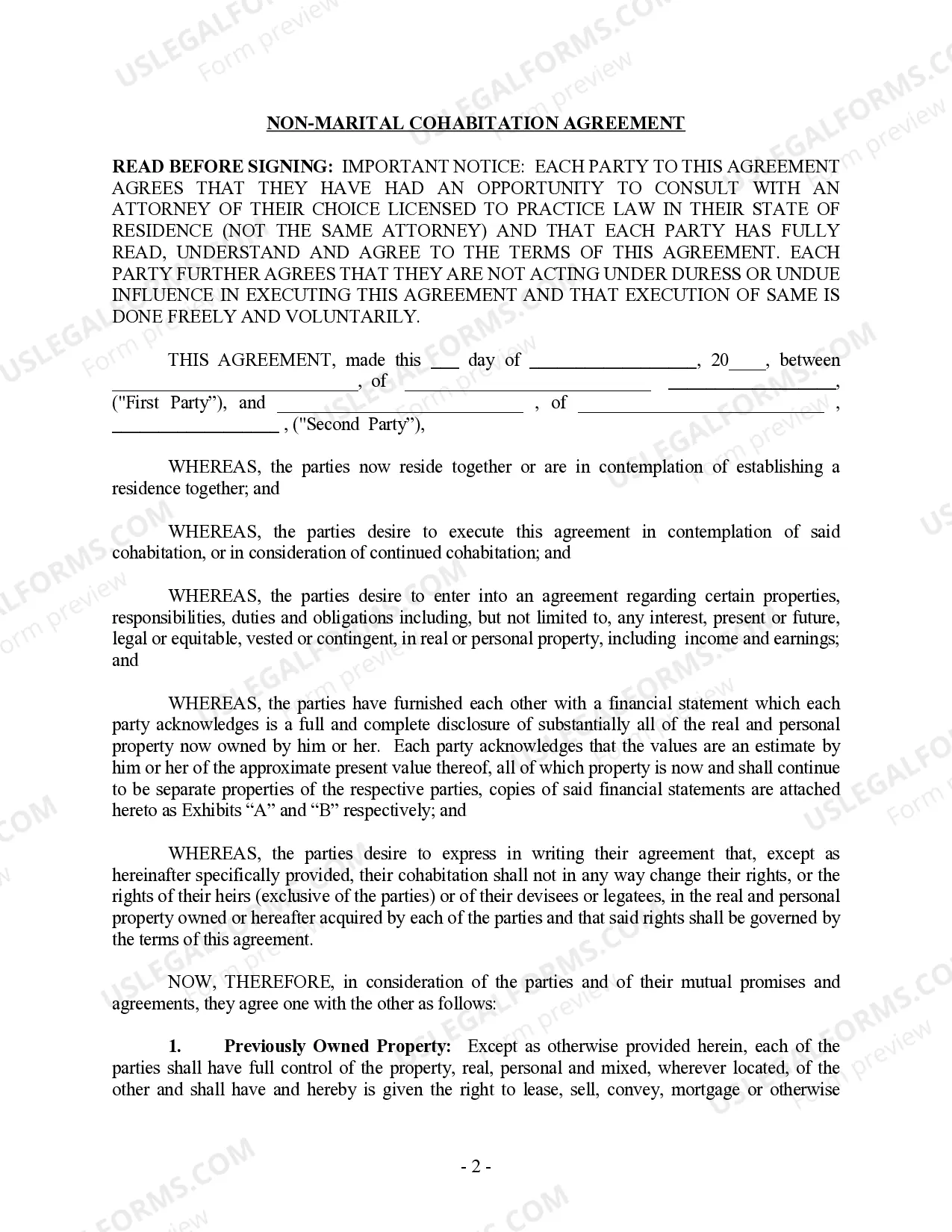
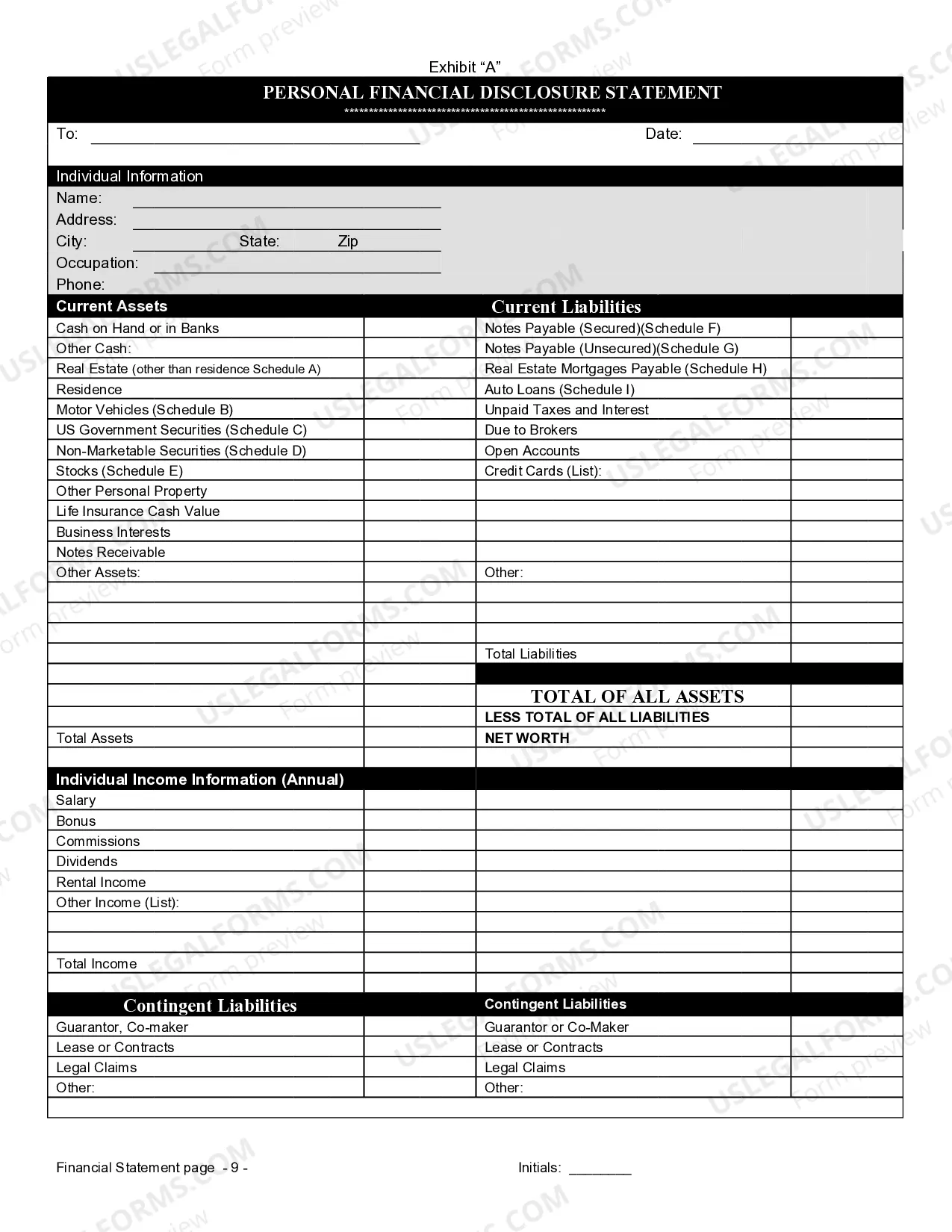
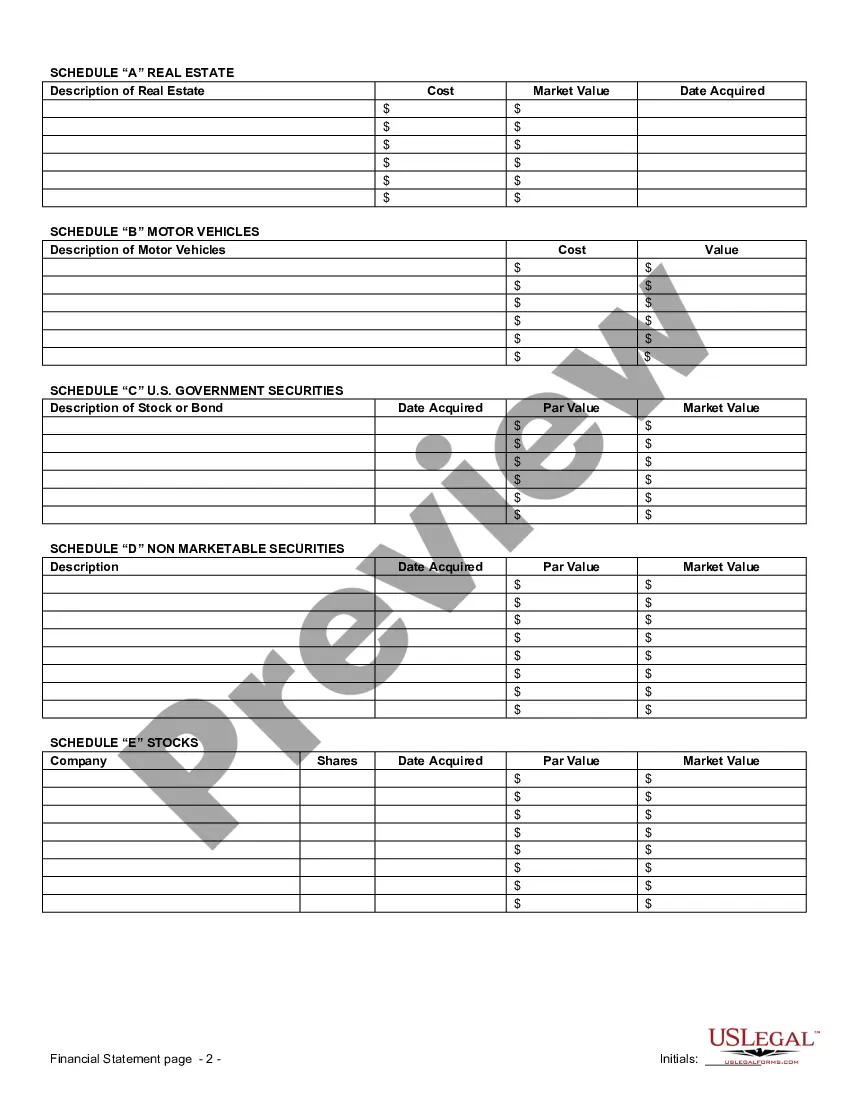
The Non-Marital Cohabitation Living Together Agreement is a legal document designed to outline the rights and responsibilities of parties living together in a non-marital relationship. This form clarifies expectations regarding expenses, property ownership, and what happens if the relationship ends, helping to prevent misunderstandings and disputes that can arise when cohabiting without clear agreements. Unlike marriage contracts, this agreement specifically addresses the unique needs of couples who choose to live together without formalizing their relationship through marriage.

Key parts of this document

  • Identification of parties involved, including their addresses.
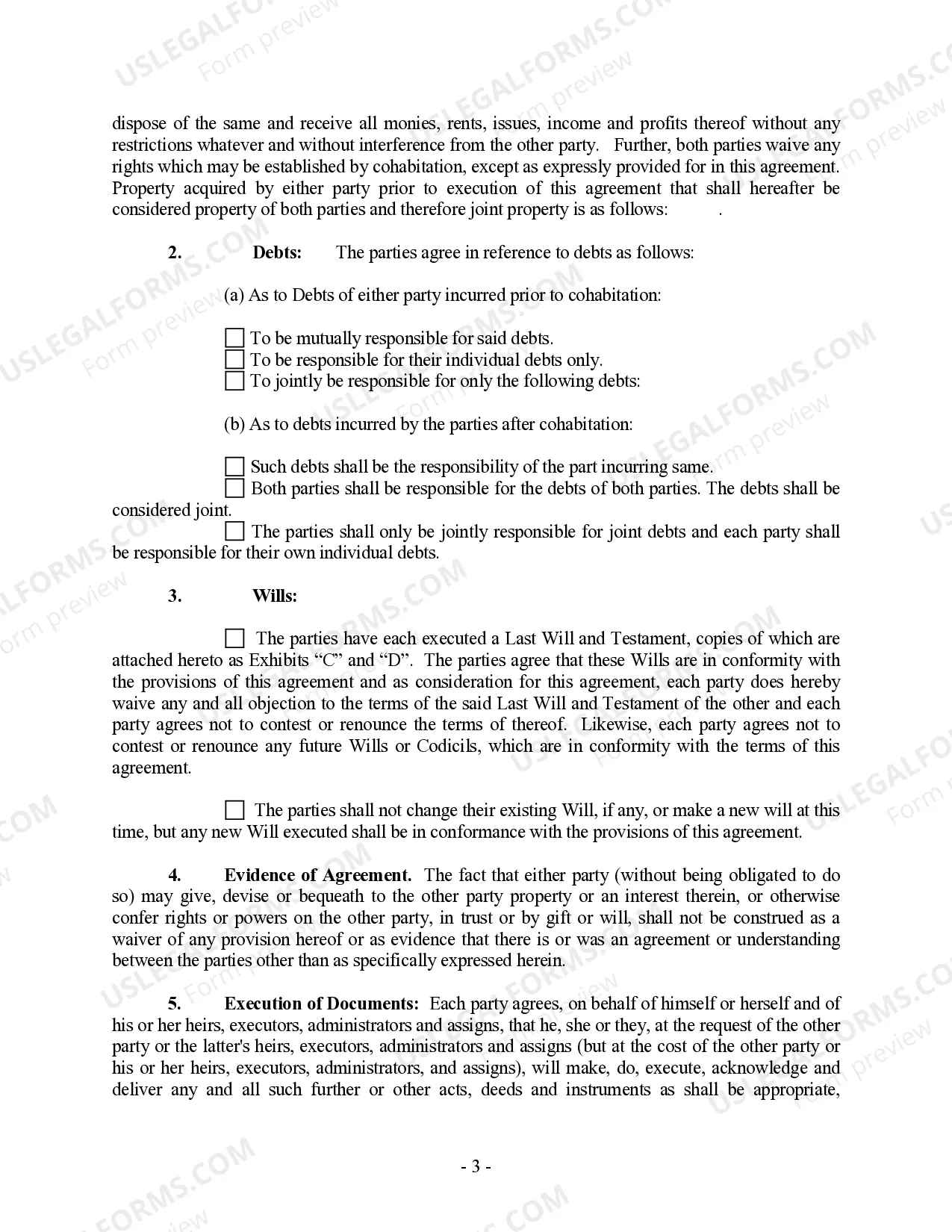
  • Clarification of joint and individual responsibilities for debts.
  • Provisions on the ownership and division of property acquired during the cohabitation.
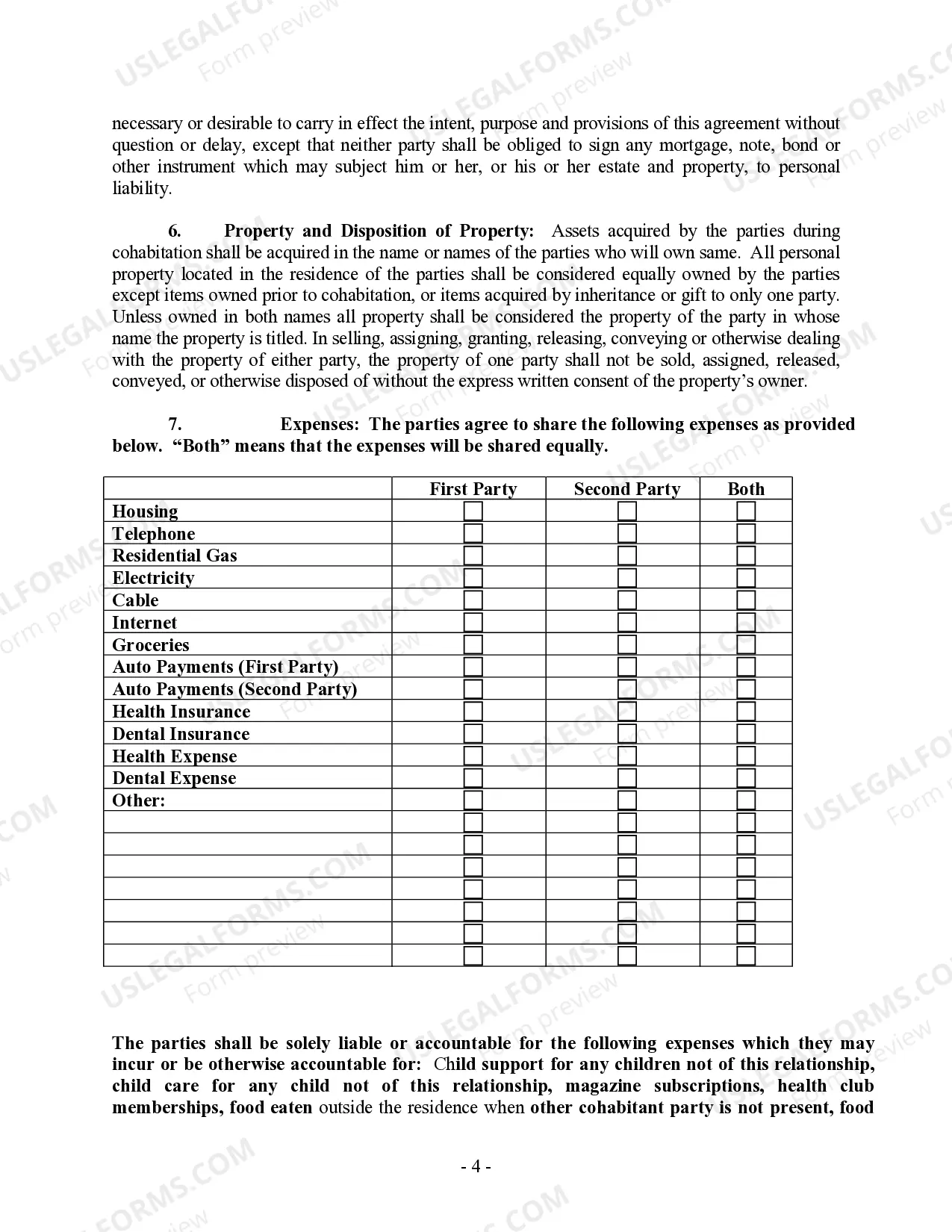
  • Details on joint bank accounts and sharing of expenses.
  • Agreements regarding health insurance and healthcare decisions.
  • Sections addressing support obligations post-cohabitation.
Free preview
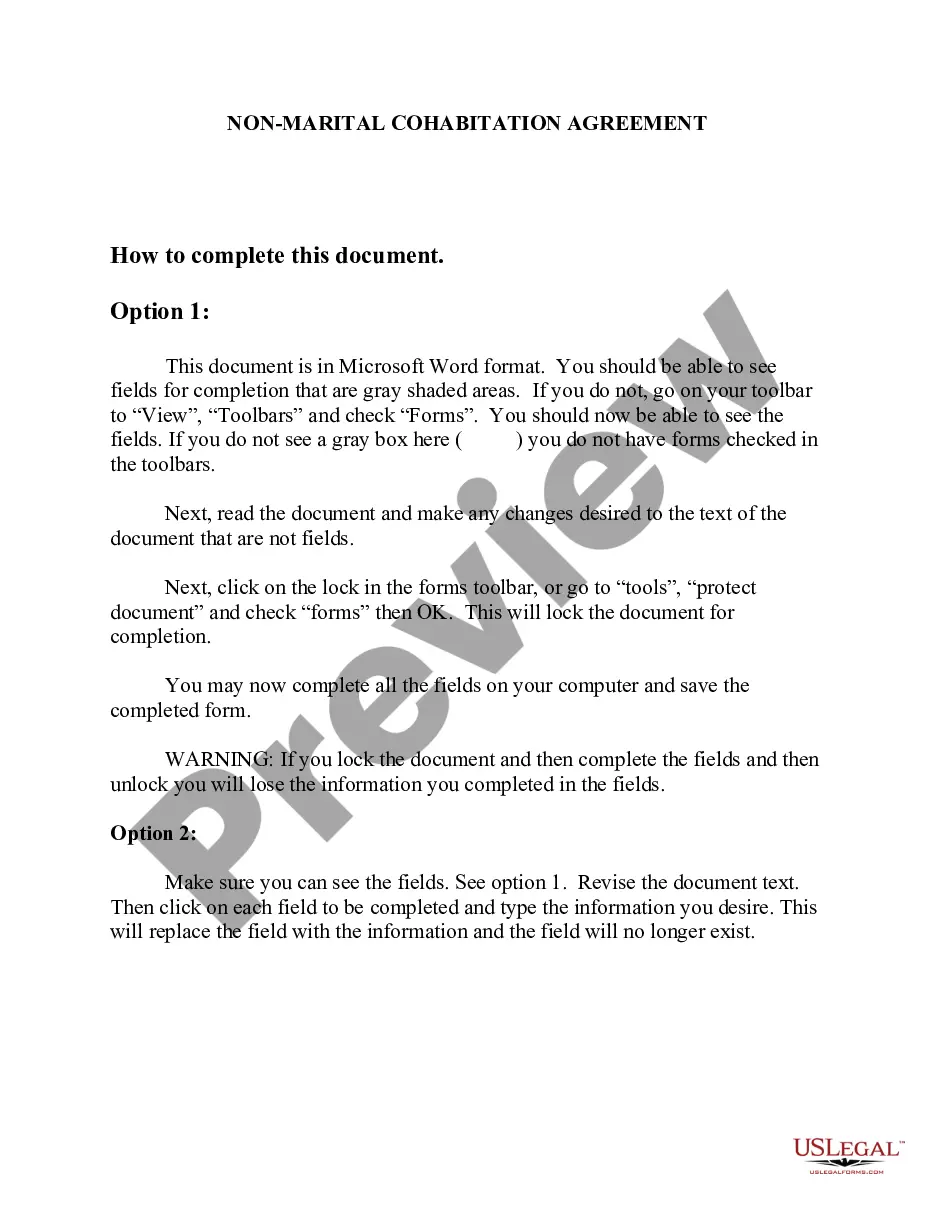
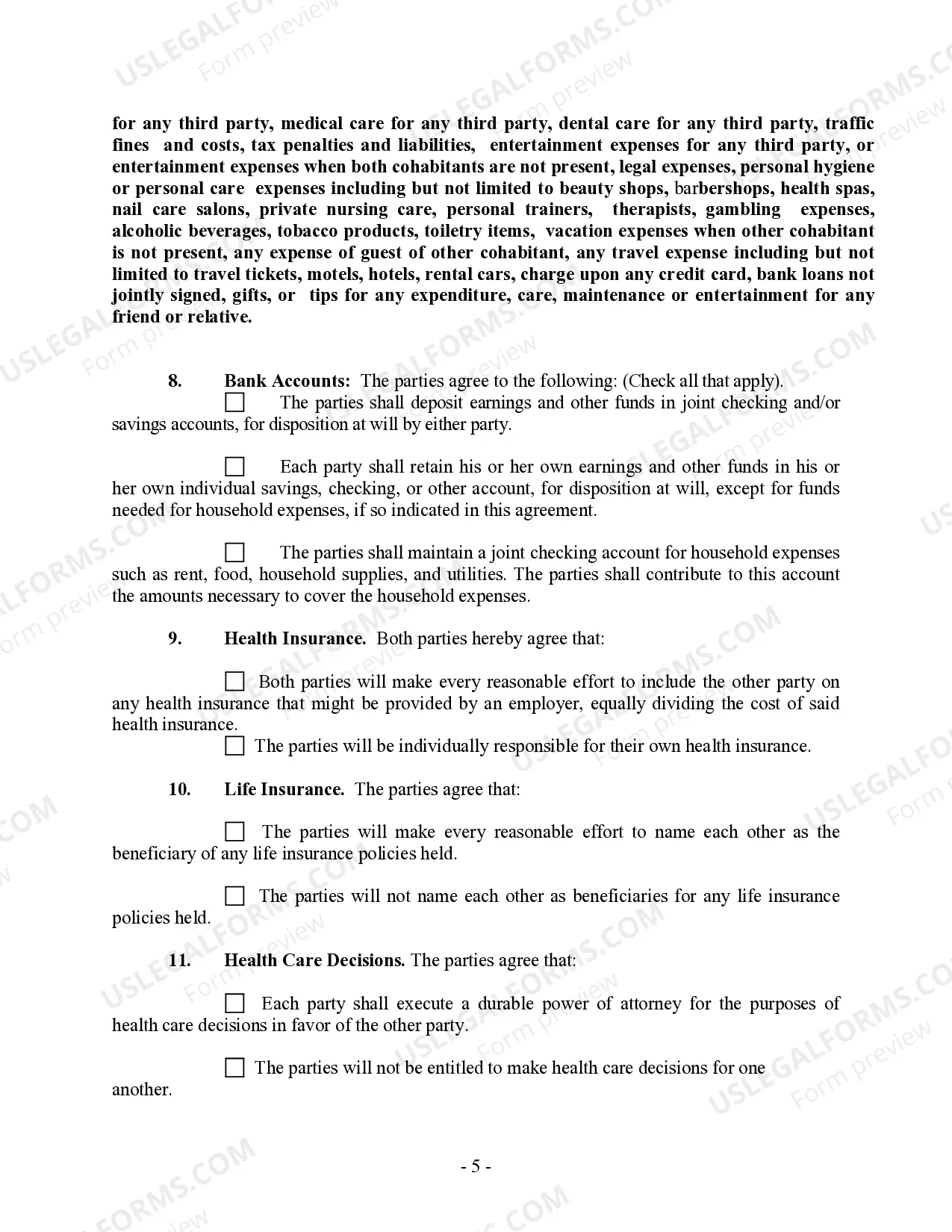
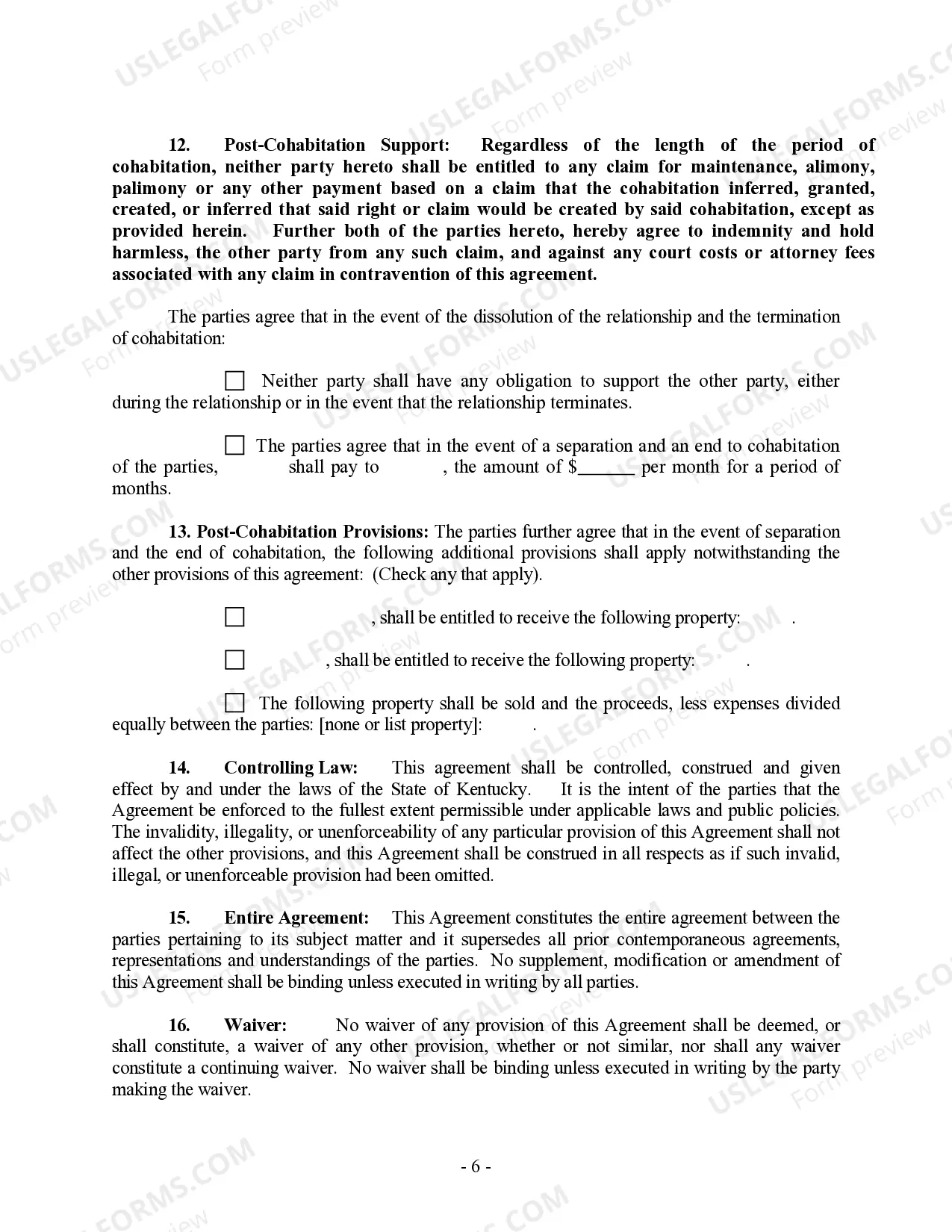
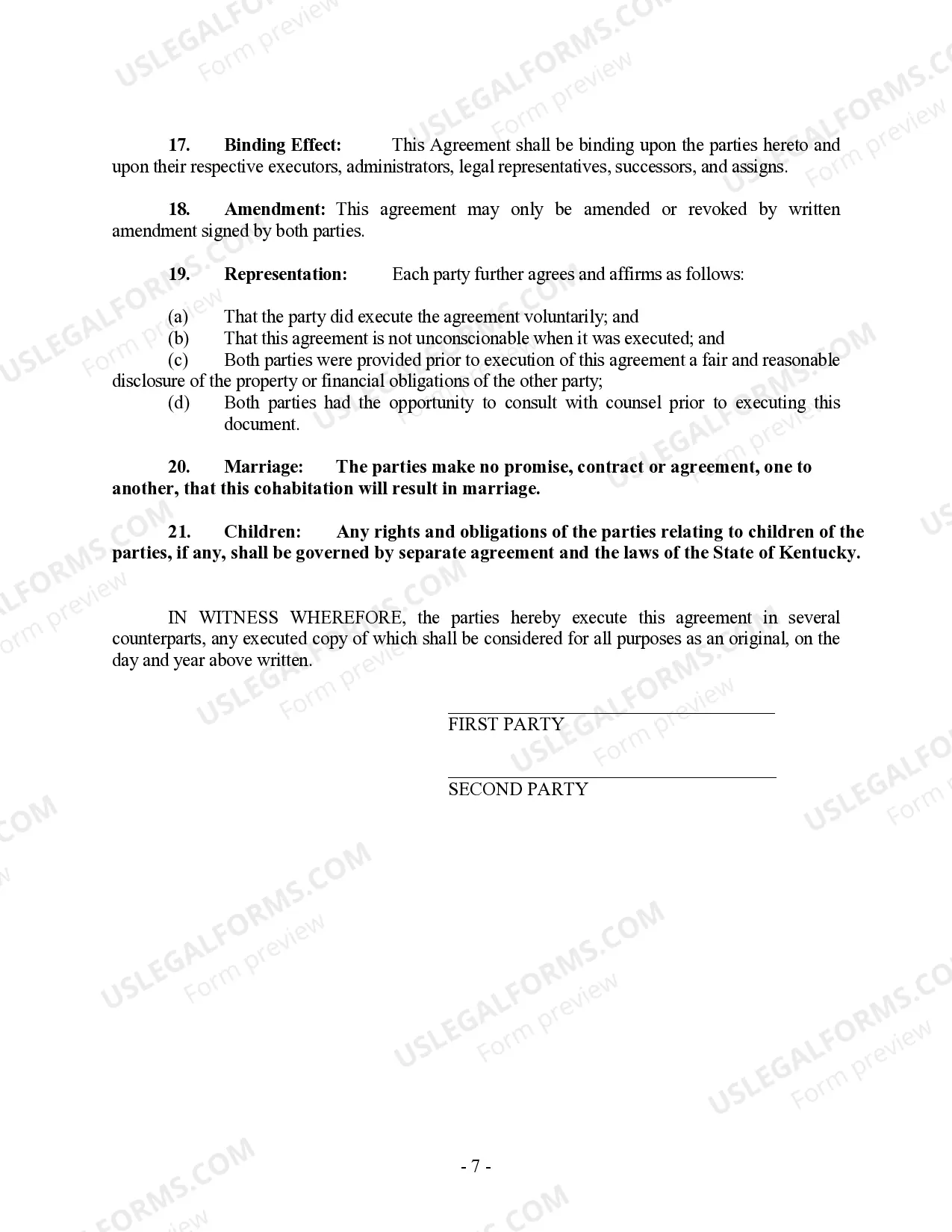
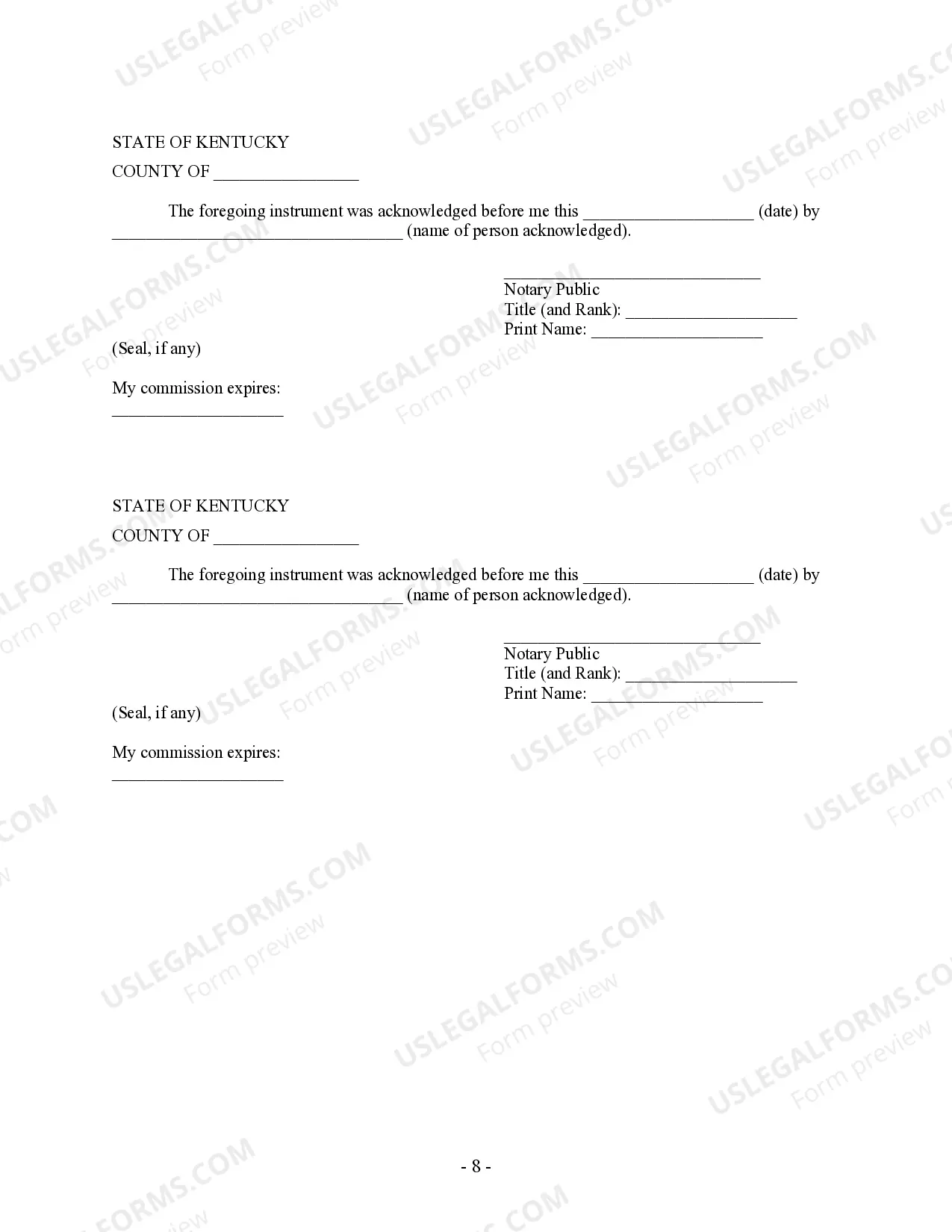
  • Preview Non-Marital Cohabitation Living Together Agreement
  • Preview Non-Marital Cohabitation Living Together Agreement
  • Preview Non-Marital Cohabitation Living Together Agreement
  • Preview Non-Marital Cohabitation Living Together Agreement
  • Preview Non-Marital Cohabitation Living Together Agreement
  • Preview Non-Marital Cohabitation Living Together Agreement
  • Preview Non-Marital Cohabitation Living Together Agreement
  • Preview Non-Marital Cohabitation Living Together Agreement
  • Preview Non-Marital Cohabitation Living Together Agreement
  • Preview Non-Marital Cohabitation Living Together Agreement
  • Preview Non-Marital Cohabitation Living Together Agreement

Situations where this form applies

This agreement is useful for couples who are moving in together and want to clearly outline their responsibilities and expectations. It can help address potential financial and property disputes, clarify how shared expenses will be managed, and define what happens to assets if the relationship ends. It is particularly important for unmarried couples who want to ensure that their rights are protected and that there is a mutual understanding in their living arrangements.

Who should use this form

  • Unmarried couples moving in together.
  • Partners who want to establish clear financial and property agreements.
  • Individuals looking to protect their assets before entering a cohabitation arrangement.
  • Couples who wish to clarify their mutual responsibilities in relation to shared living expenses.

How to prepare this document

  • Identify the full names and addresses of both parties at the beginning of the agreement.
  • Clearly outline any shared and individual debts that each party is responsible for.
  • Detail any property owned individually as well as jointly acquired during the relationship.
  • Indicate how expenses will be shared, including contributions to joint accounts.
  • Ensure both parties sign and date the agreement in the presence of a notary if required.

Notarization guidance

Notarization is required for this form to take effect. Our online notarization service, powered by Notarize, lets you verify and sign documents remotely through an encrypted video session, available 24/7.

Get your form ready online

Our built-in tools help you complete, sign, share, and store your documents in one place.

Built-in online Word editor

Make edits, fill in missing information, and update formatting in US Legal Forms—just like you would in MS Word.

Export easily

Download a copy, print it, send it by email, or mail it via USPS—whatever works best for your next step.

E-sign your document

Sign and collect signatures with our SignNow integration. Send to multiple recipients, set reminders, and more. Go Premium to unlock E-Sign.

Notarize online 24/7

If this form requires notarization, complete it online through a secure video call—no need to meet a notary in person or wait for an appointment.

Store your document securely

We protect your documents and personal data by following strict security and privacy standards.

Form selector

Make edits, fill in missing information, and update formatting in US Legal Forms—just like you would in MS Word.

Form selector

Download a copy, print it, send it by email, or mail it via USPS—whatever works best for your next step.

Form selector

Sign and collect signatures with our SignNow integration. Send to multiple recipients, set reminders, and more. Go Premium to unlock E-Sign.

Form selector

If this form requires notarization, complete it online through a secure video call—no need to meet a notary in person or wait for an appointment.

Form selector

We protect your documents and personal data by following strict security and privacy standards.

Mistakes to watch out for

  • Failing to specify individual versus joint debts, leading to future disputes.
  • Not providing a clear outline of property ownership and rights to assets.
  • Neglecting to consult with legal professionals to ensure the agreement meets state laws.
  • Overlooking the need for both parties to sign and date the agreement to validate it.

Benefits of using this form online

  • Convenience: Complete the form anytime, anywhere, from the comfort of your home.
  • Editability: Customize the document to fit your specific cohabitation arrangement.
  • Reliability: Trust that the form meets legal standards as it is drafted by licensed attorneys.

Looking for another form?

This field is required
Virginia
Select state

Form popularity

FAQ

The term non-marital agreement simply refers to an agreement between two people who are living together and are not married.They specify how the couple will divide their property, debts, income, and expenses if the marriage dissolves.

In general, unmarried couples can't claim ownership of each other's property in the event of a breakup. This applies to big investments (such as a house) and smaller items (such as furniture). Gifts made during the relationship remain the property of the recipient.

Cohabitation is an arrangement where two people are not married but live together. They are often involved in a romantic or sexually intimate relationship on a long-term or permanent basis.More broadly, the term cohabitation can mean any number of people living together.

Cohabitation is an arrangement where two people are not married but live together.

Whether you've been living together for 1 year, 10 years or even 50 years, if you're not married, you have no automatic legal right over your partner's assets.Often someone will move into a property that their partner already owns, or it may be that one person can't afford to contribute to the purchase of a new house.

Some couples choose not to enter into a marriage or legally recognized domestic partnership but choose to enter into a cohabitation agreement instead. Oftentimes, these agreements are made orally and difficult to enforce after the relationship has ended.

Whether you've been living together for 1 year, 10 years or even 50 years, if you're not married, you have no automatic legal right over your partner's assets.Often someone will move into a property that their partner already owns, or it may be that one person can't afford to contribute to the purchase of a new house.

Although there is no legal definition of living together, it generally means to live together as a couple without being married. Couples who live together are sometimes called common-law partners. This is just another way of saying a couple are living together.

Are you in a Domestic Partnership? According to The Free Dictionary, a Domestic Partnership is defined as a legal or interpersonal relationship between two individuals who live together and share a common domestic life but are not joined by marriage nor a civil union. Common Law Marriage is not allowed in Kentucky.

Trusted and secure by over 3 million people of the world’s leading companies

Kentucky Non-Marital Cohabitation Living Together Agreement