Kansas Resume for Land Surveyor
Description
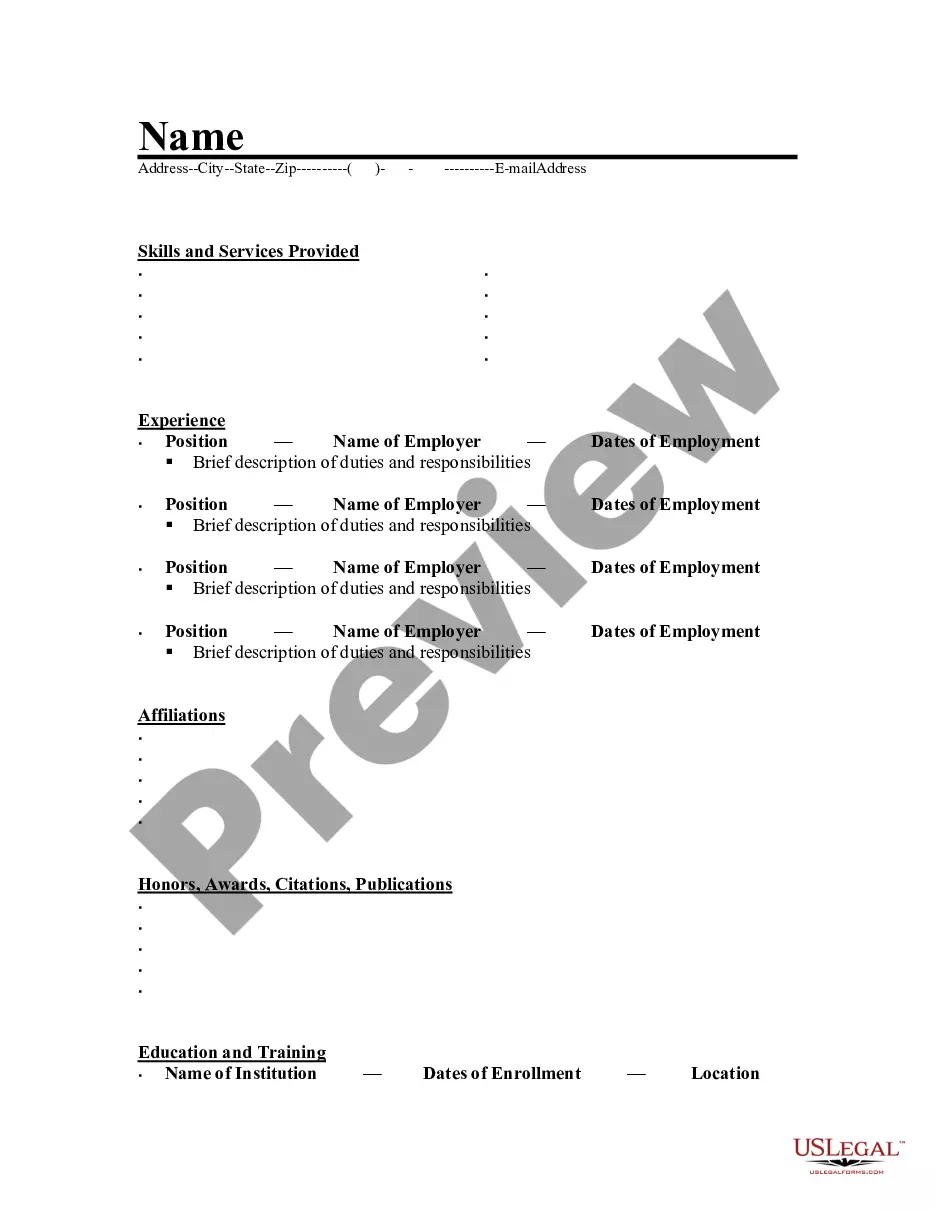
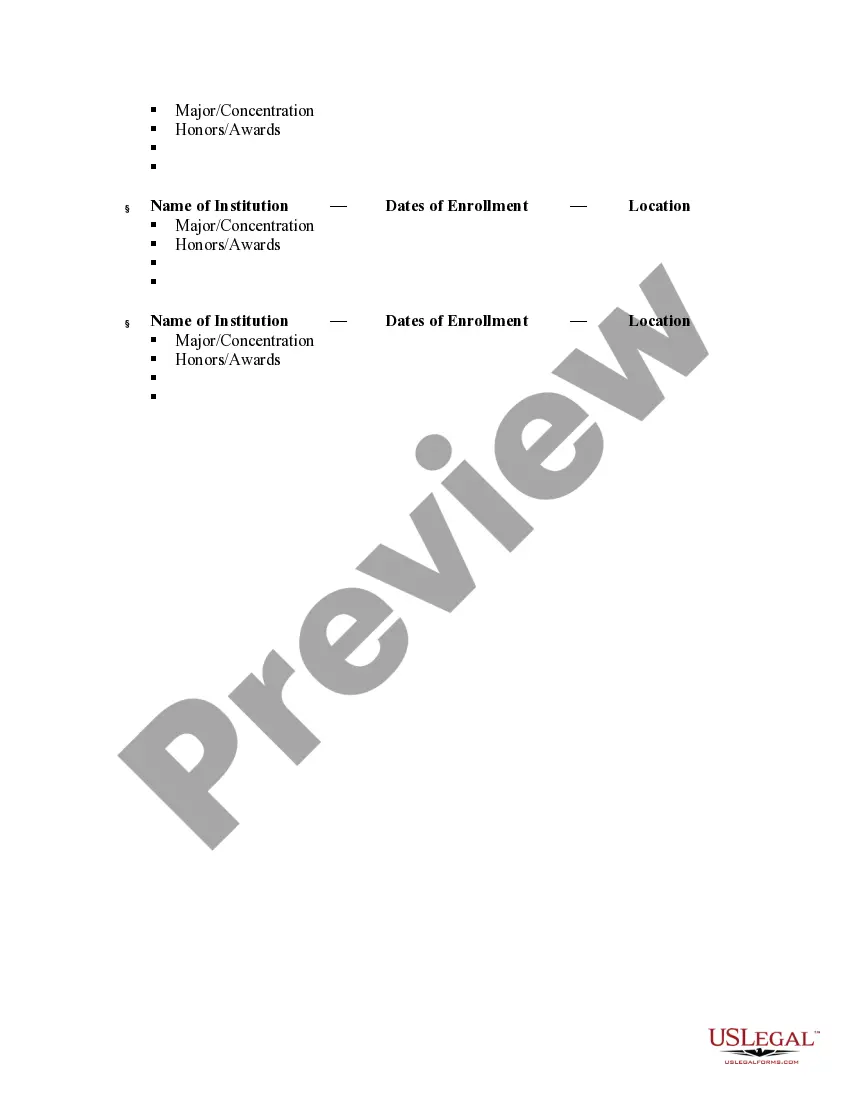
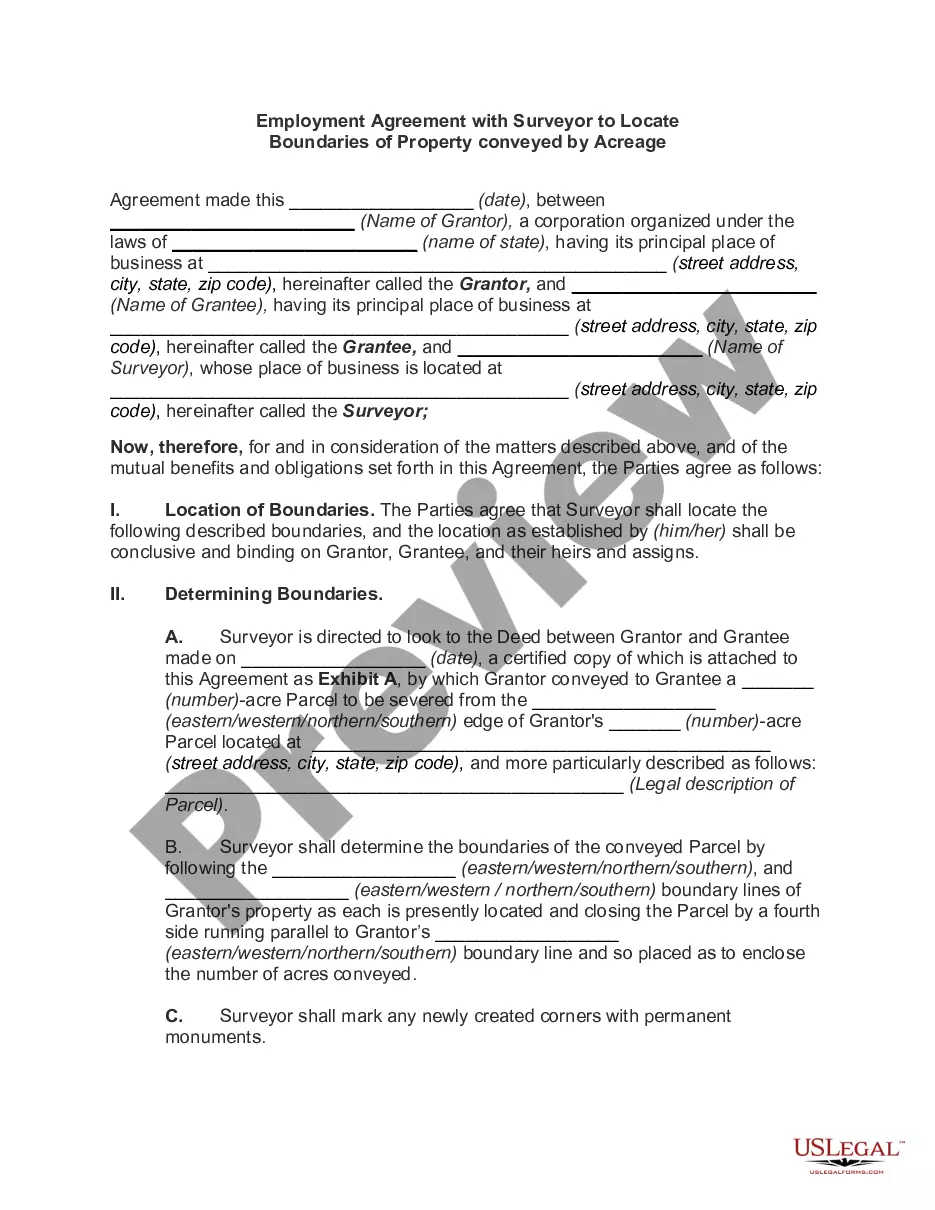
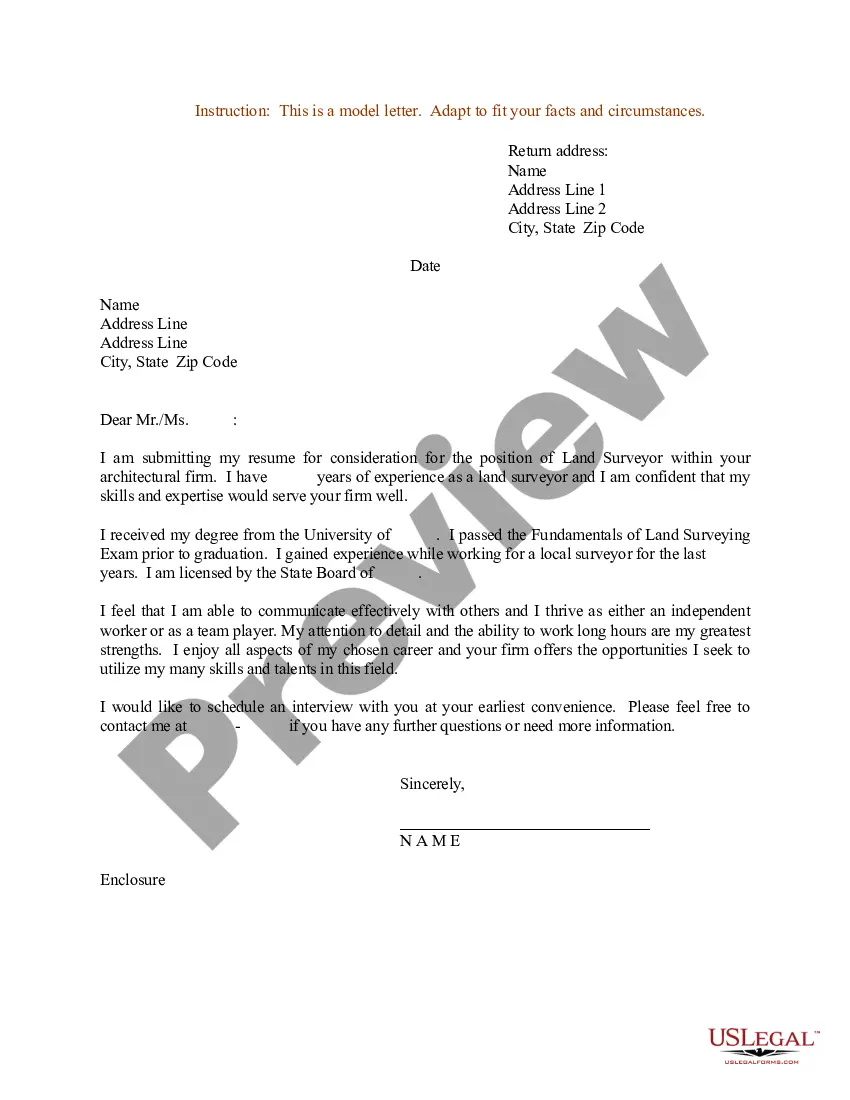
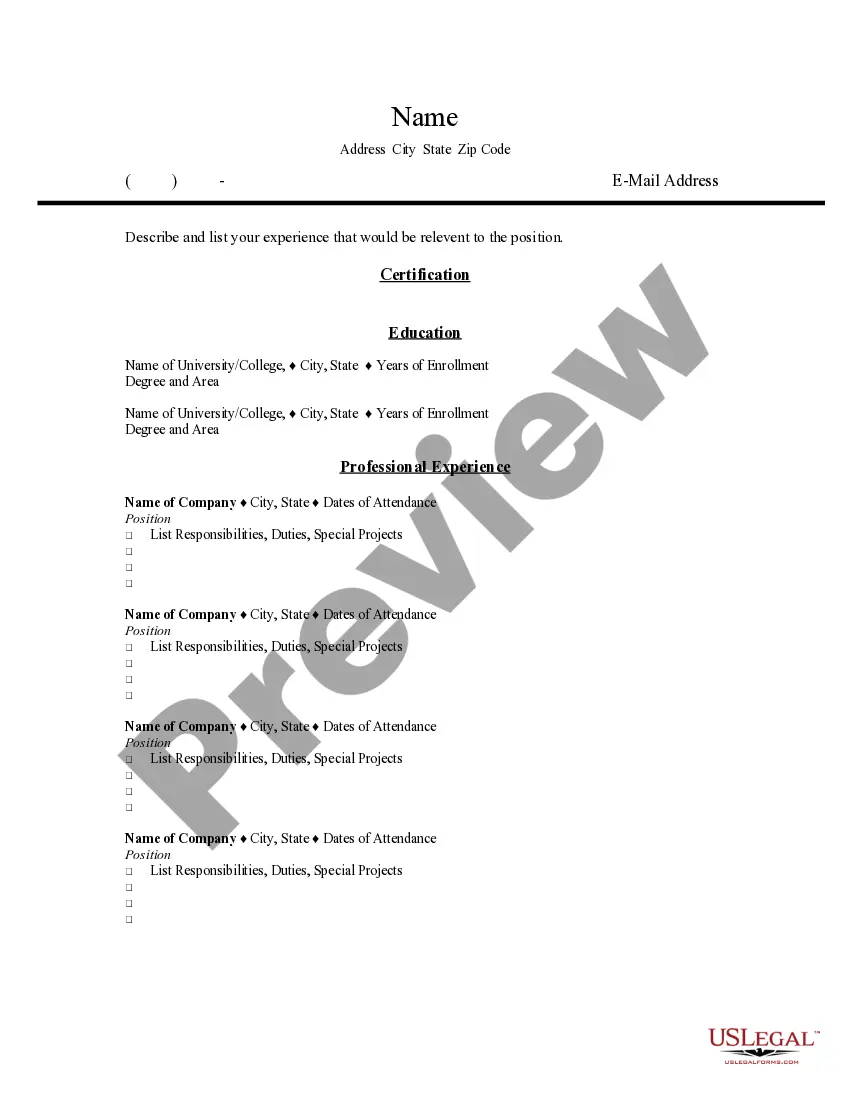
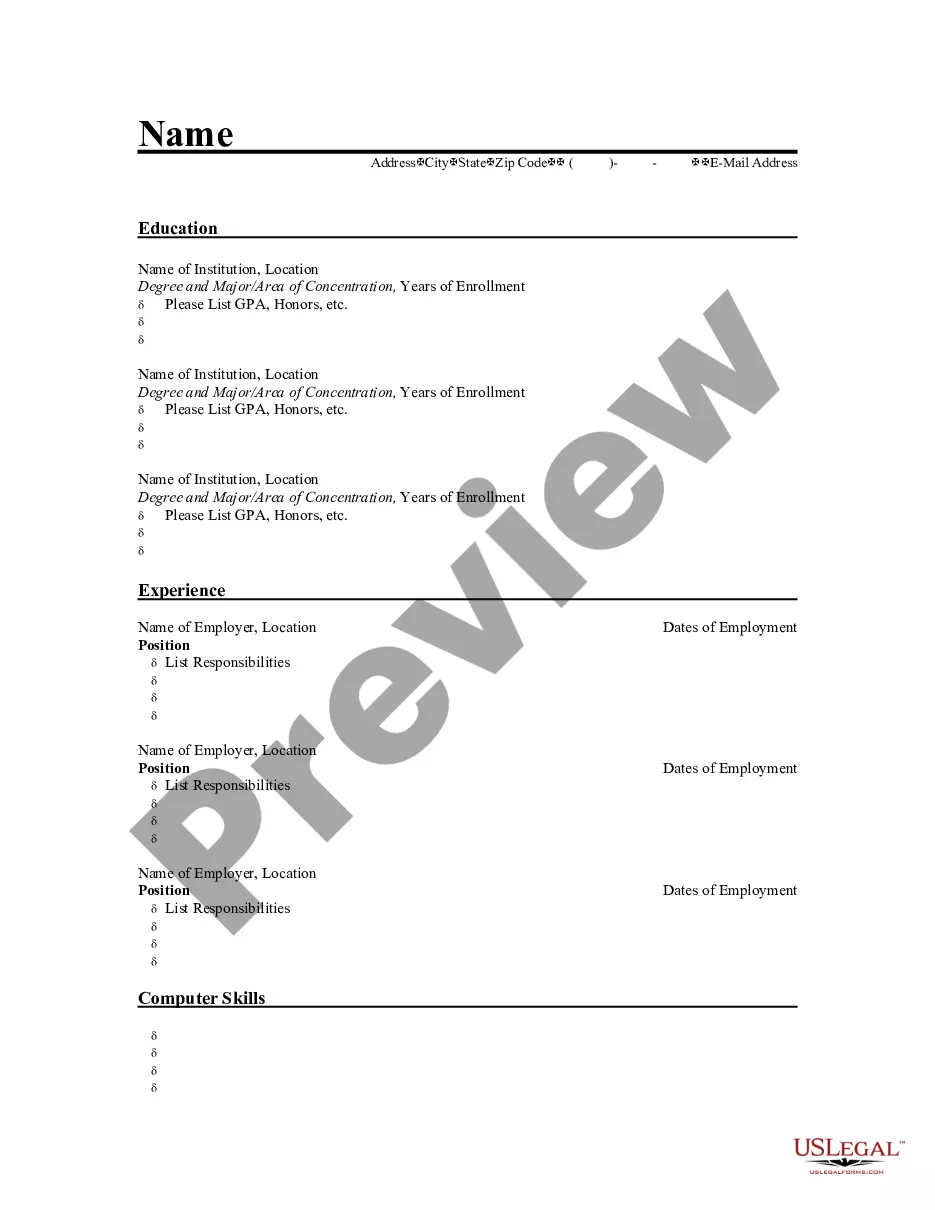
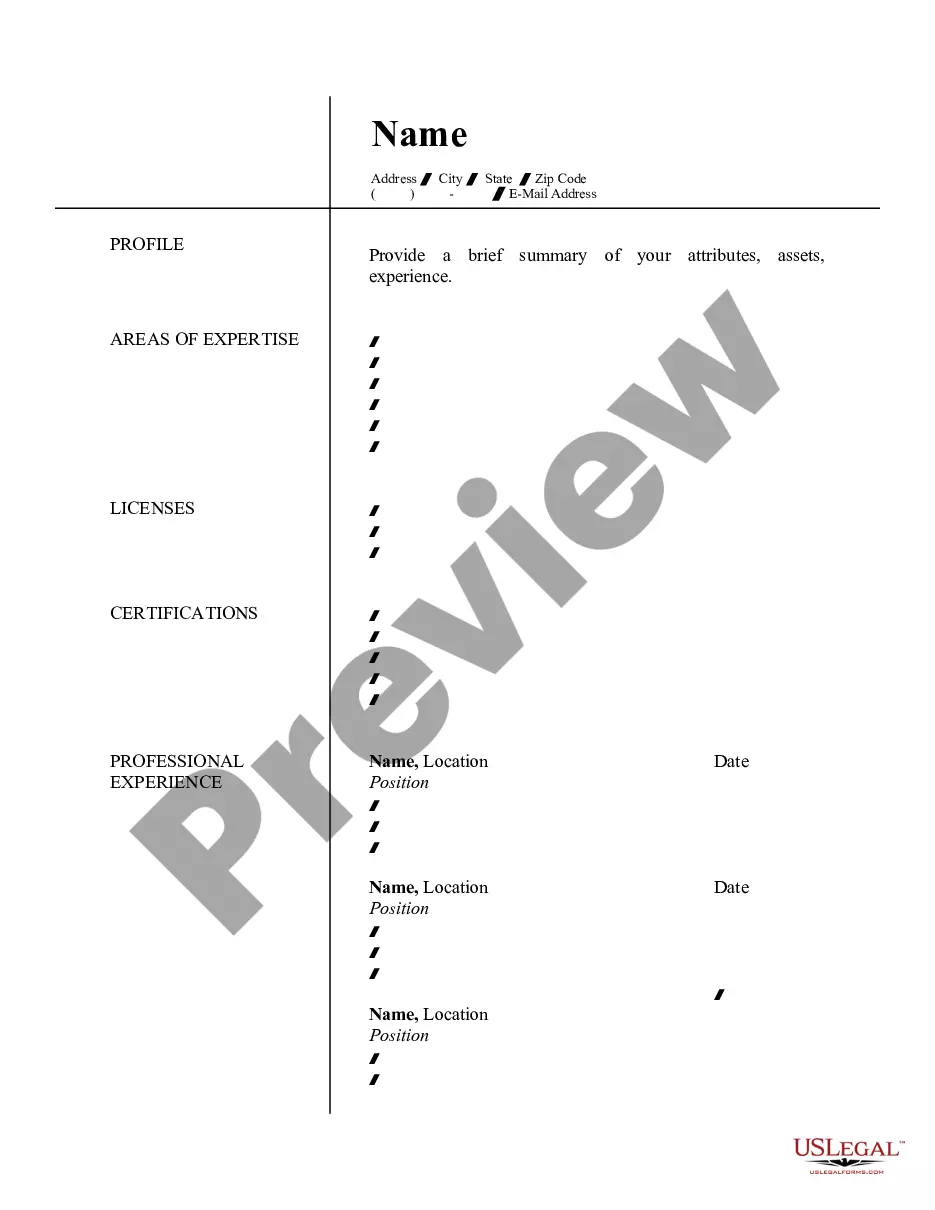

How to fill out Resume For Land Surveyor?
If you wish to finalize, obtain, or print legal document templates, utilize US Legal Forms, the largest compilation of legal forms, which can be accessed online.
Take advantage of the site's straightforward and user-friendly search to locate the documents you need.
Numerous templates for business and personal purposes are categorized by types and states, or keywords. Use US Legal Forms to find the Kansas Resume for Land Surveyor with just a few clicks.
Every legal document template you obtain is yours permanently. You have access to every form you saved in your account. Click on the My documents section and select a form to print or download again.
Complete and obtain, and print the Kansas Resume for Land Surveyor with US Legal Forms. There are countless professional and state-specific forms available for your business or personal needs.
- If you are already a US Legal Forms customer, Log In to your account and click on the Download button to obtain the Kansas Resume for Land Surveyor.
- You can also access forms you previously saved in the My documents section of your account.
- If you are utilizing US Legal Forms for the first time, follow the steps below.
- Step 1. Ensure you have chosen the form for your correct area/state.
- Step 2. Use the Preview option to review the form's content. Remember to read the description.
- Step 3. If you are not satisfied with the form, utilize the Search field at the top of the screen to find other versions of the legal form template.
- Step 4. Once you have located the form you want, click the Get now button. Select the pricing plan you prefer and enter your credentials to register for an account.
- Step 5. Complete the transaction. You can use your credit card or PayPal account to finalize the purchase.
- Step 6. Choose the format of your legal form and download it to your device.
- Step 7. Fill out, edit, and print or sign the Kansas Resume for Land Surveyor.
Form popularity
FAQ
A professional summary for a surveyor should reflect your unique expertise and contributions to the field. You might write, 'Dedicated surveyor with extensive experience in land and construction surveying, adept at using cutting-edge technology to ensure precise results.' Crafting a strong professional summary is vital for your Kansas Resume for Land Surveyor, as it sets the tone for the rest of your application and highlights your suitability for the job.
A professional summary for a land surveyor should encapsulate your key qualifications and career highlights in a compelling way. For instance, you could say, 'Experienced land surveyor skilled in GIS technology and project management, with a dedication to accuracy and efficiency in all surveying activities.' This summary serves as an engaging introduction to your Kansas Resume for Land Surveyor, capturing the attention of potential employers.
On a Kansas Resume for Land Surveyor, it is important to clearly outline your key responsibilities and accomplishments. This may include tasks such as conducting land surveys, preparing reports, and collaborating with engineers and architects. Highlighting your technical skills and the tools you are proficient in can further strengthen your resume and make you stand out to employers.
In Kansas, the salary for a land surveyor can vary based on experience and location. On average, land surveyors in the state earn around $60,000 to $75,000 per year. Factors such as certifications, specialized skills, and the complexity of projects can significantly influence earning potential, making a well-crafted Kansas Resume for Land Surveyor essential for capturing the attention of hiring managers.
A professional summary in a Kansas Resume for Land Surveyor should succinctly highlight your expertise and experience. For example, you might write, 'Detail-oriented land surveyor with over five years of experience in boundary and topographic surveying. Proven track record in utilizing advanced surveying equipment and software to deliver accurate results.' This format clearly presents your qualifications to potential employers.
Land Surveyor Responsibilities:Preparing and maintaining sketches, maps, and reports of legal descriptions of surveys. Verifying data and calculations. Recording results of surveys.
Work Experience DescriptionsBegin each item by stating the name of the place, location, dates, and job title (e.g. manager, volunteer) List experiences in reverse chronological order (most current experience first).Describe your responsibilities in concise statements led by strong verbs.More items...
Perform duties related to land surveying for identifying land ownership and property boundaries. Conduct records management activities and perform historical and legal land ownership research. Develop and inspect land surveying project contracts.
Keep in mind that your resume should provide examples of how you've used the hard skills that are most relevant to the job you're seeking. Whenever possible, note specific, quantifiable achievements for each position you've held. If you're a digital marketer, give conversion and click-through rates.
Using specialized tools and equipment to measure distances or angles between reference points. Recording and marking measurements and verifying their accuracy using software. Determining boundary lines based on their measurements. Creating legal documents, such as leases and deeds, based on surveying results.