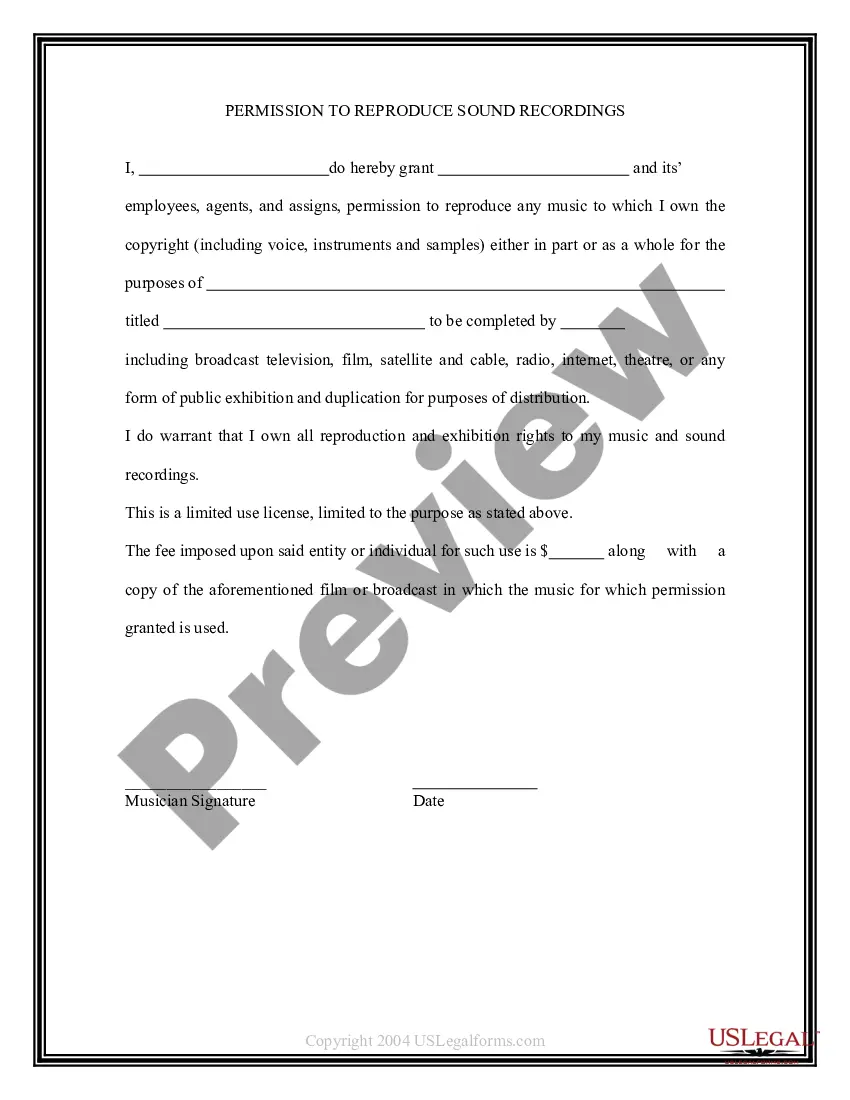
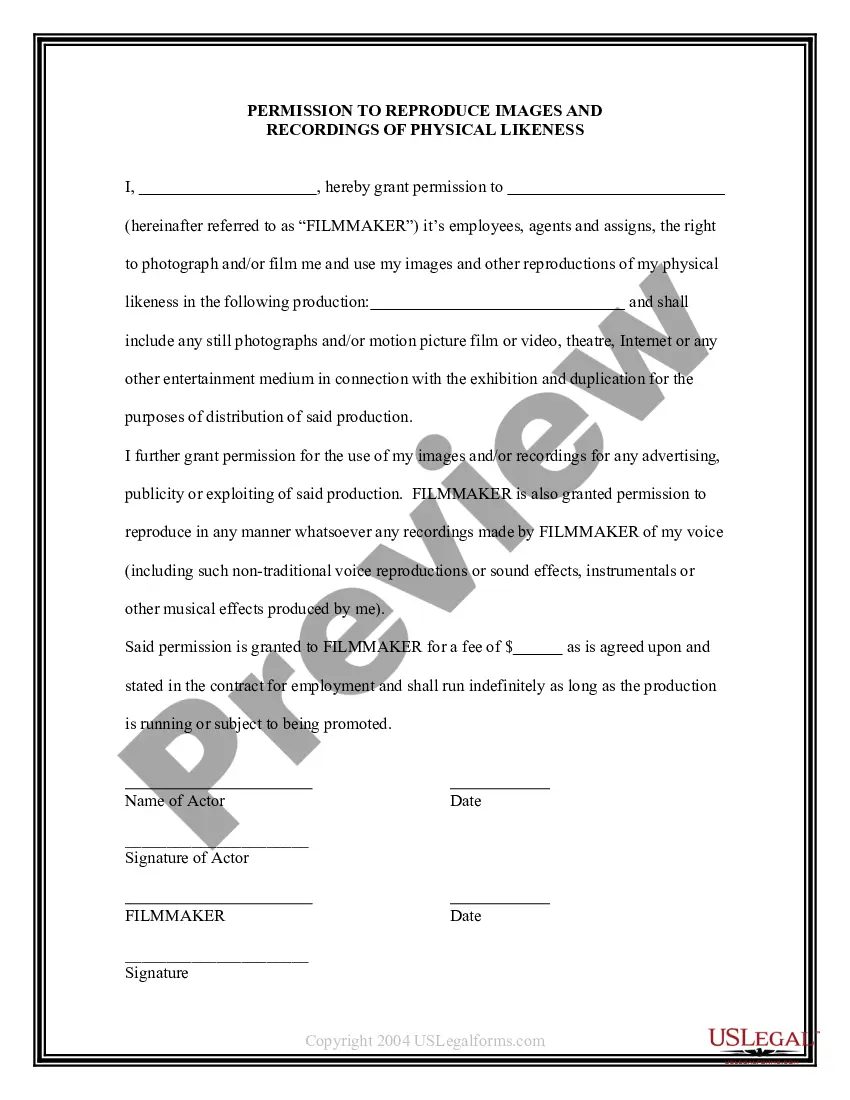
This is a form signed by a musician or owner of music granting permission to reproduce copyrighted music for use in a film, television, Internet, radio etc.
Kansas Permission To Reproduce Sound Recordings
State:
Multi-State
Control #:
US-PRM-23
Format:
Word;
Rich Text
Instant download
Description

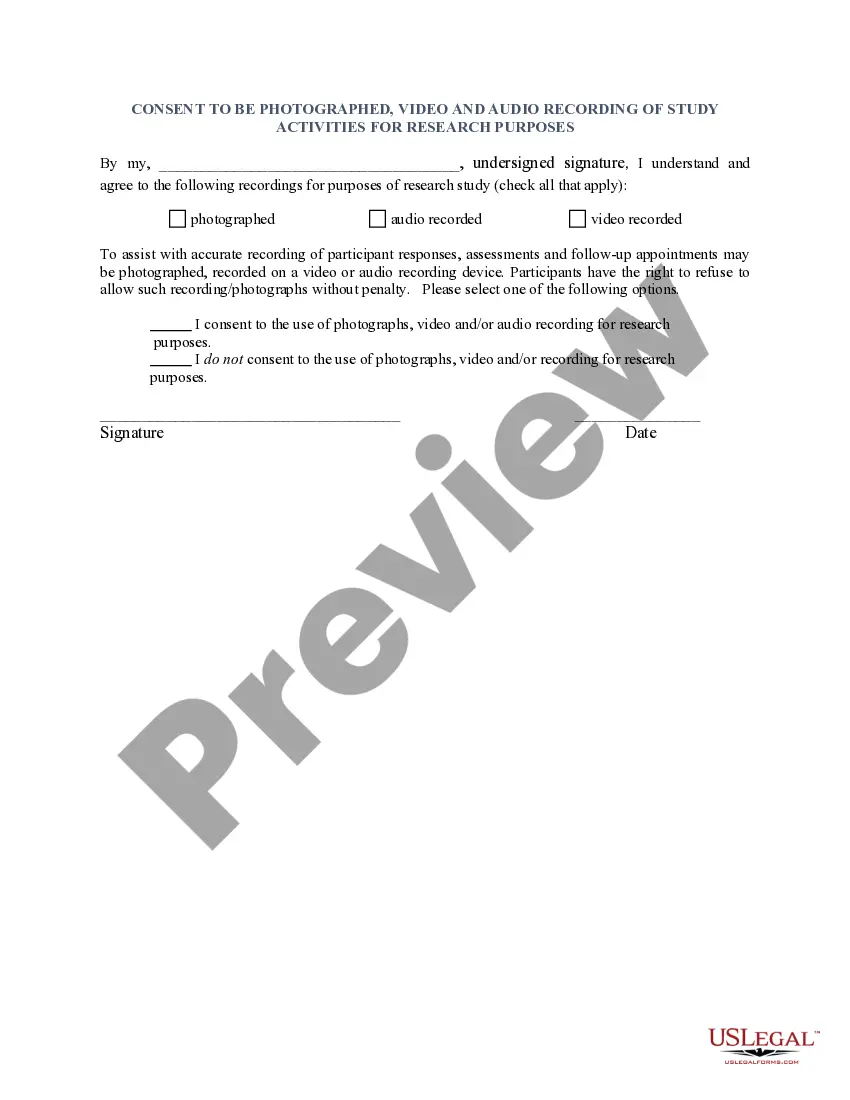
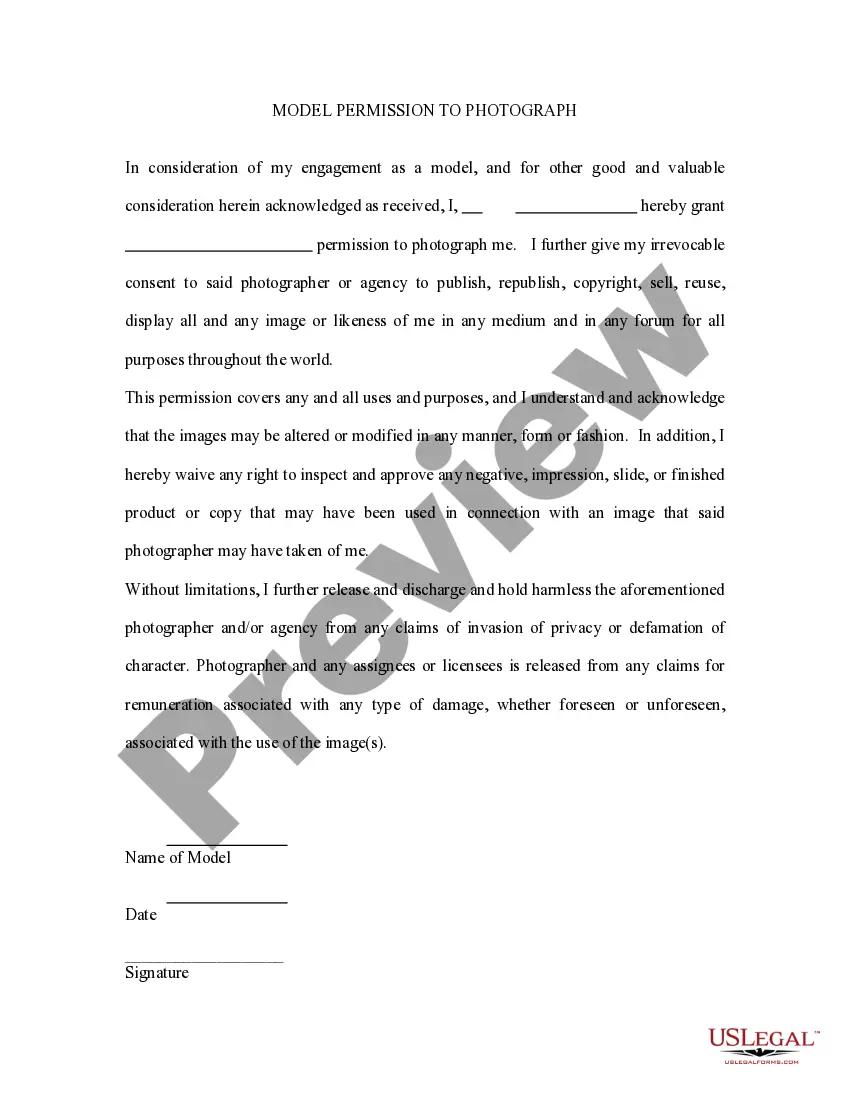
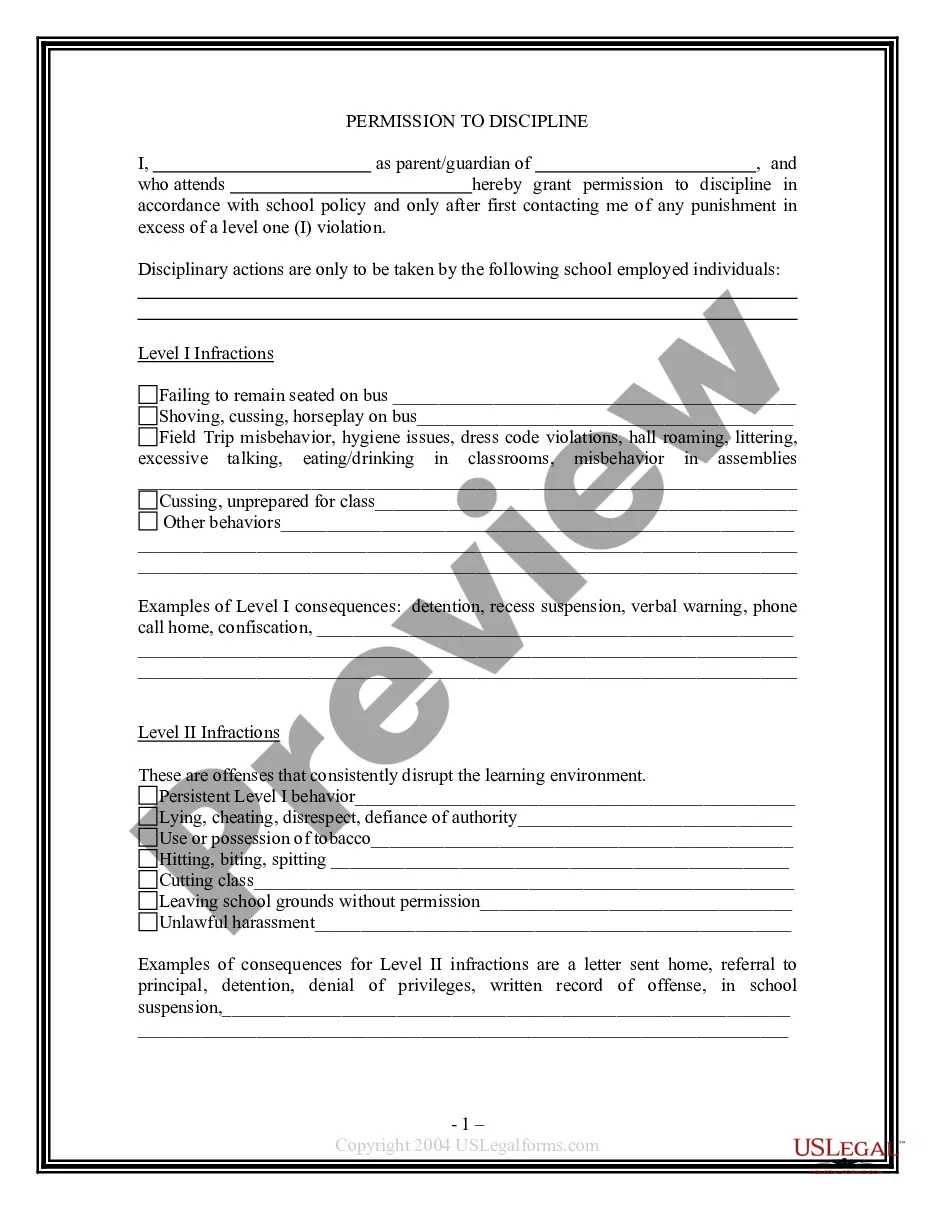
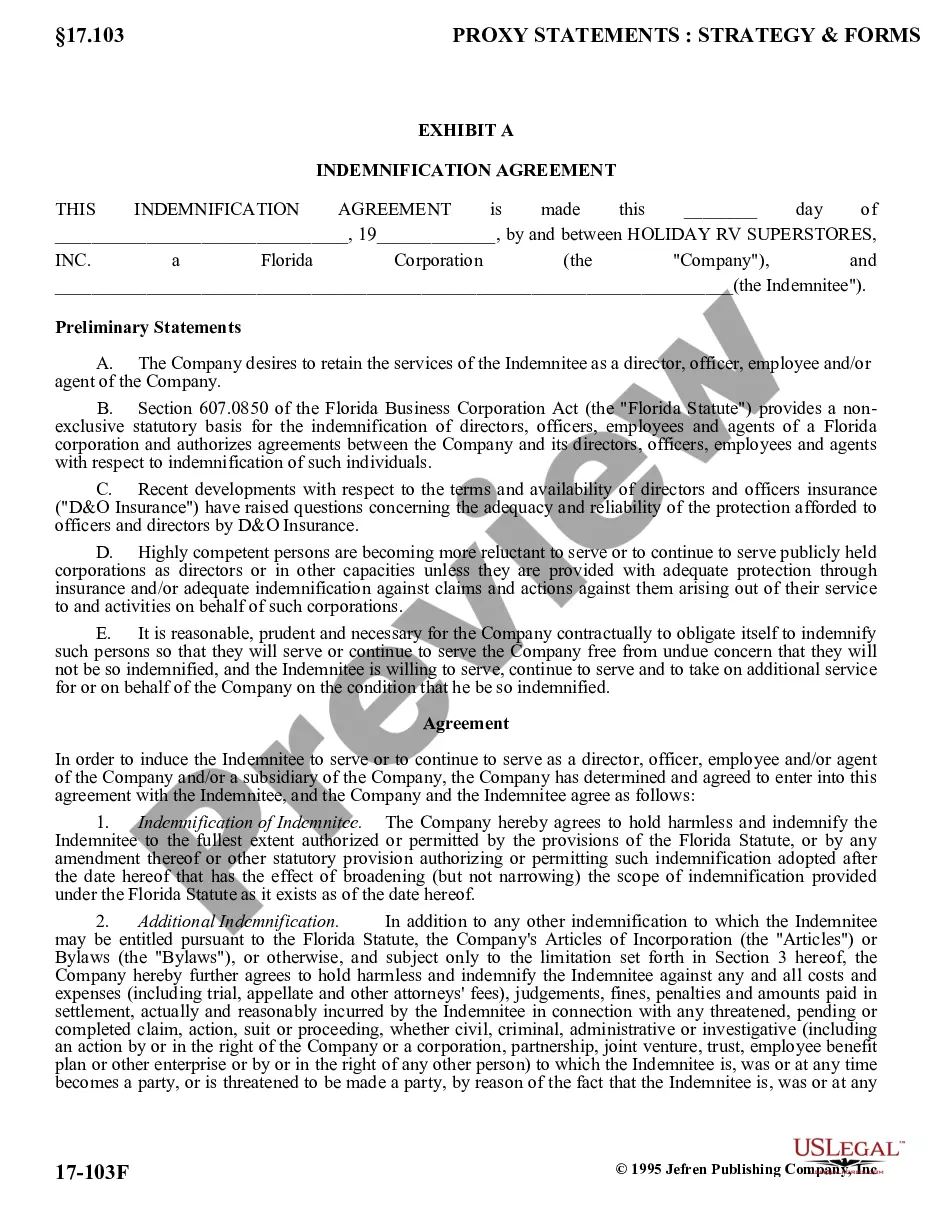

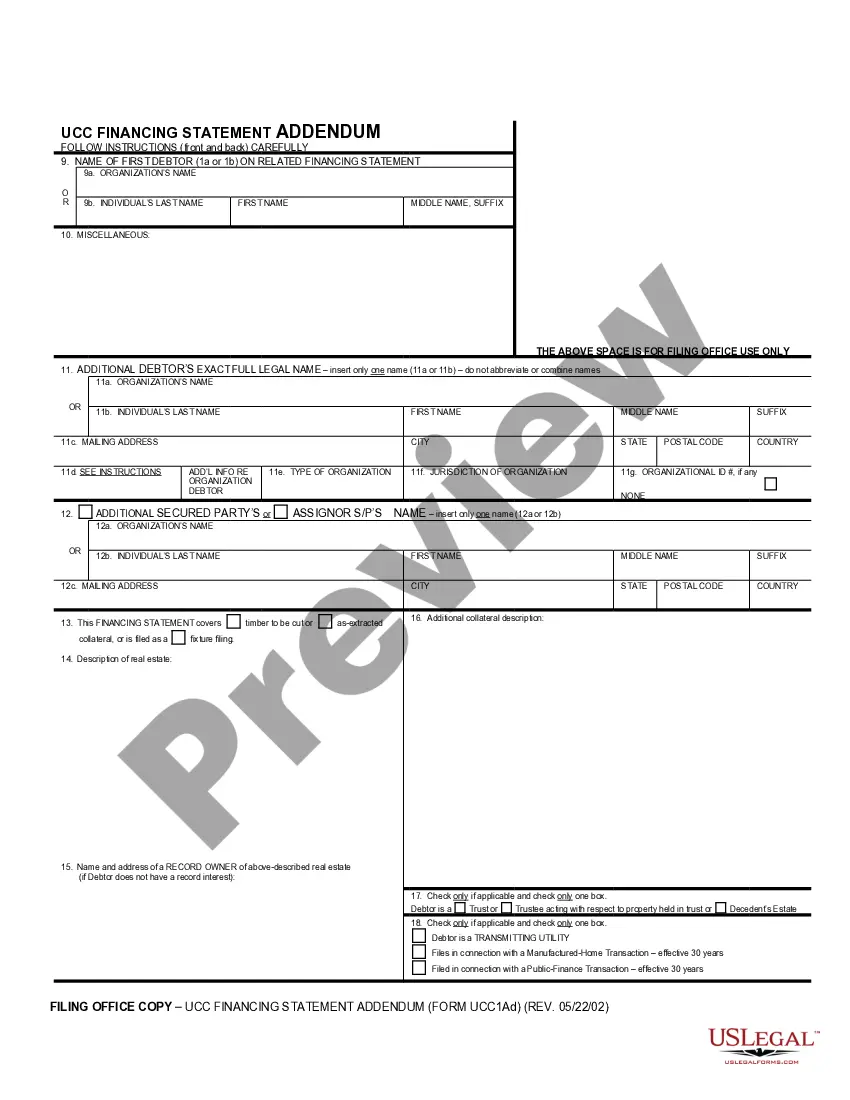
How to fill out Permission To Reproduce Sound Recordings?
Are you in a situation where you require documentation for various organizational or personal reasons almost all the time? There are numerous legal document templates available online, but finding reliable versions is not easy.
US Legal Forms offers a vast array of form templates, including the Kansas Permission To Reproduce Sound Recordings, designed to meet federal and state requirements.
If you are already familiar with the US Legal Forms website and have your account, simply Log In. After that, you can download the Kansas Permission To Reproduce Sound Recordings template.
Access all the document templates you have purchased in the My documents section. You can get an additional copy of Kansas Permission To Reproduce Sound Recordings anytime, if needed. Just navigate to the required form to download or print the document template.
Utilize US Legal Forms, the most extensive collection of legal forms, to save time and prevent errors. The service provides professionally crafted legal document templates that can be used for various purposes. Create your account on US Legal Forms and start making your life a bit easier.
- Obtain the form you require and ensure it is for the correct area/region.
- Use the Preview button to examine the form.
- Review the details to confirm you have selected the correct form.
- If the form is not what you are looking for, use the Search field to find the form that matches your requirements.
- Once you find the suitable form, click Purchase now.
- Select the payment plan you wish to use, complete the necessary information to create your account, and pay for the transaction using your PayPal or credit card.
- Choose a convenient document format and download your copy.
Form popularity
FAQ
In the United States, several states allow one party consent for recording conversations. This means that only one person involved in the conversation needs to agree to the recording. States like Kansas, California, and Texas follow this rule. If you are looking to understand the nuances of recording laws in relation to Kansas Permission To Reproduce Sound Recordings, it is essential to consult legal resources or professionals who can guide you accurately.
Two-party consent states require that all parties involved in a conversation or recording give their consent for it to be recorded. States such as California, Florida, and Illinois are known for their two-party consent laws. If you intend to record video content that includes sound, it's important to be aware of these regulations. To simplify the process of obtaining Kansas Permission To Reproduce Sound Recordings, consider using US Legal Forms for easy access to the necessary legal documents.
Yes, sound recordings are typically protected by copyright law, provided they meet certain criteria. This protection grants the creator exclusive rights to reproduce, distribute, and perform the work publicly. If you plan to reproduce sound recordings in Kansas, understanding copyright is vital to avoid infringement. With Kansas Permission To Reproduce Sound Recordings, you can ensure you respect these rights and stay compliant.
Kansas has specific exceptions to the Open Records Act that allow certain records to remain confidential. These exceptions include records related to personal privacy, law enforcement investigations, and certain governmental deliberations. Understanding these exceptions is crucial for anyone looking to access public records. If you need to navigate these complexities while seeking Kansas Permission To Reproduce Sound Recordings, US Legal Forms can provide valuable resources and guidance.
In the context of recording conversations, one-party consent states allow you to record a conversation if at least one party involved in the conversation agrees to the recording. Kansas is a one-party consent state, meaning you can legally record conversations without informing the other party. It is essential to understand the laws in your state, as they vary widely. For those seeking to reproduce sound recordings in Kansas, knowing these laws can help ensure compliance with Kansas Permission To Reproduce Sound Recordings.
The Kora Act in Kansas is legislation that addresses the recording of conversations and the protection of privacy. It outlines the rules regarding consent for recording audio and aims to provide clarity on the legalities involved. Familiarizing yourself with the Kora Act can help you navigate issues related to Kansas Permission To Reproduce Sound Recordings effectively.
In Kansas, recording audio without someone knowing is permissible only if you are part of the conversation. If you are not involved, it is illegal to record without consent. Therefore, it's crucial to be aware of the regulations related to Kansas Permission To Reproduce Sound Recordings to avoid any legal issues.
If someone is recording you without your consent, you have several options. First, you can ask them to stop recording, as they may not be aware of the legal implications. If they refuse, you may wish to consult legal resources or platforms like uslegalforms to understand your rights regarding Kansas Permission To Reproduce Sound Recordings.
Yes, someone can audio record you without your consent in Kansas, but only if they are also participating in the conversation. However, if they are not part of the discussion, this would violate Kansas law. Understanding your rights regarding Kansas Permission To Reproduce Sound Recordings is essential in such situations.
In Kansas, you can record audio without consent only if you are a participant in the conversation. This means that if you are part of the discussion, you may record it without notifying the other party. However, to avoid legal complications, it's always best to seek permission when dealing with Kansas Permission To Reproduce Sound Recordings.