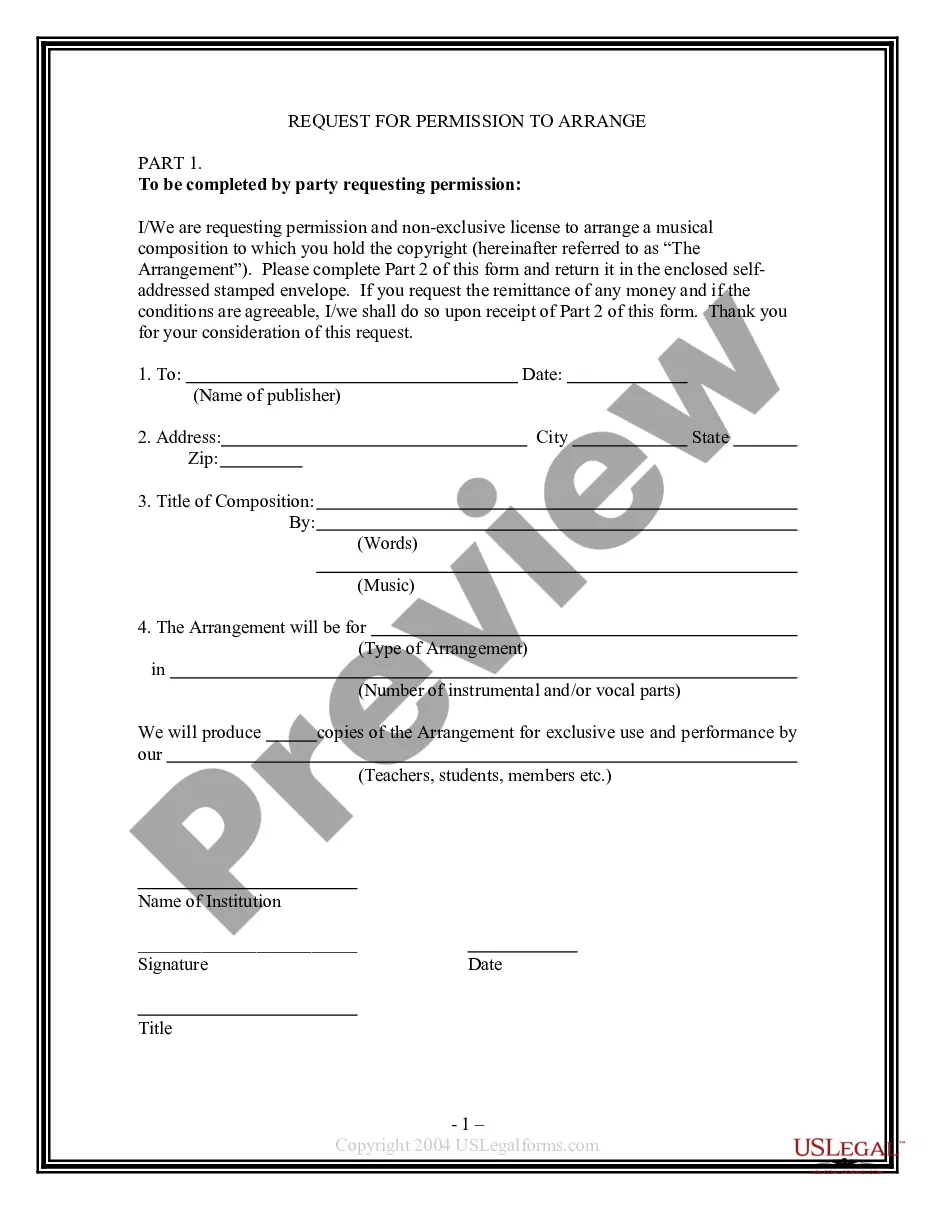
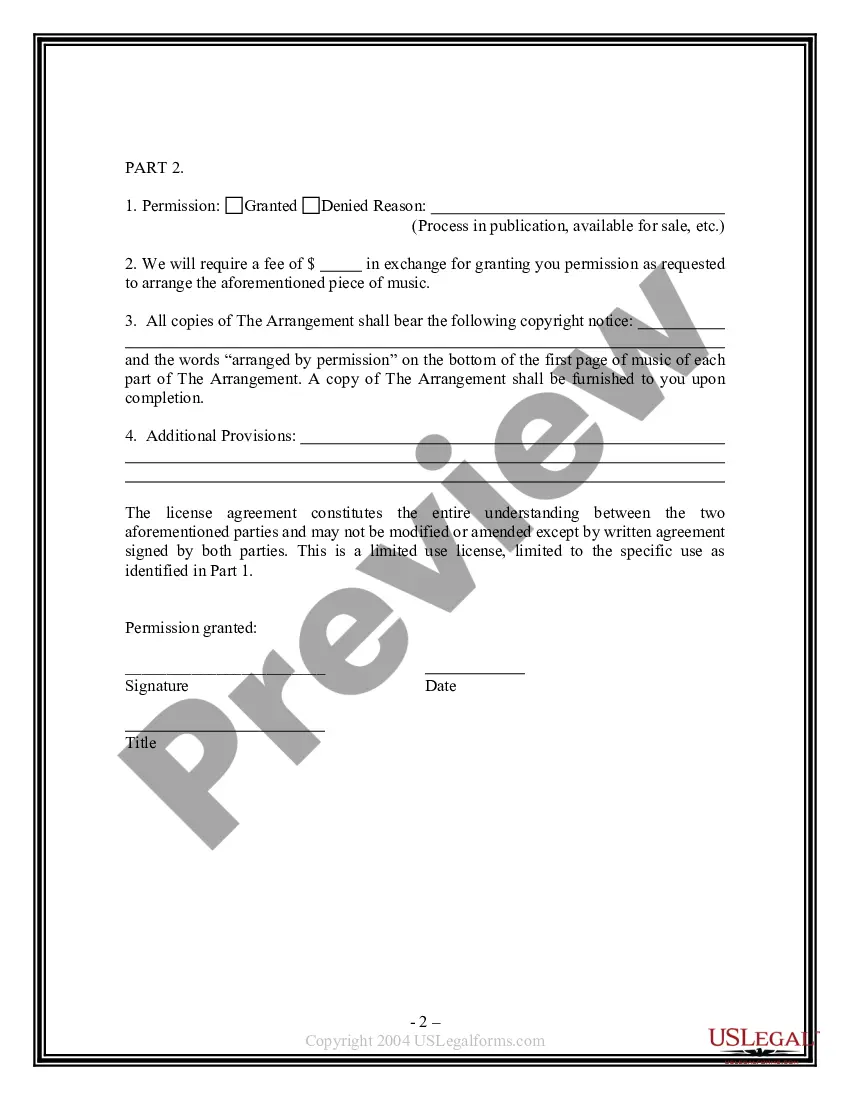
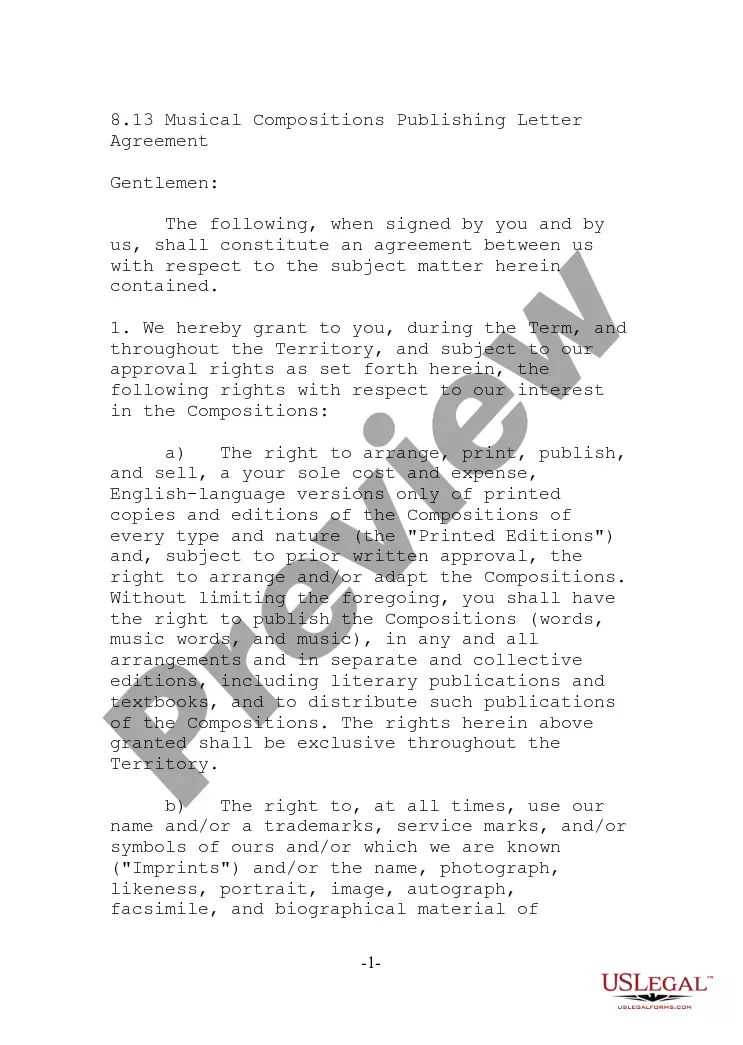
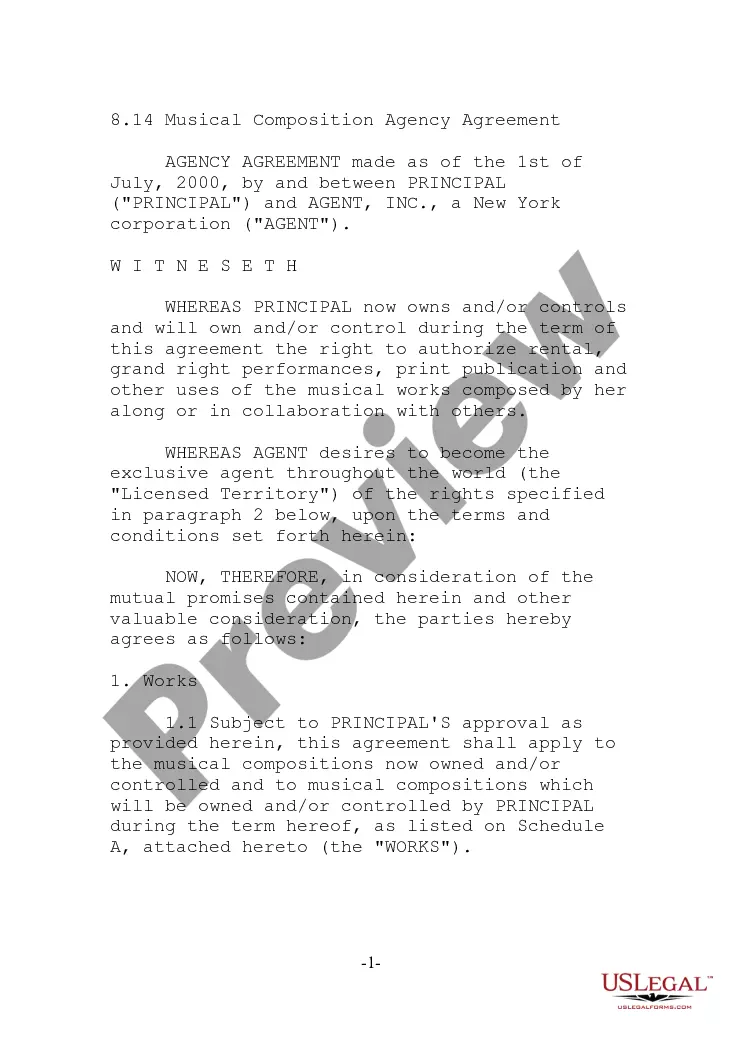
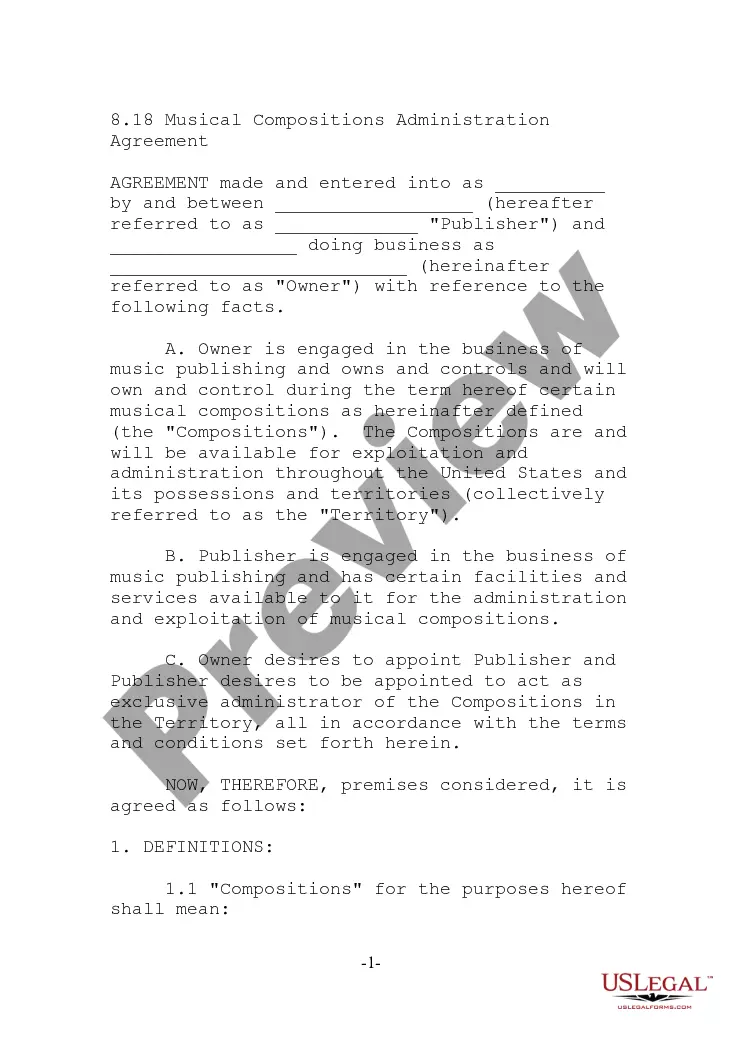
This is a form requesting permission to arrange a piece of music from a publisher. The first part of the form is to be completed by the party requesting permission, and the second part is to be filled out by the publisher or party granting permission.
Kansas Request For Permission To Arrange a Musical Composition
State:
Multi-State
Control #:
US-PRM-11
Format:
Word;
Rich Text
Instant download
Description
Free preview
How to fill out Request For Permission To Arrange A Musical Composition?
Locating the appropriate valid document format could be a challenge. It goes without saying that there are numerous templates available online, but how can you obtain the correct version you require? Utilize the US Legal Forms website. The platform offers a vast array of templates, such as the Kansas Request For Permission To Arrange a Musical Composition, which you can utilize for both business and personal needs. All forms are reviewed by professionals and comply with federal and state regulations.
If you are already registered, Log In to your account and click on the Download button to acquire the Kansas Request For Permission To Arrange a Musical Composition. Use your account to browse the legal forms you have previously purchased. Visit the My documents section of your account and download another copy of the document you need.
If you are a new user of US Legal Forms, here are simple instructions you can follow: First, make sure you have selected the correct form for your locality/county. You can review the document using the Preview button and examine the form summary to ensure it is suitable for you. If the form does not meet your criteria, utilize the Search field to find the correct document. Once you are confident that the form is appropriate, click the Download now button to obtain the form. Choose the pricing plan you wish and input the necessary information. Create your account and complete your purchase using your PayPal account or credit card. Select the file format and download the legal document to your device. Finally, complete, edit, print, and sign the acquired Kansas Request For Permission To Arrange a Musical Composition.
Overall, US Legal Forms provides a comprehensive solution for obtaining legitimate forms tailored to your specific needs.
- US Legal Forms is the largest library of legal documents where you can access numerous file templates.
- Utilize the service to download properly crafted paperwork that adhere to state requirements.
- Ensure you have selected the right document for your area.
- Use the Preview button to review the document before downloading.
- Search for the correct document if the initial one does not meet your needs.
- Download the legal document in your preferred file format.
Form popularity
FAQ
Requesting permission to use music involves contacting the copyright owner or their representative. You will need to clearly state your intentions and provide details about how you plan to use the music. A Kansas Request For Permission To Arrange a Musical Composition can help formalize your request and clarify your usage rights. For added support, US Legal Forms offers resources to simplify the permission-seeking process, helping you stay compliant with copyright laws.
To obtain permission to arrange music, you should start by identifying the copyright holder of the original composition. Reach out directly to them or use a service that specializes in music licensing. A Kansas Request For Permission To Arrange a Musical Composition can streamline this process, ensuring you have the proper permissions in place. Additionally, consider using platforms like US Legal Forms to access templates and guidance that make this task easier.
SEEKING PERSMISSION Once you've found the owner, publisher or administrator, you can visit the Music Publishers Association Copyright Resource Center and download the Request for Permission to Arrange form that can be filled out and sent to the song's publisher.
Arrangements of copyrighted works are only permitted to be sold with ArrangeMe. Selling an arrangement with ArrangeMe does not grant any additional permission to sell your work on other websites, or in physical printed sheet music, unless you have a direct agreement with the work owner or publisher.
Getting The Proper License For Your Commissioned Arrangement Permission Fees range from $50 to several hundred dollars, depending on variables such as the nature of intended performance, who the licensee is (educational is cheaper), our arranging fee, and other factors.
Base fee for an arrangement is $150. This includes a full musical score for up to two instruments. Each additional instrument is $50.
In general, the permissions process involves a simple five-step procedure:Determine if permission is needed.Identify the owner.Identify the rights needed.Contact the owner and negotiate whether payment is required.Get your permission agreement in writing.
Arranging a copyrighted musical work requires the permission of the copyright owner.
General Requirements for CopyrightThe arrangement must be an original work. It must be fixed in a tangible medium of expression, such as on sheet music or a digital recording. It must be a musical work, including any accompanying words. It must not be an idea or concept.